How to Use Water Immersion for Natural Pain Relief During Active Labor
Embracing the ‘Aquadural’: Your Guide to Water Immersion
Hello, sweet mama. If you are reading this, you are likely preparing for one of the most transformative experiences of your life. As a doula, I have stood beside many women as they navigated the powerful waves of labor, and there is one tool that consistently stands out for its ability to bring a sense of peace and profound relief: water immersion. Often referred to by birth workers as the ‘aquadural,’ the simple act of stepping into a warm tub during active labor can feel like a heavy weight has been lifted—quite literally.
Water has a primal connection to birth. After all, your baby has been floating in a warm, watery world for nine months. When you immerse yourself in water during labor, you are returning to an element that fosters safety, weightlessness, and fluidity. This guide is designed to help you understand the science, the timing, and the practical techniques to make water immersion a cornerstone of your natural pain relief strategy. Whether you are planning a home birth or a hospital delivery with a tub, let’s explore how you can use the magic of hydrotherapy to meet your baby with strength and serenity.
The Science of Buoyancy: Why Water Works

You might wonder how something as simple as water can compete with the intensity of active labor contractions. The answer lies in the physiological changes your body undergoes the moment you submerge. When your body is buoyant, the effects of gravity are significantly reduced. This weightlessness allows your muscles to relax more deeply, particularly the muscles in your pelvis and lower back that are working so hard during labor.
Hydrotherapy works on the Gate Control Theory of Pain. Essentially, the sensation of warm water on your skin sends a multitude of pleasant signals to your brain, which compete with and ‘dampen’ the pain signals coming from your uterus. Furthermore, being in water promotes the release of endorphins—your body’s natural narcotics—and oxytocin, the hormone of love and labor progress. At the same time, it helps lower levels of adrenaline and cortisol, which can otherwise stall labor by triggering a ‘fight or flight’ response.
Key Benefits of Water Immersion
- Enhanced Relaxation: Warm water lowers blood pressure and reduces anxiety, allowing you to rest more effectively between contractions.
- Increased Mobility: Buoyancy makes it much easier to change positions, move your hips, and find the most efficient alignment for baby’s descent.
- Perineal Stretching: The warm water helps to soften the tissues of the perineum, potentially reducing the risk of significant tearing.
- Privacy and Autonomy: The physical barrier of the tub creates a ‘sacred space’ where you feel more in control of your environment.
Timing Your Dip: When to Enter the Water

In the world of birth support, we often say that timing is everything. While it might be tempting to jump into the tub as soon as the first ‘real’ contraction hits, entering the water too early can sometimes slow things down. If you get in during early labor (before 4 to 5 centimeters of dilation), the deep relaxation can occasionally cause your contractions to space out or lose their intensity.
The ‘sweet spot’ for water immersion is typically when you have reached active labor. This is usually characterized by contractions that are 4 minutes apart, lasting 60 seconds, and have been consistent for at least an hour. At this stage, your body is firmly established in its labor rhythm, and the water will help you manage the intensity rather than stopping the momentum.
| Labor Phase | Water Immersion Strategy | Goal |
|---|---|---|
| Early Labor (0-4cm) | Wait or use a warm shower instead. | Maintain labor momentum. |
| Active Labor (5-8cm) | Ideal time to enter the tub. | Maximum pain relief and relaxation. |
| Transition (8-10cm) | Stay in or enter now for intense focus. | Grounding and sensory soothing. |
| Pushing Phase | Continue immersion if comfortable. | Softening tissues and gentle transition. |
“Listen to your body’s rhythm. If you get in the water and labor slows down, don’t be afraid to get out, walk around for 30 minutes, and try again later. The water is a tool, not a cage.”
Creating Your Sacred Space: Setting the Scene
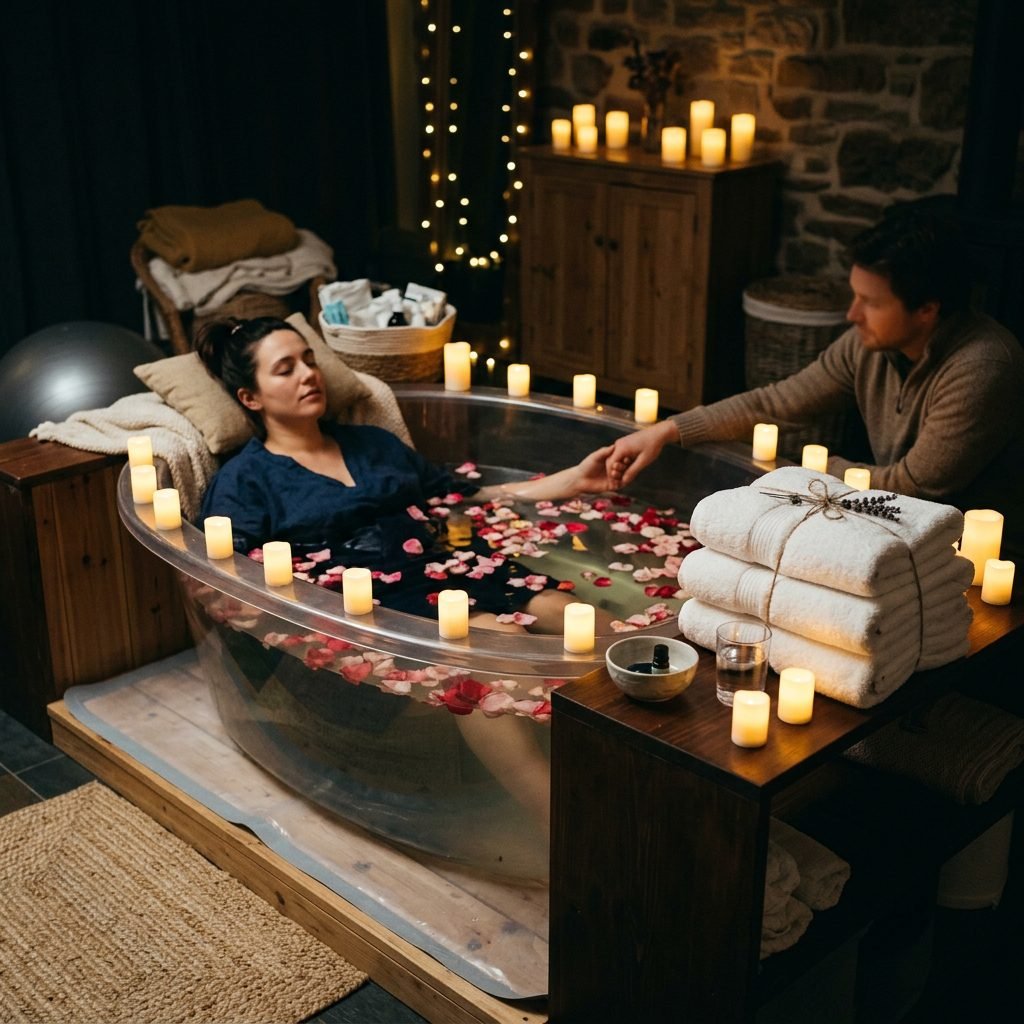
To get the most out of water immersion, the environment surrounding the tub matters just as much as the water itself. Your goal is to create a sensory cocoon that encourages your parasympathetic nervous system to take the lead. This is the ‘rest and digest’ state where labor thrives.
Essential Elements for Your Birth Pool Environment
- Temperature Control: The water should be comfortably warm, usually between 95°F and 101°F (35°C – 38°C). It should never feel hot or cause you to sweat excessively, as this can raise your heart rate and your baby’s heart rate.
- Soft Lighting: Dim the overhead lights. Use battery-operated tea lights or fairy lights to create a soft, amber glow. Bright lights can inhibit oxytocin production.
- Aromatherapy: A few drops of lavender or clary sage oil on a warm washcloth nearby (not necessarily in the water) can enhance the calming effect.
- Soundscape: Prepare a playlist of grounding music, nature sounds, or birth affirmations. The sound of water itself is also naturally soothing.
Don’t forget the practical side of comfort. Have a stack of warm, dry towels ready for when you eventually step out, and a comfortable pillow or rolled-up towel to cushion your neck or knees against the edge of the tub.
Active Labor Positions for the Tub
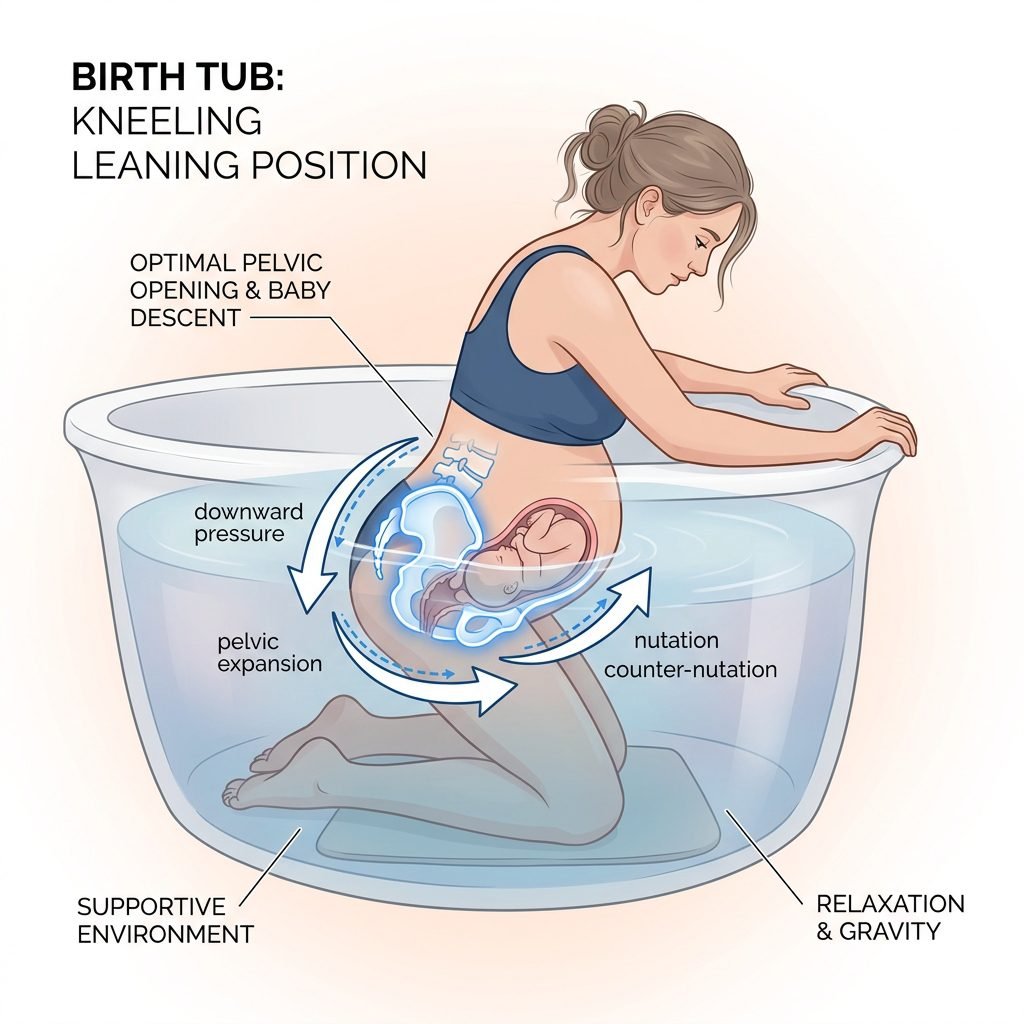
One of the greatest gifts of water is the ability to move with ease. Unlike being on a bed, the tub allows you to utilize gravity and pelvic opening positions without the usual strain. Here are the best positions to try while immersed:
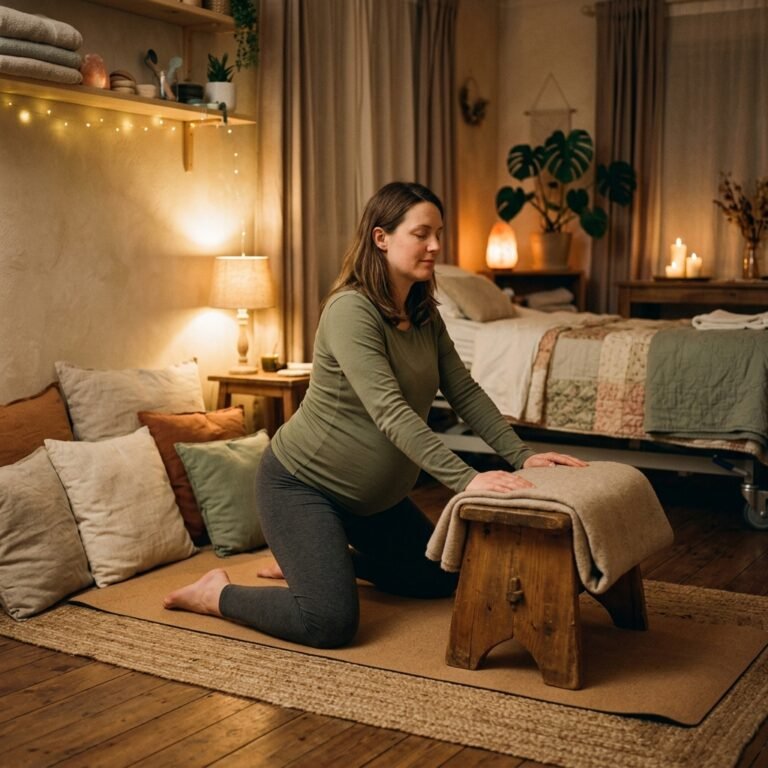
- The Kneeling Lean: Kneel on the bottom of the tub (use a towel for padding) and lean your chest and arms over the edge. This is incredible for relieving back labor and allowing your partner to apply counter-pressure.
- The Floating Squat: Hold onto the handles of the tub or your partner’s hands and sink into a deep squat. The buoyancy supports your weight while your pelvis opens fully.
- The Side-Lying Float: Lie on your side in the water, perhaps with a ‘peanut ball’ or a pool noodle between your knees. This is a restful position that still allows for labor progress.
- The Reclining Throne: Lean back against the slope of the tub, letting the water cover your belly. This is often the most relaxing position between contractions.
| Position | Best For… | Partner Support |
|---|---|---|
| Kneeling | Back labor & Baby rotation | Firm lower back massage |
| Squatting | Descending & Pushing | Holding hands for stability |
| Side-Lying | Resting during Transition | Cool cloth on forehead |
| Floating on Back | Total relaxation between waves | Supporting the head/neck |
Safety, Hydration, and the Partner’s Role

While water immersion is generally very safe for low-risk pregnancies, there are a few ‘doula secrets’ to ensure you stay safe and energized. First and foremost: Hydration is non-negotiable. The warm water can lead to dehydration faster than you realize. Your partner should offer a sip of water or an electrolyte drink after every single contraction.
Safety Guidelines for Water Labor
- Monitor Temperature: Your birth team should check the water temperature every 30 to 60 minutes to ensure it stays in the safe zone.
- Know When to Exit: If you develop a fever, if the baby’s heart rate shows concerns, or if you simply feel ‘done’ with the water, it is time to step out.
- Keep the Upper Body Cool: If you start feeling too warm, use a cold compress on your neck or forehead. This helps regulate your core temperature while keeping your lower body relaxed in the warmth.
For the partner, your role is to be the ‘Anchor.’ You are the one ensuring the towels are warm, the water bottle is full, and the environment remains undisturbed. You can sit behind the tub and let her lean against you, or stay at the side to provide the physical and emotional grounding she needs to stay in her ‘birth zone.’
Conclusion
Diving Into Your Strength
Mama, water immersion is more than just a comfort measure; it is a way to honor the incredible work your body is doing. By using the ‘aquadural,’ you are giving yourself the gift of weightlessness, the power of privacy, and the soothing embrace of warmth. Remember that labor is a journey of many steps, and the tub is one of the most beautiful tools in your kit. Trust your instincts, listen to your body, and don’t be afraid to dive deep into your own strength. You are doing something magnificent, and the water is there to hold you through every wave.