

How to Write a Birth Plan for a Gestational Diabetes Induction
Embracing Your Empowered Path to Parenthood
Hello, mama. If you are reading this, you might have just received a gestational diabetes (GD) diagnosis, or perhaps you’ve known for weeks and the conversation has finally turned toward the word induction. Take a deep breath. I want you to feel the weight of these words: A scheduled birth is still a powerful birth. A GD induction is not a failure of your body; it is a proactive step to ensure both you and your sweet baby cross the finish line safely. As your virtual doula, I am here to tell you that having an induction doesn’t mean you have to toss your birth preferences out the window. In fact, writing a birth plan for a gestational diabetes induction is more important than ever because it helps you navigate the medical aspects while fiercely protecting your emotional and physical comfort.
In this guide, we are going to walk through how to bridge the gap between medical necessity and the soulful, transformative experience you deserve. We will talk about movement, blood sugar management, and how to create a ‘gentle induction’ environment that feels like a sanctuary, not just a hospital room. You’ve got this, and I’ve got you.
Understanding the ‘Why’ and Setting the Tone

When you have gestational diabetes, the placenta—that amazing organ you grew from scratch—can sometimes start to age a little faster than usual toward the end of pregnancy. Because of this, many providers recommend an induction between 38 weeks 0 days and 39 weeks 6 days. Understanding the medical reasoning helps remove the fear of the unknown. Your birth plan should start with a ‘Philosophy of Care’ section that sets the tone for your medical team.
“I understand that an induction is recommended for the health of my baby and myself due to GD. My goal is a collaborative environment where I am informed of all interventions using the BRAIN acronym (Benefits, Risks, Alternatives, Intuition, and Nothing).”
By starting with this, you signal to your nurses and OB/GYN that you are an active participant in your care. It shifts the dynamic from being ‘delivered’ to ‘giving birth.’ Remember, mama, your voice is the most powerful tool in the room.
The Gentle Induction Toolkit: Managing Interventions
Choosing Your Induction Methods
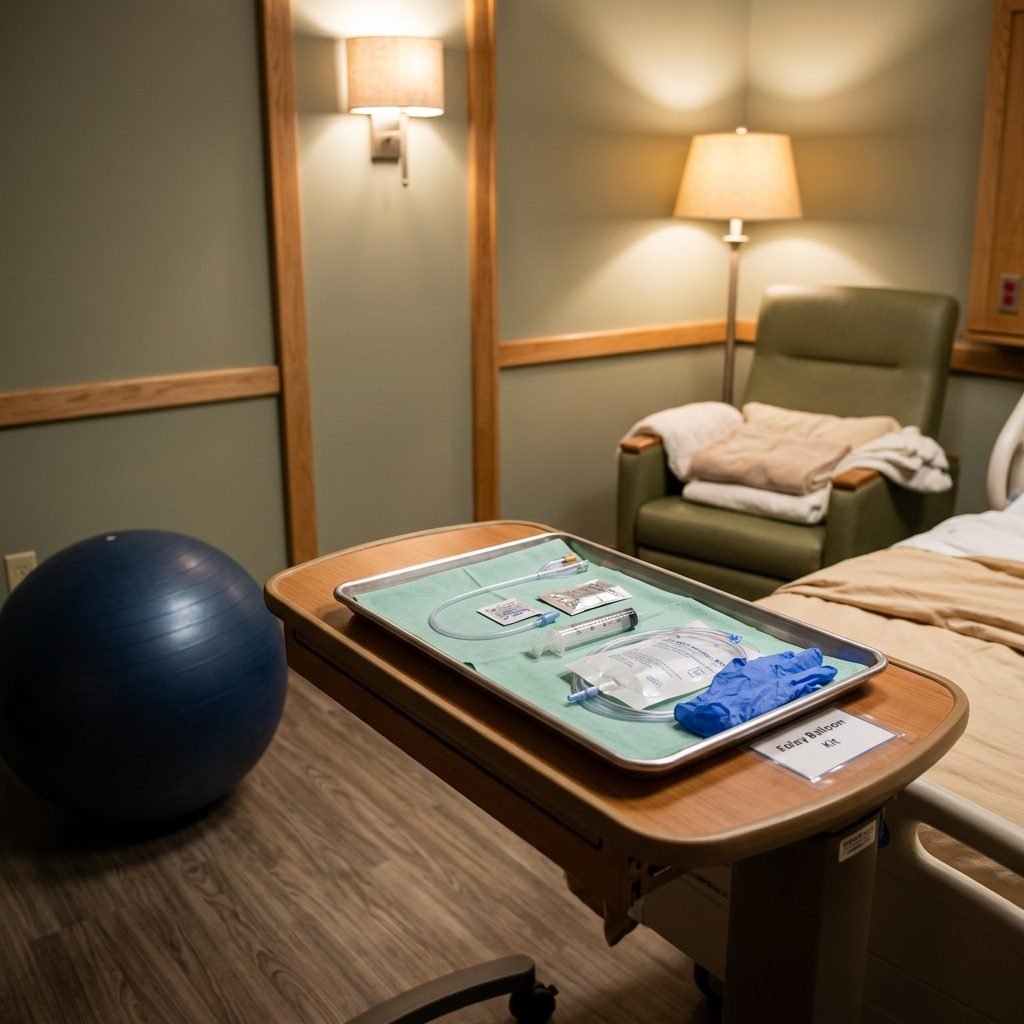
Induction isn’t a single event; it’s a ladder of interventions. You can express preferences for how you climb that ladder. Some women prefer a mechanical start (like a Foley balloon) to avoid early medication, while others may be more comfortable starting with a low-dose Pitocin drip. Discuss these options with your provider and list them in your plan.
Common Induction Interventions for GD
| Intervention | What it is | Why it’s used |
|---|---|---|
| Foley Balloon | A small catheter inserted into the cervix to manually dilate it. | Great for ‘ripening’ the cervix without systemic medication. |
| Cervidil/Cytotec | Prostaglandin medications placed near the cervix. | Helps soften the cervix to prepare for active labor. |
| Pitocin | A synthetic version of oxytocin delivered via IV. | Stimulates regular, effective contractions. |
| Breaking the Water (ARM) | The provider uses a small hook to rupture the amniotic sac. | Can intensify contractions and speed up labor. |
In your birth plan, you might specify: ‘If my cervix is favorable, I would prefer to try a mechanical induction (Foley balloon) before starting Pitocin.’ This gives you a sense of control over the pace of your labor.
Movement and Positioning for an Active Induction

Don’t Stay in the Bed!
One of the biggest myths about induction is that you are ‘stuck’ in bed because of the IV and monitors. This is not true! Most hospitals now offer wireless telemetry monitoring, which allows you to move freely while the nurses keep an eye on baby. Even if you are tethered to an IV pole, that pole has wheels—it’s your new dance partner.
Physical Moves to Encourage Baby’s Descent
- The Miles Circuit: Spend 20 minutes in an open-knee-chest position, followed by 20 minutes of exaggerated side-lying with a peanut ball between your legs.
- The Curb Walk: If you are allowed to walk the halls, try walking with one foot on the ‘curb’ (the edge of the hallway) and one foot on the floor to open the pelvis.
- The Slow Dance: Wrap your arms around your partner’s neck and sway side to side, allowing gravity to pull the baby down.
- Peanut Ball Resting: If you choose an epidural, use a peanut ball to keep your pelvis open. Have your nurse help you switch sides every 30 to 60 minutes.
Your birth plan should state: ‘I plan to remain as mobile as possible. Please provide a peanut ball and, if available, wireless monitoring.’
Blood Sugar Management and Nutrition During Labor

Fueling the Marathon
This is the most specific part of a GD birth plan. In a typical labor, many hospitals allow ‘clear liquids,’ but with GD, your blood sugar must be monitored closely to ensure the baby’s insulin levels stay stable. If your sugar spikes or drops too low during labor, the baby might experience a blood sugar drop (hypoglycemia) after birth.
Nutrition Strategy for GD Labor
- Ask about ‘Clear Liquids Plus’: Some providers allow sugar-free Jell-O, broth, or protein-rich clear drinks.
- Monitor Frequency: Specify if you prefer to have your finger pricks done at specific intervals or if you are using a Continuous Glucose Monitor (CGM).
- The IV Drip: In some cases, a dextrose (sugar) drip is used alongside Pitocin to keep your energy up. Ask your doctor their policy on this.
Pro-Tip: Pack a ‘Post-Birth Reward’ snack in your hospital bag. After the placenta is delivered, your GD usually resolves instantly. Whether it’s a high-quality sourdough bagel or a specific piece of fruit, having that ready can be a huge mental boost!
The Golden Hour and Baby’s First Checks

Protecting the First Moments
When a baby is born to a mama with GD, the pediatric team will want to check the baby’s blood sugar. This usually involves a small heel prick. You can still have your Golden Hour while this happens! In your birth plan, be very clear about your desires for the immediate postpartum period.
“I request immediate skin-to-skin contact for at least 60 minutes. Please perform baby’s initial assessments and blood sugar checks while baby is on my chest, unless there is a medical emergency.”
Early and frequent breastfeeding (or colostrum harvesting before birth, with your doctor’s okay) is one of the best ways to stabilize your baby’s blood sugar. If the baby’s sugar is low, you can request to use your harvested colostrum or a donor milk bridge before opting for formula, if that aligns with your goals.
Sample Birth Plan Comparison Table
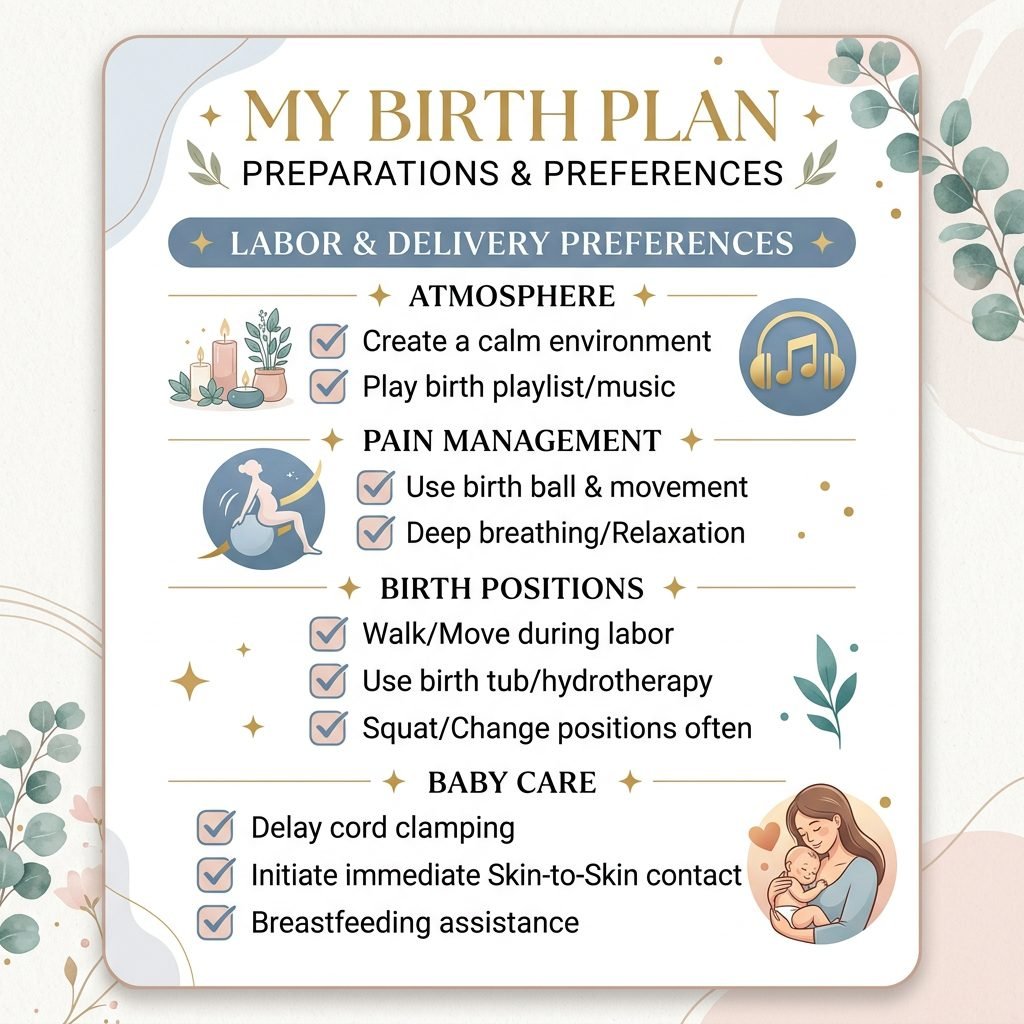
To help you visualize how to write your plan, here is a comparison of ‘Standard Procedure’ versus ‘GD Empowered Preferences’ that you can use as a template.
| Category | Standard Procedure | Your Empowered Preference |
|---|---|---|
| Environment | Bright lights, TV on, busy room. | Dim lights, battery-operated candles, soft music. |
| Monitoring | Continuous, wired monitoring at bedside. | Wireless telemetry or intermittent monitoring to allow movement. |
| Pain Management | Wait for the anesthesiologist to offer. | Use of tub/shower (if water hasn’t broken), counter-pressure, and tens machine first. |
| GD Checks | Nurse-led finger pricks every hour. | Use of my own CGM or request checks be done during contractions’ breaks. |
| Baby’s First Meal | Formula supplement if sugar is slightly low. | Immediate breastfeeding and use of pre-harvested colostrum. |
Conclusion
You Are Ready for This Journey
Mama, writing this birth plan is your way of saying, ‘I am present, I am informed, and I am ready.’ While we can’t control every twist and turn of labor—especially with the added layer of gestational diabetes—we can control how we show up for ourselves. By focusing on a gentle induction, movement, and clear communication with your medical team, you are setting the stage for a beautiful, positive birth story.
Remember that your worth as a mother is not measured by how your baby enters the world, but by the love and intention you pour into the process. You are strong, you are capable, and very soon, you will be holding your greatest reward in your arms. Trust your body, trust your baby, and trust the plan you’ve built with love.