
The Dream Feed Schedule That Will Help Your Baby Sleep 6 Hours Straight
Oh, mama, I see you. I see the heavy eyelids, the fourth cup of lukewarm coffee, and that deep, soul-aching desire for just one solid block of sleep. Whether you are in the thick of the ‘fourth trimester’ or navigating the four-month sleep regression, the nights can feel incredibly long. As a doula, I have sat in those quiet, dark hours with so many mothers, and I want you to know: your need for rest is not selfish—it is foundational to your healing and your ability to show up for your little one. Enter the Dream Feed. This gentle, strategic technique is designed to align your baby’s longest sleep stretch with your own, potentially giving you that magical six-hour window of uninterrupted rest. In this guide, we are going to walk through exactly how to master the dream feed, the science behind why it works, and a schedule that will help your whole household breathe a little easier tonight.
“Rest is not a luxury; it is the soil in which your mothering grows. You deserve to sleep as much as your baby does.”
The Science of the Dream Feed: Why 10 PM is the Magic Hour
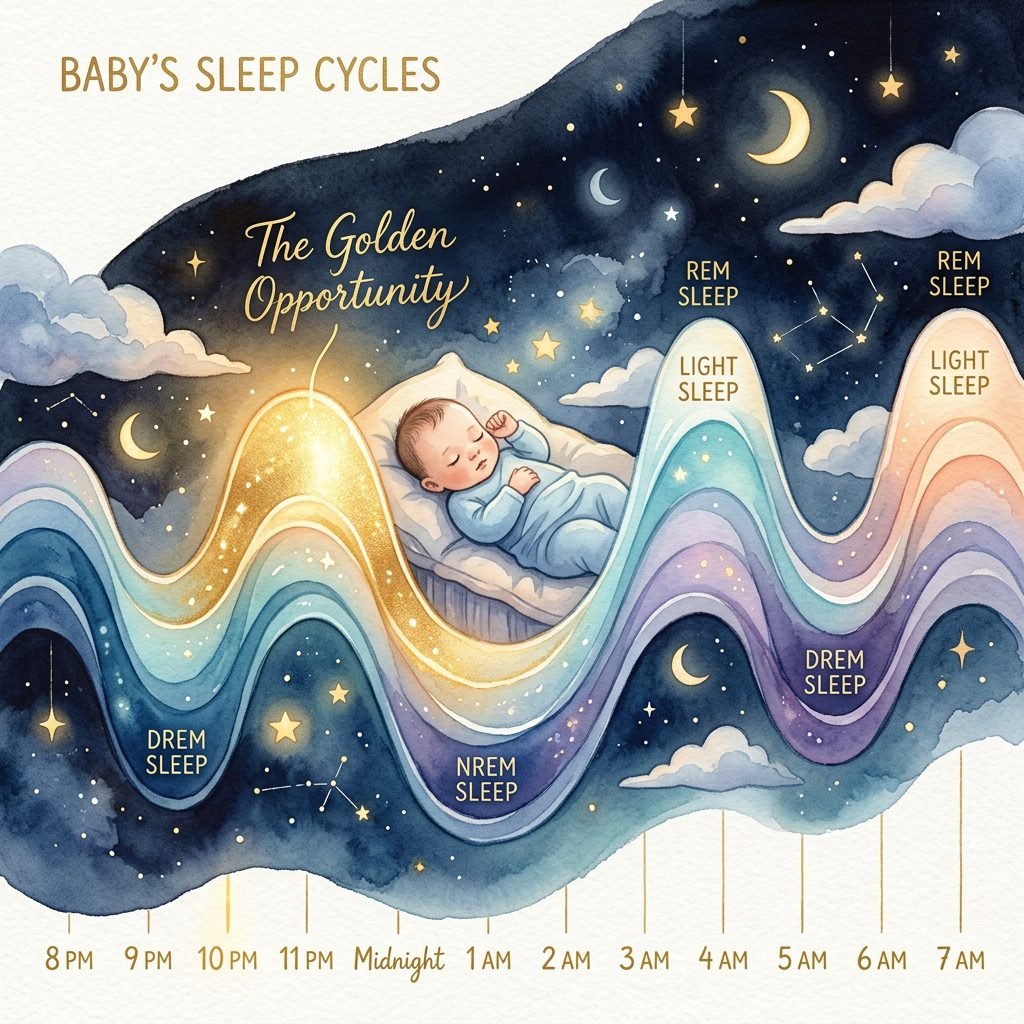
The dream feed is essentially a ‘top-off’ feed given to your baby while they are still asleep, typically between 10:00 PM and 11:00 PM. The goal is to fill their tummy one last time before you go to sleep yourself, preventing them from waking up for a feeding at 1:00 AM or 2:00 AM just as you’ve finally hit your own deep sleep cycle. By doing this, you are effectively shifting their longest stretch of sleep to start later in the night.
From a biological perspective, babies have high ‘sleep pressure’ in the early evening. They often fall into their deepest sleep between 7:00 PM and 10:00 PM. If they eat at 7:00 PM and go down, they might naturally wake up four hours later at 11:00 PM. However, if we proactively feed them at 10:30 PM without fully waking them, we can often stretch that next wake-up call to 4:00 AM or even 5:00 AM. This creates a 6-hour straight window for you. Understanding the difference between active sleep and quiet sleep is key here; during a dream feed, we aim to keep the baby in a state of quiet, submerged sleep so their nervous system stays calm.
The Stealth Method: A Step-by-Step Guide to Feeding a Sleeping Baby

Mastering the dream feed is all about ‘stealth mode.’ You want to be like a nursery ninja—quiet, efficient, and barely there. If you wake the baby up too much, you risk a full hour of ‘party time’ in the middle of the night, which is exactly what we want to avoid. Follow these precise steps to ensure a successful session:
- Keep the Environment Dark: Do not turn on overhead lights. Use a dim, red-toned nightlight if necessary, as red light does not interfere with melatonin production.
- Minimize Stimulation: Avoid eye contact and keep talking to an absolute minimum. This is not the time for ‘peek-a-boo’ or sweet lullabies.
- The Gentle Lift: Carefully lift your baby from the bassinet. If they are swaddled, leave them in the swaddle unless they have had a major diaper blowout. The warmth of the swaddle keeps them in that sleepy state.
- Stimulate the Rooting Reflex: Gently stroke your baby’s cheek or lower lip with the nipple (breast or bottle). Their natural instincts will take over, and they will begin to suckle even while eyes remain closed.
- The Burp (Optional but Recommended): For gassy babies, a gentle burp is necessary. Use the ‘upright cuddle’ method rather than vigorous patting. Hold them against your shoulder for 5-10 minutes to let gravity do the work.
- The Transition: Slowly lower them back into their sleep space, feet first, then bottom, then head to avoid triggering the startle reflex.
The Dream Feed Schedule: Age-Appropriate Timelines
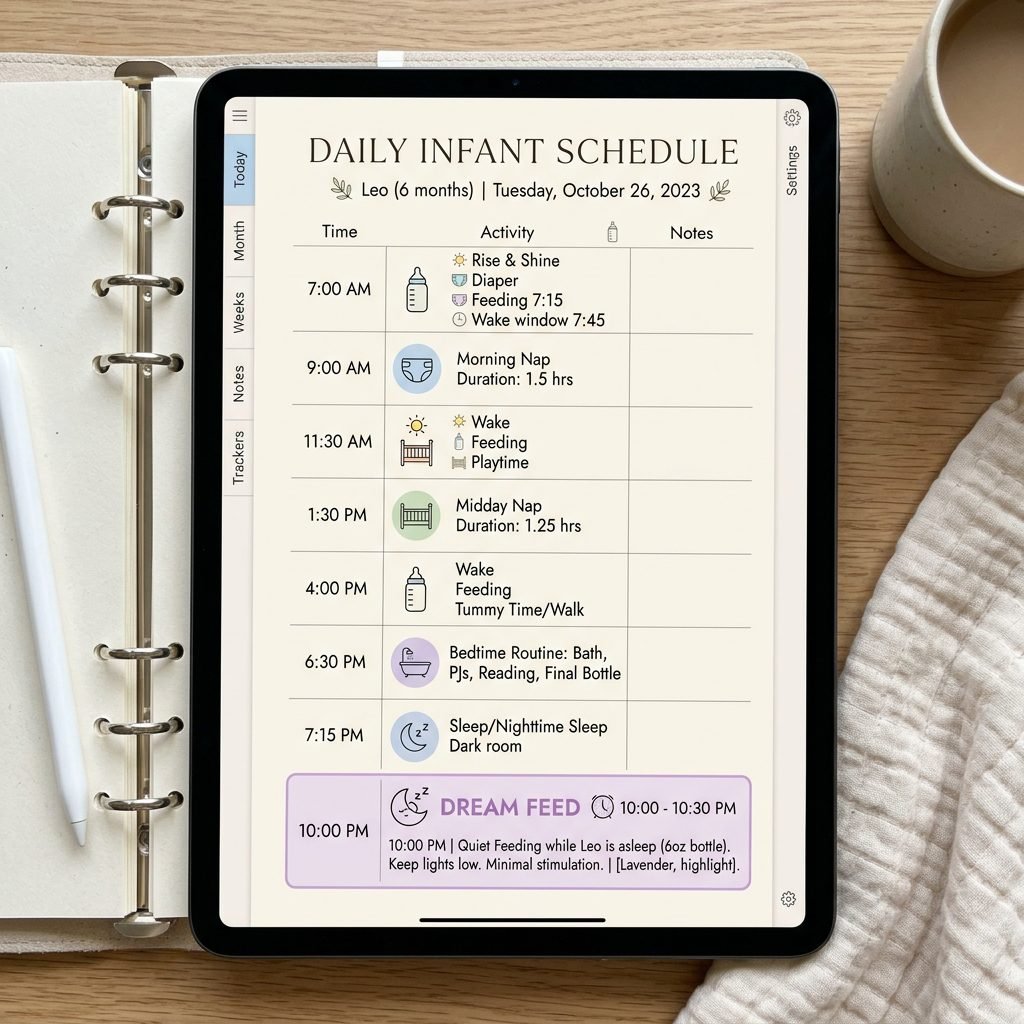
Consistency is your best friend when establishing a sleep routine. While every baby is unique, having a structured framework helps regulate their internal clock. Below is a comparison of how the dream feed fits into different stages of the first six months. Note how the bedtime shifts earlier as the baby gets older, but the dream feed remains a consistent anchor.
| Baby’s Age | Early Evening Feed | Bedtime Routine | The Dream Feed | Expected Morning Wake |
|---|---|---|---|---|
| 0-2 Months | 6:30 PM | 8:30 PM | 11:00 PM | 2:30 AM / 6:30 AM |
| 3-4 Months | 6:00 PM | 7:30 PM | 10:30 PM | 4:30 AM / 7:00 AM |
| 5-6 Months | 5:30 PM | 7:00 PM | 10:00 PM | 6:30 AM (Straight through) |
As your baby approaches the 6-month mark and begins solids, you may find that the dream feed is no longer necessary. You will know it is time to drop the feed if the baby becomes difficult to wake for it, or if they start waking up more frequently after the feed is given.
Troubleshooting Gas and Reflux During Late-Night Feeds

One of the biggest concerns mamas have is: ‘What if my baby gets gassy and wakes up because I didn’t burp them enough?’ It is a valid worry! For babies prone to colic or reflux, the dream feed requires a little extra finesse. If your little one is particularly ‘bubblesome,’ try the ‘Tiger in the Tree’ hold for a few minutes after the feed. This involves laying the baby face down along your forearm with their head supported in your hand, providing gentle pressure on the tummy which helps move gas along without fully waking them.
“If your baby wakes up during the feed, don’t panic. Keep the room dark, keep your movements slow, and treat it like a boring extension of the night. They will take their cue from your calm energy.”
If your baby consistently wakes up or struggles with gas after a dream feed, consider the ‘elevated side-lay’ position if breastfeeding, or ensuring a slow-flow nipple if bottle-feeding to reduce the amount of air swallowed. Pro tip: If you use a bottle, pre-warm it slightly so the temperature change doesn’t startle them awake.
When the Dream Feed Doesn’t Work: Knowing Your Baby

I want to be honest with you—the dream feed is a tool, not a magic wand. For about 10-15% of babies, it can actually disrupt their sleep. Some infants have a very sensitive ‘arousal threshold.’ For these little ones, being touched or fed at 10:30 PM pulls them out of deep sleep and into a lighter stage of sleep, making them more likely to wake up at midnight or 1:00 AM. How do you know if this is your baby?
- Increased Wake-ups: If your baby starts waking up more frequently after you introduce the dream feed, it’s a sign it’s disrupting their natural cycles.
- Refusal to Eat: If your baby simply will not latch or suckle while asleep, don’t force it. Their body is prioritizing sleep over calories at that moment.
- Indigestion: If the late feed causes increased spitting up or discomfort, it may be better to let them wake naturally when they are hungry.
If the dream feed isn’t working, don’t feel like you’ve failed. It just means your baby’s unique sleep architecture prefers a different rhythm. In those cases, focusing on a strong bedtime routine and daytime caloric intake is the better path forward.
Conclusion
The journey to a full night’s sleep is rarely a straight line, but the dream feed is one of the most effective ‘shortcuts’ we have in our doula toolkit. By aligning your baby’s needs with your own biology, you are creating a sustainable rhythm that supports your mental health and physical recovery. Remember, mama, you are doing an incredible job. Whether you get six hours of sleep tonight or two, your worth is not measured by your baby’s sleep schedule. Try the 10:30 PM top-off tonight, stay in ‘ninja mode,’ and keep your heart full of patience. You’ve got this!