Set the Vibe: How to Curate the Perfect Calming Playlist for Active Labor
The Auditory Birth Nest: Why Sound Matters
Hello, sweet mama. As you prepare to bring your little one into the world, you have likely thought about your birth plan, your hospital bag, and perhaps even the scent of the room. But have you considered the auditory landscape of your labor? As a doula, I have seen firsthand how the right soundscape can act as an invisible support system, wrapping you in a cocoon of safety. Labor is a deeply primitive process, governed by the ‘mammalian brain.’ When we feel safe, our bodies produce oxytocin—the hormone of love and contractions. When we feel observed or stressed, we produce adrenaline, which can stall labor. A curated playlist isn’t just about ‘background music’; it is a physiological tool to help you maintain a state of relaxation, manage the intensity of contractions, and stay connected to your body’s innate wisdom.
The Science of Sound: How Rhythm Regulates Your Labor

The connection between sound and the human nervous system is profound, especially during the vulnerability of active labor. There is a concept called entrainment, where our internal rhythms—like our heart rate and breathing—begin to synchronize with the external rhythms we hear. By choosing music with a specific Beats Per Minute (BPM), we can actually nudge our nervous system toward a calmer state.
During the early and active phases of labor, your goal is to keep your heart rate steady and your breath deep. Music that mimics the resting human heart rate (around 60 to 80 BPM) can be incredibly grounding. Furthermore, sound serves as a powerful ‘cognitive distractor.’ According to the Gate Control Theory of Pain, the brain can only process a certain amount of information at once. When your ears are filled with soothing, familiar melodies, the ‘gate’ for pain signals from the uterus can be partially closed, making the sensations feel more manageable.
| Labor Phase | Musical Energy & BPM | Ideal Physical Position |
|---|---|---|
| Early Labor | Soft, Ambient (60-70 BPM) | Side-lying with peanut ball or slow walking |
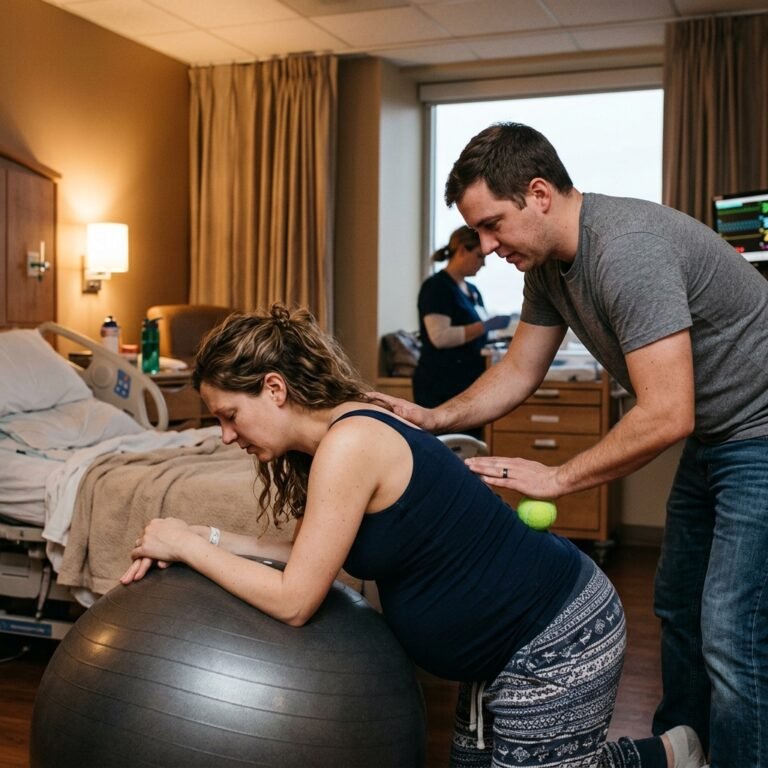
| Active Labor | Steady, Rhythmic (80-100 BPM) | Hands and knees or swaying with partner |
| Transition | Deep, Low-Frequency or Silence | Deep squatting or ‘hanging’ on partner |
| Pushing | Empowering, Upbeat (110+ BPM) | Semi-seated or side-lying with leg support |
“Your body is not broken. Your body is a powerful vessel. Let the music carry you through the wave, knowing each one brings you closer to your baby.”
Curating Your Labor Flow: A Step-by-Step Guide

Creating a playlist is a beautiful way to bond with your partner and your baby before the big day. You don’t want a random shuffle of songs that might jump from a heavy rock anthem to a lullaby; you need a curated flow that mirrors the physiological stages of birth. Here is how to build your ‘Labor Flow’ list:
- Identify Your ‘Anchor’ Tracks: These are 3 to 5 songs that make you feel instantly safe, grounded, and loved. They might be from your wedding, a favorite vacation, or a song you’ve hummed to your bump.
- Organize by Intensity: Start with ‘The Gentle Welcome’ (Early Labor) and move toward ‘The Deep Work’ (Active Labor). Save the most empowering, rhythmic songs for ‘The Final Push.’
- Check the BPM: Use online tools to check the tempo. For active labor, look for steady drumming or bass lines that provide a ‘metronome’ for your breathing.
- Avoid Lyrics (Sometimes): During the ‘Transition’ phase, the language-processing part of your brain (the neocortex) needs to shut down. Many mothers find lyrics distracting at this stage and prefer ambient soundscapes, neo-classical cello, or nature sounds.
- Cross-fade Your Songs: In your music app settings, set a 5-10 second cross-fade. This prevents jarring silences or sudden starts between tracks, keeping the ‘vibe’ seamless.
Remember, mama, this is your journey. If a song you usually love suddenly feels ‘wrong’ during a contraction, give your partner the ‘skip’ signal. You are the conductor of this symphony.
The Role of the ‘DJ Doula’: Partner Instructions

Partners, this is your time to shine! You are the Guardian of the Vibe. While the birthing person is deep in ‘Labor Land,’ they should not have to worry about finding the charger or adjusting the volume. You need to be intuitive and proactive. Here are the ‘DJ Doula’ protocols:
- Volume Management: During a contraction, the mother may want the music louder to ‘drown out’ the intensity. Between contractions, she may want it whispered low so she can rest.
- Offline Access: Hospital Wi-Fi is notoriously spotty. Ensure the entire playlist is downloaded for offline use on at least two devices.
- The ‘Silence’ Button: Sometimes, the best sound is no sound at all. If she says ‘Turn it off,’ do it immediately without question.
- Speaker Placement: Don’t just leave the speaker on a distant counter. Place it near her head if she is resting, or move it to the bathroom if she decides to use the shower or tub for pain relief.
By managing the environment, you are protecting her oxytocin levels and allowing her to stay in the zone. You aren’t just ‘playing music’; you are holding the space for a miracle.
Beyond Music: Affirmations and Vocal Toning

Your playlist doesn’t have to be limited to musical instruments. Incorporating recorded affirmations can be a game-changer for your mental fortitude. You can record yourself, or have your partner or doula record messages of encouragement to be played during the long stretches of active labor.
“I trust my body. I open like a flower. My breath is deep, my heart is open, my baby is coming.”
Additionally, consider the sound of your own voice. Vocal toning—making low, guttural ‘O’ or ‘U’ sounds during a contraction—helps keep the jaw relaxed. There is a direct physiological link between a relaxed jaw and a relaxed cervix. If your playlist includes low-frequency sounds like chanting or deep cellos, it can encourage you to match those low tones with your own voice, effectively ‘mooing’ your baby down and out.
Technical Checklist & The ‘Hospital Bag’ Audio Kit
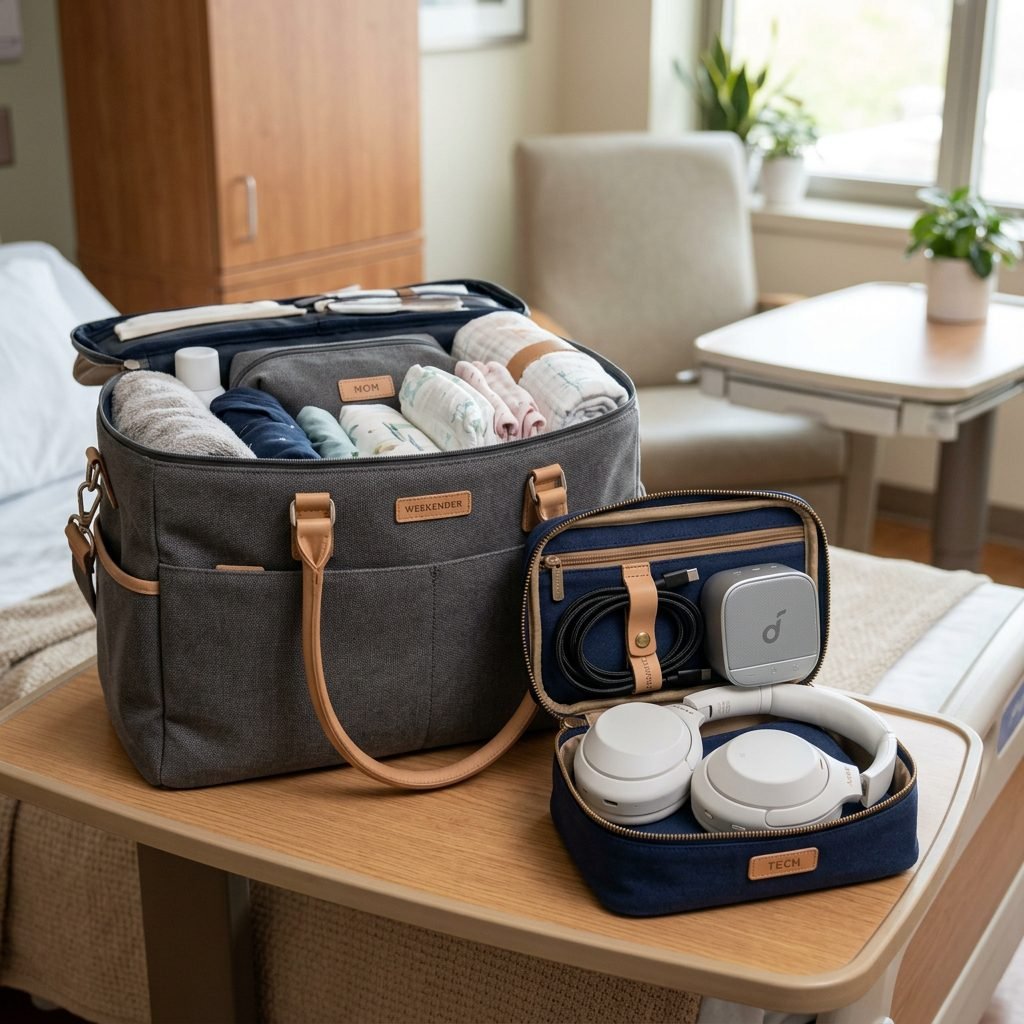
To ensure your calming environment isn’t interrupted by a ‘low battery’ warning, you need a technical kit. Preparation is the key to a stress-free birth environment. Use the following checklist to pack your audio gear:
| Item | Purpose | Doula Tip |
|---|---|---|
| Bluetooth Speaker | Fills the room with sound | Bring a waterproof one if you plan on a water birth! |
| Noise-Canceling Headphones | For ‘zoning out’ in busy hospitals | Great for the car ride to the hospital too. |
| Extra-Long Charging Cable | Keeps devices powered | Hospital outlets are often far from the bed. |
| Portable Power Bank | Backup power source | Essential for long labors. |
| Auxiliary Cable | Hardwire connection | Backup in case Bluetooth fails. |
Pro-Tip: Create a ‘Postpartum Bliss’ playlist as well. This should be filled with gentle, joyful songs to play in the ‘Golden Hour’ immediately after birth when you are meeting your baby for the first time. It will forever link those songs to the scent of your newborn’s head.
Conclusion
Curating the perfect labor playlist is an act of love and a vital part of your birth preparation. By selecting sounds that resonate with your soul and regulate your nervous system, you are taking an active role in your pain management and emotional well-being. Trust your instincts, mama. Whether you want the silence of a cathedral or the steady beat of a drum, your body knows exactly what it needs to bring your baby home. You are strong, you are capable, and you are ready for this beautiful symphony of birth.