
Dilation Station: Why Sitting on the Toilet Is the Ultimate Labor Hack
Mama, if you had told me years ago that the most effective tool in your birth arsenal was sitting right in your bathroom, I might have laughed. But as a doula who has supported hundreds of births, I can tell you with absolute certainty: the toilet is the ‘holy grail’ of labor positions. Often affectionately called the ‘Dilation Station,’ the porcelain throne offers a unique combination of physiological alignment, gravity, and psychological safety that can help turn a stalled labor into a productive one. In this guide, we are going to dive deep into why this hack works, how to set up your ‘spa-let’ for success, and the step-by-step positions that will help you meet your baby sooner. Whether you are planning a home birth or a hospital delivery, understanding the power of the Dilation Station is a total game-changer for your labor experience.
The Physiological Power of the Porcelain Throne
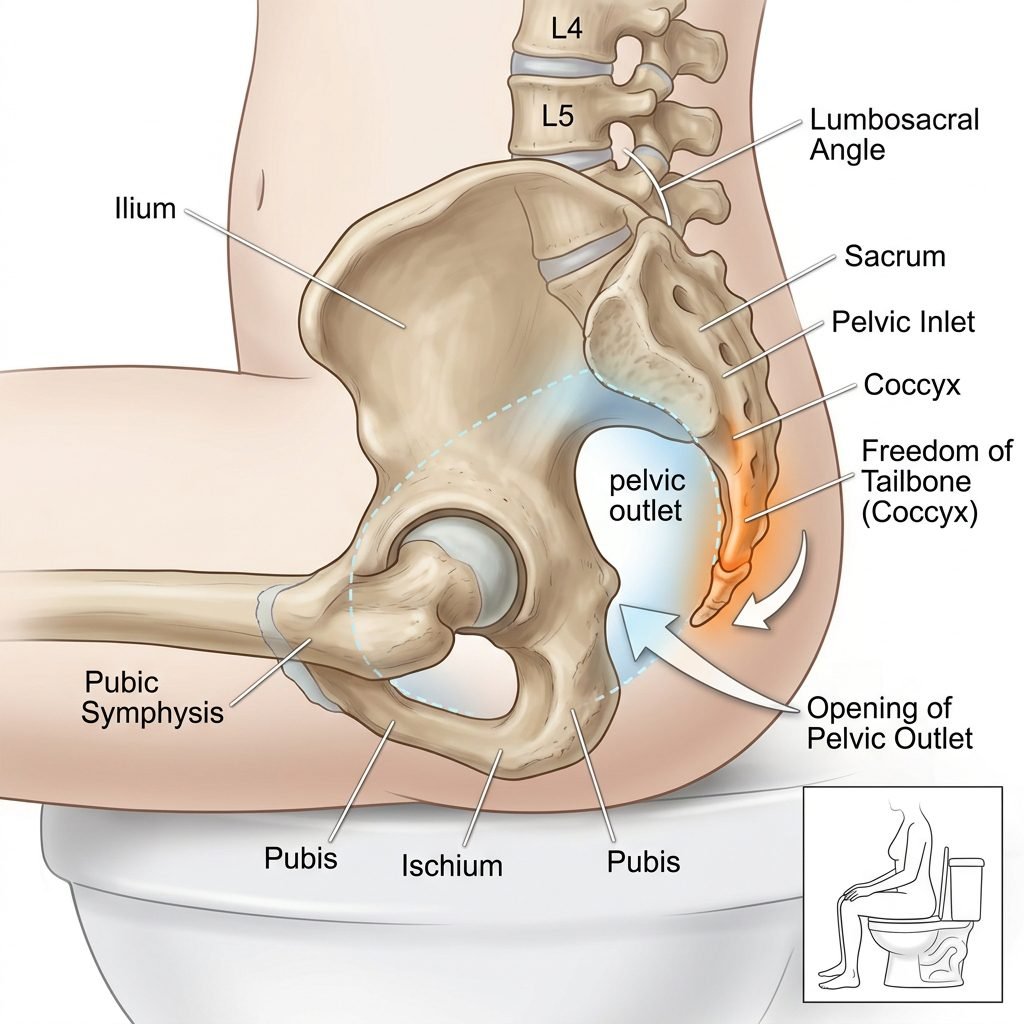
Why does sitting on the toilet work so well? It comes down to basic anatomy and the way our bodies are designed to release. When you sit on a toilet, your legs are naturally separated and your pelvis is in an open, neutral position. This posture encourages the sitz bones to spread apart, which can increase the diameter of your pelvic outlet by up to 30%. Unlike lying on your back in a hospital bed—which can actually compress the sacrum and narrow the birth canal—sitting on the toilet allows your tailbone to move freely, making more room for the baby’s head to descend.
Furthermore, we have spent our entire lives training our pelvic floor muscles to relax when we are on the toilet. It is a deeply ingrained ‘muscle memory’ response. In the heat of intense contractions, many mothers subconsciously tense their pelvic floor, which can slow down dilation. However, the moment you sit on the toilet, your brain receives a signal that it is safe to let go. This passive relaxation is exactly what your body needs to allow the cervix to thin and open. Additionally, gravity is your best friend here; being upright allows the weight of the baby to press directly onto the cervix, stimulating the release of oxytocin, the hormone responsible for labor progress.
The Sphincter Law: Why Privacy Promotes Progress

One of the most famous concepts in the birth world is Ina May Gaskin’s ‘Sphincter Law.’ This law suggests that the sphincters of the body (including the cervix) do not respond well to stress, observation, or feeling rushed. Think about it: most people find it difficult to use the restroom if someone is watching them or if they are in a high-stress environment. The cervix behaves much the same way. It is a shy muscle that thrives in privacy, darkness, and safety.
Your body is not a machine; it is a garden that needs the right environment to bloom. Privacy is the sunshine that allows your cervix to open.
The bathroom is often the only place in a hospital or even a busy home where a laboring mother feels truly alone and unobserved. By closing that door, you signal to your primitive brain that you are in a ‘safe cave.’ This reduces adrenaline—the hormone that triggers the ‘fight or flight’ response and stalls labor—and allows your natural endorphins to take over. When you feel unobserved, you are more likely to vocalize, moan, and move in ways that feel good, all of which are essential for a smooth delivery.
Step-by-Step: Mastering the Dilation Station Positions
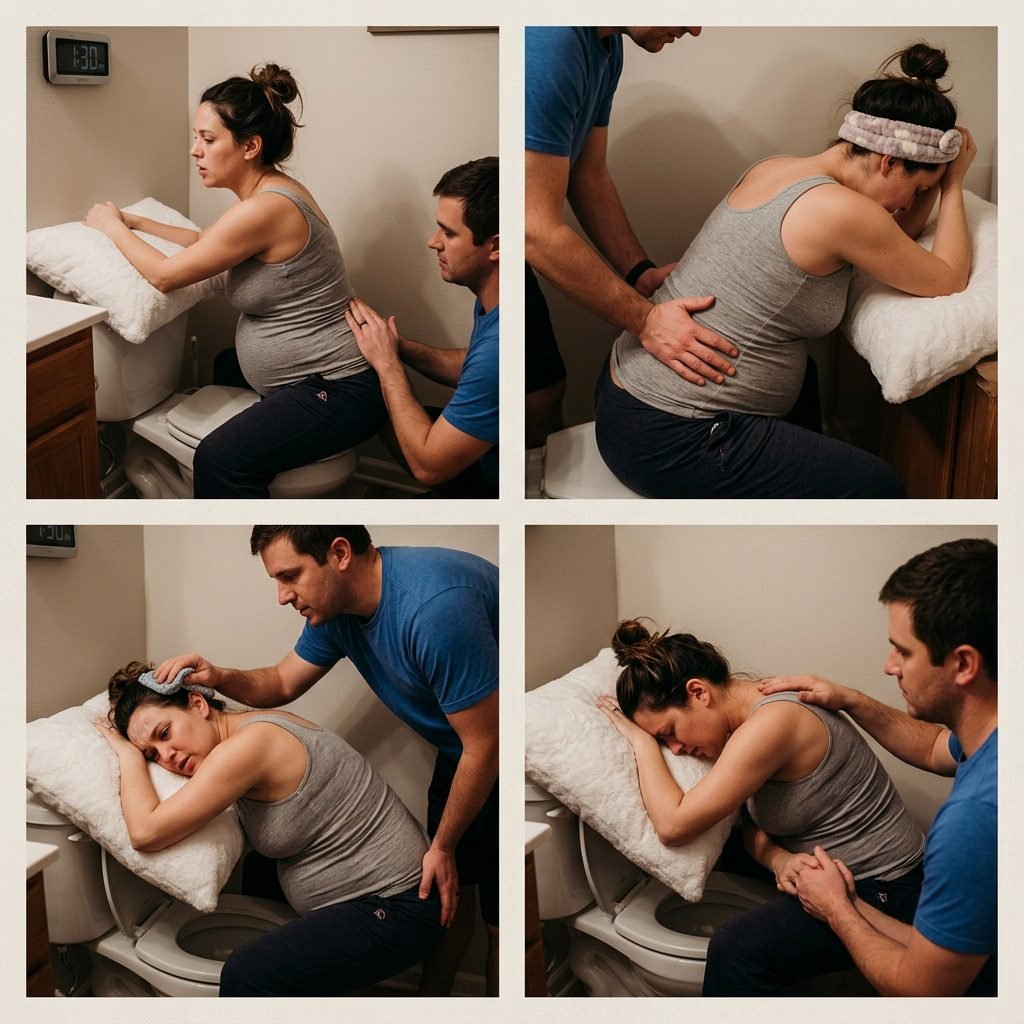
You don’t just have to sit there the ‘normal’ way. Depending on where your baby is in your pelvis, different variations can provide significant relief and progress. Here is your step-by-step guide to the best Dilation Station moves:
- The Reverse Straddle (The Holy Grail): Sit on the toilet facing the tank. Place a pillow or a folded towel over the tank and lean your head and chest forward. This allows you to rest between contractions while keeping your pelvis wide open.
- The Squatty Potty Boost: Use a small stool or a Squatty Potty to lift your feet. This mimics a deep squat, which is the most natural position for the human body to eliminate and, by extension, to give birth. It aligns the birth canal perfectly.
- The Side-Saddle Lean: Sit sideways on the toilet and lean your weight into your partner or a birth ball placed on a nearby counter. This asymmetrical position can be incredibly helpful if the baby is ‘sunny-side up’ (OP position) and needs to rotate.
- The Forward Lean with Support: Sit normally but lean forward onto a birth ball or your partner’s lap. This uses gravity to move the baby away from your spine, providing immense relief for back labor.
Try to stay on the station for about 3 to 5 contractions, then move to a different position to keep the blood flowing and the baby moving.
The ‘Spa-let’ Setup: Creating Your Birth Sanctuary
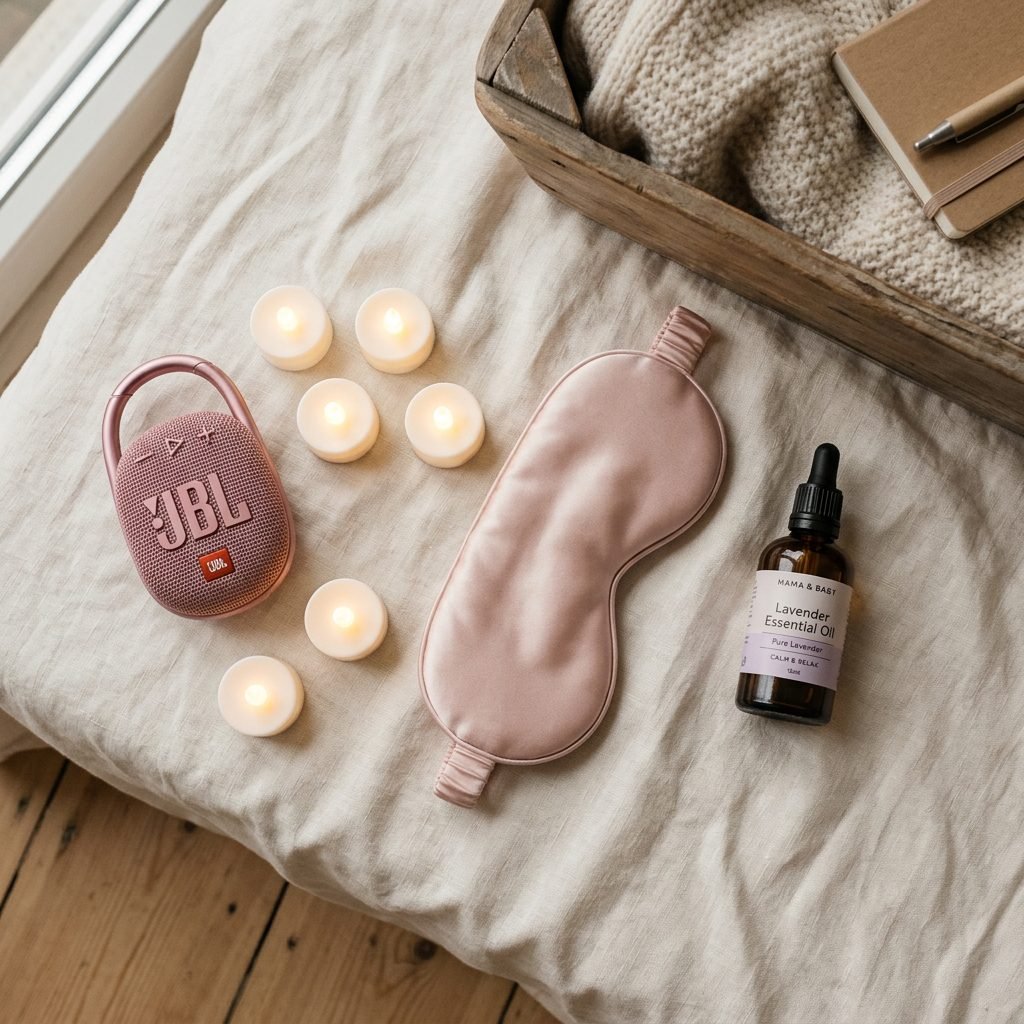
To get the most out of the Dilation Station, you need to transform the bathroom from a functional room into a birth sanctuary. If you are in a hospital, the bright fluorescent lights can be an oxytocin-killer. Use the following table to prepare your ‘Spa-let’ kit:
| Item | Purpose | Doula Tip |
|---|---|---|
| Battery-Operated Candles | Creates a soft, dim environment. | Avoid real candles in hospitals due to oxygen rules! |
| Portable Bluetooth Speaker | Plays your birth affirmations or soothing music. | Low-frequency sounds help you keep your moans deep and productive. |
| Essential Oil Diffuser | Lavender for calm, Peppermint for nausea. | Put a drop on a cotton ball if you don’t have a diffuser. |
| Plush Pillow | For leaning on the tank or the partner. | Put it in a bright pillowcase so it doesn’t get lost in hospital laundry. |
| Peri Bottle with Warm Water | Soothing for the perineum. | Adding a little witch hazel can be extra cooling. |
Don’t forget to keep the room warm. When a mother gets cold, she tenses up. Ensure there are plenty of warm blankets nearby for when she steps off the station.
The Partner’s Role: Support from the Sidelines

Just because the mama is on the toilet doesn’t mean the partner’s job is over. In fact, this is when some of the best comfort measures can be applied. Since the mother’s back is often exposed in these positions, it is the perfect time for physical support.
- Counter Pressure: Use the heels of your hands to press firmly on the lower back (the sacrum) during a contraction. This helps ‘counter’ the internal pressure of the baby’s head.
- The Double Hip Squeeze: Stand behind her and pull her hips up and back towards you. This creates even more space in the pelvic inlet.
- Hydration Station: Every time she finishes a contraction, offer a sip of coconut water or an electrolyte drink. Labor is a marathon, and she needs to stay fueled.
- Cool Compresses: The bathroom can get steamy. A cold, peppermint-scented washcloth on the back of her neck can feel like heaven.
Remember to keep your energy calm. If you are anxious, she will feel it. Stay grounded, breathe with her, and remind her how incredibly strong she is.
When to Transition: Moving from the Station to the Finish Line
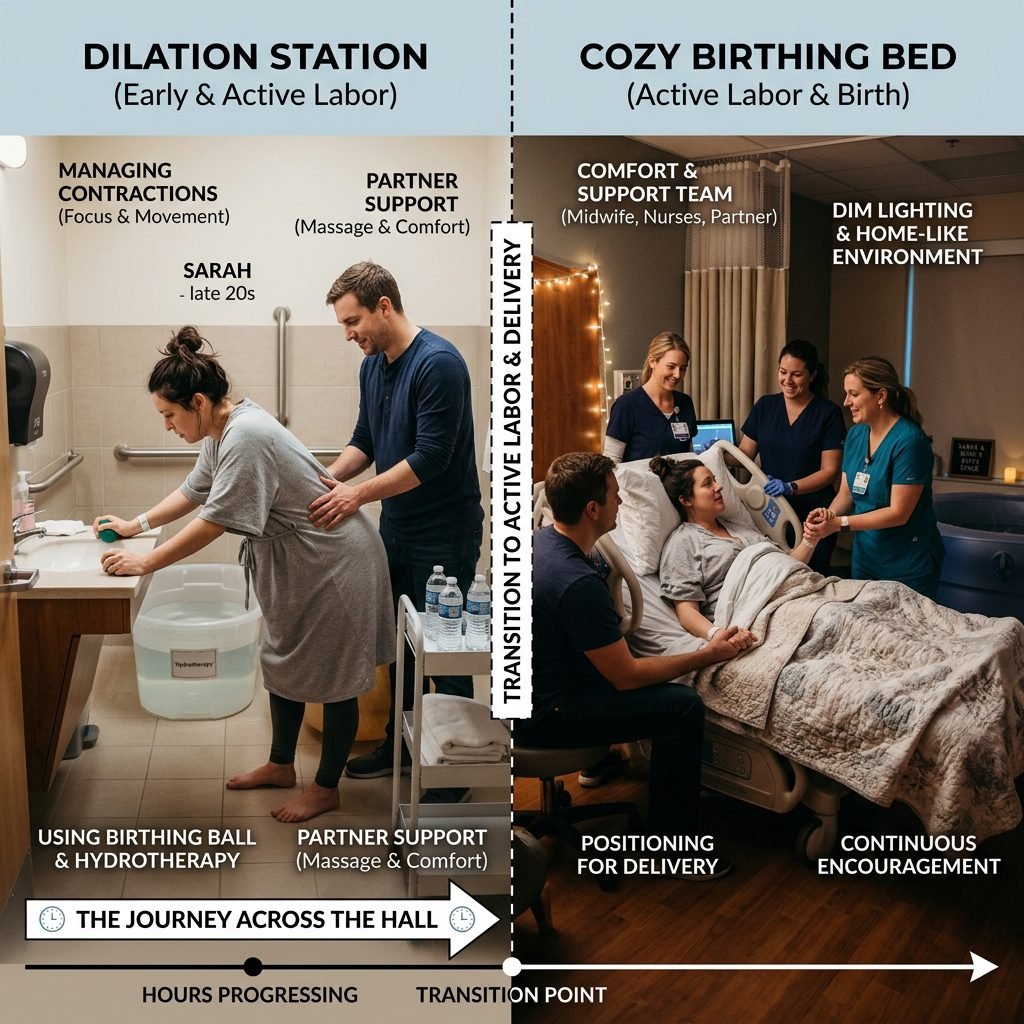
While the Dilation Station is amazing, you don’t want to stay there forever. There is a phenomenon known as ‘toilet labor’ where a woman can actually dilate very quickly. You need to be aware of the signs that it is time to move to your primary birthing space (the bed, the tub, or the floor). Look for the ‘Transition’ signs:
- The ‘Poop’ Sensation: If the mother says she feels like she actually has to have a bowel movement, that is often the baby’s head pressing on the rectum. It’s time to check for progress!
- Vocal Changes: Shifts from high-pitched moans to deep, guttural grunts usually mean the pushing stage is near.
- The Shakes: Uncontrollable shivering is a classic sign of the transition phase (moving from 8cm to 10cm).
- Nausea or Vomiting: This is a common physical reaction to the final stretch of dilation.
Use the guide below to understand when the Dilation Station is most effective:
| Labor Phase | Effectiveness | Recommended Duration |
|---|---|---|
| Early Labor | Low – Better to rest in bed. | 15 mins (only if restless) |
| Active Labor (4-7cm) | High – Peak Effectiveness | 30-45 mins with movement breaks |
| Transition (8-10cm) | Very High – But stay close to the bed! | 15-20 mins |
| Pushing Stage | Moderate – Great for ‘descending’ the baby. | Until the urge to push is overwhelming |
Conclusion
Mama, birth is a wild, beautiful, and unpredictable journey, but having a few ‘hacks’ in your pocket can make all the difference. The Dilation Station is more than just a place to sit; it is a physiological tool that respects the way your body was designed to open. By embracing the privacy of the bathroom, utilizing gravity, and allowing your pelvic floor to relax, you are working with your body rather than against it. Trust your instincts. If the toilet feels like the right place to be, stay there. If you feel the urge to move, follow that rhythm. You are doing the incredible work of bringing life into this world, and whether you meet your baby in a tub, on a bed, or right there in the ‘spa-let,’ you are a warrior. You’ve got this!