
Why Kneeling on Stairs Asymmetrically Is the Secret to Speeding Up Labor
Embracing the Power of Your Moving Pelvis
Hello, mama. If you are reading this, you are likely in those final, heavy weeks of pregnancy or perhaps you are feeling the first rhythmic waves of early labor. You might be feeling a mix of excitement, exhaustion, and a deep, primal desire to meet your little one. As a doula, I have sat on many floors and climbed many stairs alongside women just like you, and if there is one secret I wish every mother knew, it is this: your pelvis is not a fixed cage; it is a dynamic, shifting gateway.
When we think of labor, we often imagine lying in a hospital bed, but the truth is that movement—specifically asymmetrical movement—is the key to helping your baby navigate the birth canal. Kneeling on stairs asymmetrically is one of the most effective, ‘secret weapon’ positions in a birth worker’s toolkit. It uses gravity, creates space where you need it most, and helps a ‘stuck’ baby find the perfect angle for descent. In this guide, we are going to dive deep into the science of why this works, how to do it safely, and why your staircase might just be your best friend during the marathon of birth.
The Magic of Asymmetry: Why Your Pelvis Needs a Little Wiggle Room
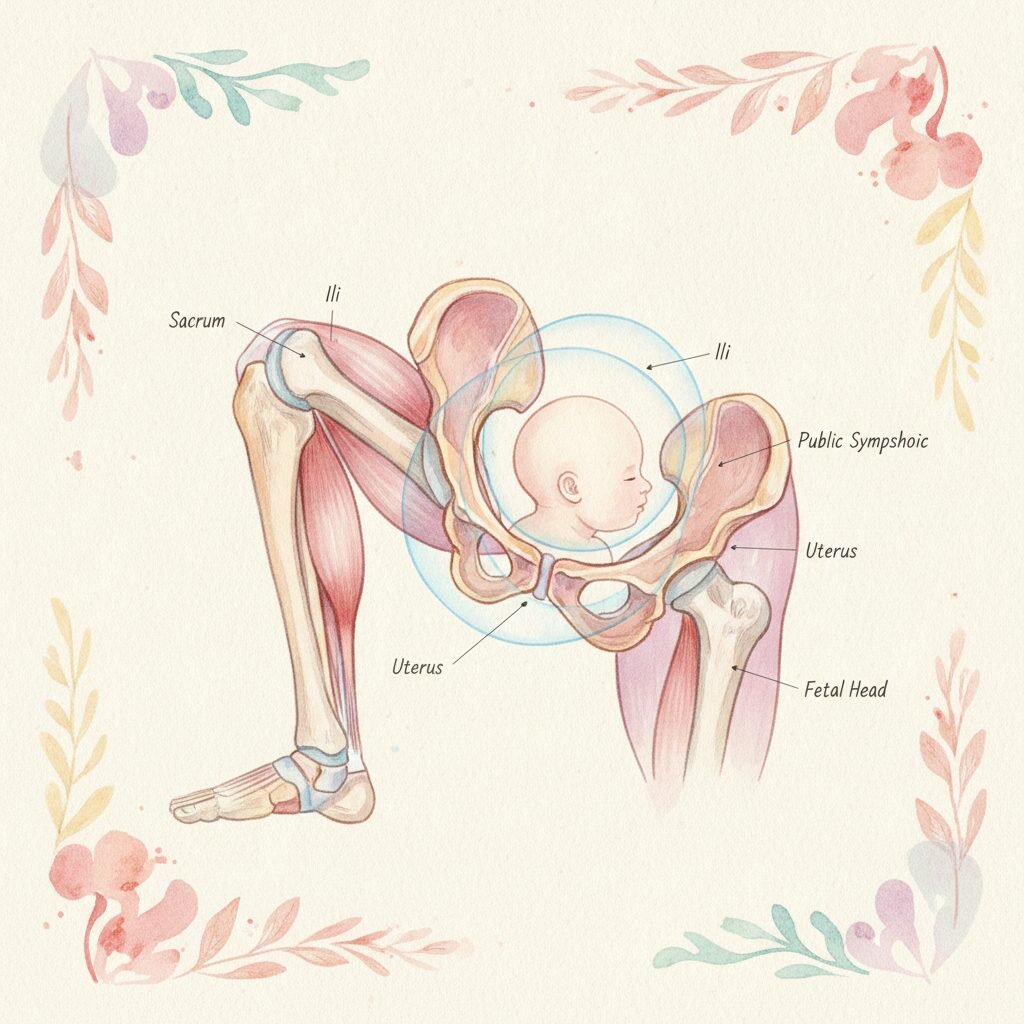
To understand why kneeling on stairs works, we first have to look at the anatomy of the female pelvis. Your pelvis is made up of several bones held together by ligaments. During pregnancy, a hormone called relaxin softens these ligaments, allowing the joints to become more mobile. However, if we stay in symmetrical positions (like standing straight or lying on our backs), we aren’t fully utilizing that newfound flexibility.
When you place one knee higher than the other—as you do on a staircase—you create an asymmetrical pelvic opening. This shift does three incredible things:
- Changes the Diameters: It shifts the shape of the pelvic inlet and outlet, often providing that extra 1-2 centimeters of space that a baby needs to tuck their chin and rotate.
- Encourages Fetal Rotation: If your baby is ‘sunny-side up’ (OP position) or slightly tilted (asynclitic), the uneven pressure of an asymmetrical kneel encourages them to rotate into the more favorable Occiput Anterior (OA) position.
- Engages the Uterus: By leaning forward while kneeling, you allow the weight of the baby to press firmly against the cervix, which can stimulate stronger, more effective contractions.
Think of it like trying to get a key into a stubborn lock; sometimes you have to jiggle it and turn it at just the right angle to get it to click. Asymmetry is that ‘jiggle’ for your labor.
The Staircase Advantage: Turning Your Home into a Labor Suite

Why the stairs? While you can do asymmetrical lunges on flat ground, the stairs provide built-in, graduated levels of support that allow you to find the exact height that feels best for your body. Plus, the handrails provide essential stability when a contraction hits.
Before you begin, let’s talk about the ‘Labor Staircase’ setup. You want to ensure your environment is safe and conducive to relaxation. Labor progresses best when the ‘thinking brain’ (neocortex) shuts down and the ‘primitive brain’ takes over. Here is how to prep your space:
- Safety First: Never practice this alone if you are feeling dizzy or if you have had an epidural. Ensure you have a partner or doula nearby.
- Grip Matters: Wear non-slip socks or go barefoot. Avoid slippery wooden stairs in regular socks.
- Padding: Keep a yoga mat or a few thick pillows nearby to cushion your knees.
- Atmosphere: Dim the lights in the hallway and perhaps play some rhythmic birthing music.
By using the stairs, you are also incorporating verticality. Gravity is your greatest ally in labor, pulling the baby down and helping the cervix dilate more efficiently than if you were horizontal.
Step-by-Step Guide: How to Safely Execute the Asymmetrical Kneel
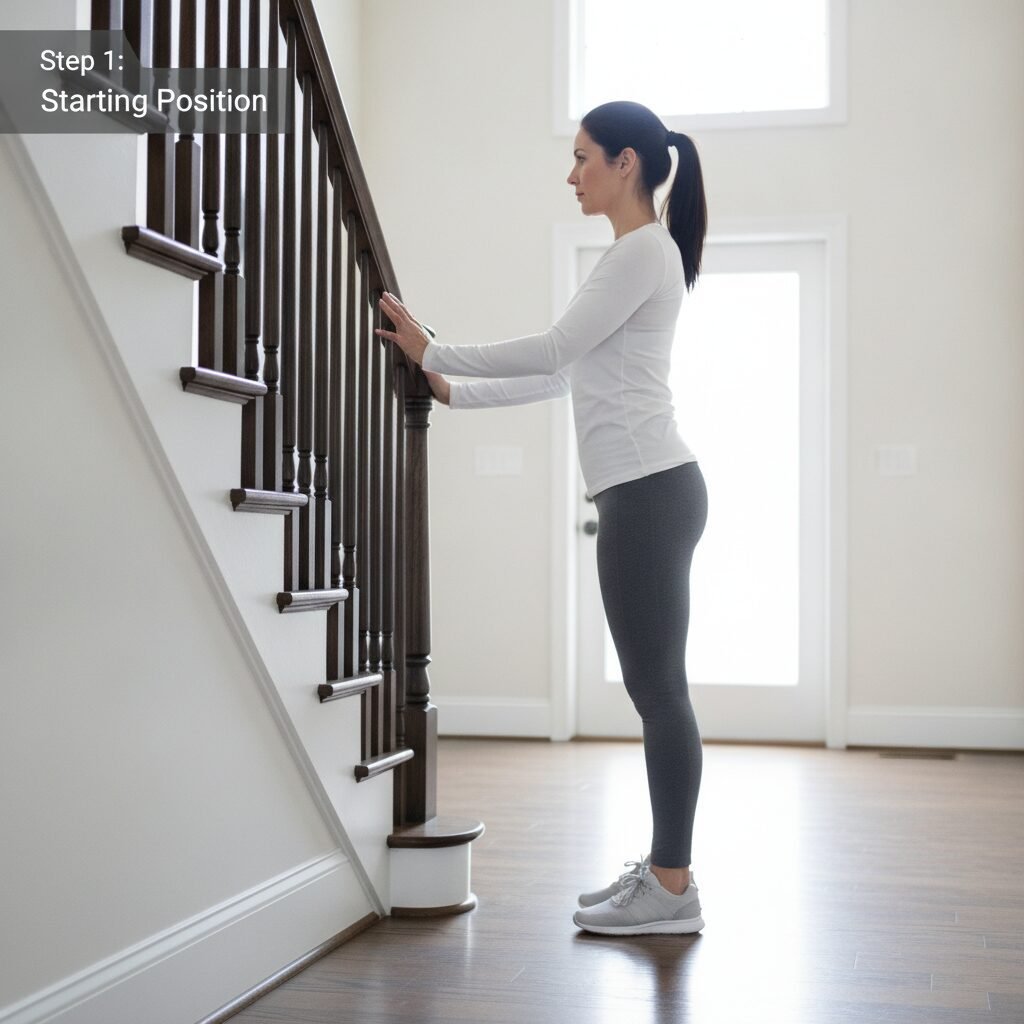
Ready to try it? This move is best utilized during active labor (when contractions are regular and intense) or if you feel your labor has plateaued. Follow these steps to ensure maximum effectiveness and safety:
- Position Your Base: Stand facing the stairs. Place your ‘lower’ knee on a plush pillow on the floor or the very first step.
- Elevate the Other Leg: Place your ‘upper’ foot or knee two steps above your base. Most women find that kneeling with the upper leg (knee on the step) feels more stable than standing on the foot.
- Lean Forward: Drape your arms over a higher step or hold onto the banisters. Allow your belly to hang heavy between your thighs. This ‘forward-leaning’ posture takes the pressure off your back (great for back labor!).
- The Gentle Sway: During a contraction, gently sway your hips from side to side or perform small pelvic circles. Imagine your pelvis opening like a blooming flower.
- Switch Sides: Every 5 to 10 contractions, or about every 20 minutes, switch which leg is elevated. This ensures you are opening both sides of the pelvic mid-plane.
“Listen to your body’s rhythm. If one side feels ‘tighter,’ spend an extra few minutes there. Your body knows how to make space for your baby; you are simply providing the opportunity.”
Timing Your Moves: Position vs. Labor Phase
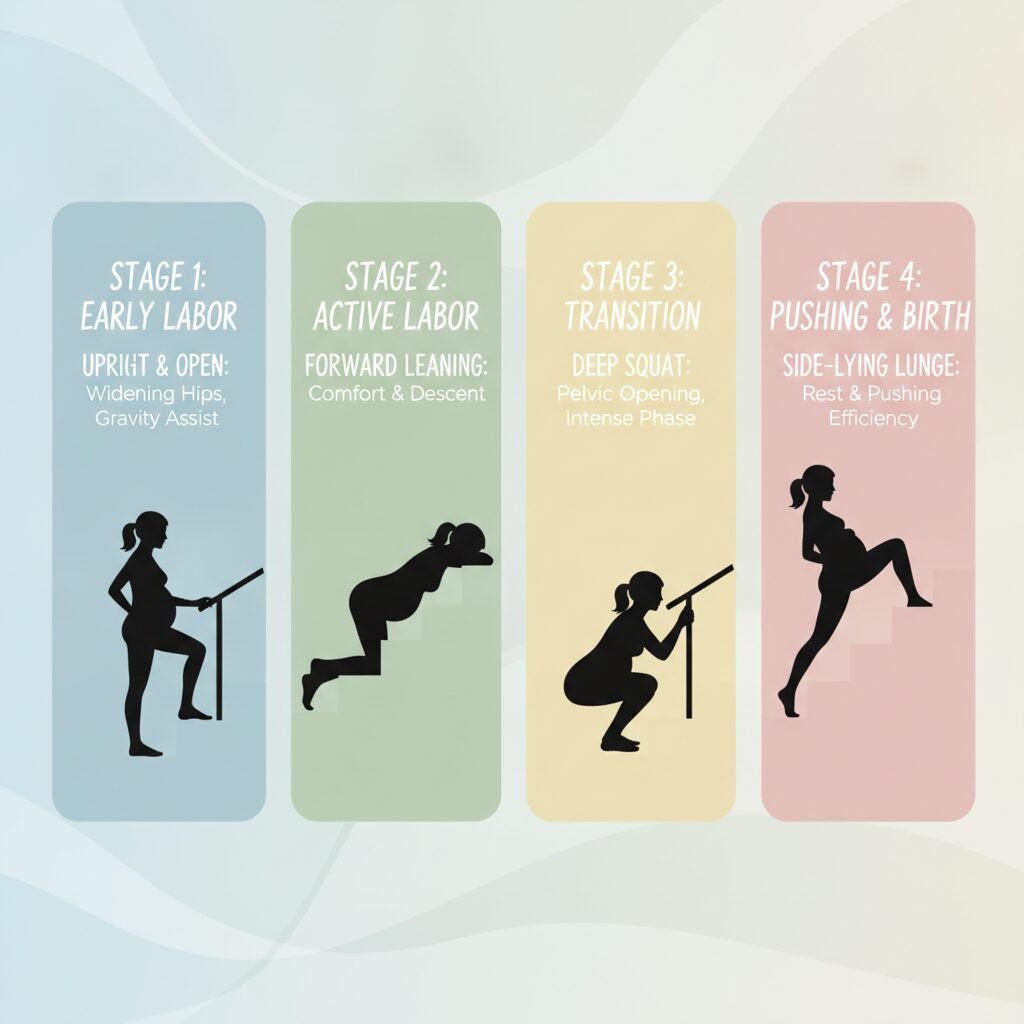
Not every position is right for every moment of labor. Using the stairs too early might tire you out, while using them too late might feel overwhelming. Use this guide to help you time your ‘stair work’ perfectly.
| Labor Phase | Goal | How to Use Stairs |
|---|---|---|
| Early Labor | Rest & Conserve Energy | Avoid the stairs. Focus on diaphragmatic breathing and ‘napping’ through contractions. |
| Active Labor (4-7cm) | Encourage Descent | Start asymmetrical kneeling. Use 10-minute intervals to keep the baby moving. |
| Transition (8-10cm) | Intense Opening | Use the stairs only if you feel an urge to move. The forward lean can help manage the ‘peak’ of intensity. |
| Stalled Labor | Restart Progress | The ‘Secret Weapon’ phase. Use the stairs for 30 minutes to change the baby’s station. |
If you feel a ‘heavy’ sensation in your rectum or an uncontrollable urge to push while on the stairs, it is time to move to your planned birthing spot! The stairs are a tool for the journey, not necessarily the destination.
Partner Support: How Your Birth Team Can Help
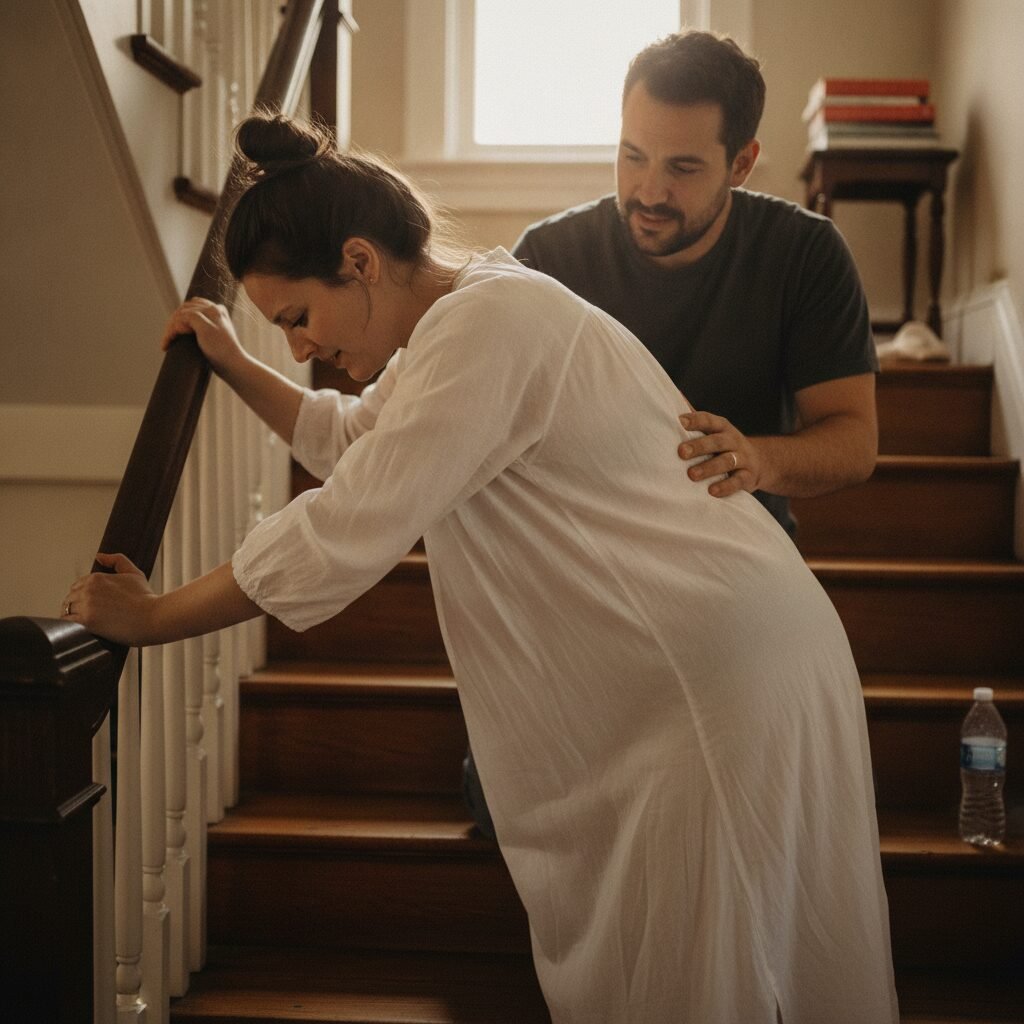
Mama, you don’t have to do this alone. Your partner or doula plays a crucial role in making the asymmetrical kneel successful. Their job is to be your ‘anchor’ so you can focus entirely on your breath and your baby.
Ways your partner can support you on the stairs:
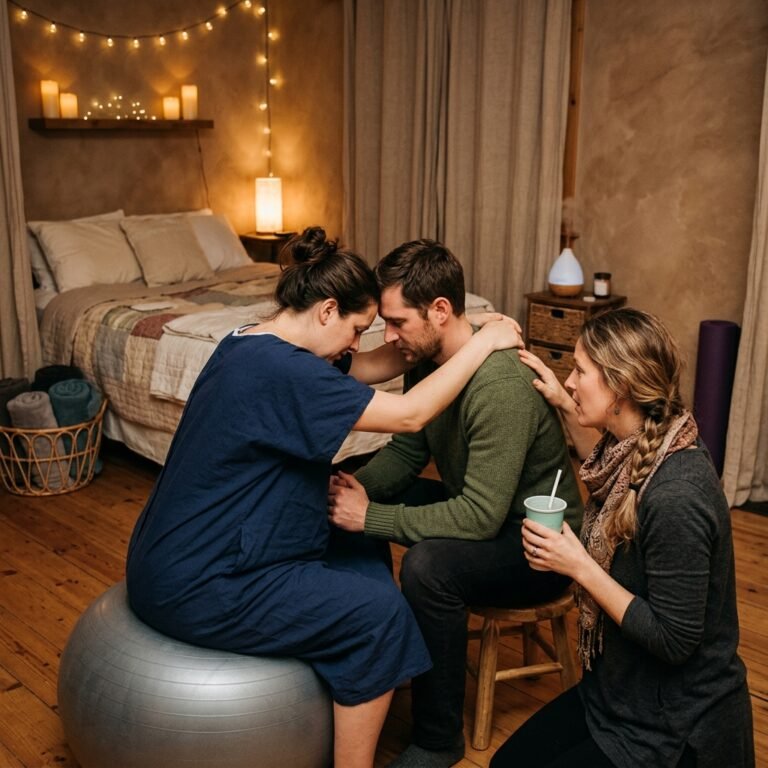
- The Counter-Pressure King/Queen: While you are kneeling and leaning forward, your partner can stand behind you and apply firm pressure to your lower back (the sacrum) during contractions. This is often described as ‘heavenly’ for relieving labor pain.
- The Physical Anchor: Your partner can stand a few steps above you, allowing you to wrap your arms around their waist or neck for support, rather than holding the banister. This ‘oxytocin-boosting’ touch can actually help speed up labor.
- Hydration Station: Between contractions, your partner should offer sips of water or coconut water. Moving on stairs is physical work!
- The Reminder: When you are deep in labor ‘land,’ you might forget to switch sides. Your partner can keep track of the time and gently suggest a side-switch to keep the pelvis balanced.
Conclusion
You Are Built for This
Labor is a profound transformation, and while it can feel overwhelming, remember that your body is designed with an ancient wisdom. Kneeling on stairs asymmetrically is not just a ‘trick’; it is a way of honoring the physical reality of how a baby moves through the world. By creating space, utilizing gravity, and embracing the power of asymmetry, you are taking an active, empowered role in your birth story.
Whether you use this technique for ten minutes or two hours, know that every sway of your hips and every breath you take is bringing you closer to holding your baby. You are strong, you are capable, and you have all the tools you need right within you (and perhaps right in your hallway). Trust the process, trust your body, and keep moving, mama. You’ve got this!