
How to Create a Home Birth Plan: A Step-by-Step Guide with a Doula
Welcome to Your Sacred Space, Mama
Hello, beautiful soul. If you are reading this, you are likely considering—or have already committed to—the transformative journey of bringing your baby into the world within the comfort of your own home. As a doula, I have seen firsthand the incredible power that comes when a mother feels safe, sovereign, and supported in her own environment. A home birth isn’t just a medical event; it is a sacred rite of passage. However, the key to a peaceful home birth isn’t just ‘going with the flow’—it is intentional preparation.
Creating a home birth plan is about more than just choosing music; it is about building a safety net and a sanctuary. We aren’t planning for a rigid ‘performance,’ but rather mapping out your preferences so that when labor takes over, your mind can rest while your body does the work. In this guide, we will walk through every layer of your home birth plan, from the practical logistics of chux pads and birth pools to the emotional nuances of your labor support team. Let’s brew a cup of tea, get cozy, and start dreaming up your perfect birth day.
Building Your Birth Sanctuary: The Physical and Emotional Environment

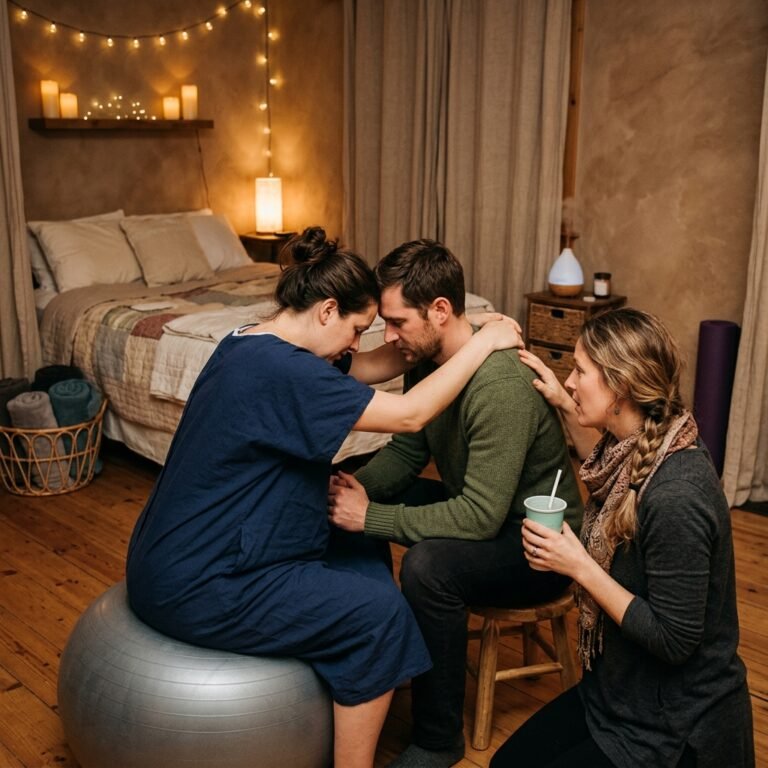
Your home is already your sanctuary, but during labor, we want to optimize it for the oxytocin flow. Oxytocin, the ‘love hormone’ that drives contractions, thrives in environments that are dark, warm, and private. When drafting this section of your plan, think about how you want your space to feel, smell, and sound.
Environmental Preferences
- Lighting: Dim lights, battery-operated candles, or fairy lights to keep the ‘thinking brain’ (neocortex) quiet.
- Temperature: Keeping the room warm (around 72-75 degrees) is vital for both you and the newborn.
- Soundscape: Do you want a specific ‘Birth Affirmations’ playlist, or do you prefer total silence?
- Privacy: Who is allowed in the room? Many mothers find that having too many observers can stall labor.
Beyond the aesthetics, you need a practical ‘Birth Station.’ This is a designated area where all your supplies live. Your midwife and doula will need easy access to these items without having to hunt through your kitchen cabinets while you are in active labor.
| Category | Essential Items | Purpose |
|---|---|---|
| The Bed | Old sheets, waterproof mattress cover, 2-3 pillows | Protection and comfort during pushing or resting. |
| The Pool | Birth pool, new garden hose, faucet adapter | Hydrotherapy for pain relief and soft landing for baby. |
| Sanitation | Chux pads (large), hydrogen peroxide, trash bags | Managing fluids and easy cleanup post-birth. |
| Personal Care | Lip balm, hair ties, honey sticks, electrolyte drinks | Maintaining energy and comfort during the marathon. |
“My home was my fortress. By planning exactly where my ‘nest’ would be, I felt a sense of control that allowed me to eventually let go and trust my body.” — A Birth Affirmation for Your Plan
The Labor Toolbox: Step-by-Step Comfort Measures

In a home birth, you are the architect of your own comfort. Without an epidural on the table, we rely on movement, water, and gravity. Your birth plan should list the specific techniques you want your doula or partner to suggest when things get intense. Remember, you don’t have to remember these steps—your team will!
Active Labor Movement Guide
Use these physical techniques to help baby navigate the pelvis:
- The Rebozo Sifting: Have your partner wrap a long woven wrap (Rebozo) under your belly while you are on all fours. They gently jiggle the cloth to relax the broad ligaments.
- The Double Hip Squeeze: During a contraction, your partner applies firm pressure to the outsides of your hips, pushing inward and slightly upward. This can significantly reduce back labor pressure.
- The Miles Circuit: A series of positions (Open Knee-Chest, Exaggerated Side-Lying, and Curb Walking) used to help a baby get into the optimal LOA (Left Occiput Anterior) position.
- Counter-Pressure: Firm, steady pressure on the lower back (sacrum) using a tennis ball or the heel of a hand.
Hydrotherapy Preferences
Water is often called the ‘midwife’s epidural.’ In your plan, specify when you’d like to enter the pool. Generally, we wait until you are at least 5-6 centimeters dilated to ensure the water relaxes you without slowing down the contractions. Do you want the shower head on your back? Do you want your partner in the tub with you? These are great details to include.
The Logistics of Safety: Your Transfer Plan
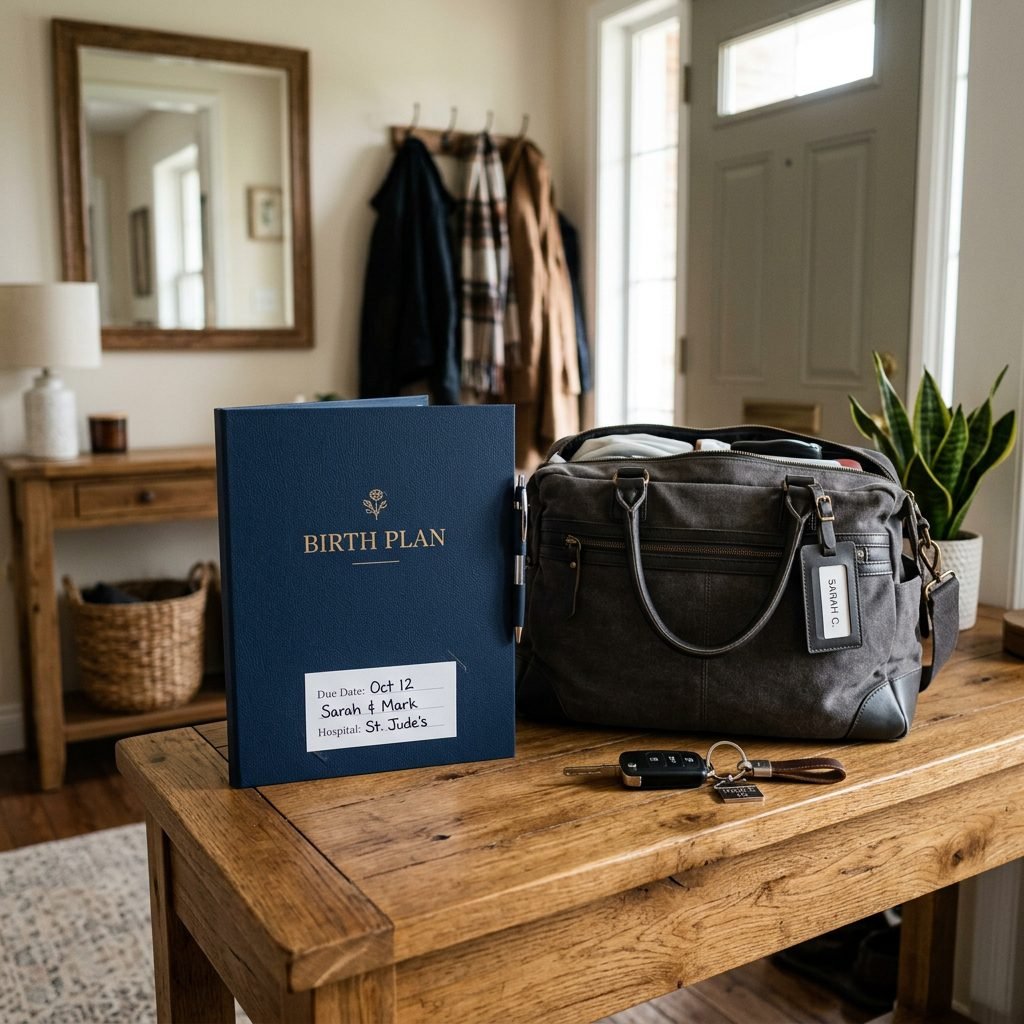
One of the most important parts of a home birth plan is the one we hope we don’t have to use: the Transfer Plan. As a doula, I tell my clients that a transfer isn’t a ‘failure’ of a home birth; it is a successful utilization of the medical system when needed. Having this written down reduces panic and ensures everyone is on the same page.
Defining the ‘Why’ and ‘How’
Your midwife is trained to spot ‘variations of normal’ before they become emergencies. Most home-to-hospital transfers are non-emergent (e.g., maternal exhaustion or a long stall). Your plan should include:
- Preferred Hospital: Which hospital is closest or has the best relationship with your midwife?
- Transportation: Who is driving? Is the car gassed up with a towel and a bowl (for nausea) ready?
- The ‘Go-Bag’: Even for a home birth, pack a small bag with insurance cards, a change of clothes, and baby’s first outfit.
| Phase | Action Item | Responsible Party |
|---|---|---|
| Decision | Clinical assessment of mother/baby vitals | Midwife |
| Communication | Call the receiving hospital to give ‘heads up’ | Midwife / Doula |
| Logistics | Gathering records and the ‘Go-Bag’ | Partner |
| Support | Continuous emotional support during transport | Doula |
Important Tip: In your plan, state clearly: ‘In the event of a transfer, I would like my doula to remain with me to provide continuity of care, and I would like to maintain as many of my original birth preferences as the clinical situation allows.’
The Golden Hour: Immediate Postpartum at Home

One of the greatest perks of a home birth is that you don’t have to go anywhere after the baby arrives. You can crawl right into your own bed. This section of your plan covers the first 2-4 hours after birth.
Newborn Care Preferences
- Delayed Cord Clamping: At home, we often wait until the cord is white and limp (usually 10-30 minutes) to ensure baby gets all their stem cells and iron-rich blood.
- Skin-to-Skin: Specify that baby should be placed directly on your chest and not removed for weighing or measuring for at least the first hour.
- Vitamin K and Eye Ointment: Do you want these administered? If so, when? Many home birth parents choose to delay these or use oral alternatives.
- The Placenta: Are you keeping it for encapsulation, burying it, or having the midwife dispose of it?
Maternal Recovery
Your doula’s role shifts here to ‘Nesting.’ In your plan, you might request that your doula prepares a ‘Postpartum Healing Plate’ (high in protein and iron) and helps you to the bathroom for your first herbal sitz bath. Pro-Tip: Have a ‘Postpartum Care Kit’ ready in your bathroom containing peri-bottles, mesh underwear, and herbal padsicles.
“The world stops in the Golden Hour. There is no beeping of monitors, only the sound of your baby’s breath and the smell of their head. Protect this time fiercely.”
Conclusion
You Are Ready, Mama
Creating a home birth plan is an act of love for yourself and your baby. It shows that you have done the work to understand your body, your options, and your boundaries. Whether your birth goes exactly as written or takes a wild, unexpected turn, the process of writing it down has already empowered you. You have assembled your team, curated your space, and prepared your heart.
Remember, your doula and midwife are your partners in this. Share this plan with them, discuss the ‘what-ifs,’ and then—when the first surge of labor begins—tuck the paper away. You won’t need to read it then. You will simply need to breathe, open, and receive. You are strong, you are capable, and you are about to do something miraculous. Welcome to the journey of home birth.