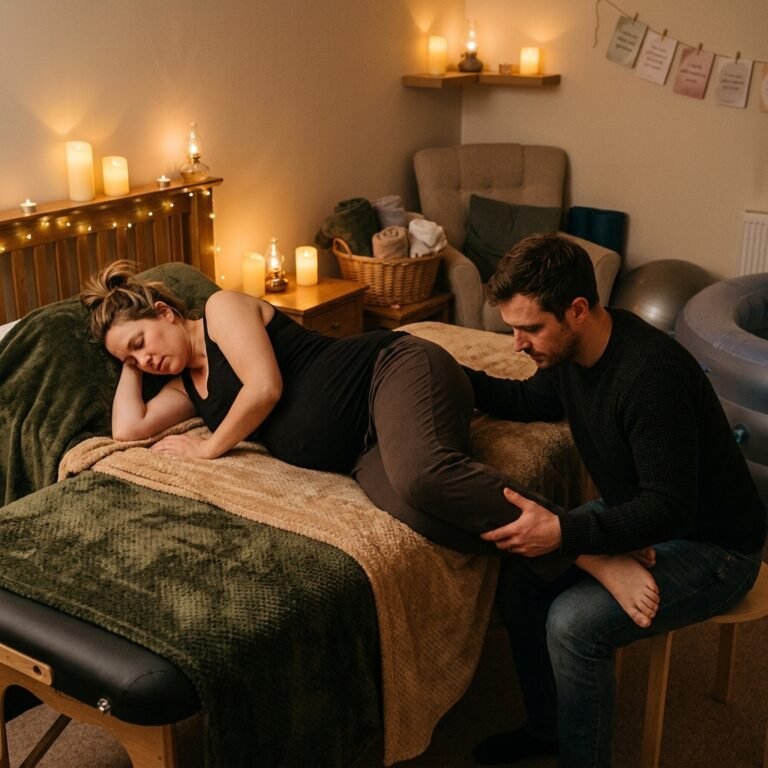
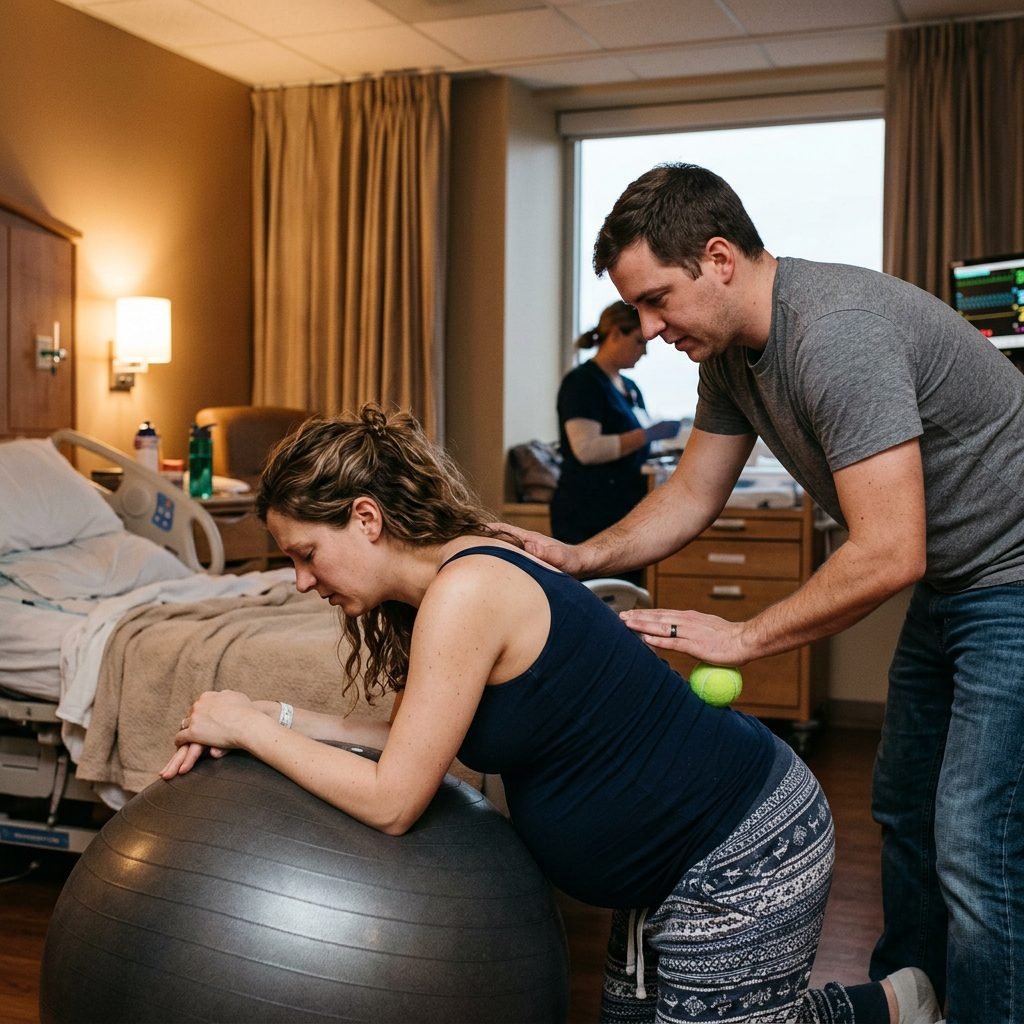
The Tennis Ball Trick: How to Use a Tennis Ball for Back Labor Relief
Hello, beautiful mama. If you are reading this, you are likely preparing for one of the most transformative days of your life: the day you meet your baby. As a doula, I know that building your birth toolkit can feel overwhelming. You might be packing your hospital bag, organizing tiny onesies, and reading up on every breathing technique under the sun. But today, I want to share one of the most effective, inexpensive, and absolute holy-grail items you can pack in your birth bag: a simple tennis ball.
If you have ever heard whispers about the dreaded back labor, you might be feeling a little anxious. Take a deep breath. You are not alone, and your body is incredibly capable. Back labor is simply intense discomfort felt in the lower back during contractions, often caused by the baby’s position in the pelvis. While it can be challenging, it is entirely manageable with the right tools and support.
Enter the tennis ball trick. This humble, fuzzy green sphere is a powerhouse when it comes to delivering targeted counter-pressure. It saves your birth partner’s hands from exhaustion while providing deep, soothing relief exactly where you need it most. Let us dive into the science of why this works, how your partner can master the technique, and the best positions to combine with this doula-approved secret weapon.
Understanding Back Labor: Why Does It Happen and How Does Counter-Pressure Help?
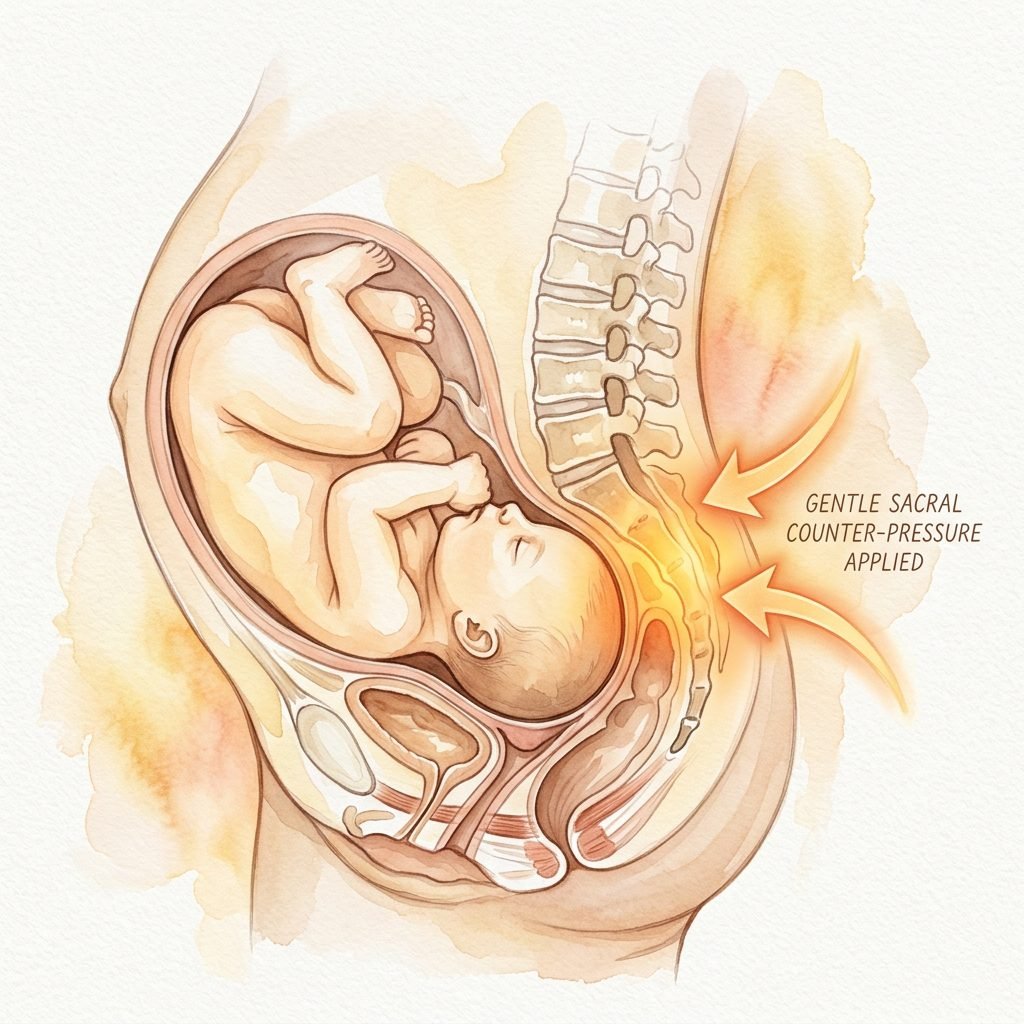
Before we learn how to use the tool, let us understand what is happening in your amazing body. Back labor typically occurs when your baby is in an Occiput Posterior (OP) position, affectionately known in the birth world as sunny-side up. Instead of facing your spine, the baby is facing your belly. This means the hardest part of your baby’s skull is pressing directly against your sacrum (the triangular bone at the base of your spine) during every contraction.
The Gate Control Theory of Pain
So, why does pressing a tennis ball into your back make the pain go away? It comes down to a fascinating physiological concept called the Gate Control Theory of Pain. Your nervous system can only process a certain amount of sensory information at one time. When your partner applies strong, firm pressure to your lower back using a tennis ball, those pressure signals race to your brain faster than the pain signals from the contraction. In essence, the deep pressure closes the gate on the pain.
Furthermore, counter-pressure helps physically lift the baby’s head slightly off your sacral nerves, providing immediate, mechanical relief. It is not just a distraction; it is a physical intervention that helps your body cope and encourages the baby to rotate into a more optimal position.
The Tennis Ball Trick: Step-by-Step Instructions for Birth Partners

Birth partners, this section is for you! When you are in the delivery room, you might feel helpless watching the person you love work through intense contractions. The tennis ball gives you a tangible, incredibly important job. You become the anchor. Here is exactly how to execute the tennis ball massage for maximum relief without exhausting your own arms.
- Locate the Sacrum: Do not press on the spine itself! You are looking for the sacrum, the flat, triangular bone just above the tailbone and between the dimples of the lower back. This is your target zone.
- Wait for the Contraction to Build: As the mother signals that a contraction is starting, place the tennis ball firmly against the sacrum.
- Use Your Body Weight, Not Your Arms: This is vital for your stamina. Do not just use your arm muscles to push. Lock your elbows slightly and lean your body weight into the ball. Let gravity do the work.
- Apply Sustained Pressure or Small Circles: Depending on what she prefers, either hold the ball completely still with deep pressure, or make very small, slow, deep circles.
- Release Slowly: As the contraction fades, do not just drop the ball. Slowly release the pressure, keeping your hands on her back for reassuring, warm touch.
Partner Script: During labor, she may not be able to speak in full sentences. Establish a code beforehand. Ask her, ‘Higher, lower, harder, or softer?’ Let her answer with one word. If she says nothing, keep doing exactly what you are doing.
Maximizing Relief: Best Labor Positions for Tennis Ball Massage

Counter-pressure works best when the mother’s pelvis is open, mobile, and accessible to her partner. Lying flat on your back is not only counterproductive for an OP baby, but it also makes it impossible for your partner to reach your sacrum. Here are the best, doula-recommended positions to pair with the tennis ball trick.
Hands and Knees (All Fours)
This is the gold standard for back labor. Being on all fours allows gravity to pull the baby away from your spine, providing instant relief. It also gives your partner wide-open access to your lower back. You can do this on the hospital bed with the head raised, or on a yoga mat on the floor.
Forward-Leaning / Slow Dancing
Stand up and wrap your arms around your partner’s neck, swaying slowly. Your partner can hold you with one arm while using their other hand to press the tennis ball into your lower back. This upright position uses gravity to help the baby descend while keeping you grounded.
| Labor Phase | Recommended Position | Tennis Ball Technique |
|---|---|---|
| Early Labor (0-6cm) | Slow Dancing / Standing | Gentle rolling massage across the lower back and hips between contractions. |
| Active Labor (6-8cm) | Hands and Knees (All Fours) | Firm, sustained counter-pressure directly on the sacrum during the peak of contractions. |
| Transition (8-10cm) | Side-Lying with Peanut Ball | Intense, targeted pressure on the hips and lower back; partner uses full body weight. |
Advanced Doula Hacks: Taking Your Tennis Ball Tool to the Next Level

Ready to upgrade your birth toolkit? While a single tennis ball is fantastic, experienced doulas have a few extra tricks up their sleeves to make this technique even more effective and luxurious for the laboring mother. Let us look at how you can customize this tool for ultimate comfort.
The Double Tennis Ball Sock Trick
This is my absolute favorite hack. Take two clean tennis balls and slip them inside a long, soft tube sock. Tie a knot tightly at the open end so the balls are held securely together, side-by-side. This creates a peanut shape. Your partner can place this horizontally across your lower back, positioning the dip between the two balls directly over your spine. This allows them to apply massive pressure to the muscles and bones on both sides of your spine simultaneously, without ever putting dangerous pressure on the spinal column itself.
Temperature and Aromatherapy Upgrades
- The Frozen Ball: In the weeks leading up to your due date, keep your tennis balls in the freezer. The intense cold combined with deep pressure can feel like absolute heaven on inflamed, overworked lower back muscles.
- The Heated Sock: If you prefer warmth, pack an electric heating pad in your hospital bag. Wrap the heating pad over the tennis ball sock between contractions to keep the muscles loose and relaxed.
- Aromatherapy: Place a few drops of pregnancy-safe essential oils, like lavender or clary sage, directly onto the fabric of the sock. As your partner massages your back, the calming scent will waft up, helping to lower your heart rate and keep you grounded.
Conclusion
Mama, as you pack your bags and prepare your mind for labor, remember that you were built for this. Back labor can sound intimidating, but with knowledge, preparation, and a simple tennis ball, you and your birth partner are equipped to handle whatever this journey brings. You are stepping into a powerful transition, and every contraction is bringing you one step closer to holding your sweet baby.
Birth Affirmation: My body knows exactly what to do. I am safe, I am supported, and I can handle anything for one minute at a time. I am softening, opening, and releasing.
Take this time to practice these techniques with your partner at home. Communication and teamwork are the true secrets to a beautiful birth experience. You have got this, and we are all cheering you on as you step into this beautiful new chapter of motherhood.