

The 4-7-8 Breathing Technique: How to Breathe Through Active Labor Contractions Without Panic
Finding Your Anchor in the Storm of Labor
Hello, sweet mama. If you are reading this, you are likely preparing for one of the most transformative experiences of your life. As a doula, I have stood by the bedside of many women as they navigate the powerful waves of active labor. One of the biggest fears I hear is the fear of losing control—that moment when the intensity of a contraction becomes so great that panic starts to set in. When panic takes over, your muscles tighten, your heart rate climbs, and the pain can feel exponentially more overwhelming. This is where the 4-7-8 breathing technique becomes your ultimate anchor.
Originally popularized by Dr. Andrew Weil, this rhythmic breathing pattern is often called a ‘natural tranquilizer for the nervous system.’ In the context of labor, it serves as a bridge between your mind and your body, allowing you to move with the contraction rather than fighting against it. In this guide, we are going to walk through exactly how to master this technique, why it works physiologically, and how to adapt it for the different stages of your birthing journey. Take a deep breath with me now—you’ve got this, and you are stronger than you know.
The Science of the Sigh: Why Your Nervous System Needs 4-7-8
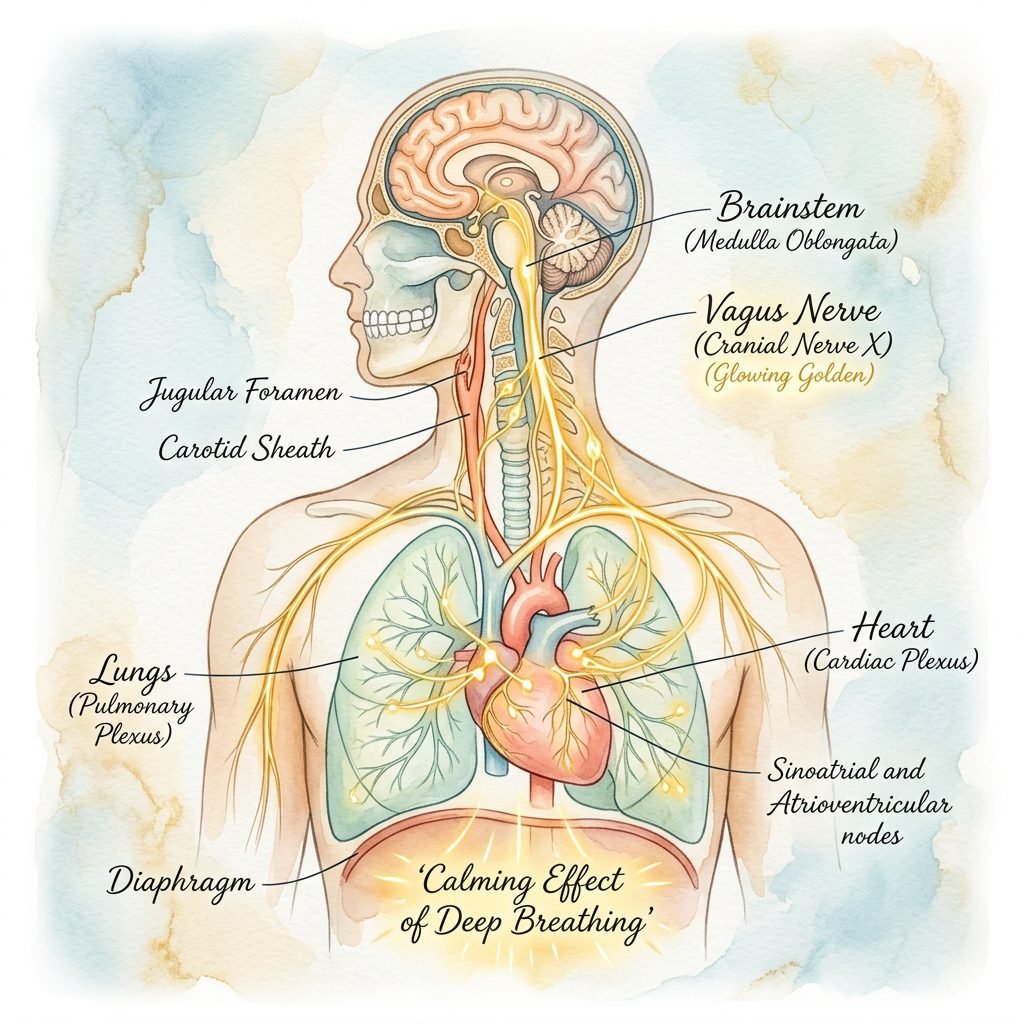
To understand why the 4-7-8 method is so effective during active labor, we have to look at the Autonomic Nervous System (ANS). When a contraction hits, your body’s natural ‘fight or flight’ response (the sympathetic nervous system) often kicks in. This causes your body to flood with cortisol and adrenaline, which can actually slow down labor by inhibiting oxytocin—the very hormone you need to progress.
By consciously slowing your breath and focusing on a specific count, you activate the Parasympathetic Nervous System, also known as the ‘rest and digest’ or ‘calm and connect’ system. Here is what is happening inside your body when you use this technique:
- Vagus Nerve Stimulation: The deep, rhythmic inhale and the prolonged exhale stimulate the vagus nerve, which sends a signal to your brain that you are safe, even in the midst of physical intensity.
- Carbon Dioxide Regulation: The specific counts help balance the ratio of oxygen and carbon dioxide in your blood, preventing the lightheadedness and tingling that often come with the rapid, shallow breathing of panic.
- Muscle Oxygenation: Rhythmic breathing ensures that your uterus—which is a massive muscle working incredibly hard—receives a steady supply of oxygenated blood, helping it function more efficiently and with less cramp-like pain.
Your breath is the bridge that connects your conscious mind to your subconscious strength. When the waves get high, let the breath be your boat.
Mastering the Rhythm: A Step-by-Step Guide to the 4-7-8 Method
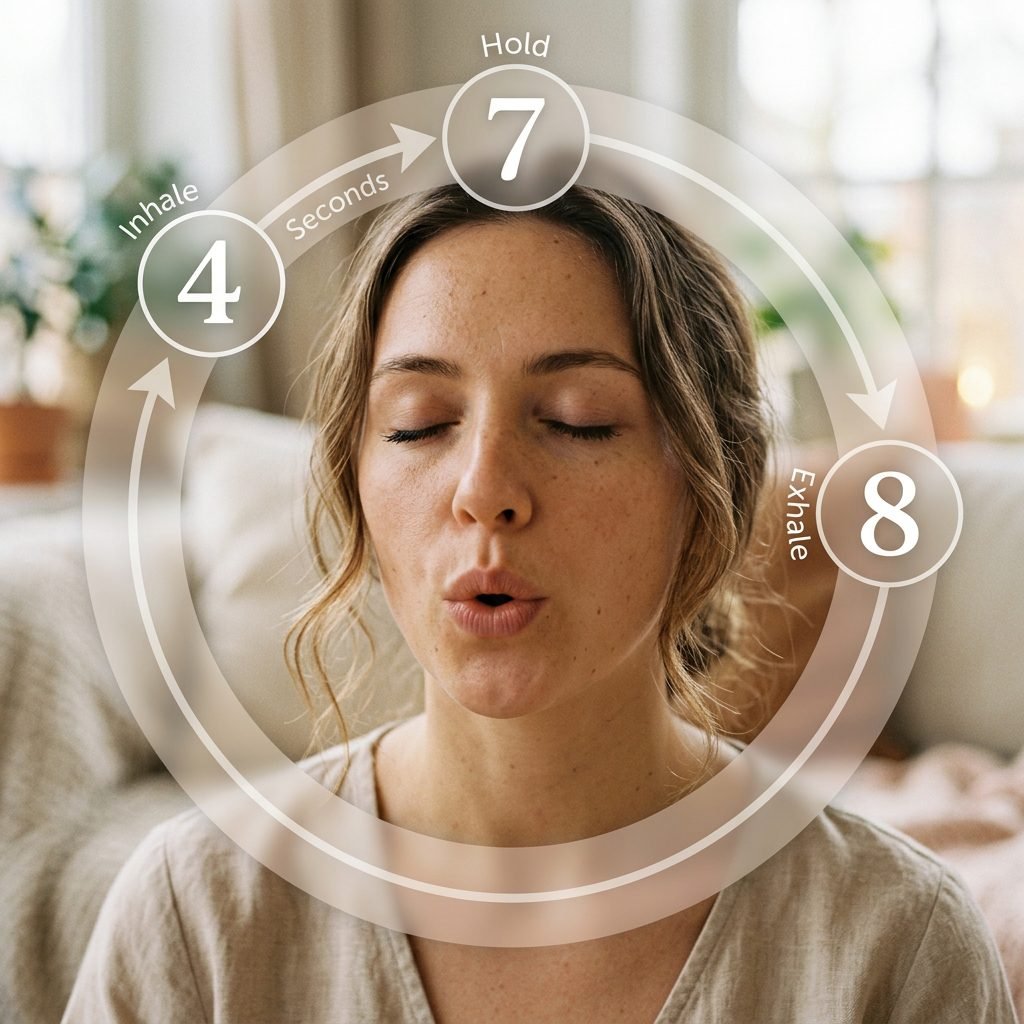
Ideally, you should start practicing this technique weeks before your due date so it becomes second nature. During the heat of active labor, you don’t want to be ‘learning’—you want to be ‘remembering.’ Follow these steps to practice the 4-7-8 rhythm:
- The Preparation: Place the tip of your tongue against the ridge of tissue just behind your upper front teeth and keep it there throughout the entire exercise. You will be exhaling through your mouth around your tongue.
- The Inhale (4 Seconds): Close your mouth and inhale quietly through your nose to a mental count of 4. Focus on filling your belly, not just your chest.
- The Hold (7 Seconds): Hold your breath for a count of 7. This is the most critical part for calming the nervous system, but during labor, if 7 seconds feels too long, you can shorten it to 3 or 4—the goal is the pause, not the strain.
- The Exhale (8 Seconds): Exhale completely through your mouth, making a ‘whoosh’ sound to a count of 8. This long, audible exhale is what releases the tension from your jaw and pelvic floor.
Repeat the cycle for 4 full breaths. In labor, you will time these cycles to the duration of a contraction, usually starting as the wave builds and continuing until it crests and fades.
When the Waves Get High: Adapting 4-7-8 for Active Labor & Transition

Active labor is defined by contractions that are longer, stronger, and closer together (usually 45 to 60 seconds long). This is the phase where many mothers begin to feel the ‘work’ of labor. The 4-7-8 technique is your best friend here, but it needs to be flexible.
Adapting for the Peak
When a contraction reaches its peak, holding your breath for 7 seconds might feel impossible or even counter-intuitive. Listen to your body. If the ‘hold’ phase feels like it’s creating tension rather than releasing it, transition into a 4-0-8 rhythm (inhale for 4, exhale for 8). The most important element is that the exhale is twice as long as the inhale.
The Transition Phase
Transition is the shortest but most intense part of labor. You might feel shaky, nauseated, or like you ‘can’t do this anymore.’ During transition, your breathing might naturally speed up. Use the 4-7-8 count as a ‘reset.’ Between contractions, use one full cycle of 4-7-8 to bring your heart rate down and clear the mental fog before the next wave begins.
| Labor Phase | Breathing Focus | Internal Mantra |
|---|---|---|
| Early Labor | Natural, easy 4-7-8 cycles | ‘I am soft, I am open.’ |
| Active Labor | Deep 4-7-8, focusing on the 8-count ‘whoosh’ | ‘This breath, this moment.’ |
| Transition | Shortened 4-4-8 or ‘reset’ breaths | ‘I am almost there.’ |
| Pushing | Directed breath (not 4-7-8) | ‘Down and out.’ |
The Doula’s Secret: Partner Cues and Environmental Anchors

Mama, you don’t have to do the counting alone. In fact, when the contractions are at their most intense, you might find it hard to keep track of numbers. This is where your birth partner or doula comes in. Their role is to be your external metronome.
How Your Partner Can Help:
- Verbal Counting: Have your partner whisper the counts into your ear: ‘In, 2, 3, 4… Hold, 2, 3… Out, 2, 3, 4, 5, 6, 7, 8.’
- Physical Touch: Your partner can place a hand on your shoulder or lower back. On the exhale, they can apply gentle downward pressure, reminding your muscles to melt toward the floor.
- Eye Contact: If you feel panic rising, open your eyes and find your partner’s gaze. Have them breathe with you. Their calm, steady breath will help regulate yours through ‘mirror neurons.’
Pro-Tip for the Birth Room: Use sensory anchors to support your breathing. A specific essential oil (like lavender or frankincense) can be inhaled during the ‘4’ count, creating a sensory association between the scent and the feeling of relaxation.
Beyond the Breath: Combining 4-7-8 with Labor Positions

Breathing is powerful, but when combined with gravity-positive positions, it becomes a superpower. Using the 4-7-8 technique while in a position that opens the pelvis can significantly reduce the duration of active labor. Here is a guide on how to pair your breath with movement:
| Position | Why it Works | Breathing Tip |
|---|---|---|
| Hands and Knees | Relieves back pain and helps baby rotate. | Let your belly hang heavy and fill it completely on the 4-count. |
| Supported Squat | Uses gravity to help baby descend. | Focus on the 8-count exhale to relax the pelvic floor muscles. |
| Side-Lying | Great for resting while keeping labor moving. | Use a peanut ball between legs to keep the pelvis open. |
| Leaning on Partner | Provides emotional support and physical relief. | Sway your hips rhythmically to the 4-7-8 count. |
Remember, movement is medicine. If you feel stuck or if the breathing starts to feel less effective, change your position. Often, a new physical orientation will help you find a new rhythm with your breath.
Troubleshooting the Panic: What to Do When You Lose Your Rhythm

It happens to the best of us, mama. There may come a point where a contraction catches you off guard, or the intensity jumps a level, and suddenly you are panting, your shoulders are at your ears, and you feel the ‘panic wall.’ This is not failure; it is just a moment to reset.
When you lose your rhythm, try the ‘Horse Lips’ trick. Instead of a controlled 8-second exhale, blow out through your lips so they vibrate (like a horse). It is physically impossible to keep a tight jaw or a tight pelvic floor while doing horse lips. Once you’ve ‘blown off’ the peak of that panic, return to the 4-7-8 count.
If you lose your breath, don’t judge yourself. Just find the next inhale. Every breath is a new chance to start again.
Your doula or nurse might also use a technique called ‘matching.’ They will breathe loudly and visibly near you, inviting you to match their pace until you can regain your own 4-7-8 rhythm. Trust the people around you to hold the space when you feel like you can’t.
Conclusion
You Are Your Own Best Resource
The 4-7-8 breathing technique is more than just a labor tool; it is a reminder that you have an internal system designed to handle the intensity of birth. By practicing this rhythm, you are training your body to stay soft when things get hard, and to stay present when things get loud. Whether you are planning an unmedicated birth, an induction, or are keeping your options open for an epidural, breath is the foundation of your experience.
As you move closer to your ‘guess date,’ take five minutes every night to sit in your nursery or a quiet corner and practice your 4-7-8 cycles. Visualize your baby moving down, visualize your body opening like a flower, and feel the power of your own lungs. You are doing an incredible job, and soon, that very first breath your baby takes will be the most beautiful sound you’ve ever heard. You’ve got this, mama!