

The Forward Leaning Inversion: Your Daily Exercise for a Faster, Easier Labor
Hello, lovely mama. Grab a cup of red raspberry leaf tea and sit with me for a moment. As your doula, I have walked beside many women on their journey to motherhood, and if there is one thing I have learned, it is that your body is an absolute masterpiece of engineering. However, even the most perfect machines sometimes need a little fine-tuning. In our modern world, we spend a lot of time sitting in car seats, lounging on soft sofas, and hunching over computers. While comfortable, these habits can lead to tight ligaments and a pelvis that is slightly out of balance. This is where the Forward Leaning Inversion (FLI) comes in. It is often called the ‘doula’s secret weapon’ for a reason. By gently using gravity to create space in the lower segment of your uterus, you are essentially giving your baby a ‘reset’ button, allowing them to find the most optimal position for birth. When baby is positioned correctly—ideally head down and facing your back—labor tends to progress more smoothly, with less intense back pain and a shorter pushing stage. In this guide, we are going to dive deep into why this exercise is a game-changer, how to do it safely with a partner, and how to integrate it into your daily rhythm during those final weeks of pregnancy. You are doing an incredible job, and I am so excited to share this simple, transformative tool with you.
The Science of Space: How Inversions Soften Your Ligaments
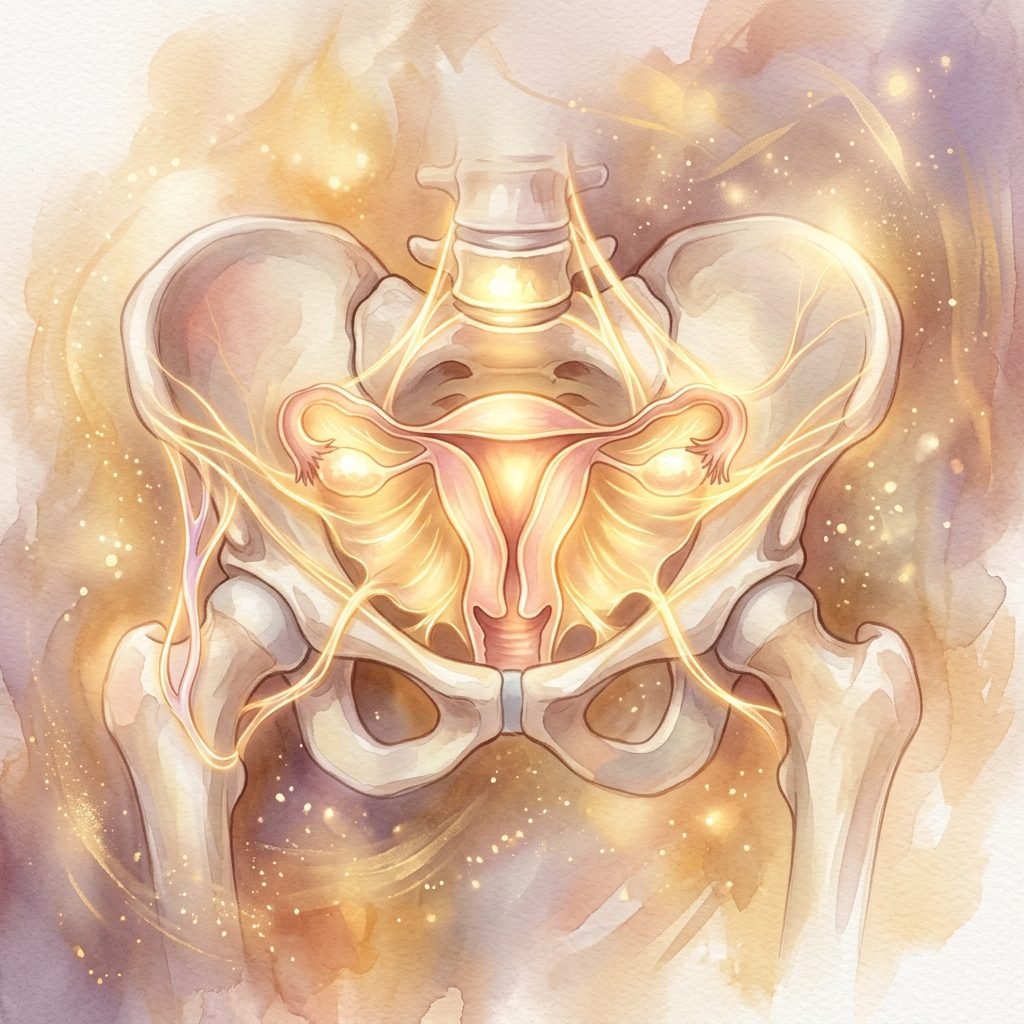
To understand why being upside down for thirty seconds can change your entire birth experience, we have to look at the anatomy of the pregnant uterus. Your uterus is not just floating freely in your abdomen; it is held in place by a series of ‘guy-wires’ known as ligaments. The most important ones for our discussion are the uterosacral ligaments, which attach the back of the uterus to the sacrum, and the round ligaments, which pull forward. When these ligaments become tight or asymmetrical—often from long periods of sitting or pelvic misalignment—they can act like a tight corset around your baby. This ‘tightness’ can prevent the baby from tucking their chin or rotating into the Occiput Anterior (OA) position.
The Forward Leaning Inversion works through a principle known as ‘the rebound.’ When you go upside down, the weight of the uterus pulls on those tight ligaments, giving them a gentle stretch. But the real magic happens when you come back up to a kneeling position. As you return to an upright state, those ligaments suddenly relax and soften. This creates a momentary window of maximum space and ‘give’ in the lower uterine segment. It is during this rebound that babies often take the opportunity to wiggle into a better spot. As your doula-expert, I often tell my clients to think of it as fluffing a pillow; you’re making the ‘nest’ more accommodating so your little one can settle in perfectly. This isn’t just about comfort; it is about fetal positioning. A baby who is well-positioned puts even pressure on the cervix, which helps it dilate more efficiently. This can be the difference between a 24-hour labor and a much swifter experience.
Master the Move: A Step-by-Step Guide to the Forward Leaning Inversion

Performing the Forward Leaning Inversion is simple, but it requires mindfulness and, ideally, a helping hand. You can use the edge of a sturdy couch, a bed, or even a staircase. The goal is to have your knees on the elevated surface and your hands on the floor, creating a gentle slope. Here is exactly how to do it safely:
- Setup: Ensure you are on a non-slip surface. Have your partner stand beside you to offer stability and a steadying hand on your shoulder or hip.
- Kneel: Kneel on the very edge of the couch or the second or third step of a staircase. Your knees should be about hip-width apart.
- The Descent: Slowly walk your hands down to the floor. Do not ‘drop’ down. Lower yourself one hand at a time until your forearms or palms are flat on the ground. Your head should hang freely, and your chin should be slightly tucked.
- The Hold: Stay in this position for only 30 seconds, or about three deep, diaphragmatic breaths. Focus on relaxing your belly and letting your jaw go slack (a relaxed jaw means a relaxed pelvic floor!).
- The Ascent: This is the most critical part for safety. Use your hands to walk yourself back up to a kneeling position on the couch. Do not jump or stand up immediately.
- The Rebound: Stay in a high-kneeling position (on your knees, chest upright) for at least three more breaths. This allows your blood pressure to stabilize and gives those ligaments the chance to ‘rebound’ and soften.
“Remember, mama: this isn’t a gymnastics meet. It’s a gentle conversation with your body. If you feel any sharp pain or extreme pressure, listen to your intuition and slowly come back up.”
Safety and Contraindications: When to Skip the Inversion

While the FLI is a wonderful tool for many, it is not a ‘one-size-fits-all’ exercise. Because it involves changing your center of gravity and increasing pressure in the head, there are several conditions where you should avoid this move. As a doula, I always prioritize the safety of both you and your baby. If you have any history of high blood pressure or preeclampsia, the increased pressure from being upside down can be dangerous. Similarly, if you have been diagnosed with glaucoma or have a high risk of stroke, this exercise is off-limits. We also want to be cautious if you have an excessive amount of amniotic fluid (polyhydramnios), as the baby could potentially flip into a breech position if they have too much room to move.
Below is a quick reference guide to help you decide if today is a good day for an inversion. If you are ever in doubt, please consult your midwife or OB-GYN before attempting this move.
| Condition | Status | Why? |
|---|---|---|
| Normal, healthy pregnancy | Safe | Helps with fetal positioning and pelvic balance. |
| High Blood Pressure / Preeclampsia | Avoid | Increases cranial pressure and risk of complications. |
| Severe Heartburn / GERD | Caution | Gravity can cause stomach acid to rise; use with care. |
| Glaucoma or Eye Issues | Avoid | Increases intraocular pressure. |
| Baby is already in a great position | Safe | Helps maintain that position and balances ligaments. |
| Immediately after a meal | Avoid | Wait at least 30-60 minutes to prevent indigestion. |
The Partner’s Role: Support, Stability, and Connection

Mama, you don’t have to do this alone. In fact, having your partner involved makes the Forward Leaning Inversion safer and more emotionally grounding. For the partner, this is a beautiful way to actively participate in the birth preparation process. Your job is to be the ‘anchor.’ Stand right next to her as she kneels on the couch. Offer a firm hand on her shoulder or upper arm as she lowers herself down. This isn’t just about physical support; it’s about providing a sense of security so she can truly let go and relax her pelvic muscles.
During the 30 seconds she is inverted, you can offer gentle affirmations. Remind her to breathe into her back and to let her belly be heavy. When she is ready to come up, be there to help her walk her hands back. Once she is in the high-kneeling ‘rebound’ position, stay close. Some women feel a bit lightheaded when they first come up, so your steady presence is vital. This daily ritual—taking just a minute or two together—builds the teamwork and trust you will rely on during active labor. It is a moment of quiet connection before the beautiful chaos of birth begins.
Beyond the Inversion: A Matrix of Pelvic Balancing Exercises
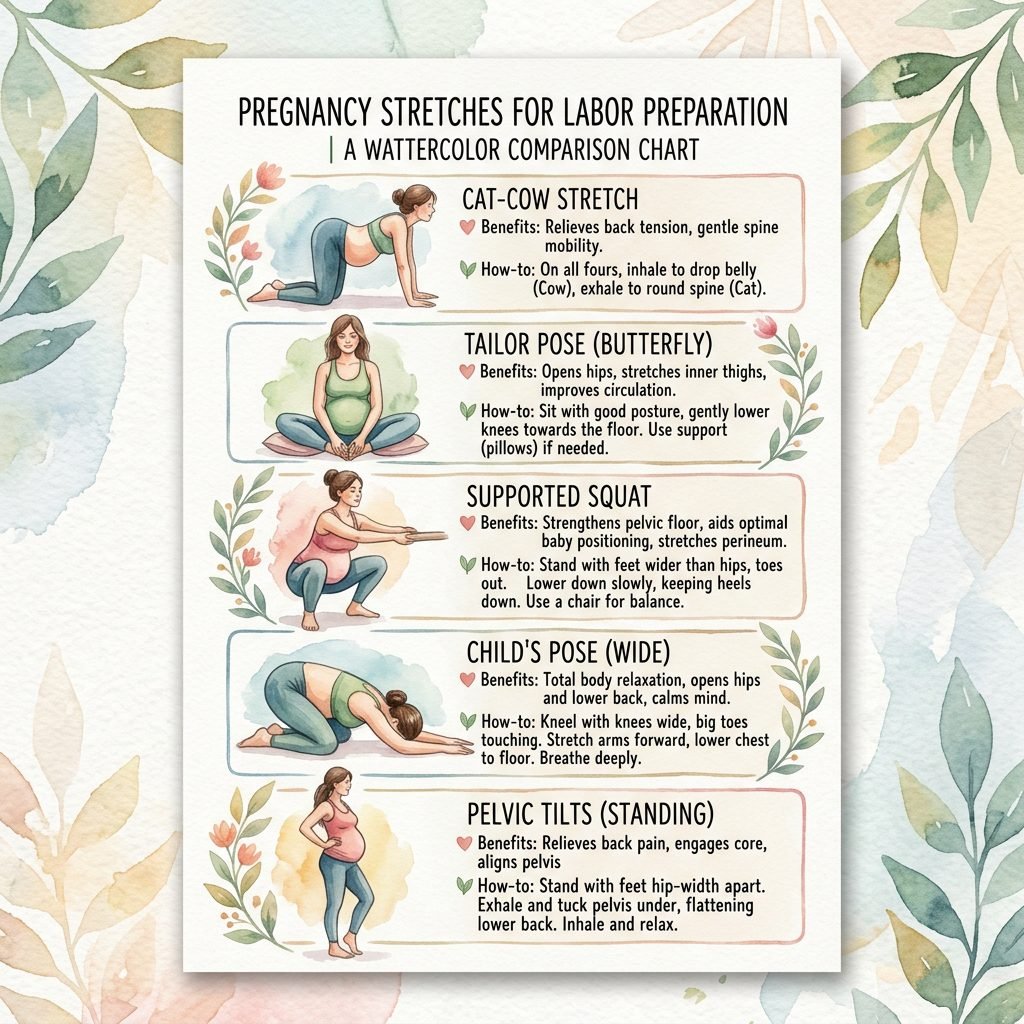
While the FLI is powerful, it works best when part of a holistic approach to pelvic balancing. As your maternal wellness companion, I recommend pairing it with other gentle movements like the Side-Lying Release or Rebozo sifting. The goal is balance. Think of your pelvis as a bowl; we want that bowl to be level and the muscles surrounding it to be supple. If you are experiencing ‘back labor’ (where you feel the contractions mostly in your spine), it often means baby is ‘sunny-side up’ (OP position). Using a combination of these techniques can help encourage that baby to rotate.
Refer to this table to see how the Forward Leaning Inversion fits into a larger labor-prep routine:
| Technique | Benefit | Frequency |
|---|---|---|
| Forward Leaning Inversion | Stretches uterosacral ligaments; creates lower uterine space. | Once daily for 30 seconds. |
| Side-Lying Release | Balances the pelvic floor muscles and deep rotators. | 2-3 times per week. |
| Pelvic Tilts (Cat/Cow) | Relieves lower back pressure and encourages baby to move off the spine. | 10-20 repetitions daily. |
| Rebozo Sifting | Relaxes abdominal fascia and helps ‘shake’ baby into position. | Daily, or during early labor. |
| Daily Walking | Uses gravity and movement to help the head engage in the pelvis. | 20-30 minutes daily. |
The Doula’s Daily Routine: Integrating FLI into Your Third Trimester

Consistency is key, sweet mama. Doing one inversion won’t magically solve a long-term pelvic misalignment, but doing it every day can create lasting change. I suggest making it part of your ‘winding down’ routine in the evening, or perhaps right before you start your morning stretches. Most doulas and midwives recommend starting the Forward Leaning Inversion around 30 to 34 weeks of pregnancy. This gives you plenty of time to encourage the baby into a head-down, anterior position before they get too big and snug in the pelvis.
If you are already in the home stretch—say, 38 or 39 weeks—don’t worry! It is never too late to start. Even doing this exercise during early labor can help if the baby is having trouble navigating the pelvic brim. Just remember the ‘Rule of Three’: three breaths down, and three breaths in the high-kneel rebound. If you find yourself getting dizzy, shorten the time. If you feel great, stay for the full 30 seconds. You are the expert on your own body. Trust the sensations you feel, and know that every time you do this, you are actively participating in a smoother, more empowered birth story.
Conclusion
You have taken such a wonderful step today by learning how to support your body’s natural wisdom. The Forward Leaning Inversion is more than just an exercise; it is an act of love and preparation for both you and your baby. By creating space, softening ligaments, and finding balance, you are setting the stage for a birth experience where you can feel more in control and physically capable. As you move into these final weeks, keep listening to that beautiful intuition of yours. You are strong, you are capable, and you are already the most incredible mother to your little one. I am cheering you on every step of the way. Go forth with confidence, breathe deep, and enjoy the ‘rebound’!