

How to Use Guided Visualization Techniques for Natural Labor Pain Relief
Welcome to Your Inner Sanctuary, Mama
Hello, beautiful soul. If you are reading this, you are likely preparing for one of the most transformative journeys of your life: the birth of your baby. As a doula, I have sat beside many bedsides, holding hands and witnessing the incredible power of the human spirit. One of the most profound tools I have ever seen—and one that is backed by both ancient wisdom and modern science—is guided visualization. This isn’t just ‘daydreaming’; it is a deliberate, focused mental practice that allows you to work with your body rather than against it. In this guide, we are going to explore how you can use the canvas of your mind to paint a birth experience filled with peace, power, and presence. We will dive deep into the ‘why’ and the ‘how,’ providing you with the exact scripts and techniques used by professionals to help women navigate the waves of labor with confidence. You are stronger than you know, and your mind is your greatest ally. Let’s learn how to harness it together.
The Science of the Mind-Body Connection in Labor
Understanding the Fear-Tension-Pain Cycle
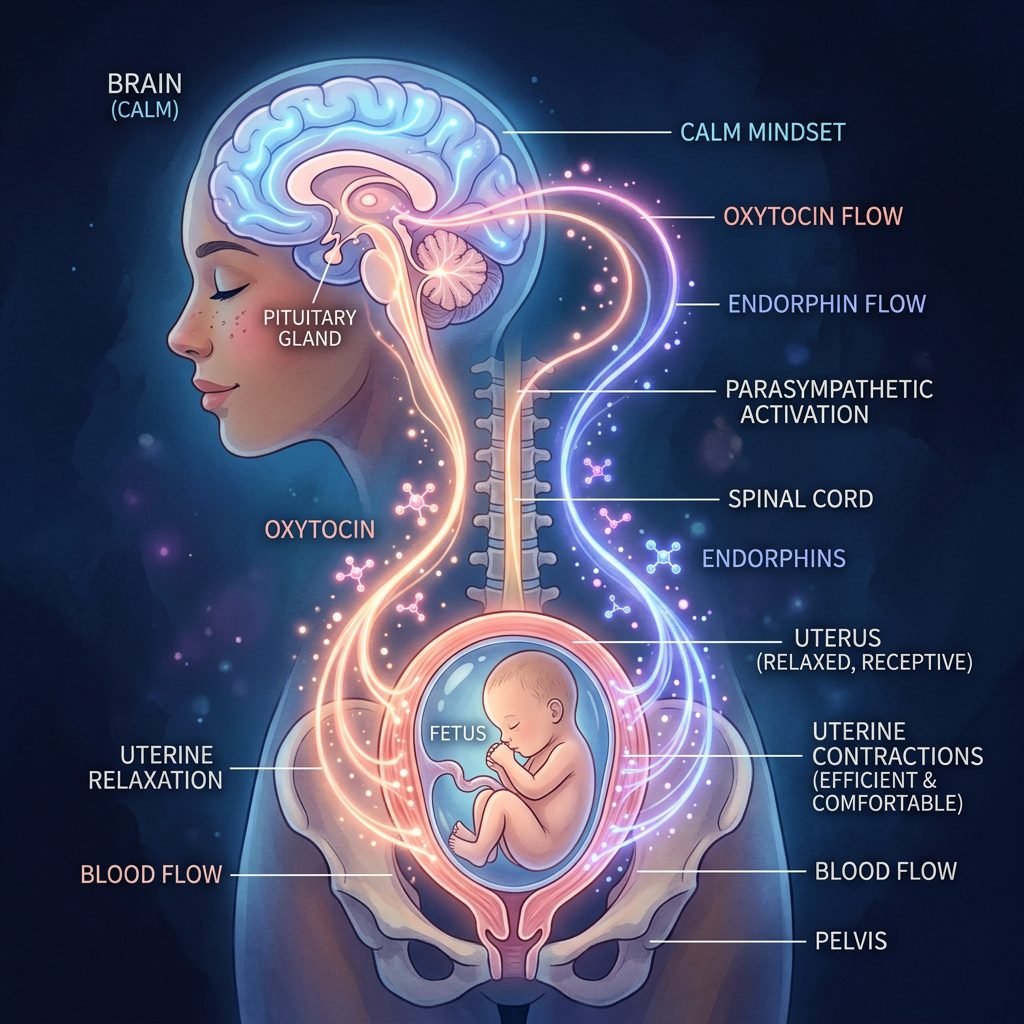
To understand why visualization works, we first have to look at how our bodies process labor. Dr. Grantly Dick-Read, a pioneer in natural childbirth, identified what he called the Fear-Tension-Pain cycle. When a mother feels fear, her body releases adrenaline. Adrenaline is the ‘fight or flight’ hormone, and in labor, it causes the muscles of the uterus to tighten and the blood to divert away from the reproductive organs to the limbs. This tension makes contractions feel more intense and can actually slow down the progress of labor.
The Magic of Oxytocin and Endorphins
Visualization acts as a circuit breaker for this cycle. By focusing on calming, expansive imagery, you signal to your brain that you are safe. This safety allows your body to flood your system with oxytocin—the ‘love hormone’ that drives effective contractions—and endorphins, which are your body’s natural narcotics, many times stronger than morphine. When you visualize your body opening like a flower or waves rolling onto a shore, you are literally changing your internal chemistry to favor ease and progress.
| Hormone | Effect on Labor | Visualization Goal |
|---|---|---|
| Oxytocin | Stimulates contractions and bonding. | Increase through feelings of love and safety. |
| Endorphins | Natural pain relief and euphoria. | Boost through deep relaxation and rhythmic imagery. |
| Adrenaline | Stalls labor and increases pain perception. | Minimize by reducing fear and environmental stress. |
Creating Your Sensory Birth Sanctuary

Setting the Stage for Mental Travel
Visualization is much easier when your external environment supports your internal focus. Think of your birth space as a ‘cave’—dark, quiet, and safe. As a doula, I recommend focusing on the sensory details that ground you. If you are in a hospital, this might mean bringing items from home to mask the clinical atmosphere. Your mind needs to feel that it has permission to leave the room and travel to the mental landscapes you’ve prepared.
Practical Tips for Your Birth Environment
- Lighting: Use battery-operated tea lights or salt lamps to create a soft, amber glow. Bright overhead lights trigger alertness and can inhibit visualization.
- Scent: Lavender for relaxation or clary sage to support contractions (only once labor has started!). Use a diffuser or a drop on a cotton ball.
- Sound: A playlist of nature sounds, binaural beats, or specific guided meditation tracks can act as an ‘anchor’ for your mind.
“Your birth environment is the container for your experience. When the container is soft, the experience can flow.”
The Visualizer’s Toolkit: Three Powerful Scripts

Mastering the Imagery of Birth
Here are three core visualization techniques that I teach every client. I recommend practicing these during the last few weeks of pregnancy so they become second nature when the real work begins.
1. The Blossoming Flower (Cervical Dilation)
This is the most classic visualization for a reason—it works. As you feel a contraction (which we like to call a ‘surge’) beginning, close your eyes and see a tightly closed rosebud. Visualize the petals. Are they deep red, soft pink, or a vibrant yellow? As the surge builds in intensity, see the petals slowly, surely unfurling. With the peak of the surge, the flower is in full, glorious bloom, wide and soft. As the surge fades, the flower remains open, ready for the next layer of petals to expand.
2. The Ocean Tides (Rhythm and Breath)
Imagine yourself standing on a shore. Each contraction is a wave. You cannot stop the wave, but you can dive into it or float over it. As the surge begins, visualize the water rising. Breath in as the wave swells, and as you exhale, visualize the foam sliding back into the deep, vast ocean. Remind yourself: ‘The wave is not against me; the wave is me.’
3. The Golden Thread (Connecting with Baby)
Visualize a shimmering golden thread connecting your heart to your baby’s heart. With every breath, see this thread glowing brighter. This visualization is particularly helpful if you feel overwhelmed, as it shifts the focus from your pain to the shared journey between you and your little one.
- Find a comfortable position on your side or a birth ball.
- Close your eyes and take a deep, slow breath into your belly.
- Identify where you feel the most intensity and imagine it as a color.
- Visualize a cooler color (like blue or silver) washing over that area, soothing it.
- Repeat the affirmation: ‘I am soft, I am open, I am capable.’
The Partner’s Guide to Verbal Guidance

How Your Support Person Can Lead the Way
Your birth partner—whether it’s a spouse, a friend, or a doula—plays a critical role in guided visualization. When you are in the ‘labor land’ (that deep, primal state of mind), hearing a familiar, calm voice can anchor you. Partners should practice using a low, steady tone and avoiding ‘check-in’ questions that require the logical part of your brain to wake up.
Step-by-Step Partner Scripting
Instead of asking ‘Are you okay?’, the partner should use descriptive, guiding language. Here is a template for a partner to use during a surge:
“You are doing it, mama. Breathe into my hand. See the mountain path. You are climbing, you are at the top, and now we are coming down together. Soften your jaw. Release your shoulders. You are one surge closer to meeting our baby.”
| What to Say | Why it Works |
|---|---|
| “Soft jaw, soft bottom.” | There is a direct physiological link between the jaw and the pelvic floor. |
| “The surge is your friend.” | Reframes the pain as a productive force. |
| “Down and out.” | Helps the mother visualize the baby’s descent. |
| “You are safe with me.” | Lowers adrenaline and boosts oxytocin. |
Managing the Transition Phase with Mental Anchors

Staying Grounded When the Intensity Peaks
Transition is the shortest but most intense phase of labor, occurring when you are nearly fully dilated. This is often the point where mothers say, ‘I can’t do this anymore!’ As a doula, I know this is the sign that baby is almost here. At this stage, visualizations need to be very simple and very powerful.
The Mountain Peak Visualization
Imagine you are a mountain climber. You have been hiking for hours, and the air is getting thin. You are almost at the summit. The transition surges are the final, steepest part of the climb. Visualize yourself reaching the peak. Once you are at the top, the view is magnificent, and the way down is easy. Use the ‘Mountain Breath’: a sharp inhale and a long, forceful exhale, picturing yourself blowing away any doubt or fear. You are the mountain—unshakable, ancient, and strong.
The Safe Place Anchor
Before labor begins, identify a ‘Safe Place’ in your mind. It could be a childhood garden, a quiet beach, or a cozy library. During the peak of transition, go there. Describe the smells, the temperature of the air, and the feeling of the ground beneath your feet. By fully inhabiting this mental space, you create a psychological buffer between yourself and the physical sensations of birth.
Practice Makes Progress: Your Prenatal Routine
Building the Muscle of the Mind
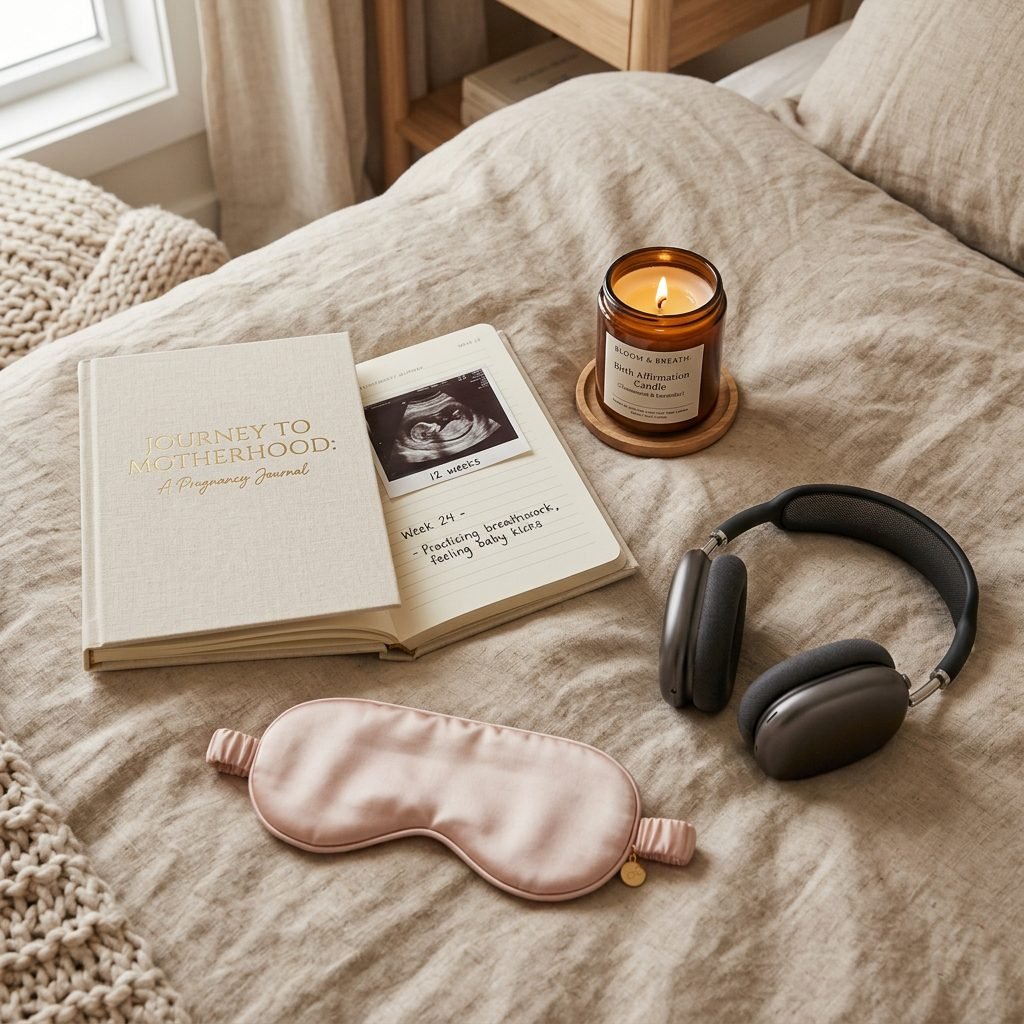
You wouldn’t run a marathon without training, and birth is no different. Guided visualization is a skill that improves with repetition. I recommend setting aside 15 minutes every day starting around week 34. This builds ‘neural pathways’ that make it easier for your brain to slip into a relaxed state even when things get intense.
A Sample Weekly Practice Schedule
- Monday: Focus on the ‘Blossoming Flower’ for 10 minutes while lying on your left side.
- Wednesday: Practice with your partner. Have them read a script while you focus on relaxing every muscle in your body.
- Friday: Use your visualization while in a slightly uncomfortable position (like a long squat or a cold shower) to simulate ‘working through’ intensity.
- Sunday: Reflective journaling. Write down any fears that came up during your visualization and ‘release’ them on paper.
By the time your surges begin, these mental images will be like old friends, ready to support you and guide you home to your baby.
Conclusion
You Are Ready for This Journey
Mama, as we wrap up this guide, I want you to take a deep breath and feel the life growing within you. You are part of an unbroken chain of women who have birthed since the beginning of time. Guided visualization is not about ignoring the reality of labor; it is about mastering your response to it. By using these techniques, you are choosing to meet your labor with an open heart and a focused mind. Whether your birth goes exactly to plan or takes a few unexpected turns, these mental tools will remain with you, providing a sense of agency and calm. Trust your body, trust your baby, and trust the power of your incredible mind. You’ve got this, sister. We are all cheering you on.