5 Foam Roller Exercises to Gently Open Your Pelvis for an Easier Labor
Welcome, Mama: Creating Space for Your Little One
Hello, beautiful soul. If you are reading this, you are likely in that sacred window of pregnancy where your body is doing the incredible work of preparing for birth. As a doula, I often tell my clients that labor isn’t just something that happens to you; it’s a physical dance between you and your baby. For that dance to be fluid, your ‘dance floor’—your pelvis—needs to be as open, mobile, and relaxed as possible.
In our modern world, we spend a lot of time sitting in cars, at desks, or on soft couches. This can lead to a ‘tight’ pelvis, where the muscles and fascia surrounding the pelvic bowl become restricted. When these tissues are tight, they can pull on the bones of the pelvis, potentially making it harder for your baby to find the optimal position for birth. That is where our humble friend, the foam roller, comes in. Think of foam rolling as a form of self-myofascial release—a gentle way to ‘iron out’ the knots in your tissues, allowing your bones to move the way nature intended.
Today, we are going to walk through five gentle, evidence-based foam roller exercises designed specifically for the pregnant body. These moves aren’t about ‘working out’; they are about letting go. We are going to focus on the soft tissues that support the pelvis, ensuring that when those first contractions begin, your body is ready to expand with grace and ease. Grab your roller, put on your most comfortable leggings, and let’s begin this journey of preparation together.
Understanding the Pelvic Bowl: Why Mobility Matters
The Anatomy of an Easier Birth
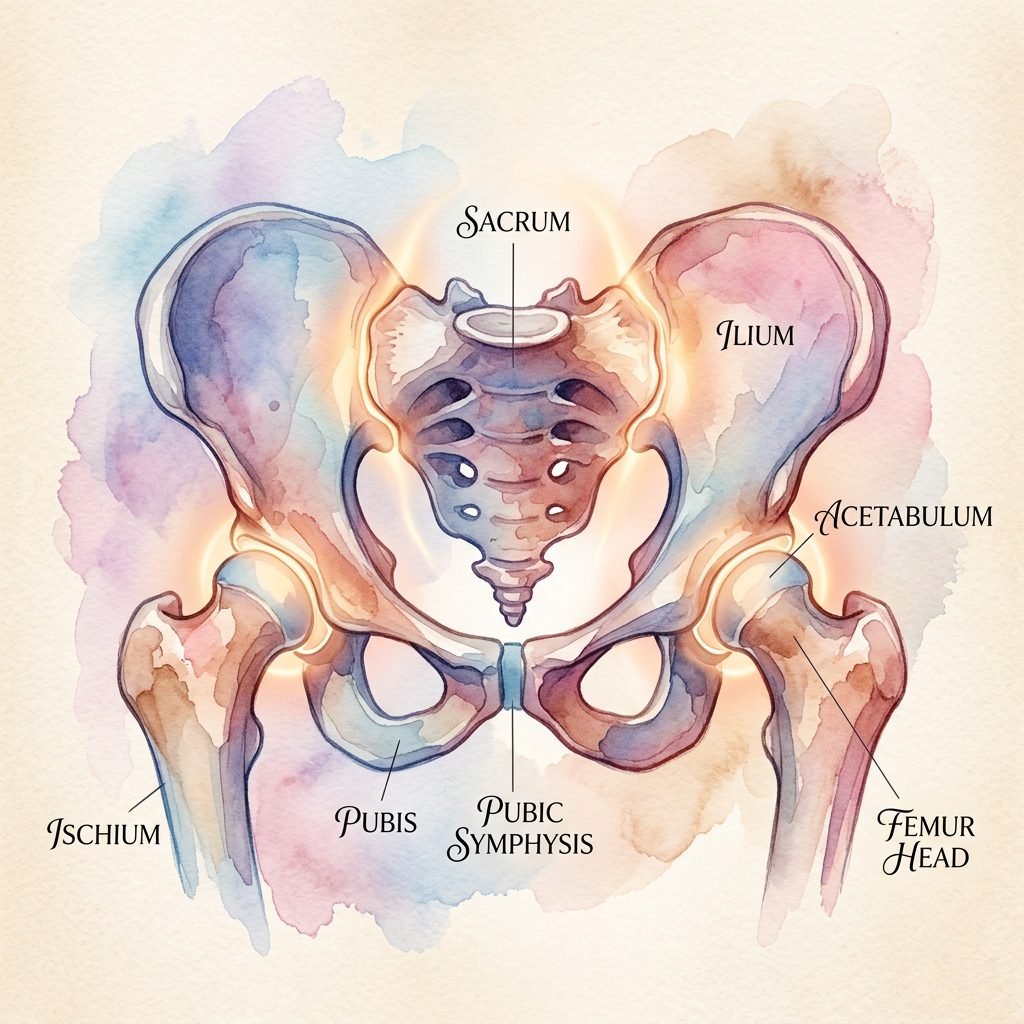
Before we dive into the movements, let’s talk about why we are doing this. Your pelvis isn’t one solid bone; it’s a complex structure of bones held together by ligaments and muscles. During pregnancy, a hormone called relaxin softens these ligaments, allowing the joints to become more mobile. However, if the muscles attached to those bones—like your glutes, hip flexors, and inner thighs—are chronically tight, they can act like tight rubber bands, preventing the pelvis from opening fully.
The Path of Least Resistance
Your baby is looking for the path of least resistance. When your pelvic muscles are supple, the pelvic outlet can expand by up to 30% during the pushing stage. By using a foam roller, we are targeting the fascia—the connective tissue ‘suit’ that wraps around your muscles. Releasing this fascia helps ensure that the sacrum (the bone at the base of your spine) can swing freely, which is crucial for the baby’s descent.
“Your body was designed to open. Our goal is simply to remove the physical ‘noise’ of tension so your natural instincts can take over.”
When we roll, we aren’t just stretching; we are communicating with our nervous system. We are telling our body it is safe to relax. This mental shift is just as important for labor as the physical opening.
Safety First: The Golden Rules of Prenatal Rolling
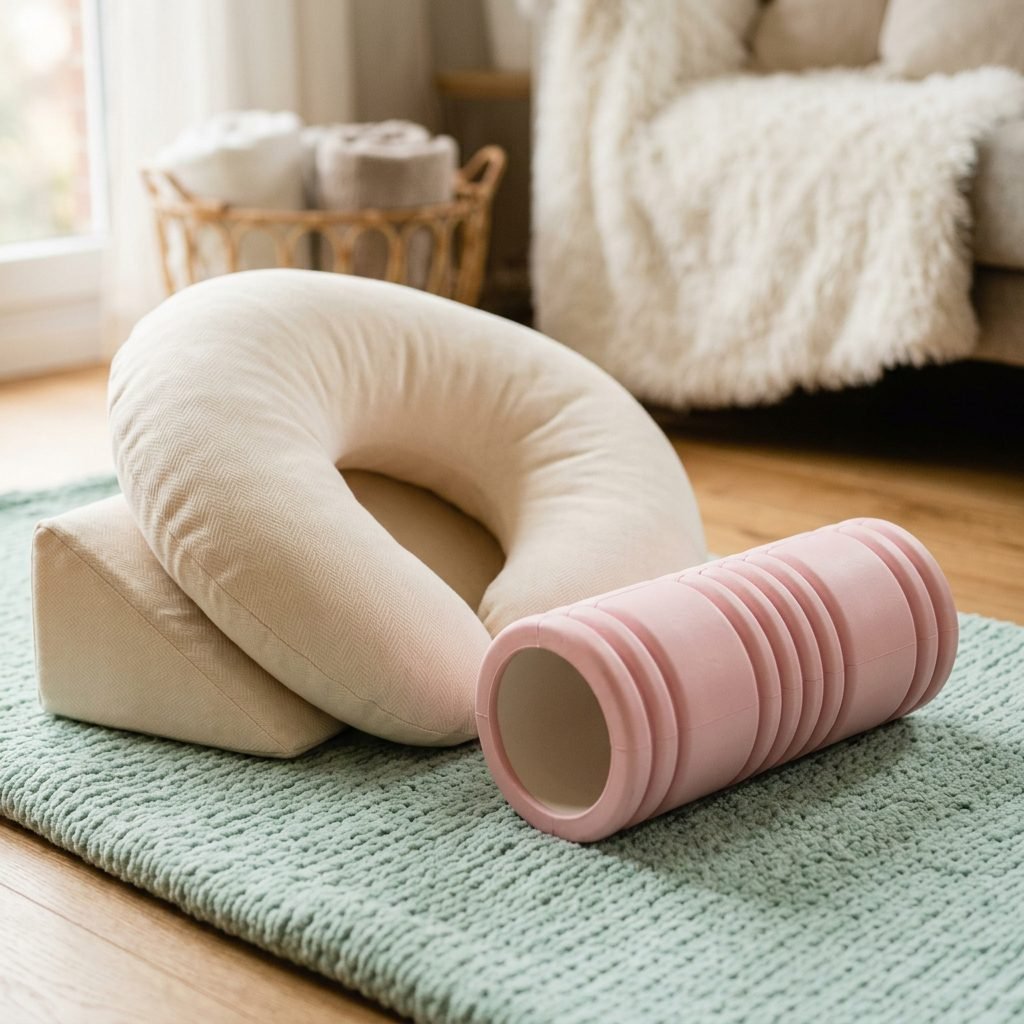
Honoring Your Pregnant Body
As your belly grows, your center of gravity shifts, and your joints become more lax. This means we must approach foam rolling with a different mindset than an athlete would. We aren’t looking for ‘no pain, no gain.’ We are looking for gentle release.
Guidelines for a Safe Session
- Never roll directly on your lower back: This can put too much pressure on the spine and kidneys. Stick to the fleshy parts of the hips and the mid-to-upper back.
- Avoid the Vena Cava: If you feel dizzy or lightheaded while lying on your back, immediately roll onto your left side.
- Breathe, don’t hold: If a spot feels tender, breathe into it. If you hold your breath, your muscles will tense up, defeating the purpose of the exercise.
- Use a soft roller: If you are new to this, choose a low-density (softer) foam roller rather than a hard, knobby one.
| What to Feel | What to Avoid |
|---|---|
| A ‘good’ hurt or gentle pressure | Sharp, shooting, or stabbing pain |
| A sense of warmth or ‘melting’ | Numbness or tingling in the limbs |
| Increased range of motion | Dizziness or shortness of breath |
The 5 Key Exercises for Pelvic Opening
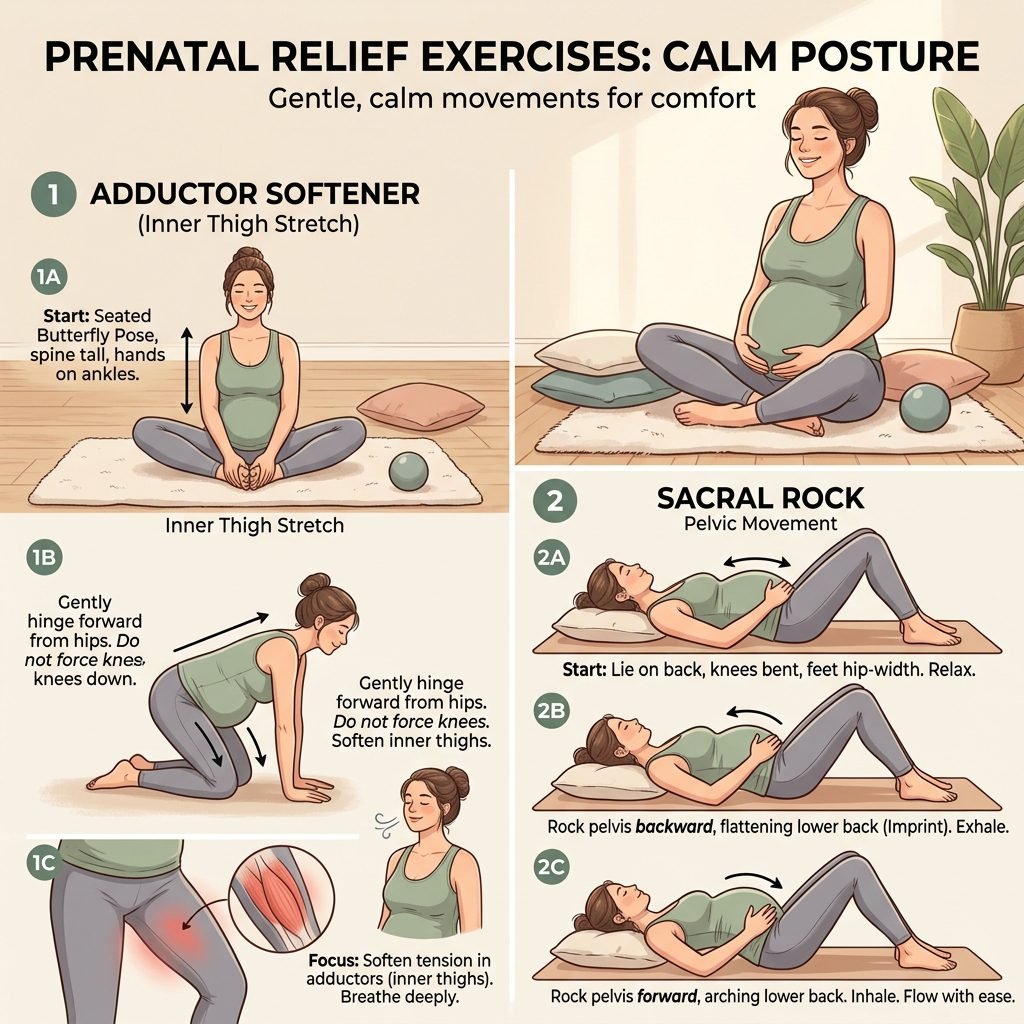
1. The Glute & Piriformis Release
The glutes are the ‘powerhouse’ muscles, but they often hold onto deep emotional and physical tension. A tight piriformis can pull the sacrum forward, closing the space in the back of the pelvis.
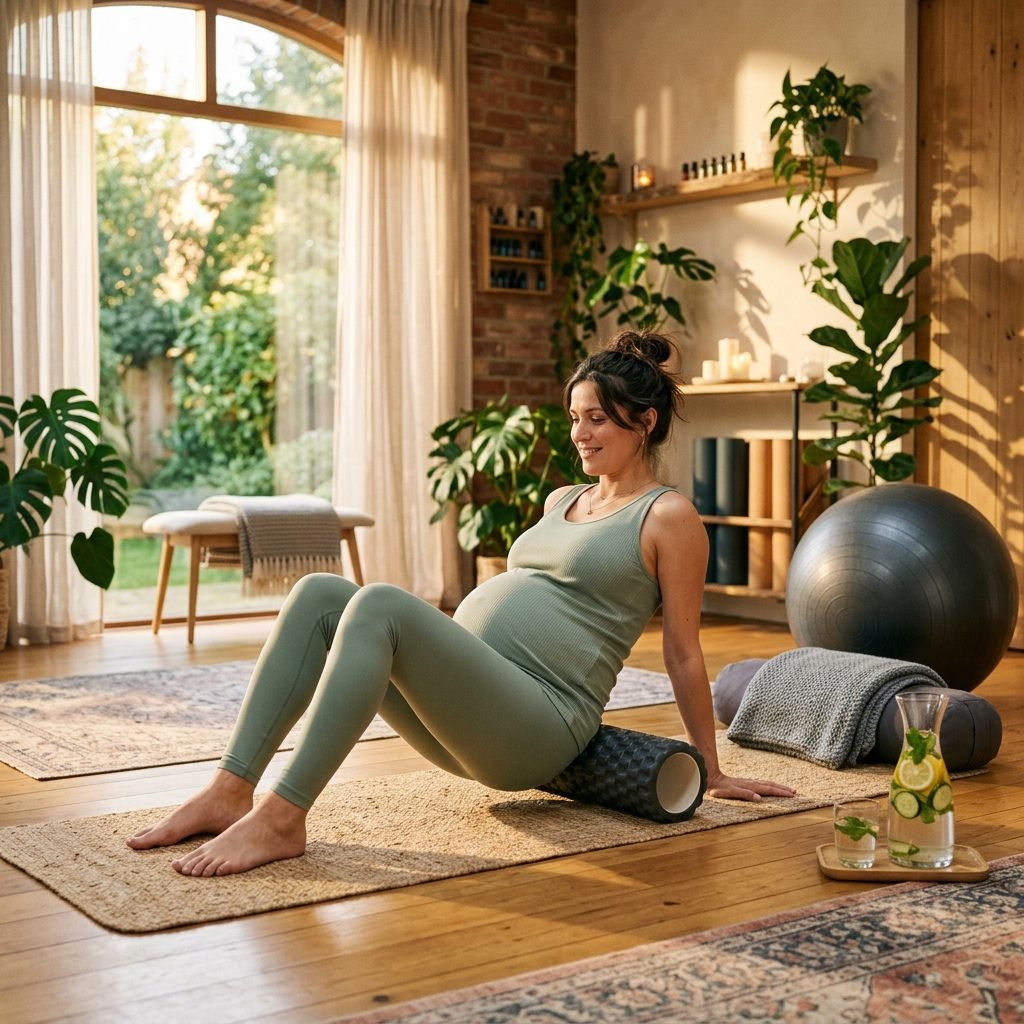
- Sit on your foam roller with your knees bent and feet flat on the floor.
- Lean back slightly, supporting yourself with your hands behind you.
- Cross your right ankle over your left knee (the ‘figure 4’ position). If your belly is large, you can keep both feet on the floor and simply tilt your knees to the right.
- Slowly shift your weight onto your right glute and roll back and forth over the fleshy part of your buttock for 60 seconds.
- Repeat on the other side.
2. The Inner Thigh (Adductor) Softener
Tight inner thighs can pull the pubic bone and prevent the pelvis from widening during labor. This move is a favorite for ‘opening the gates.’
- Lie on your stomach (or propped on your elbows if you have a belly wedge) and place the roller parallel to your body.
- Bring your right leg out to the side, knee bent at a 90-degree angle (like a frog leg), and place the inner thigh on top of the roller.
- Slowly roll from your groin down toward your knee.
- Focus on the tender spots and take 3 deep belly breaths at each point.
3. The Sacral Rock (Gentle Pelvic Tilts)
This isn’t ‘rolling’ in the traditional sense, but using the roller as a fulcrum to create space in the lower back.
- Lie on your back with knees bent (use a wedge pillow if lying flat is uncomfortable).
- Lift your hips and place the roller horizontally directly under your sacrum (the hard bone above your tailbone).
- Gently rock your knees from side to side in a very small motion. This gently massages the SI joints and encourages the pelvis to ‘un-tuck.’
4. The Hip Flexor Extension
Sitting too much causes the psoas and hip flexors to shorten, which tilts the pelvis forward (anterior pelvic tilt). This can make it harder for the baby to engage in the pelvis.
- Place the roller under your hips while lying on your back (propped up as needed).
- Hug your left knee toward your chest while extending your right leg straight out.
- Let the weight of your right leg hang heavy, feeling the stretch in the front of the hip.
- Hold for 5-10 breaths, then switch.
5. Thoracic Opening (Upper Back)
You might wonder why we are rolling the upper back for labor. The body is connected by fascia from head to toe. A tight, hunched chest leads to a tight diaphragm, which in turn leads to a tight pelvic floor.
- Place the roller horizontally under your shoulder blades.
- Support your head with your hands (don’t let it dangle).
- Gently lean back over the roller, opening your elbows wide.
- Inhale as you open, exhale as you come back to neutral. This creates ‘vertical space’ for the baby.
The Mind-Body Connection: Breathing Into the Roller

Visualizing the Opening
As you perform these exercises, your breath is your most powerful tool. In labor, the ‘vocal-pelvic connection’ is real—a relaxed jaw means a relaxed pelvic floor. While you are on the foam roller, practice keeping your mouth slightly open and your jaw soft.
The ‘Melt’ Technique
When you find a tender spot on the roller, don’t pull away. Instead, imagine that the muscle is like a piece of cold butter sitting on a warm pancake. As you breathe out, imagine the muscle melting and spreading over the roller. This practice of ‘softening into intensity’ is the exact skill you will use during a contraction.
“I inhale space; I exhale tension. My body is a wide, open path for my baby.”
Spend at least 10 minutes each evening on this routine. Not only will it help your labor prep, but it will also significantly reduce common pregnancy complaints like sciatica and round ligament pain.
When to Use These Moves: A Labor Preparation Timeline

Integrating Rolling into Your Routine
Consistency is key. You don’t need to spend hours rolling; a focused 15-minute session four times a week can transform your pelvic mobility. As you move closer to your due date, you may find some positions more or less comfortable. Listen to your body above all else.
| Pregnancy Phase | Focus Area | Frequency |
|---|---|---|
| Second Trimester | Hip Flexors & Glutes (Focus on posture) | 3x per week |
| Third Trimester (32-36 weeks) | Adductors & Sacral Rocking (Creating space) | 4-5x per week |
| Full Term (37+ weeks) | Gentle pelvic tilts & Upper back (Relaxation) | Daily |
| Early Labor | Upper back & Glutes (Between contractions) | As needed for comfort |
Pro Tip: Keep your foam roller in a visible spot—next to your bed or by the TV. If it’s tucked away in a closet, you’re less likely to use it. Make it a part of your evening wind-down ritual, perhaps while listening to your favorite birth affirmations or a calming podcast.
Conclusion
You Are Ready for This Dance
Preparing for labor is about more than just checking items off a registry; it’s about coming home to your body. These five foam roller exercises are a gift of space and ease that you are giving to both yourself and your baby. By releasing the tension in your glutes, inner thighs, and hips, you are clearing the path for your little one’s grand entrance.
Remember, mama, your body is wise. It knows how to birth. Your only job is to provide the environment—both mentally and physically—where that wisdom can unfold. Keep breathing, keep rolling, and keep believing in your incredible strength. You’ve got this!