

The Hidden Signs Your Baby is Overtired (And How to Catch the Sleep Window)
The Mystery of the ‘Second Wind’
Oh, mama, we have all been there. It is 7:45 PM, and your little one, who seemed perfectly happy and energetic just ten minutes ago, has suddenly transformed into a tiny, inconsolable whirlwind of flailing limbs and piercing cries. You might think, ‘But they were just laughing! They didn’t seem tired at all!’ As a doula and sleep consultant, I want to let you in on a little secret: by the time a baby is screaming, the ‘sleep window’ hasn’t just closed—it has been boarded up and locked. That burst of energy you saw? That wasn’t happiness; it was a cortisol surge, the body’s way of keeping a tired baby awake when they’ve missed their natural biological opportunity to rest.
Understanding the delicate dance of infant sleep is less about following a rigid clock and more about becoming a master of your baby’s unique body language. In this guide, we are going to peel back the layers of the ‘overtired’ phenomenon. We will explore the biology of why babies fight sleep, identify the ‘hidden’ cues that appear long before the first yawn, and provide you with a practical, step-by-step ‘Emergency Landing’ protocol for those nights when the window slams shut. You are doing an incredible job, and together, we are going to turn those stressful bedtimes into peaceful transitions.
The Biological Trap: Why ‘Overtired’ is a Real Medical State
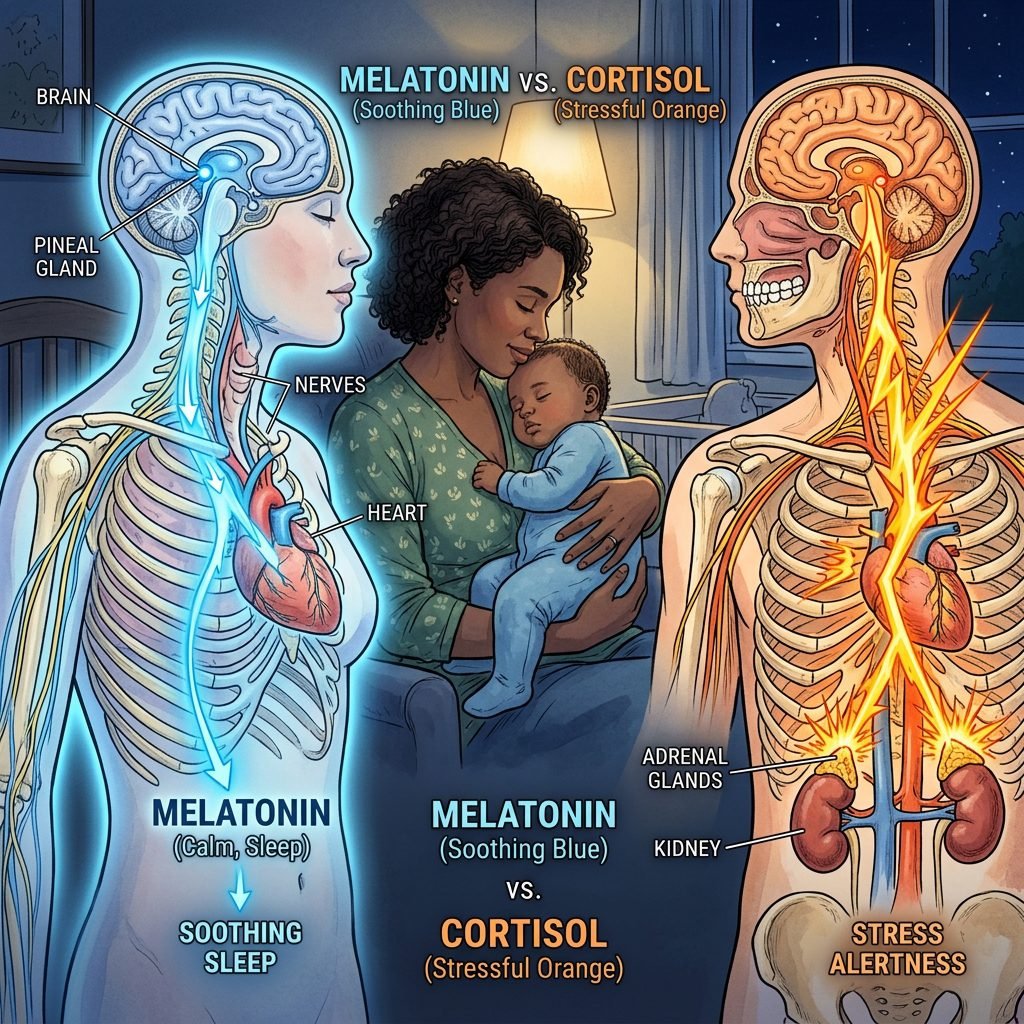
When a baby stays awake past their optimal ‘wake window,’ their brain perceives the lack of sleep as a stressor. To keep the body functioning, the adrenal glands begin pumping out cortisol and adrenaline. This is essentially a ‘fight or flight’ response. This chemical cocktail makes it nearly impossible for a baby to settle down, leading to the frantic, ‘wired’ behavior that many parents mistake for being wide awake.
The Cortisol Loop
Once cortisol enters the system, it acts as a stimulant. This is why an overtired baby may struggle to latch, arch their back, or seem to fight the very rocking and shushing that usually calms them. It creates a vicious cycle: the baby is too tired to sleep, and the lack of sleep creates more stress hormones.
| Hormone | Role in Sleep | Impact of Being Overtired |
|---|---|---|
| Melatonin | The ‘Sleepy’ Hormone | Suppressed by light and stress; needs a calm environment to rise. |
| Cortisol | The ‘Alert’ Hormone | Spikes when the sleep window is missed, causing a ‘second wind.’ |
| Adrenaline | The ‘Energy’ Hormone | Creates the jerky, frantic movements seen in overtired infants. |
Remember, sweet mama: your baby isn’t ‘being difficult’ or ‘manipulating’ the situation. Their little body is physically flooded with stimulants, and they need your calm nervous system to help them regulate and find their way back to baseline.
The Three Stages of Sleep Cues: Catching the Window

Most parents wait for a yawn or eye-rubbing to start the bedtime routine. However, in the world of pediatric sleep, these are actually late-stage cues. To catch the ‘Optimal Sleep Window,’ we need to look for the subtle, early signals that the brain is ready to power down.
Stage 1: The ‘Hidden’ Early Cues
- The Thousand-Yard Stare: Your baby loses interest in their toys and stares blankly into space. This is ‘disengagement.’
- Red Eyebrows: A little-known doula secret! The skin around the eyebrows and eyelids often turns a faint pink or red when a baby is ready for a nap.
- Decreased Activity: Their movements become slower and less purposeful.
Stage 2: The ‘Active’ Mid-Cues
This is your 15-minute warning. If you see these, drop everything and head to the nursery:
- Tugging at ears or scratching at the face.
- Turning their head away from lights, sounds, or people (rooting for a shoulder).
- The first real yawn.
Stage 3: The ‘Overtired’ Late Cues
If you see these, you are now in the ‘Emergency Landing’ zone:
- Arching the back and stiffening the limbs.
- High-pitched, frantic crying.
- Closing eyes and then snapping them open suddenly.
- Refusing the breast or bottle despite being hungry.
The Emergency Landing Protocol: Soothing the Wired Baby

If you’ve missed the window, don’t panic. You cannot ‘force’ an overtired baby to sleep, but you can create the conditions that allow the cortisol to dissipate. Follow this step-by-step manual technique to bring your baby back to a calm state:
- The Sensory Blackout: Immediately move to a pitch-black room. Use 100% blackout curtains. Eliminate all visual stimulation.
- The Skin-to-Skin Reset: Strip the baby down to their diaper and place them against your bare chest. Your heartbeat and body heat act as a natural regulator for their nervous system.
- The ‘Tiger in the Tree’ Hold: If they are gassy and overtired, lay them face-down along your forearm, with their head in your hand and legs straddling your elbow. Gently sway.
- The Deep Shush: Use a white noise machine or your own voice to make a ‘shhhh’ sound that is louder than the baby’s cry. This mimics the sound of blood rushing through the placenta, which is incredibly comforting.
- The Rhythmic Pat: While holding them on their side or stomach (in your arms only), use a firm, rhythmic pat on their bottom. This rhythmic vibration helps break the cycle of frantic movements.
| Technique | Best For… | Why it Works |
|---|---|---|
| Swaddle | Moro Reflex | Prevents ‘startle’ wakes caused by adrenaline-fueled limb jerks. |
| Side-Lying Hold | High Distress | Calms the ‘fight or flight’ response more effectively than back-lying. |
| White Noise | Environment Control | Drowns out the internal ‘noise’ of a stressed nervous system. |
Age-Appropriate Wake Windows: Your Strategic Cheat Sheet

While every baby is an individual, biology provides us with a general roadmap. A ‘wake window’ is the amount of time your baby can comfortably stay awake between sleeps. If you stay within these ranges, you are much more likely to hit that ‘Optimal Sleep Window’ every time.
The Wake Window Matrix
| Baby’s Age | Average Wake Window | Naps Per Day |
|---|---|---|
| 0-6 Weeks | 45 – 60 Minutes | 4 – 6 (Variable) |
| 2-3 Months | 60 – 90 Minutes | 3 – 4 |
| 4-6 Months | 1.5 – 2.5 Hours | 3 |
| 7-9 Months | 2.5 – 3.5 Hours | 2 |
| 10-14 Months | 3 – 4 Hours | 1 – 2 |
Pro-Tip: The first wake window of the morning (between waking up and the first nap) is almost always the shortest of the day. If your 4-month-old wakes up at 7:00 AM, they will likely be ready for their first nap by 8:30 AM, even if they seem energetic!
The Nursery Environment: Engineering the Perfect Window

As an interior organizer and doula, I believe the environment is 50% of the battle. You can be the best at spotting cues, but if the nursery isn’t optimized, the baby will struggle to transition into sleep. Here is your ‘Sleep Sanctuary’ checklist:
- Temperature Control: Aim for 68–72°F (20–22°C). A baby who is too warm will produce more cortisol to try and regulate their temperature.
- The Darkness Test: Go into the nursery at midday, close the curtains, and wait 30 seconds. If you can see your hand in front of your face, it is too bright. Use painters tape to seal the edges of blinds if necessary.
- Sound Consistency: Use a non-looping white noise machine. Avoid ‘rain’ or ‘ocean’ sounds that have peaks and valleys in volume; a steady ‘brown noise’ or ‘white noise’ is best for masking household sounds.
- The Scent of Safety: Place a used (but clean) nursing pad or a shirt you’ve worn inside the crib (safely tucked under the fitted sheet where the baby cannot reach it) so they can smell your comforting scent.
Affirmation for the Tired Parent: ‘I am my baby’s safe harbor. My calm is contagious. We will find our rhythm together, one nap at a time.’
Conclusion
You Are Your Baby’s Expert
Learning to catch the sleep window is a skill, much like breastfeeding or swaddling. There will be days when you miss it—days when the grocery store run took too long or the doorbell rang just as you were heading upstairs. Give yourself grace. One missed window will not ruin your baby’s sleep habits forever. The goal is not perfection; it is connection. By observing these hidden signs and understanding the biology behind the ‘meltdown,’ you are empowering yourself to meet your baby’s needs with confidence and empathy. Tonight, take a deep breath, watch for those pink eyebrows, and know that you are doing a beautiful job guiding your little one toward the rest they need.