

Prepare Your Arms! 10 Min Workout to Carry a 10lb Baby Without Back Pain
Welcome to the Motherhood Marathon, Mama!
Oh, sweet mama, I see you. Whether you are currently nesting and waiting for your little one to arrive, or you are already in the thick of those hazy postpartum days, there is one thing no one tells you: babies are heavy! And they don’t just stay at 7 or 8 pounds; they grow, and they grow fast. Before you know it, you are carrying a 10lb, 15lb, or 20lb bundle of joy who wants to be held all the time.
As a doula, I’ve seen so many mothers struggle with what we call the ‘nursing slouch’ or the ‘mom-back.’ We spend so much time looking down at our beautiful babies that our shoulders round, our chests tighten, and our lower backs take the brunt of the weight. But here is the good news: you can prepare your body. You can build the functional strength needed to carry your baby with ease, grace, and—most importantly—zero pain.
This 10-minute workout isn’t about ‘getting your body back’ or fitting into old jeans. It is about functional motherhood. It is about making sure your arms are strong enough to rock your baby to sleep and your back is supported enough to survive the witching hour. Let’s get you baby-ready, one gentle rep at a time.
The Biomechanics of the ‘Mom-Lift’: Why Your Back Actually Hurts
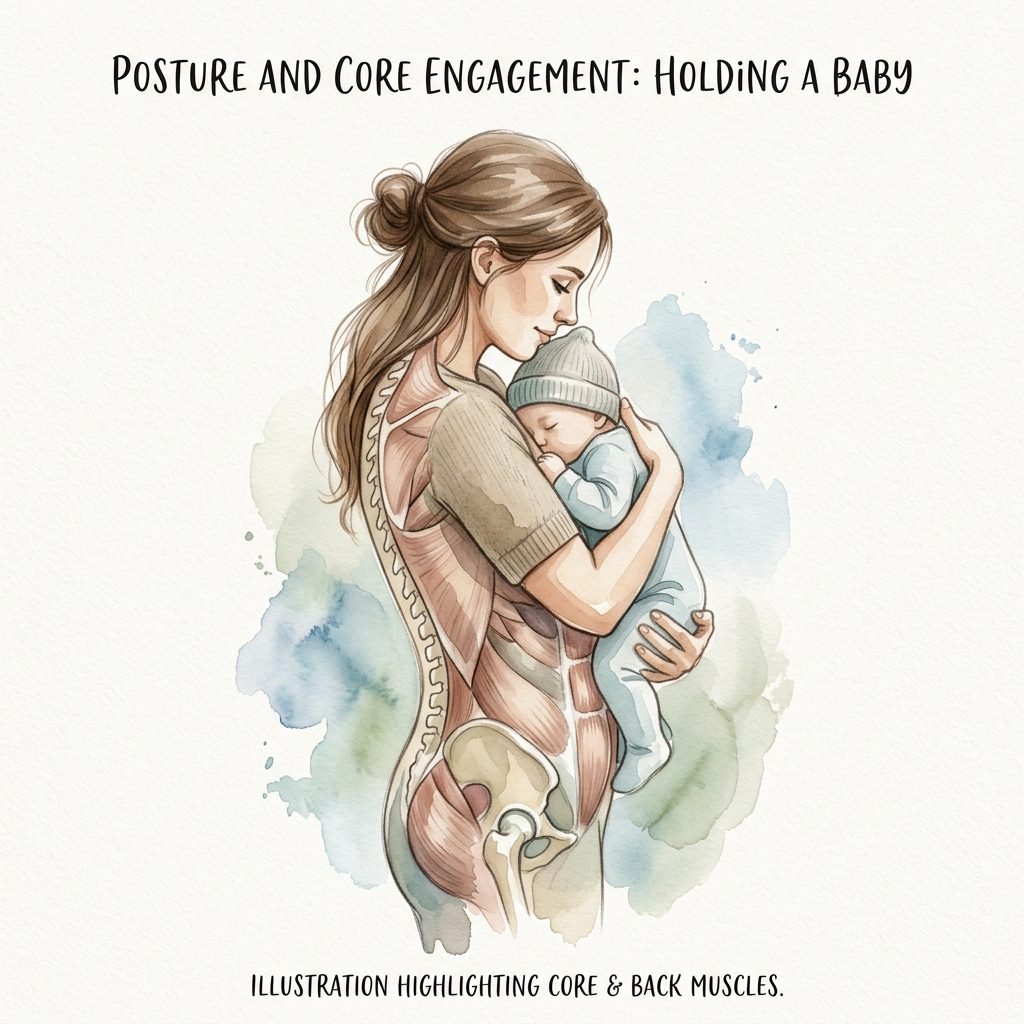
Before we dive into the moves, we need to understand the ‘why.’ When you hold a baby, your center of gravity shifts forward. To compensate, many of us stick our hips out and arch our lower backs. This puts incredible pressure on the lumbar spine. Additionally, the repetitive motion of lifting a baby from a crib or car seat can strain the small muscles in your wrists and forearms.
To carry a 10lb baby without pain, we need to focus on three key areas:
- The Posterior Chain: Strengthening the muscles in your upper back (rhomboids and traps) to keep your shoulders pulled back.
- Core Stability: Engaging the deep transverse abdominis to act as a natural corset for your spine.
- Bicep and Forearm Endurance: Building the stamina to hold that weight for extended periods.
| Muscle Group | Role in Baby Carrying | Common Pain Point |
|---|---|---|
| Upper Back | Keeps chest open and upright | Shoulder blade tension |
| Deep Core | Stabilizes the spine | Lower back aches |
| Biceps/Triceps | The ‘Shelf’ for the baby | Wrist and elbow strain |
Remember, mama: your body is a marvel. It grew a human. Now, we are simply giving it the tools to support that human on the outside.
The 10-Minute ‘Strong Mama’ Routine: Step-by-Step
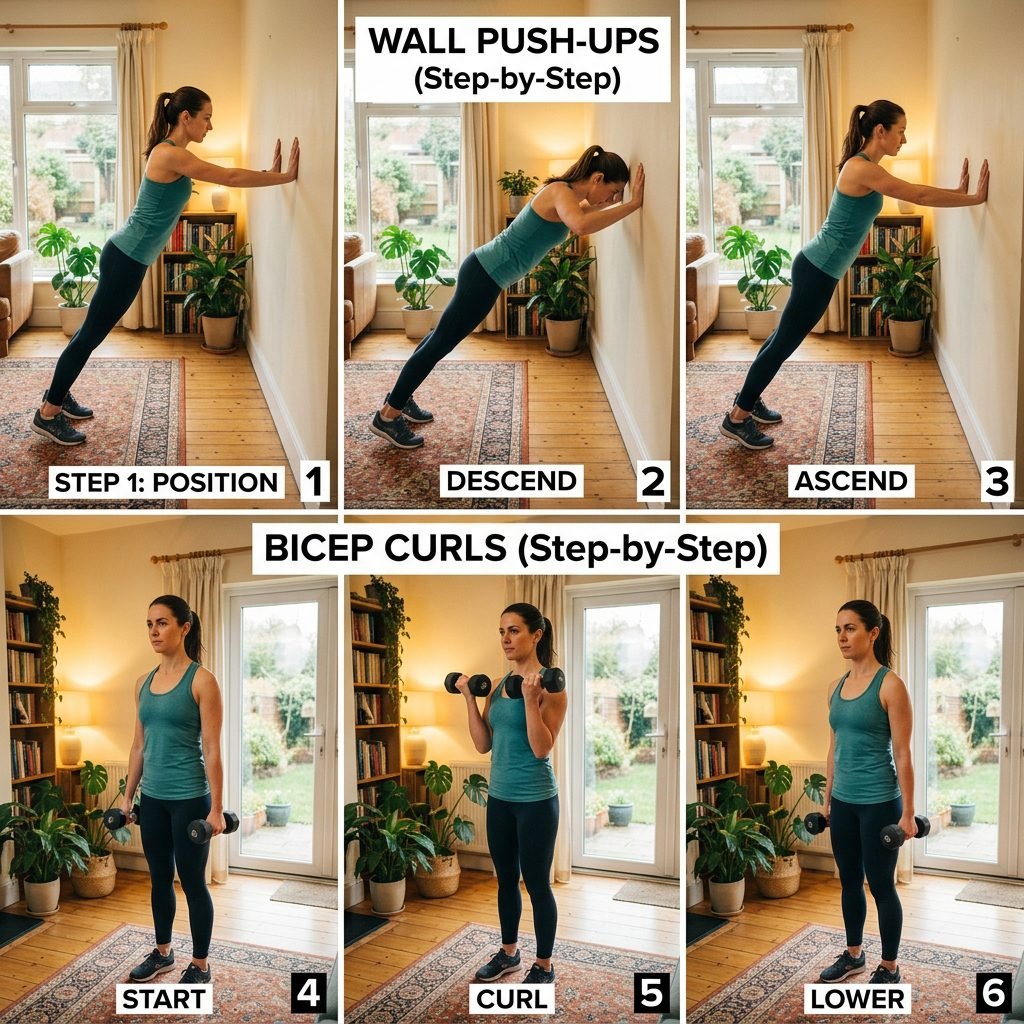
This routine is designed to be done anywhere—even in the nursery while the baby naps! You don’t need heavy weights; two full water bottles or 2lb dumbbells will do perfectly. If you are postpartum, please ensure you have been cleared for exercise by your healthcare provider.
Phase 1: The Warm-Up (2 Minutes)
- Shoulder Rolls: Roll your shoulders up to your ears and back down 10 times. Focus on ‘tucking’ your shoulder blades into your back pockets.
- Arm Circles: Extend your arms out to the sides and make small circles for 30 seconds forward and 30 seconds backward.
Phase 2: The Strength Circuit (6 Minutes)
Perform each move for 45 seconds, followed by 15 seconds of rest. Repeat the circuit twice.
- Wall Push-Ups: Stand facing a wall. Place your hands slightly wider than shoulder-width. Lower your chest toward the wall, keeping your core tight, and push back. This builds the chest and arm strength needed for lifting.
- The ‘Baby Bicep’ Curl: Using your light weights, perform slow, controlled curls. At the top of the movement, squeeze your biceps. This mimics the ‘cradle hold.’
- Scapular Squeezes: Sit or stand tall. Imagine there is a pencil between your shoulder blades and try to pinch it. Hold for 3 seconds and release. This counters the ‘slouch.’
Phase 3: The Core Connection (2 Minutes)
Finish with Pelvic Tilts. While standing or lying down, gently tuck your tailbone under and engage your lower abs. This ‘knitting together’ of the core is vital for back protection.
The Golden Rules of Ergonomic Lifting
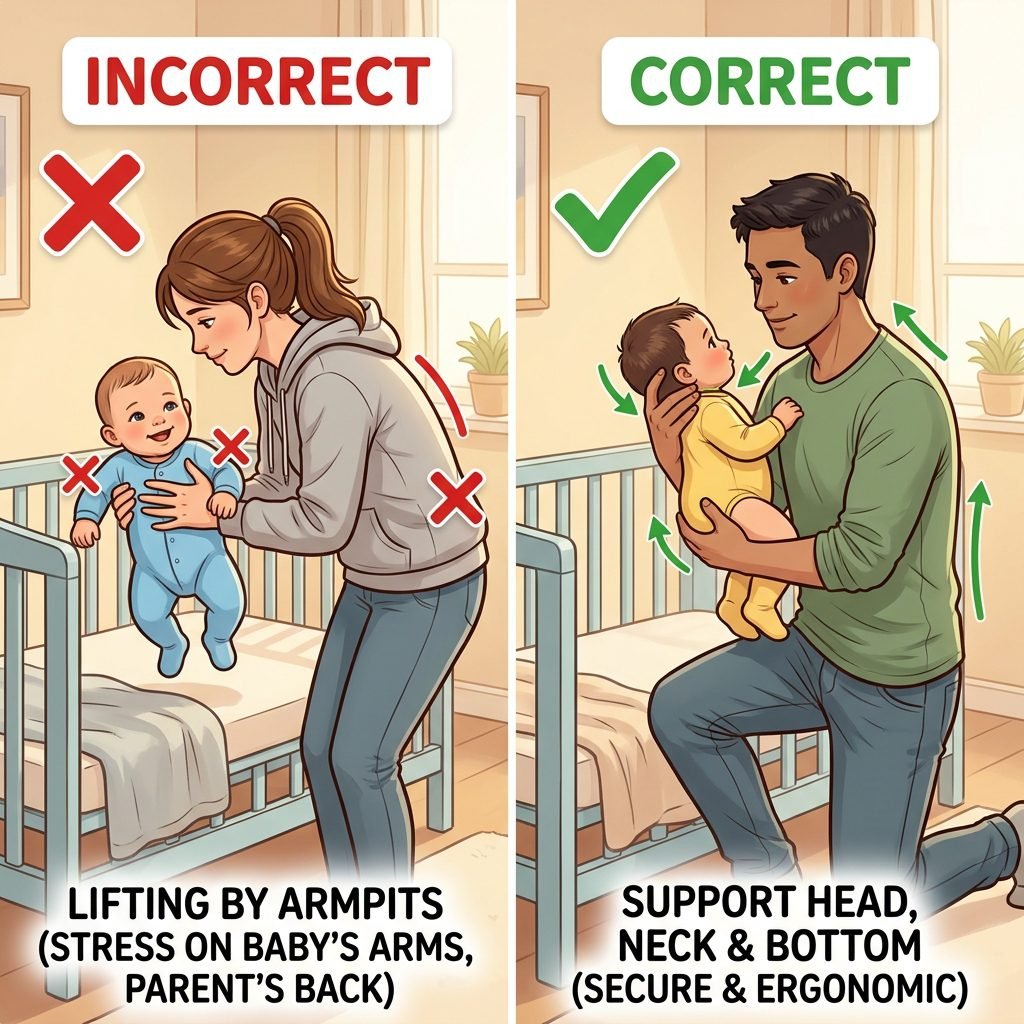
Exercise is only half the battle. How you move during the day matters just as much. When you reach into that crib to pick up your 10lb miracle, keep these rules in mind:
- Exhale on the Effort: Always breathe out as you lift the baby. This manages intra-abdominal pressure and protects your pelvic floor.
- Hinge, Don’t Curve: Bend at your hips and knees, not your waist. Think of it as a ‘mini-squat’ every time you pick up a toy or a child.
- Keep Baby Close: The further the baby is from your body, the heavier they ‘feel’ to your spine. Keep them snug against your chest.
| Action | The ‘Ouch’ Way | The ‘Strong Mama’ Way |
|---|---|---|
| Lifting from Crib | Bending at the waist | Squatting and keeping back flat |
| Carrying Car Seat | Hanging it on one arm | Using both hands or ‘the arm-through’ method |
| Nursing/Feeding | Slouching toward baby | Bringing baby up to breast/bottle with pillows |
Postpartum Recovery: You Are Not Alone

If you are finding that your back is already aching, please know this: you are not alone, and this is completely normal. Your body is still circulating relaxin (the hormone that loosens joints) for months after birth, especially if you are breastfeeding. Your joints are literally softer right now!
Be gentle with yourself. You are healing from a major medical event while simultaneously working a 24/7 job with no breaks. If all you did today was hold your baby, you have done enough.
If you experience sharp, shooting pain, numbness, or pain that prevents you from sleeping, please reach out to a Pelvic Floor Physical Therapist. They are the ‘unsung heroes’ of postpartum recovery and can help you realign your body in ways that a standard workout cannot.
Conclusion
You’ve Got This, Strong Mama!
Preparing your arms and back for the beautiful weight of motherhood is one of the best gifts you can give yourself. By spending just 10 minutes a day on these functional movements, you are setting yourself up for a more comfortable, joyful fourth trimester and beyond. Remember to hydrate, breathe through the tough moments, and listen to your body’s signals.
You are doing an incredible job, and those arms of yours? They are the safest, strongest place in the world for your baby. Keep nourishing them!