
Nitrous Oxide for Labor Pain: What to Expect and How It Helps You Cope with Contractions
Hello, sweet mama. If you are preparing for the arrival of your little one, you have likely spent many late nights thinking about the intensity of labor. It is perfectly normal to feel a mix of excitement and a little bit of ‘how am I going to do this?’ energy. As a doula, I have sat by the bedsides of hundreds of women, and I want to tell you something important: you are incredibly strong, but you also deserve to have a toolkit full of comfort options. One of the most versatile, empowering, and underutilized tools in the modern birth room is Nitrous Oxide, often affectionately called ‘laughing gas.’ Unlike the heavy sedation you might associate with the dentist, nitrous oxide in labor is a gentle way to take the ‘edge’ off those powerful waves, allowing you to stay present, mobile, and in the driver’s seat of your birth experience. In this guide, we are going to walk through exactly how it feels, how to use it like a pro, and why it might just be the perfect ‘middle ground’ you have been looking for.
Breathing Through the Waves: What Exactly is Nitrous Oxide?
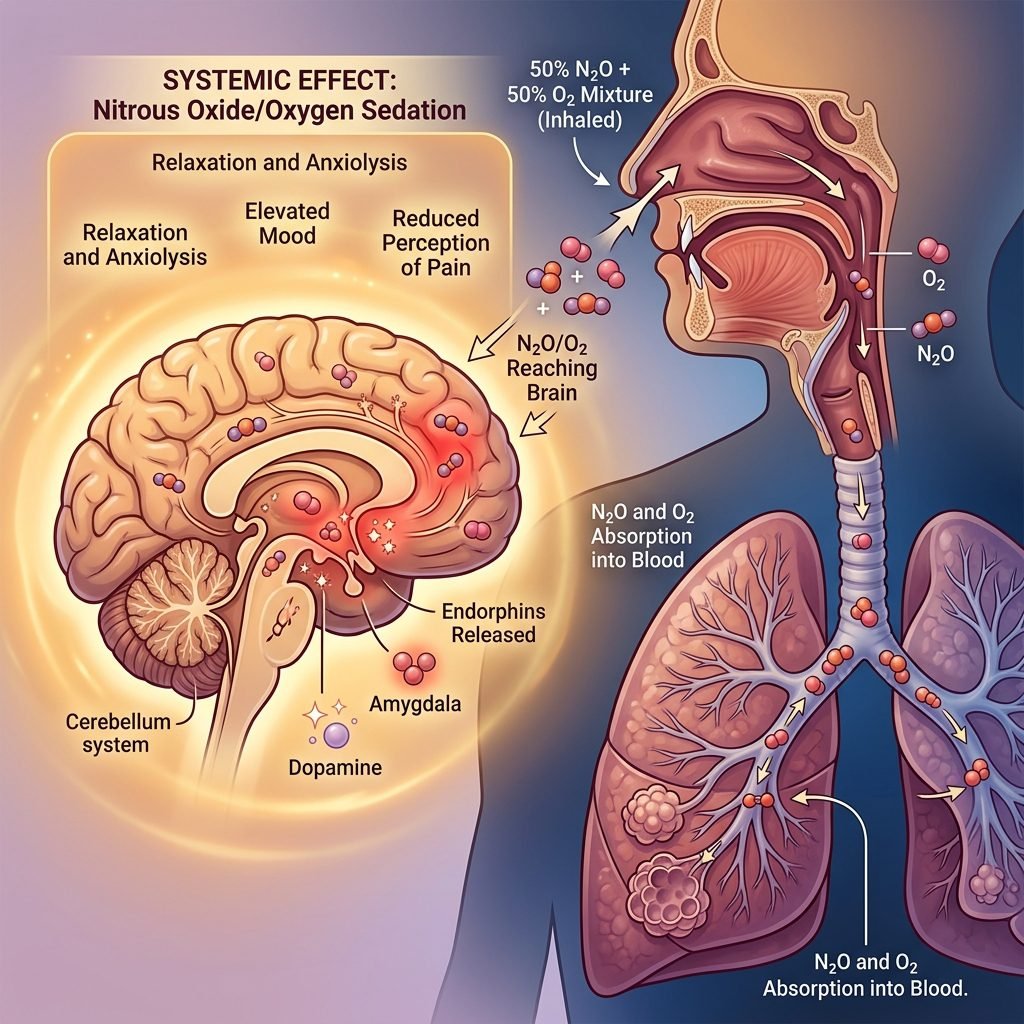
Nitrous oxide is an odorless, colorless gas that you inhale through a mask or a mouthpiece. In the labor and delivery setting, it is administered as a 50/50 blend of nitrous oxide and oxygen. This specific concentration is designed to be safe for both you and your baby, and it is cleared from your system within just a few breaths of fresh air. It is important to understand that nitrous oxide is not a ‘block’ like an epidural; it does not take away the sensation of the contraction entirely. Instead, it works by increasing your body’s natural endorphins and dopamine, which changes the way your brain perceives the pain. Many mamas describe it as feeling a bit ‘floaty’ or like they have had a glass of champagne—the contractions are still there, but they feel manageable and less frightening.
The Science of the ‘Edge’
When you inhale the gas, it quickly crosses into your bloodstream and travels to the brain, where it interacts with signaling pathways to reduce anxiety and pain. Because it is self-administered, you have 100% control over when and how much you use. This autonomy is a huge psychological boost during labor, as it helps you feel proactive rather than passive. The gas peaks in your system about 30 to 60 seconds after you start inhaling, which perfectly matches the typical duration of a contraction.
The Magic of Control: How to Master the Mask
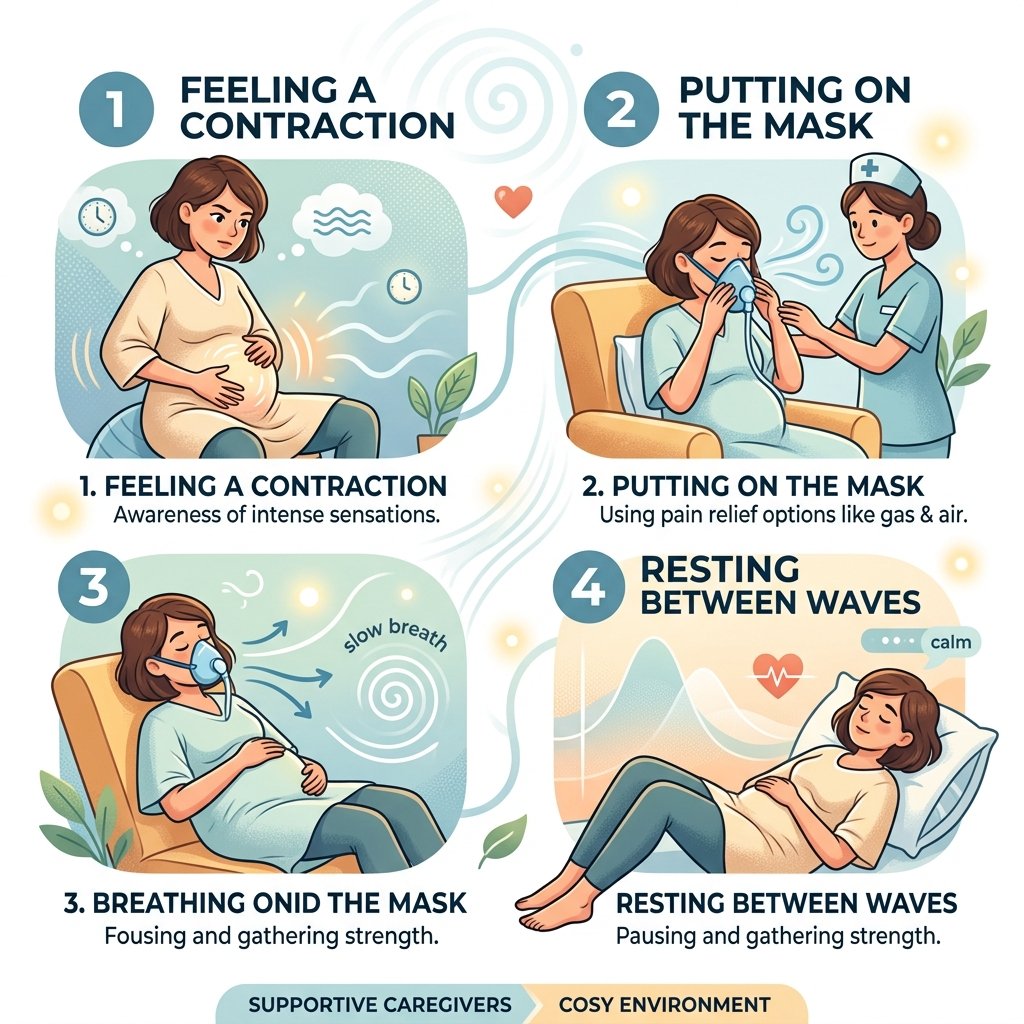
Using nitrous oxide is an art, and as your virtual doula, I want to teach you the ’30-second rule.’ The key to success is timing. If you wait until the contraction is at its peak to start breathing the gas, you have missed the window of maximum relief. Instead, you want to start inhaling the moment you feel the very first ‘tightening’ or even a few seconds before if you are tracking your waves on a monitor.
Step-by-Step Guide to Inhaling Peace
- Identify the Start: As soon as you feel the wave beginning to build, place the mask firmly over your nose and mouth to create a tight seal.
- Deep, Slow Breaths: Take deep, diaphragmatic breaths into the mask. Think about breathing all the way down to your baby.
- The Peak: Continue breathing the gas through the peak of the contraction. This is when the concentration in your blood will be highest, providing the most relief.
- The Release: Once the contraction begins to fade, pull the mask away and breathe normal room air. This prevents you from feeling too drowsy between contractions.
- Stay Hydrated: Nitrous can sometimes make your mouth feel a bit dry, so have your partner or doula keep a straw and cold water nearby.
“I felt the contraction coming and reached for my mask like it was a life raft. It didn’t make the pain go away, but it made me stop caring about the pain. I could finally focus on my breathing instead of the fear.” — A Birth Affirmation for the Nitrous Mama
Nitrous Oxide vs. The Epidural: Choosing Your Comfort Path
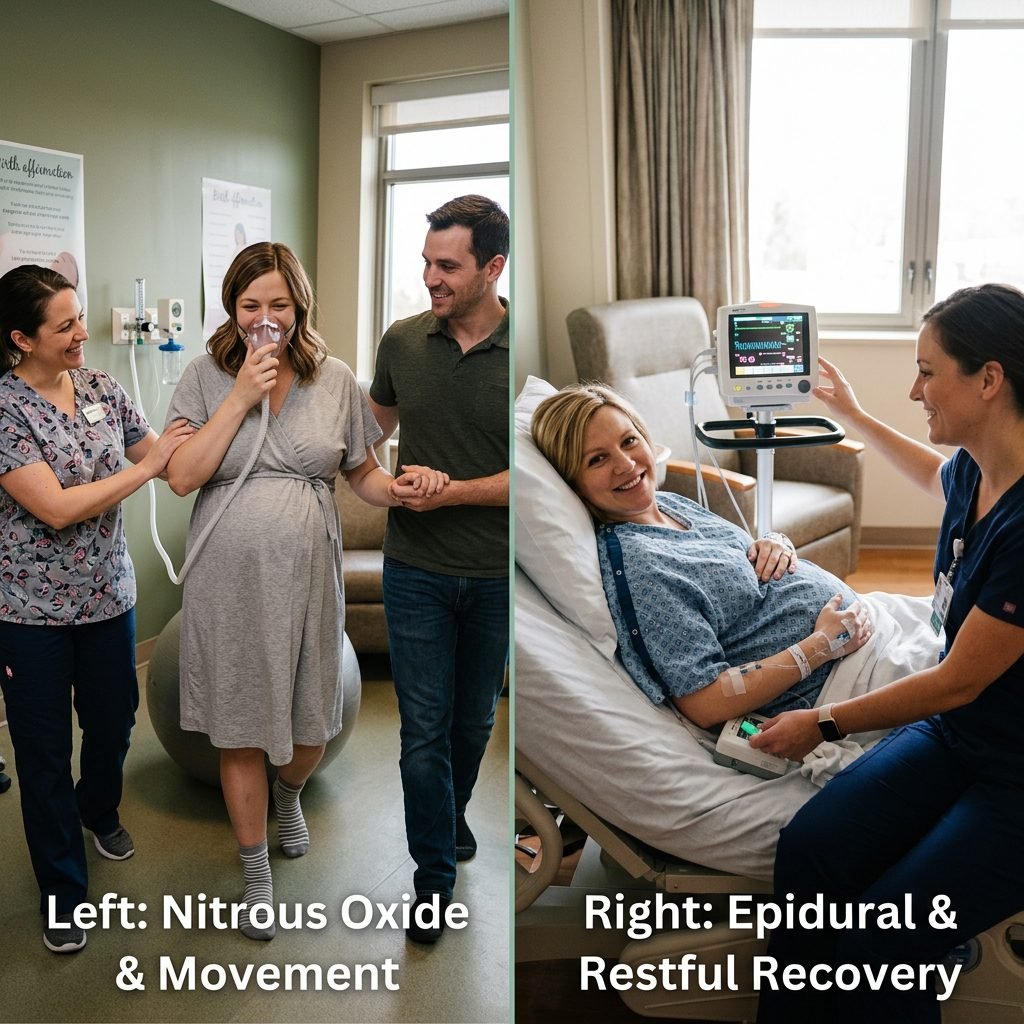
Deciding on pain management is a deeply personal choice, and there is no ‘right’ way to give birth. However, understanding the differences between your options can help you build a birth plan that feels right for your soul. Nitrous oxide is often the ‘bridge’ for mothers who want to avoid the immobility of an epidural but need more than just breathing techniques alone.
| Feature | Nitrous Oxide (Gas & Air) | Epidural Analgesia |
|---|---|---|
| Mobility | Full mobility; you can walk, sway, or use a birth ball. | Limited to bed; usually requires a catheter. |
| Level of Relief | Takes the edge off; reduces anxiety and perception. | Complete or near-complete numbing of the lower body. |
| Administration | Self-administered via mask or mouthpiece. | Administered by an anesthesiologist via a needle in the spine. |
| Effect on Baby | No known effect on fetal heart rate or APGAR scores. | Can occasionally cause a temporary drop in maternal blood pressure. |
| Recovery | Instant; clears system in minutes. | Takes several hours for feeling to return to legs. |
One of the biggest benefits of nitrous is that it does not slow down labor. In fact, because it helps you relax, it can sometimes help your body open up more quickly. If you decide later that you want an epidural, you can still get one! Nitrous is a ‘no-regrets’ tool that you can use at any point in your journey.
The Doula Perspective: Why Nitrous is a Game-Changer for Active Labor

In the world of birth support, we often talk about the ‘Transition’ phase—that intense period where you are 7 to 10 centimeters dilated and things feel a bit overwhelming. This is where nitrous oxide truly shines. It provides a task for the mother to focus on. Holding the mask and focusing on the rhythm of the breath gives you a sense of purpose during the most challenging moments of labor.
Nitrous Oxide Timing & Position Guide
| Labor Phase | Intensity Level | Recommended Position with Nitrous |
|---|---|---|
| Early Labor | Mild to Moderate | Standing, swaying, or slow dancing with your partner. |
| Active Labor | Strong & Regular | Hands and knees on the bed or a mat, mask in one hand. |
| Transition | Very Intense | Sitting on the ‘throne’ (the toilet) or a birth ball, leaning forward. |
| Pushing | Powerful Urge | Side-lying or squatting; using the gas between pushes for rest. |
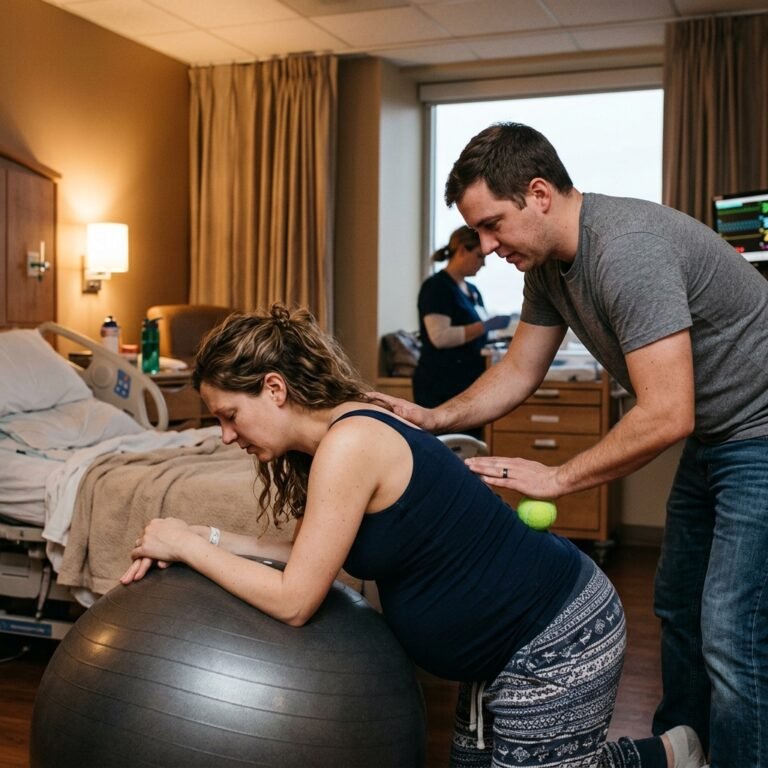
As a doula, I love seeing a mama use nitrous because it allows her to stay upright and active. Gravity is your best friend in labor! When you are upright, your baby’s head can press more effectively against the cervix, which helps things progress. Nitrous gives you just enough relief to keep moving when you might otherwise want to give up and lie down.
Common Questions & Gentle Realities: Side Effects and Safety

While nitrous oxide is incredibly safe, it is important to be aware of the potential side effects so you aren’t surprised. About 10% to 15% of women experience some mild nausea or dizziness. If this happens, don’t worry! Simply take the mask away, breathe fresh air for a minute, and the feeling will pass almost instantly. This is the beauty of nitrous—it is not a long-term commitment.
Is it safe for my baby?
Yes, mama. Nitrous oxide has been used in Europe, Canada, and Australia for decades with an excellent safety record. Because you are breathing it in and then breathing it right back out, very little actually reaches the baby. It does not stay in your system, and it does not interfere with the initial bonding or breastfeeding immediately after birth. In fact, because you are more alert and less groggy than you might be with IV narcotics, many moms find the ‘golden hour’ after birth to be even more magical.
- Can I use it in the birth tub? Yes, most hospitals allow nitrous use while laboring in water!
- Do I need a constant monitor? Usually, no. Unlike an epidural, nitrous doesn’t require continuous fetal monitoring in many hospitals, allowing you more freedom.
- Can I use it while pushing? Absolutely. Many women find it helpful to take a few breaths between pushes to stay calm and grounded.
Adding Nitrous to Your Birth Preferences: A Conversation Guide

If you have decided that nitrous oxide sounds like a tool you want in your ‘labor bag,’ the next step is to ensure your birthing facility offers it. While its popularity is growing rapidly in the United States, not every hospital has it available yet. It is a good idea to bring this up at your next prenatal appointment.
How to Ask Your Provider
You can use this simple script to start the conversation:
“I am really interested in using Nitrous Oxide as a primary pain management tool for my labor. I value the mobility and control it offers. Does this facility have nitrous available, and are there any specific policies I should know about?”
If your hospital doesn’t offer it, don’t be afraid to ask why! Sometimes, patient demand is what drives hospitals to upgrade their equipment. If it is available, make sure to include it clearly in your written Birth Plan. You might write something like: ‘I would like Nitrous Oxide to be my first line of medicinal pain relief. Please have the equipment ready in my room so I can use it as needed.’
Conclusion
In the end, sweet mama, the best pain management tool is the one that makes you feel safe, supported, and powerful. Nitrous oxide is a wonderful ‘sisterly’ companion in the birth room—it is there when you need it, easy to set aside when you don’t, and it never takes away your voice or your ability to move. Whether you use it for the whole labor or just to get through those final intense centimeters, know that you are doing an incredible job. You are bringing life into this world, and that is the most powerful thing of all. You’ve got this!