12 Clever Ways to Use a Hanging Shoe Organizer in Your Baby’s Closet
Welcome to the Nesting Phase, Mama!
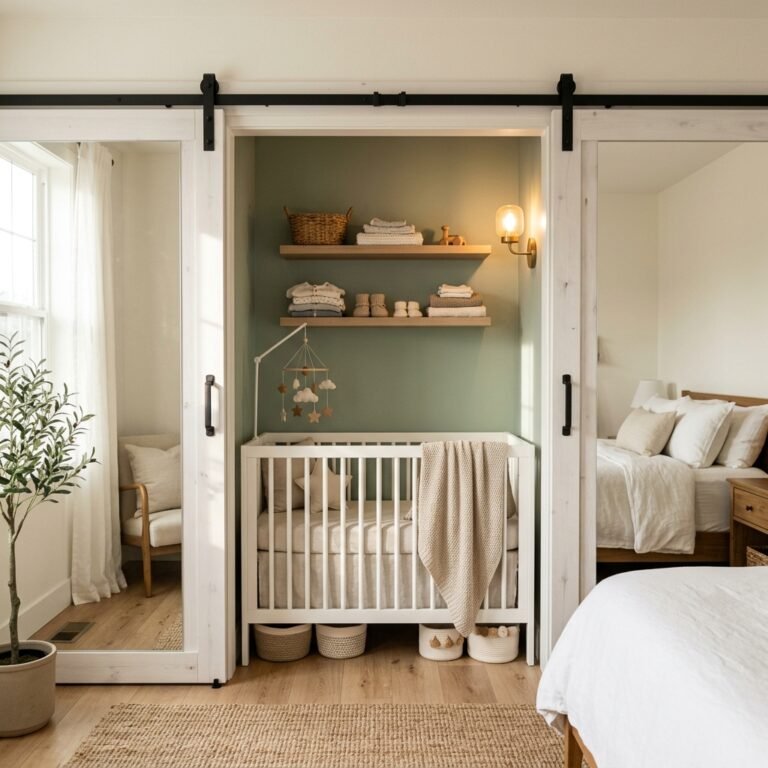
Hello, beautiful mama! If you are reading this, chances are you are deep into the glorious, sometimes overwhelming, and completely natural phase we call nesting. As a doula and pediatric sleep consultant, I have sat on the floor of countless nurseries with expectant mothers, surrounded by mountains of tiny baby socks, adorable onesies, and an intimidating amount of baby gear. You might be looking at your baby’s closet right now, wondering how on earth you are going to organize everything so it is accessible, aesthetic, and functional. Take a deep breath, drop your shoulders, and let me share one of my absolute favorite, budget-friendly nursery design hacks with you.
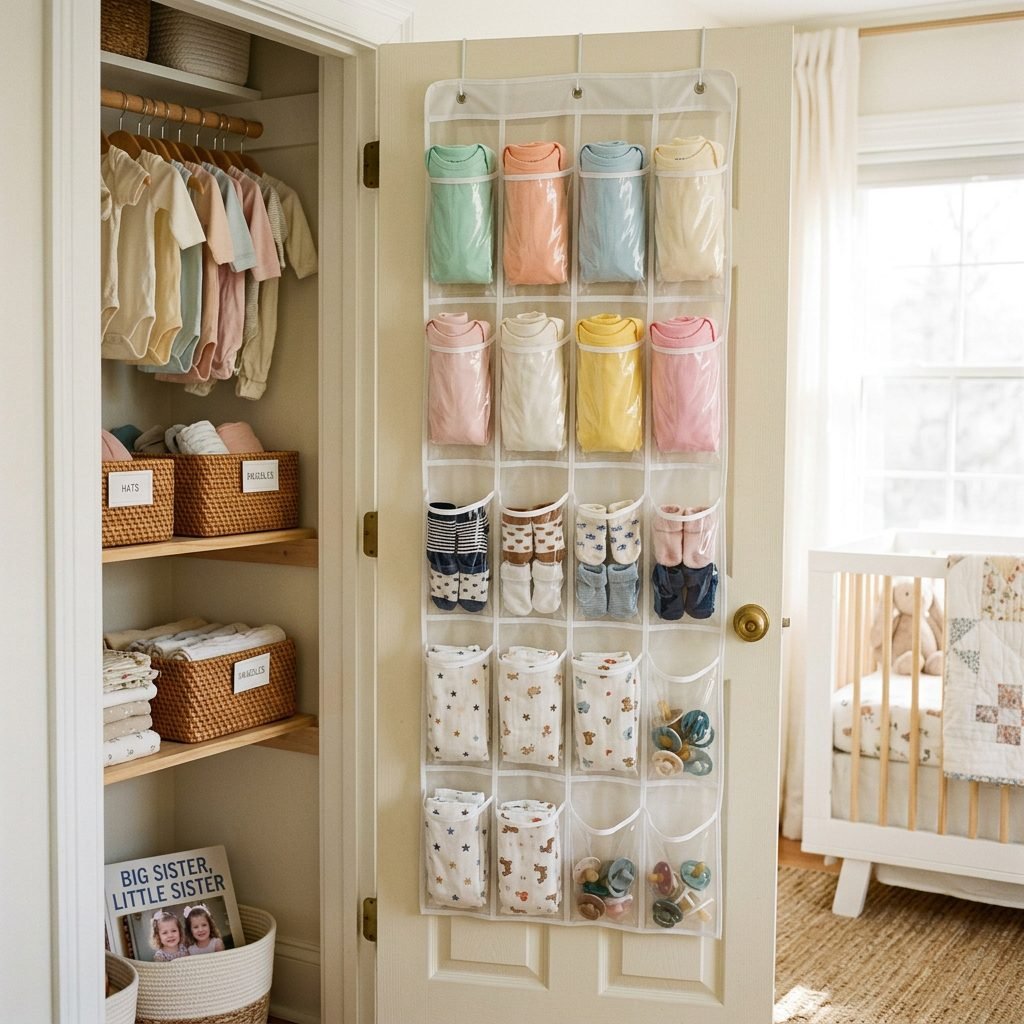
When we think of preparing for a baby, we often imagine expensive custom closet systems or elaborate dressers. But the truth is, the most functional nurseries are built on clever, accessible systems that support you during those beautiful, blurry postpartum days. Enter the humble over-the-door hanging shoe organizer. This simple, inexpensive item is a true superhero for small space nursery hacks and storage organization. It transforms unused vertical space into a highly visible, easy-to-reach command center.
Why is this so important? Because when you are holding a squirmy, crying baby at 3:00 AM, or when you are navigating the tender physical realities of postpartum recovery, you do not have the energy to rummage through deep, dark dresser drawers. You need what you need, and you need it now. A hanging shoe organizer allows you to see exactly where everything is at a single glance. It empowers your partner, your mother-in-law, or your postpartum doula to easily step in and help without having to ask you where the thermometer or the extra burp cloths are hidden.
Remember this, sweet friend: Organizing your nursery isn’t about achieving a picture-perfect magazine look. It is about creating a supportive environment that cares for YOU while you care for your new baby. A well-organized space is a gift you give to your future, sleep-deprived self.
In this comprehensive guide, we are going to walk through 12 brilliant, doula-approved ways to utilize a hanging shoe organizer in your baby’s closet. We will cover everything from taming the tiny wardrobe to setting up a midnight health command center. Grab a cup of red raspberry leaf tea, get comfortable, and let’s transform that closet into a haven of calm and order!
Choosing Your Nursery Storage Superhero
Setting the Foundation: Which Organizer is Right for You?
Before we dive into the 12 clever ways to fill your organizer, we need to talk about selecting the right one. Not all shoe organizers are created equal, and depending on your nursery’s climate, your aesthetic preferences, and what you plan to store, you will want to choose wisely. As an interior organizer for expectant parents, I always recommend looking for an organizer with at least 20 to 24 pockets to maximize your vertical space.
Materials Matter: Clear vs. Fabric vs. Mesh
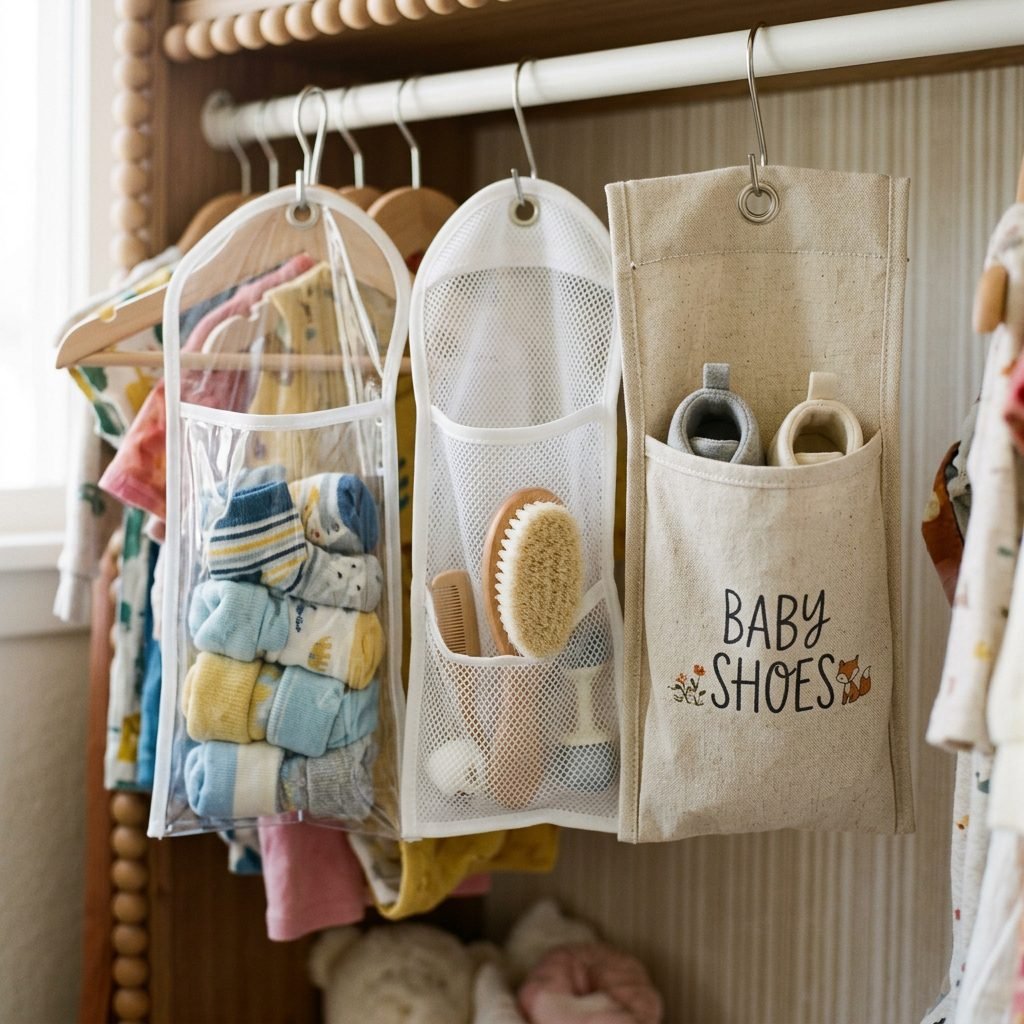
When shopping, you will generally find three main types of materials: clear PVC/plastic, breathable mesh, and solid fabric (like canvas or linen). Each has its own unique benefits for a baby’s closet.
| Organizer Material | Best For | Pros | Cons |
|---|---|---|---|
| Clear PVC / Plastic | Sleep-deprived parents needing instant visibility | 100% transparent; incredibly easy to wipe clean from spills or lotion leaks. | Can look slightly less aesthetic; plastic may tear if overloaded with heavy items. |
| Breathable Mesh | Storing damp items or items that need airflow (like shoes or burp cloths) | Allows air circulation; prevents musty smells; stretches slightly to accommodate bulky items. | Semi-transparent, so you can see colors but maybe not exact details of small items. |
| Solid Canvas / Linen | Aesthetic-focused nurseries and concealing visual clutter | Looks beautiful and high-end; very durable and can hold heavier items like lotions. | Zero visibility. You MUST use labels, or you will forget what is in each pocket. |
My personal doula recommendation? Go with the clear plastic or mesh for your first baby. The cognitive load of motherhood is heavy enough without having to memorize which opaque pocket holds the nail clippers. If you choose canvas for its aesthetic appeal, I highly recommend investing in a label maker or using cute iron-on patches to designate what goes where.
Installation Tips for Expectant Moms
When installing your organizer, please remember your pregnant body! Do not climb on chairs or step stools to reach the top of the door. Ask your partner, a friend, or a family member to hang it for you. Most organizers come with metal hooks that slide right over the top of the closet door. If you are using it inside the closet on the actual clothing rod, you can find versions that attach with strong velcro loops. Just ensure the velcro is rated to hold at least 10 to 15 pounds, as baby lotions and wipes can get surprisingly heavy!
Ways 1 to 4: Taming the Tiny Wardrobe
Mastering the Micro-Wardrobe
Baby clothes are undeniably adorable, but their miniature size makes them notoriously difficult to fold and store in traditional dresser drawers. They tend to unfold, tangle, and disappear into the abyss. Here are the first four ways to use your shoe organizer to keep baby’s apparel perfectly sorted.
1. The Infamous Missing Baby Socks
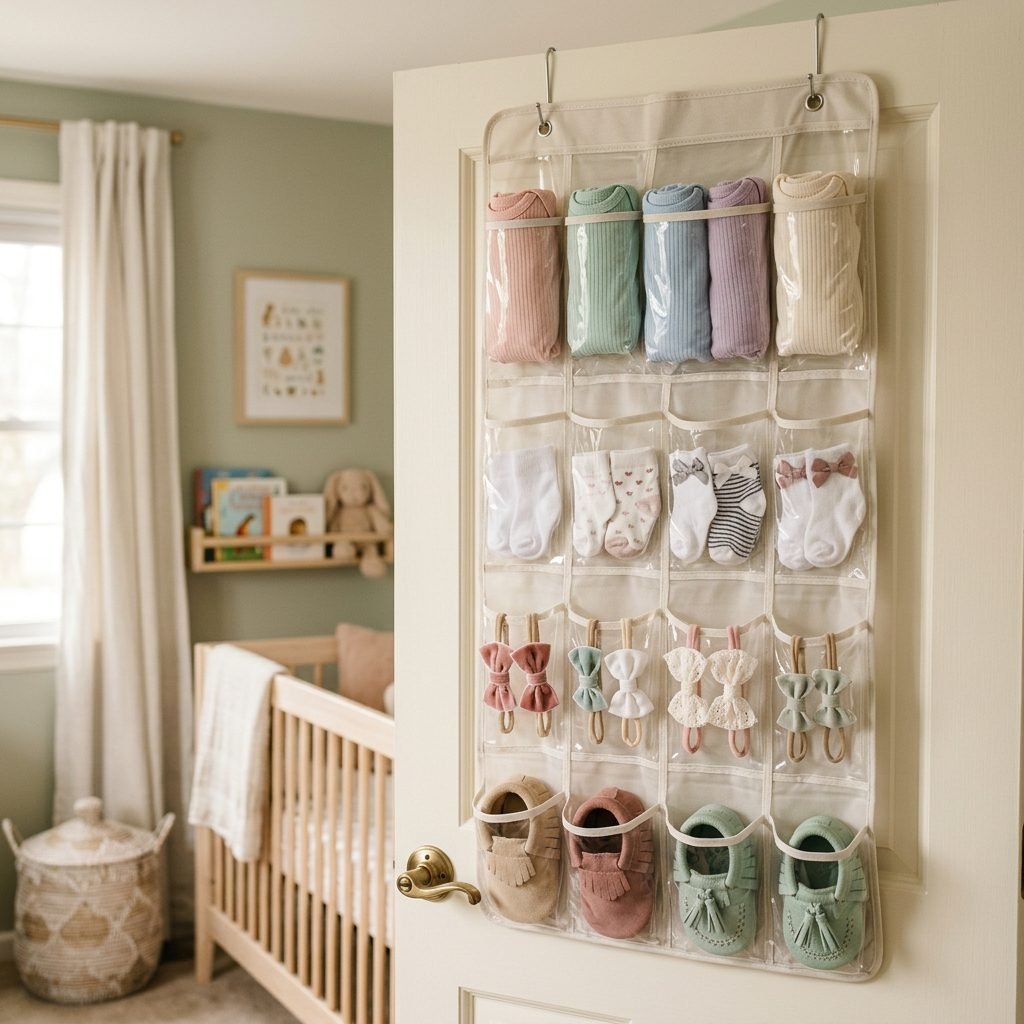
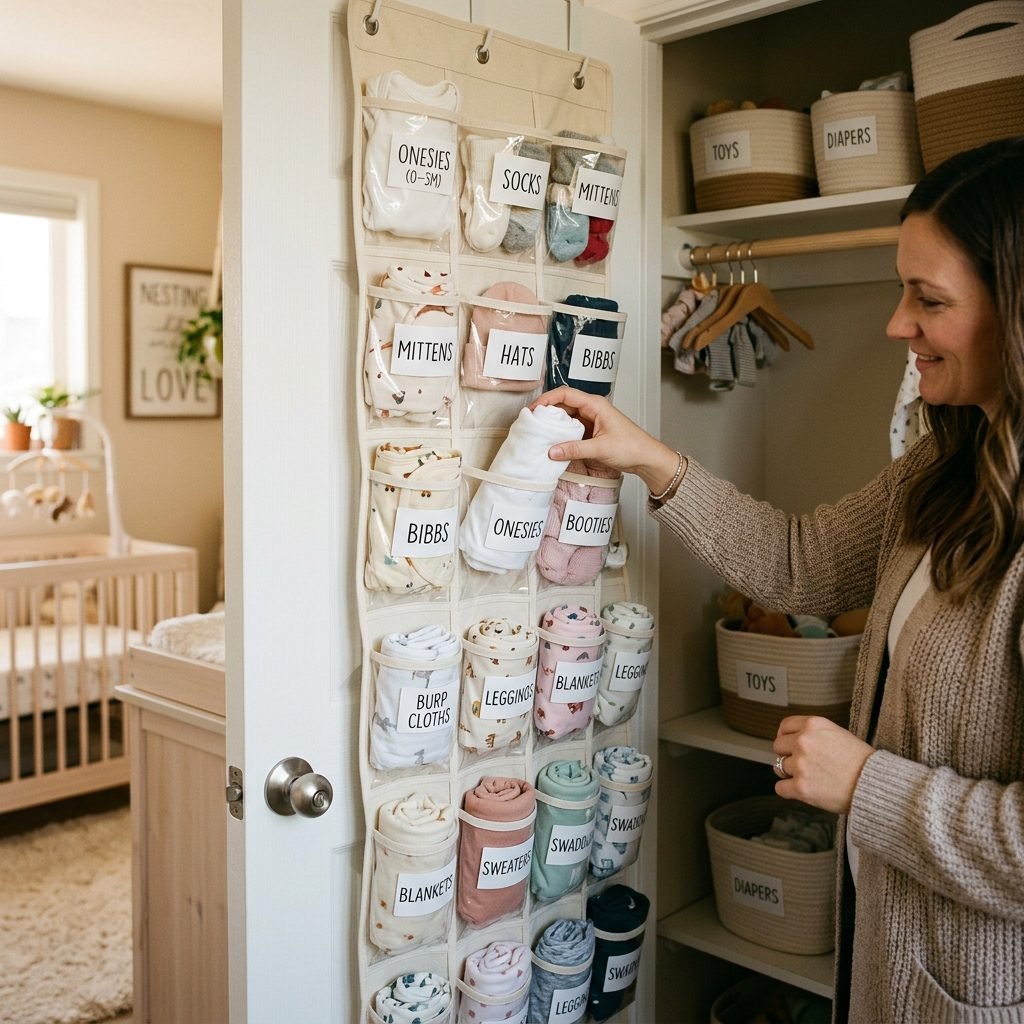
If there is one universal truth of motherhood, it is that baby socks vanish into thin air. They are so tiny that they get lost in the laundry, stuck inside other clothes, or swallowed by dresser drawers. Dedicate the top two or three pockets of your organizer exclusively to socks. You can separate them by color or simply toss them in as pairs. Because the pockets are small and contained, you will never have to dig around for a matching pair while your baby is waiting to be dressed.
2. Rolled Onesies for Grab-and-Go
This is a game-changer! Instead of stacking onesies in a drawer where pulling one out ruins the whole pile, use the Marie Kondo rolling method. Fold the onesie in half vertically, tuck the sleeves in, and roll it tightly from the neck down to the snaps. You can fit 2 to 3 rolled onesies in a single shoe pocket! Organize them by sleeve length (short sleeves in one pocket, long sleeves in another) or by size. This makes it incredibly easy for a partner to grab exactly what is needed during a frantic middle-of-the-night blowout change.
3. Bows, Beanies, and Headbands
Accessories are beautiful, but they can quickly become a tangled mess. Use the middle pockets of your organizer to store soft headbands, newborn beanies, and little mittens. For headbands with delicate bows, the pocket protects them from getting crushed under heavier clothing. You can easily color-coordinate these pockets, making it a joy to pick out the perfect accessory for your baby’s daily outfit.
4. Actual Baby Shoes (Yes, Really!)
While babies don’t truly need hard-soled shoes until they are walking, you will likely receive several pairs of adorable soft booties, moccasins, and tiny sneakers at your baby shower. Storing them in a shoe organizer (its original purpose!) keeps them paired together and prevents them from getting squished. Plus, seeing those tiny shoes displayed in the pockets is guaranteed to give you a rush of joyful anticipation every time you open the closet door.
Doula Tip: Keep the clothing items you use most frequently at your natural eye level. Put the items you use less often (like next-season’s sizes or formal booties) in the very top or very bottom pockets to save your back from unnecessary bending during postpartum recovery.
Ways 5 to 8: The Baby Care Command Center
Creating Your Midnight Health & Care Station
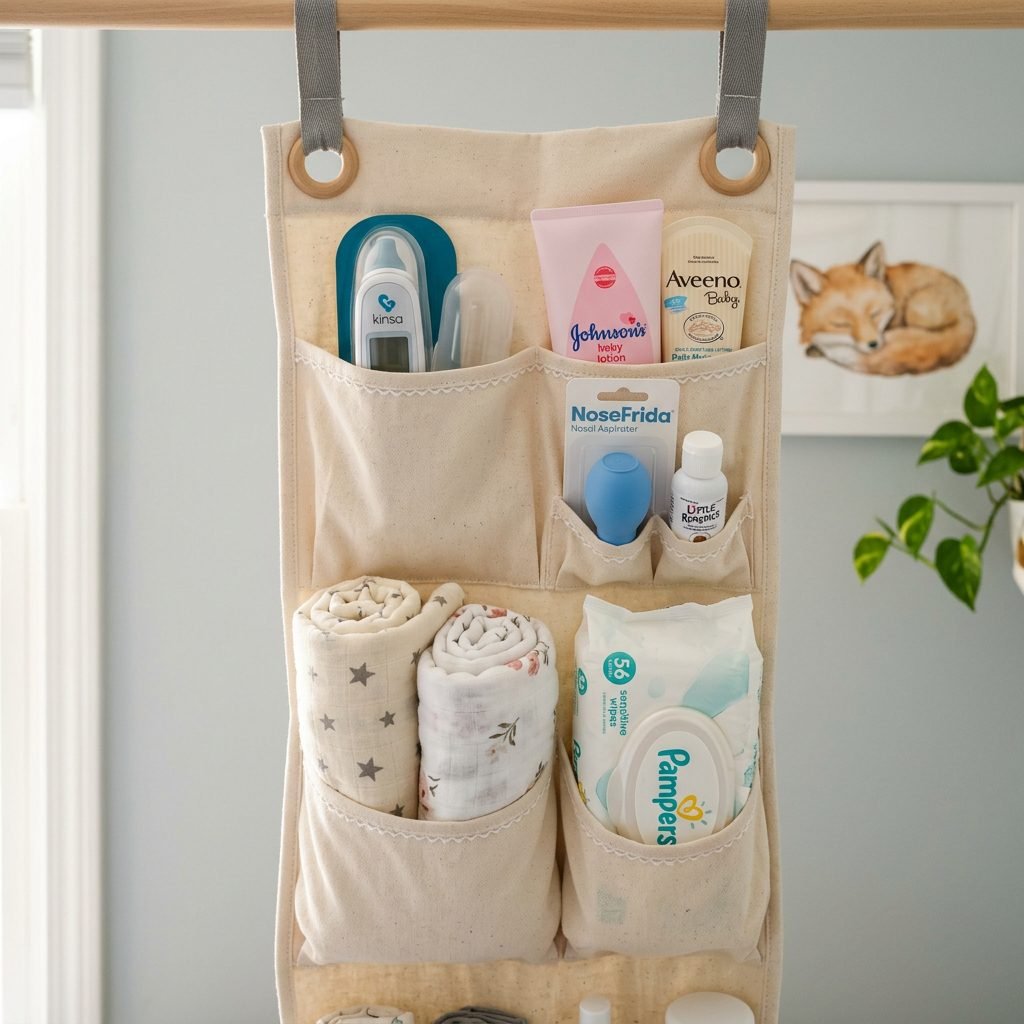
As a postpartum recovery nurse, I cannot stress enough the importance of having a centralized ‘Care Command Center’. When your baby wakes up fussy, congested, or with a sudden diaper rash, you do not want to be running between the bathroom, the nursery, and the kitchen. The middle pockets of your shoe organizer are the perfect place to build this station.
5. Diaper Creams and Lotions
Tubes of diaper rash cream, daily moisturizers, and baby massage oils are bulky and tend to tip over on top of a dresser. Slipping them vertically into a shoe organizer pocket keeps them upright, preventing leaks and making them easy to grab with one hand while your other hand is safely holding your baby on the changing table. Keep a pocket dedicated to your favorite barrier creams and another for soothing nighttime lavender lotions.
6. The Midnight First-Aid Kit
This is perhaps the most vital use of the organizer. Dedicate one highly visible pocket to health essentials. This pocket should contain your digital thermometer, baby-safe nail clippers, a soft cradle cap brush, a nasal aspirator (like the NoseFrida), and saline drops. Important: Always ensure any actual medications (like infant acetaminophen, once cleared by your pediatrician) are stored safely out of reach as your baby grows into a toddler, but for the newborn stage, having these tools visible and instantly accessible brings immense peace of mind to anxious new parents.
7. Overflow Wipes and Diapers
While you will have a main diaper caddy on your changing table, you will inevitably run out of wipes at the most inconvenient moment. Use the larger bottom pockets of your shoe organizer to hold backup packs of water wipes and a stash of 5 to 10 extra diapers. This saves you from having to open bulk cardboard boxes in the middle of a diaper change. It is a simple backup system that acts as a safety net for tired parents.
8. Swaddles and Sleep Sacks
Proper infant sleep is crucial for both baby and mama. Those beautiful muslin swaddle blankets and wearable sleep sacks can take up a lot of drawer real estate. By folding them neatly and sliding them into the larger pockets of your organizer, you keep them wrinkle-free and easy to select. You can dedicate one pocket to lightweight summer swaddles and another to heavier, fleece-lined winter sleep sacks, making bedtime routines smoother for everyone involved.
| Care Item | Ideal Pocket Location | Why It Works |
|---|---|---|
| Thermometer & Aspirator | Eye-Level (Middle) | Instant access during high-stress moments (fevers, congestion). |
| Diaper Creams & Oils | Waist-Level | Easy one-handed grab while standing at the changing table. |
| Backup Diapers & Wipes | Bottom Pockets | Heavier items won’t weigh down the top; easy to restock. |
| Swaddles & Sleep Sacks | Upper-Middle Pockets | Keeps fabrics clean, visible, and away from potential lotion spills. |
Ways 9 to 12: Feeding, Soothing, and Beyond
Supporting the Feeding Journey and Playtime
Your baby’s closet isn’t just for clothes and diapers! As your baby grows from a sleepy newborn into an alert infant, their needs will shift. The hanging shoe organizer is incredibly adaptable and can evolve right alongside your motherhood journey. Let’s look at how to use those remaining pockets for feeding, soothing, and early sensory development.
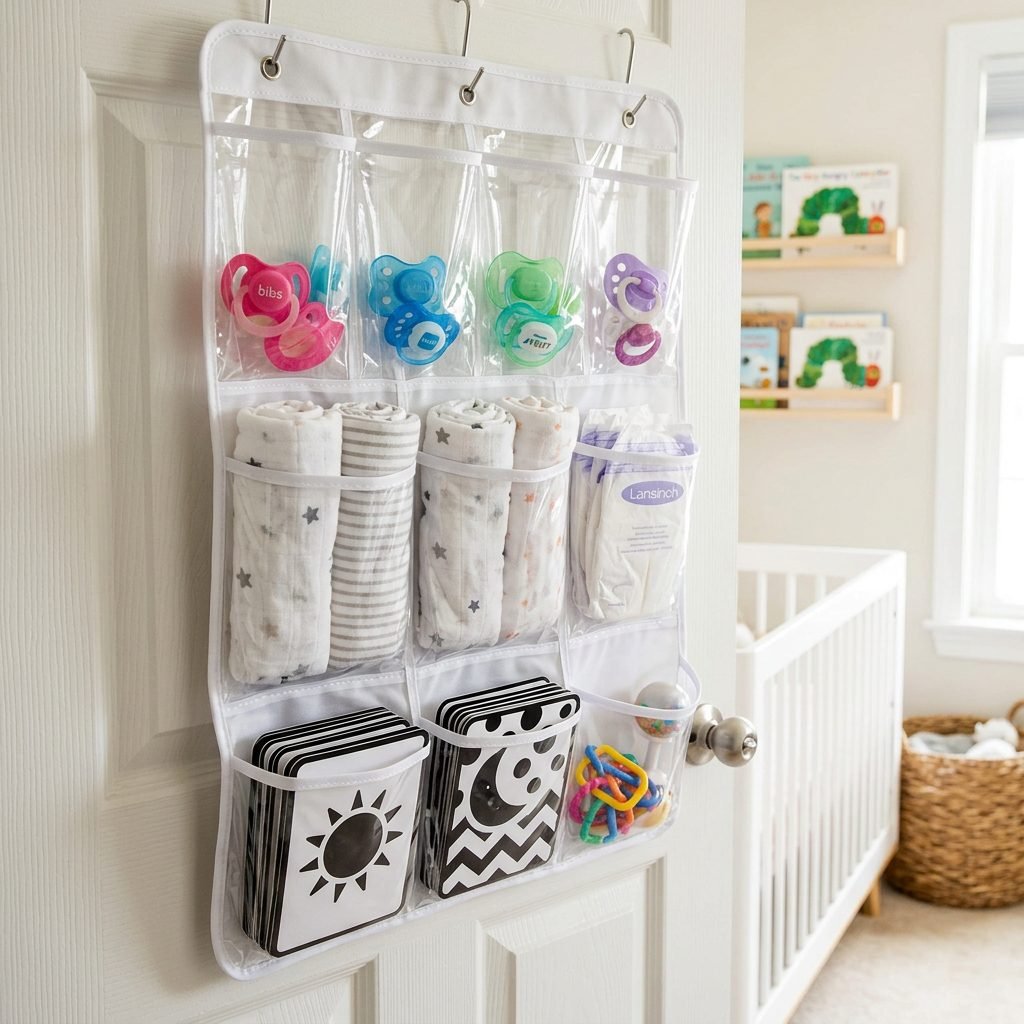
9. Pacifiers and Teether Clips
If baby socks are the most commonly lost clothing item, pacifiers are the most commonly lost soothing item! They roll under cribs, hide in couch cushions, and seemingly vanish into the ether. Dedicate a small pocket specifically for clean pacifiers and pacifier clips. Having a designated ‘clean paci’ pocket means you or your partner can instantly grab a fresh one when the baby is crying, without having to run to the kitchen to wash one. Pro tip: Keep a separate, small wet bag nearby for dirty pacifiers so they never mix!
10. Burp Cloths Galore
Listen to your doula on this one: You are going to need way more burp cloths than you think. Babies are messy, beautiful little creatures, and spit-up is a daily reality. Roll your soft muslin or cotton burp cloths just like you rolled the onesies, and stuff a pocket full of them. Having them stored vertically on the door means you can grab one on your way out of the nursery to feed the baby in the living room.
11. Pumping Parts and Bottles
For my pumping mamas, the sheer volume of flanges, valves, and bottles can take over your kitchen counters. While you will wash them in the kitchen, keeping clean, dry backup pump parts in the nursery closet can be a lifesaver for middle-of-the-night pumping sessions. Dedicate a clean, clear pocket to extra breast pads, nipple cream, and spare pump valves. This creates a supportive, quiet nursing and pumping station right in the nursery.
12. Small Sensory Toys and Books
As your baby approaches the 3-to-6-month mark, sensory play becomes incredibly important for their brain development. Use the lower pockets of your organizer to store high-contrast black-and-white flashcards, soft crinkle books, and small wooden grasping toys. Storing them here keeps the nursery floor clear of clutter while making it easy to pull out a new activity during tummy time.
- Step 1: Gather all small toys and inspect them for safety (no loose parts).
- Step 2: Group them by sensory type (e.g., visual cards in one pocket, auditory rattles in another).
- Step 3: Place them in the lowest pockets so that as your baby turns into a crawling toddler, they can safely reach their own toys, fostering early independence!
Doula-Approved Hacks for Keeping It Organized
Sustaining the System: Tips for the Long Haul
Setting up your beautiful new hanging shoe organizer is immensely satisfying, but the real challenge is keeping it organized once the baby arrives and the sleep deprivation sets in. As a mother and a maternal wellness expert, I want to reassure you: It is okay if the system gets messy sometimes. You are learning a completely new rhythm of life. However, implementing a few foolproof strategies now will make it much easier to maintain.
Labeling for the Win
Even if you use a clear organizer, labeling is a massive help—not necessarily for you, but for your ‘village’. When your partner, your mother, or your postpartum doula is helping out, labels eliminate the need for them to ask you where things are. You can use a standard label maker, or get crafty with cute, customized tags tied to the pockets with ribbon. Labeling pockets like ‘0-3M Onesies’, ‘First Aid’, and ‘Clean Pacis’ turns your closet into a system anyone can navigate.
The Art of the Size Rotation
Babies grow at an astonishing rate. A common source of nursery clutter is mixing outgrown clothes with clothes that currently fit. Use your organizer to manage this transition smoothly.
- The ‘Too Small’ Bin: Keep a small basket on the floor under the hanging organizer. The moment you try a onesie on your baby and realize it is too tight, toss it in the basket, NOT back in the pocket.
- The ‘Next Size Up’ Pockets: Dedicate the top row of your organizer to the next size up. If your baby is in 3-month clothes, keep a few 6-month essentials in the top pockets. When the time comes, you can easily rotate them down into the prime, eye-level pockets.
Color-Coding for Visual Calm
Postpartum hormones can make visual clutter feel overwhelming. To create a serene environment, try color-coding the items in your organizer. Group all the white and neutral onesies in one column, and the colored or patterned ones in another. This simple visual trick makes the closet look intentionally designed and incredibly calming to look at during those late-night feedings.
A Gentle Reminder: Some days, clean laundry will sit in a basket on the floor, and the organizer pockets will be empty. That is perfectly fine! The organizer is a tool to serve you, not a standard you have to perfectly maintain every single day. Give yourself grace, mama. You are doing a wonderful job.
Conclusion
Embracing Your Beautifully Organized Nursery
Nesting is such a profound, beautiful instinct. It is your mind and body’s way of preparing a safe, welcoming space for the new life you are bringing into the world. By utilizing a simple hanging shoe organizer, you have just unlocked 12 incredibly clever, space-saving ways to keep your baby’s closet functional, aesthetic, and ready for anything.
From taming the wild world of missing baby socks and rolled onesies to building a midnight health command center with thermometers and diaper creams, this $15 hack is truly a postpartum lifesaver. It maximizes your vertical space, keeps vital items at arm’s reach, and empowers your support system to help you care for your baby seamlessly.
As you stand back and look at your beautifully organized closet, I want you to take a moment to honor the work you are doing. Preparing for a baby is a labor of love. Every onesie you roll, every pacifier you tuck away, and every label you make is a testament to the deep, abiding love you already have for your little one. Rest easy knowing your space is prepared, so you can focus on what truly matters: recovering beautifully and soaking in every precious moment with your new baby. You’ve got this, mama!