
Cozy & Functional: How to Arrange a Shared Master Bedroom with a Crib Next to Your Bed
Welcome to Your Shared Sanctuary, Mama
Welcome to the beautiful, nesting-fueled phase of your pregnancy! Setting up a nursery is a profound rite of passage, but when you are planning to share your master bedroom with your new baby, the design process can feel a little overwhelming. As a doula and a mama who has navigated the beautiful, sleep-deprived waters of postpartum recovery, I am here to reassure you that sharing your room doesn’t mean sacrificing your adult sanctuary. In fact, keeping your baby close for the first 6 to 12 months is highly recommended by the American Academy of Pediatrics (AAP) for safe sleep and sudden infant death syndrome (SIDS) risk reduction.
But how do we practically fit a crib, a changing station, and all those tiny baby necessities into your adult space without it looking like a daycare exploded in your bedroom? How do you maintain a space that feels like a retreat for you and your partner, while perfectly accommodating your newborn’s needs? We are going to dive deep into cozy, functional, and beautiful space-saving hacks to arrange your shared master bedroom with a crib right next to your bed. Grab a cup of red raspberry leaf tea, take a deep, grounding breath, and let’s design your perfect, peaceful postpartum nest.
Setting the Foundation: Safe Sleep Guidelines for Room-Sharing

Before we get into the gorgeous aesthetics and clever storage hacks, we have to talk about the most important element: safety. When arranging a shared master bedroom with a crib next to your bed, the physical layout must prioritize your baby’s well-being above all else.
The Non-Negotiables of Crib Placement
- Distance from Hazards: Position the crib at least 3 feet away from windows, blinds, cords, and heavy wall hangings. Babies can grab cords as they grow, posing a strangulation risk.
- Climate Control: Keep the crib away from direct airflow like AC vents, drafty windows, or hot radiators. The ideal room temperature for a sleeping baby is between 68 and 72 degrees Fahrenheit.
- Adult Bed Proximity: While you want the crib close for easy midnight feedings, ensure there is a gap of at least 1 to 2 feet between your mattress and the crib. This prevents adult bedding, pillows, or heavy duvets from accidentally falling into the baby’s sleep space.
“Your baby’s sleep space should be as boring as possible. A firm mattress, a fitted sheet, and absolutely nothing else. Peace of mind is the most beautiful nursery aesthetic you can achieve.”
Choosing the Right Crib for Your Space
If your master bedroom is incredibly tight on square footage, consider a mini crib instead of a standard one. Mini cribs are typically 38 inches long by 24 inches wide, compared to a standard crib which is 52 inches by 28 inches. They offer the exact same rigorous safety standards but leave you precious walking room, which is especially vital if you are recovering from a C-section and need clear pathways to navigate the room safely in the dark.
Creating Zones: How to Blend Baby’s Space with Your Sanctuary

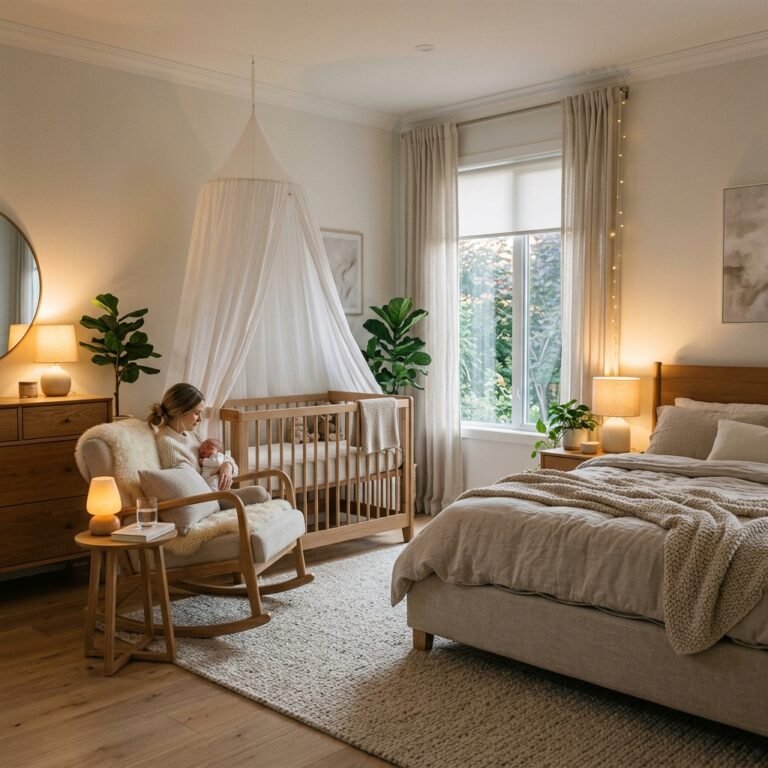
You don’t need physical walls to create separate rooms; you just need intentional, clever zoning. By visually dividing your master bedroom, you maintain your adult retreat while giving your baby their own dedicated, cozy corner.
The Sleep Sanctuary (Adult Zone)
Keep your bed looking and feeling like *your* bed. Invest in beautiful, cozy bedding that makes you feel luxurious. Use a large area rug under your bed to anchor the adult space. Keep your nightstands clutter-free by utilizing drawer organizers, ensuring that your side of the room remains a visual resting place for your tired eyes.
The Baby Nook (Infant Zone)
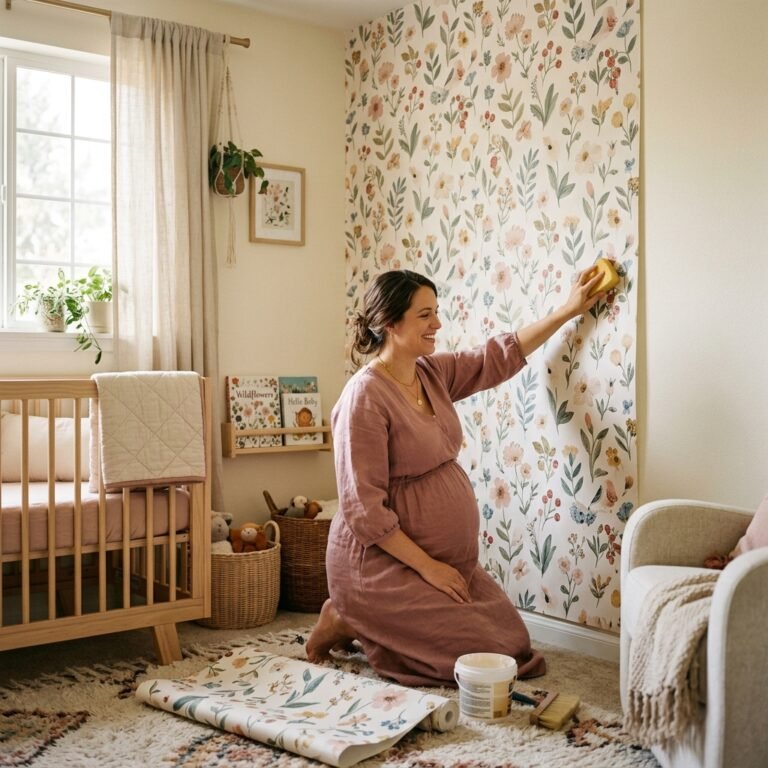
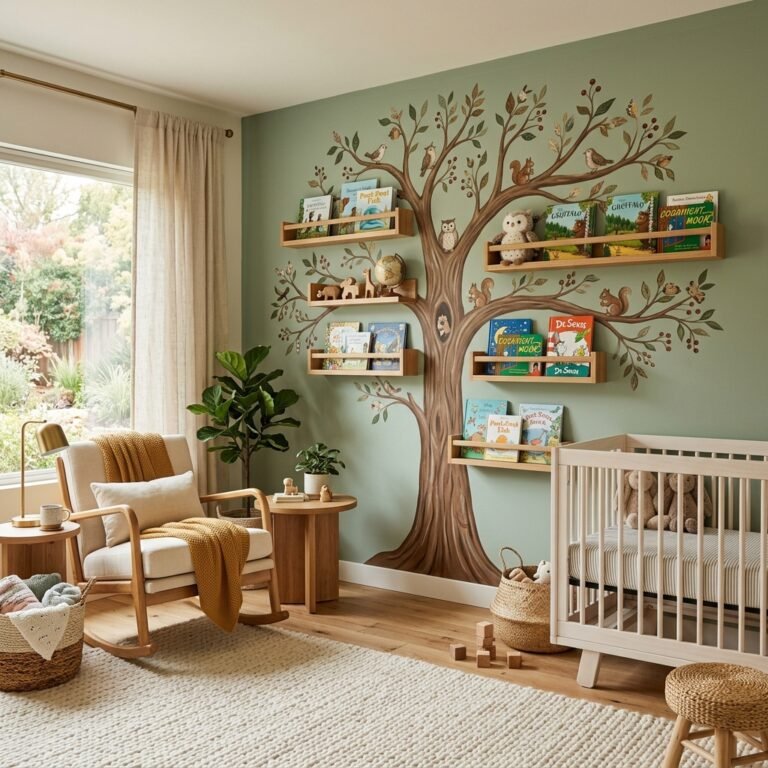
Anchor the crib with a small, washable accent rug to define their space. You can use a gentle, peel-and-stick wallpaper or a beautiful, non-toxic wall decal on just the wall behind the crib to create a subtle “nursery” feel without overwhelming the entire master bedroom aesthetic.
The Lighting Strategy
Lighting is everything in a shared room, especially when managing middle-of-the-night wake-ups.
- Overhead Lights: Put your main bedroom lights on a dimmer switch if possible.
- Baby Zone: Use a small, warm-toned nursery lamp or a red-light nightlight. Red light (around 600 to 700 nanometers) does not inhibit melatonin production, helping both you and baby get back to sleep much faster after feeds.
- Adult Zone: Keep your standard reading lamps, but consider smart bulbs so you can turn them off from your phone without having to get out of bed once the baby is finally asleep!
Maximizing Storage: Clever Hacks for a Clutter-Free Shared Room
Babies are tiny, but their gear takes up an astonishing amount of space. Storage is often the number one challenge for parents creating a shared master bedroom with a crib. Let’s look at how to double your storage capacity without bringing in bulky, space-consuming furniture.
Vertical Space is Your Best Friend
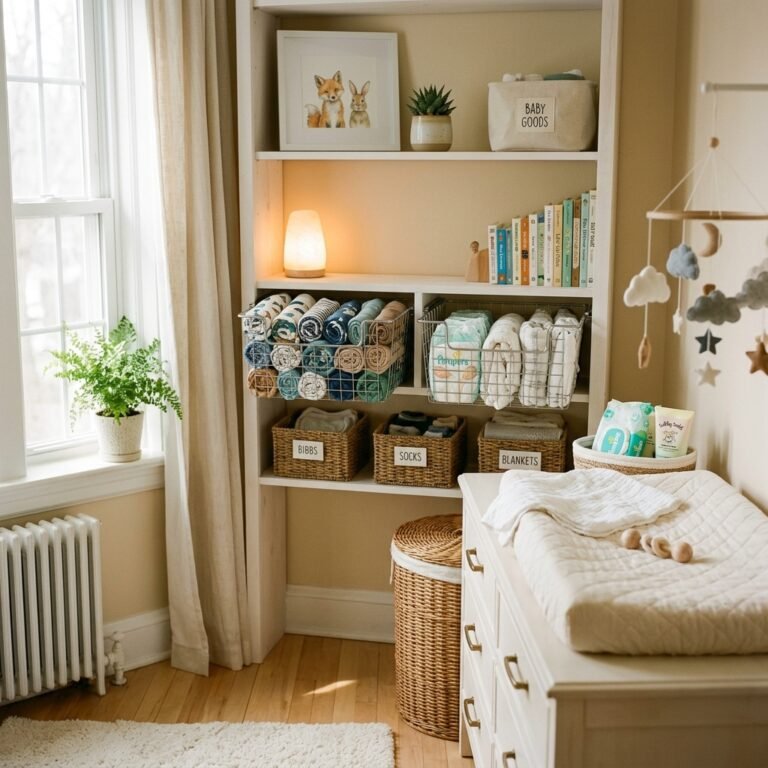
When floor space is limited, look up! Install acrylic floating bookshelves above the changing station (high enough so baby can’t reach them) to display books, small decor, or baby monitors. Use over-the-door organizers on the back of your bedroom door or closet door to hold swaddles, burp cloths, lotions, and tiny socks.
The Under-Crib Secret
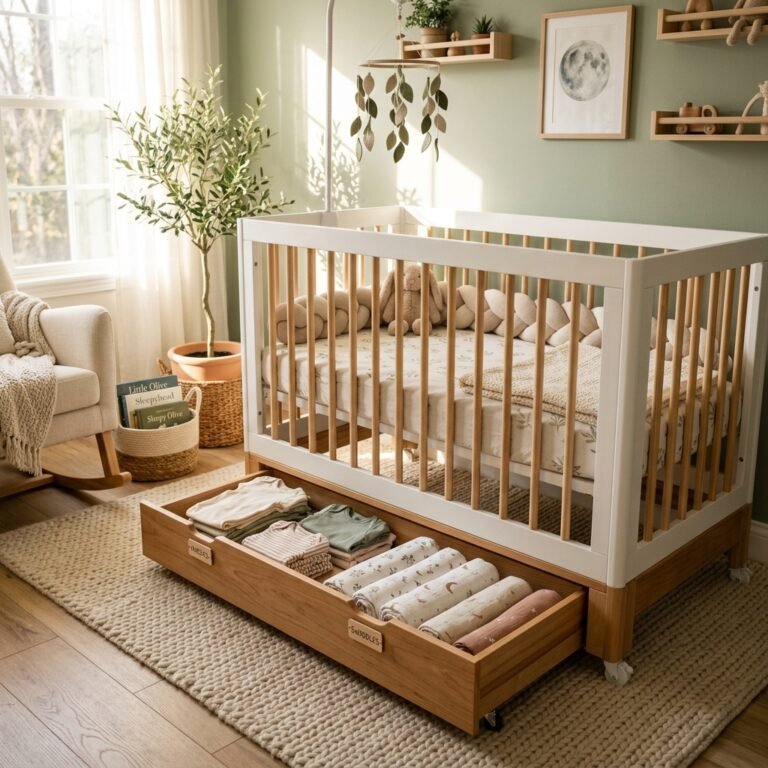
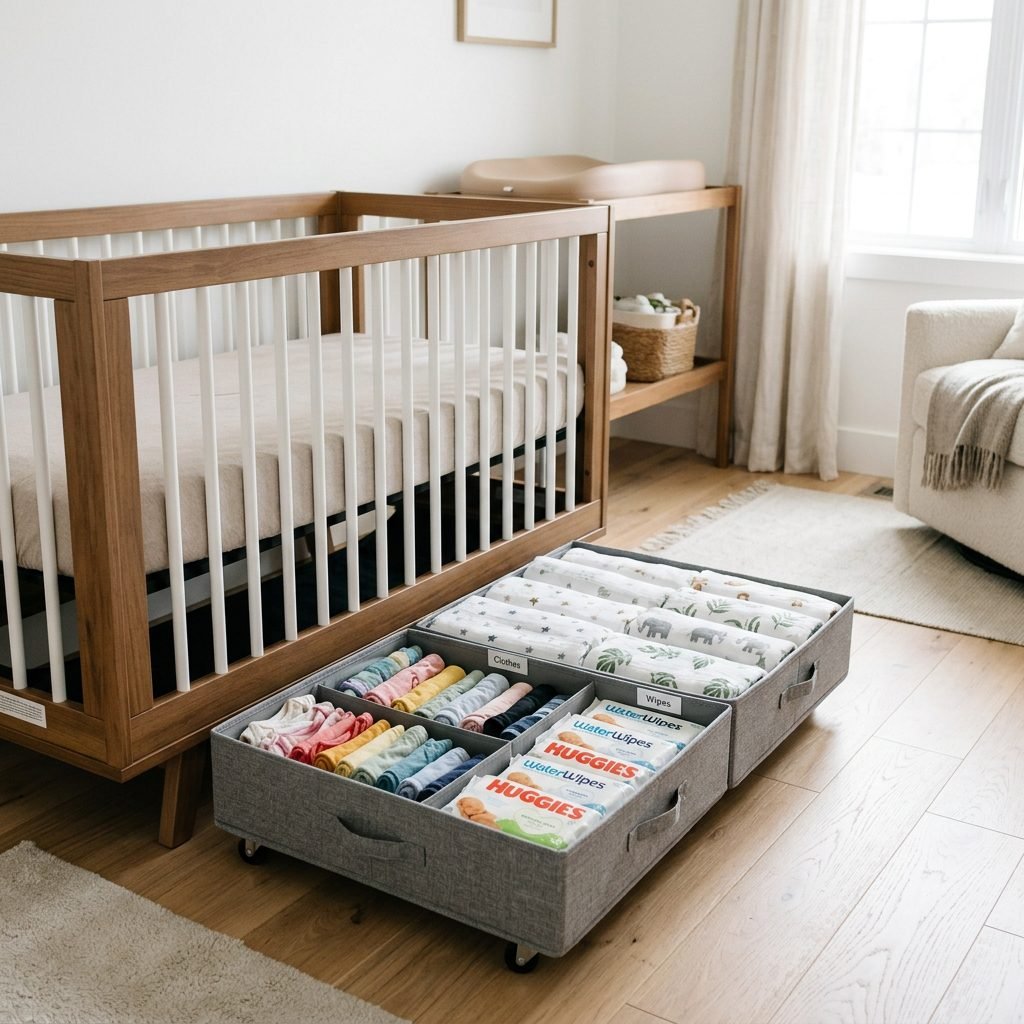
If your crib has space underneath, you must utilize it! Buy low-profile, rolling storage bins. This is the absolute perfect place to store the next size up in baby clothes, extra baby wipes, and surplus diapers. Keeping these items out of sight reduces visual clutter, which directly reduces postpartum anxiety.
Storage Comparison Guide
| Storage Challenge | Traditional Solution | Space-Saving Shared Room Hack |
|---|---|---|
| Diapers & Wipes | Bulky Changing Table | Over-the-door organizer or a 3-tier rolling cart |
| Baby Clothes | Full-size Nursery Dresser | Hanging canvas closet organizers inside the adult closet |
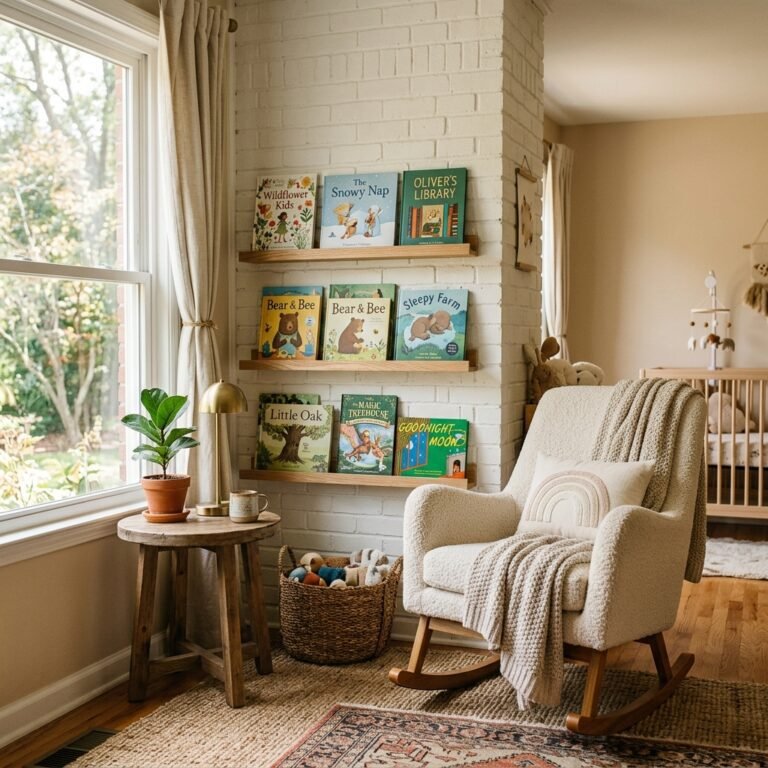
| Books & Toys | Large Bookshelf | Acrylic floating wall shelves or woven belly baskets |
| Extra Bedding | Linen Closet | Under-crib rolling storage boxes (max 6 inches high) |
The Postpartum Nursing Nook & Midnight Feeding Station
When you are waking up at 2 AM, 4 AM, and 6 AM, you want absolutely everything within arm’s reach. You don’t need a massive, expensive rocking chair if you don’t have the space. You can create a highly functional feeding station right from your bed or a small corner accent chair.
The Magic of the 3-Tier Rolling Cart
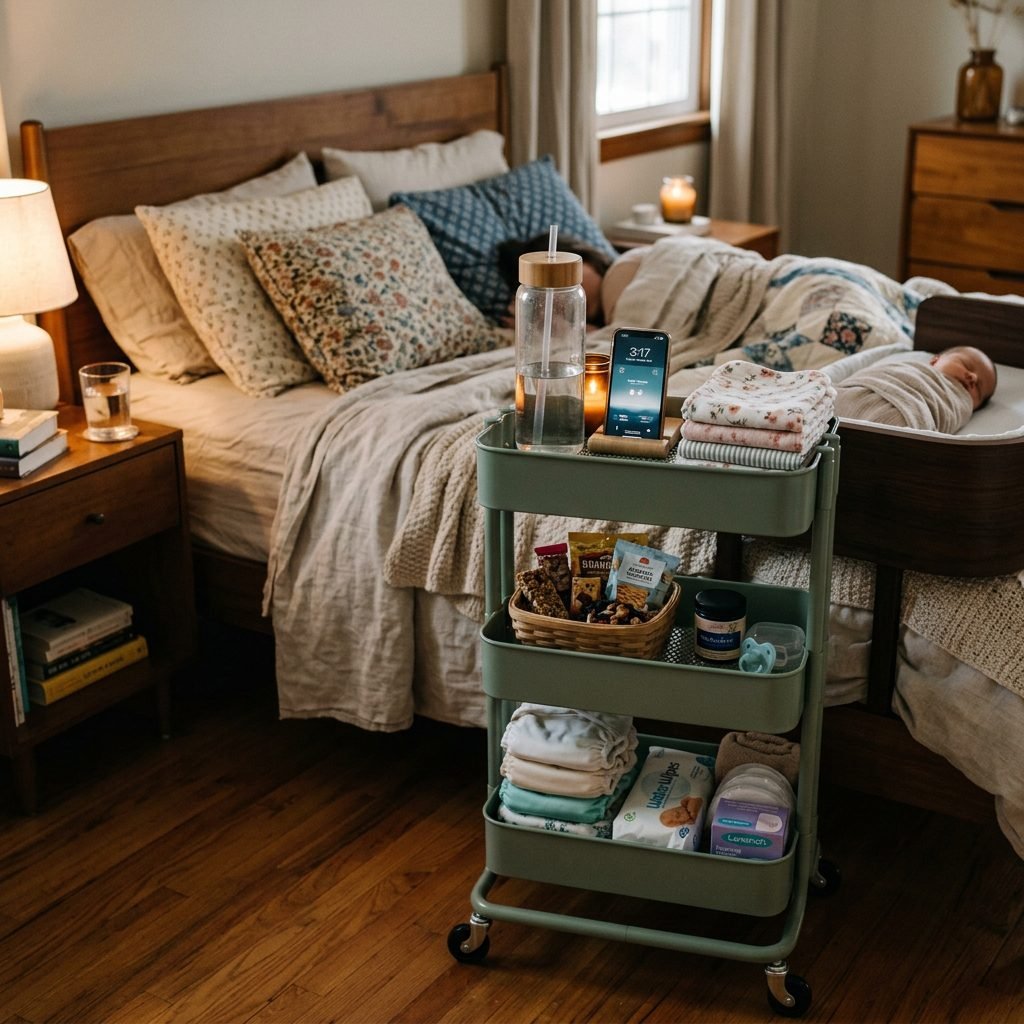
Instead of relying on a static side table that gets easily cluttered, use a rolling utility cart (like the famous IKEA Raskog cart). It can be rolled right next to your bed at night for easy access and tucked away in a closet or corner during the day to reclaim your space.
- Top Tier (The Urgent Needs): Place your red-light nightlight, a 32 oz insulated water bottle (hydration is absolutely vital for nursing and recovering mamas!), lip balm, and 2 to 3 clean burp cloths.
- Middle Tier (Feeding & Care): Store your nipple cream, silverettes, a manual breast pump (like a Haakaa to catch letdown), and a small stash of one-handed midnight snacks (granola bars, almonds, lactation cookies).
- Bottom Tier (Diaper Emergency): Keep 5 to 7 newborn diapers, a fresh pack of wipes, diaper rash cream, and one fresh swaddle or sleep sack for those inevitable midnight blowouts.
“Postpartum recovery is a marathon, not a sprint. Setting up a feeding station that allows you to stay seated, comfortable, and hydrated is an act of profound self-love. You are nourishing your baby; let your environment nourish you.”
Preserving Your Peace: Keeping the Master in Master Bedroom

It is completely normal and valid to mourn the temporary loss of your private adult space. As a doula, I always remind my clients that maintaining the romance, peace, and adult identity in your master bedroom is crucial for your mental health and your partnership.
Managing Sound and Sleep
When room-sharing, every grunt, squeak, and sigh your baby makes will sound amplified. Newborns are incredibly noisy sleepers due to their active REM sleep cycles!
- White Noise: Place a continuous white noise machine between your bed and the crib. Keep the volume around 50 to 60 decibels (roughly the sound of a gentle shower). This helps mask the baby’s active sleep sounds so you aren’t waking up every time they shift, while still allowing you to hear genuine cries of distress.
- Earplugs for the Off-Duty Parent: If you have a partner, consider taking sleep shifts. The “off-duty” partner can wear soft silicone earplugs to get a solid stretch of restorative sleep without being woken by every rustle.
Visual Boundaries for Intimacy
If your room is large enough, consider adding a beautiful folding shoji screen or a sheer, ceiling-mounted curtain that can be pulled across the room during the day or early evening. This softly hides the crib from view when you just want to lay in bed with your partner, watch a movie, and feel like an adult, not just a parent. Remember, this room-sharing phase is temporary. Whether they move to their own room at 6 months or 1 year, you will get your private sanctuary back.
Conclusion
Embracing the Beauty of the Shared Space
Arranging a shared master bedroom with a crib next to your bed is ultimately about balancing your deep, protective maternal instincts with your own essential need for a restful retreat. By prioritizing safe sleep layouts, utilizing clever vertical and rolling storage, and maintaining visual and auditory boundaries, you can create a beautiful, highly functional space for this special season of life. Remember, mama, the most important thing in that room isn’t the aesthetic or having a Pinterest-perfect nursery—it’s the love, healing, and bonding happening within those walls. Be incredibly gentle with yourself during this transition. You are doing a beautiful job, and this cozy, shared space is just the beginning of your wonderful motherhood journey.