Privacy Please: 5 Damage-Free Temporary Wall Dividers for a Shared Master Bedroom Baby Nook
Hello, sweet mama. If you are reading this, you are likely in that beautiful, slightly overwhelming phase of nesting where every square inch of your home feels like it needs a purpose. Whether you are living in a cozy city apartment, renting a space that you cannot permanently alter, or simply want to keep your little one close during those precious first months, sharing a master bedroom is a reality for many of us. As a doula, I have seen firsthand how the proximity of a baby can be both a blessing for nighttime feedings and a challenge for parental privacy and sleep hygiene. You deserve a sanctuary that feels like your bedroom, and your baby deserves a snug, darkened corner that feels like their nursery.
Creating a ‘room within a room’ doesn’t require a contractor or a lost security deposit. We are going to explore five clever, damage-free ways to partition your space so that everyone gets the rest they need. From the soft flow of floor-to-ceiling curtains to the practical magic of double-sided storage, these solutions are designed to grow with your family. Let’s create that perfect little nook together, mama.
Your bedroom is still your sanctuary; we are just adding a little more love—and a little more structure—to the mix.
1. The Tension Rod & Blackout Curtain Haven
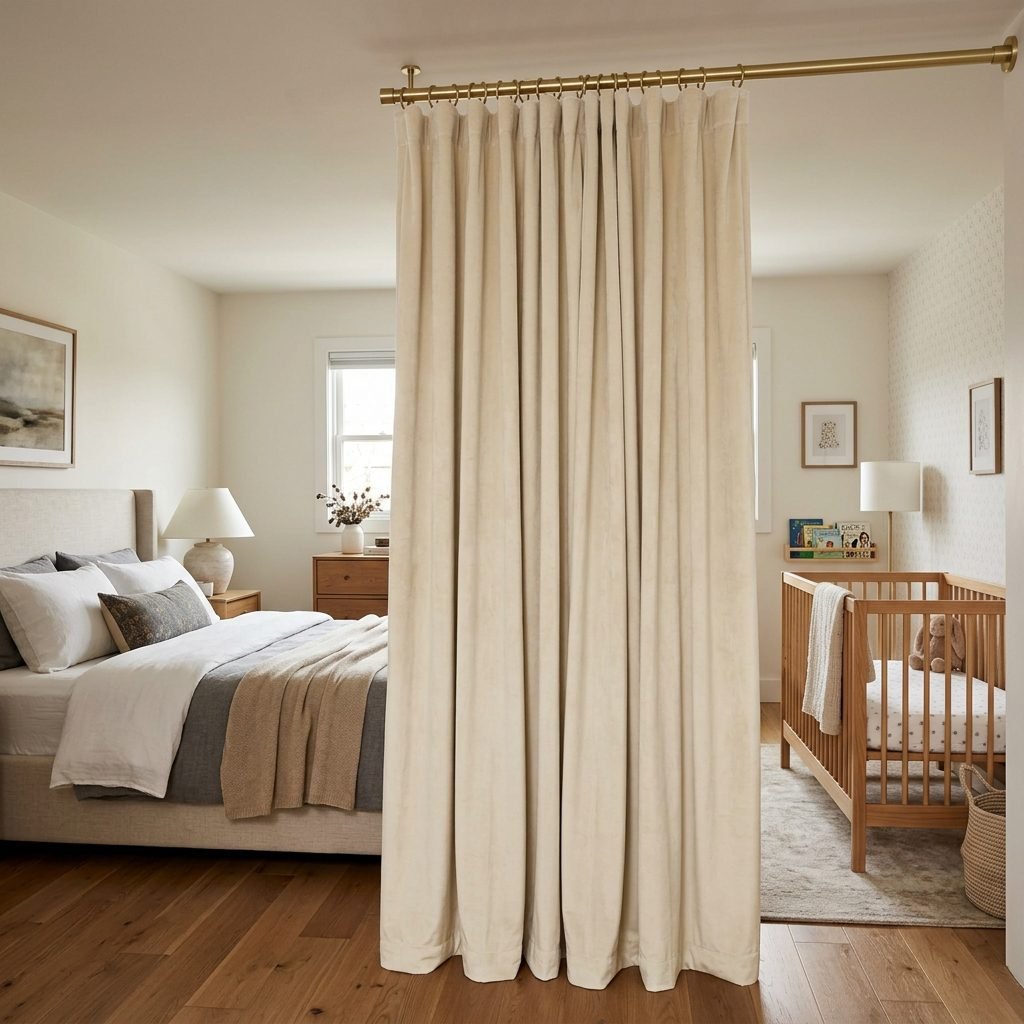
The most popular and arguably the most ‘sisterly’ advice I can give for a shared space is the use of heavy, high-quality curtains on a heavy-duty tension rod. This is the ultimate damage-free solution because it requires zero drilling. A tension rod uses spring-loaded pressure to stay in place between two walls, making it perfect for creating a soft wall across an alcove or a specific section of the room.
Why It Works for Sleep
Babies are highly sensitive to visual stimulation. If they can see you moving across the room or see the glow of your bedside lamp, they are more likely to wake up fully. Using blackout curtains provides a physical and visual barrier that signals to their brain that it is time for deep sleep. For you, it means you can keep your reading light on without worrying about waking the ‘boss’ of the house.
How to Style It
- Choose Velvet or Heavy Linen: These fabrics absorb sound better than thin cotton, helping to muffle the sound of your movements or the television.
- Color Palette: Match the curtain color to your bedroom walls to make the space feel larger and more cohesive.
- Safety First: Ensure the tension rod is rated for the weight of your curtains and check it weekly to ensure the tension remains tight.
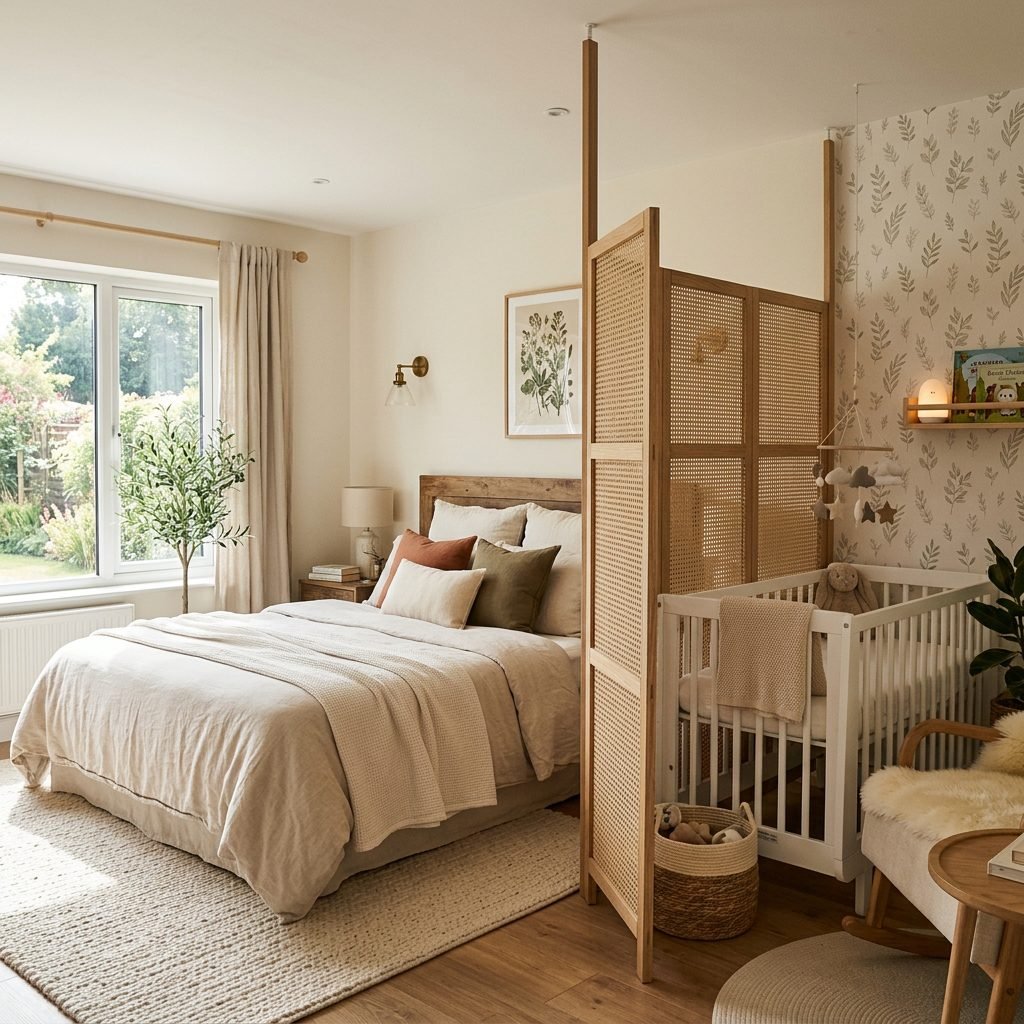
2. The Freestanding Rattan or Wood Folding Screen
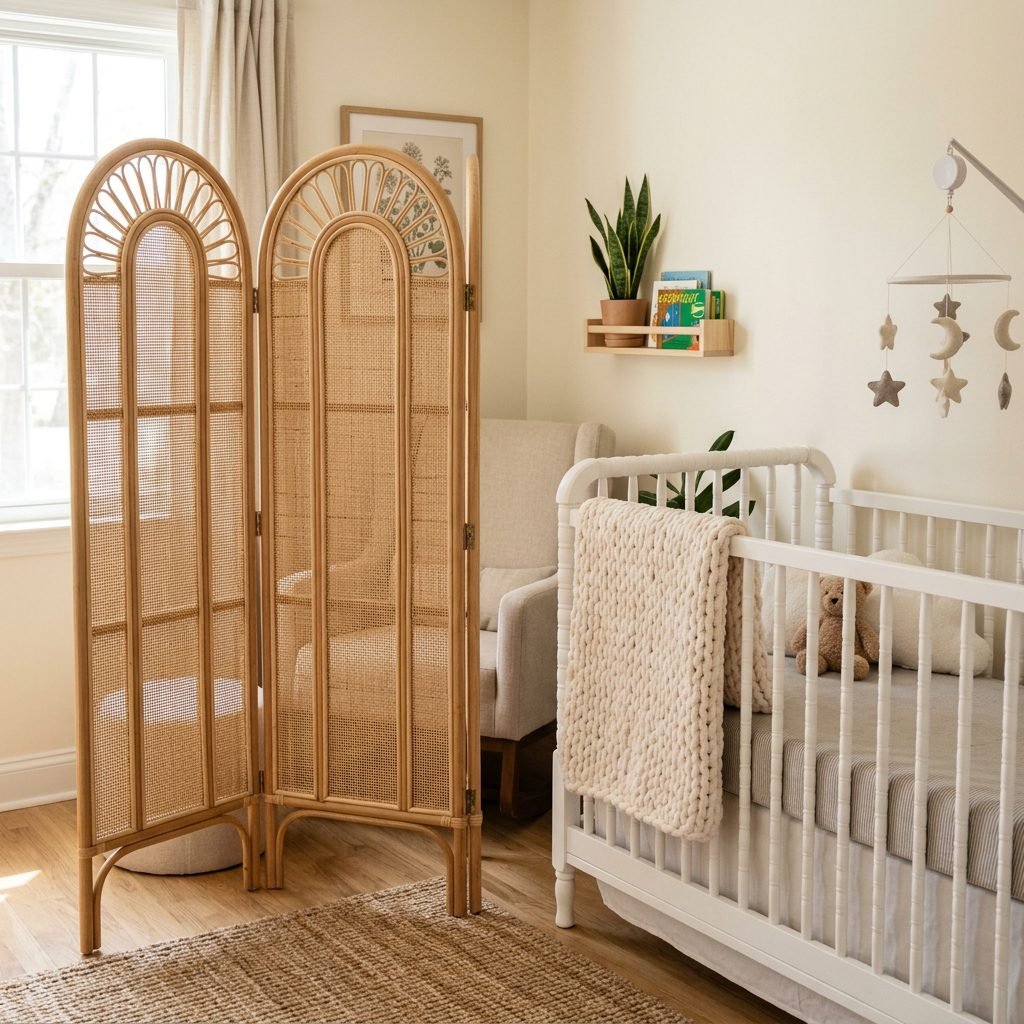
If you love a more bohemian or vintage aesthetic, a freestanding folding screen (also known as a shoji screen or room divider) is your best friend. These are wonderful because they are mobile. During the day, you can fold it back to let the light in, and at night, you can pull it around the crib to create an instant ‘nursery’ feel.
The Design Benefit
Folding screens add texture and architectural interest to a room. In my experience as an interior organizer, I recommend screens that are at least 6 feet tall to ensure they effectively block the line of sight when you are standing in the room. This creates a psychological boundary that helps you ‘switch off’ from mom-mode when you are in your bed.
| Divider Type | Privacy Level | Light Blocking | Portability |
|---|---|---|---|
| Tension Rod Curtains | High | Excellent | Low |
| Folding Screens | Medium | Moderate | High |
| Bookcase Dividers | Medium | Low | Moderate |
| Hanging Panels | Low | Low | High |
| Pressure Walls | Very High | Excellent | Low |
3. The IKEA Kallax Hack: Double-Duty Storage
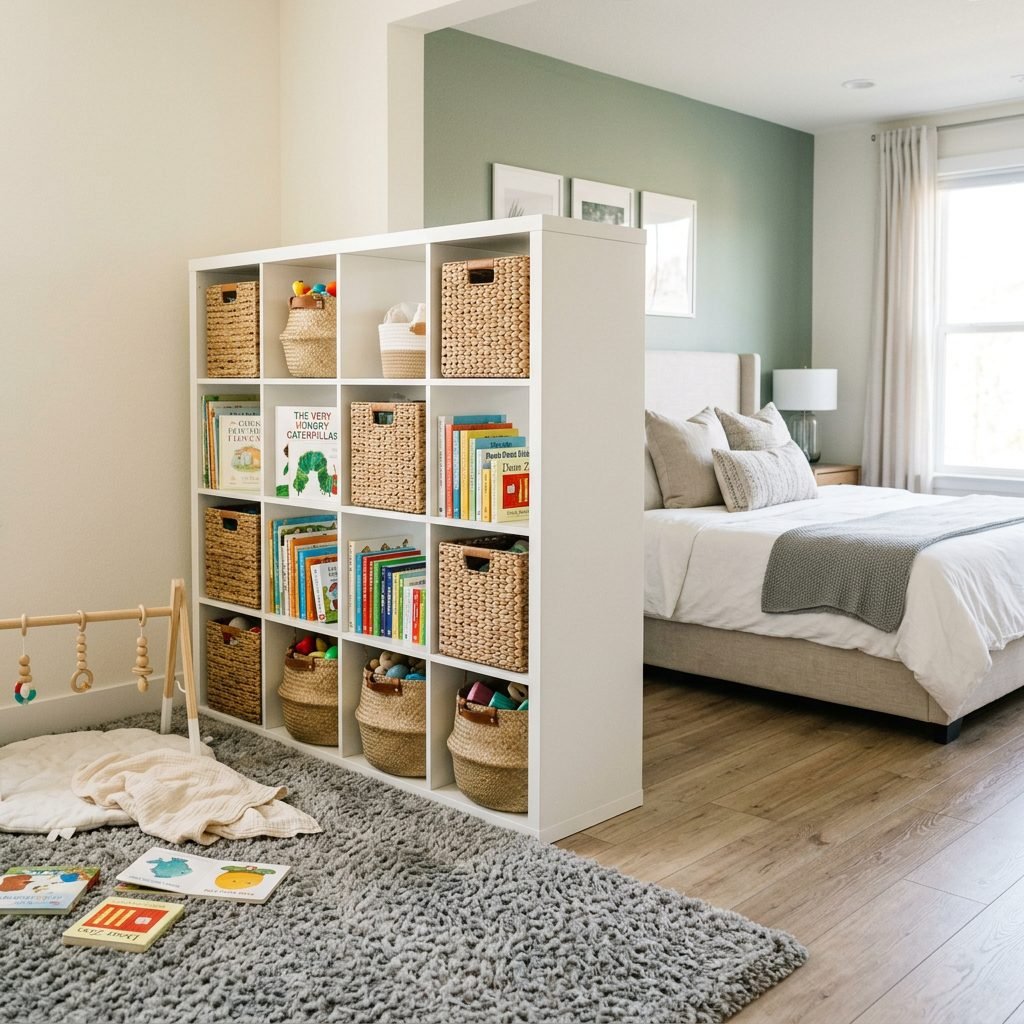
When you have a baby in a small space, storage is just as important as privacy. Using an open-shelf bookcase, like the iconic IKEA Kallax, as a room divider is a stroke of organizational genius. By placing the unit perpendicular to the wall, you create a sturdy ‘half-wall’ that provides a home for diapers, wipes, board books, and swaddles.
Maximum Efficiency Storage
To keep the space looking tidy (which is vital for your mental health, mama!), use matching baskets in the lower cubbies. This hides the ‘baby clutter’ from your view while you are in bed. You can leave the top cubbies open to allow some natural light to pass through, or fill them with books to create more of a solid wall feel.
Safety Warning
Always ensure that any furniture used as a divider is stable. Since we are avoiding drilling into walls, use heavy items on the bottom shelves to lower the center of gravity. If your baby is at the pulling-up or crawling stage, you must use furniture straps specifically designed for renters that use high-strength adhesive or tension.
| Item | Without Divider Strategy | With Divider Strategy |
|---|---|---|
| Diapering Essentials | Scattered on nightstand | Integrated into Divider Baskets |
| Sleep Environment | Bright, shared light | Darkened, cozy nook |
| Visual Clutter | High (baby gear everywhere) | Contained and hidden |
| Parental Privacy | Non-existent | Defined ‘Adult’ zone |
4. Hanging Resin or Felt Decorative Panels
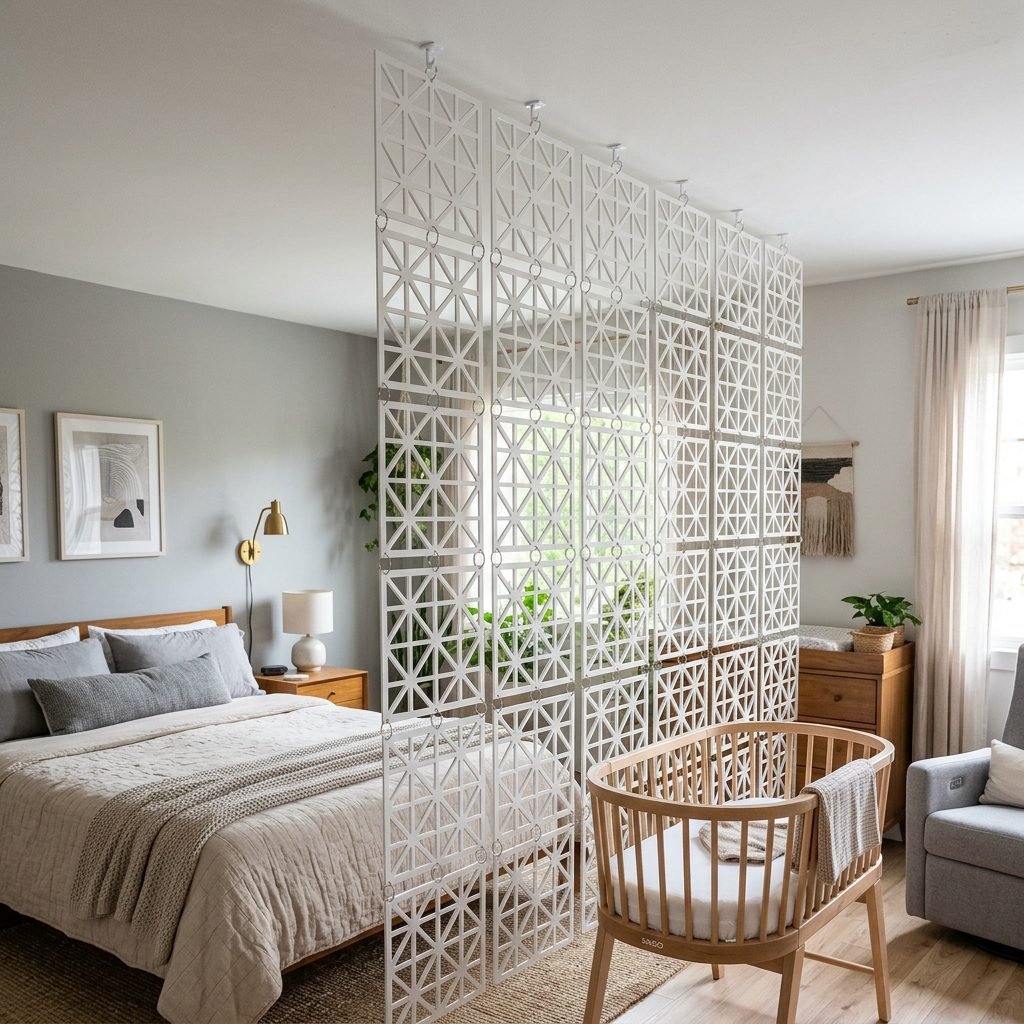
For the modern mama who wants something a bit more ‘artistic,’ hanging panels are a fantastic damage-free option. These panels often come in geometric patterns and are made of lightweight materials like felt or thin resin. They can be hung from the ceiling using high-strength adhesive hooks (like Command hooks), which can be removed without leaving a trace.
The Acoustic Advantage
Felt panels are particularly wonderful because they act as acoustic dampeners. In a shared bedroom, sound can bounce off hard walls and wake a light-sleeping infant. The soft texture of felt panels absorbs those high-frequency noises—like the crinkle of a water bottle or the click of a light switch—giving you a few more minutes of precious sleep.
- Layout Tip: Hang them in a staggered pattern to create a ‘peek-a-boo’ effect that feels airy but still provides a clear boundary.
- Light Filtering: These panels won’t block all light, so they are best paired with a white noise machine to help baby stay in the zone.
5. Professional Pressure-Mounted Room Divider Kits
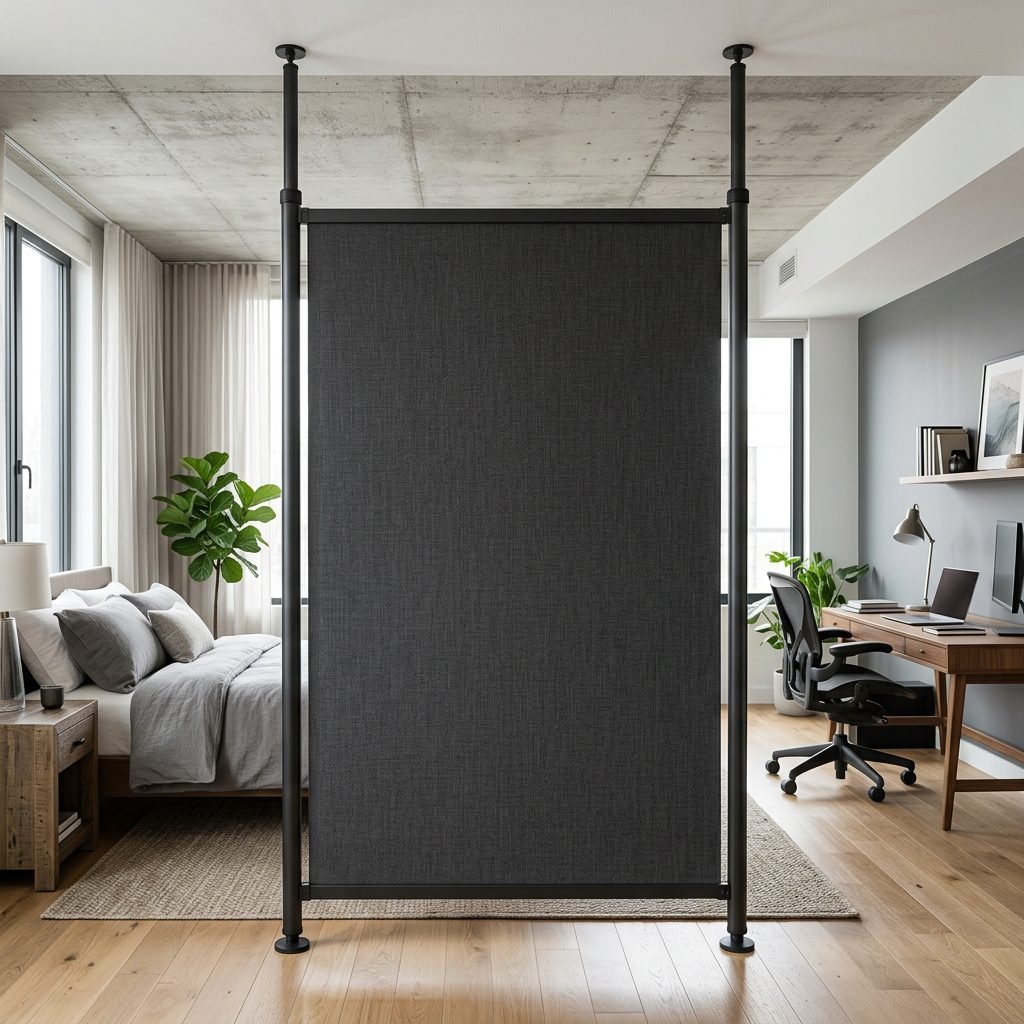
If you want a solution that looks and feels like a real wall, you might consider a pressure-mounted room divider kit. These systems consist of two vertical poles that expand to wedge tightly between the floor and the ceiling. A horizontal crossbar then holds a large fabric panel.
Creating a True ‘Room’
This is the most robust damage-free option. It allows you to create a straight ‘wall’ across a large section of the room, effectively creating a 100% private nursery nook. This is ideal if you plan on room-sharing for the entire first year. It gives you the most privacy and the best light-blocking capabilities of all the options we’ve discussed.
Installation Steps
- Measure: Measure your ceiling height accurately to ensure the poles will fit.
- Position: Place the vertical poles at least 4 feet away from the crib to ensure no fabric can fall into the baby’s sleep space.
- Tighten: Use the built-in tensioning mechanism to ensure the poles are rock-solid.
- Dress: Slide your chosen fabric or curtain onto the crossbar before securing it to the poles.
The Doula’s Guide to Shared-Room Success
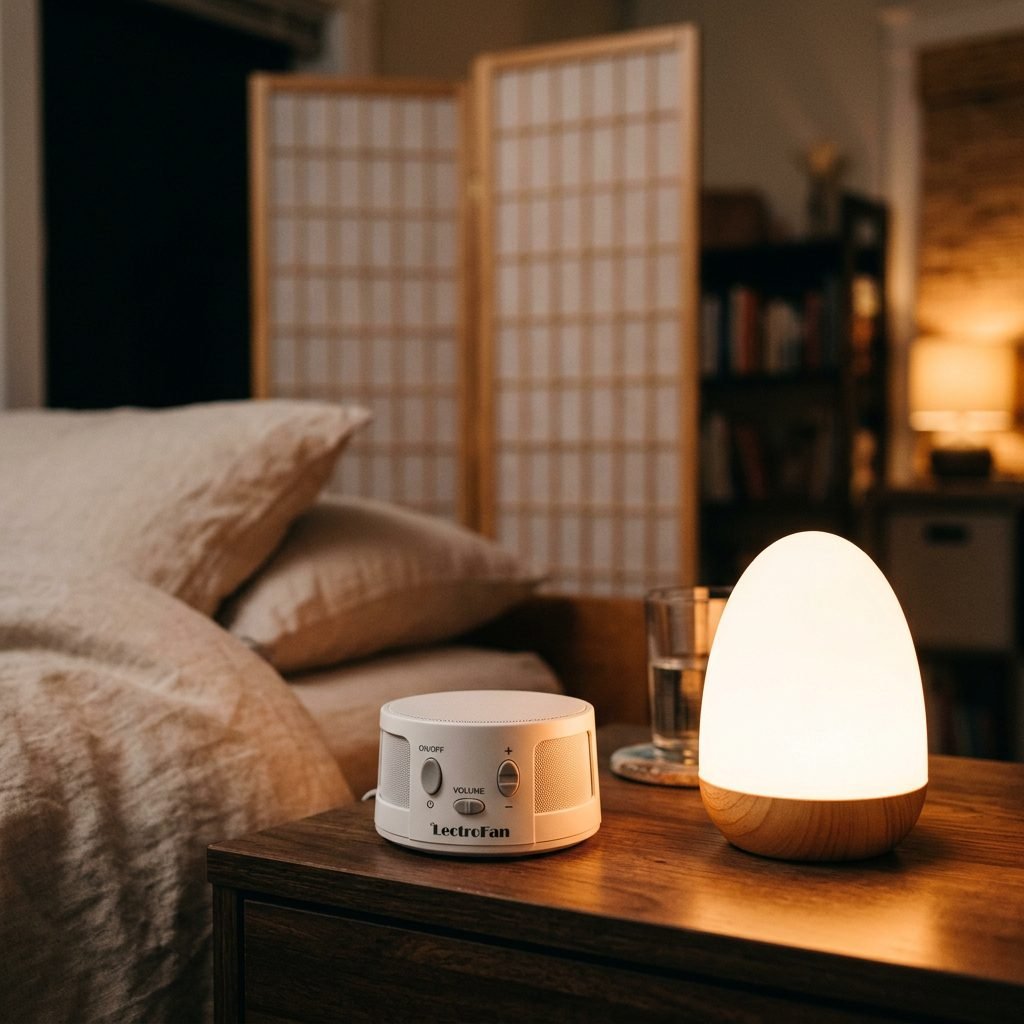
Beyond the physical dividers, successful room sharing is about rhythm and routine. As a doula, I always remind my clients that the divider is just one tool. To truly make a shared space work, consider these three ‘expert’ tips:
1. The White Noise Shield
Place your white noise machine between your bed and the baby’s crib. This creates a ‘sound wall’ that masks your movements, coughing, or snoring, allowing the baby to stay in their deep sleep cycle even while you are active in the room.
2. The Low-Light Routine
Use amber-colored nightlights or low-wattage bulbs in your master bedroom. Blue light from phones and bright overhead lights can interfere with both your melatonin production and the baby’s. When you enter the room after the baby is asleep, keep the lights low and use the divider as your guide.
3. The ‘Adult Zone’ Maintenance
It is so easy for baby gear to take over the entire master bedroom. Use your divider as a hard boundary. Keep the ‘baby stuff’ on their side of the divider and keep your side as a sanctuary for your recovery. You are a mother, yes, but you are also a woman who needs a peaceful place to rest and heal.
Conclusion
Mama, creating a shared space is an act of love and a testament to your resourcefulness. Whether you choose the soft elegance of curtains or the practical storage of a bookcase, remember that this phase is temporary. These damage-free solutions allow you to adapt your home as your baby grows, all while keeping your master bedroom feeling like the sanctuary you deserve. You are doing an incredible job preparing for this transition. Take a deep breath, look at your space, and know that with a little bit of creativity, you can create a home that perfectly holds all of you. You’ve got this!