Space-Saving Layouts: How to Fit a Bassinet in a Tiny Master Bedroom
Welcome to Your Cozy Sanctuary, Mama
Oh, honey, I know exactly how you feel. You’re looking at your beautiful, intimate master bedroom—the one that currently feels just the right size for you and your partner—and you’re wondering, ‘How on earth am I going to fit a whole human and their gear in here?’ First, take a deep breath. As a doula and a mama who has lived in a 600-square-foot apartment, I am here to tell you that your baby doesn’t need a sprawling, Pinterest-perfect nursery to feel loved and secure. They need you.
The American Academy of Pediatrics (AAP) actually recommends room-sharing for at least the first six months to reduce the risk of SIDS. So, fitting that bassinet into your room isn’t just a space-saving necessity; it’s a safety win! In this guide, we are going to walk through the ‘Tetris’ of furniture placement, the best small-footprint gear, and those clever organization hacks that make a tiny room feel like a high-end boutique hotel suite. We’re going to turn that ‘tiny’ space into a ‘functional’ haven for your fourth trimester.
The Strategic Selection: Choosing a Bassinet with a Small Footprint
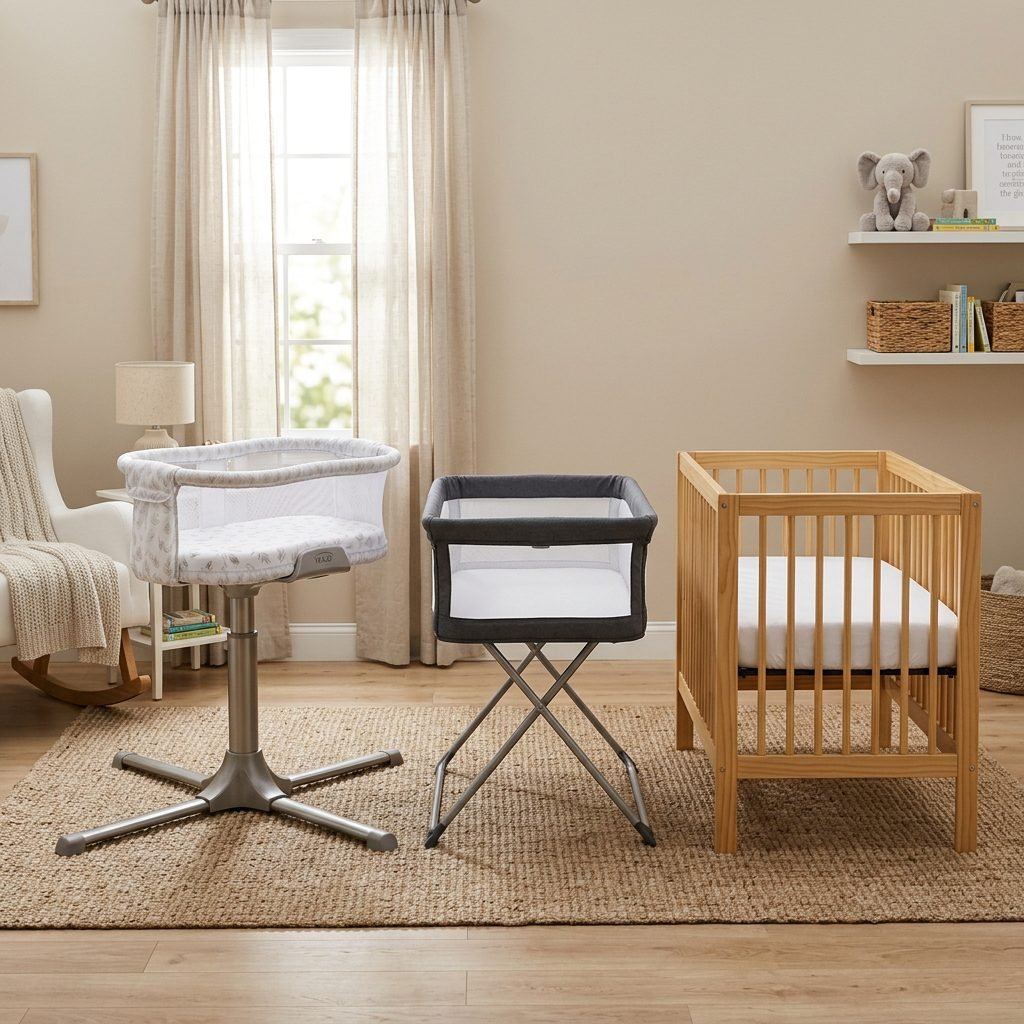
Before we move a single piece of furniture, we have to talk about the ‘star’ of the show: the bassinet. Not all bassinets are created equal, especially when square footage is at a premium. When you’re working with a tight squeeze, you want to look for three things: adjustable height, breathable mesh sides, and a narrow base.
Many traditional bassinets have wide, splayed legs that are total ‘toe-stubbers’ in a dark room. Instead, look for models with a ‘C-shaped’ base or a swivel function that allows the sleeping surface to hover over your mattress. This effectively uses the ‘dead space’ above your bed, saving you precious floor inches.
Comparing Space-Saving Sleep Options
| Feature | Bedside Sleeper (Swivel) | Travel/Folding Bassinet | Mini Crib |
|---|---|---|---|
| Footprint | Small (tucks under bed) | Medium | Large (relatively) |
| Longevity | 3-5 Months | 3-6 Months | Up to 2 Years |
| Portability | Low (Heavy base) | High (Folds flat) | Low (Fixed) |
| Best For | C-Section recovery & small gaps | Multipurpose rooms | Long-term room sharing |
If you are recovering from a C-section, I highly recommend a swivel-style sleeper. It allows you to bring the baby right to your eye level without having to twist your torso or get out of bed in those early, tender days. It’s a gift to your healing body, mama.
The Three Best Layouts for Tiny Bedrooms
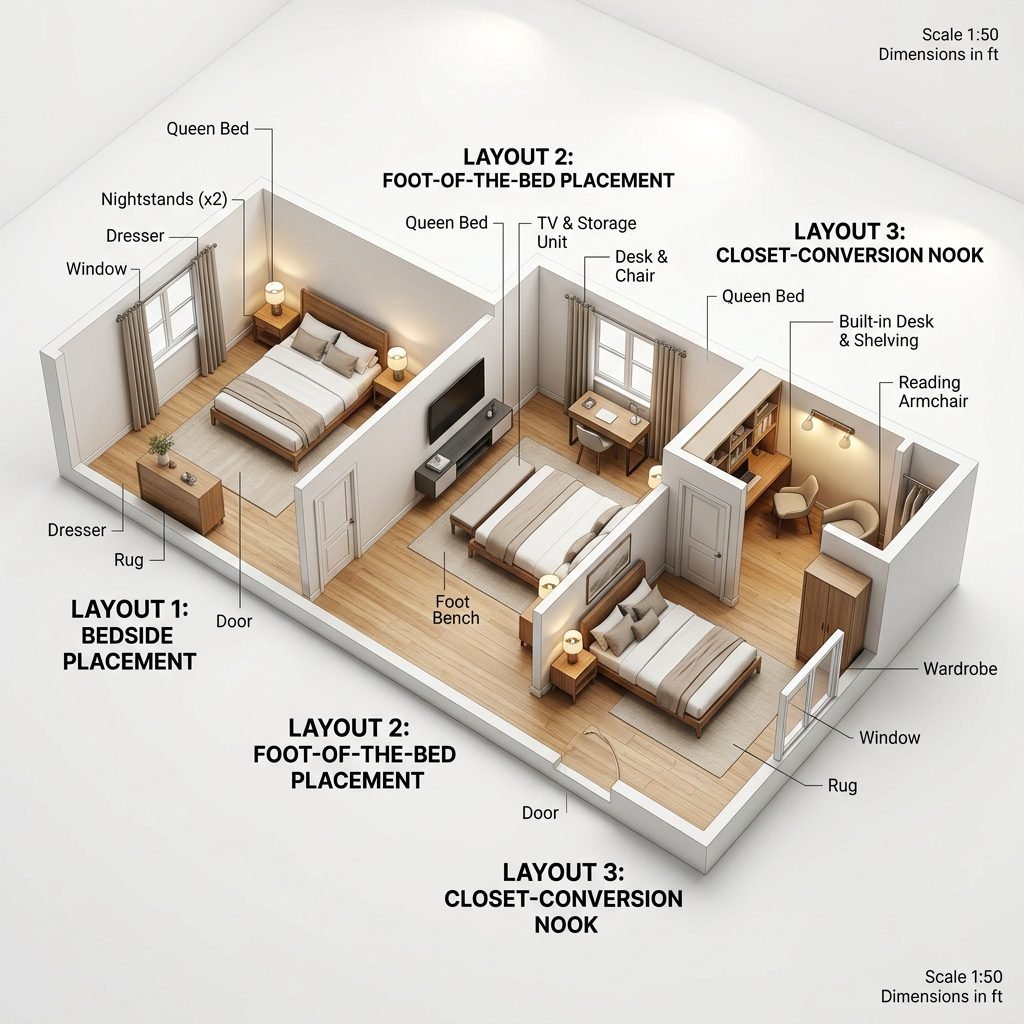
Now, let’s get into the ‘Tetris’ of it all. Depending on your room’s shape, one of these three layouts will usually be your ‘holy grail’ for space-saving.
1. The Bedside Bridge
This is the most common setup. You place the bassinet directly parallel to your side of the bed. To make this work in a tiny room, you might need to sacrifice your traditional nightstand. Don’t worry! You can replace it with a narrow floating shelf or a wall-mounted ‘pocket’ organizer. This keeps your phone, water bottle, and nipple cream within reach without taking up floor space.
2. The Foot-of-the-Bed Anchor
If your room is long but narrow, placing the bassinet at the foot of the bed can open up the ‘walking paths’ on either side. This is a great option if you have a symmetrical room and don’t want to feel ‘boxed in’ on your side of the bed. It also makes it easier for your partner to jump up for those middle-of-the-night diaper changes!
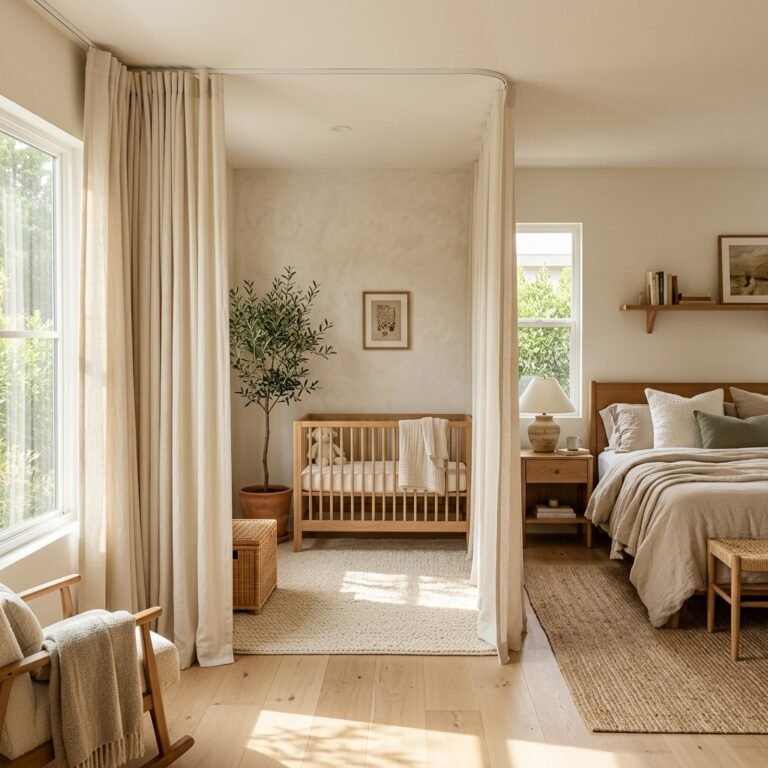
3. The Closet Nook (The ‘Clursery’)
Don’t look at me like I’m crazy! If you have a standard reach-in closet, removing the doors and tucking the bassinet or a mini-crib inside can save you nearly 10 square feet of floor space. It creates a cozy ‘alcove’ for the baby. You can even hang a pretty curtain or install some peel-and-stick wallpaper inside to make it feel like a dedicated nursery nook.
Pro Tip: Always ensure there is at least 2 feet of walking space around the bassinet. You don’t want to be tripping over gear during a 2 AM feeding fog!
Vertical Storage: Your Secret Weapon
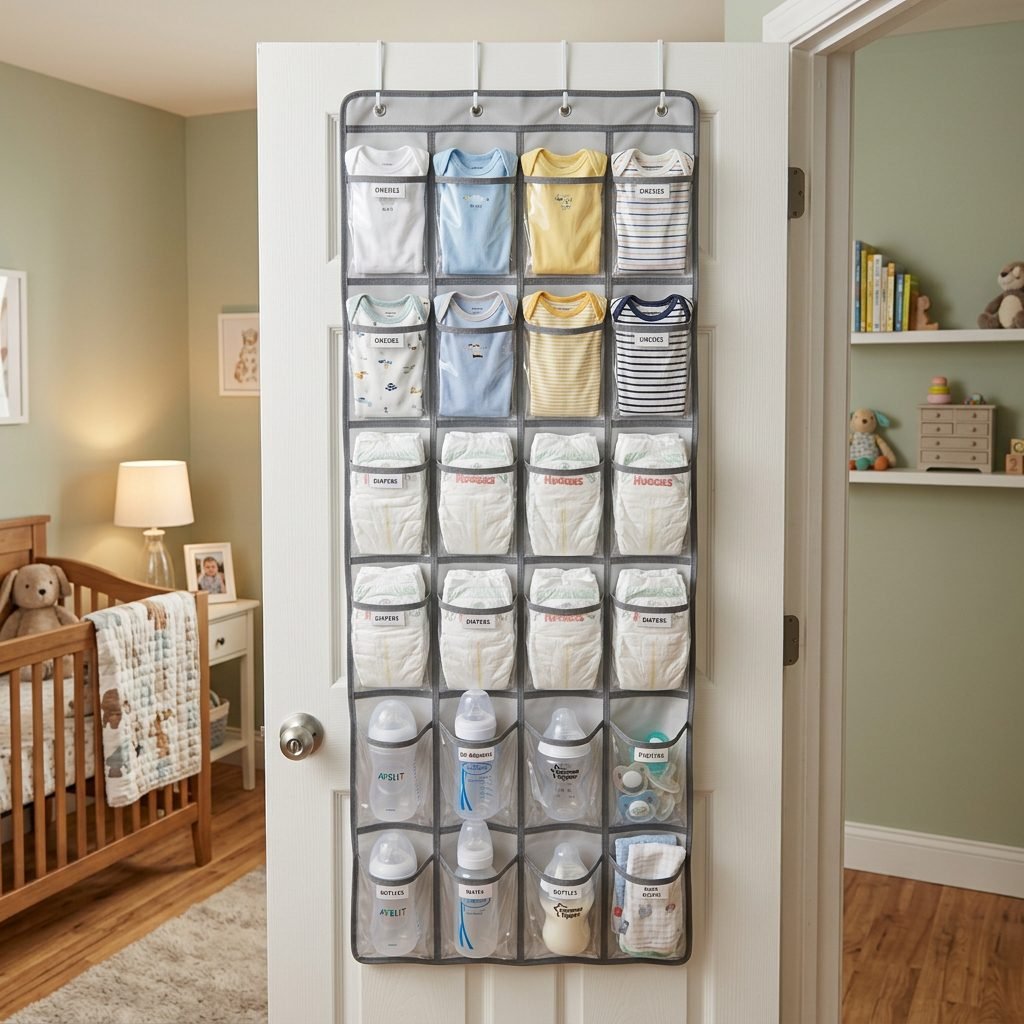
When you run out of floor space, you must look up. In a tiny master bedroom, every wall is a potential storage unit. As a doula, I see so many parents struggle with ‘diaper explosions’ because they can’t find their supplies quickly. Organization isn’t just about aesthetics; it’s about sanity.
- Over-the-Door Organizers: These are not just for shoes! Use them for diapers, wipes, onesies, and swaddles. It keeps everything at eye level and off your dressers.
- Floating Shelves: Replace bulky floor lamps with wall-mounted sconces and use floating shelves for baby monitors and sound machines.
- Under-Bed Bins: If your bed frame allows, use slim rolling bins to store ‘next size up’ clothes or extra packs of diapers.
| Storage Need | Traditional Solution | Small Space Hack |
|---|---|---|
| Diaper Station | Large Changing Table | Wipeable pad on top of dresser |
| Baby Clothes | Large Armoire | Hanging organizer in your closet |
| Nighttime Needs | Chunky Nightstand | Wall-mounted spice rack or shelf |
| Dirty Laundry | Floor Hamper | Hanging wet bag on back of door |
Remember: You only need about 8-10 onesies in each size. Don’t let the ‘baby clutter’ take over your sanctuary. Keep only what you use daily within arm’s reach.
Creating a Shared Aesthetic: Keeping the ‘Master’ in Master Bedroom
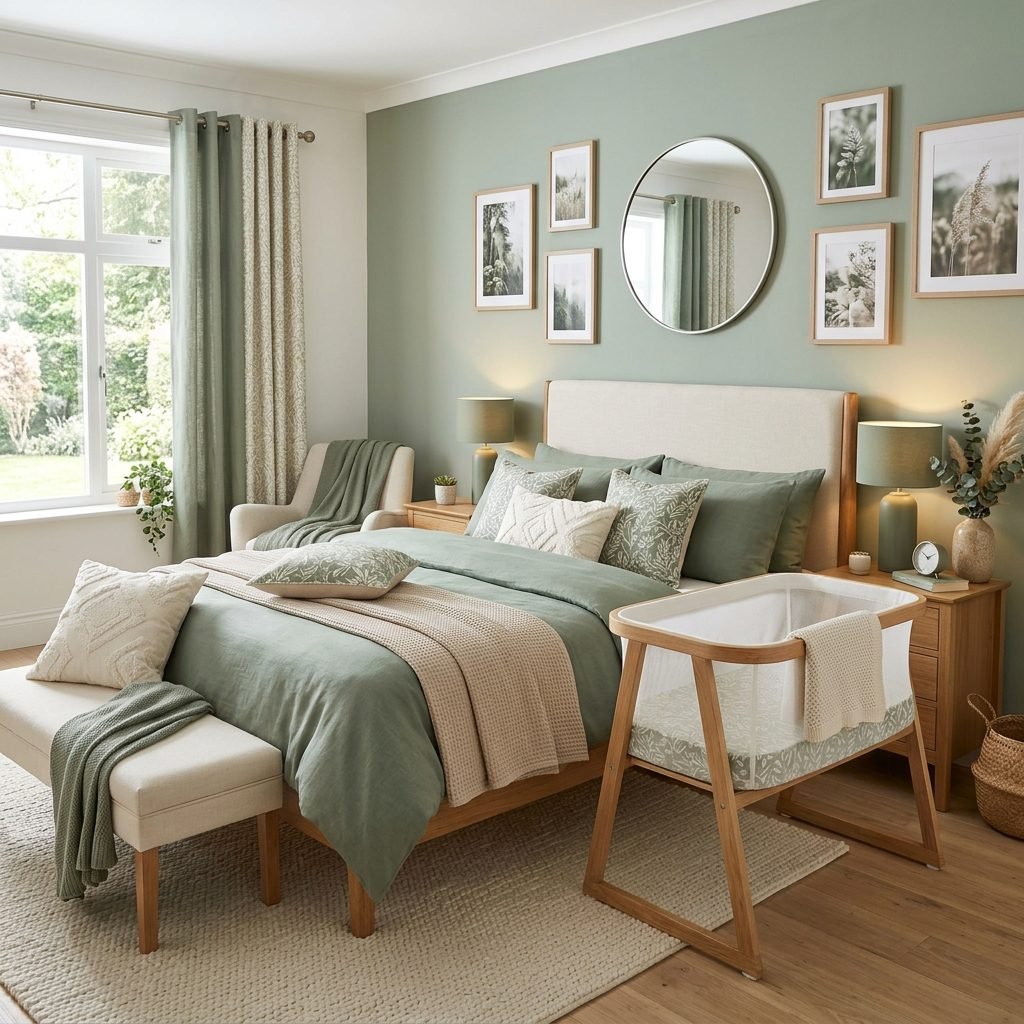
Just because a baby is moving in doesn’t mean your room has to look like a primary school classroom. To maintain your sense of self—which is so important for your postpartum mental health—try to blend the baby’s gear with your existing decor.
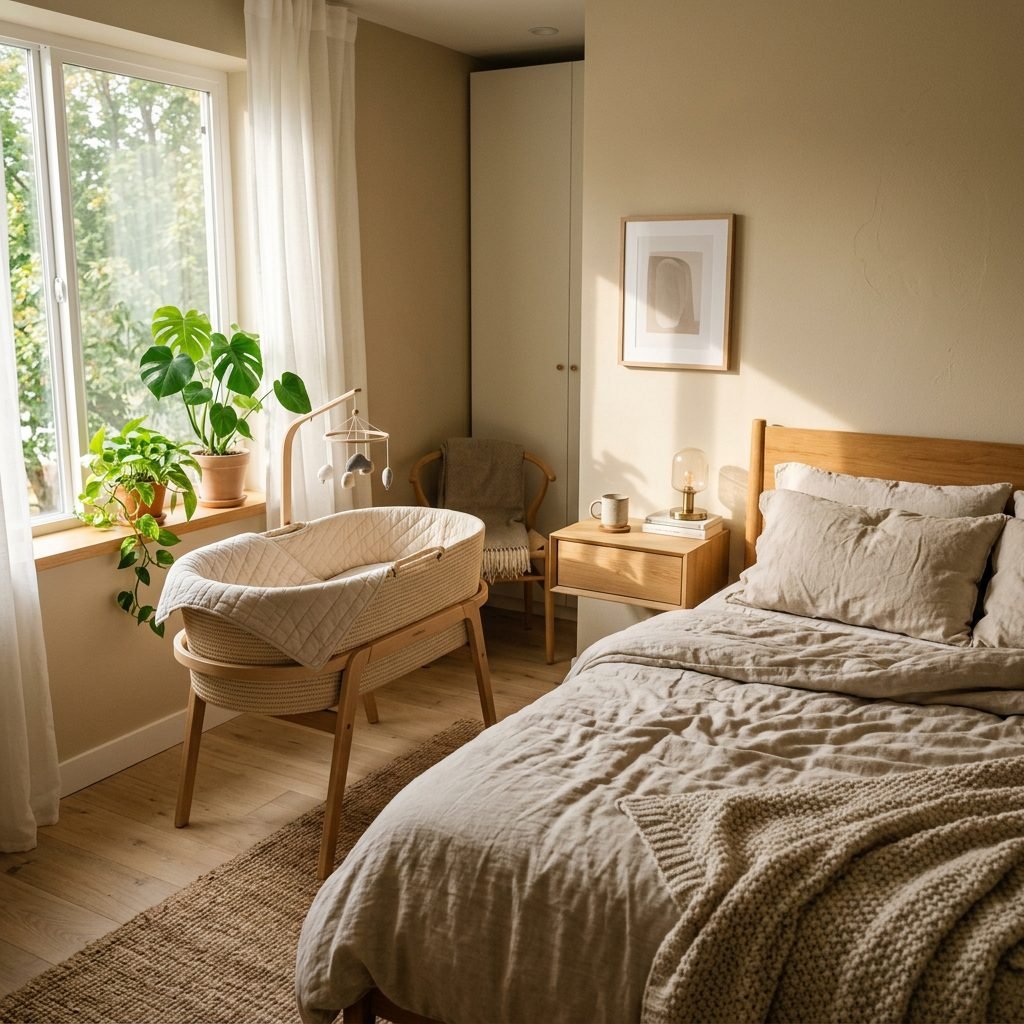
Choose a bassinet in a neutral tone (grey, cream, or natural wood) that complements your bed frame. Use a cohesive color palette for swaddles and blankets. If your room is boho, go for a rattan bassinet. If it’s modern, go for acrylic or sleek metal. When the space feels harmonious, it feels less cluttered, even if it’s tight.
Lighting and Sound Boundaries
In a small shared room, lighting is everything. Use a small, red-light nightlight for diaper changes. Red light doesn’t inhibit melatonin production, helping both you and the baby drift back to sleep faster. Also, place your white noise machine between the bassinet and your bed (or the door) to create a ‘sound curtain’ that muffles your own movements or snoring!
“Your bedroom is still your sanctuary. Adding a baby is an expansion of your love, not a takeover of your peace.”
Safety First: The Doula’s Tiny Space Checklist
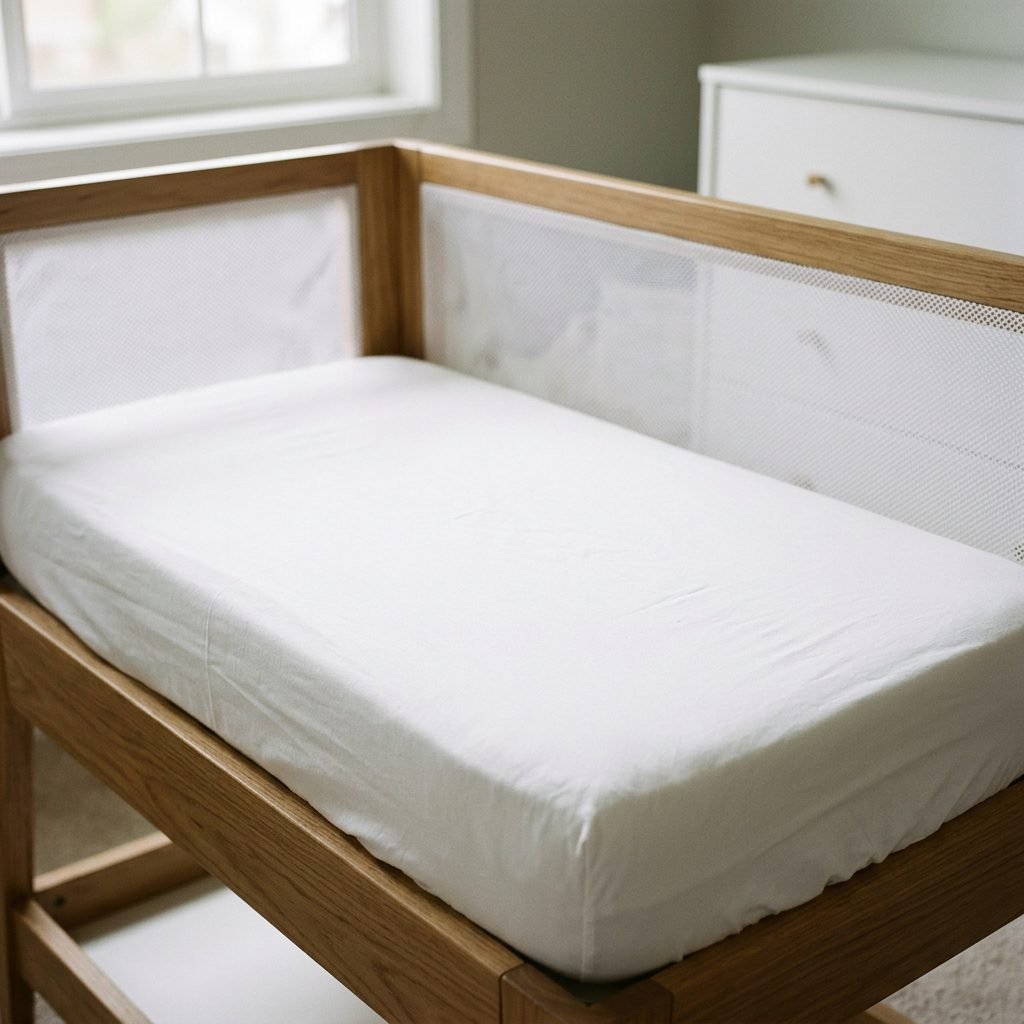
In a small room, it’s easy for things to get crowded, but safety can never be compromised. As your ‘virtual doula,’ I need you to check these four things tonight:
- Cord Safety: Ensure baby monitor cords are at least 3 feet away from the bassinet. In small rooms, we often pull furniture close to outlets—be careful!
- Airflow: Don’t shove the bassinet into a corner where air can’t circulate. Keep it a few inches away from walls and heavy curtains.
- No ‘Drop Zones’: Avoid placing the bassinet directly under heavy wall art or floating shelves that could fall during an earthquake or if bumped.
- The Firmness Test: Ensure the bassinet mattress is firm and flat. No extra padding, pillows, or ‘co-sleepers’ inside the bassinet, no matter how small the space is.
I know you want it to be cozy, but ‘Boring is Best’ when it comes to safe sleep. A flat mattress and a tight-fitting sheet are all your little one needs.
Conclusion
You’ve Got This, Mama
Fitting a bassinet into a tiny master bedroom might feel like a puzzle, but it’s a puzzle you are perfectly capable of solving. Remember, this season of ‘closeness’ is fleeting. Soon enough, they’ll be in their own room, and you’ll actually miss the sound of those tiny ‘baby grunts’ in the middle of the night. By choosing the right gear, utilizing your vertical space, and keeping a minimalist mindset, you are creating a safe, loving, and functional environment for your new addition.
You don’t need more square footage; you just need a little bit of creativity and a lot of grace for yourself. Now, go grab that measuring tape and start dreaming—your little one will be here before you know it!