

How to Breathe Through Crowning: Simple Techniques to Prevent Tearing During Delivery
Embracing the Final Threshold
Hello, beautiful mama. If you are reading this, you are likely preparing for one of the most transformative moments of your life. As a doula, I have sat bedside with many women as they reach that final, intense threshold of labor: crowning. Often referred to as the ‘Ring of Fire,’ this is the moment when your baby’s head is visible and stretching the perineal tissues to their fullest. It is a moment of raw power, but it can also be a moment of intense fear. I want you to take a deep breath right now and know this: your body was built for this.
The secret to minimizing tearing isn’t necessarily about ‘pushing harder.’ In fact, it is often about the opposite. It is about yielding, softening, and using your breath to allow your tissues to expand at their own pace. When we hold our breath or purple-push (straining while holding the breath), we increase the pressure on the pelvic floor too rapidly. By learning how to breathe through the crowning, you give your skin and muscles the precious seconds they need to stretch safely. Let’s walk through these gentle, evidence-based techniques together, sister-to-sister, to help you feel empowered and prepared.
The Physiology of Crowning: Why Slow is Smooth
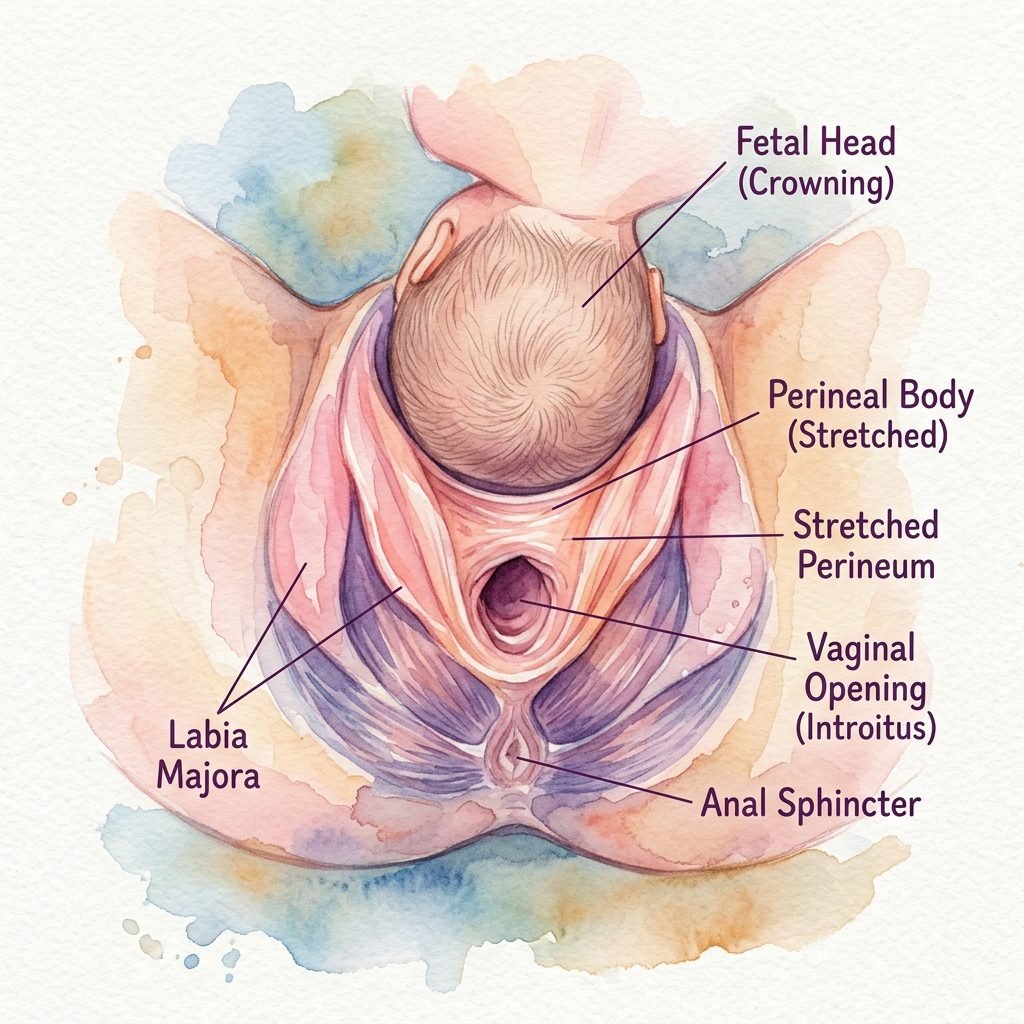
Understanding what is happening in your body can take away so much of the ‘fear of the unknown.’ During the second stage of labor, your uterus is doing the heavy lifting by contracting to move the baby down the birth canal. When the baby’s head reaches the vaginal opening, the perineum—the area between the vagina and the anus—must stretch significantly. This is the crowning phase.
The ‘Ring of Fire’ sensation is actually a protective signal from your body. It is the nerves in the perineum telling you that the tissue is at its maximum stretch. If you push forcefully through this sensation, you are more likely to experience a tear. However, if you use specific breathing techniques to ‘pant’ or ‘blow’ the baby out, you allow the baby to emerge slowly, giving the tissues time to thin out and stretch naturally. This is often called ‘breathing the baby down.’
The Benefits of Controlled Crowning
- Reduced Tearing: Slow emergence allows for gradual tissue expansion.
- Pelvic Floor Protection: Minimizes the long-term risk of prolapse or incontinence.
- Baby’s Oxygenation: Continuous breathing ensures a steady supply of oxygen to your little one during the most strenuous part of birth.
- Mental Clarity: Focusing on breath prevents the ‘panic response’ that often leads to tensing the pelvic muscles.
The ‘Blow Out the Candles’ Technique: Step-by-Step
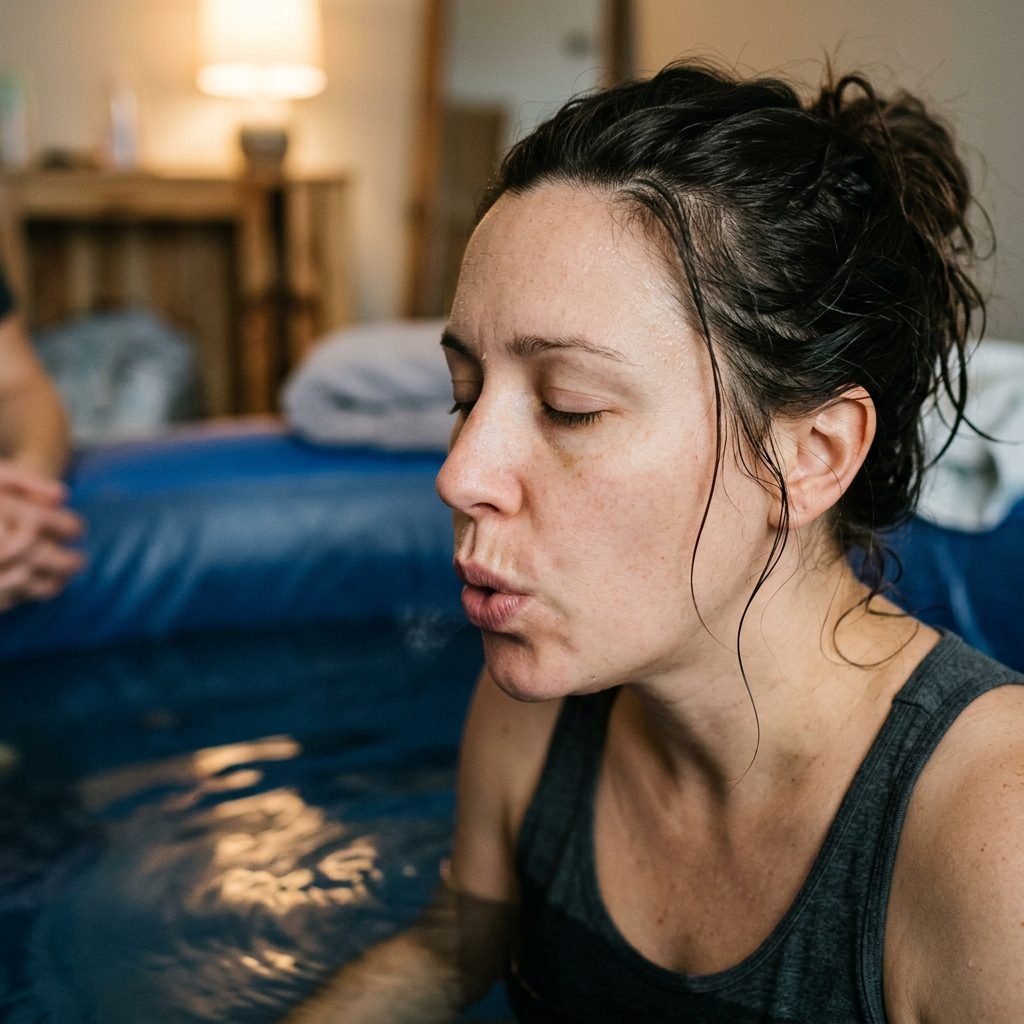
When that overwhelming urge to push hits at the moment of crowning, your instinct might be to bear down with everything you have. Your care provider or doula might suddenly tell you to ‘Stop pushing!’ This can feel impossible unless you have a specific breathing tool ready to go. The ‘Blow Out the Candles’ method is my favorite tool for this exact moment.
- Recognize the Sensation: As you feel the intense stretching or burning sensation, acknowledge it as a sign that your baby is almost here.
- Open Your Mouth: Keep your lips loose and slightly parted. Remember: Loose lips, loose hips.
- Short, Sharp Exhalations: Instead of one long push, take short, quick breaths out of your mouth, as if you are trying to flicker the flame of a candle without blowing it out completely.
- Keep it High: Keep the breath in the upper part of your chest and throat rather than pushing it down into your abdomen.
- Repeat the Rhythm: Continue this ‘ha-ha-ha’ or ‘hoo-hoo-hoo’ rhythm until the contraction peaks and the baby’s head has safely cleared the perineum.
“I am softening. I am opening. My body knows how to stretch. I am safe, and my baby is safe.”
Optimal Positions to Prevent Tearing
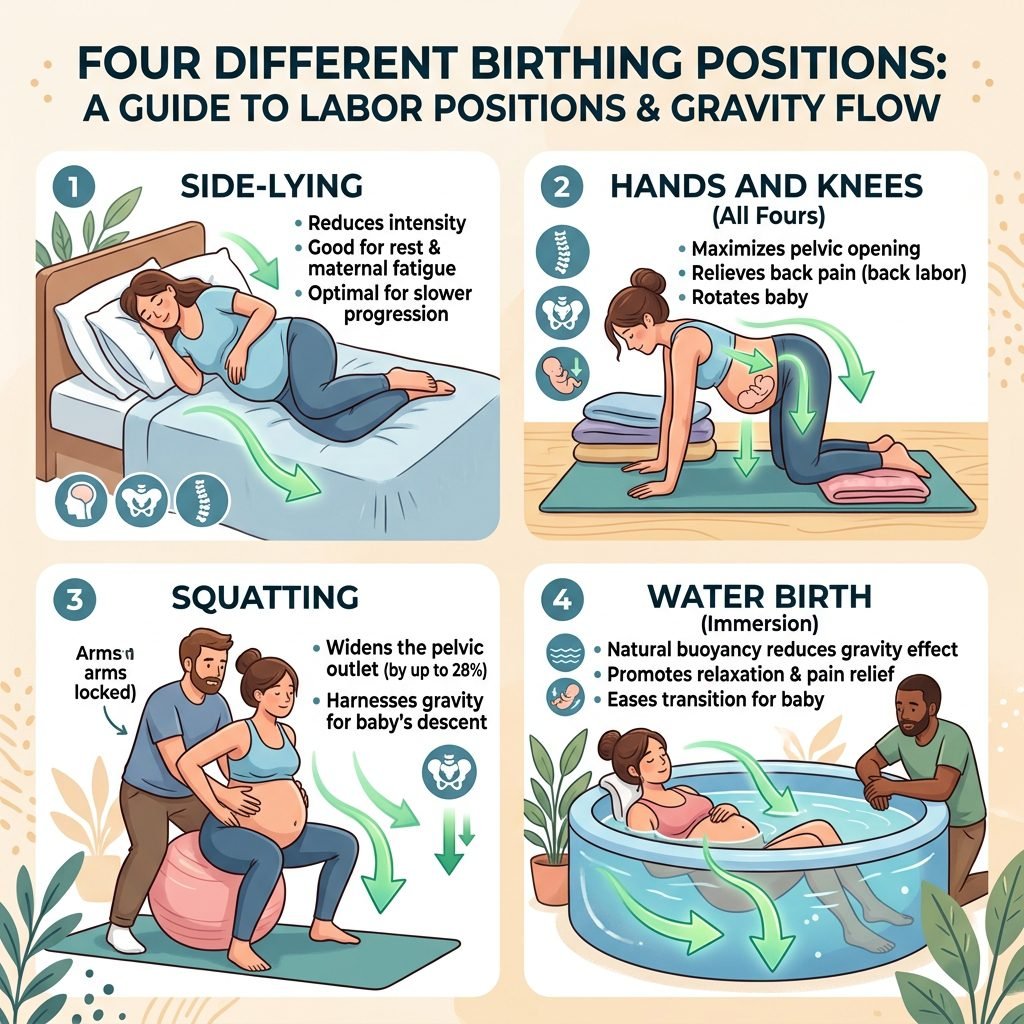
While breathing is vital, the position of your body plays a massive role in how much pressure is placed on your perineum. The traditional ‘lying on your back’ (lithotomy) position is actually one of the least effective for preventing tears because it forces the baby against the perineum and narrows the pelvic outlet.
To help you choose the best position for your birth plan, I’ve put together this comparison table based on gravity and perineal pressure:
| Position | Impact on Tearing | Doula’s Pro-Tip |
|---|---|---|
| Hands and Knees | Very Low Risk | Takes pressure off the perineum and uses gravity to help the baby rotate. |
| Side-Lying | Low Risk | Allows for a very slow, controlled exit; great for tired mamas. |
| Deep Squat | Moderate Risk | Opens the pelvis 30% more, but can be intense for the perineum if not supported. |
| Water Birth | Lowest Risk | Warm water softens tissues and provides natural counter-pressure. |
| On Your Back | Highest Risk | Works against gravity and increases the risk of ‘upward’ tearing toward the urethra. |
I always recommend my clients try side-lying or hands-and-knees during the final moments. These positions allow your midwife or doctor to have a clear view to support your perineum with warm compresses while ensuring the baby doesn’t ‘rocket’ out too fast.
The Jaw-Pelvis Connection: Why You Must Stay Vocal
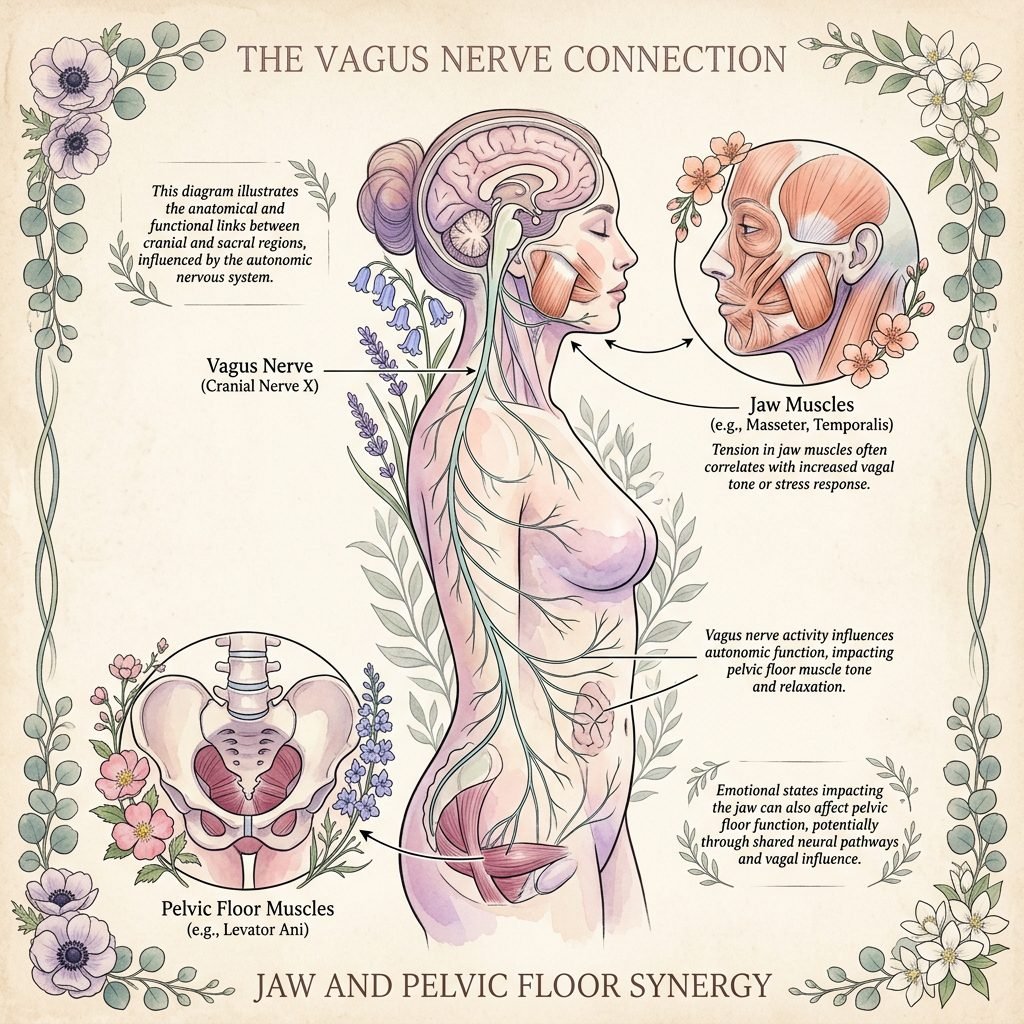
Did you know that your jaw and your pelvic floor are anatomically and energetically connected? In the doula world, we call this the Sphincter Law. If your jaw is tight, clenched, and tense, your vaginal opening and cervix will also be tight. This is the last thing we want during crowning!
Instead of high-pitched screaming, which tenses the throat and the pelvic floor, we want to focus on low, guttural vocalizations. Think of a low ‘mooing’ sound or a deep ‘Oooo.’ This keeps the energy moving downward and encourages the tissues to relax. When you feel the ‘Ring of Fire,’ try to drop your chin to your chest and make the lowest sound you can. This naturally triggers the parasympathetic nervous system, keeping you out of ‘fight or flight’ mode and reducing the likelihood of a stress-induced tear.
How to Practice Before Labor
- The Jaw Check: Throughout your day, check if your teeth are touching. If they are, drop your jaw and wiggle it.
- Humming: Practice humming into your chest while doing pelvic floor releases (reverse Kegels).
- Mirror Work: Look in the mirror and practice the ‘horse lips’ (blowing air through relaxed lips to make them vibrate). It feels silly, but it’s a lifesaver in the delivery room!
Supporting the Tissue: Warm Compresses and Counter-Pressure

While you are doing the hard work of breathing, your birth partner or provider can help from the outside. One of the most effective ways to prevent tearing is the application of warm compresses during the crowning stage. The heat increases blood flow to the area, which makes the skin more elastic and pliable.
You can also ask your provider about perineal massage or counter-pressure. As the baby’s head crowns, a skilled provider can place two fingers on the baby’s head to prevent it from ‘popping’ out, while another hand supports the perineum. This ‘hands-on’ approach, combined with your ‘hands-off’ breathing, is the gold standard for an intact perineum.
Your ‘Gentle Crowning’ Checklist
- Pack a small bowl and soft washcloths in your hospital bag for warm compresses.
- Discuss ‘delayed pushing’ or ‘laboring down’ with your doctor if you have an epidural.
- Include ‘I prefer to breathe my baby out rather than coached pushing’ in your birth plan.
- Ensure your partner knows to remind you: ‘Relax your shoulders, relax your jaw.’
Conclusion
You Are Ready for This Moment
Crowning is the bridge between two worlds—the moment you transition from being a pregnant woman to holding your baby in your arms. It is intense, yes, but it is not something to fear. By mastering the ‘Blow Out the Candles’ breath, staying vocal with low tones, and choosing a gravity-neutral position, you are giving your body the best possible chance to heal quickly and recover beautifully.
Remember, mama, even if a small tear does happen, it is a badge of the incredible work your body has done. Most tears heal quickly and are a normal part of the physiological process for many women. But by using these techniques, you are taking an active, empowered role in your birth experience. You’ve got this. Trust your breath, trust your body, and we’ll see you on the other side of that final, beautiful stretch.