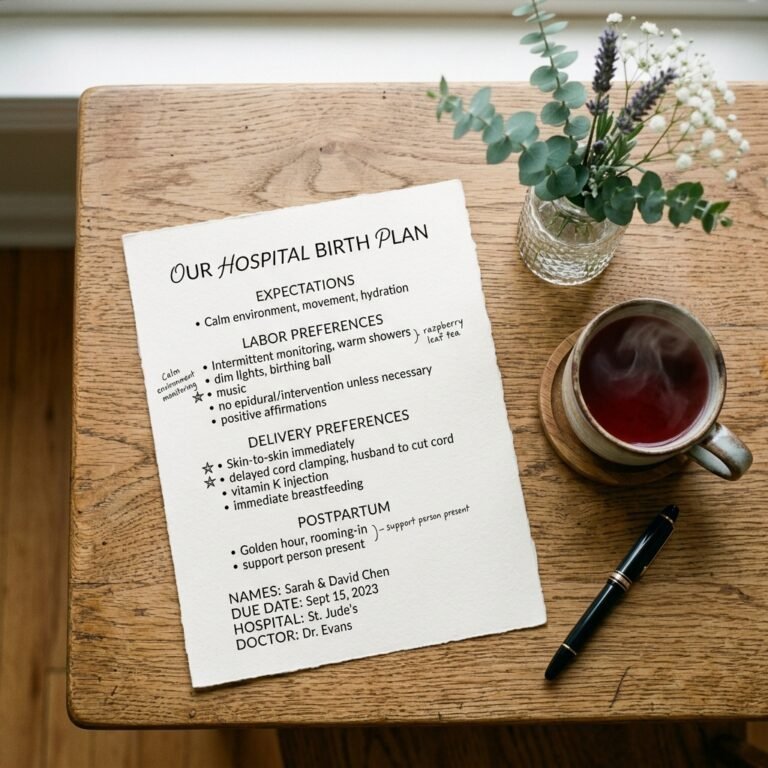
The Ultimate Guide to Using Hydrotherapy During Your Active Labor Transition
Welcome to Your Sacred Space, Mama
Take a deep breath. Can you feel that? The incredible power of your body as it prepares to bring new life into the world. If you are reading this, you are likely preparing for one of the most transformative journeys of your life: active labor and transition. As a doula, I often refer to hydrotherapy as the ‘midwife’s epidural.’ There is something deeply primal and profoundly soothing about the element of water. It doesn’t just wash away the sweat of hard work; it provides a weightless sanctuary where gravity loses its grip and your spirit finds its rhythm.
In this guide, we aren’t just talking about a warm bath. We are exploring a clinical yet soulful tool that can lower your blood pressure, reduce the need for pharmacological intervention, and provide a sense of privacy and safety that allows your oxytocin—the shy hormone of labor—to flow freely. Whether you are planning a hospital birth with a shower, a birth center water birth, or a home birth tub experience, let’s dive deep into how you can use water to navigate the intensity of the transition phase with grace and strength.
Remember, your body was built for this, and the water is here to hold you when the waves feel too high.
The Science of Soothing: Why Water Works
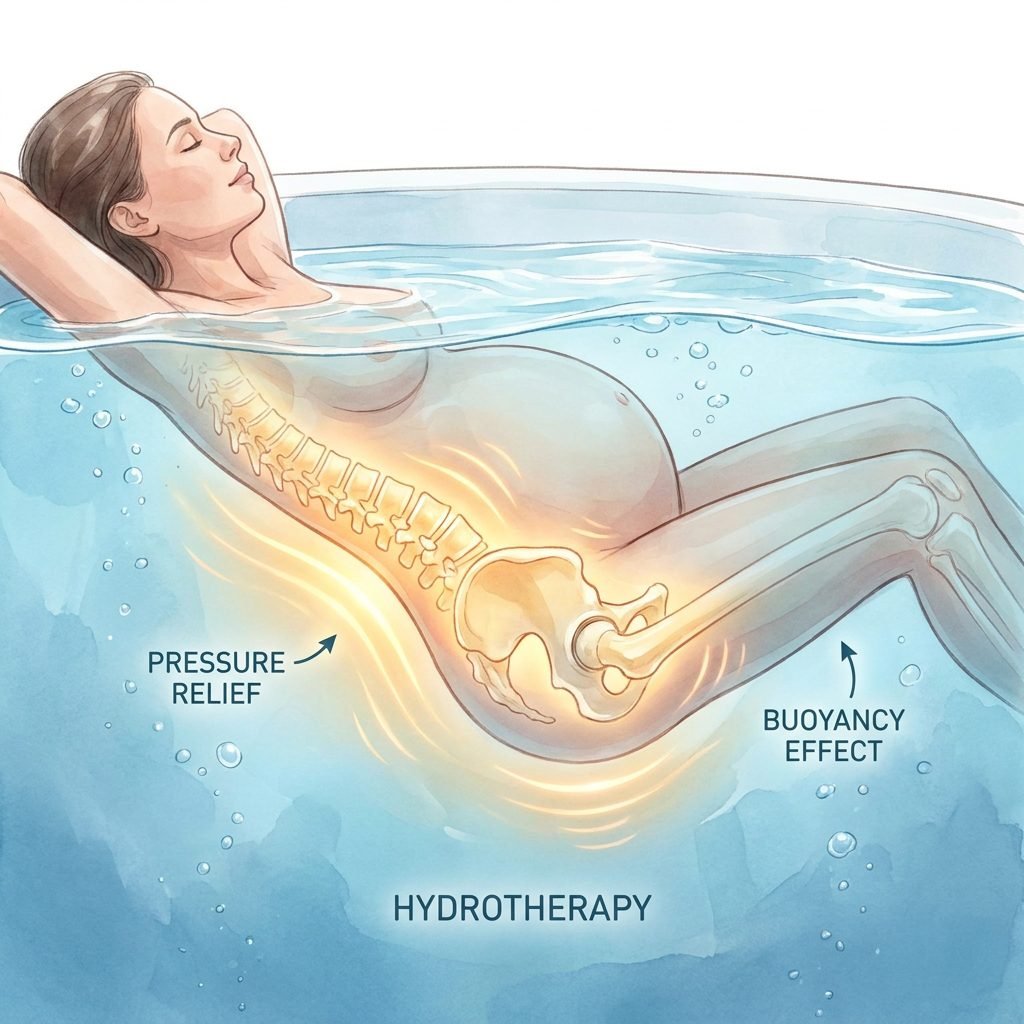
Hydrotherapy is more than just a comfort measure; it is an evidence-based tool for pain management. When you immerse yourself in warm water, your body experiences buoyancy, which relieves the pressure on your pelvis and lower back. This weightlessness allows you to move more freely, helping your baby find the optimal position for birth.
From a neurological perspective, water works through the Gate Control Theory of Pain. The sensation of warm water on the skin sends signals to the brain that compete with the pain signals of contractions. Essentially, the water ‘distracts’ your nervous system, allowing you to focus on your breathing rather than the intensity of the surge. Furthermore, being in water can significantly lower catecholamines (stress hormones), which in turn prevents the ‘fight or flight’ response that can stall labor.
The Benefits of Hydrotherapy in Active Labor
- Natural Pain Relief: Reduces the perception of pain during the peak of contractions.
- Increased Relaxation: Promotes the release of endorphins, your body’s natural painkillers.
- Tissue Elasticity: Warm water helps soften the perineum, potentially reducing the risk of tearing.
- Autonomy: The tub creates a physical boundary, giving the laboring mother a sense of her own ‘protected space.’
Timing the Transition: When to Get In

Timing is everything when it comes to hydrotherapy. If you get into the tub too early (during early labor), the extreme relaxation can sometimes slow down your contractions. However, once you are in active labor—usually around 6 centimeters dilated—the water acts as a catalyst for progress.
Transition is the shortest but most intense phase of labor, where you move from 7cm to 10cm. This is often where moms feel they ‘can’t do it anymore.’ The water provides a sensory shift that can help you cross this bridge. Below is a guide on how to time your immersion for maximum benefit.
| Labor Phase | Hydrotherapy Action | Goal |
|---|---|---|
| Early Labor (0-5cm) | Warm Shower (Standing or Seated) | Relaxation without stalling progress |
| Active Labor (6-8cm) | Full Tub Immersion | Pain management and weightlessness |
| Transition (8-10cm) | Tub or Intense Shower Spray | Focus, grounding, and ‘the bridge’ to pushing |
| Second Stage (Pushing) | Tub (if water birth is planned) | Perineal support and gentle crowning |
The Water Dance: Rhythmic Positions for Transition
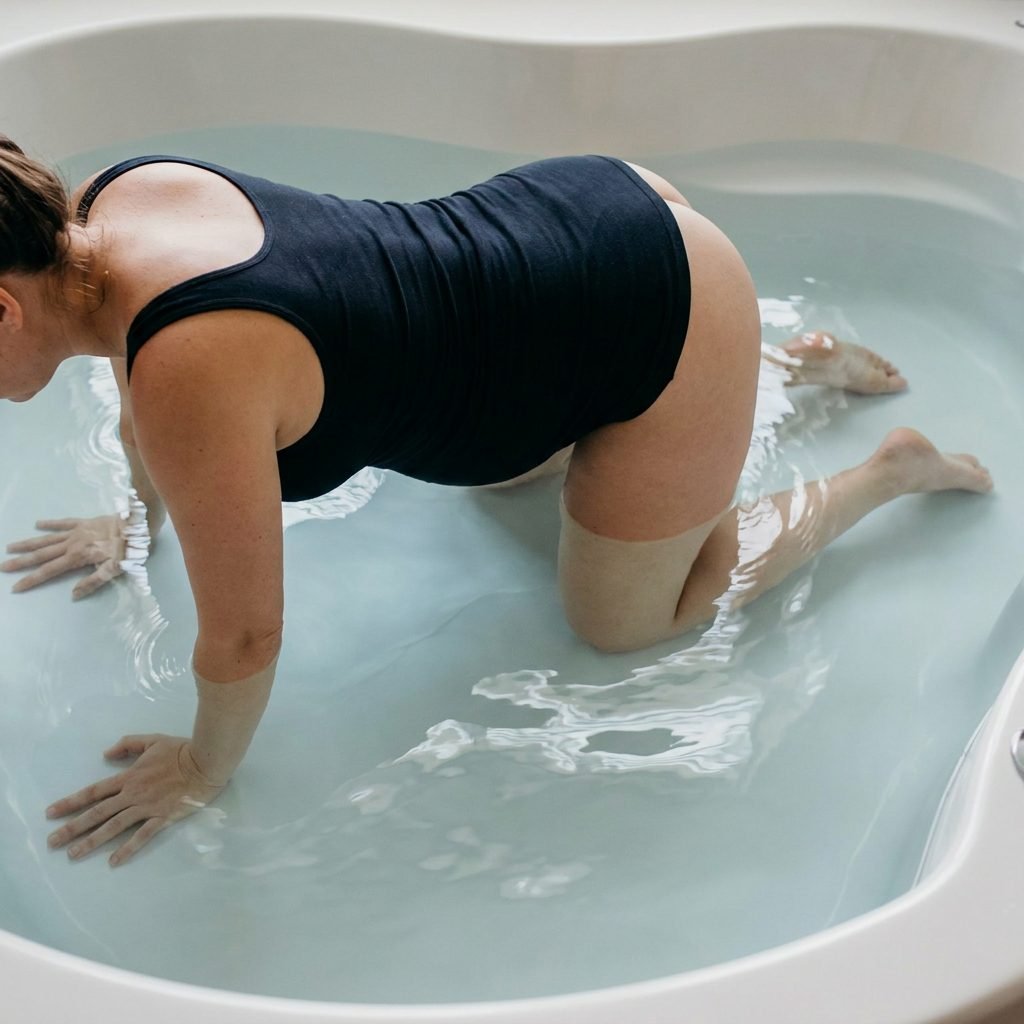
The beauty of the water is the freedom of movement it provides. You aren’t confined by the ‘bed’ or the ‘floor.’ In the water, you can dance with your labor. During transition, you want positions that open the pelvis and allow you to rest between surges.
Try these specific movements to help your baby descend while staying supported by the water:
- The Floating Squat: Hold onto the handles or the edge of the tub. Allow your hips to sink low while the water supports your weight. This uses gravity to help the baby’s head apply pressure to the cervix.
- Hands and Knees (The All-Fours): This is the gold standard for back labor. Submerge your belly in the warm water while resting your head on your arms at the edge of the tub. The water takes the weight of the baby off your spine.
- The Side-Lying Float: Use a waterproof pillow or a rolled-up towel under your head. Lie on your side and let one leg float. This is a restorative position for when you are feeling exhausted during transition.
- The Reclining Goddess: Lean back against the tub’s slope. This is excellent for rest, but ensure your partner is supporting your shoulders so you don’t feel like you are slipping.
In the water, you are weightless. Let your pelvis go heavy and your jaw go soft.
Setting the Sanctuary: Temperature and Logistics
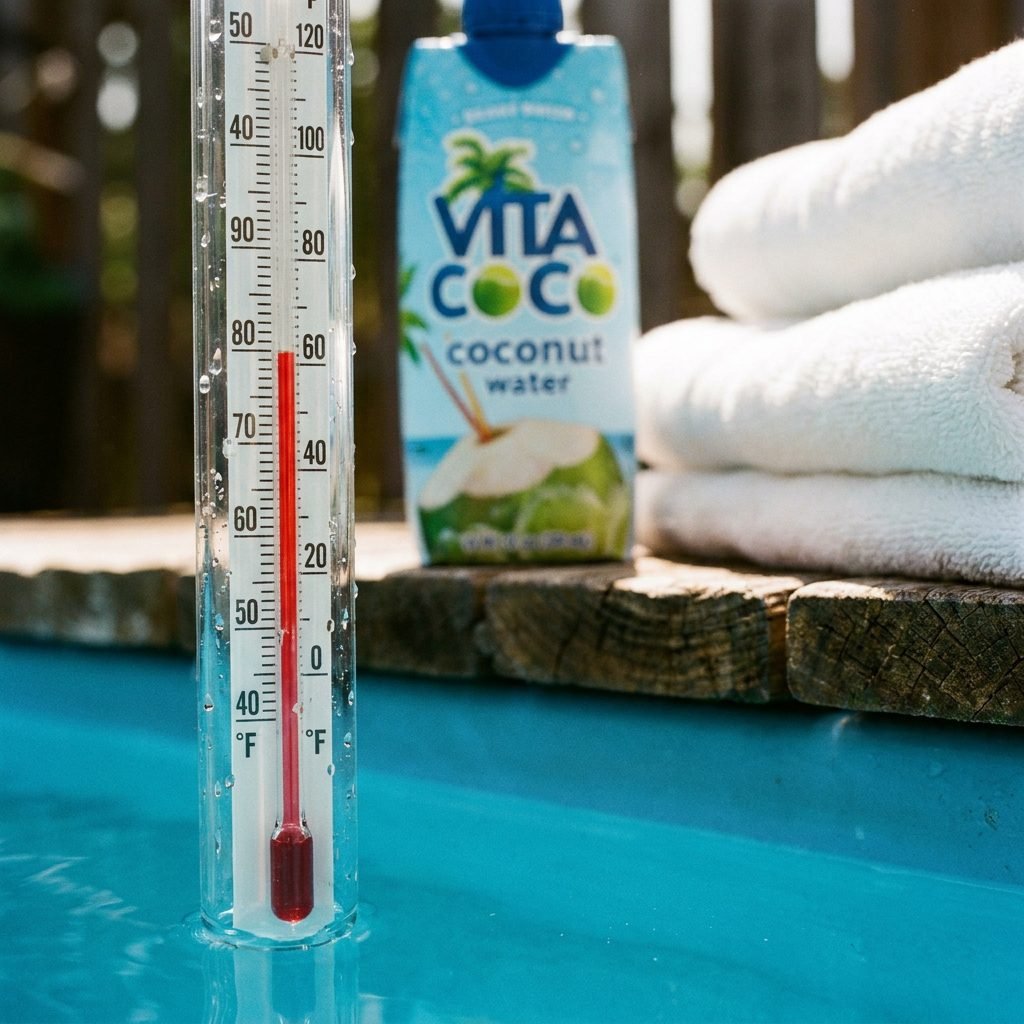
To make hydrotherapy effective, the environment must be curated for safety and comfort. The water temperature is the most critical factor. It should be warm enough to relax you but not so hot that it raises your core temperature or the baby’s heart rate. Aim for 98°F to 100°F (37°C to 38°C).
Logistically, you should also consider the ‘dry’ aspects of your wet environment. Have a stack of warm towels ready, a robe for when you step out, and plenty of hydration. Because you are in warm water, you will sweat more than usual. Sip on electrolyte-rich drinks or coconut water between every contraction.
Safety Checklist for Hydrotherapy
| Feature | Recommendation | Why? |
|---|---|---|
| Water Temp | 98°F – 100°F | Prevents maternal hyperthermia and fetal tachycardia |
| Hydration | 8oz per hour (minimum) | Prevents dehydration in the warm environment |
| Exit Plan | Non-slip mats nearby | Safety when transitioning out of the tub |
| Monitoring | Waterproof Doppler | Ensures baby is coping well with labor |
The Partner’s Role: Being the Anchor in the Water
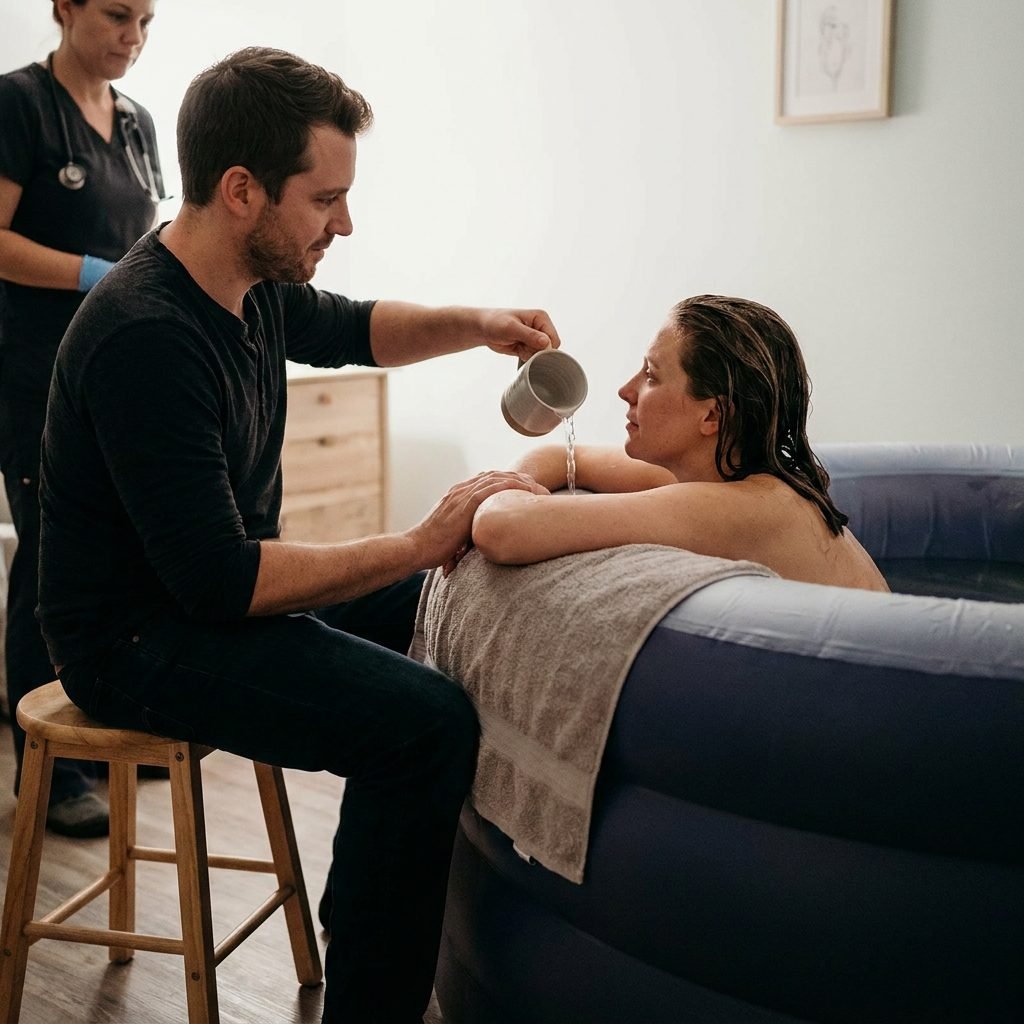
Partners, you are not just a spectator! When the laboring mother is in the water, your role shifts to being her anchor. You are the ‘guardian of the tub.’ Your job is to ensure she feels safe, hydrated, and emotionally grounded. If she is in a shower, you can use the handheld sprayer to provide directed hydrotherapy on her lower back or the top of her fundus.
Use these scripts and actions to support her during the intensity of transition:
- The Cup Pour: Use a plastic cup to continuously pour warm water over her shoulders or back when she is not fully submerged.
- Counter Pressure: Even in the water, you can apply firm pressure to her hips (the double hip squeeze) during a contraction.
- Affirmations: Lean in close so she can hear you over the sound of the water.
Try saying these during the transition peaks:
“You are riding the wave, and the water is carrying you.”
“Each drop of water is washing away the tension. Soften into the tub.”
“You are safe. You are strong. You are doing it.”
Transitioning Out: When the Water Work is Done
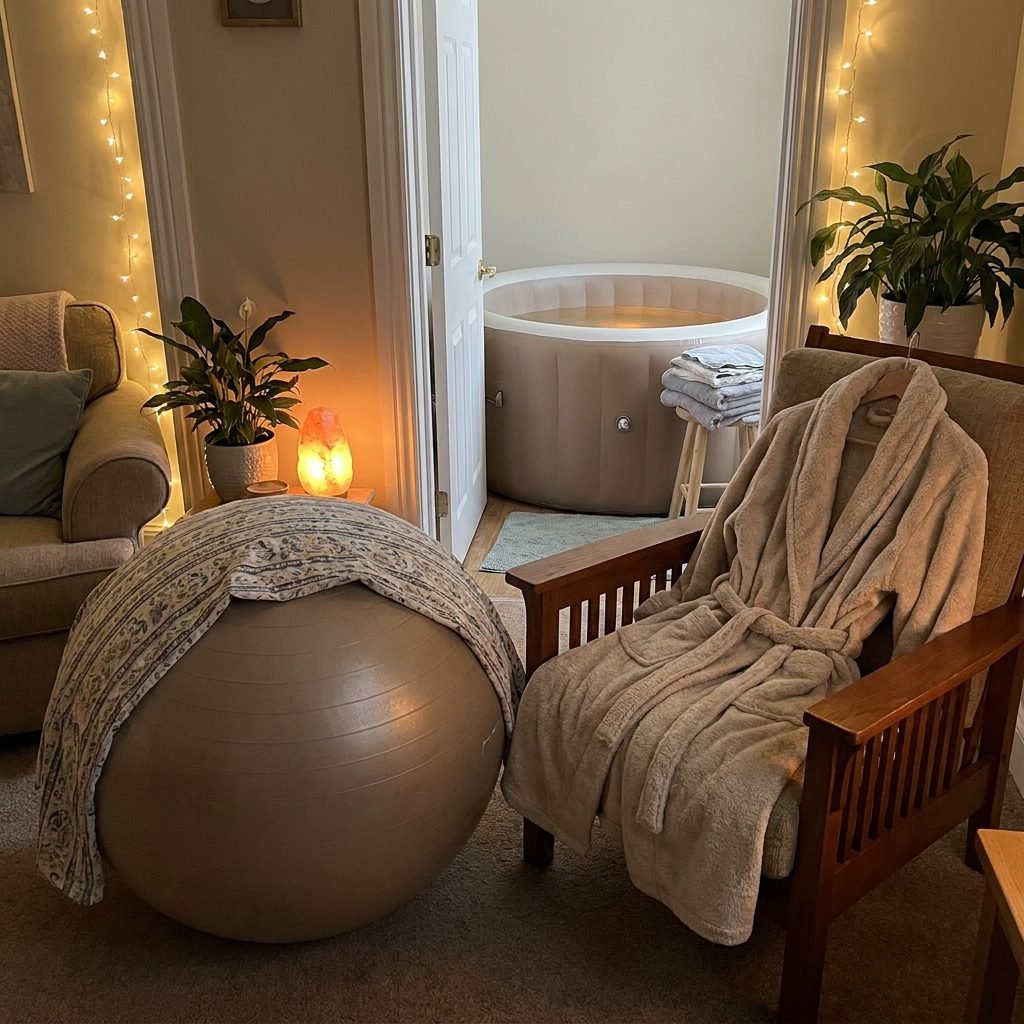
Sometimes, the water can become ‘too’ relaxing, and labor may need a change of scenery to reach the finish line. If you have been in the tub for more than two hours and progress seems to have plateaued, it might be time for the ‘Towel Effect.’ Getting out of the water, drying off, and moving to a birth ball or the bed can create a sensory shift that jumpstarts the final stage of labor.
Additionally, if your care provider needs to perform an intervention or if the baby’s heart rate shows a need for closer monitoring, you must be prepared to exit the water quickly and calmly. Keep your ‘dry’ space ready so the transition is seamless and you don’t lose your ‘labor rhythm.’
Signs it’s time to get out:
- You feel restless or ‘done’ with the water.
- The water has cooled and cannot be easily reheated.
- Contractions are spacing out significantly (more than 5-6 minutes apart).
- You feel the ‘urge to push’ and your provider prefers a dry birth.
Conclusion
Embrace the Flow, Mama
Hydrotherapy is a gift—a way to return to the element we all began in. As you navigate the powerful currents of the active labor transition, remember that the water is your ally. It softens the hard edges of labor, creates a cocoon of privacy, and empowers you to move in ways that feel right for your body and your baby. Whether you spend ten minutes under a warm shower spray or three hours floating in a deep tub, you are using a tool that has supported women for generations.
Trust your instincts. If the water calls to you, dive in. If it’s time to get out, step out with confidence. You are the captain of this ship, and you are doing an incredible job. You are almost there, and soon, you will be holding your little one in your arms, the intensity of this moment a distant, beautiful memory. You’ve got this, sister.