The 4 Best Daily Stretches to Spin a Posterior Baby Before Labor Starts
Welcome, Mama: Preparing Your Body and Your Baby
Hello, sweet friend. If you have recently discovered that your little one is in a posterior position—often called ‘sunny-side up’—you might be feeling a mix of anxiety and physical discomfort. First, take a deep breath. Your body is a magnificent, intelligent vessel, and your baby is a clever little navigator. As a doula, I have seen countless mamas successfully encourage their babies to rotate into the Occiput Anterior (OA) position just by creating a little more ‘room in the inn’ through specific, gentle movements.
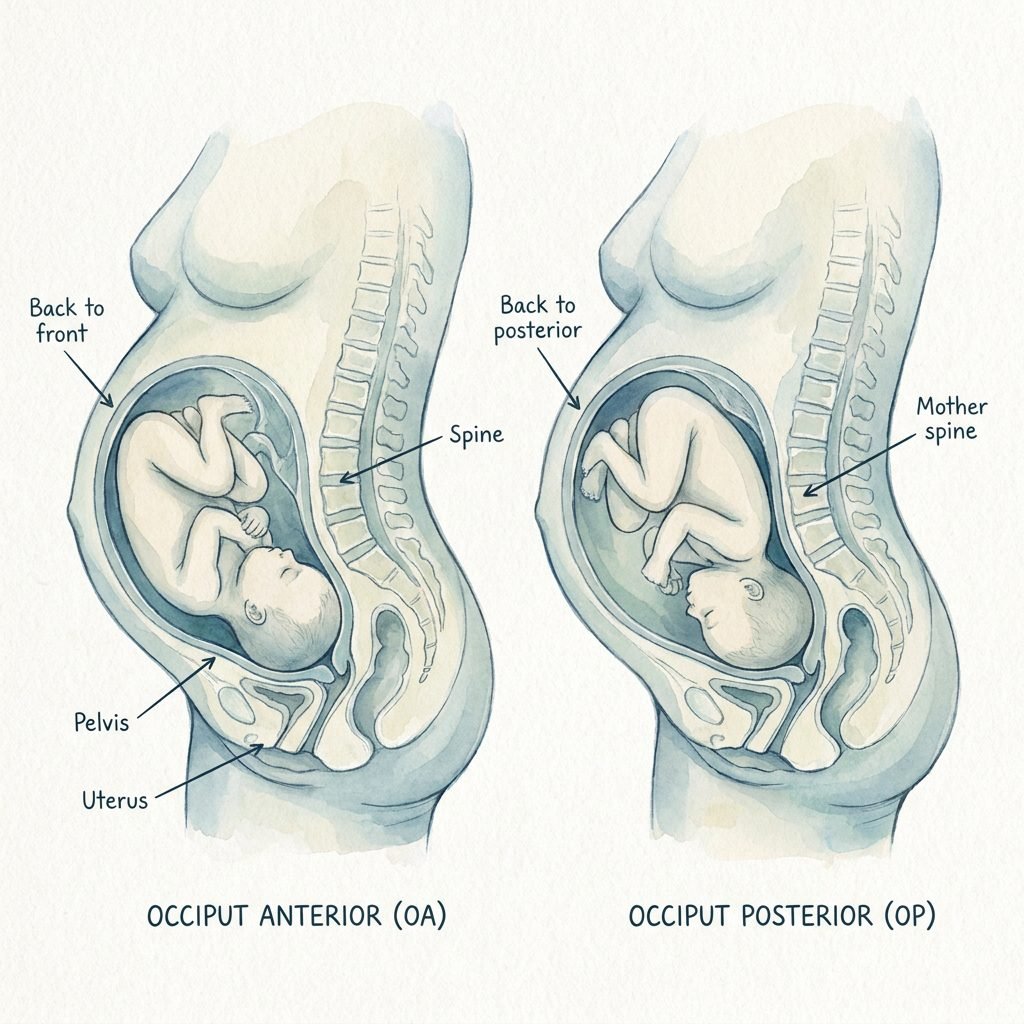
A posterior baby means the back of the baby’s head is against your spine rather than your belly. While babies can certainly be born this way, it often leads to what we call ‘back labor’ and a longer pushing stage. Our goal with these stretches is not to force the baby to move, but to balance your pelvic muscles and ligaments so the baby naturally finds the path of least resistance into the optimal position. Let us walk through these four powerhouse stretches together, with the warmth of a sister and the expertise of a birth professional.
Understanding Fetal Positioning and Labor Impact
Why Position Matters for Your Birth Experience
Before we dive into the physical stretches, it is vital to understand why we focus on fetal positioning. When a baby is anterior (facing your back), their head fits into the pelvis like a key in a lock. When they are posterior, the widest part of their head may press against your sacrum, which is why many mamas feel intense pressure in their lower back during contractions.
“Your pelvis is not a fixed bone; it is a dynamic system of ligaments and muscles that can be balanced to welcome your baby’s descent.”
By practicing daily stretches, you are addressing the uterosacral ligaments, the round ligaments, and the psoas muscles. When these are tight or asymmetrical, they can act like a tight hammock, pulling the uterus into a shape that makes it hard for the baby to tuck their chin and rotate. Below is a quick guide to understanding the difference between the two main positions.
| Position Aspect | Occiput Anterior (OA) | Occiput Posterior (OP) |
|---|---|---|
| Baby’s Face | Faces the Mother’s Spine | Faces the Mother’s Belly |
| Labor Sensation | Pressure in the Front/Cervix | Intense Back Labor/Sacral Pain |
| Dilation Pace | Usually Steady and Efficient | May Stall or Start/Stop (Prodomal) |
| Optimal Stretch Focus | Maintenance and Relaxation | Pelvic Balancing and Inversion |
Stretch 1: The Forward-Leaning Inversion (The Great Reset)

Creating Space in the Lower Uterus
The Forward-Leaning Inversion (FLI) is perhaps the most famous move in the doula’s toolkit for ‘spinning’ babies. The goal here is to use gravity to let the baby’s head back out of the pelvis slightly, allowing the lower uterine segments to stretch and untwist. This often gives the baby the ‘wiggle room’ they need to rotate on their own once you stand back up.
- Setup: Use a sturdy couch or a bed. Ensure you have a partner nearby for safety the first few times you try this.
- The Move: Kneel on the edge of the couch. Slowly and carefully lower your hands to the floor, followed by your forearms.
- Positioning: Your knees should stay on the edge of the couch, and your hips should be the highest point of your body. Let your head hang loose. Do not rest your head on the floor.
- Duration: Hold this for 30 seconds—about 3 deep, diaphragmatic breaths.
- The Exit: Use your hands to walk yourself back up to a kneeling position on the couch. Sit on your heels for a moment to let your blood pressure stabilize.
Important Safety Tip: Do not perform this if you have high blood pressure, a high risk of stroke, or if you feel any sharp pain. Always listen to your body first, Mama.
Stretch 2: The Side-Lying Release (The Fascia Unwinder)
Balancing the Pelvic Floor and Ligaments
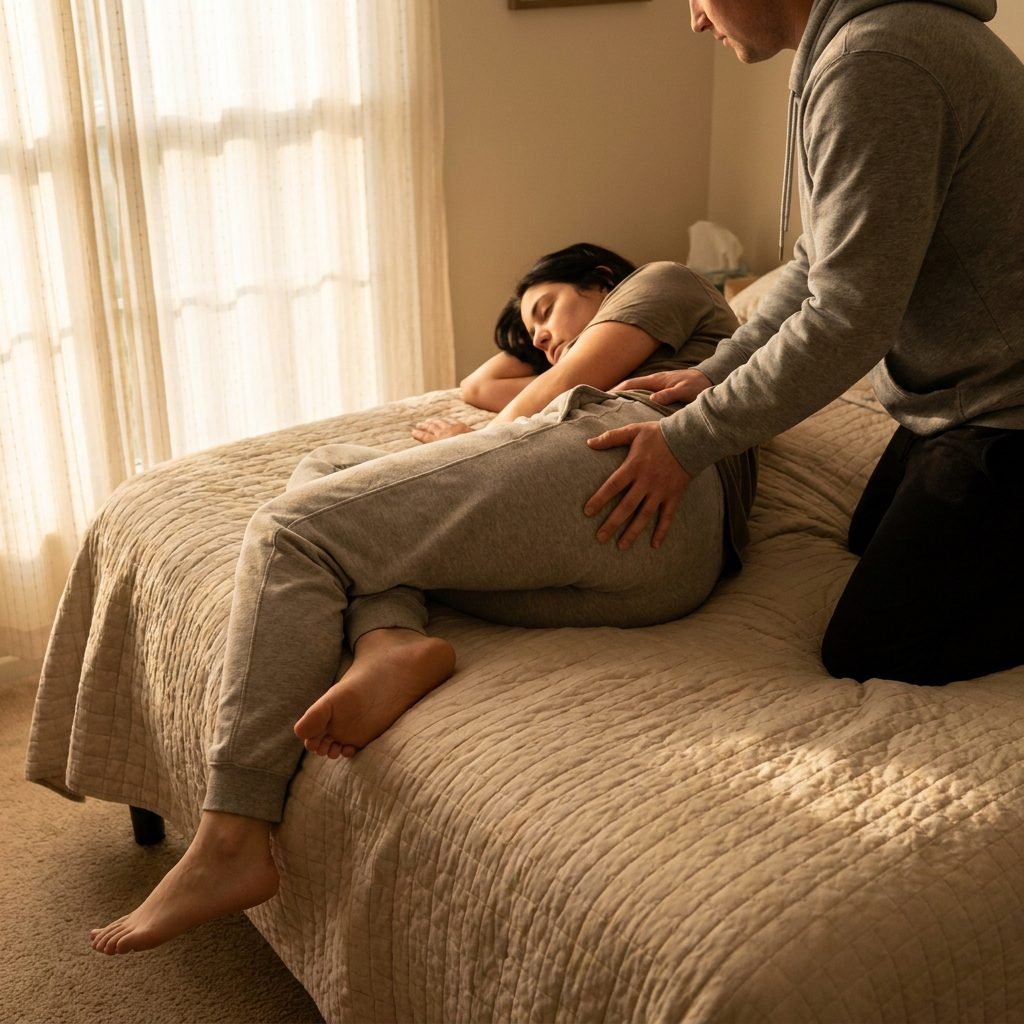
The Side-Lying Release (SLR) is a subtle but incredibly powerful move that targets the pelvic floor and the ligaments that support the uterus. Unlike a standard stretch, this is a fascial release. It requires a partner to ensure your hips stay stacked, which allows the weight of your leg to gently pull on the pelvic tissues.
- Positioning: Lie on your side at the very edge of a firm bed or massage table. Your partner should stand in front of you to prevent you from rolling off.
- The Leg Hang: Keep your bottom leg straight. Your partner will gently stabilize your top hip. Slowly bring your top leg forward and let it hang off the edge of the bed.
- The Release: Do not push the leg down; let gravity do the work. You will feel a subtle pull in your hip and lower back.
- Timing: Stay in this position for 2 to 5 minutes, or until you feel a ‘release’ or the leg naturally drops a bit lower.
- Switch: Roll over and repeat on the other side. This is crucial for symmetry!
This stretch is a favorite for mamas experiencing sciatica or symphysis pubis dysfunction (SPD) because it helps realign the pelvis without high-impact movement.
Stretch 3: Rebozo Sifting (The Gentle Jiggle)

Relaxing the Abdominal Wall
The Rebozo is a traditional Mexican shawl used for centuries by midwives and doulas. Sifting (or ‘manteada’) is a technique that uses the shawl to gently jiggle the mother’s abdomen. This vibration helps relax tight abdominal muscles and the round ligaments, which can often be the ‘tight’ spots keeping a baby in a posterior position.
- Step 1: Get on all fours (hands and knees) on a comfortable mat.
- Step 2: Have your partner wrap a long, non-stretchy scarf or Rebozo around your belly, holding the ends firmly above your back.
- Step 3: Your partner will lift the weight of the belly slightly and begin a very gentle, rhythmic jiggling motion. It should feel like your belly is a bowl of jelly being lightly shaken.
- Step 4: Breathe deeply and let your belly ‘fall’ into the fabric. Continue for 2 to 3 minutes.
This is not just a physical stretch; it is a deeply soothing sensory experience that helps shift the mother’s nervous system from ‘fight or flight’ into ‘rest and digest,’ which is the state where labor progresses best.
Stretch 4: Pelvic Tilts and Cat-Cow (The Daily Essential)

Encouraging Gravity-Led Rotation
If you only have five minutes a day, make it the Pelvic Tilt. This movement encourages the baby to move away from your spine and toward the ‘hammock’ of your belly. When you are on all fours, the heaviest part of the baby (their back) naturally wants to swing toward the floor due to gravity.
How to Perform Effective Pelvic Tilts:
- Start on your hands and knees with a flat back.
- Inhale: Drop your belly slightly and look forward (Cow pose), but be careful not to over-arch your lower back if you have SPD.
- Exhale: Tuck your tailbone, round your spine toward the ceiling, and look toward your knees (Cat pose).
- The Tilt: Focus on the movement of your pelvis. Imagine you are tilting a bowl of water toward your belly button.
- Repetition: Do 20 to 40 tilts every morning and evening.
“Consistency is key. Think of these tilts as an invitation for your baby to find their best fit before the big day arrives.”
Lifestyle Habits to Support an Anterior Position
Avoiding the ‘Couch Slump’
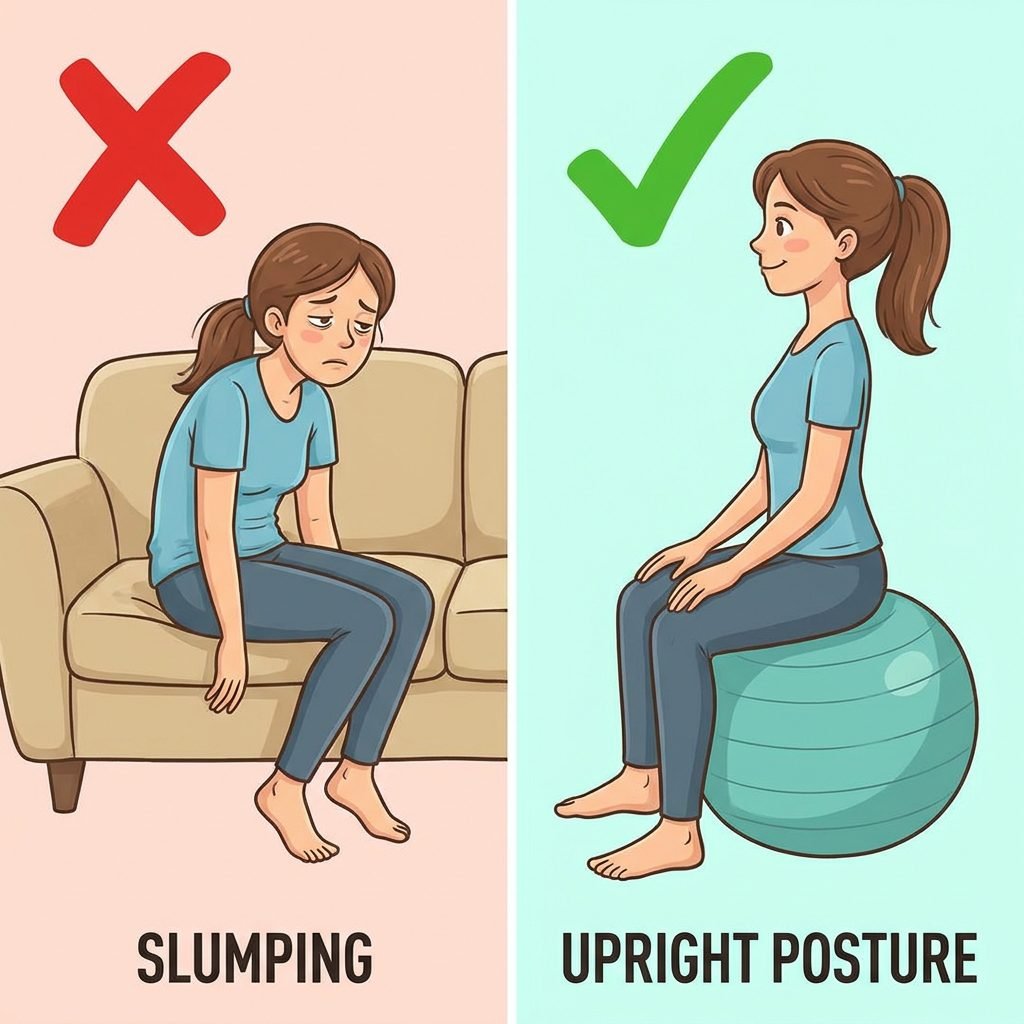
While stretches are vital, how you sit for the other 23 hours of the day matters just as much! Many of us have a habit of slumping back into soft couches, which tilts the pelvis backward and encourages the baby to settle into a posterior position. To keep the progress you make with your stretches, follow these daily posture ‘Do’s and Don’ts’.
| Habit | The ‘No-No’ (Posterior Risk) | The ‘Yes-Please’ (Anterior Support) |
|---|---|---|
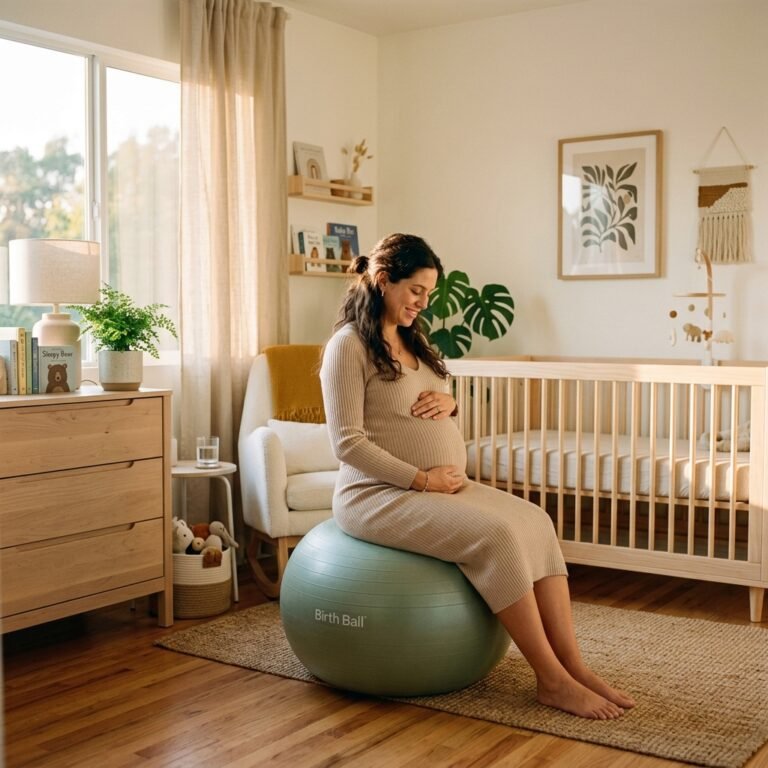
| Sitting | Slumping back on a soft sofa. | Sitting on a birth ball or ‘perching’ on the edge of a chair. |
| Driving | Bucket seats that sink the hips. | Using a wedge cushion to keep knees lower than hips. |
| Sleeping | Flat on your back. | Side-lying with a ‘peanut ball’ or pillow between the knees. |
| Resting | Feet up on a recliner. | Forward-leaning over a birth ball or kitchen counter. |
When to Contact Your Birth Team
Trusting Your Intuition and Professional Guidance
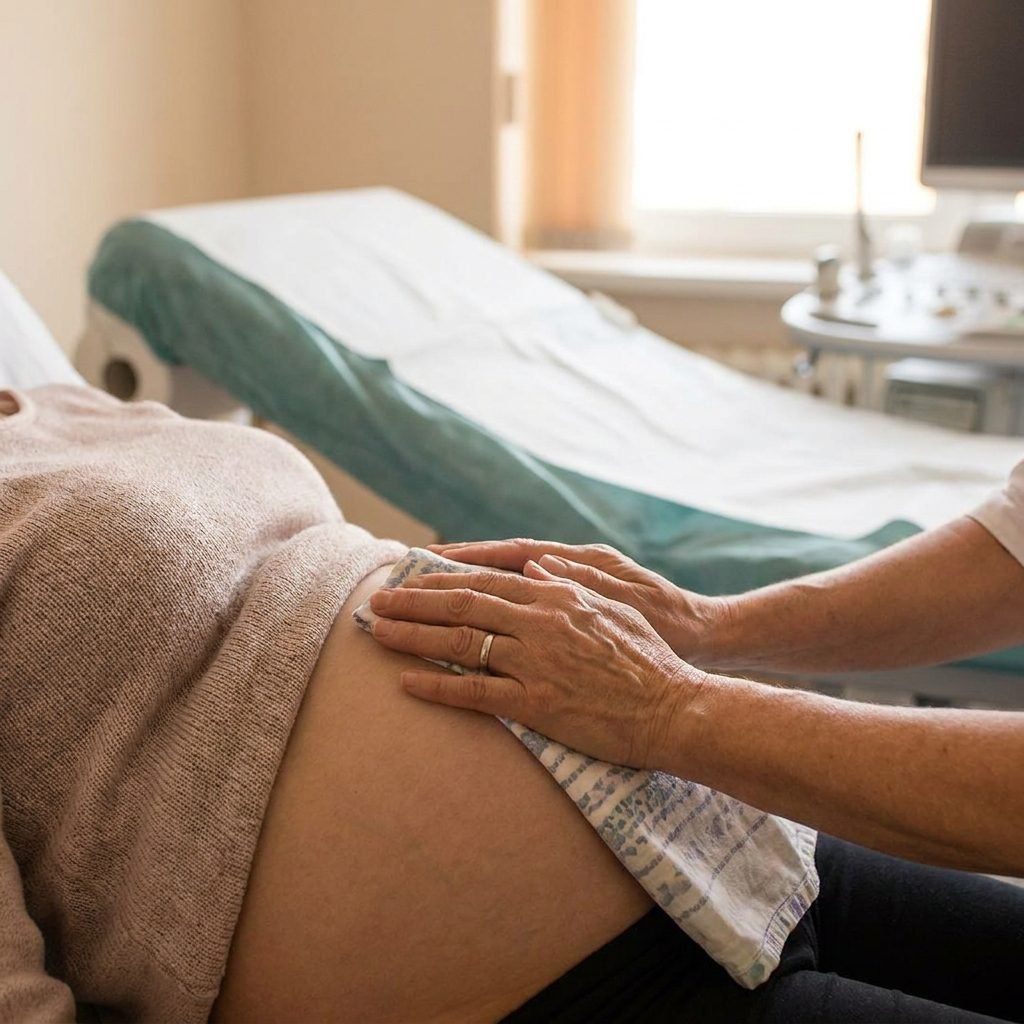
While these stretches are wonderful for general pelvic balancing, it is always important to keep your midwife or doctor in the loop. If you suspect your baby is posterior, they can perform Leopold’s Maneuvers to confirm the position. If you experience any of the following, please pause your stretches and reach out to your provider:
- A sudden decrease in baby’s movement.
- Vaginal bleeding or leaking of fluid.
- Regular, painful contractions before 37 weeks.
- Dizziness or blurred vision during inversions.
Remember, Mama, even if your baby stays posterior, you can still have a beautiful birth. These tools are here to help, but your body is not ‘broken’ if the baby chooses a different path. You are doing an incredible job.
Conclusion
You’ve Got This, Mama
Preparing for labor is as much about the mind as it is about the body. By incorporating these four daily stretches—the Forward-Leaning Inversion, the Side-Lying Release, Rebozo Sifting, and Pelvic Tilts—you are taking proactive, loving steps to support your baby’s journey. You are creating a balanced, supple space for your little one to rotate and descend. Trust in your strength, stay consistent with your movements, and remember that every stretch is a moment of connection with your baby.
You are strong, you are capable, and you are ready for this. Whether your baby arrives ‘sunny-side up’ or perfectly tucked, you have the tools to navigate your birth with grace and power. Happy stretching!
Medical Disclaimer: This content is for informational and educational purposes only and does not constitute medical advice. Always consult with your obstetrician, midwife, or physical therapist before beginning any new exercise routine during pregnancy, especially if you have a high-risk condition or physical limitations.