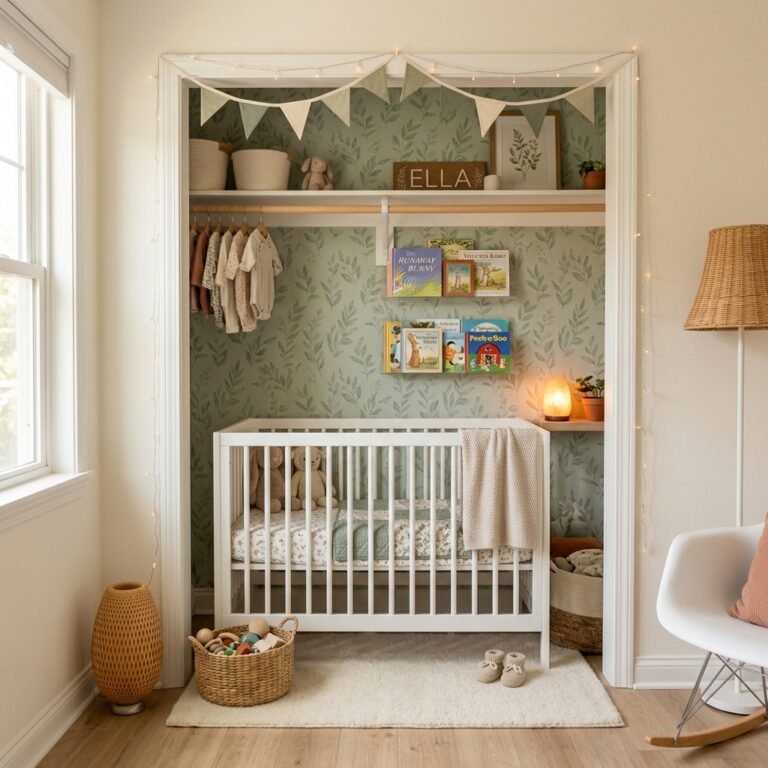

How to Style an Under-Window Mini Crib Nook in Your Master Bedroom
Welcome to the Beautiful Reality of Room-Sharing, Mama
Take a deep breath, sweet friend. If you are staring at a tape measure, looking at that small gap under your master bedroom window, and wondering how on earth you are going to fit a baby into your personal sanctuary—you are in exactly the right place. As a postpartum doula and a mama who has navigated the spatial gymnastics of room-sharing, I am here to tell you a wonderful secret: your baby does not care about square footage. They care about your proximity, your warmth, and your heartbeat.
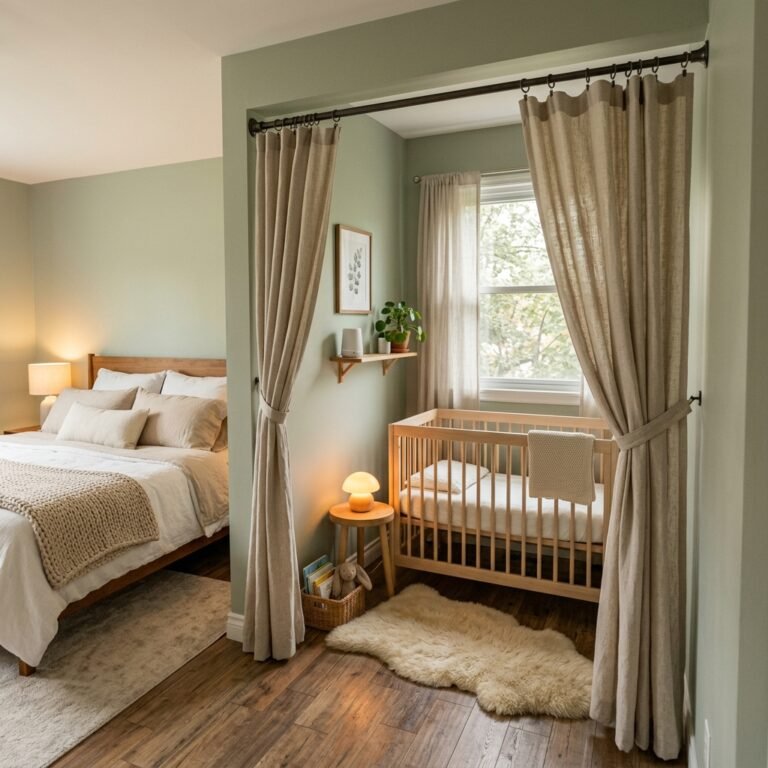
The American Academy of Pediatrics (AAP) recommends room-sharing for at least the first six months of your baby’s life to reduce the risk of SIDS. But knowing the safety guidelines doesn’t magically create more space in your home! That is where the brilliance of the under-window mini crib nook comes in. It is the ultimate small-space hack for expectant parents who want a beautiful, functional nursery footprint without sacrificing their entire master bedroom.
You do not need a massive, Pinterest-perfect, dedicated nursery room to be fully prepared for your baby’s arrival. A thoughtfully designed nook is not just a compromise; it is an intimate, cozy, and highly efficient way to welcome your little one.
In this comprehensive guide, we are going to walk step-by-step through creating a stunning, safe, and wildly practical mini crib nook right under your window. We will cover the absolute must-know safety rules for window placements, clever IKEA storage hacks, blackout lighting solutions, and styling tips that blend your adult aesthetic with sweet baby whimsy. Let’s build your perfect little nest.
The Safety-First Checklist: Rules for Under-Window Cribs
Prioritizing Your Baby’s Safe Sleep Environment
Before we look at cute sheets and floating shelves, we have to put on our doula and safety-expert hats. Placing a crib near a window requires extra vigilance. Windows can present hazards like drafts, temperature fluctuations, and dangerous cords. Here is exactly how to secure this space so you can sleep as peacefully as your baby.
1. Eliminate All Cords and Strings
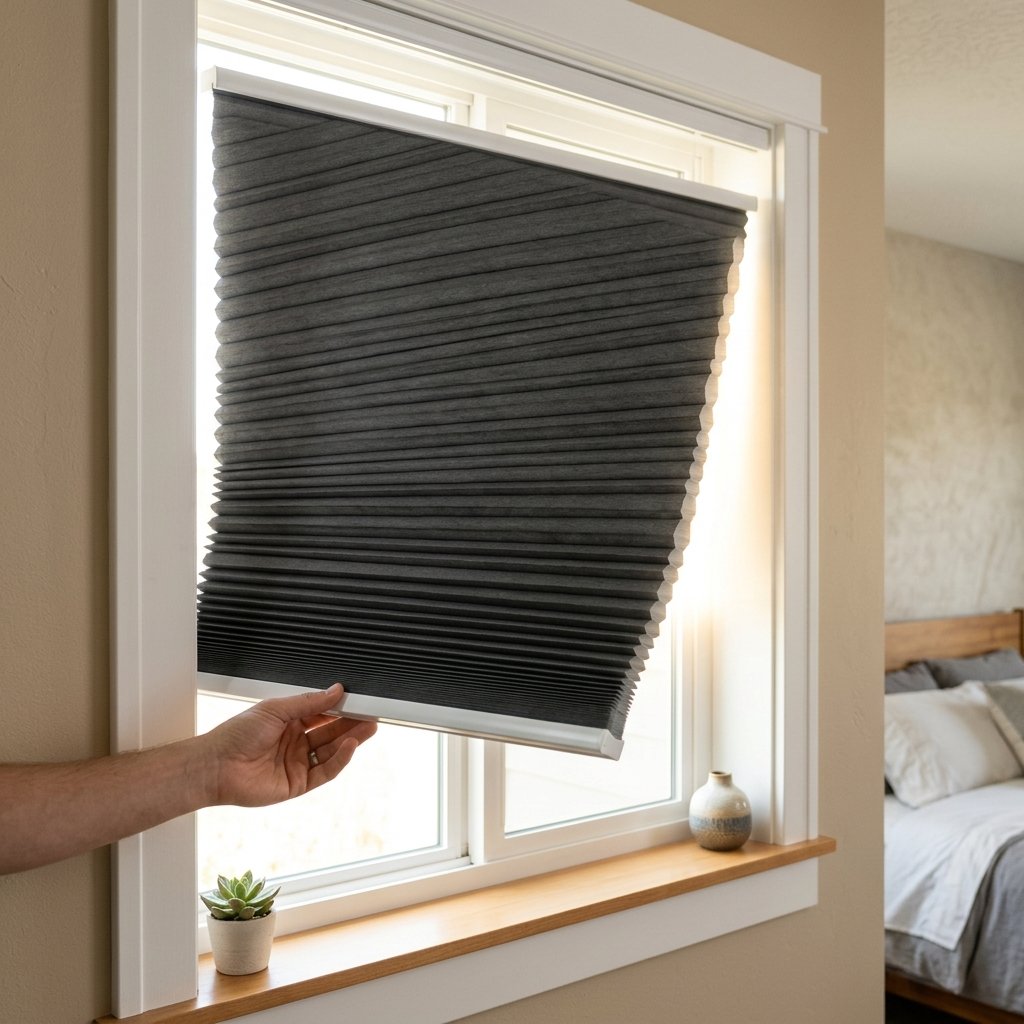
This is the absolute golden rule of under-window crib placement. Blind cords are a severe strangulation hazard. If your current window treatments have cords, they must be replaced before the baby arrives. Opt for cordless cellular shades, cordless roller shades, or curtains that operate on a track without any dangling pull strings. The crib must be at least 3 feet away from any window blind cords, monitor cords, or drapery tie-backs.
2. Manage Drafts and Temperature
Windows can be the draftiest part of a room. Before setting up the crib, check the window seals. If you feel a breeze, apply weather stripping to ensure the nook stays cozy. Remember that babies cannot regulate their body temperature as well as adults. The ideal room temperature for a baby is between 68 and 72 degrees Fahrenheit. Keep a small indoor thermometer near the crib to monitor the micro-climate of that specific corner.
3. Secure the Glass and Window Locks
Ensure the window remains locked at all times. If you live in an earthquake-prone area, or if you simply want ultimate peace of mind, consider applying a clear, shatter-resistant window film. This invisible layer holds the glass together in the rare event of a break, keeping your little one perfectly safe from shards.
4. Mind the Heaters and Vents
Often, radiators or HVAC vents are located directly under windows. Your mini crib should never be pushed flush against a working radiator or a baseboard heater. Ensure there is at least 12 to 18 inches of clearance to prevent overheating and to allow proper air circulation.
Choosing the Perfect Mini Crib for Your Space
Why the Mini Crib is the MVP of Room-Sharing
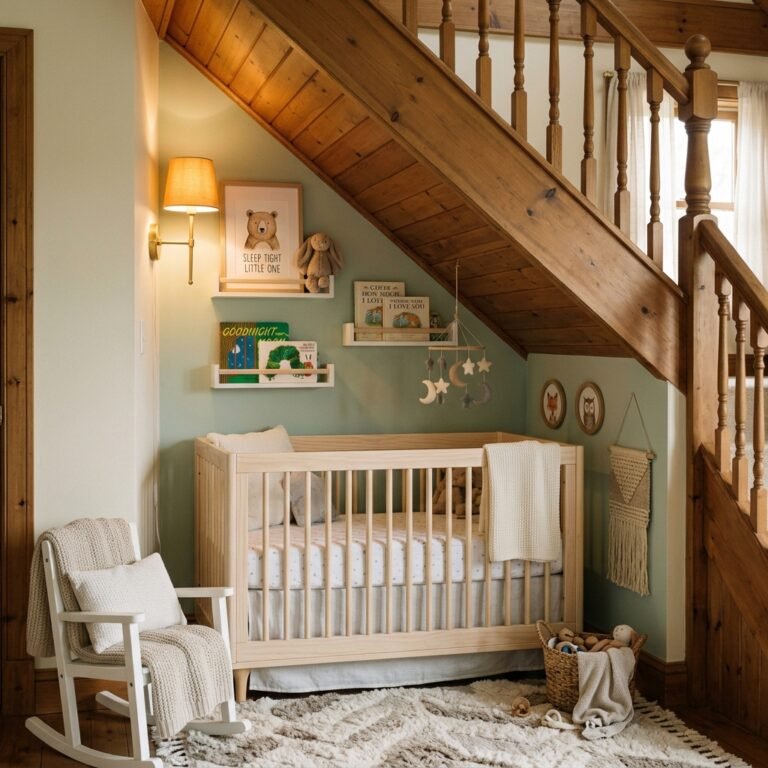
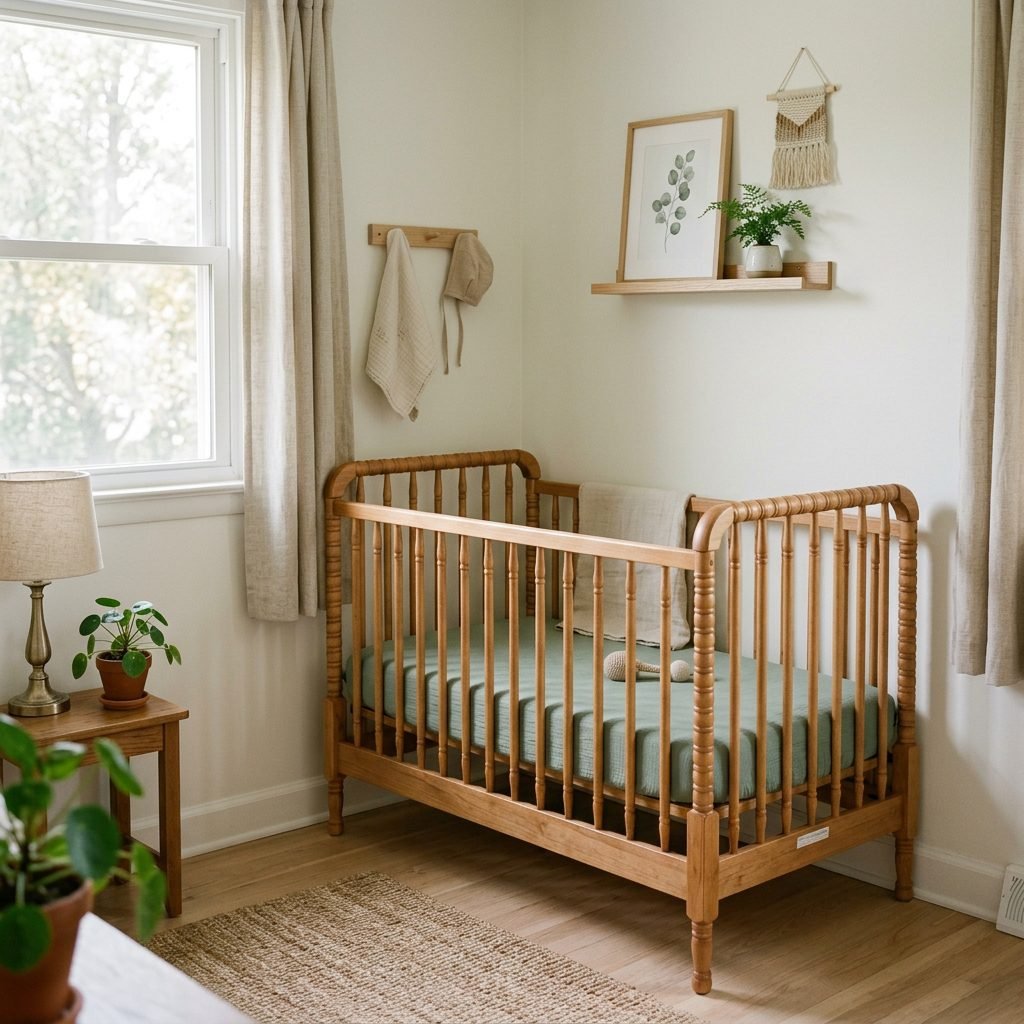
If you are debating between a bassinet, a pack-n-play, or a standard crib, let me introduce you to your new best friend: the mini crib. Standard cribs measure roughly 52 inches long by 28 inches wide, which can easily swallow half of a master bedroom. Mini cribs, on the other hand, are typically 38 inches long by 24 inches wide. They offer the sturdiness and aesthetic appeal of a traditional crib but fit seamlessly under a window or in a tight alcove.
Bassinets vs. Mini Cribs
While bassinets are lovely for the newborn days, most babies outgrow them by 3 to 4 months of age, or as soon as they can roll over. A mini crib can safely house your baby until they are 18 to 24 months old, making it a much better financial and spatial investment for long-term room-sharing.
Design Styles to Elevate Your Nook
- The Acrylic Dream: If your room feels incredibly cramped, an acrylic mini crib is a designer secret. The clear slats allow light to pass through, making the crib visually disappear and keeping the room feeling airy and spacious.
- The Classic Spindle: For a vintage or grandmillennial vibe, a Jenny Lind-style spindle mini crib adds beautiful texture and charm without feeling heavy.
- The Modern Minimalist: Clean, straight wooden lines in natural birch or white oak blend beautifully with adult furniture, ensuring the baby’s nook doesn’t clash with your master bedroom set.
Doula Tip: Always ensure you are buying a firm, properly fitted mattress specifically designed for your exact mini crib model. Gaps between the mattress and the crib sides should be no wider than two fingers to ensure safe sleep.
Maximizing Storage in a Micro-Nook
Clever Organization Hacks for Baby Essentials
Babies may be tiny, but they come with a mountain of gear. When your nursery is a mere 15 square feet of your bedroom, vertical space and dual-purpose furniture are your lifelines. Here is how to store diapers, wipes, swaddles, and creams without turning your serene bedroom into a chaotic baby warehouse.
The Magic of the Rolling Cart
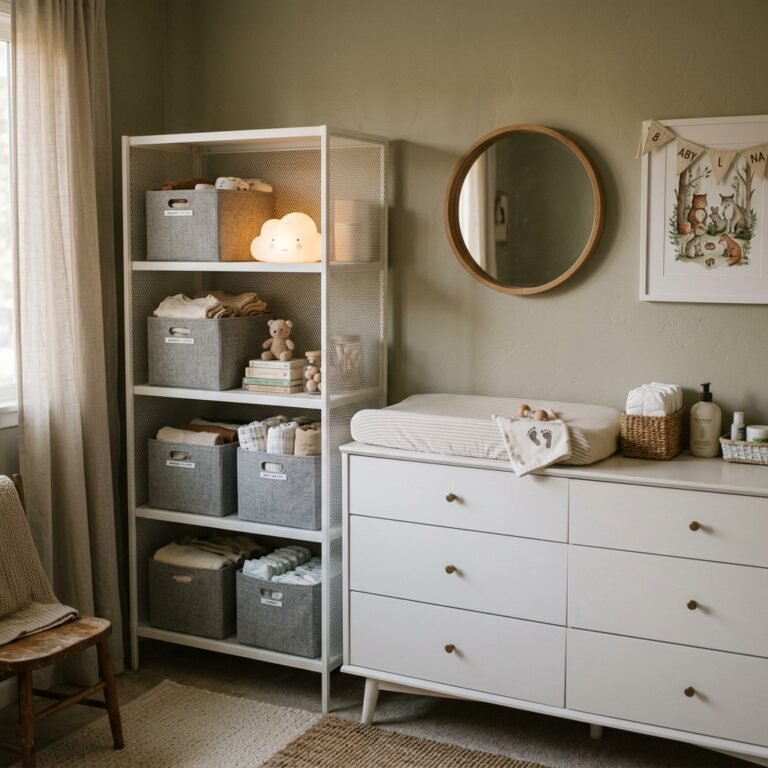
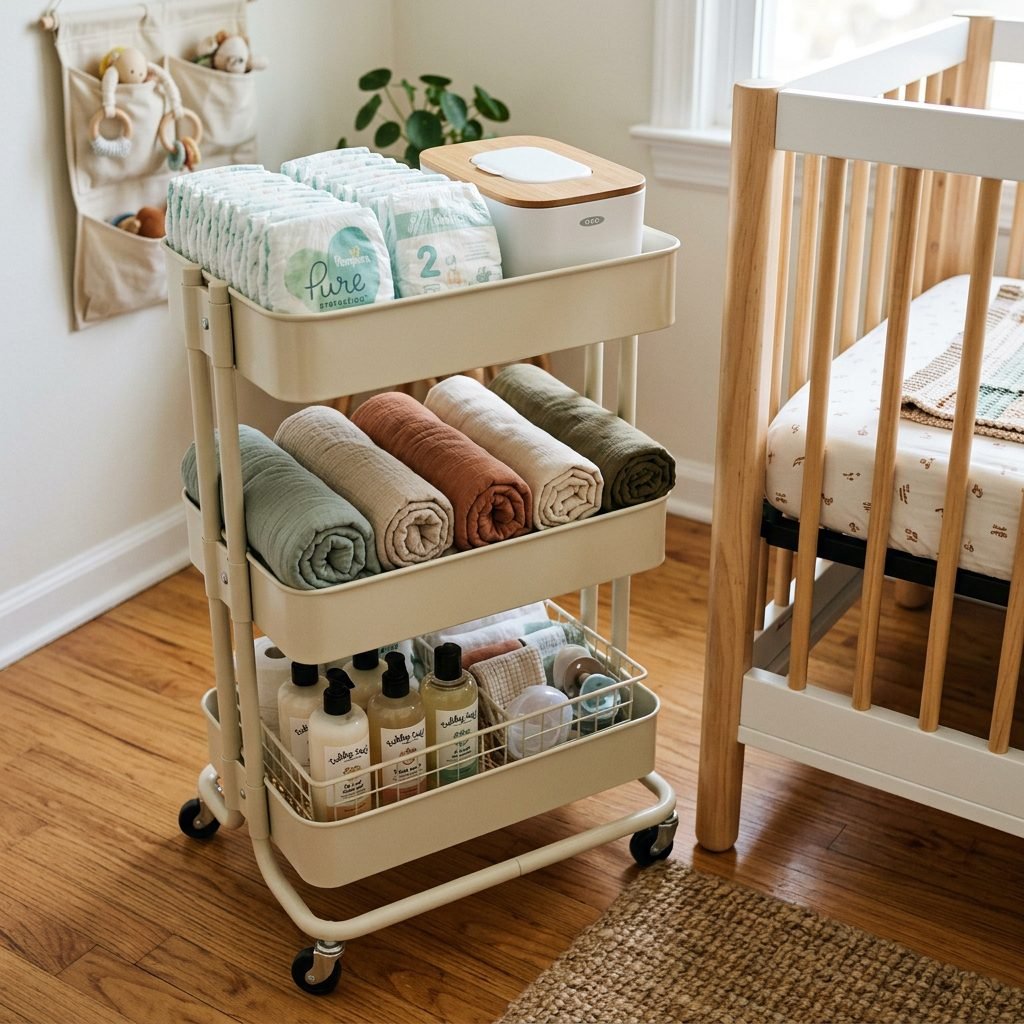
Instead of trying to cram a bulky changing table into your bedroom, utilize a 3-tier metal rolling cart (like the famous IKEA Raskog). This cart can slide right next to the mini crib under the window. The top tier holds your immediate needs: diapers, wipes dispenser, and diaper cream. The middle tier holds rolled muslin swaddles and burp cloths. The bottom tier can hold extra crib sheets and backup pajamas. When you need to change the baby on your bed, simply roll the cart over to you!
Under-Crib Storage
Many mini cribs sit high enough off the ground to offer valuable real estate underneath. Invest in low-profile, structured canvas bins or woven baskets that slide easily under the crib. This is the perfect hidden spot for storing bulk boxes of wipes, out-of-season baby clothes, or extra swaddles.
Floating Bookshelves
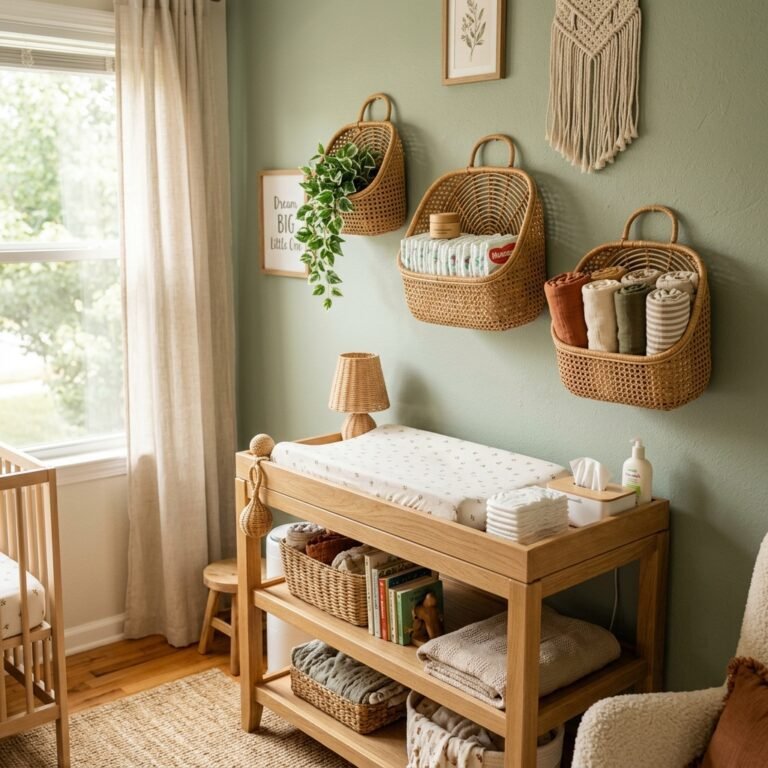
To keep the floor clear, look to the walls beside the window. Install 2 or 3 acrylic floating ledges. These take up zero floor space and are perfect for displaying sweet board books, a small sound machine, and a baby monitor camera.
| Nursery Essential | Space-Saving Storage Solution |
|---|---|
| Diapers & Wipes | Top tier of a metal rolling cart tucked beside the crib |
| Swaddles & Burp Cloths | Rolled tightly in the middle tier of the rolling cart |
| Extra Crib Sheets & Bulk Items | Low-profile canvas bins tucked under the mini crib |
| Sound Machine & Monitor | Acrylic floating wall shelves mounted beside the window |
| Baby Clothes | A dedicated drawer in the parents’ master dresser |
Mastering Lighting, Blackout Solutions, and Sleep Ambiance
Creating a Womb-Like Sleep Environment
Since your baby’s crib is directly under the window, mastering the light is going to be your biggest priority for protecting those precious naps and nighttime sleep stretches. As a pediatric sleep consultant, I cannot emphasize enough how important a dark, calming environment is for a baby’s circadian rhythm.
The Blackout Setup
To avoid dangerous cords and bulky drapery that might fall into the crib, your best solution is a cordless cellular blackout shade mounted inside the window frame. Cellular shades (also known as honeycomb shades) not only block out 100% of the sunlight, but they also provide excellent insulation against window drafts and outdoor noise.
If light still bleeds through the sides of the shade, you can install sleep-safe blackout tracks or use travel blackout curtains with suction cups directly on the glass behind the shade for total darkness during those tricky 2:00 PM afternoon naps.
Sound and Ambiance
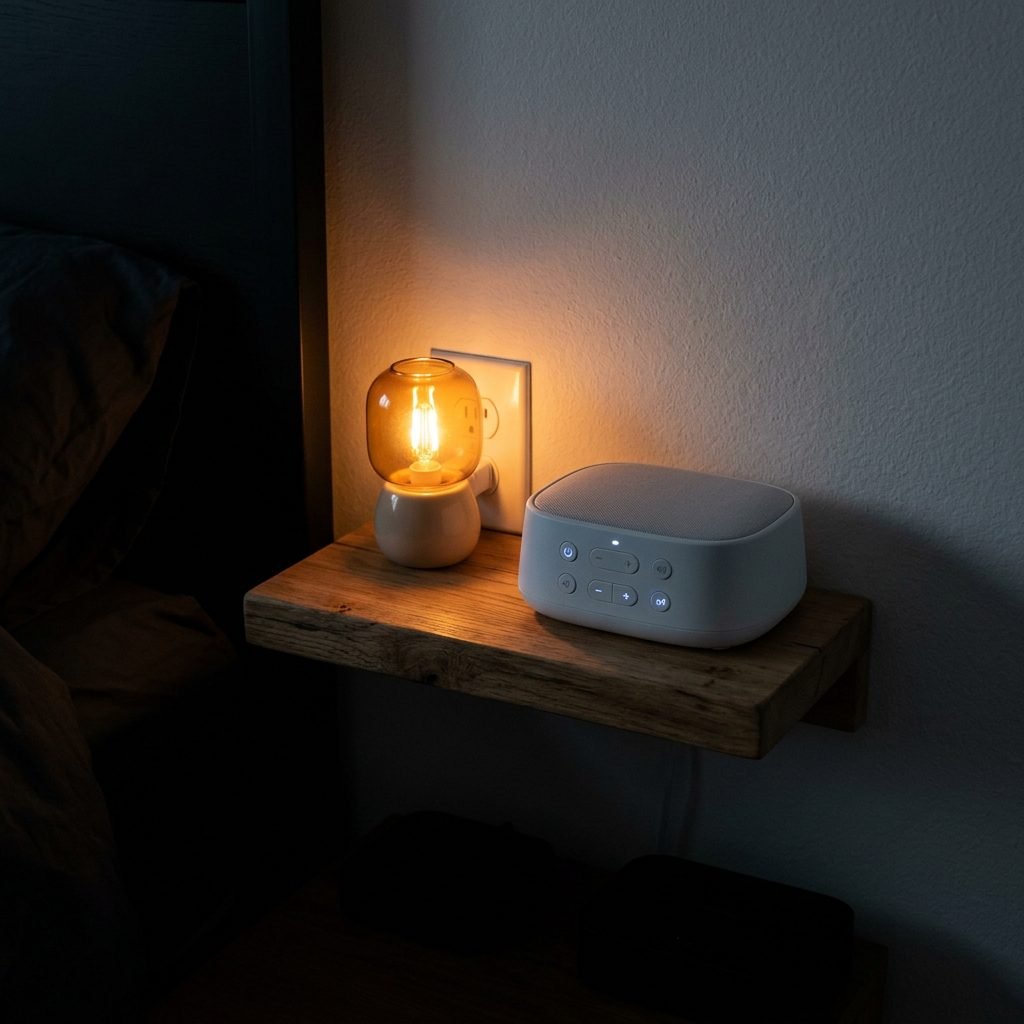
Because you are room-sharing, a sound machine is vital for masking the sounds of you and your partner moving around, coughing, or getting into bed. Place the sound machine on the window sill (ensuring the cord is tightly secured and out of reach) or on a nearby floating shelf. Opt for continuous pink noise or brown noise, which is deeper and more soothing to the infant brain than high-pitched white noise.
Night Wake-Up Lighting
When you are doing 3:00 AM feeds, you do not want to turn on the harsh overhead bedroom lights. Add a small, dimmable amber nightlight near the crib. Amber or red-toned light does not inhibit melatonin production, allowing both you and your baby to easily drift back to sleep after a diaper change.
Styling the Nook: Blending Baby Whimsy with Adult Aesthetics

Designing a Space You Both Love
Just because this is a practical setup doesn’t mean it can’t be stunning. The goal is to make this corner feel intentional, like a beautiful boutique hotel suite that happens to welcome a baby. You want the nook to complement your master bedroom, not look like an explosion of pastel plastic.
Anchor with a Washable Rug
Even if your bedroom is carpeted, placing a small 3×5 or 4×6 washable rug under the mini crib creates a visual boundary. It tells the eye, ‘This is the baby’s dedicated zone.’ Choose a vintage-inspired distressed rug or a soft jute blend that ties into your bedroom’s color palette. The best part? When spit-up inevitably happens, you can just toss it in the washing machine.
Wall Art and Decals
Since the crib is under a window, you won’t be hanging heavy framed art directly over the baby’s head (a major safety hazard anyway!). Instead, utilize the wall space on either side of the window. Consider removable wallpaper or gentle watercolor wall decals (like subtle eucalyptus leaves or tiny stars) to frame the window area. This adds a touch of nursery sweetness without requiring a permanent commitment or damaging your walls.
Cohesive Textiles
Keep the crib sheets in the same color family as your master bedding. If your bed features crisp white linen and sage green throw pillows, opt for a sage green muslin crib sheet. This cohesive textile strategy prevents the room from feeling visually cluttered. Remember, the crib itself should be completely bare for sleep safety—no bumpers, no stuffed animals, no loose blankets, and no pillows until the baby is at least 12 months old.
Sisterly Reminder: Your baby’s favorite view in this entire beautiful room is going to be your face. Don’t stress if the nook isn’t perfectly Instagram-ready on day one. You are doing a beautiful job.
Conclusion

Embracing the Cozy Season of Room-Sharing
Designing an under-window mini crib nook is one of the most rewarding nesting projects you can tackle. It requires a bit of creativity, a strict adherence to safety guidelines, and a willingness to rethink your master bedroom’s layout. But the result is a beautiful, highly functional space that keeps your sweet baby safely within arm’s reach.
Remember, mama, this season of room-sharing is incredibly fleeting. Before you know it, that mini crib will be packed away, and you will have your window back. But for now, enjoy the soft sounds of their breathing in the quiet of the night, the ease of rolling over to check on them, and the deep comfort of having your little one so close. You have prepared a beautiful space, and you are going to be an incredible mother.
Conclusion
Embracing the Cozy Season of Room-Sharing
Designing an under-window mini crib nook is one of the most rewarding nesting projects you can tackle. It requires a bit of creativity, a strict adherence to safety guidelines, and a willingness to rethink your master bedroom’s layout. But the result is a beautiful, highly functional space that keeps your sweet baby safely within arm’s reach.
Remember, mama, this season of room-sharing is incredibly fleeting. Before you know it, that mini crib will be packed away, and you will have your window back. But for now, enjoy the soft sounds of their breathing in the quiet of the night, the ease of rolling over to check on them, and the deep comfort of having your little one so close. You have prepared a beautiful space, and you are going to be an incredible mother.