How to Set Up a Cozy Floor Mattress Reading Corner in Your Nursery
Hello, sweet mama. If you are reading this, you are likely in that beautiful, slightly exhausting phase of nesting or perhaps you are already deep in the fourth trimester, looking for a way to make those long afternoons and midnight cuddles a bit more comfortable. As a doula, I have spent countless hours in nurseries, and I have seen a beautiful shift happening. We are moving away from the stiff, formal rocking chairs and toward something much more grounded—literally. The floor mattress reading corner is more than just a Pinterest trend; it is a functional, high-comfort sanctuary designed for bonding, nursing, and eventually, fostering a love for stories in your little one.
Setting up a floor-level nook is a gift to your future self. Think about those days when your back aches from carrying a growing baby, or those nights when you just need to lay down next to the crib while they drift off. A floor mattress provides a soft landing spot for everyone. In this guide, we are going to walk through every detail—from picking the safest mattress to styling it with textures that soothe the soul. We will look at it through the lens of a designer, a safety expert, and a sister who just wants you to have a comfortable place to rest your feet. Let’s create a space where magic happens, one page at a time.
Choosing the Perfect Foundation: Safety and Mattress Types

The foundation of your reading corner is, of course, the mattress itself. But before we get into the aesthetics, we have to talk about safety, especially if you have a mobile infant or a toddler. When we choose a mattress for the floor, we aren’t just looking for ‘squishy.’ We are looking for support, breathability, and non-toxic materials. You want something that provides enough cushion for your adult joints but remains firm enough that it doesn’t pose a suffocation risk for a baby who might roll onto it.
I always recommend looking for mattresses with Oeko-Tex Standard 100 or GREENGUARD Gold certifications. This ensures that the foam or fibers aren’t off-gassing harmful chemicals into your baby’s sleeping and playing environment. For the best experience, a thickness of 3 to 5 inches is usually the sweet spot—it’s high enough to feel like a real bed but low enough to remain accessible for a crawling baby.
| Mattress Type | Best For… | Pros | Cons |
|---|---|---|---|
| Standard Crib Mattress | Safety-Conscious Parents | Firm, waterproof, fits standard sheets. | Can be a bit small for adult lounging. |
| Tri-Fold Memory Foam | Small Nurseries | Easy to fold away, portable, very soft. | Needs a high-quality washable cover. |
| Organic Cotton Futon | Eco-Friendly Homes | Breathable, natural fibers, very durable. | Heavy to move and requires regular fluffing. |
| Play Foldable Foam (Nugget Style) | Active Toddlers | Versatile for play, soft, huge color range. | Less ‘bed-like’ for long reading sessions. |
When placing your mattress, ensure it is not pushed directly against a wall in a way that creates a ‘trap gap.’ A gap of less than 2 inches or more than 12 inches is the general safety rule to prevent a baby from getting wedged between the mattress and the wall. If you are using a thinner mattress, placing a high-quality rug underneath can add that extra layer of insulation from a cold floor.
Layering for Ultimate Coziness: Textiles and Textures
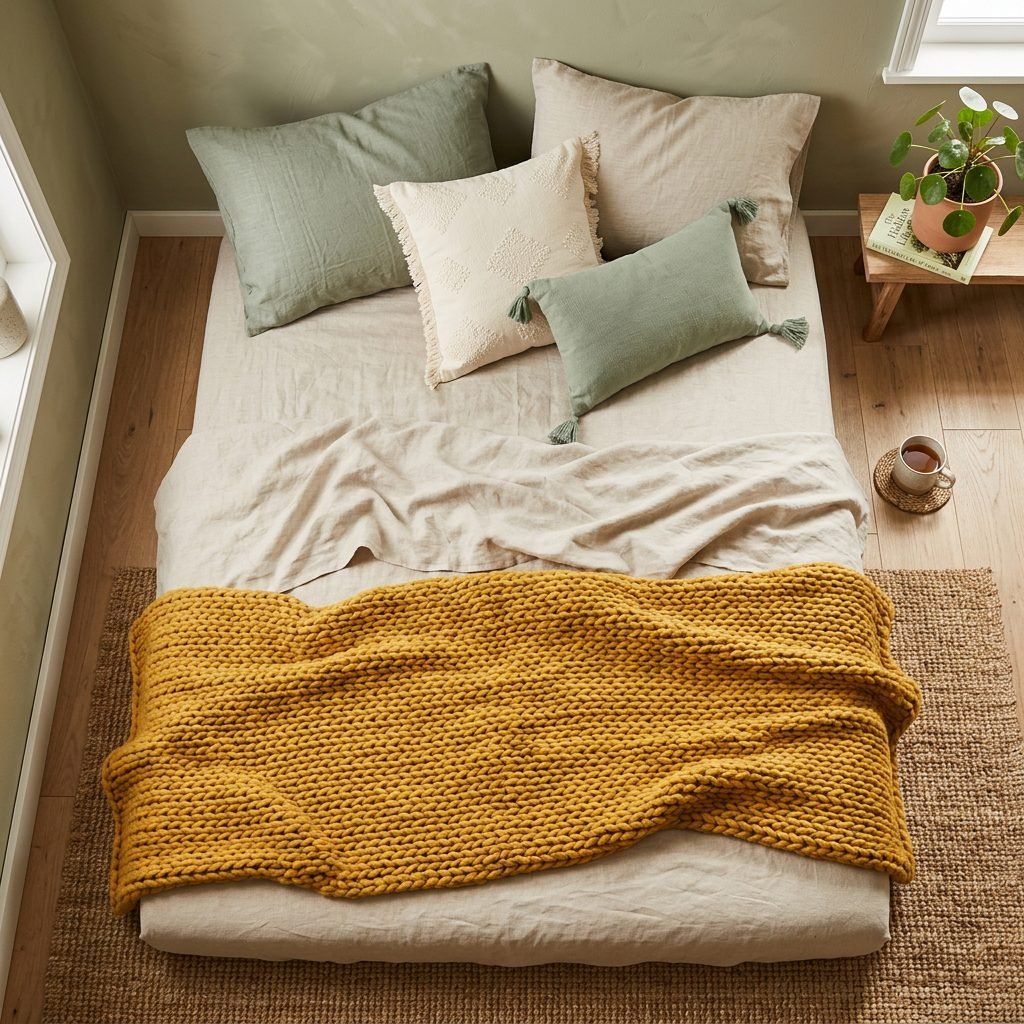
Now comes the fun part, mama! This is where we turn a simple mattress into a ‘cloud.’ Layering is the secret to that high-end, cozy look. Start with a fitted sheet in a natural, breathable fabric like linen or organic cotton. These materials regulate temperature much better than polyester, which is vital when you’re skin-to-skin during nursing or snuggling.
- The Base Layer: A soft, low-pile rug or a sheepskin (faux is fine!) placed partially under the mattress to anchor the space.
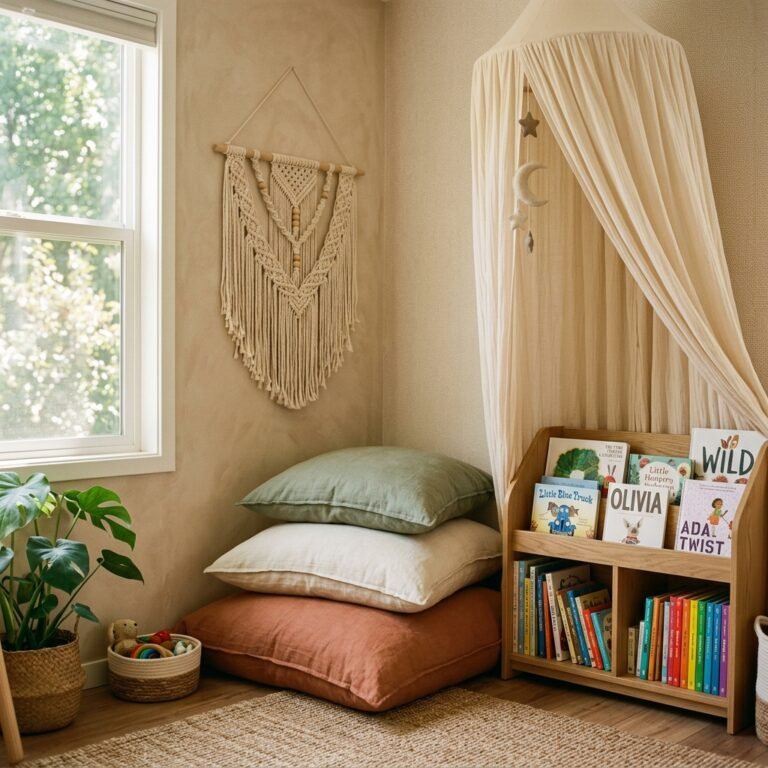
- The Comfort Layer: Add two or three large floor pillows. Choose fabrics with different textures—think a chunky knit, a smooth velvet, and a breathable muslin.
- The Warmth Layer: A lightweight throw blanket. I love a waffle-knit cotton because it’s breathable but still feels substantial.
‘Remember, mama: your nursery is a sensory workshop. Mixing textures like wood, wool, and cotton helps your baby’s brain map the world around them while they cuddle with you.’
Don’t be afraid to play with colors that soothe. While high-contrast is great for baby’s development, for a reading corner, we want parasympathetic-activating colors: sage greens, dusty roses, warm oatmeals, or soft terracottas. These colors signal to both your brain and your baby’s brain that it is time to wind down.
The Magic of Low-Level Lighting and Ambiance

Lighting is the ‘vibe-setter.’ In a reading corner, you need enough light to see the words on the page, but not so much that it disrupts the production of melatonin—the sleep hormone. Avoid harsh overhead lights at all costs during your evening reading routine.
Ideally, you want light sources that are at eye level when you are sitting on the floor. A small, dimmable LED lantern or a wall-mounted sconce with a warm-toned bulb (look for ‘Soft White’ or ‘Warm Amber’) works beautifully. If you want to get fancy, a string of fairy lights encased in a sheer fabric canopy can create a truly magical, ‘enchanted forest’ feel that toddlers absolutely adore.
Lighting Tips for Late-Night Snuggles
- Use Red Spectrum Bulbs: If you are using this corner for night-time nursing, red light doesn’t interrupt the sleep cycle.
- Battery-Operated Options: To avoid dangerous cords near the floor mattress, opt for rechargeable touch-lamps.
- Blackout Balance: Ensure your window treatments allow you to dim the room during the day for those much-needed ‘contact naps’ on the floor mattress.
Smart Storage: Organizing Your Little One’s Library
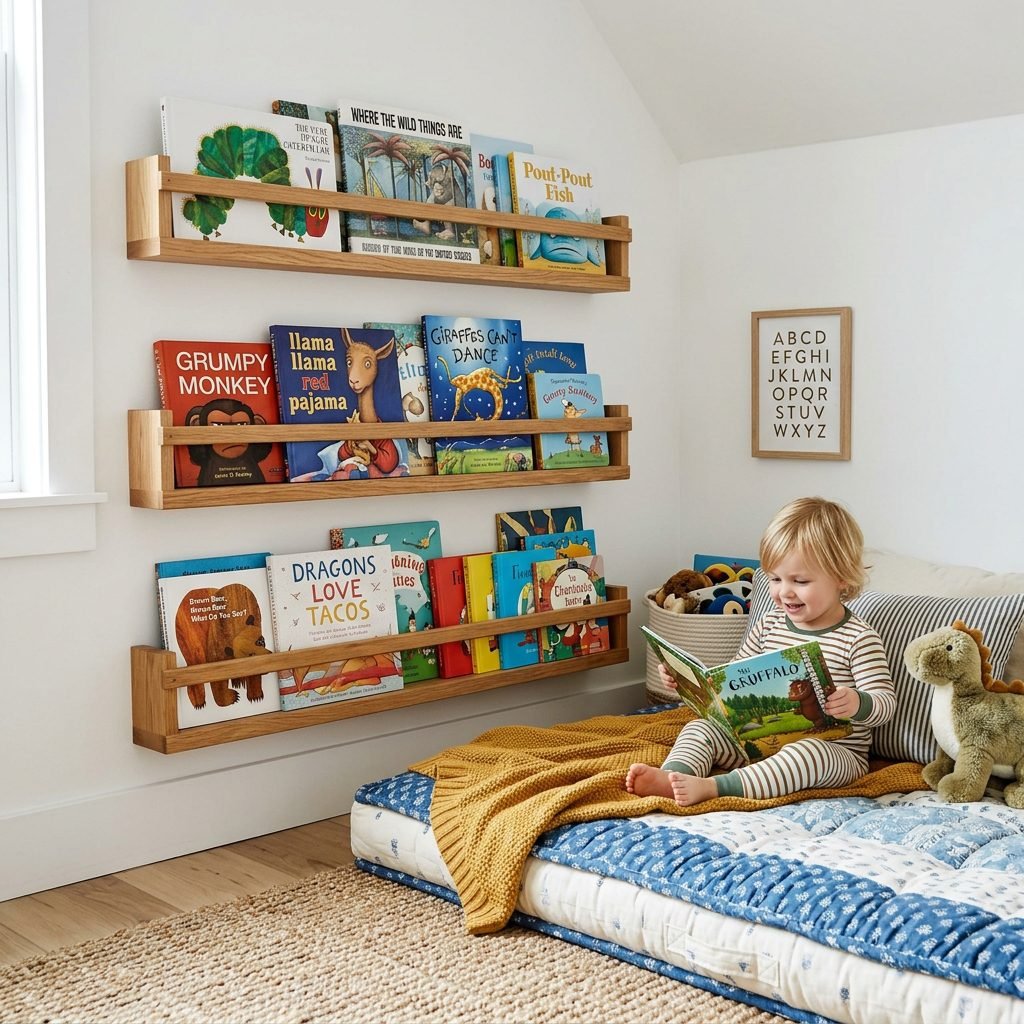
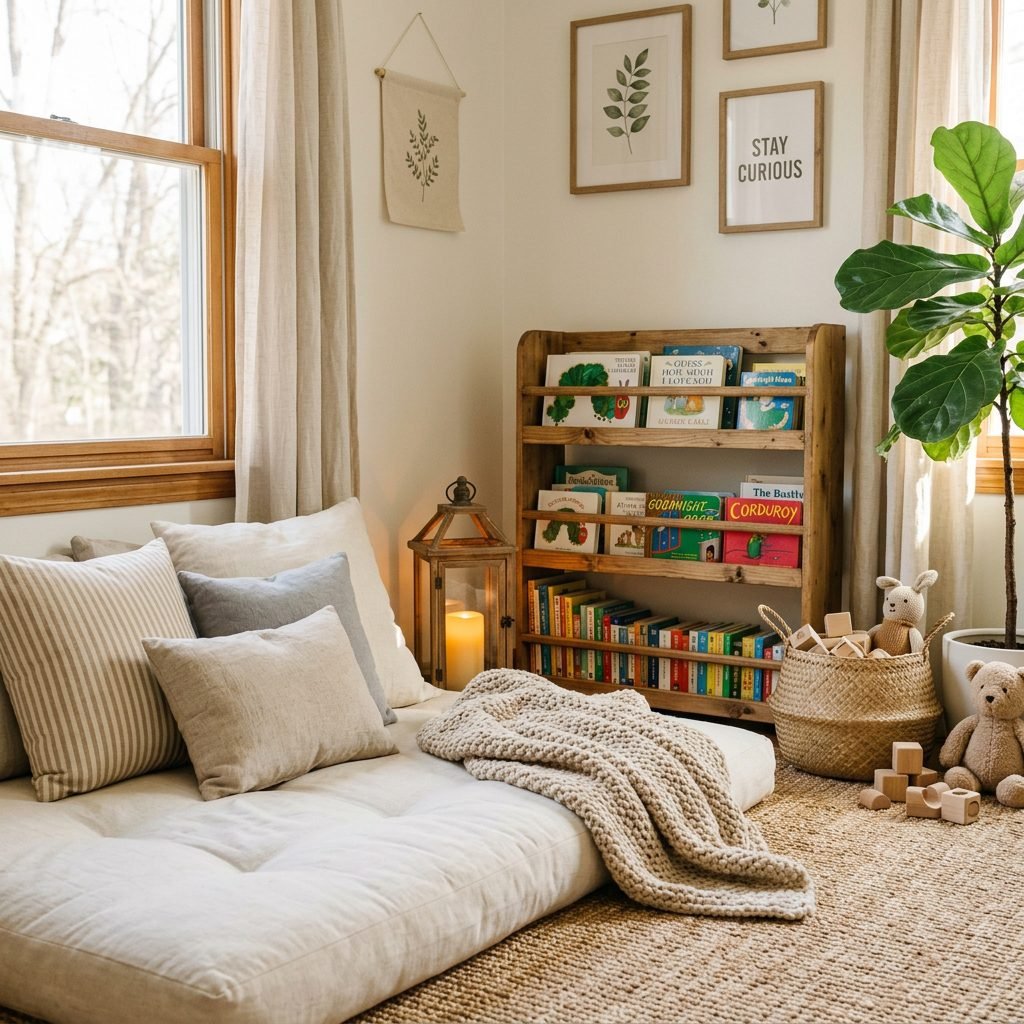
A reading corner isn’t complete without the books! But as any mom knows, books can quickly become clutter. The key is accessibility. In a Montessori-style nursery, we want the books to be facing forward so the child can see the covers, not just the spines. This empowers them to choose their own ‘adventure’ as they grow.
For small spaces, floating acrylic shelves are a godsend. They take up zero floor space and make the books look like art. If you have a bit more room, a low wooden bin or a ‘book crate’ allows your toddler to flip through their collection like they’re at a record store. This is great for their fine motor skills!
| Storage Method | Best Age Group | Style Factor |
|---|---|---|
| Floating Picture Ledges | 0-5 Years | High – Looks like a gallery. |
| Woven Floor Baskets | 6 Months+ | Cozy and organic. |
| IKEA Spice Rack Hack | 1-4 Years | Budget-friendly and sturdy. |
| Rotating Book Tower | 3 Years+ | Saves space, holds a large library. |
Keep a rotating selection. You don’t need fifty books out at once. Pick 5-7 favorites for the week and keep the rest in a closet. This prevents overstimulation and makes the books you do have feel more special.
The Doula’s Perspective: Why Floor-Level Bonding Matters
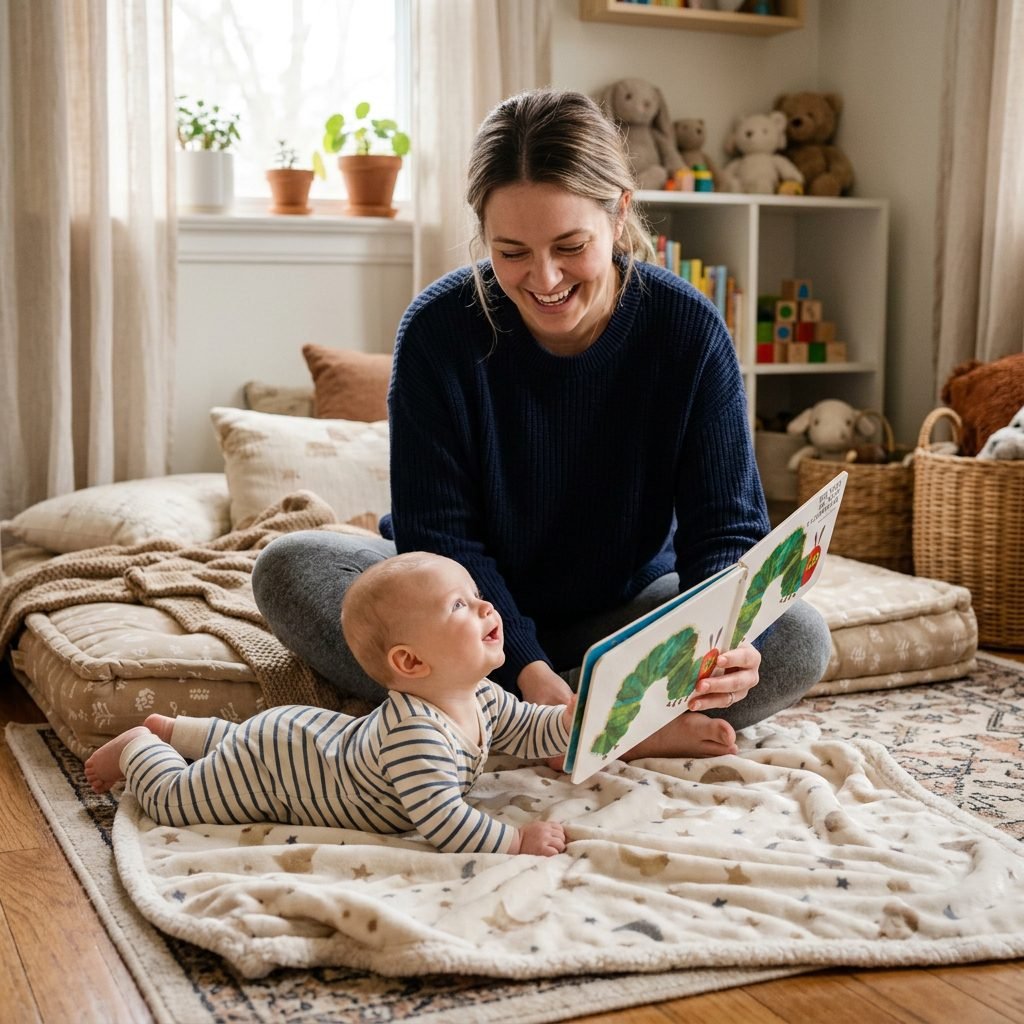
As a doula, I often focus on the physical and emotional recovery of the mother. One of the hidden benefits of a floor mattress reading corner is how it supports postpartum healing. After a C-section or a difficult vaginal birth, sitting in a traditional wooden rocking chair can sometimes put pressure on the wrong places. A floor mattress allows you to stretch out, change positions easily, and even practice gentle pelvic floor breathing while you interact with your baby.
Furthermore, being on the same level as your child changes the power dynamic of the room. It says, ‘I am here with you.’ When you are at eye level, your baby can study your facial expressions more clearly, which is vital for their social and emotional development. It also makes ‘tummy time’ much more bearable for a baby who hates it—if you are lying on the mattress right in front of them, they are much more likely to lift that heavy little head to see your smile.
‘The floor is where the real life happens. It’s where first rolls occur, where first words are whispered, and where the deepest bonds are forged in the quiet of the afternoon.’
Don’t forget to make this space comfortable for you, too. Keep a small basket nearby with a water bottle, some nursing pads, and maybe a snack. If you are comfortable, the baby will feel that calm energy, and your reading time will become the highlight of the day.
Step-by-Step Installation: From Blank Canvas to Dreamy Nook
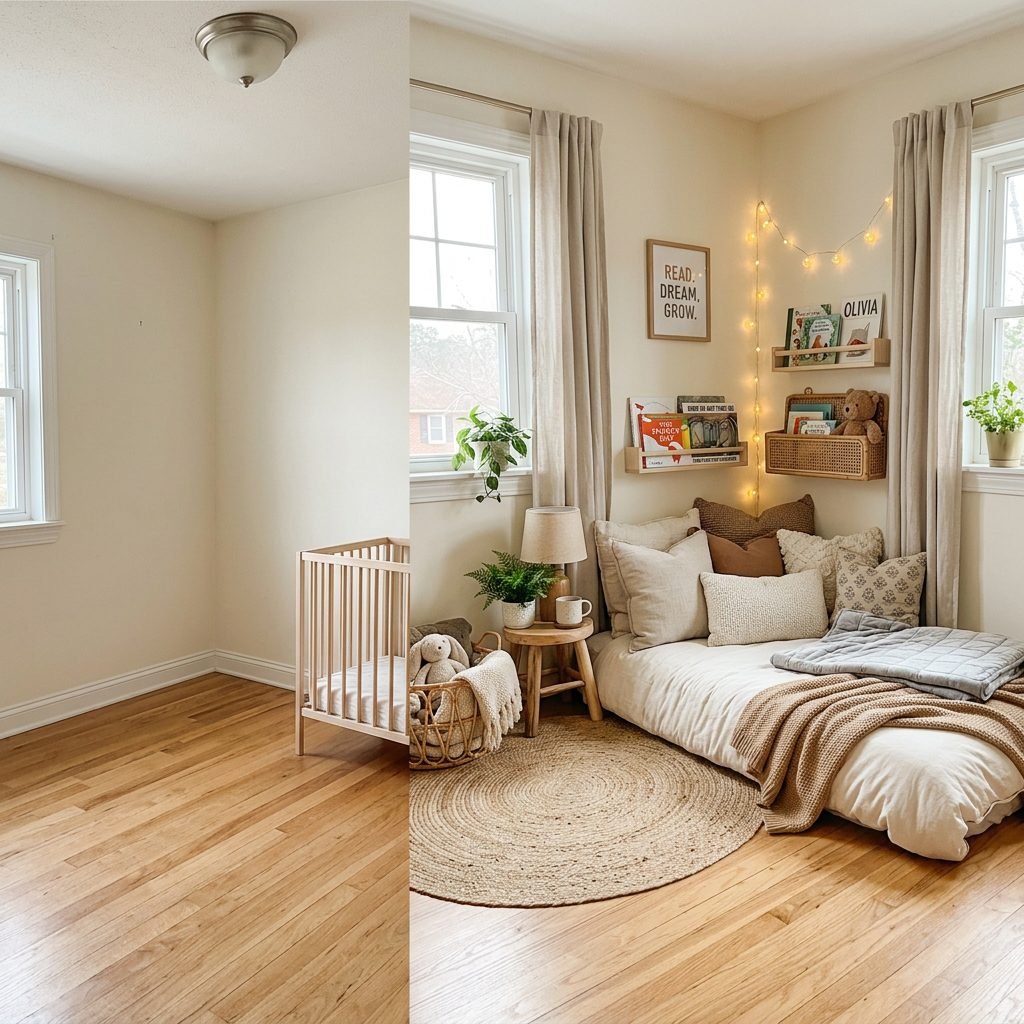
Ready to build your sanctuary? Follow these simple steps to ensure your corner is as safe as it is beautiful. Don’t rush the process—enjoy the nesting!
- Clear the Zone: Choose a corner away from heavy traffic or swinging doors. Ensure there are no hanging cords from blinds or wall art within reach of where the mattress will be.
- Lay the Foundation: Place your rug first. If the floor is hardwood, use a non-slip rug pad.
- Position the Mattress: Lay your chosen mattress down. Check the ‘trap gap’ safety measurements we discussed earlier.
- Install Shelving: Mount your book ledges about 12-18 inches from the floor. This is the perfect height for a sitting adult and a standing toddler.
- Add Your Layers: Put on the fitted sheet, add your floor pillows against the wall for back support, and drape your throw blanket.
- Test the Comfort: Sit down! Lean back. Can you reach a book easily? Is the lighting right? If it feels good to you, it will feel like heaven to your baby.
Pro-Tip: Consider adding a small, soft ‘wall bumper’ or a fabric wall hanging behind the pillows if your walls are particularly cold or hard. It adds another layer of soundproofing and warmth.
Conclusion
Creating a cozy floor mattress reading corner is such a beautiful way to prepare your heart and your home for the journey of motherhood. It’s a space that will grow with your child—from a soft spot for tummy time and nursing to a magical kingdom where dragons are fought and bedtime stories come to life. Remember, mama, it doesn’t have to be ‘perfect’ or look like a magazine cover. It just needs to be a place where you feel at peace and where your baby feels loved. So, grab a blanket, pick out a favorite book, and get ready for the sweetest snuggles of your life. You’re doing an amazing job.