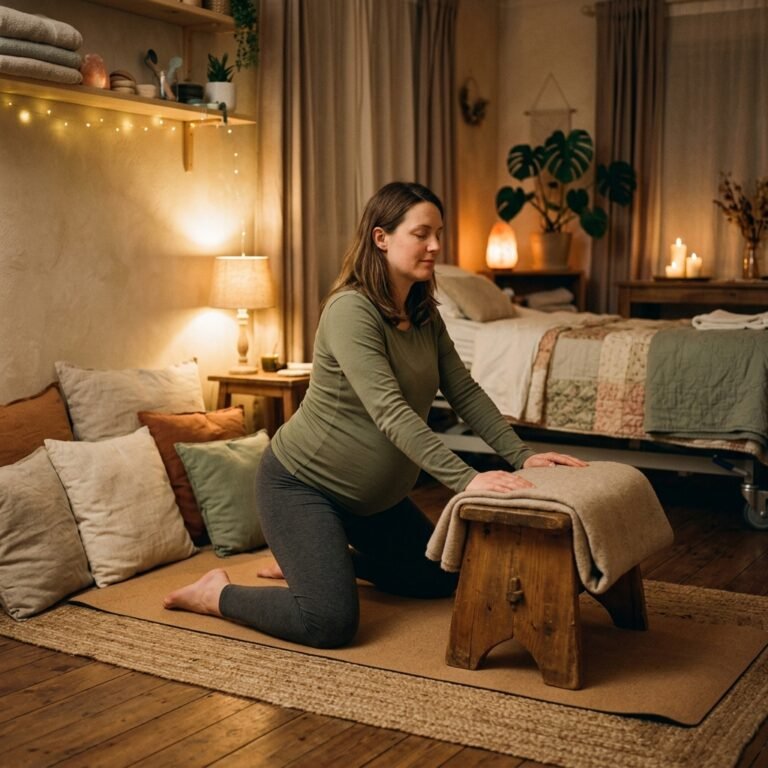

How Your Birth Partner Can Help You Do Supported Squats During Active Labor
Welcome, mama. If you are reading this, you are likely preparing for one of the most transformative experiences of your life. As a doula, I have seen firsthand how the right physical support can turn a challenging labor into an empowering journey. One of the most effective tools in our birth bag is the supported squat. Squatting is a primal, instinctive position that works with gravity rather than against it. However, during the intensity of active labor, holding a squat on your own can be exhausting. That is where your birth partner comes in. They aren’t just a bystander; they are your anchor, your physical support, and your greatest cheerleader. In this guide, we will dive deep into how your partner can help you utilize supported squats to open your pelvis, encourage your baby to descend, and manage the sensations of active labor with grace and strength.
“Your body is not a lemon. You are a powerful creator, and your partner is the steady ground upon which you build your birth experience.”
The Anatomy of a Powerful Birth: Why Squatting Works
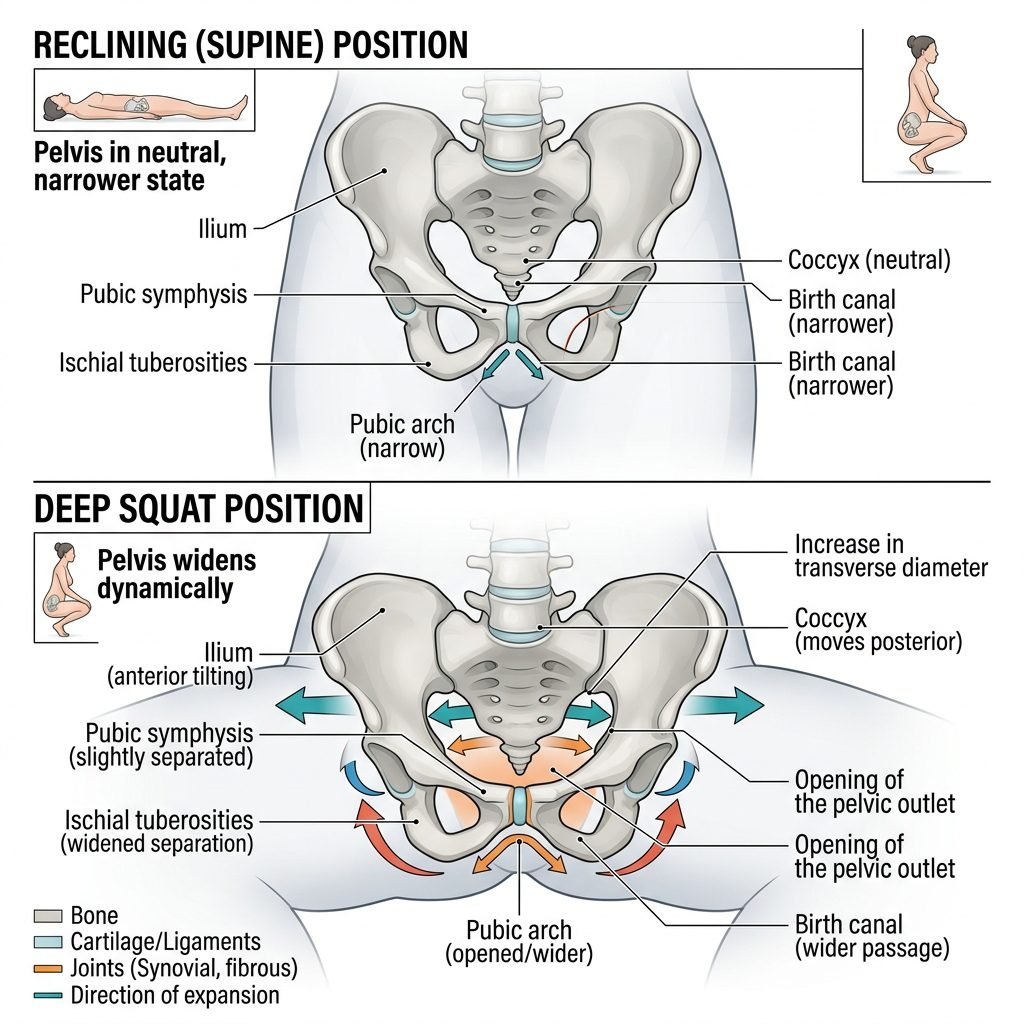
The Science of the Pelvic Opening
When you squat, you are physically changing the shape of your birth canal. Research suggests that squatting can increase the pelvic outlet by up to 20% to 30% compared to lying on your back. This extra space is often exactly what a baby needs to navigate the pelvic bones. During active labor, the goal is to create as much room as possible for the baby to descend and rotate. Squatting also aligns the baby’s head with the cervix, providing the necessary pressure to encourage dilation.
Benefits of Supported Squats
- Gravity’s Assistance: Squatting allows gravity to pull the baby downward, speeding up the second stage of labor.
- Reduced Pain: Many women find that being upright reduces the pressure on their sacrum and lower back.
- Active Participation: It helps you feel more in control of your body and the birthing process.
- Fewer Interventions: Studies show that upright positions can lead to a shorter labor and a reduced need for forceps or vacuum extraction.
| Labor Phase | Squat Intensity | Primary Goal |
|---|---|---|
| Early Labor | Mild/Occasional | Encourage baby to engage in the pelvis |
| Active Labor | Moderate/Rhythmic | Open the pelvic mid-portion and manage contractions |
| Transition | Deep/Supported | Maximize pelvic outlet for descent |
| Pushing | Full Squat | Directing downward energy for birth |
The Partner’s Stance: Protecting the Support Person
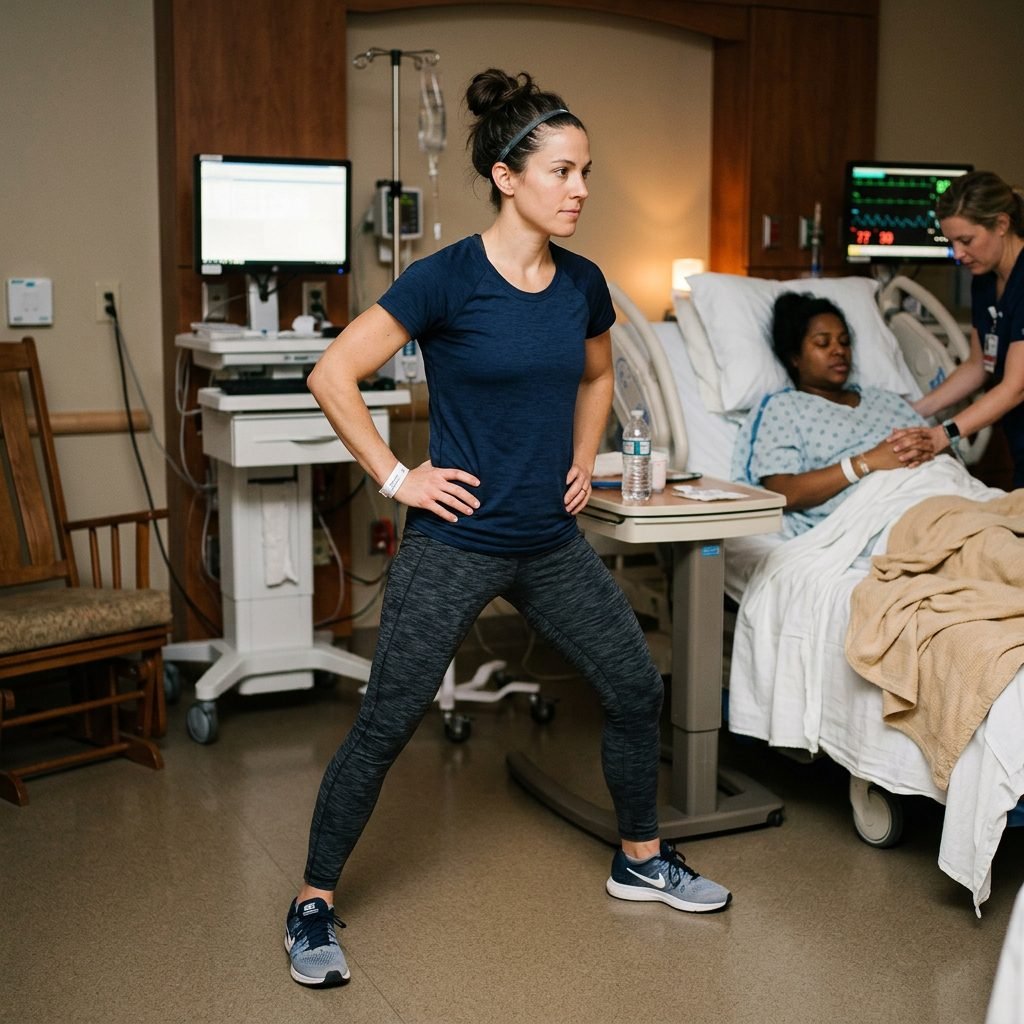
Your Partner is the Anchor
Before we get into your positions, we must talk about your partner. If your partner throws out their back in the first hour of active labor, they won’t be much help later! The partner’s role is to provide a solid, unmoving base. They must use their legs, not their back, to support your weight. We often call this the ‘Doula Stance.’ It involves a wide base of support and a neutral spine.
Tips for the Birth Partner
- Wear Supportive Shoes: This is not the time for flip-flops. Wear sneakers with good grip.
- Hydrate Together: If the laboring person takes a sip of water, the partner should too.
- Communication is Key: Establish a ‘safe word’ or a signal for when the partner needs to shift their weight to avoid cramping.
- Mind Your Back: Always bend at the knees and keep your core engaged when the laboring person leans their weight on you.
“Partner, you are her mountain. Stay rooted, stay calm, and let her lean into your strength.”
The Master Class: Executing the Supported Squat
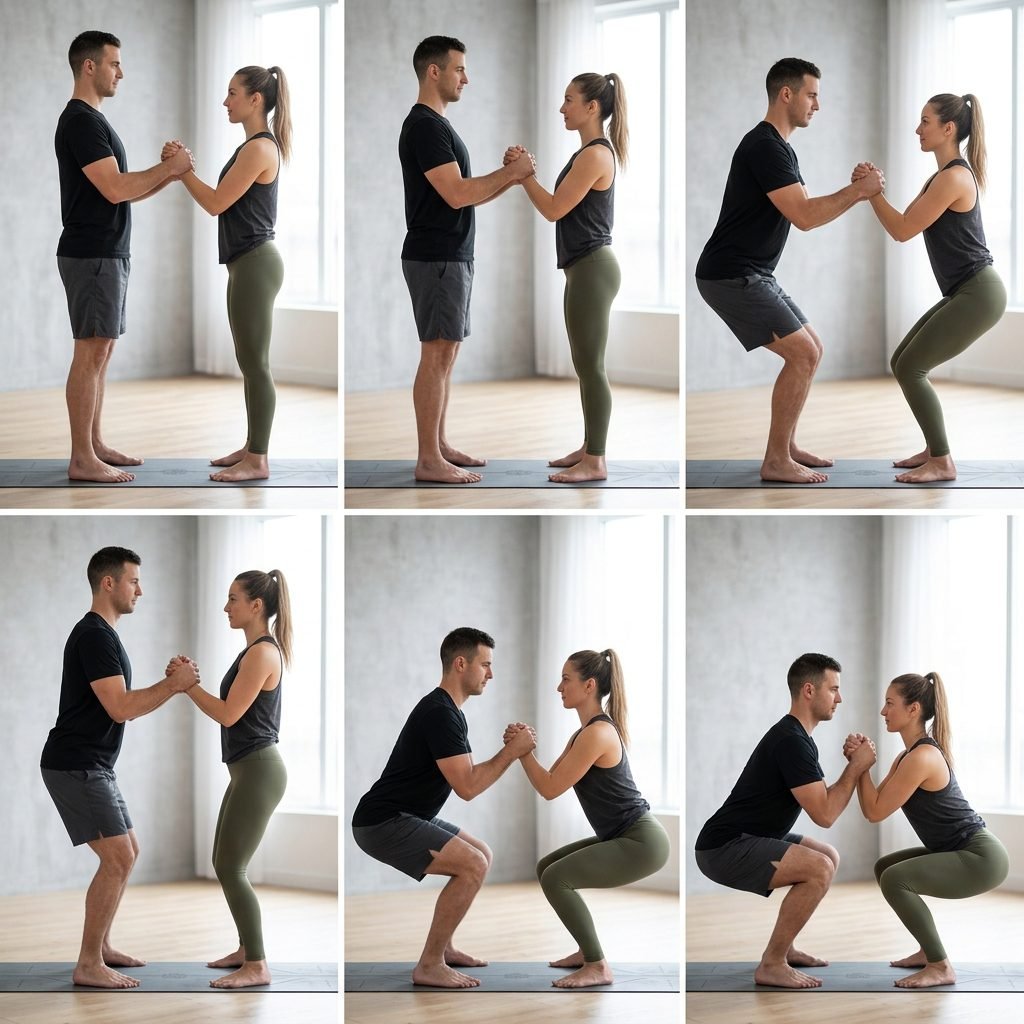
Step-by-Step Instructions for the Face-to-Face Squat
This is the most common and intimate form of a supported squat. It allows for eye contact, which can be incredibly grounding during the peak of a contraction.
- Positioning: The laboring person and the partner stand face-to-face. The partner should stand with their back against a sturdy wall or have their feet firmly planted wider than hip-width apart.
- The Grip: The laboring person reaches out and grasps the partner’s forearms or wrists. Do not pull on the partner’s neck, as this can cause injury. The partner should likewise grasp the laboring person’s forearms.
- The Descent: As a contraction begins, the laboring person slowly lowers their hips into a squat. The partner provides the counter-balance, leaning back slightly to take the weight.
- The Depth: The squat should be as deep as is comfortable. Use a stack of pillows or a low stool underneath the laboring person’s bottom if a full ‘hanging’ squat is too intense.
- The Breath: The partner should lead the breathing. ‘In through the nose, out through the mouth like you are blowing out a candle.’
- The Rise: Once the contraction fades, the partner helps the laboring person stand back up slowly to allow blood flow to return to the legs.
Safety Check-In
| Do This | Avoid This |
|---|---|
| Keep heels flat on the floor if possible | Don’t balance on tiptoes for long periods |
| Partner keeps a straight back | Don’t let the partner’s back arch or slouch |
| Take breaks between contractions | Don’t stay in a deep squat for more than 5-10 minutes |
| Use pillows for support | Don’t ignore numbness or tingling in the legs |
Adapting the Squat: Tools and Variations
The Lap Squat (The Seated Support)
If the laboring person is tired, a lap squat is a wonderful alternative. The partner sits on a sturdy chair or the edge of the bed with their feet flat on the floor. The laboring person sits on the floor or a low cushion between the partner’s legs, facing away. The laboring person then leans their back against the partner’s chest, and the partner wraps their arms under the laboring person’s armpits to help lift some of the weight during a contraction.
Using the Rebozo for Extra Support
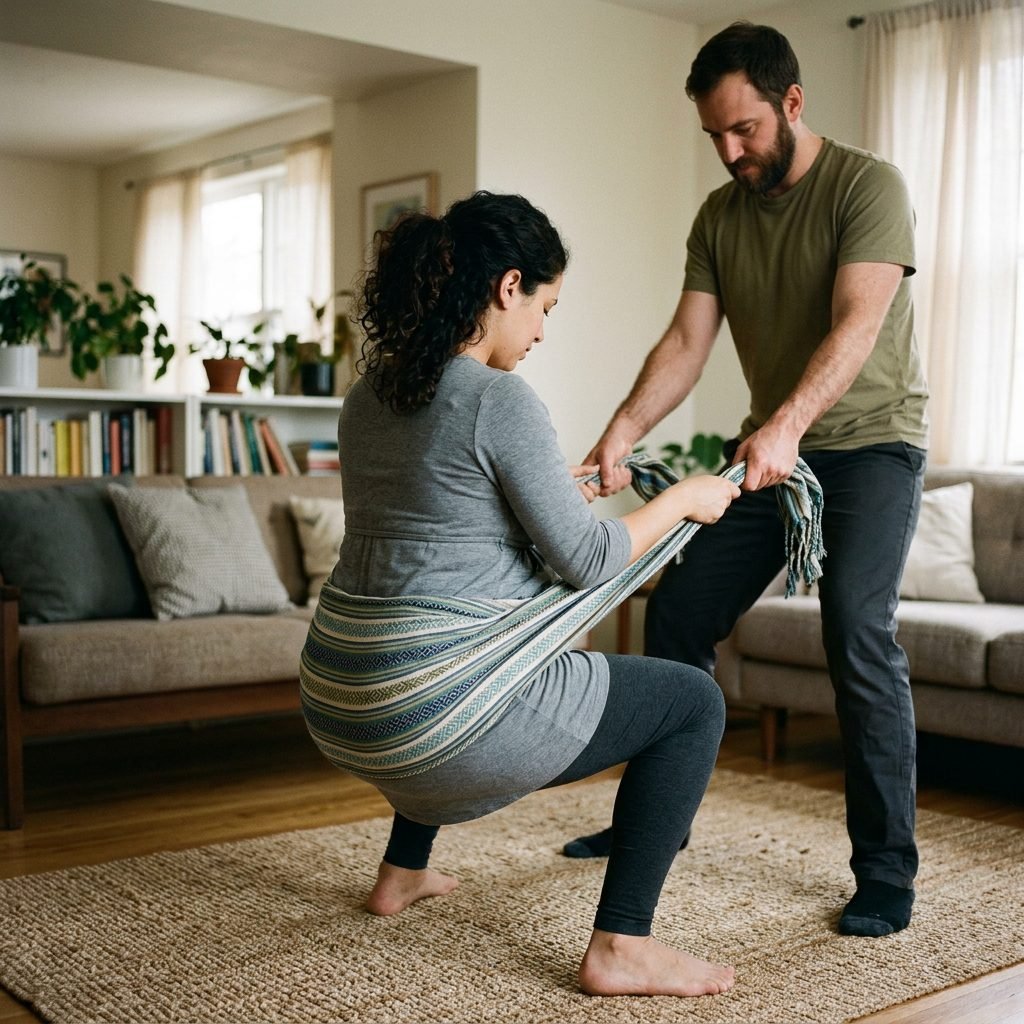
A Rebozo (a long Mexican shawl) can be a game-changer. The partner loops the Rebozo under the laboring person’s arms and holds the ends behind them, acting like a harness. This allows the partner to stand upright while the laboring person ‘hangs’ into the squat, significantly reducing the strain on the partner’s arms.
The Wall Squat with Partner Pressure
The laboring person leans their back against a wall and slides down into a squat. The partner stands in front and provides counter-pressure by placing their hands on the laboring person’s knees or providing a firm hip squeeze. This is excellent for babies who are in an ‘OP’ (sunny-side up) position, as it helps create space in the lower back.
The Rhythm of the Contraction: Breathing and Sound

Coordinating with the Wave
A contraction is like a wave. It has a beginning, a peak, and an end. The supported squat is most effective when it is timed with this rhythm. The partner should watch for the physical cues of a starting contraction—the tensing of the shoulders or a change in breathing. At this moment, the partner should offer the physical support for the squat.
Vocalizing Through the Squat
Low, guttural sounds help the pelvic floor relax. High-pitched screaming tends to tighten the pelvic floor. The partner can help by ‘toning’ with the laboring person. Partner Tip: If she starts to make high-pitched sounds, you make a low ‘Oooo’ or ‘Uuuu’ sound. She will likely instinctively follow your pitch.
- Inhale: Expand the belly, imagine the cervix opening like a flower.
- Exhale: Release the weight into the partner’s arms, making a low sound.
- Between Contractions: The partner should offer words of affirmation and a sip of water.
“With every breath, your baby moves closer. With every squat, you are opening the doors to a new life.”
Troubleshooting Common Challenges

When the Squat Doesn’t Feel Right
Not every position works for every labor. If the supported squat is causing sharp pain (rather than the intense pressure of labor) or if the laboring person feels dizzy, it is time to shift. Listen to the body. If the baby is very high, a deep squat might actually be too much too soon. In that case, an asymmetrical squat (one foot up on a stool) might be better.
Common Obstacles and Solutions
| Challenge | Solution |
|---|---|
| Partner’s arms are getting tired | Switch to a Rebozo or use the hospital bed for leverage |
| Laboring person’s legs are shaking | This is normal (hormones!), but try a supported seated position |
| Contractions slow down | Try walking for 10 minutes, then return to squatting |
| Baby is ‘stuck’ or malpositioned | Try an asymmetrical ‘Captain Morgan’ squat with one leg up |
Knowing When to Rest
Labor is a marathon, not a sprint. You cannot stay in a supported squat for the entire duration of active labor. Use the squat for 3 to 5 contractions, then move to a resting position like side-lying or hands-and-knees. This ‘positional rotation’ keeps the labor progressing and prevents maternal exhaustion.
Conclusion
The journey of labor is as much about the connection between you and your partner as it is about the birth of your baby. By utilizing supported squats, you are inviting your partner into the physical work of birth, creating a shared experience of strength and surrender. Remember, mama, you are built for this. Your partner is there to hold you up, literally and figuratively. Practice these positions during your third trimester so they feel like second nature when the big day arrives. You’ve got this, and your partner has you.