5 Easy Auditory Tracking Games to Boost Your 3-Month-Old’s Development
Welcome to the Magical World of Sound, Mama!
By the time your little love reaches the 3-month mark, their world is expanding in the most beautiful ways. You’ve likely noticed those first gummy smiles, the way they start to push up during tummy time, and—perhaps most excitingly—how they are becoming increasingly aware of the sounds around them. This is the golden window for auditory tracking, a vital developmental milestone where your baby learns to locate, follow, and distinguish between different sounds.
As a doula and maternal wellness guide, I’ve seen firsthand how these early sensory experiences lay the foundation for language, cognitive processing, and even emotional security. At three months, your baby is transitioning from reflexive responses to intentional curiosity. They aren’t just hearing you; they are listening for you. These five easy games are designed to be low-stress, high-connection, and perfectly suited for your baby’s growing brain. Grab a cup of tea, settle onto the play mat, and let’s explore how we can support your baby’s journey through the symphony of everyday life.
“In the quiet moments of play, we aren’t just passing time; we are building the neural pathways of a lifetime.”
The Science of Sound: Why Auditory Tracking Matters

Before we dive into the games, let’s talk about what’s happening inside that precious little head. Auditory tracking is the ability to identify the source of a sound and follow its movement with the eyes and head. At 12 weeks old, your baby’s brain is rapidly pruning and strengthening connections in the auditory cortex.
Key Developmental Benefits
- Spatial Awareness: Understanding where they are in relation to the things (and people) around them.
- Language Foundation: Learning to distinguish the rhythmic patterns of speech and different pitches.
- Focus and Attention: Building the stamina to concentrate on a single stimulus amidst background noise.
- Emotional Bonding: Associating your unique voice with safety and comfort.
It is important to remember that every baby develops at their own pace. If your little one doesn’t perfectly track a sound every time, don’t worry! We are looking for progress, not perfection. These games are meant to be a joyful invitation to explore, not a rigorous test.
Game 1: The Singing Silk Scarf Serenade

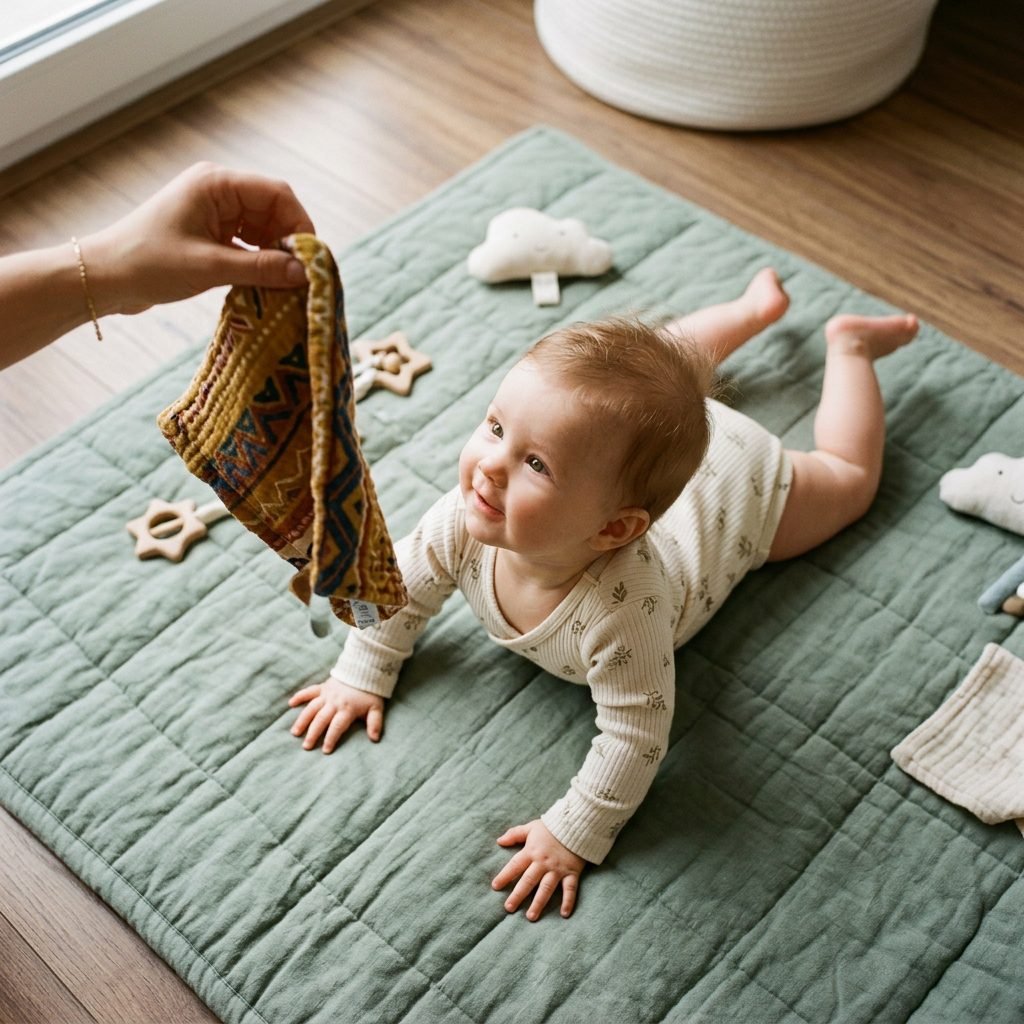
This game combines visual tracking with auditory cues, making it a powerful multi-sensory experience. The soft texture of a silk scarf is gentle on your baby’s developing senses while providing a beautiful visual focus.
How to Play:
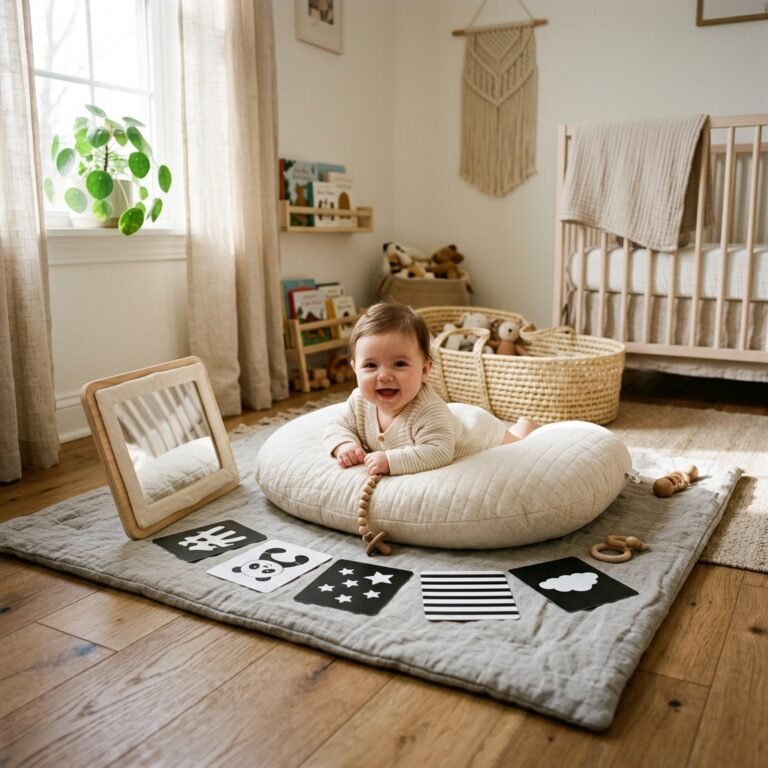
- Lay your baby comfortably on their back on a soft play mat.
- Hold a brightly colored silk scarf about 10 to 12 inches above their chest.
- Begin humming a low, steady tune or singing a familiar nursery rhyme like “Twinkle Twinkle Little Star.”
- Slowly move the scarf from the left side of their vision to the right, keeping your voice ‘attached’ to the scarf’s movement.
- Stop the sound and the movement periodically to see if they look for the source.
Why it works: The combination of the slow-moving fabric and your melodic voice helps the baby coordinate their eyes and ears. Using a high-pitched ‘parentese’ voice is especially effective here, as babies are naturally more responsive to higher frequencies.
Game 2: The Crinkle Paper Concert
Babies at three months are often fascinated by high-contrast sounds—those sharp, distinct noises that stand out from the hum of the house. Crinkle paper (or even a clean, empty cereal bag) provides a wonderful ‘white noise’ alternative that captures their attention instantly.
Step-by-Step Instructions:
- Sit behind your baby while they are propped up in a nursing pillow or lying on their tummy.
- Gently crinkle the paper near their right ear (but not too close!).
- Wait for them to turn their head toward the sound.
- Once they make eye contact with the paper, offer a big smile and a verbal reward: “You found the sound!”
- Repeat on the left side.
Pro-Tip: If your baby seems startled, soften the crinkling. We want to pique their curiosity, not trigger their startle reflex. This game is excellent for strengthening neck muscles during tummy time as they work to find the source of the noise.
Game 3: The Rattle Roll and Reveal

This game introduces the concept of object permanence alongside auditory tracking. It teaches your baby that even if they can’t see the object moving, the sound tells them where it is going.
The Setup:
You will need a soft rattle or a small ball with a bell inside. Something that makes a continuous sound when moved is ideal.
| Action | Developmental Focus |
|---|---|
| Rolling the ball slowly | Horizontal tracking |
| Shaking the rattle high to low | Vertical tracking |
| Hiding the rattle behind your back while shaking | Auditory localization |
How to Play: Start by shaking the rattle in your baby’s direct line of sight. Slowly move it in a large circle. As their eyes follow, begin to move it slightly out of their field of vision. Does their head follow the sound even when the object is ‘gone’? This is a huge leap in cognitive development!
Game 4: The Whisper Trail
Your voice is your baby’s favorite sound in the whole world. In this game, we use the power of your whisper to encourage deep listening and focus. Whispering requires the baby to ‘tune out’ background noise more effectively than loud talking does.
How to Play:
- Start by talking in your normal volume while standing in front of your baby.
- Slowly transition to a whisper as you walk slowly around the perimeter of their play area.
- Say their name softly: “Where is Mommy? Can you find me?”
- Continue moving in a 360-degree circle (if their neck strength allows for the turn).
- When you complete the circle and return to their front, give them a gentle tickle or a kiss.
“The sound of a mother’s voice is the first heartbeat of a baby’s education.”
Safety Note: Always ensure the play area is clear of obstacles so you don’t trip while walking and whispering!
Game 5: Kitchen Percussion (Gentle Edition)

You don’t need fancy toys to boost brain power! Your kitchen is full of ‘instruments’ that provide unique auditory signatures. This game helps babies distinguish between different materials (wood vs. metal vs. plastic).
Materials Needed & Budget:
| Item | Sound Type | Cost |
|---|---|---|
| Wooden Spoon | Dull, warm thud | $0 (In-home) |
| Metal Whisk | Light, metallic ‘tink’ | $0 (In-home) |
| Plastic Measuring Cups | Hollow, rhythmic click | $0 (In-home) |
How to Play: Sit with your baby and gently tap two wooden spoons together. Let them hear the rhythm. Then, switch to the metal whisk against a pot lid. Watch their expression change as the ‘timbre’ of the sound shifts. This is early sensory discrimination at its finest!
Recognizing Overstimulation: When to Pause

While these games are wonderful, a 3-month-old’s nervous system is still very delicate. It is just as important to know when to stop as it is to know how to play. Sensory play should be a bridge to connection, not a source of stress.
Signs Your Baby Needs a Break:
- Turning away or avoiding eye contact.
- Fretfulness or sudden crying.
- Arching their back or stiffening their body.
- Yawning or suddenly looking very tired.
If you see these signs, simply stop the game, dim the lights, and offer some quiet snuggles. Your baby is telling you their ‘cup’ is full for now, and that is perfectly okay. We want them to associate these sounds with joy, not overwhelm.
Conclusion
Mama, you are doing an incredible job. By taking just five or ten minutes a day to engage in these simple auditory tracking games, you are providing your 3-month-old with the building blocks for a lifetime of learning. These moments of play are the threads that weave your bond tighter every single day. Remember, you are your baby’s best teacher and their favorite toy. Enjoy the giggles, the wide-eyed wonder, and the magic of watching them discover the world, one sound at a time.