Interactive Games for First Month Newborns to Boost Early Brain Development
Welcome to the Fourth Trimester, Mama
Oh, sweet sister, congratulations on this beautiful, blurry, and breathtaking new chapter. Your little one has finally arrived, and while you might feel like you are just surviving on 20-minute naps and lukewarm coffee, something miraculous is happening right under your nose. Inside that tiny, velvet-soft head, your baby’s brain is growing at a rate it will never repeat again. In this first month, your newborn is forming millions of neural connections every single second.
As a doula and maternal wellness guide, I want to whisper a secret to you: you don’t need expensive battery-operated gadgets or complex curricula to boost your baby’s IQ. The most powerful ‘toy’ in the world is you—your face, your voice, and your gentle touch. These ‘games’ we are going to explore aren’t about ‘performance’; they are about connection, safety, and sparking curiosity in a way that respects your baby’s delicate nervous system. Let’s dive into how we can turn these quiet moments of bonding into a powerhouse of brain development, all while keeping your postpartum recovery and comfort at the forefront.
The Science of the 10-Inch Window: High-Contrast Visual Play

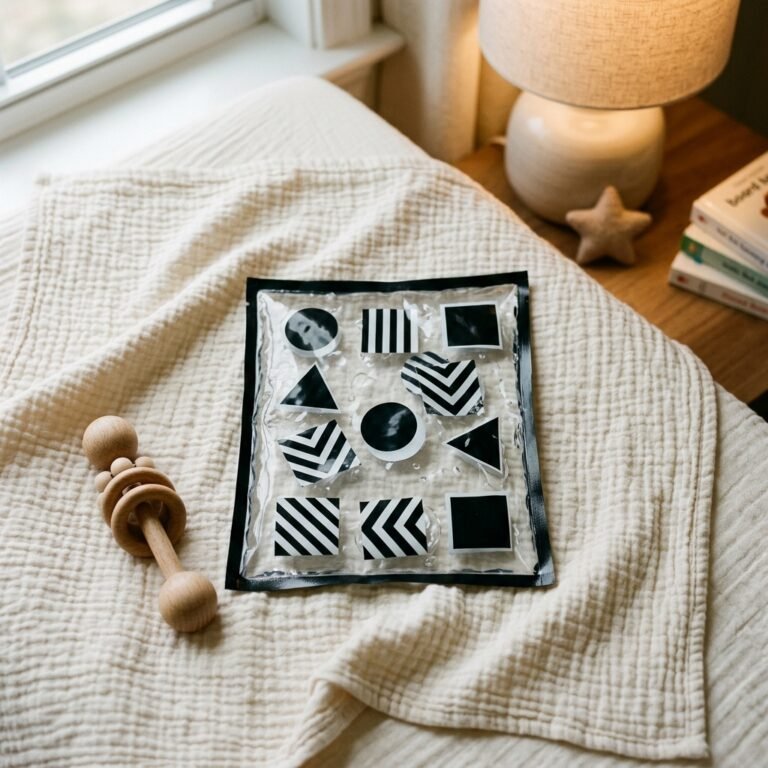
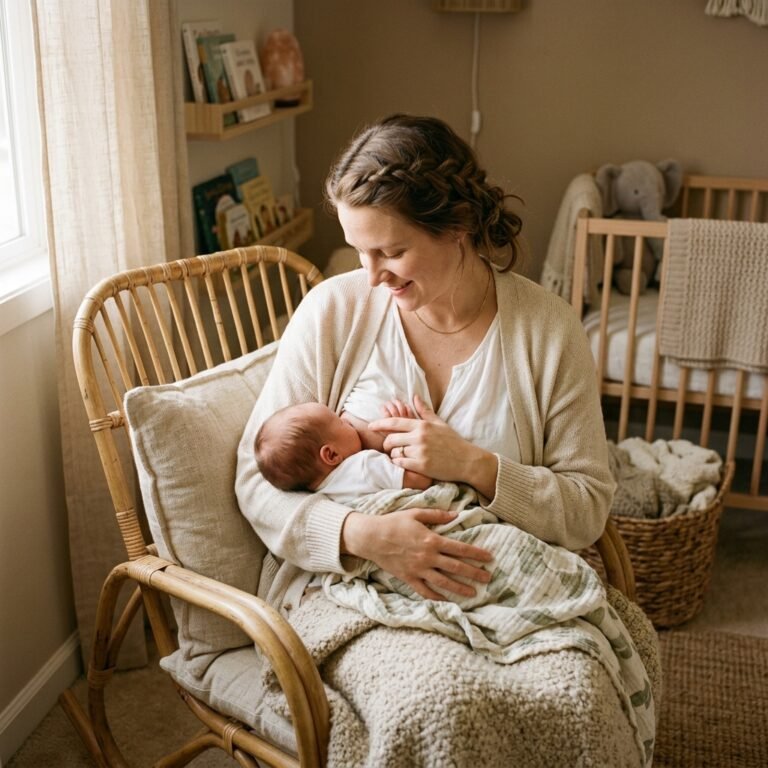
When your baby is born, their vision is the least developed of their senses. They see the world in shades of gray and can only focus on objects about 8 to 12 inches away—which, not coincidentally, is the exact distance between your face and theirs during nursing or bottle-feeding. High-contrast images (black and white) stand out clearly against their blurry world, providing the visual stimulation needed to strengthen the optic nerve and the visual cortex.
The ‘Tracking’ Game
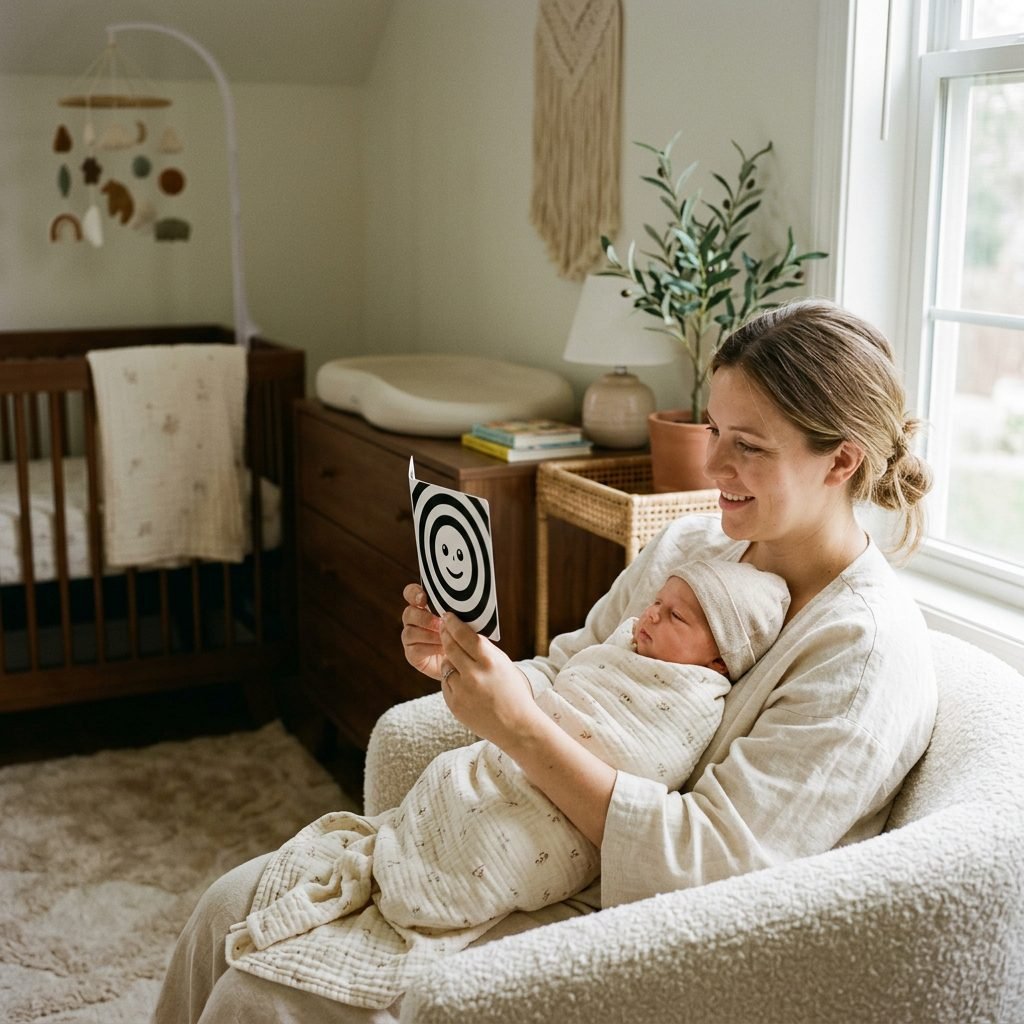
This is one of the simplest yet most effective ways to encourage focus. Use a high-contrast card or even a black-and-white patterned sock.
- Wait for your baby’s ‘Quiet Alert’ state (after a feed and diaper change).
- Hold the object 10 inches from their face until they lock eyes on it.
- Slowly move the object 2-3 inches to the left, then back to the center.
- Watch their eyes (and eventually their head) follow the movement.
“Mama, if your baby looks away, it’s not a rejection. It’s their way of saying, ‘My brain is full!’ Respect the gaze-aversion; it’s their first form of self-regulation.”
| Week | Visual Milestone | Play Focus |
|---|---|---|
| Week 1-2 | Light sensitivity & brief focus | Still high-contrast cards |
| Week 3-4 | Tracking slow movement | Horizontal tracking games |
| Week 4+ | Beginning to see primary colors | Adding a splash of red |
The Symphony of Sound: Auditory Games for Language Foundations

Your baby has been listening to your voice since the second trimester. It is their favorite sound in the world. Research shows that ‘Parentese’—that high-pitched, elongated, sing-song way we naturally talk to babies—actually helps them map out language sounds faster than regular adult speech.
The ‘Narrator’ Game
This game builds your baby’s vocabulary long before they can speak. Simply narrate your day as if you are a tour guide for their life. ‘Now, I am folding your soft, yellow onesie. Can you feel the cotton? Now, I am pouring water for tea. Listen to the splash!’
The Echo Game
When your baby makes a tiny ‘coo’ or a ‘gurgle,’ wait for them to finish, then repeat the sound back to them. This mimics the rhythm of a conversation and teaches them the ‘serve and return’ nature of human interaction, which is the cornerstone of social-emotional development.
- Vary your pitch: Move from low hums to high-pitched chirps.
- Use silence: Give your baby 5-10 seconds to respond. Their processing speed is much slower than ours!
- Sing their name: Create a simple 2-note melody using their name to build self-recognition.
The Gentle Touch: Tactile Play & The ‘Texture Tour’
The skin is the largest organ in the body, and for a newborn, touch is their primary language of love and security. Tactile stimulation sends massive amounts of data to the somatosensory cortex, helping the baby understand where their body ends and the world begins.
The ‘Texture Tour’
While your baby is lounging on their back, gently brush different safe fabrics against their hands and feet. Use a silk scarf, a soft wool blanket, and a cool cotton sheet. Describe the sensations: ‘This is smooth,’ ‘This is fuzzy.’
The ‘I Love You’ Massage
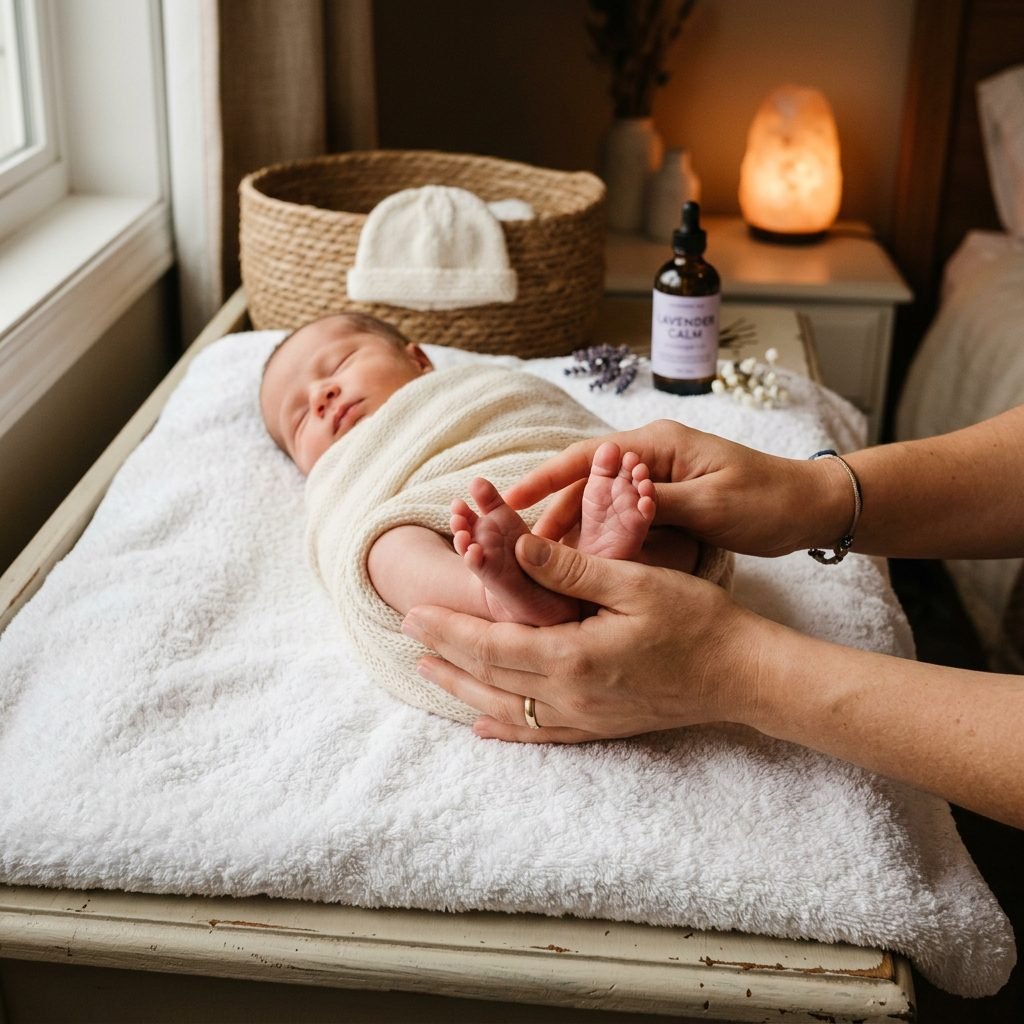
Infant massage isn’t just for gas; it’s a brain-boosting powerhouse that lowers cortisol (the stress hormone) and increases oxytocin. Focus on the legs and feet in the first month.
- Warm a tiny drop of coconut or grapeseed oil in your palms.
- Gently stroke from the hip down to the ankle.
- Trace a ‘C’ shape on the sole of their foot with your thumb.
- Finish with a gentle ‘compression’ (a soft squeeze) of the whole leg to provide proprioceptive input.
“Touch is the first language and the last, and it always tells the truth. Your hands are teaching your baby that the world is a safe place to learn.”
Tummy Time 2.0: Building Strength and Neural Pathways
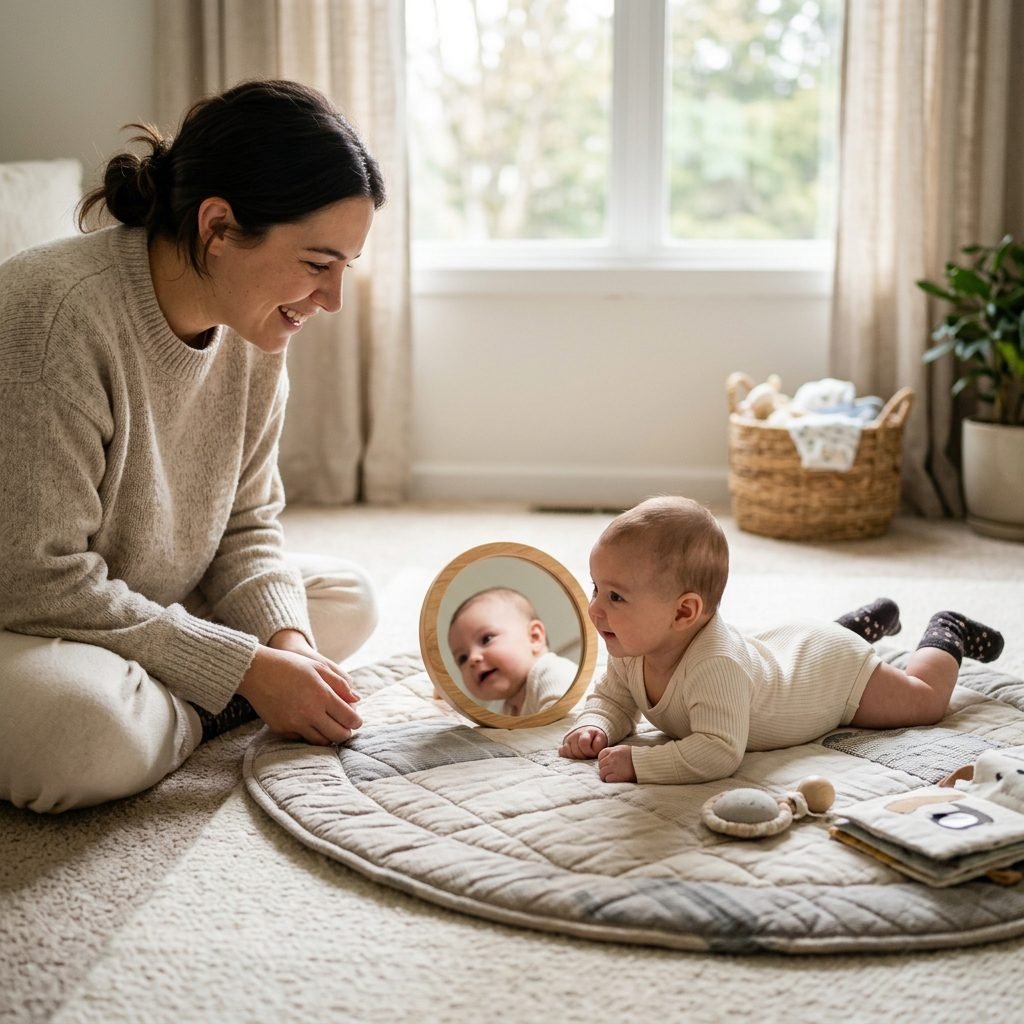
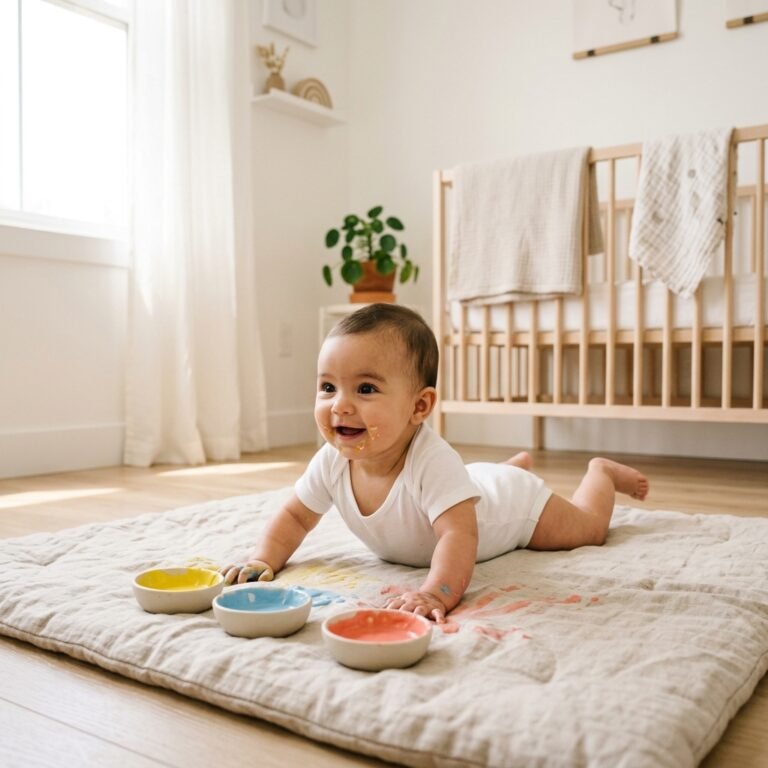
Tummy time is often dreaded by both moms and babies, but it is the ‘gym’ for newborn brain development. It builds the neck, back, and shoulder strength required for later milestones like reaching and crawling—movements that actually integrate the two hemispheres of the brain.
The ‘Chest-to-Chest’ Elevator
If your baby hates the floor, don’t worry! Tummy time on your chest counts. Recline at a 45-degree angle on your sofa with your baby on your chest. As they lift their head to look at your face, they are working those muscles.
The ‘Mirror Magic’ Game
Place a shatterproof baby-safe mirror on the floor during tummy time. Seeing another ‘baby’ (their reflection) encourages them to lift their head higher and stay in the position longer. They won’t realize it’s them for many months, but the visual stimulation is top-tier for cognitive engagement.
| Tummy Time Tool | Benefit | Pro-Tip |
|---|---|---|
| Your Chest | Emotional Security | Best for the first 2 weeks |
| A Boppy or Rolled Towel | Easier head lifting | Place under the armpits |
| High-Contrast Books | Visual distraction | Prop them up in a ‘V’ shape |
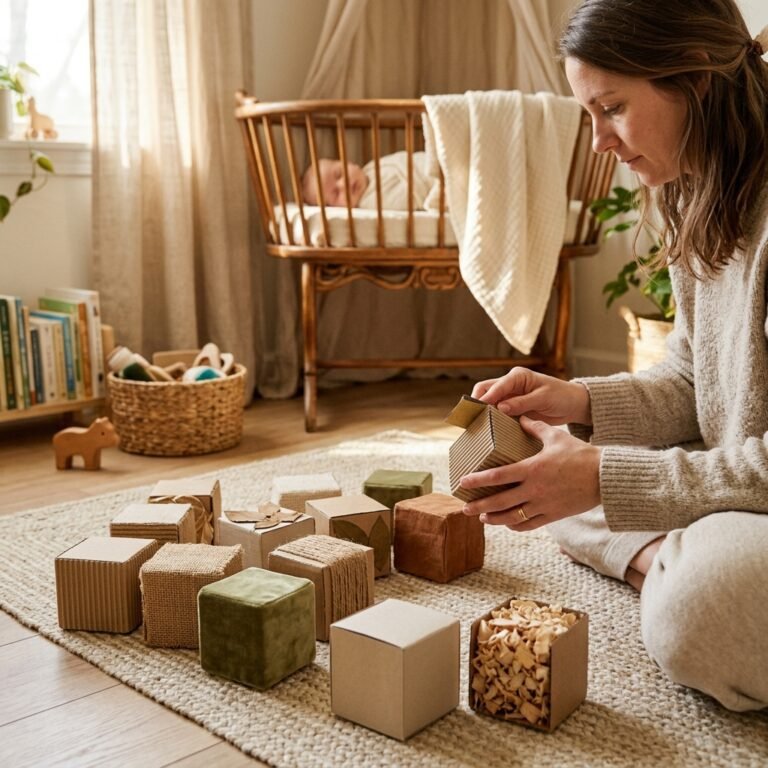
DIY Sensory Kit: Crafting Your Baby’s First ‘Toys’
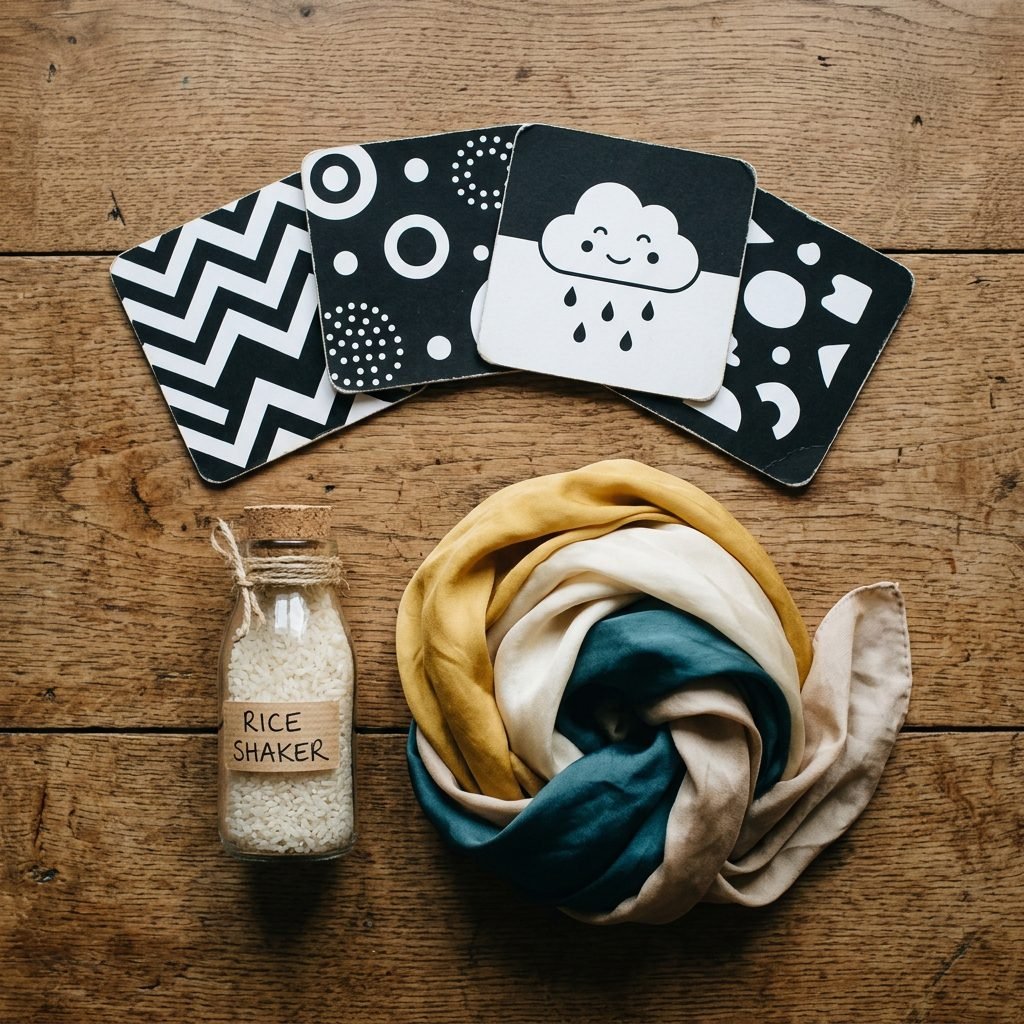
You don’t need a big budget to be a ‘Crafty Mom.’ In fact, the best newborn toys are often homemade and tailored to their specific developmental stage. Here is a quick guide to creating a first-month sensory kit on a budget.
High-Contrast Flashcards
Use black cardstock and a white paint pen (or vice versa) to draw simple shapes: a heart, a circle, a bold stripe, and a smiley face. These are much more engaging for a 3-week-old than a colorful teddy bear.
The ‘Sound Shaker’ (For Mom to Use)
Take a small, clear plastic bottle and fill it with dried rice or uncooked beans. Secure the lid with non-toxic glue and tape. Use this to gently shake to the left and right of the baby’s head (at a safe distance) to encourage auditory localization—the ability to find where a sound is coming from.
| Material | Purpose | Cost Estimate |
|---|---|---|
| Black/White Cardstock | Visual Focus | $2 – $5 |
| Empty Water Bottle + Rice | Auditory Tracking | $0 (Upcycled) |
| Silk or Muslin Scraps | Tactile Awareness | $5 – $10 |
| Shatterproof Mirror | Self-Awareness | $10 – $15 |
Conclusion
The Best Game is Just ‘Being’
Mama, as you navigate these first 30 days, please remember that you are enough. On the days when the house is a mess and you haven’t managed a single ‘high-contrast’ game, simply holding your baby skin-to-skin is doing more for their brain than any toy ever could. Your heartbeat regulates theirs; your warmth stabilizes their blood sugar; and your scent triggers the release of growth hormones. These games are just tools in your toolkit to enjoy the wonder of your baby’s unfolding mind. Trust your intuition, follow your baby’s lead, and know that you are doing an incredible job. You aren’t just raising a baby; you are building a human brain with every cuddle and coo. Sleep when you can, hydrate often, and enjoy these fleeting, magical first weeks.