

How to Write an Empowering Birth Plan Checklist for a Medical Induction
Reclaiming Your Narrative: The Power of the Induction Birth Plan
Hello, sweet mama. If you are reading this, you might have just learned that your baby’s birthday is going to be scheduled. Whether it is due to preeclampsia, gestational diabetes, being post-dates, or any other medical reason, hearing the word ‘induction’ can sometimes feel like a detour from the ‘natural’ birth you envisioned. But here is the first thing I want you to know: An induction is still a birth. It is a powerful, transformative, and deeply sacred event. Your body is not failing; it is simply receiving a little ‘nudge’ to start the most important meeting of your life.
As a doula, I have seen some of the most beautiful, peaceful births happen via induction. The key isn’t in avoiding the medical aspects, but in integrating them into a plan that honors your preferences. This guide is designed to help you navigate the clinical side of things while keeping your spirit and autonomy at the center. We are going to build a checklist that ensures you feel like the protagonist of your story, not just a patient on a chart. We will cover everything from the ‘medical menu’ to the sensory details that keep your oxytocin flowing, even when Pitocin is in the mix.
Understanding the ‘Why’ and the ‘How’: Your Induction Options
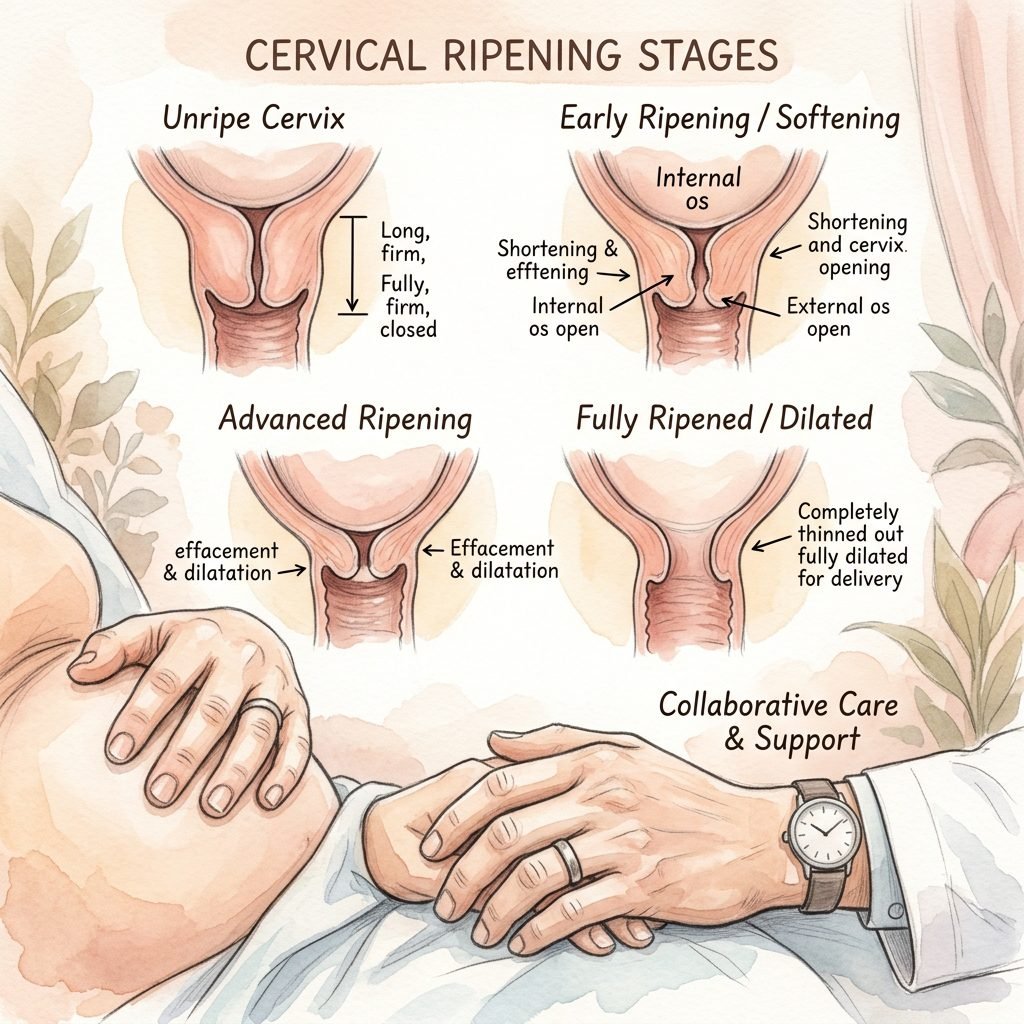
Knowledge is your greatest tool for empowerment. When you understand the tools the medical team uses, they become resources rather than things ‘done to you.’ An induction is rarely a single event; it is a process that often happens in stages. Depending on the state of your cervix (measured by the Bishop Score), your provider might suggest different methods.
Common Induction Methods
- Cervical Ripening: If your cervix is still firm and closed, the first step is ‘softening’ it. This often involves prostaglandins like Cervidil or Cytotec.
- Mechanical Dilation: A Foley Bulb or Cook Balloon is a small catheter inserted into the cervix to physically stretch it to about 4 centimeters.
- Breaking the Water (AROM): Artificial Rupture of Membranes can sometimes jumpstart labor or speed it up once you are already dilated.
- Pitocin: A synthetic version of oxytocin, administered via IV, to create regular, effective contractions.
| Method | How it Works | Best For… |
|---|---|---|
| Prostaglandins | Hormonal softening of the cervix. | An ‘unripe’ or closed cervix. |
| Foley Balloon | Physical pressure to dilate the cervix. | Moms wanting to avoid extra medication initially. |
| Pitocin | IV medication to start contractions. | When the cervix is ripe but labor hasn’t started. |
| AROM | Physically breaking the amniotic sac. | Intensifying labor that has stalled. |
When writing your plan, you can specify your preferences for these methods. For example, you might state: ‘I would prefer to start with mechanical dilation (Foley Bulb) before moving to hormonal ripening agents if my Bishop Score allows.’ This shows your team that you are an active participant in the decision-making process.
Movement and Positioning: You Are Not Tethered to the Bed

One of the biggest fears moms have about induction is being ‘stuck in the bed’ because of the IV and continuous monitoring. I am here to tell you that movement is still your best friend. In fact, movement helps the baby navigate the pelvis, which can actually make the induction more efficient. You just need to request the right tools in your birth plan.
Requesting Mobility Tools
- Wireless/Telemetry Monitoring: Most modern hospitals have waterproof, wireless monitors that allow you to walk, sway, and even use the shower while the baby is being monitored.
- The Peanut Ball: If you do choose an epidural or need to be in bed, the peanut ball is a game-changer. It keeps the pelvis open and can reduce labor time by up to 90 minutes.
- Heparin/Saline Lock: If you don’t need continuous fluids, ask for a ‘lock’ so you aren’t attached to an IV pole 24/7.
‘I request the use of wireless telemetry monitoring so that I may remain mobile. If I am in bed, I would like my birth team to help me change positions every 30 minutes using a peanut ball.’
By including these specific requests, you transform a clinical environment into a dynamic labor space. Don’t be afraid to ask for a ‘long’ IV cord if wireless isn’t available—you can still do squats next to the bed!
The Sensory Sanctuary: Oxytocin vs. Adrenaline

Labor depends on oxytocin, the ‘love hormone.’ Adrenaline, triggered by bright lights, loud noises, and stress, can actually slow labor down. In an induction, we are often using synthetic oxytocin (Pitocin), but we still want your natural oxytocin to be as high as possible. This is where your ‘vibe’ checklist comes in.
Creating Your Zen Zone
- Lighting: Ask to dim the fluorescent overhead lights. Bring battery-operated tea lights or fairy lights to create a warm glow.
- Scent: Use a diffuser with lavender for relaxation or peppermint for nausea. (Check hospital policy on diffusers first; cotton balls with oils work too!)
- Sound: Curate two playlists—one for ‘Zen’ (meditation, soft instrumentals) and one for ‘Power’ (upbeat songs that make you feel strong).
- Clothing: You do NOT have to wear the drafty hospital gown. Bring your own soft robe, a nursing-friendly nightie, or a labor skirt. Feeling like yourself helps you stay grounded.
| Sensory Element | Hospital Default | Your Empowerment Choice |
|---|---|---|
| Sight | Fluorescent Lights | Fairy Lights & Eye Mask |
| Smell | Antiseptic/Clinical | Essential Oils (Lavender/Citrus) |
| Sound | Monitor Beeps | Personal Playlist/White Noise |
| Touch | Stiff Bed Linens | Your Own Pillow & Soft Blanket |
Advocacy and the BRAIN Method: Making Informed Choices
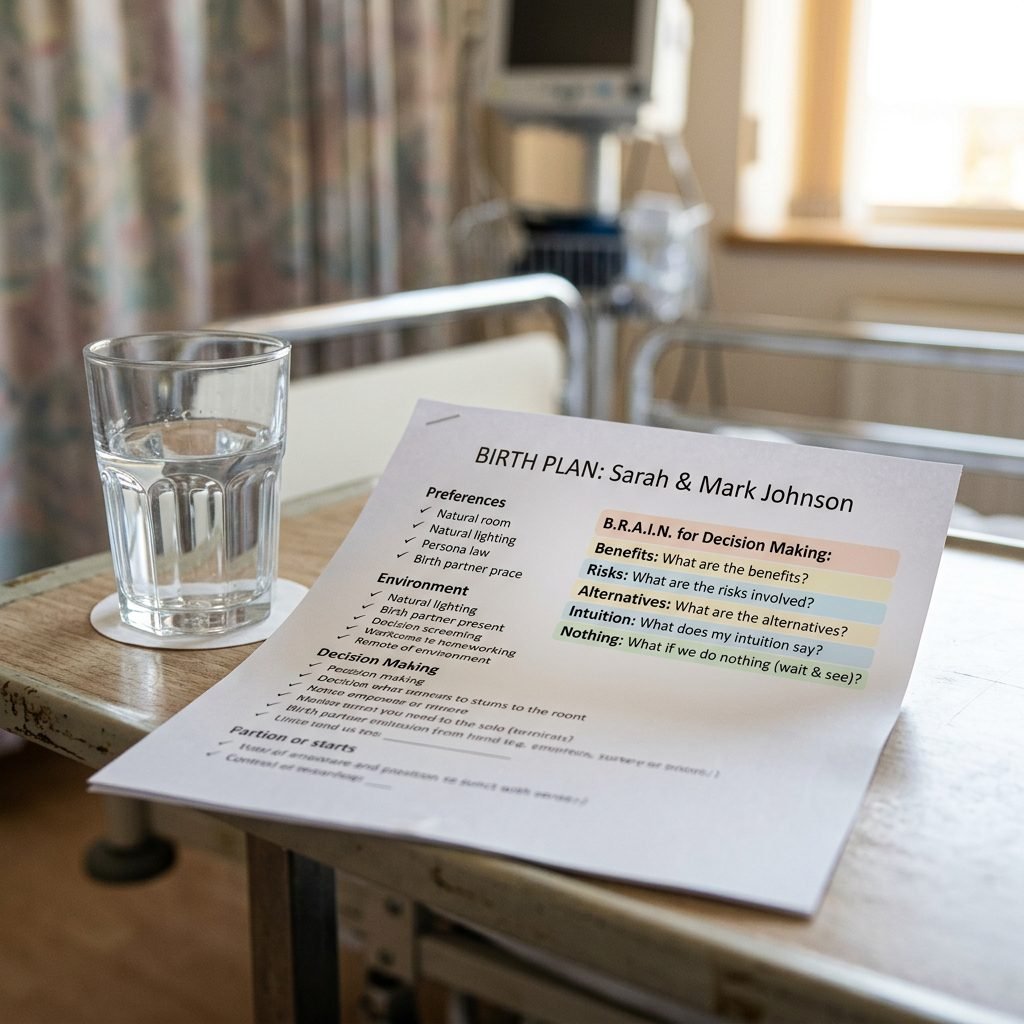
During an induction, things can move quickly, and you might feel pressured to make decisions. This is where the BRAIN acronym becomes your best friend. It is a simple script you and your partner can use whenever a new intervention is suggested.
Benefits: What are the benefits of this procedure?
Risks: What are the potential risks or side effects?
Alternatives: Are there any other options?
Intuition: What is my gut feeling telling me?
Nothing: What happens if we do nothing or wait 1 hour?
Include a note in your birth plan about how you want to receive information. For example: ‘We prefer that all non-emergency suggestions be explained using the BRAIN method, and we would like 5-10 minutes of private time to discuss them before proceeding.’ This creates a ‘buffer’ that prevents you from feeling railroaded and ensures every ‘yes’ is an informed one.
The ‘Golden Hour’ in an Induction
Don’t forget to plan for the moments after the birth. Induction babies sometimes need a little extra monitoring, but you can still request:
- Immediate Skin-to-Skin: Unless there is a medical emergency, the baby should go straight to your chest.
- Delayed Cord Clamping: Waiting just 60 seconds can increase your baby’s iron stores for the first 6 months of life.
- Quiet Initiation: Request that the first hour be ‘visitor-free’ so you can focus on breastfeeding and bonding.
The Empowered Induction Checklist: A Summary

To make things easy for your labor and delivery nurses, I recommend a one-page, bulleted checklist. Nurses love these because they can see your heart at a glance! Here is a template of what to include:
My Induction Birth Plan Checklist
- Environment: Dim lights, soft music, personal pillows, and minimal staff interruptions.
- Induction Methods: Preference for mechanical dilation (Foley) first; request for slow-and-low Pitocin titration.
- Monitoring: Request for intermittent or wireless telemetry monitoring to allow for movement.
- Pain Management: List your preferences in order (e.g., 1. Breathing/Movement, 2. Water immersion/Shower, 3. Nitrous Oxide, 4. Epidural).
- Communication: Please use the BRAIN method for all decisions; my partner will be my primary spokesperson.
- Postpartum: Immediate skin-to-skin, delayed cord clamping, and no pacifiers/formula unless medically necessary.
Pro-Tip: Print 3 copies—one for your chart, one for your nurse’s station, and one to tape to the wall of your room. It makes your wishes visible to every shift change!
Conclusion
Mama, you are doing an incredible job. An induction is not a ‘lesser’ way to give birth; it is a strategic, supportive way to bring your baby into the world safely. By creating this plan, you are taking ownership of your experience and setting the stage for a positive, empowered birth. Remember, the most important part of any birth plan isn’t the paper it’s written on—it’s the confidence you carry in your heart. You are strong, you are capable, and you are about to meet your soulmate. You’ve got this!