

How to Activate Your Vagus Nerve to Relieve Severe Labor Contraction Pain
Your Body’s Secret Superpower for Birth
Hello, sweet mama. If you are reading this, you are likely preparing for one of the most transformative journeys of your life: bringing your baby into the world. It is completely natural to feel a mix of excitement and, let’s be honest, a little bit of trepidation about the intensity of labor contractions. As a doula, I want to let you in on a beautiful secret that your body already knows, but your mind might need to learn: the Vagus Nerve.
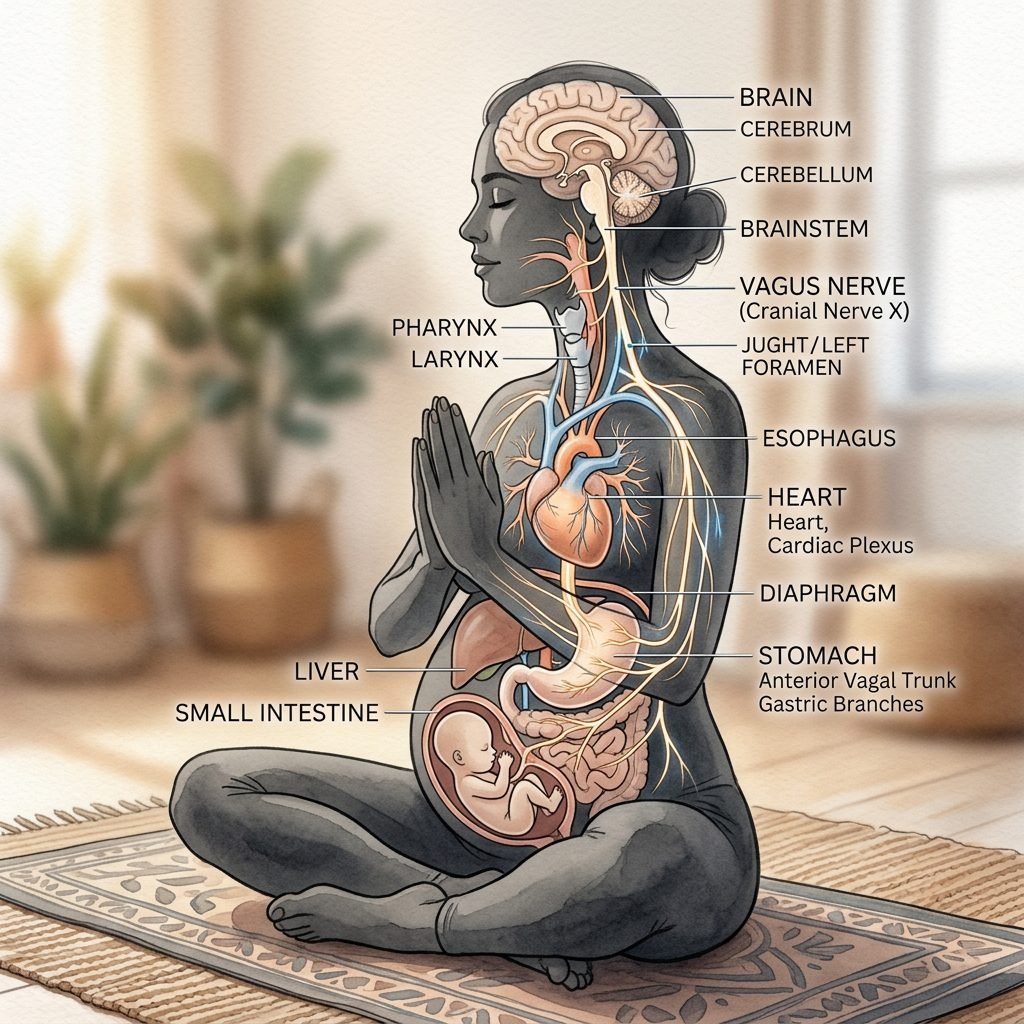
Think of the vagus nerve as your body’s internal ‘calm down’ button. It is the longest cranial nerve in your body, stretching from your brainstem all the way down to your abdomen, touching your heart, lungs, and digestive tract along the way. When we are in pain or under stress—like during a powerful contraction—our body naturally wants to enter ‘fight or flight’ mode. This causes tension, which actually increases the perception of pain. By learning how to activate your vagus nerve, you can switch your nervous system back into ‘rest and digest’ mode, allowing your uterus to work efficiently while your mind stays anchored in peace. Let’s explore how to use this incredible physiological tool to navigate labor with grace and strength.
Understanding the Vagus Nerve: The Bridge to Relaxation
The Science of Softness
To understand why vagus nerve stimulation is so effective during labor, we have to look at the Autonomic Nervous System (ANS). The ANS has two main branches: the Sympathetic (fight or flight) and the Parasympathetic (rest, digest, and bond). Labor is a high-intensity physical event, and it is very easy for the body to get stuck in the Sympathetic branch. When this happens, your body produces adrenaline, which can actually slow down labor by inhibiting oxytocin—the ‘love hormone’ that drives contractions.
The vagus nerve is the primary component of the Parasympathetic system. When it is stimulated, it sends a signal to your brain that ‘all is well.’ This triggers a cascade of physiological responses:
- Lowered Heart Rate: Helping you stay calm between contractions.
- Decreased Blood Pressure: Reducing the physical strain on your cardiovascular system.
- Muscle Relaxation: Specifically in the pelvic floor, where tension can hinder the baby’s descent.
- Endorphin Release: Your body’s natural painkillers, which are many times stronger than morphine.
Your body is not a machine to be managed; it is a garden to be tended. Activating your vagus nerve is the act of tending to your inner peace amidst the storm of labor.
Vocalizing and the ‘Horse Lips’ Technique

Sound as a Tool for Opening
Did you know that the vagus nerve passes right through your larynx (voice box) and pharynx? This means that the sounds you make during labor can directly influence your nervous system. Many first-time moms feel self-conscious about making noise, but as your doula, I am here to tell you: low, guttural sounds are your best friend.
When you make high-pitched screams, it tightens your throat and, by extension, tightens your pelvic floor (there is a fascinating physiological link between the jaw and the pelvis!). Instead, we want to use low-frequency vibrations to stimulate the vagus nerve. One of the most effective methods is the ‘Horse Lips’ or ‘Raspberry’ technique.
How to Practice Horse Lips:
- Take a deep, belly-filling breath through your nose.
- As you exhale, let your lips go completely limp and loose.
- Blow air through your lips so they vibrate loudly (like a horse blowing air).
- Focus on the vibration in your face and throat; this vibration is literally ‘massaging’ your vagus nerve.
Pro-Tip: If you find yourself clenching your jaw, you are likely clenching your cervix. Try to keep your mouth open and soft. A ‘floppy’ mouth equals a ‘floppy’ (opening) cervix!
The Power of the Mammalian Dive Reflex
Cold Therapy for Immediate Calm
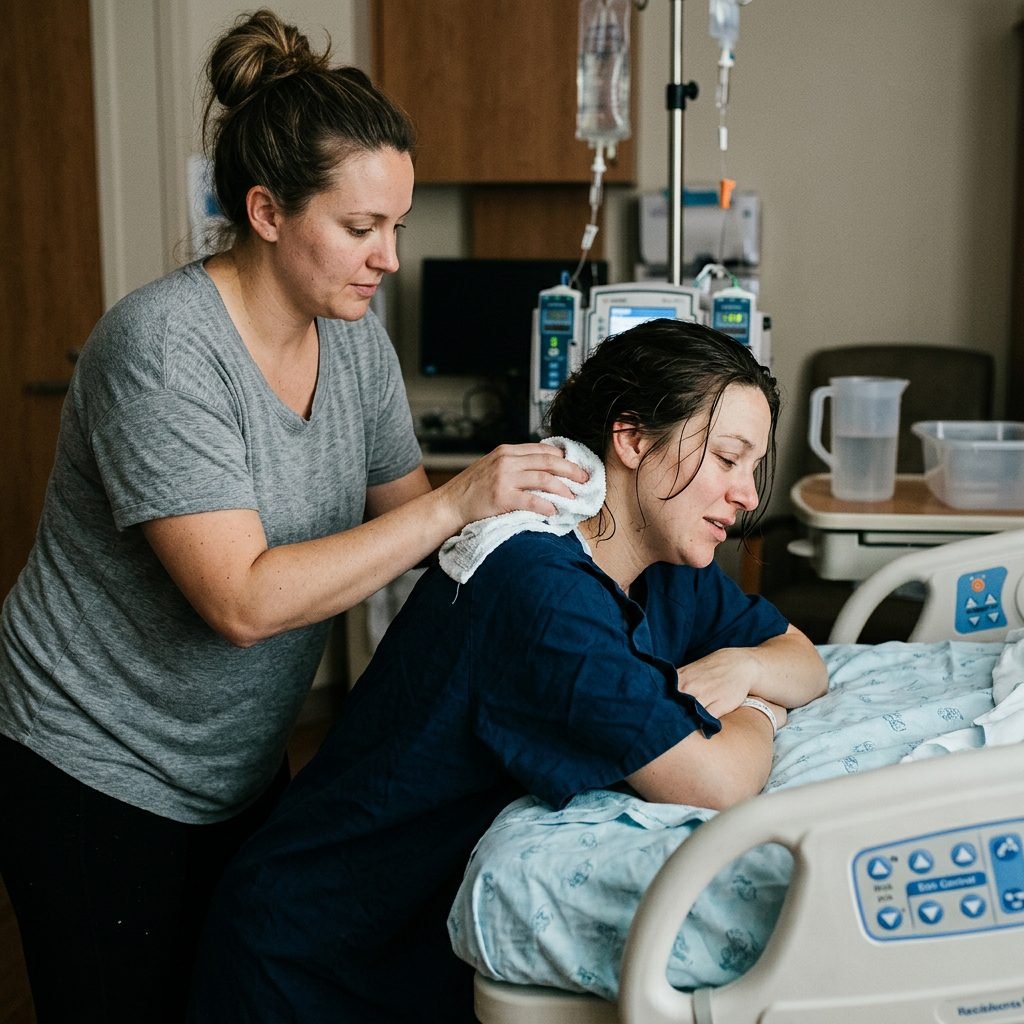
One of the fastest ways to ‘hack’ the vagus nerve is through something called the Mammalian Dive Reflex. This is an evolutionary response that occurs when the face is exposed to cold water. It immediately slows the heart rate and shifts blood flow to the brain and heart, creating an instant sense of grounding.
During the ‘Transition’ phase of labor—which is often the most intense and overwhelming part—you might feel like you are ‘losing it.’ This is the perfect time for cold stimulation. It acts like a reset button for your brain.
| Method | How to Apply | Best For… |
|---|---|---|
| Cold Compress | Apply a frozen washcloth to the back of the neck or forehead. | Managing heat and intensity during active labor. |
| Facial Splash | Splash ice-cold water onto the eyes and cheekbones. | Snapping out of a ‘panic’ moment or ‘The Wall.’ |
| Ice Pack to Chest | Place a cold pack over the center of the chest for 3-5 minutes. | Reducing heart palpitations and anxiety. |
Always have a bowl of ice water and several small towels ready in your birth bag. Your partner or doula can rotate these so you always have a fresh, cold cloth available when a contraction begins.
Auricular Stimulation: The Ear Massage Secret

The Ear as a Gateway to Peace
The vagus nerve has a small branch that reaches the outer ear, specifically the concha (the hollow part near the ear canal). Gently stimulating this area can send calming signals directly to the brainstem. This is a wonderful technique for your birth partner to use while you are resting between contractions.
Step-by-Step Ear Massage for Labor:
- The Hollow Rub: Using a clean finger, your partner can gently rub the hollow part of the ear in slow, circular motions.
- The Lobe Pull: Gently grasp the earlobes and pull them slightly downward and outward, holding for 10 seconds.
- The Tragus Press: Gently press the small flap of cartilage (the tragus) over the ear canal and release.
This tactile stimulation provides a sensory focal point, helping to distract the brain from the intensity of the uterine sensations. It is also incredibly grounding if you are feeling lightheaded or ‘floaty’ during labor.
The 4-8 Breathing Rhythm
Lengthening the Exhale
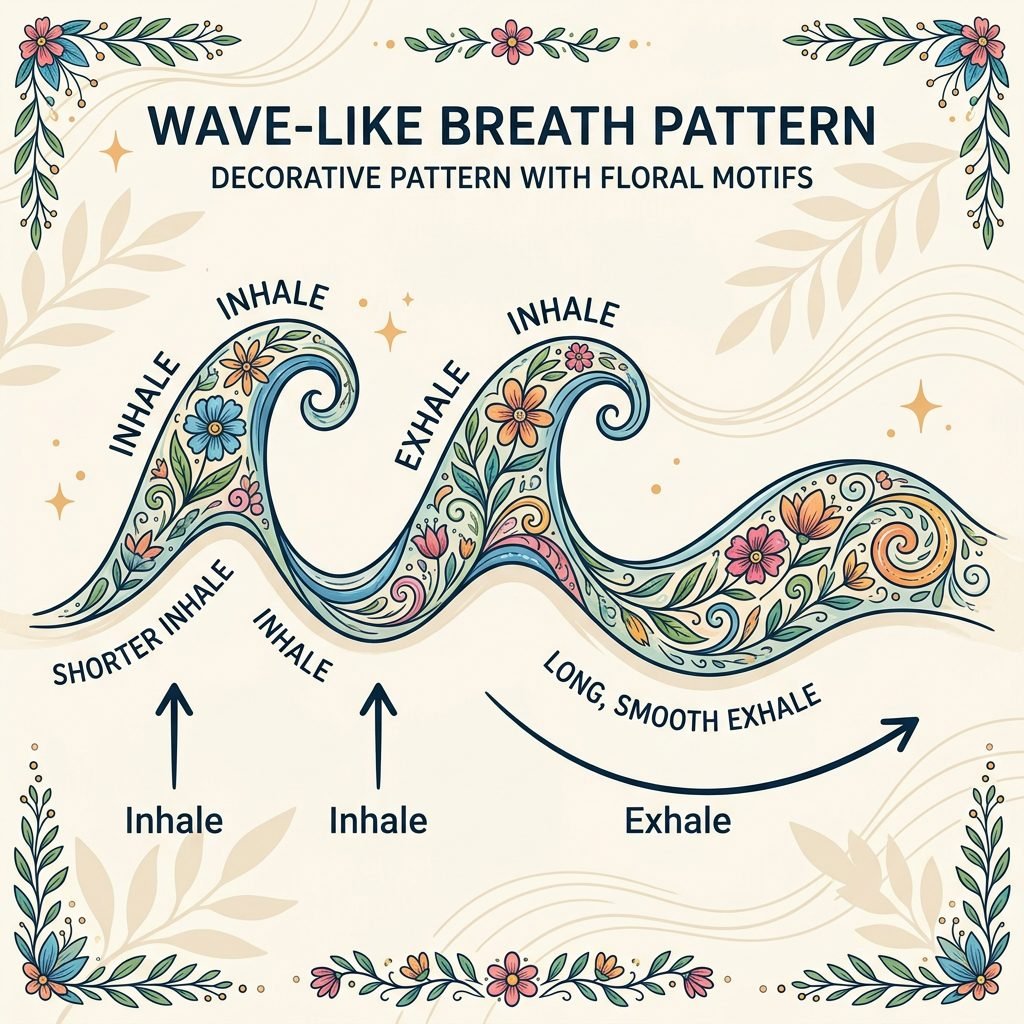
Breathing is the only part of the Autonomic Nervous System that we can consciously control. While we can’t tell our heart to beat slower or our stomach to digest faster, we can control our breath to force those things to happen. The key to vagus nerve activation is the exhale.
When you inhale, your heart rate speeds up slightly. When you exhale, the vagus nerve releases a substance called Vagusstoff (acetylcholine), which slows the heart down. By making your exhale twice as long as your inhale, you are essentially bathing your nervous system in calm.
The Labor Breathing Matrix
| Labor Phase | Breathing Pattern | Vagal Focus |
|---|---|---|
| Early Labor | Inhale 4, Exhale 4 | Establishing a steady, calm rhythm. |
| Active Labor | Inhale 4, Exhale 8 | Deep activation to manage rising intensity. |
| Transition | Short Inhale, Long ‘Sigh’ Exhale | Releasing extreme tension and ‘letting go.’ |
Practice Tip: Try to visualize the air as a soft color (like a pale blue or gold) entering your body and carrying away the tension as it leaves. Count the numbers in your head to give your ‘thinking brain’ a job to do while your ‘laboring body’ does the work.
Partner Support: How to Help Her Activate the Nerve

A Guide for the Birth Support Team
Partners, you are the guardians of the birth space. Your presence alone can help stimulate the mother’s vagus nerve through the release of oxytocin, but you can also take an active role. Because the vagus nerve is sensitive to safety and connection, your touch and tone of voice are paramount.
- Use a Low Voice: High-pitched or panicked voices can trigger her sympathetic nervous system. Speak in a low, slow, ‘bedroom’ voice.
- Eye Contact: If she is feeling overwhelmed, ask her to look at you. Deep, loving eye contact releases oxytocin and grounds the nervous system.
- Gentle Chest Pressure: Placing a warm, flat hand on her sternum (the center of the chest) can help her focus on deep, thoracic breathing.
Your calm is her calm. If you stay grounded, her nervous system will use yours as a mirror. This is called co-regulation, and it is a powerful tool in the delivery room.
Conclusion
You Are Equipped and Ready
Mama, as you approach your birth day, remember that you carry within you an ancient and sophisticated system designed to help you navigate this experience. The vagus nerve is your ally, your anchor, and your bridge to a more manageable labor. By practicing these techniques now—the horse lips, the long exhales, the cold therapy—you are building ‘muscle memory’ that will serve you when the waves of labor become their strongest.
Trust your body, trust the process, and remember that every contraction is not just ‘pain,’ but a powerful surge bringing you one step closer to holding your sweet baby in your arms. You’ve got this, sister. We are all cheering you on.