The Best Water Birth Tub Positions to Ease Pain and Speed Up Delivery
The Magic of Nature’s Epidural: Welcoming Your Little One in the Water
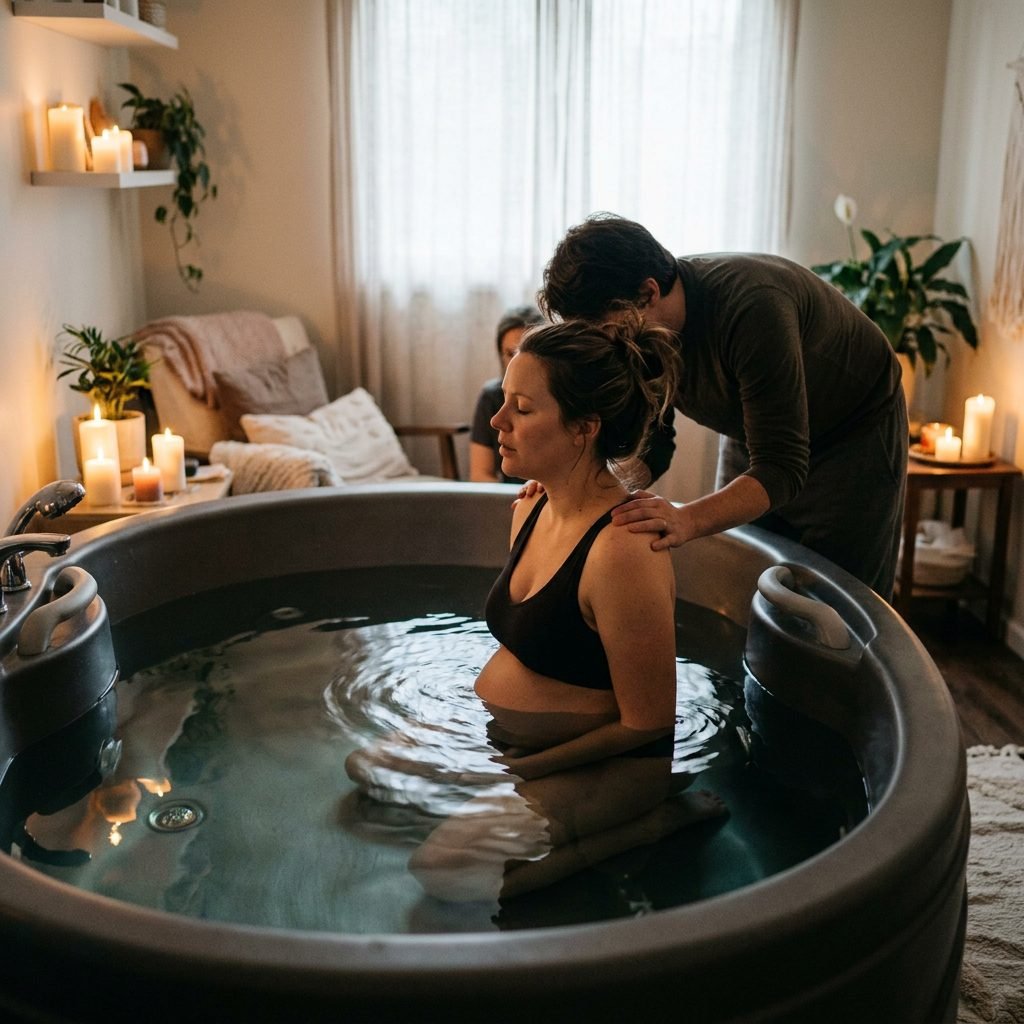
Mama, if you are considering a water birth, you are about to embark on one of the most transformative and gentle experiences labor has to offer. Often referred to by midwives and doulas as ‘nature’s epidural,’ the warm water of a birth tub provides a unique sense of weightlessness that can transform the intensity of contractions into manageable waves of progress. As your doula-sister, I want you to know that the tub isn’t just a place to sit; it is a dynamic tool. The way you move your body within those warm depths can significantly influence how your pelvis opens and how quickly your baby descends.
In this guide, we are going to dive deep into the science of buoyancy and the specific physical positions that help ease the ‘ring of fire,’ protect your perineum, and use gravity to your advantage—even when you feel weightless. Whether you are planning a home birth or a hospital water birth, these positions are designed to keep you feeling empowered, safe, and deeply connected to your body’s rhythm.
The Science of Buoyancy: Why Water Works for Labor
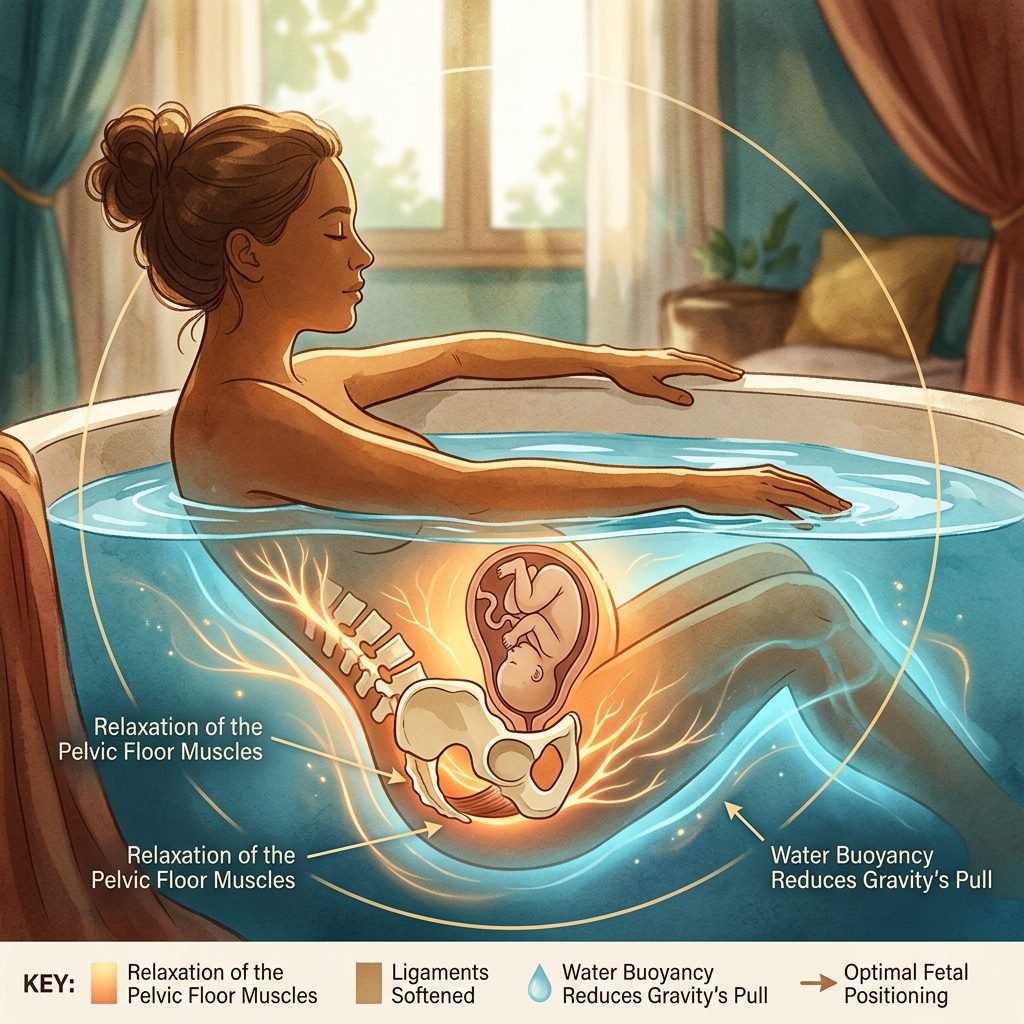
Before we get into the ‘how,’ let’s talk about the ‘why.’ When you submerge your laboring body in water, several physiological shifts occur that directly impact your pain perception and labor speed. The buoyancy of the water supports up to 90% of your body weight. This relief allows your muscles—especially those in your pelvis and lower back—to relax more deeply than they ever could on a bed or a birth ball.
Benefits of Hydrotherapy in Labor
- Increased Oxytocin: The warmth and privacy of the tub encourage the release of oxytocin, the ‘love hormone’ that drives contractions.
- Reduced Adrenaline: The soothing environment lowers stress hormones, preventing labor stalls caused by fear or tension.
- Perineal Elasticity: Warm water softens the tissues of the perineum, which can reduce the risk of tearing during the crowning stage.
- Easier Movement: In the water, you can shift from your back to your knees with a fraction of the effort it would take on dry land.
Your body is not a machine; it is a blooming flower. The water is the nourishment that allows you to open without resistance. You are safe, you are capable, and you are doing it.
The Forward-Leaning Power: Hands and Knees in the Tub

One of the most effective and popular water birth positions is the Hands and Knees (all-fours) position. This is particularly helpful if you are experiencing ‘back labor’ or if your baby is in an OP (occiput posterior) position, commonly known as ‘sunny-side up.’
How to Execute the Hands and Knees Position:
- Lower yourself into the center of the tub where the water is deepest.
- Place your hands firmly on the bottom of the tub or grip the handles if your tub has them.
- Ensure your knees are spread wide—at least hip-width apart—to allow the pelvis to open.
- During a contraction, arch your back slightly or perform gentle pelvic tilts (cat-cow stretches) to help the baby rotate.
- Between contractions, rest your head and chest on the edge of the tub or a floating pillow.
This position uses the water to take the pressure off your spine while allowing gravity to pull the baby’s heaviest part (the back of the head) toward your belly, encouraging an optimal birth position.
The Deep Squat: Using the Tub Handles for Descent
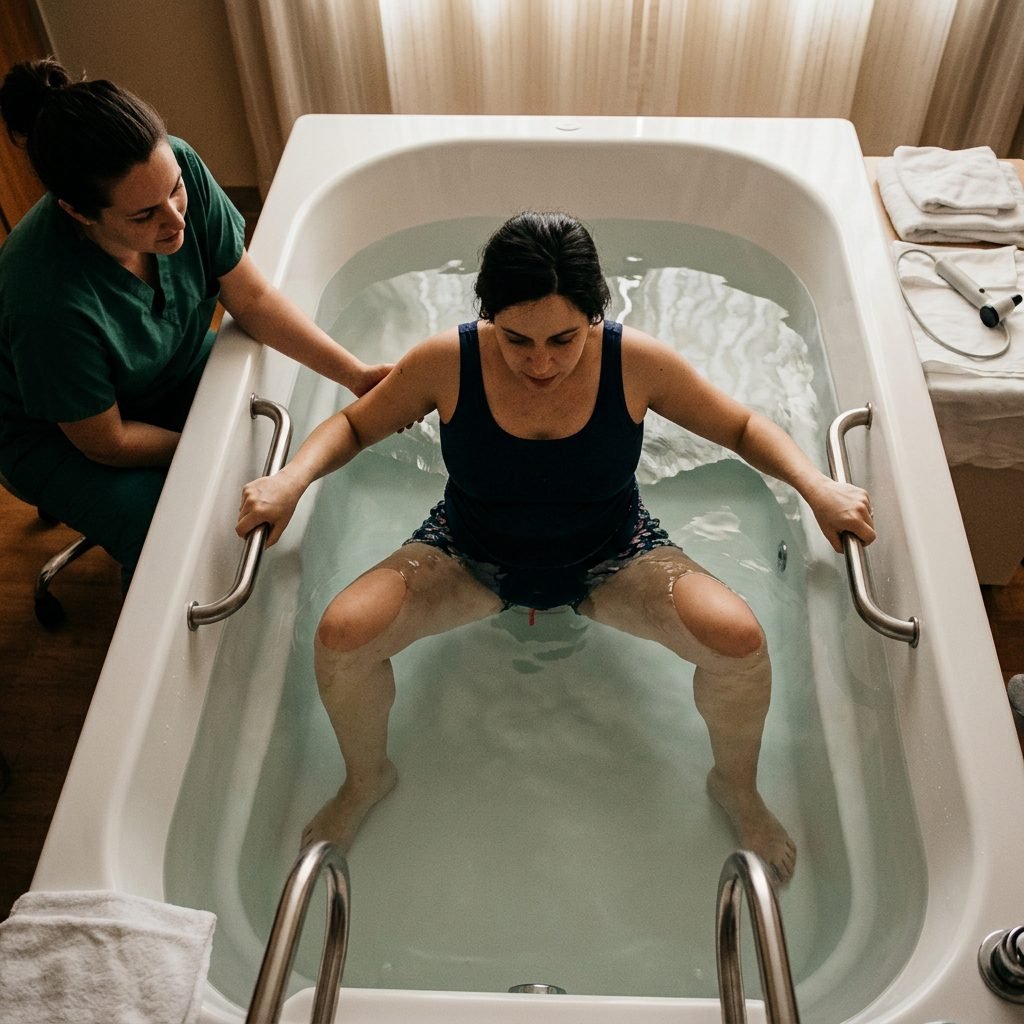
When it comes time to move the baby down the birth canal, the Deep Squat is your best friend. In a traditional bed birth, squatting can be exhausting for the legs. However, in the water, the buoyancy supports your thighs, allowing you to hold a squat much longer without muscle fatigue.
| Labor Phase | Recommended Position | Primary Benefit |
|---|---|---|
| Active Labor | Hands and Knees | Relieves back pain and rotates baby. |
| Transition | Vertical Squat | Maximum pelvic opening for descent. |
| Pushing | Supported Recline | Conserves energy while softening perineum. |
| Stalled Labor | Asymmetrical (Captain Morgan) | Creates space in the pelvic mid-well. |
To perform the Supported Squat, use the handles on the side of the birth pool. Pull your weight slightly back while keeping your heels flat if possible. This position opens the pelvic outlet to its maximum diameter, providing the baby with the widest possible path for delivery. Pro-Tip: Keep your jaw relaxed! There is a direct physiological link between a tight jaw and a tight pelvic floor. If you find yourself clenching, try making low, guttural ‘moo’ sounds.
The Side-Lying Glide: Restful Progress

Labor is a marathon, not a sprint. There will be moments—especially during a long active labor—where you need to rest while still keeping the process moving. The Side-Lying position in the water is perfect for these ‘rest and be thankful’ moments.
Steps for Side-Lying Comfort:
- Lie on your left side to optimize blood flow to the placenta and the baby.
- Use a ‘peanut ball’ or a waterproof pillow between your knees. This is crucial because it keeps the pelvis open even while you are lying down.
- Allow your partner to support your head or use the built-in headrest of the tub.
- Focus on slow, rhythmic breathing, allowing the water to cocoon your belly.
This position is excellent for slowing down a labor that is moving too fast, giving your tissues time to stretch gradually and reducing the risk of tearing. It is also the most ‘stylish’ way to labor, as it feels like a luxurious spa moment amidst the hard work of birth.
Asymmetrical Positions: The ‘Captain Morgan’ in Water
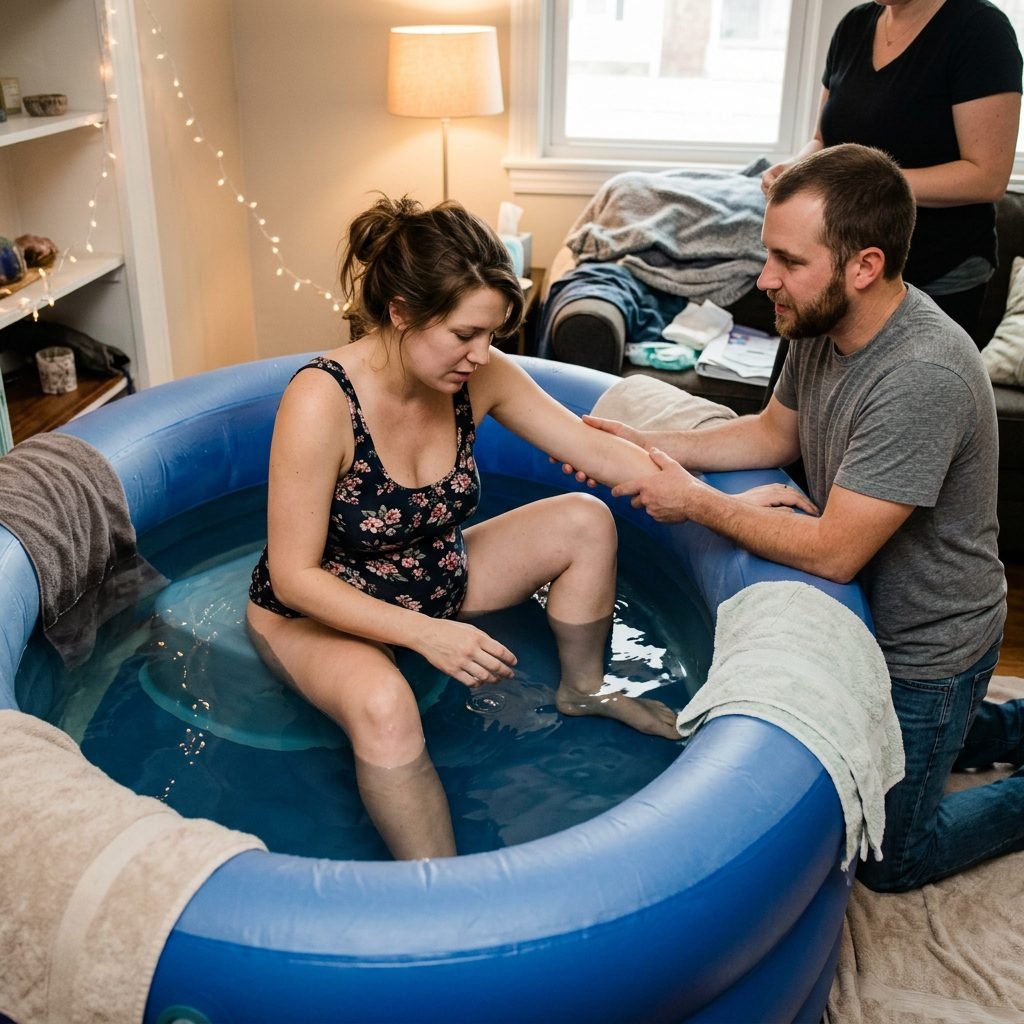
Sometimes, labor can hit a plateau. If you’ve been at 7 centimeters for a while and things aren’t progressing, it’s time to get asymmetrical. By lifting one leg higher than the other, you change the shape of the pelvic inlet, which can help a baby who is ‘stuck’ or slightly tilted (asynclitic) to find the right angle.
How to do the Water-Captain:
- While kneeling or standing in the tub, place one foot up on the ‘seat’ or the edge of the tub.
- Lean into the raised leg during a contraction.
- Gently sway your hips in a figure-eight motion.
- Switch legs every 3 to 5 contractions to ensure balance in the pelvic muscles.
The water makes this move incredibly easy to execute compared to doing it on a floor. You’ll feel a sense of ‘opening’ on one side that often provides that final bit of space the baby needs to drop into the birth canal.
The Crowning Moment: Reclined and Supported
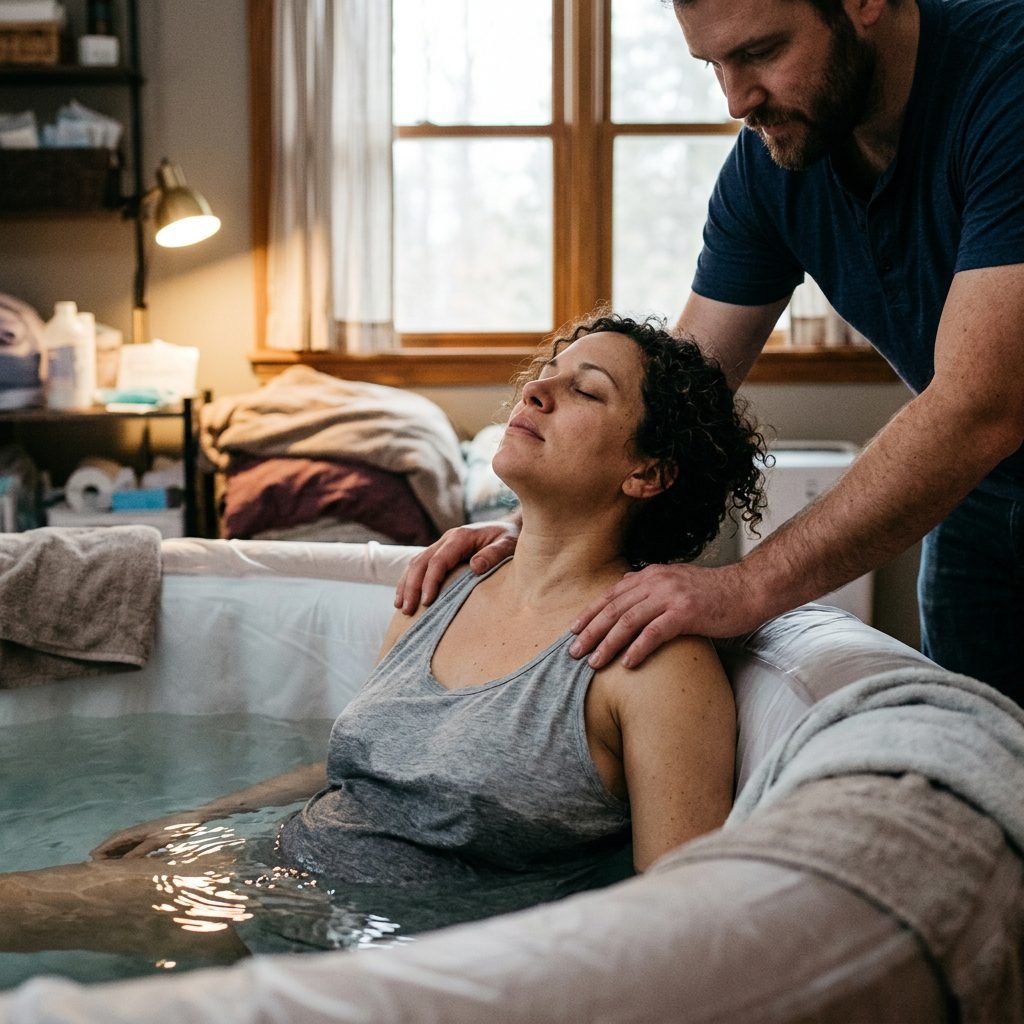
As you reach the final stage of delivery, you may naturally want to lean back. A Supported Recline allows you to see your baby being born and makes it easy for the midwife to monitor the baby’s progress without disturbing your peace.
In this position, you lean your back against the tub wall, with your arms resting on the edges. Your partner can sit behind the tub, offering their shoulders for you to lean against. This is a beautiful, intimate setup for those final pushes. Because your bottom is submerged, the warm water continues to provide consistent heat to the perineum, which acts as a natural warm compress, significantly easing the ‘stinging’ sensation of crowning.
Remember, Mama: Your breath is the bridge. Breathe the baby down. You don’t need to scream the baby out; you can breathe them into your arms.
Conclusion
Embracing the Flow of Your Birth Journey
Water birth is a powerful testament to the strength and fluidity of the maternal body. By utilizing these positions—from the gravity-defying squat to the restful side-lying glide—you are giving yourself the best chance at a shorter, more comfortable labor. Remember that the ‘best’ position is always the one that feels right to you in the moment. Listen to your body, trust the water, and know that you are surrounded by support.
As you prepare your birth plan, share these positions with your partner and doula. Practice getting in and out of the tub (if possible) and visualize yourself moving through the water with ease. You are doing an incredible thing, and soon, you will be holding your little one in the quiet, warm aftermath of a beautiful delivery.