Kitchen Sink Sensory Play: Floating Utensils for 6-Month-Old Babies
Oh, sweet mama, you have made it to such a golden era of babyhood. Right around the 6-month mark, your little one is likely blossoming into a tiny, curious explorer. They might be sitting up with a little support, their eyes are tracking everything you do, and their favorite hobby is grabbing whatever they can find and bringing it straight to their mouth. It is a beautiful, messy, and deeply demanding phase of motherhood.
As a doula and pediatric sleep specialist, I hear from so many mothers who feel the pressure to buy expensive, battery-operated toys to keep their babies entertained and developing perfectly. But let me whisper a little secret to you: the most profound developmental magic often happens with the simplest household items. You do not need a perfectly curated Montessori playroom to stimulate your baby’s brain. Sometimes, all you need is your kitchen sink, a few inches of warm water, and the contents of your utensil drawer.
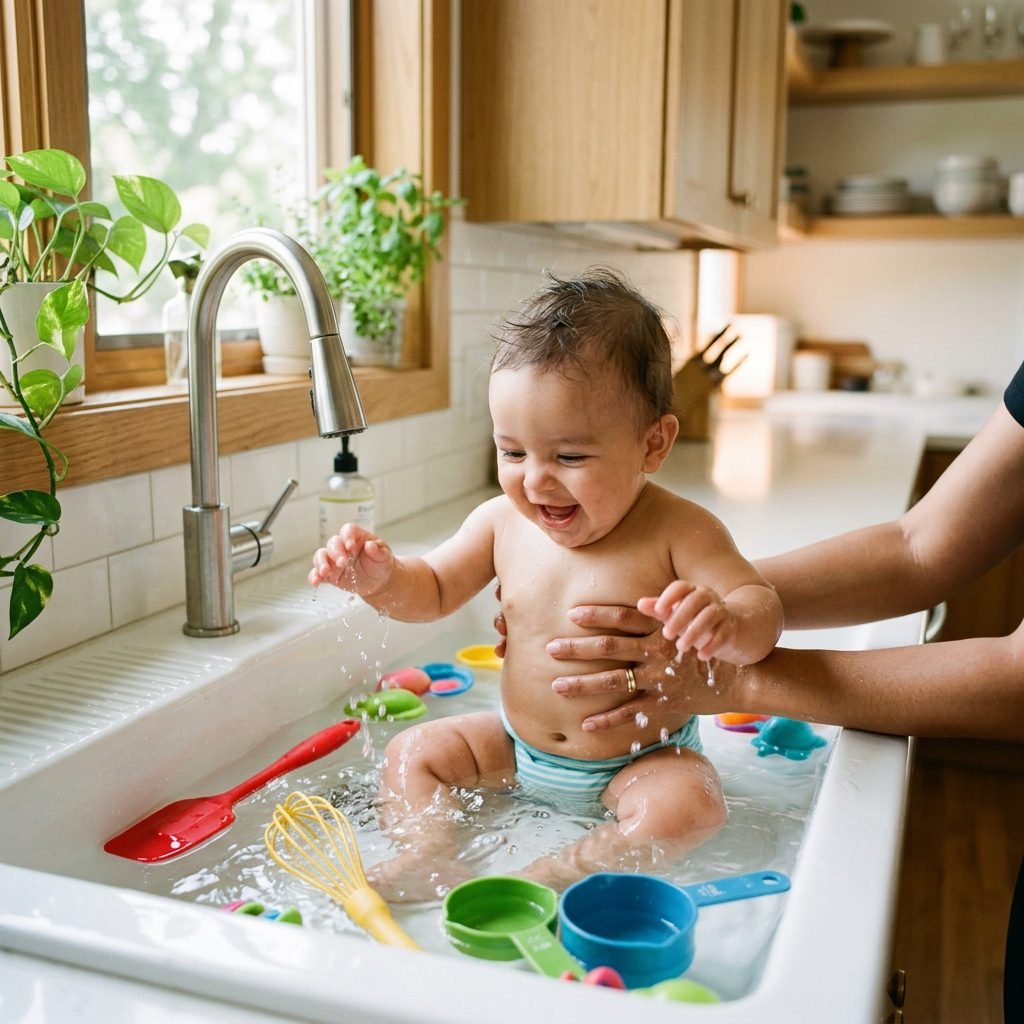
Kitchen sink sensory play is a beloved, tried-and-true motherhood hack. It is virtually free, incredibly easy to set up, and offers a safe, contained space for your baby to explore textures, temperatures, and cause-and-effect. Plus, it gives you a precious 15 minutes to sip your coffee (while standing right next to them, of course!) and watch their little mind expand. Let us dive into exactly how to set up this stylish, comfort-first sensory experience for your 6-month-old.
The Developmental Magic of Water Play
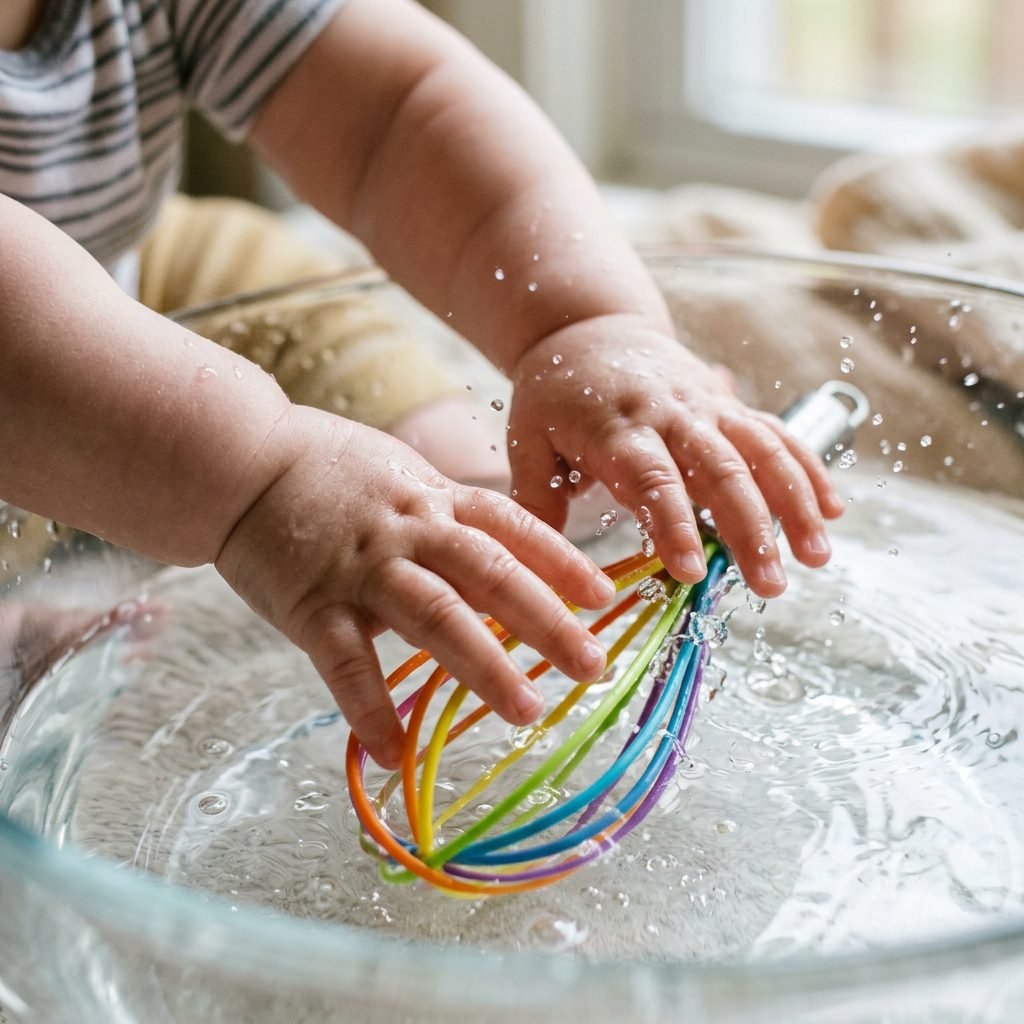
Before we turn on the tap, let us talk about why this simple activity is a powerhouse for your baby’s developing brain. At 6 months old, your baby is undergoing a massive cognitive leap. Water play is not just about keeping them busy; it is a full-body sensory diet that feeds their neurological pathways.
Fine Motor Skills and the Palmar Grasp
When you toss a silicone spatula or a plastic measuring cup into the water, it bobs and moves. To catch it, your baby has to coordinate their eyes and their hands. Grabbing a wet, slippery object requires a different kind of muscle engagement than grabbing a dry rattle. They will practice their ‘palmar grasp’ (using their whole hand to pull an object toward their palm), which is the foundational step before they master the pincer grasp later on.
Cause and Effect Learning
Water is the ultimate teacher of cause and effect. When baby smacks the water with an open palm, it splashes their face. When they push a whisk down, it pops back up. These tiny scientific experiments teach them that their actions have direct consequences in their environment, a crucial cognitive milestone.
Tactile Sensory Input
Your baby experiences the world primarily through touch and taste right now. The contrast between the warm water, the cool metal of a whisk, the squishy texture of a silicone spoon, and the hard plastic of a cup provides a rich tapestry of tactile feedback. This helps desensitize their gag reflex as they mouth the items and builds neural connections that process sensory information.
Setting Up Your Sink Safely and Stylishly

Creating a splash zone in your kitchen does not mean sacrificing your stylish space or dealing with a massive mess. With a little preparation, you can make this an easy, stress-free activity. Here is your step-by-step guide to setting up the perfect kitchen sink sensory station.
- Sanitize the Space: Start by giving your sink a thorough scrub. Since your baby will inevitably try to drink the water or suck on the wet utensils, you want a pristine environment. Use a natural, baby-safe cleaner like a mixture of white vinegar and baking soda, and rinse it completely with hot water.
- Pad the Edges: Kitchen sinks have hard edges, and 6-month-olds are notoriously wobbly. Fold a thick, plush towel over the front edge of the counter and sink. This protects your baby’s delicate tummy and ribs as they lean forward to play.
- Prep the Floor: Lay down an absorbent bath mat or a couple of beach towels on the floor right beneath the sink to catch the inevitable splashes. This prevents slip hazards for you!
- Draw the Water: Fill the sink with just 2 to 3 inches of water. The water should be lukewarm, ideally around 98 degrees Fahrenheit (body temperature), just like their bathwater. Test it with your wrist to ensure it is not too hot or too cold.
“Safety Reminder: Water play is magnificent, but it requires 100% of your attention. A baby can drown in less than an inch of water. Keep your hands on or hovering inches away from your baby at all times. Never step away to check your phone or stir a pot on the stove. Be present in the magic.”
Curating Your Floating Utensil Collection
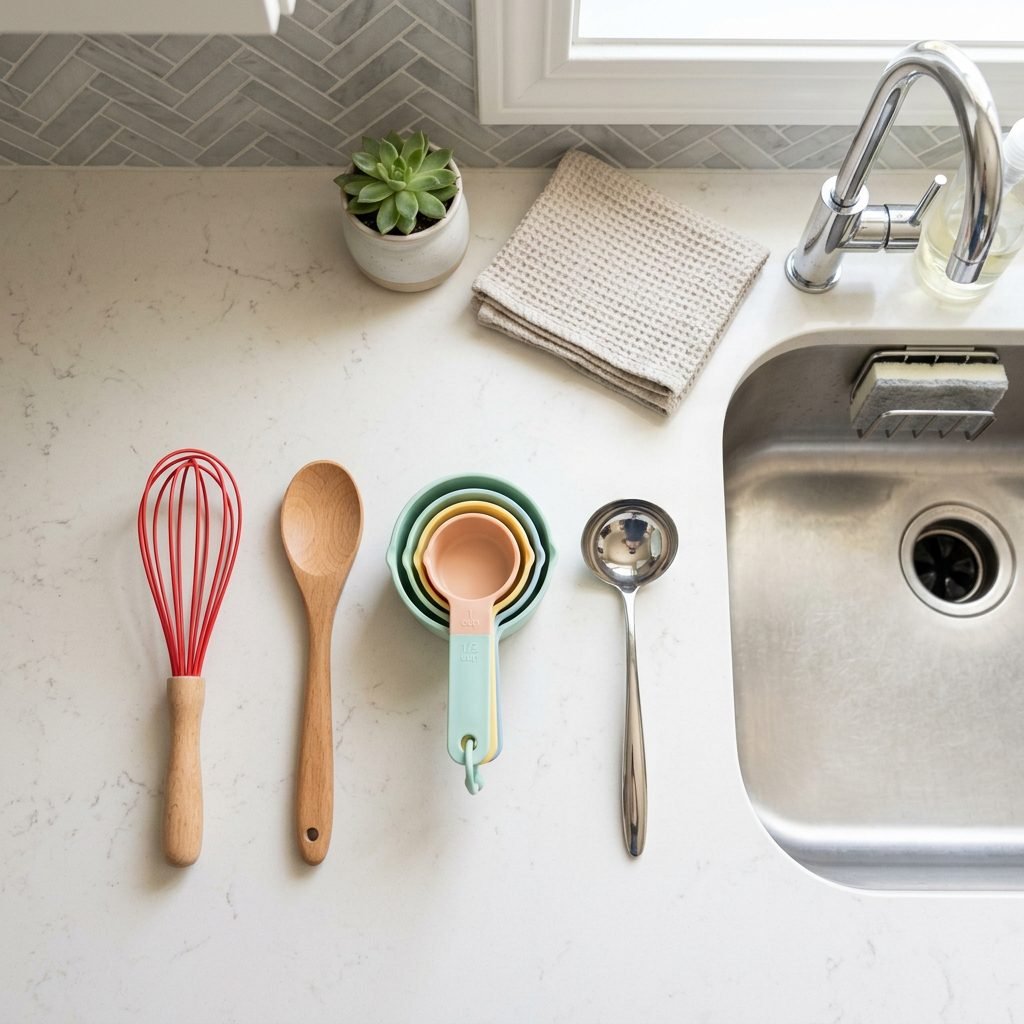
You do not need to buy anything new for this activity! Your kitchen drawers are already full of incredible sensory toys. The key is to select items that offer different textures, weights, and floating capabilities while ensuring they are completely safe for a teething baby to mouth.
What to Look For
Choose items made of food-grade silicone, smooth wood, stainless steel, or BPA-free plastic. You want a mix of items that float on top of the water and items that sink to the bottom, encouraging your baby to reach down through the water.
What to Avoid
Strictly avoid anything with sharp edges (like certain metal spatulas or pizza cutters), glass, heavy cast iron, small items that could pose a choking hazard (like bottle nipples or small measuring spoons), and anything that has hidden crevices where mold might hide.
| Household Item | Developmental Benefit & Texture | Budget / Cost Breakdown |
|---|---|---|
| Silicone Whisk | Offers an intricate, squishy texture for mouthing. Traps water inside the loops. | $0 (Already in your drawer) |
| Plastic Measuring Cups | Teaches volume and pouring. Hard plastic provides a loud, satisfying sound when banged. | $0 (Already in your drawer) |
| Wooden Spoon | Floats beautifully. Natural wood texture is soothing on sore, teething gums. | $0 (Already in your drawer) |
| Silicone Baking Liners | Floats like a lily pad. Extremely flexible, allowing baby to practice two-handed manipulation. | $0 (Already in your drawer) |
| Metal Ladle | Heavy and sinks. Cool to the touch. Great for scooping and observing reflections. | $0 (Already in your drawer) |
Guiding the Play (Without Taking Over)
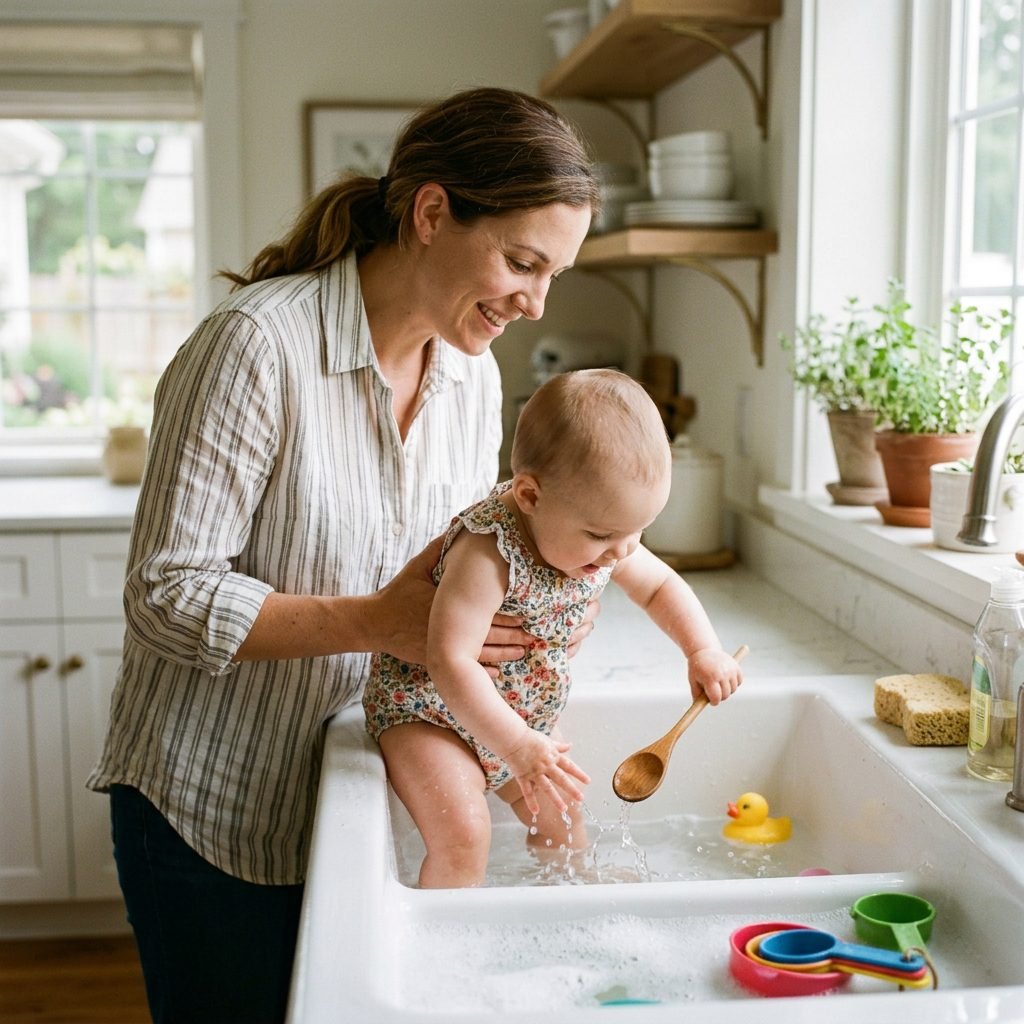
Once the sink is prepped and the utensils are floating, it is time to introduce your little one to the setup. At 6 months, they might be a little hesitant at first, or they might dive right in with both hands. Your role here is to be the loving, supportive anchor while they lead the exploration.
- Support their posture: If your baby is not sitting independently yet, stand behind them and support them firmly at the hips or ribcage. Let them lean their weight slightly against your chest or the padded sink edge.
- Model the splashing: If baby is just staring at the water, take a wooden spoon and gently tap the surface. Say, ‘Look, splash, splash!’ in a warm, encouraging voice.
- Narrate their discoveries: As they pick up a whisk, narrate what they are feeling. ‘Oh, you found the red whisk! Is it wet? Is it cold?’ This builds their receptive language skills.
- Allow the mouthing: Do not panic when the spatula goes straight into their mouth. Because you have sanitized the sink and used clean utensils, this is perfectly safe and highly beneficial for their oral motor development.
“Script for Mama: ‘I am giving my baby the space to explore at their own pace. Messes can be wiped up, but these moments of discovery are building their brain forever.'”
Keep the session short. 10 to 15 minutes is usually the maximum attention span for a 6-month-old. If they start rubbing their eyes, arching their back, or getting fussy, it is time to wrap it up.
Transitioning from Splash to Snuggle

All good things must come to an end, and transitioning out of water play can sometimes trigger a few tears if baby is overtired or suddenly feels cold. Having a warm, cozy post-play routine is essential for keeping the peace and protecting their delicate skin.
The Wind-Down Routine
Before you pull the plug on the sink, give your baby a verbal warning. Even at 6 months, they absorb your tone. Say, ‘Okay sweetie, one more minute of splashing, and then we are getting all cozy in your towel!’
Have a thick, hooded towel already draped over your shoulder or resting on the counter. Lift them straight out of the sink and immediately wrap them up like a little burrito. Cuddle them close to your chest to transfer your body heat.
Post-Play Skincare
Water play can slightly dry out a baby’s sensitive skin. Once you have gently patted them dry, lay them down in their nursery or on a soft mat and give them a quick, soothing massage. Use a baby-safe, fragrance-free lotion or a natural oil like sweet almond or coconut oil. Gently massage their arms and legs—this deep pressure provides calming proprioceptive input that helps regulate their nervous system after the high sensory stimulation of the water.
Dress them in a comfortable, breathable cotton onesie, and offer a feeding if it aligns with their schedule. You will likely find that after a good session of kitchen sink sensory play, your baby is beautifully primed for a long, restorative nap!
Conclusion
At the end of the day, motherhood is not about creating Pinterest-perfect, elaborate activities every single hour. It is about connection, safety, and finding joy in the mundane. By turning your kitchen sink into a sensory playground, you are giving your 6-month-old a rich developmental experience while giving yourself the grace of a simple, no-cost setup. Watch their eyes light up as they conquer the floating whisk, and remember what an incredible job you are doing, mama. You are exactly the mother your baby needs.