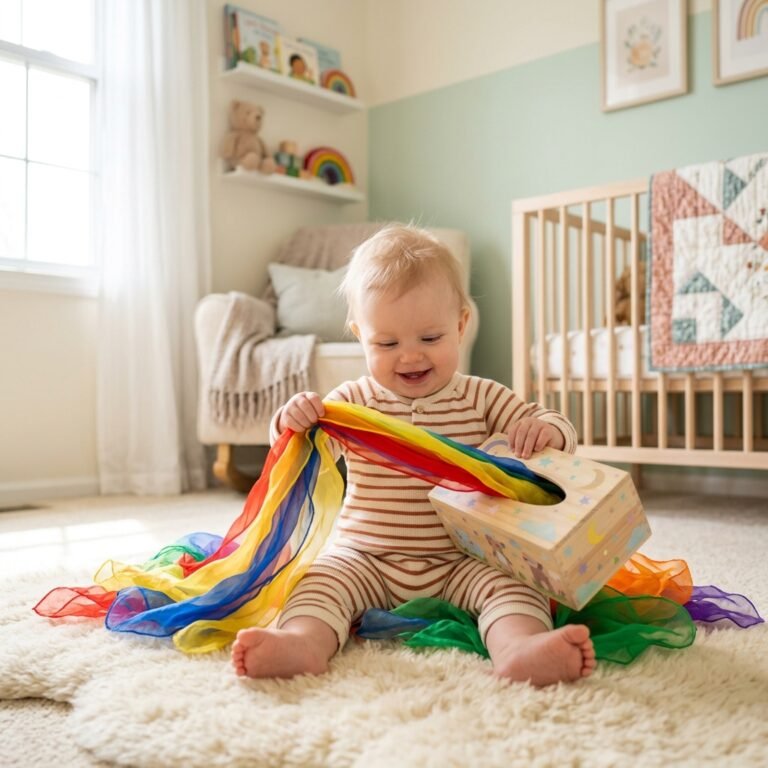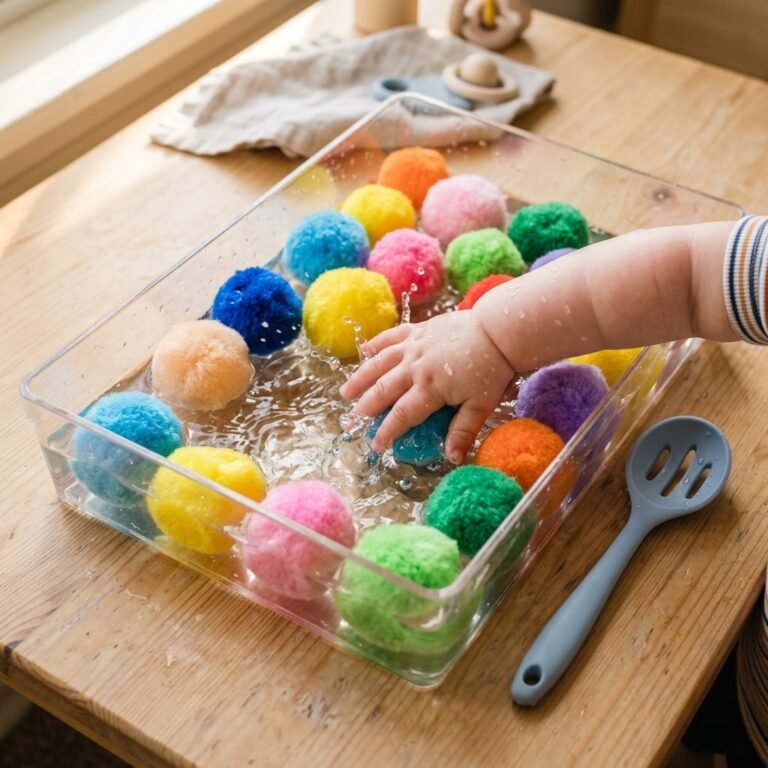

3 Safe and Edible Sensory Bins for a 9-Month-Old Baby
Welcome to the World of Taste-Safe Exploration
Oh, mama, I see you. You’re likely in that beautiful, chaotic stage where your 9-month-old is a tiny whirlwind of curiosity. At this age, their primary way of learning about the world is through their mouth. If they see it, they want to touch it; if they touch it, they want to taste it. As a doula and a fellow mom, I know the anxiety that comes with ‘messy play.’ You want to encourage their development, but you also don’t want to be hovering every second, worried they might swallow something toxic or a choking hazard.
That is exactly why edible sensory bins (or taste-safe bins) are a total game-changer for this milestone. At 9 months, your baby is likely developing their pincer grasp, sitting up independently, and perhaps even scooting or crawling. They are ready for sensory input that goes beyond just a soft rattle. They need textures, colors, and safe ways to explore cause and effect. In this guide, we are going to dive deep into three specific, easy-to-create sensory bins that are not only safe if they end up in your little one’s mouth but are also designed to hit those crucial developmental markers.
Remember, mama: The mess is just evidence of a brain growing. You are doing an incredible job fostering their curiosity!
The Developmental Science Behind Sensory Play at 9 Months

Why Sensory Play Isn’t Just ‘Making a Mess’
At 9 months, your baby’s brain is like a sponge, soaking up every tactile sensation. When they plunge their hands into a bin of crushed cereal or slippery pasta, they aren’t just playing; they are performing a complex neurological workout. This type of play supports fine motor development, cognitive growth, and even language skills as you describe the textures to them.
The Pincer Grasp and Bilateral Coordination
You’ve probably noticed your baby trying to pick up tiny crumbs from the floor using their thumb and forefinger. This is the pincer grasp. Sensory bins filled with small, edible items provide the perfect ‘gym’ for this skill. Additionally, reaching across their body to grab a toy in the bin encourages bilateral coordination—the ability to use both sides of the brain and body together.
| Sensory System | What It Processes | Benefit for 9-Month-Old |
|---|---|---|
| Tactile | Touch and Texture | Discriminating between hard, soft, wet, and dry. |
| Proprioceptive | Body Position/Pressure | Learning how much force to use when grabbing. |
| Visual | Colors and Shapes | Tracking moving objects within the bin. |
| Gustatory | Taste | Safe exploration of new ‘food-like’ textures. |
Bin #1: The ‘Crushed Cereal Desert’ (Pincer Grasp Focus)
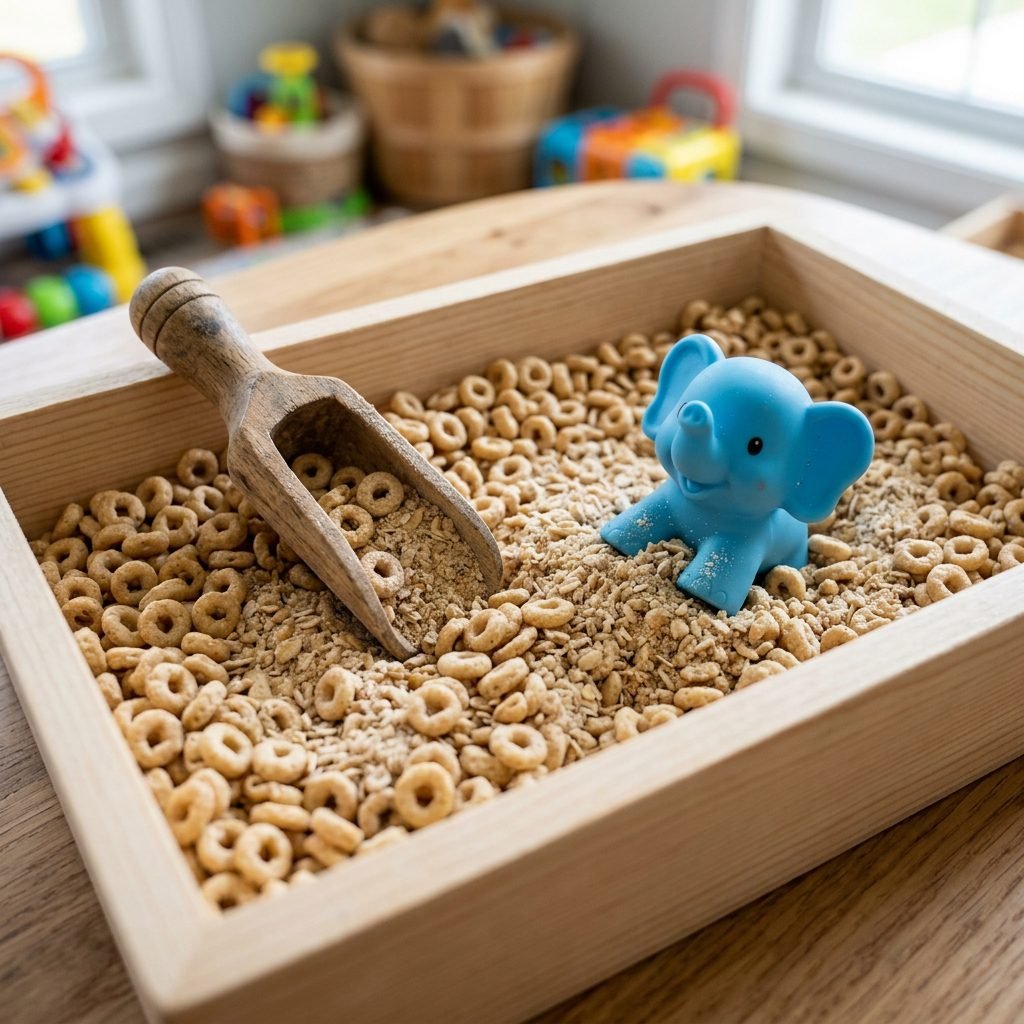
A Classic for a Reason: The Cereal Sand Bin
This is the ultimate ‘starter’ bin. It uses ingredients you likely already have in your pantry and provides a ‘sand-like’ experience without the risk of actual sand getting into eyes or tummies. It’s perfect for practicing that pincer grasp and introducing the concept of ‘scooping and pouring.’
What You’ll Need
- 2-3 cups of O-shaped toasted oat cereal (like Cheerios).
- A shallow plastic bin or a wooden ‘Tuff Tray.’
- Measuring cups, large spoons, or a small silicone muffin tin.
- Optional: A few of your baby’s favorite plastic animal figurines.
Step-by-Step Instructions
- Place half of the cereal in a blender or food processor and pulse until it reaches a coarse, sand-like consistency.
- Leave the other half of the cereal whole.
- Mix the ‘sand’ and the ‘whole’ cereal in the bin to create varying textures.
- Nestle the cups and spoons into the mixture and let your baby explore.
Pro-Tip from a Doula: Sit on the floor with your baby. If they try to eat a handful, don’t panic! It’s just cereal. Instead, narrate the experience: ‘That feels crunchy, doesn’t it? Can you find the hidden elephant?’ This builds their receptive language while they play.
Bin #2: The ‘Chia Seed Slime’ (Tactile & Gooey Exploration)
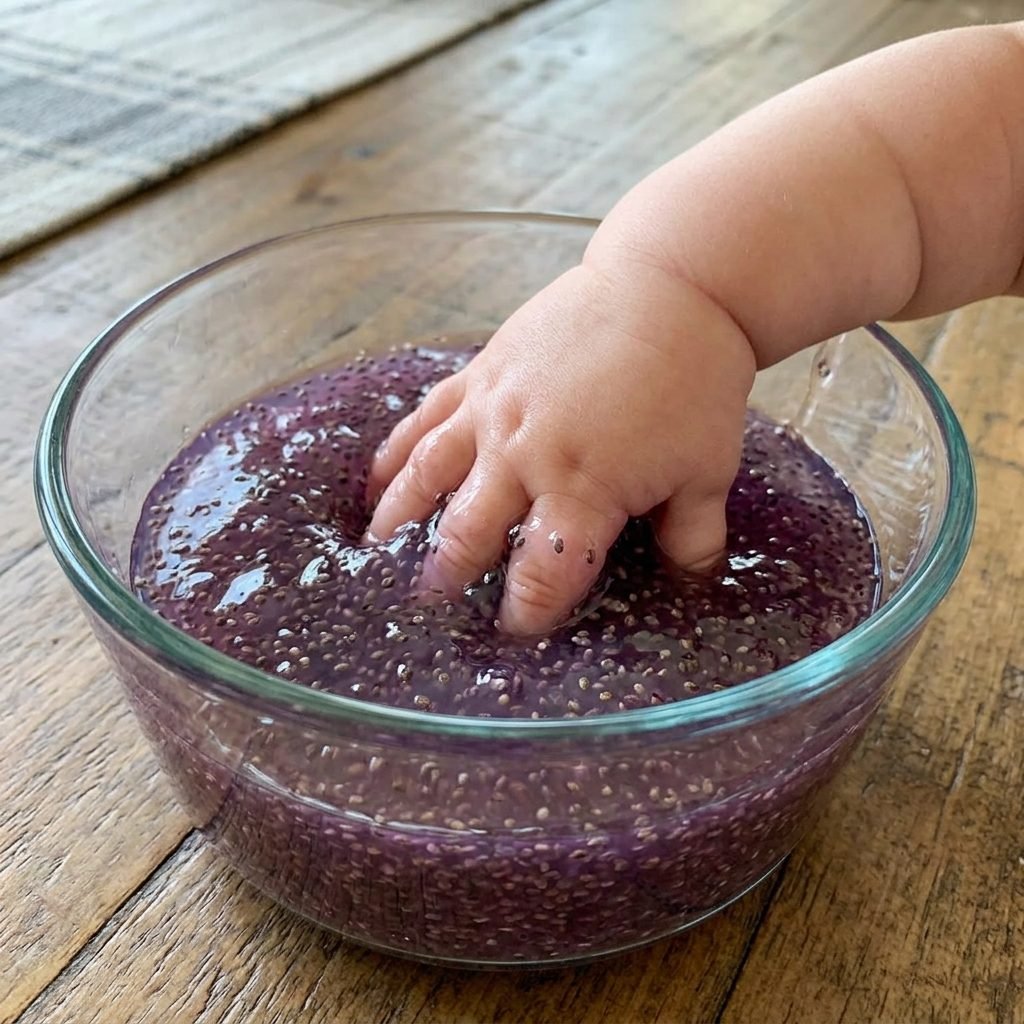
The Ultimate Taste-Safe Sensory Goo
Most ‘slime’ recipes use glue or borax, which are absolute no-gos for a 9-month-old. However, chia seeds create a natural, gelatinous texture when soaked in water that mimics slime perfectly while being 100% edible and packed with Omega-3s (though we’re playing, not eating a meal!).
Materials and Budget Breakdown
| Item | Quantity | Estimated Cost |
|---|---|---|
| Chia Seeds | 1/4 Cup | $2.00 |
| Water | 2 Cups | $0.00 |
| Food Coloring | 2-3 Drops (Natural) | $1.00 |
| Large Bin | 1 | $5.00 |
How to Prep the ‘Slime’
- Mix 1/4 cup of chia seeds with 2 cups of water in a large container.
- Add a drop of plant-based food coloring if you want a ‘swamp’ or ‘ocean’ theme.
- Let it sit in the fridge for at least 4 hours (or overnight). The seeds will absorb the water and become delightfully gooey.
- Pour the mixture into your sensory bin. Add some large, easy-to-clean plastic blocks for ‘excavating.’
Why it works: This bin focuses on tactile discrimination. The seeds are slippery, cold, and slightly bumpy. It’s a sensory explosion that keeps babies engaged for long stretches of time.
Bin #3: The ‘Rainbow Pasta Jungle’ (Color & Movement)
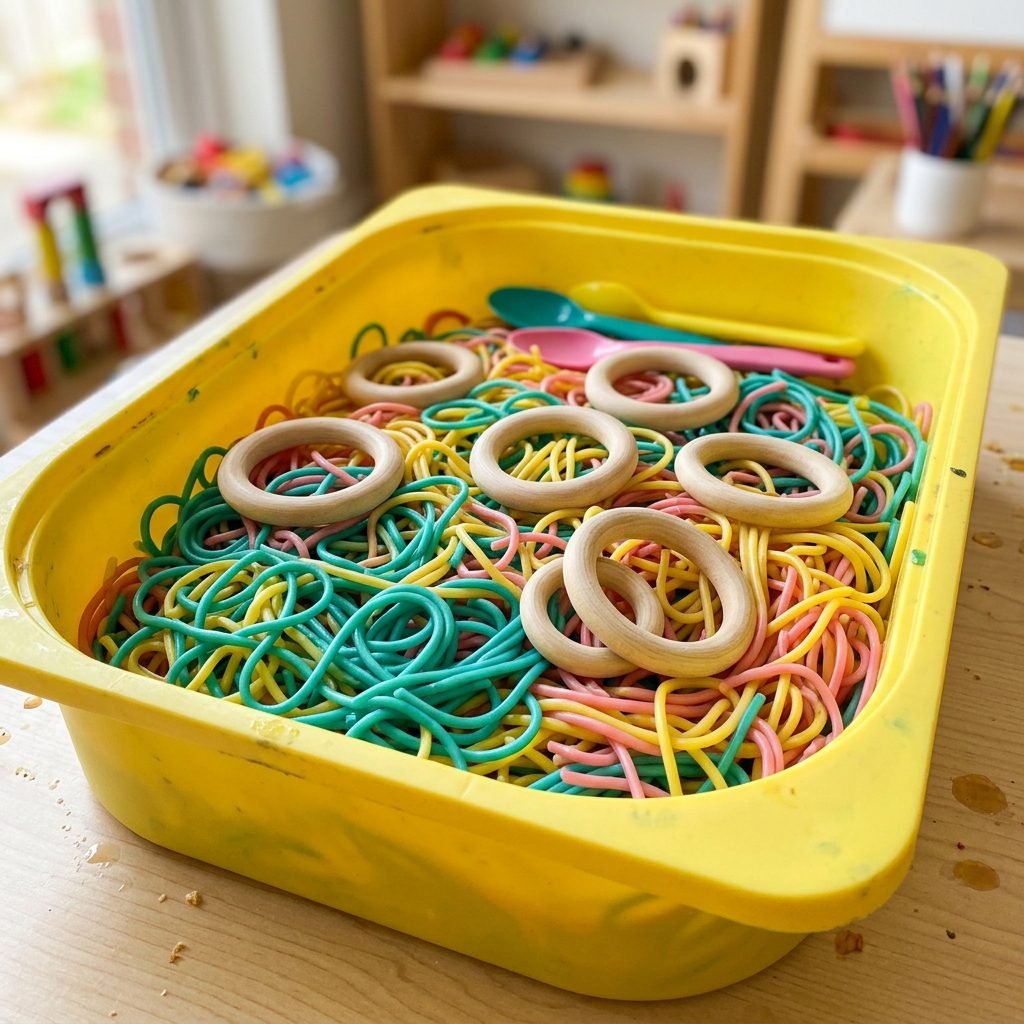
A Visual and Textural Feast
Cooked pasta is one of the most versatile sensory materials. For a 9-month-old, long spaghetti noodles feel like ‘vines,’ while rotini or bowties provide interesting shapes for their little hands to squeeze. This bin is fantastic for visual tracking and proprioception.
Safe Dyeing Method
To make the pasta ‘rainbow’ colored without using harsh dyes, you can use beet juice (red), turmeric water (yellow), or spinach juice (green). Simply boil the pasta in the dyed water or toss cooked pasta with a tiny bit of olive oil and natural food coloring.
Play Prompts
- The ‘Spaghetti Pull’: Drape long noodles over the edge of the bin and encourage your baby to pull them back in.
- The ‘Hidden Treasure’: Hide large, chunky puzzle pieces under the pasta for them to find.
- The ‘Slippery Squeeze’: Show them how the pasta feels when you squish it in your fist.
Mama, don’t worry about the floor. Lay down an old shower curtain liner or a ‘splat mat’ before you start. It makes cleanup a 30-second task!
The Mama’s Survival Guide to Cleanup & Organization
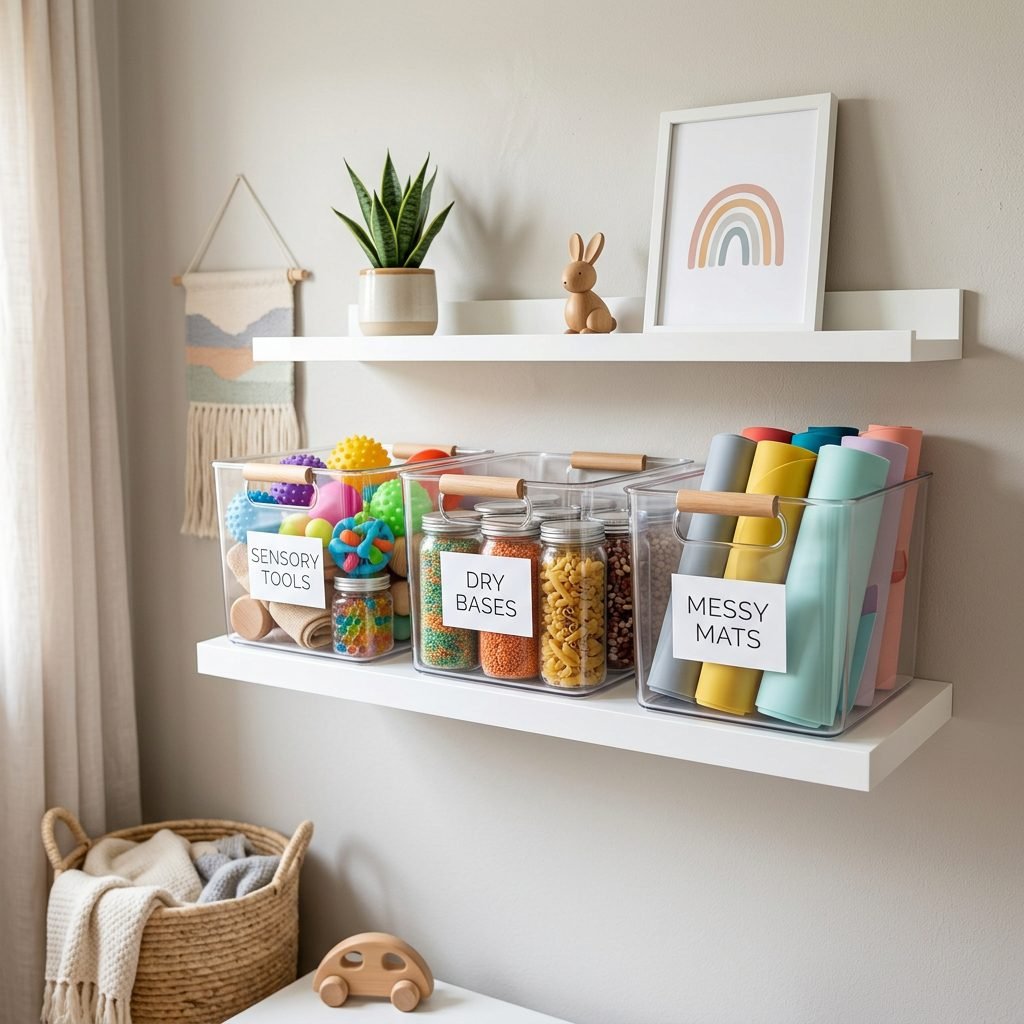
Making Messy Play Sustainable
The number one reason moms avoid sensory bins is the cleanup. But as an interior organizer and doula, I’m here to tell you that with a little systematization, you can enjoy these activities without the stress. Sensory play is vital, but your sanity is too!
The ‘Splat Mat’ Strategy
Never, ever start a sensory bin on a rug without protection. Use a dedicated splat mat, a cheap plastic tablecloth from the dollar store, or even a large bedsheet that you can just shake out outside and toss in the wash.
Storage Hacks for Sensory Supplies
- Kallax Bins: Keep a dedicated IKEA Kallax bin for ‘Sensory Tools’ (scoops, bowls, brushes).
- Airtight Containers: Dry materials like the ‘cereal sand’ can be kept in airtight containers for up to 2 weeks.
- The ‘Wet vs. Dry’ Rule: Always keep one bin for wet play (chia, pasta) and one for dry play (cereal, felt) to prevent mold growth.
| Cleanup Tool | Best For… | Must-Have? |
|---|---|---|
| Handheld Vacuum | Cereal, dry pasta, crumbs | Yes! |
| Microfiber Cloth | Chia slime, wet spills | Yes! |
| Shower Curtain Liner | Floor protection | Highly Recommended |
Safety Protocols for Taste-Safe Play
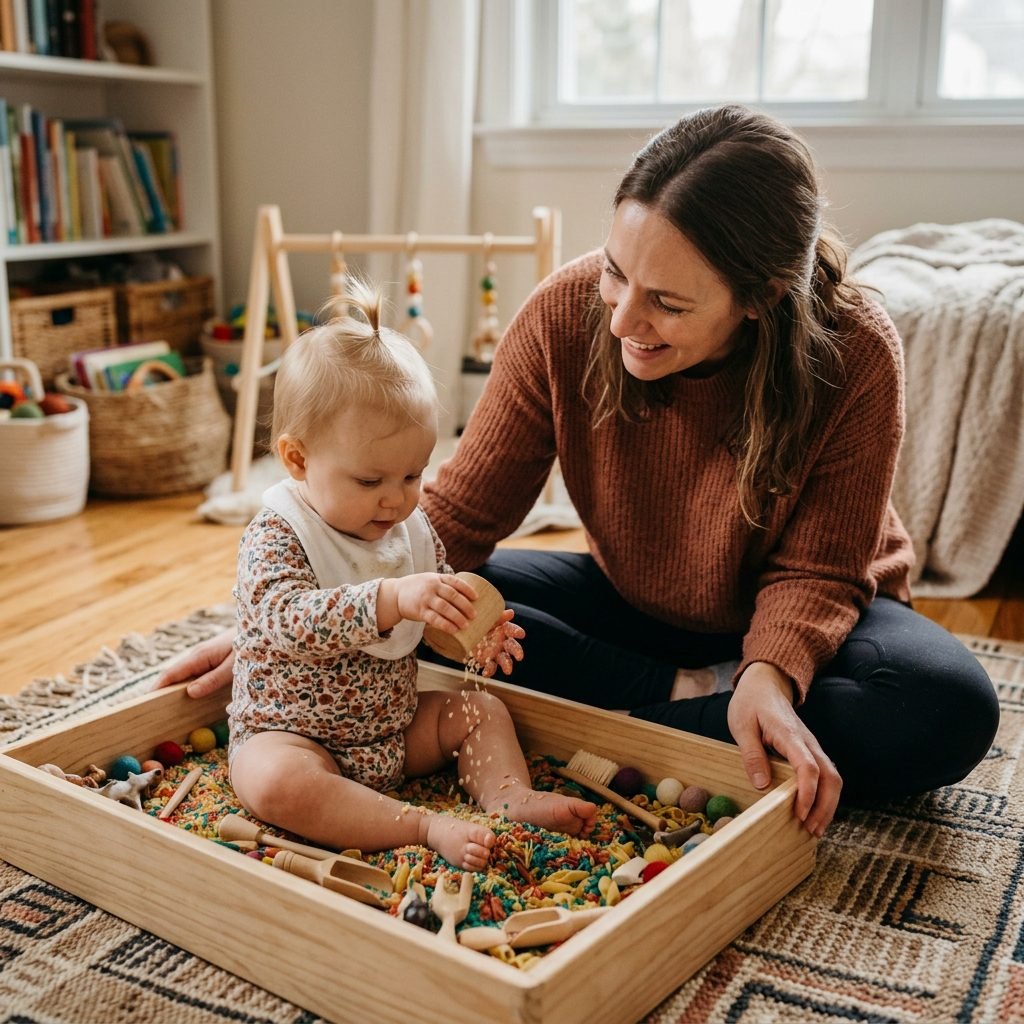
Keeping Your Little Explorer Safe
While these bins are ‘edible,’ safety is still our top priority. At 9 months, the risk of choking is the biggest concern. Even ‘safe’ items require 100% active supervision.
The ‘Toilet Paper Roll’ Rule
If an object can fit through a toilet paper roll, it is a potential choking hazard for a baby under 3. When adding toys to your bins, ensure they are large, chunky, and have no small parts that could break off.
Allergy Awareness
Always introduce the ingredients in the bin as food first. For example, ensure your baby has eaten chia seeds or the specific brand of cereal in their high chair before putting them in a play bin. This ensures you aren’t dealing with a potential allergic reaction during playtime.
Supervision Scripts
If your baby is focusing *too* much on eating the materials rather than playing, use a gentle redirect:
‘I see you tasting the pasta! It’s cold, isn’t it? Look, can you make the pasta go splash in the bowl?’
This acknowledges their sensory exploration (tasting) while gently nudging them toward the motor skill (splashing/pouring).
Conclusion
You’ve Got This, Mama!
Sensory play is such a beautiful way to bond with your 9-month-old. It’s a window into how they think, how they solve problems, and how they experience joy. By choosing edible, taste-safe materials, you are removing the ‘no’ from their environment and replacing it with ‘yes.’ You are creating a space where they are free to explore, learn, and—yes—get a little messy.
Start small. Maybe try the cereal bin this weekend. Put on some soft music, grab a cup of coffee (while it’s still hot!), and just watch your little one discover the world. You are providing them with the building blocks of a curious, confident mind. Happy playing!