7 Simple Visual Tracking Games to Boost Your 2-Month-Old’s Cognitive Development
Hello, sweet mama. Welcome to that magical window where your little one is starting to truly see the world around them. At 2 months old, your baby’s brain is like a beautiful, thirsty sponge, and their eyes are the primary gateway for all that wonderful information. As a doula and infant specialist, I’ve watched countless parents marvel at the moment their baby first locks eyes and follows a moving toy. That is visual tracking, and it is a massive milestone in their cognitive journey.
Visual tracking isn’t just about ‘looking’—it’s the foundation for hand-eye coordination, reading readiness later in life, and the ability to understand their physical environment. Right now, your baby’s vision is still developing; they are moving from seeing the world in a bit of a blur to focusing on objects about 8 to 12 inches away. These 7 simple games are designed to gently challenge those tiny eye muscles while deepening the bond between you and your babe. Let’s dive into these low-stress, high-connection activities that you can do right from your living room floor.
The Science of the Spark: Understanding 2-Month Vision

At 8 weeks, your baby’s retinas are maturing, and the bridge between their eyes and their brain is strengthening every single day. You might notice them staring intently at ceiling fans or the outline of a window. This is because they crave high contrast and clear borders. They are learning to coordinate both eyes to work together—a skill called binocular vision.
What Your Baby Sees Now
- Distance: Their sweet spot is still 8 to 15 inches from their face (exactly the distance from your arms to your face during a feeding!).
- Color: While they are starting to perceive colors, they still respond most strongly to black, white, and bold primary colors.
- Range: They are progressing from tracking objects in a small arc to following them across a full 180-degree semi-circle.
Your baby’s gaze is their first form of communication. When they track an object, they are telling you, ‘I am curious, I am learning, and I am here with you.’
Game 1: The High-Contrast Wand Dance
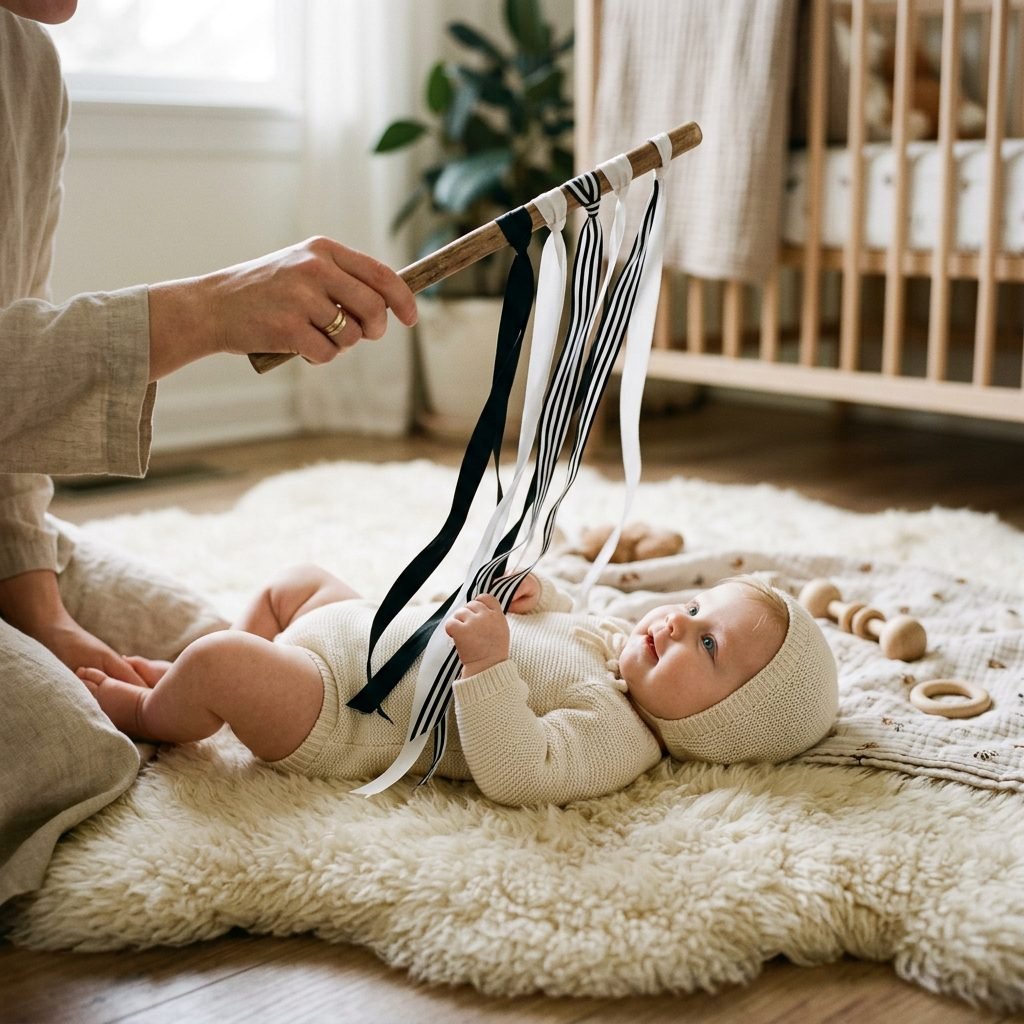
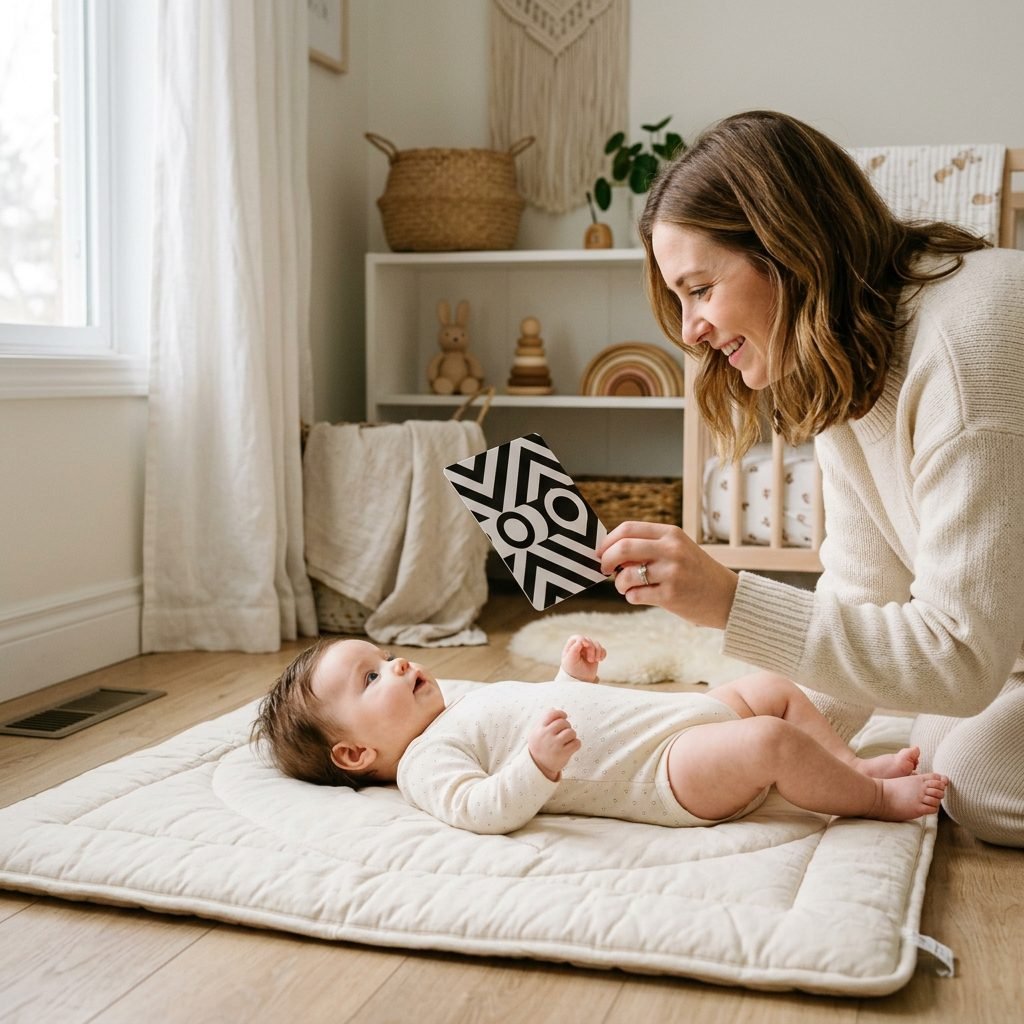
This is a classic for a reason! Since your 2-month-old is most attracted to black and white, we can create a ‘wand’ that acts as a visual beacon. This game helps them practice smooth pursuit, which is the ability of the eyes to follow a moving object without lagging.
How to Play:
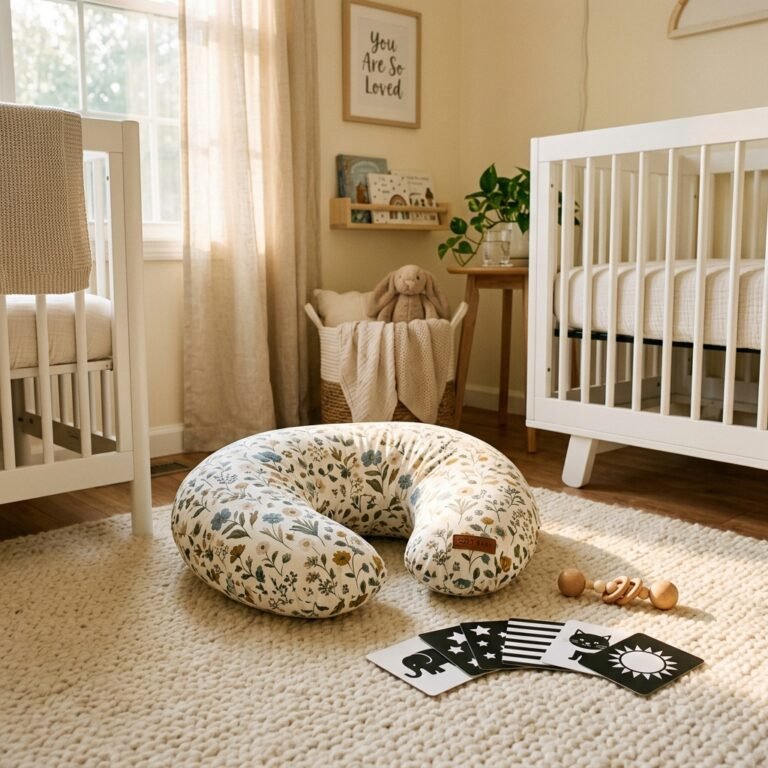
- Find a high-contrast card (black and white patterns) or a small toy with bold stripes.
- Lay your baby comfortably on their back on a flat surface.
- Hold the object about 10 inches above their chest until they lock eyes with it.
- Slowly move the object to the left, then back to the center, and then to the right.
- Wait for them: If they lose the object, bring it back to the center and wait for them to refocus before moving again.
Pro Tip: Don’t move too fast! At this age, their ‘processing speed’ is a bit like a dial-up modem—give them time to catch up.
Game 2: The Slow-Motion Scarf Sway
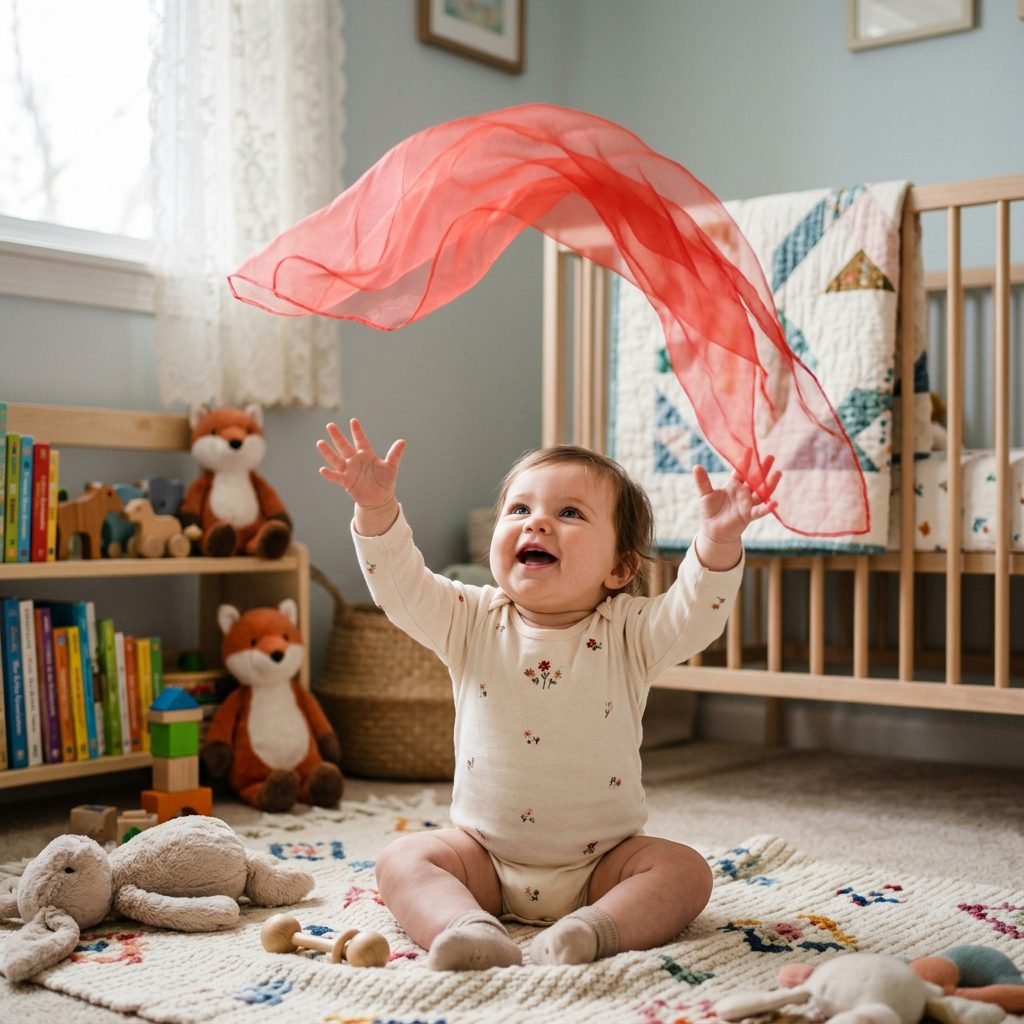
Texture and movement combine in this sensory delight. Using a lightweight silk or chiffon scarf allows for a slower, more fluid movement than a solid toy, making it easier for those developing eye muscles to keep up.
Why It Works:
The way a scarf floats through the air provides a different type of visual input. It’s less ‘point-to-point’ and more ‘flow.’ This encourages your baby to use their peripheral vision as the edges of the scarf flutter.
- Choose a brightly colored scarf (red or yellow is great if you want to move beyond black and white).
- Gently billow the scarf above them, letting it slowly descend.
- Move it in a circular motion, encouraging their eyes to track in a ’round’ path rather than just side-to-side.
Game 3: Tummy Time Mirror Magic
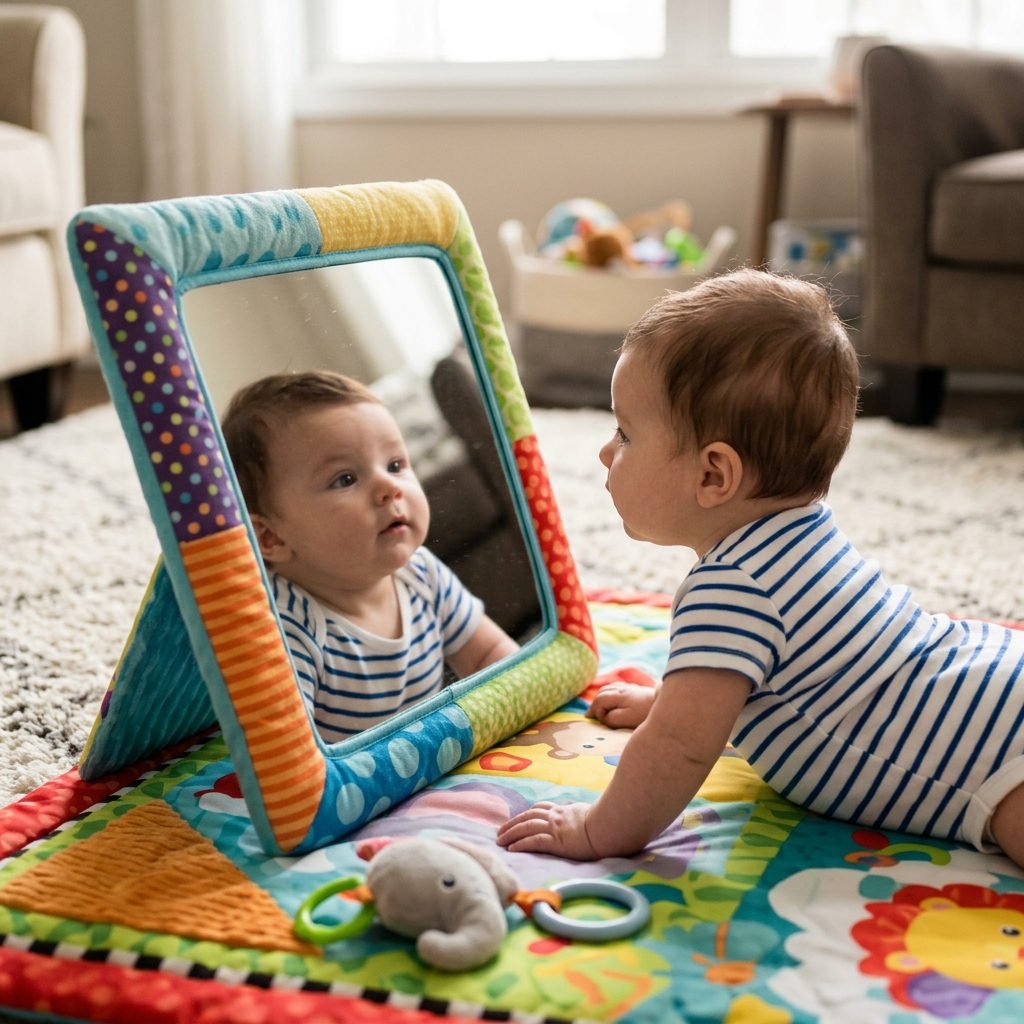
We all know tummy time is vital for physical strength, but it can be a struggle for some babes. Adding a mirror turns a workout into a cognitive game. Babies are biologically programmed to be drawn to faces—even their own!
Setting the Scene:
Place a shatterproof, baby-safe mirror on the floor in front of your baby during tummy time. Angle it so they can see their own reflection. As they lift their head, they will find their ‘friend’ in the mirror. You can then slowly slide the mirror an inch or two to the left or right, encouraging them to shift their gaze and their weight to track the reflection.
| Benefit | Why It Matters |
|---|---|
| Neck Strength | Lifting the head to see the reflection builds core and neck muscles. |
| Self-Recognition | Though they don’t know it’s ‘them’ yet, they are learning social cues from the reflection. |
| Visual Depth | Understanding reflections helps develop spatial awareness. |
Game 4: The Human ‘Sway’ Technique

Mama, you are your baby’s favorite thing to look at! This game requires no toys at all, just your beautiful face. This is excellent for building emotional intelligence alongside visual tracking.
The Steps:
- Hold your baby in a cradle position or sit them in a supportive bouncer.
- Get close—about 12 inches from their face.
- Make eye contact and give them a big, wide smile.
- Slowly move your head from side to side while making a gentle clicking or cooing sound.
- The sound helps them ‘localize’ your position, using their ears to help their eyes find you.
Affirmation: My face is a source of comfort and learning for my baby. We are growing together.
Game 5: Bubble Tracking in the Breeze

Bubbles are a sensory miracle for infants. They move slowly, they catch the light, and they disappear—which introduces the very early concepts of object permanence.
Safety First:
Ensure you use a non-toxic, tear-free bubble solution. Blow the bubbles away from the baby’s face so they don’t get in their eyes. The goal is for the baby to watch the bubbles drift across their field of vision. Because bubbles move in unpredictable ways (up, down, and swirling), it challenges the eyes to track vertical and diagonal movements, which are more difficult than horizontal ones.
Game 6: Flashlight Follow (The Dim-Light Game)
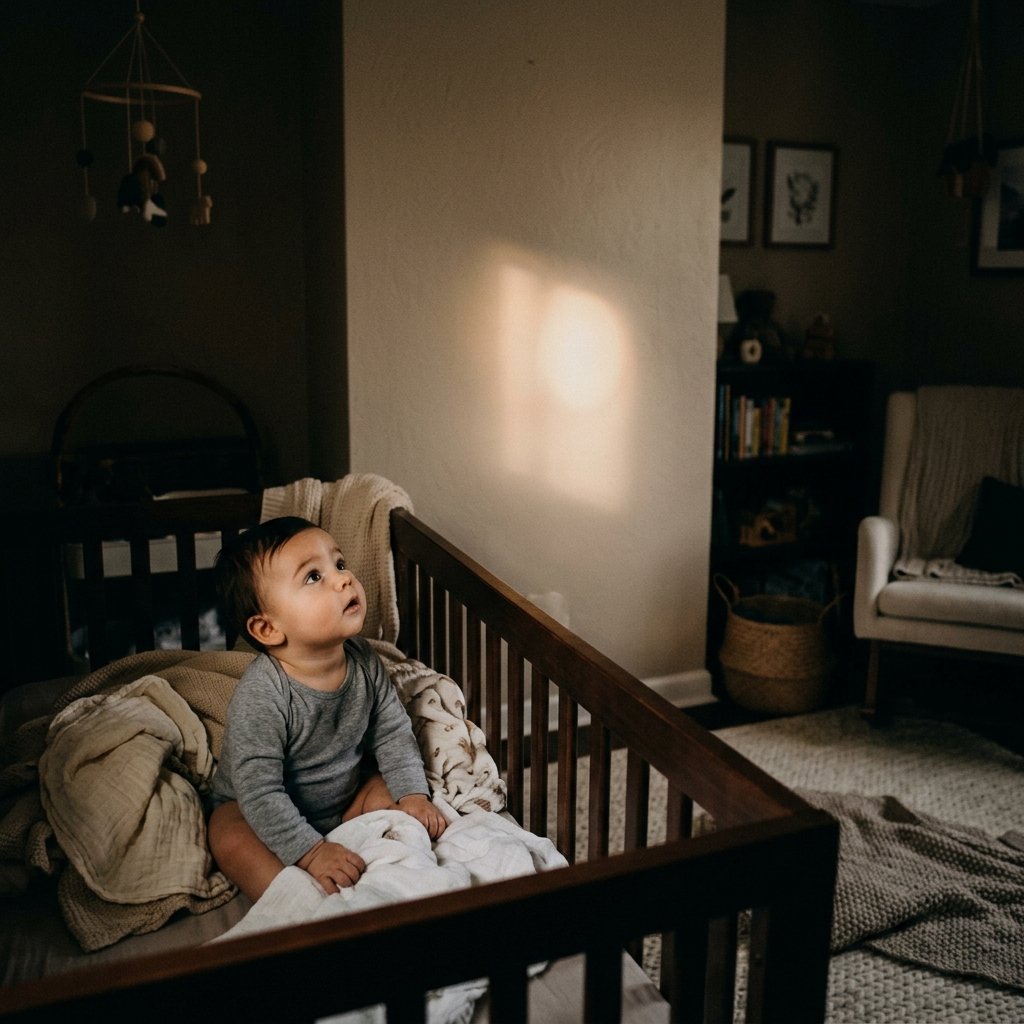
When the sun goes down and the house gets quiet, you can try this gentle tracking game. In a dimly lit room, a soft light source becomes the ultimate high-contrast object.
How to Play:
- Use a small flashlight (you can cover it with a colored cloth to make the light softer).
- Shine the light on a plain wall or the ceiling while your baby is lying down.
- Slowly move the ‘light dot’ across the surface.
- Watch as their eyes lock onto the glowing orb. This is particularly good for babies who get easily overstimulated by bright colors or loud toys, as it provides a very singular, calm point of focus.
Game 7: The ‘Toy Transit’ Method
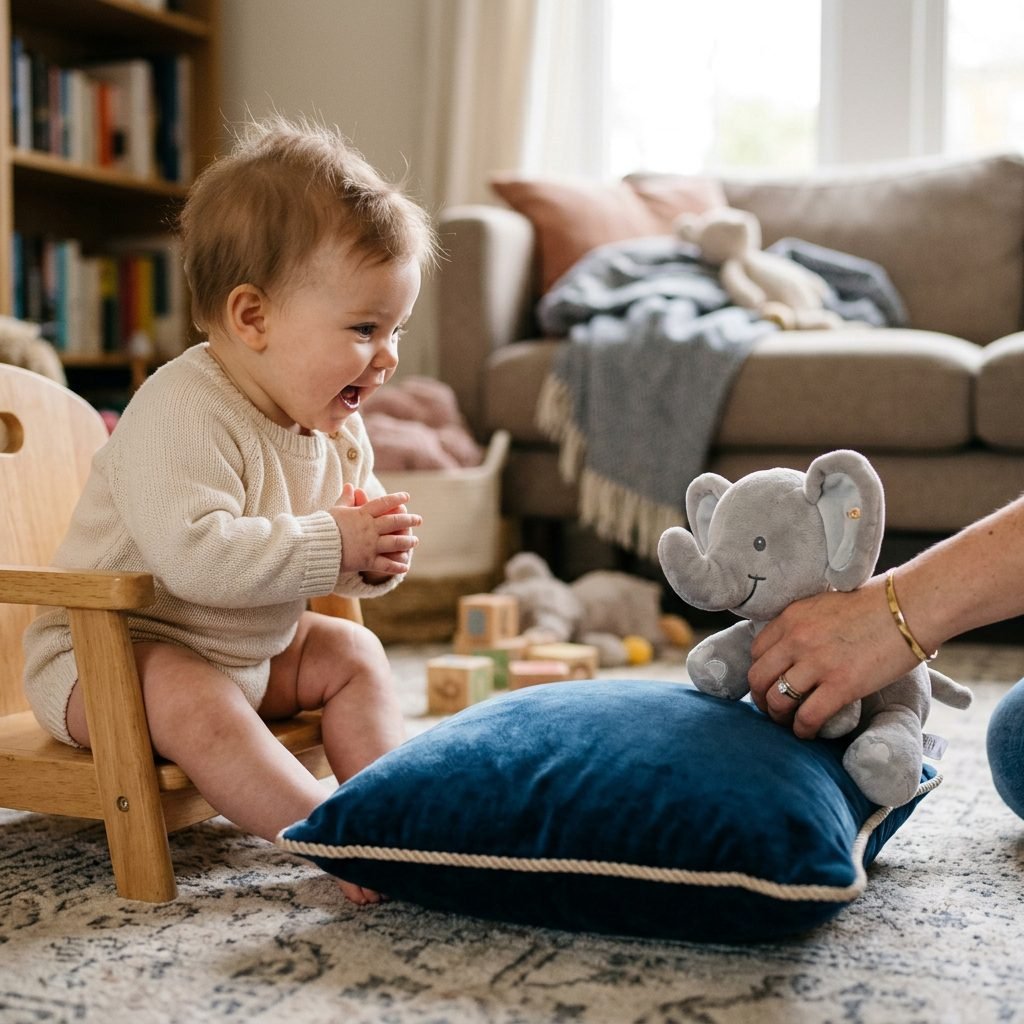
This game helps your baby learn to track objects that move behind other objects, a precursor to more complex cognitive tasks. It’s like a very slow version of ‘peek-a-boo’ for the eyes.
The Setup:
Take a favorite rattle and a small pillow or cloth. Move the rattle slowly across their vision. Then, move it ‘behind’ the pillow and make it reappear on the other side. This encourages the baby to ‘anticipate’ where the object will go, which is a huge leap in predictive brain processing.
Key Numbers for Success:
- 2-3 minutes: The ideal length for a play session at this age.
- 10 inches: The ‘Goldilocks’ distance for focus.
- 2 times a day: How often to practice for consistent development.
Budget & Materials: Creating Your Sensory Kit
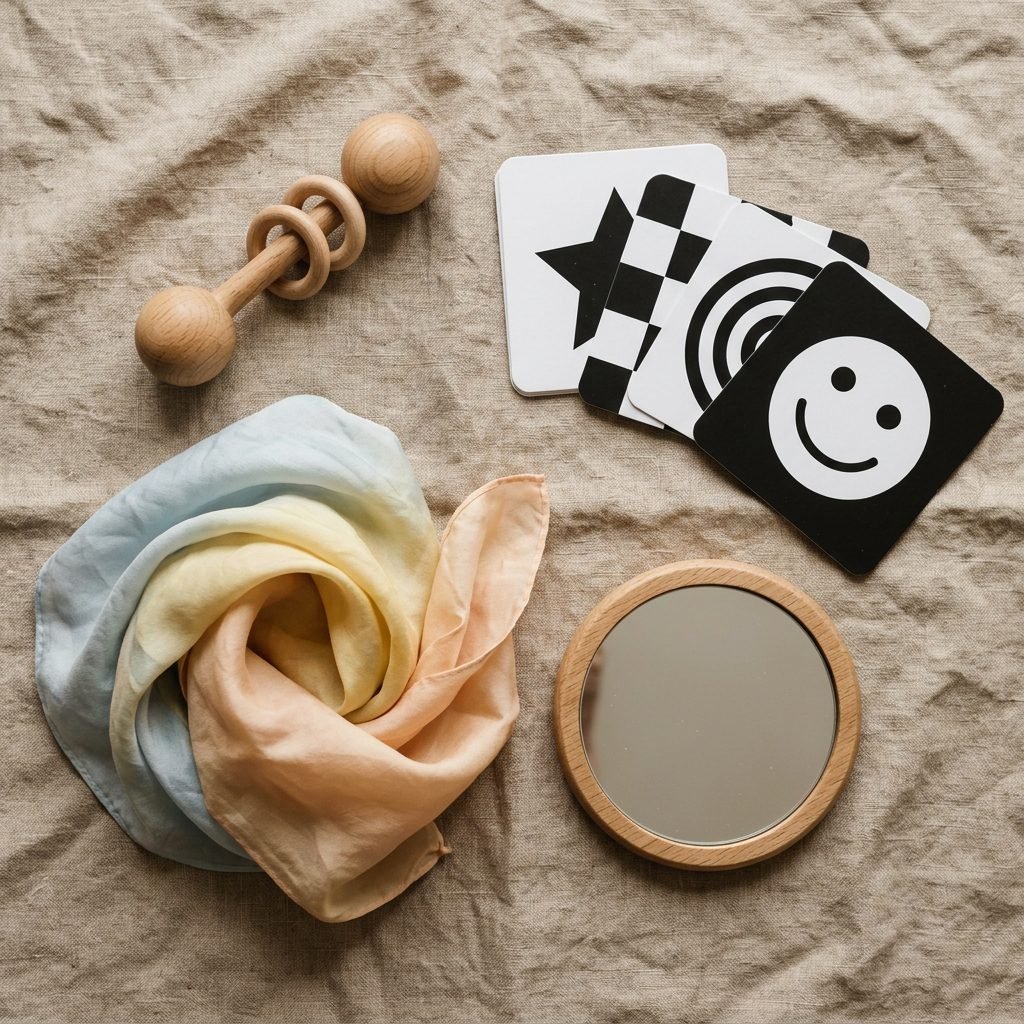
You don’t need expensive ‘brain-boosting’ kits to help your baby reach their milestones. Most of these items are already in your home or can be made for pennies.
| Item | Purpose | Estimated Cost |
|---|---|---|
| Black & White Cards | High-contrast tracking | $0 (DIY with paper/marker) |
| Silk Scarf | Fluid movement tracking | $5 – $10 |
| Baby-Safe Mirror | Tummy time engagement | $12 – $20 |
| Non-Toxic Bubbles | Depth perception | $2 – $4 |
| Soft Flashlight | Focus in low light | $5 |
Conclusion
Mama, you are doing an incredible job. These 7 games aren’t just about ‘hitting milestones’; they are about the giggles, the quiet moments of connection, and the wonder of watching your baby discover their world. Remember that every baby develops on their own timeline. Some days they will be eager to track everything in sight, and other days they will just want to snuggle and sleep. Follow their lead, keep the play light and joyful, and trust that you are providing exactly what their growing brain needs. You’ve got this!