Studio Apartment Baby Layouts: How to Fit a Crib Without Feeling Crowded
Welcome to Your Cozy New Chapter, Mama
Oh, honey, I see you. You’re looking at your beautiful, sun-drenched studio apartment—the one with the perfect commute and the neighborhood coffee shop you love—and you’re wondering: How on earth am I going to fit a whole human and all their gear into 500 square feet? Take a deep breath. As your doula and your big sister in this journey, I want you to know that your baby doesn’t need a sprawling 15-by-15 nursery. They need a safe place to sleep, a clean place to be changed, and, most importantly, they need you nearby. Small-space living with a newborn isn’t just possible; it can be incredibly intimate and peaceful if you approach it with a bit of strategy and a lot of heart. We are going to turn that ‘crowded’ feeling into a ‘cozy sanctuary’ together.
In this guide, we’re going to dive deep into the art of zoning, the magic of multi-functional furniture, and the vertical storage hacks that will keep your floor clear and your mind calm. We’ll look at real-world layouts that work for studio living, ensuring that you still feel like an adult in your own home while providing a perfect nest for your little love. Let’s roll up our sleeves and start nesting!
The Art of Zoning: Creating a ‘Room within a Room’
Defining the ‘Nursery Nook’
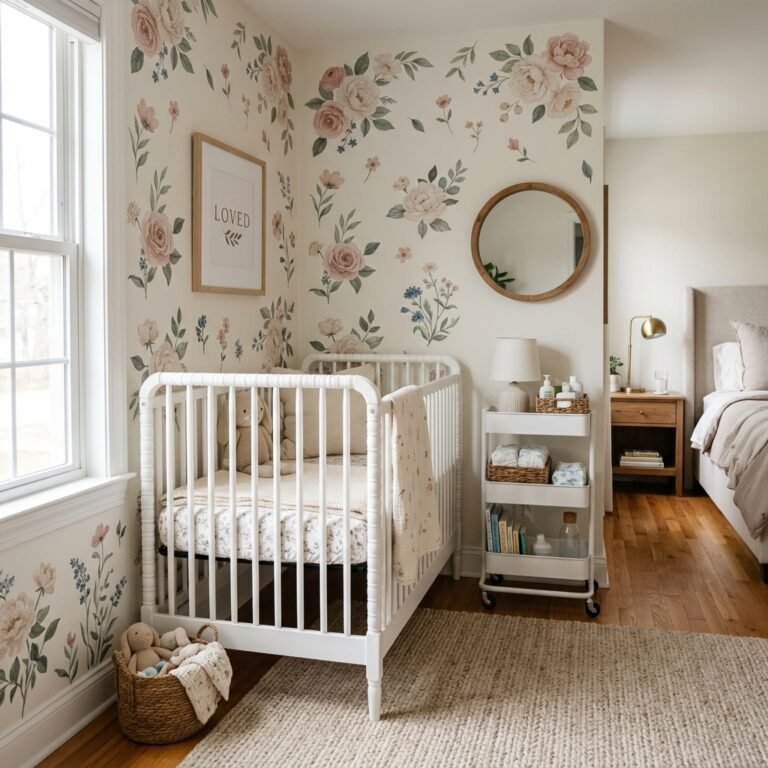
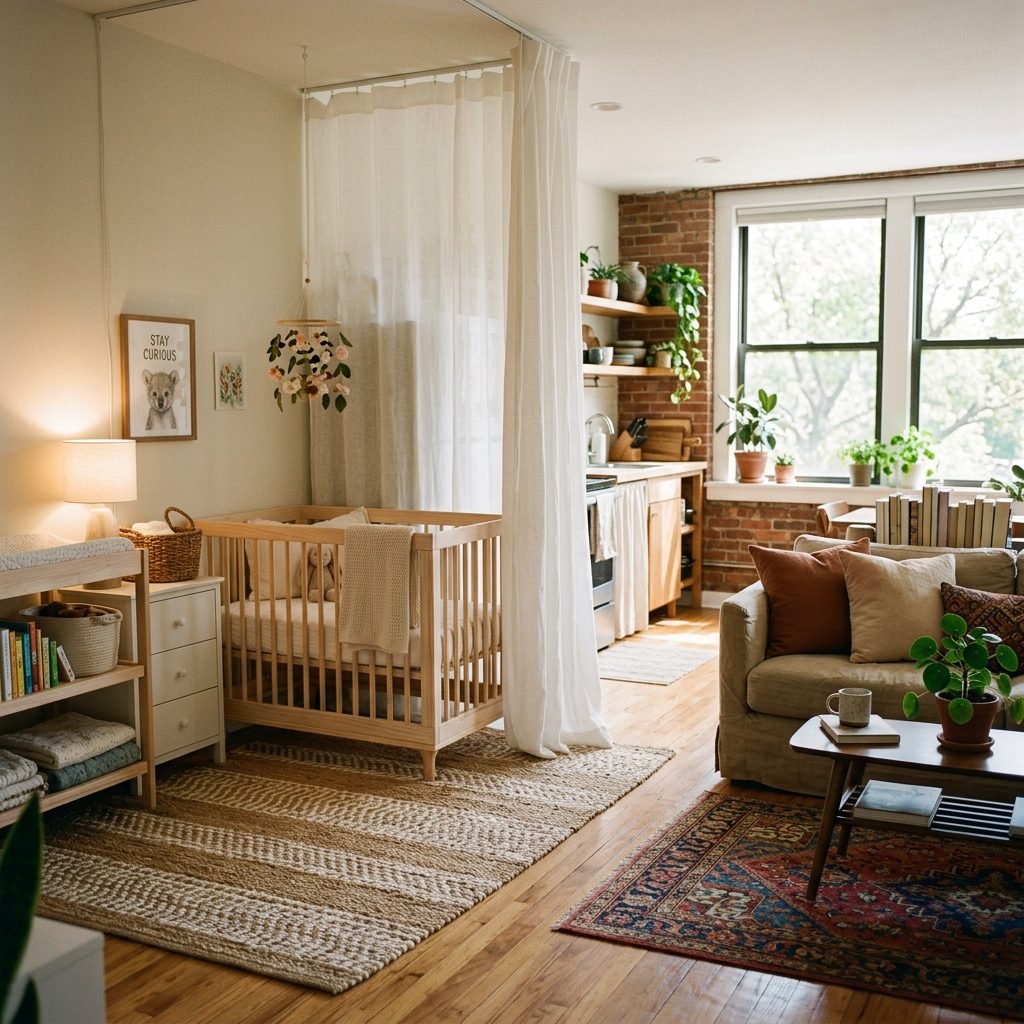
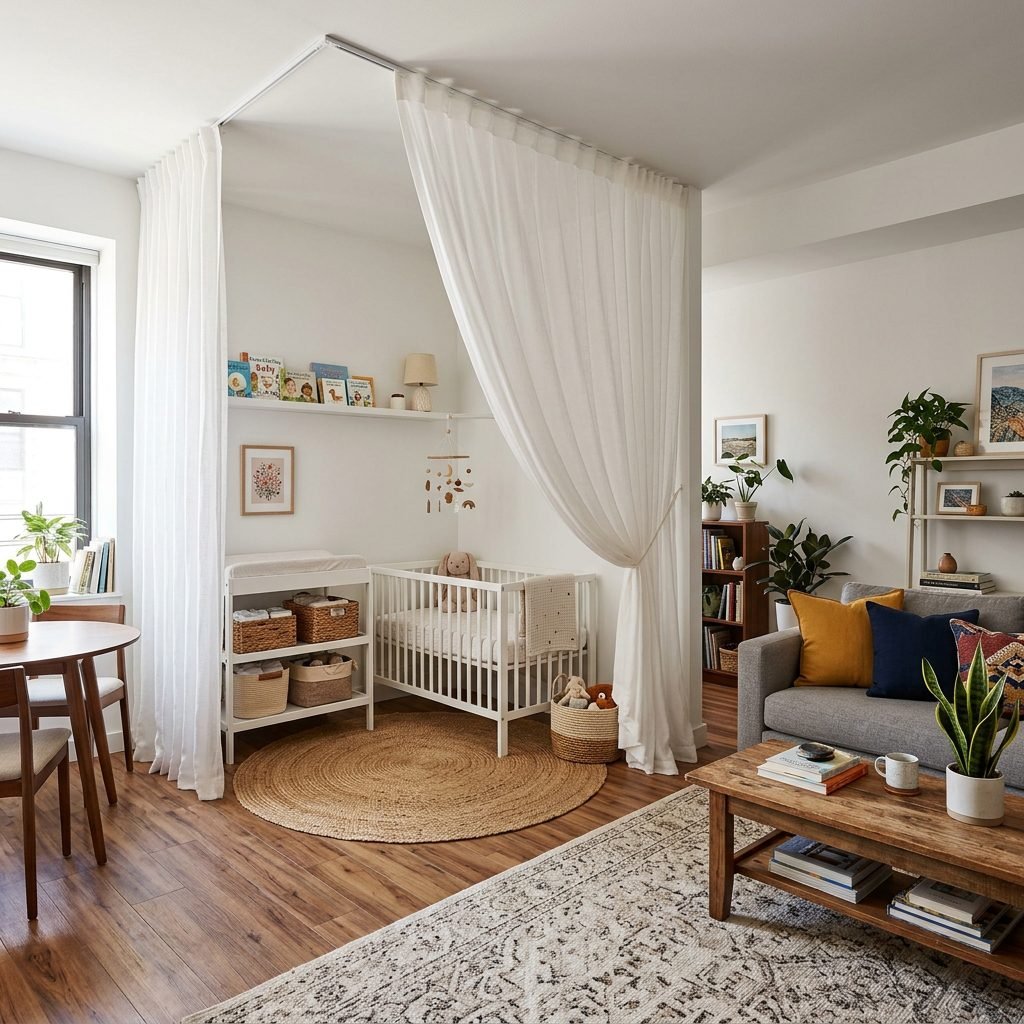
The biggest challenge in a studio is the lack of walls. Without physical boundaries, it’s easy for baby gear to ‘bleed’ into your living space, making the whole apartment feel like one giant diaper bag. The secret is visual zoning. You want to create a mental boundary that says, ‘This is the baby’s room,’ even if it’s only four feet away from your sofa.
- Area Rugs: Use a distinct rug to anchor the crib area. A soft, plush rug in a different texture or color than your main living room rug immediately defines the space.
- Ceiling-Mounted Curtains: This is a game-changer. Installing a track on the ceiling with sheer or blackout curtains allows you to ‘close the door’ to the nursery at nap time while keeping the apartment airy.
- Bookshelf Dividers: An open-backed bookshelf, like the IKEA Kallax, acts as a half-wall. It provides storage for bins while physically separating the crib from your bed or living area.
Your home is a reflection of your transition into motherhood. By creating a dedicated space for baby, you are honoring their arrival while protecting your own space for rest.
The Crib Dilemma: Choosing Small-Scale Sleep Solutions
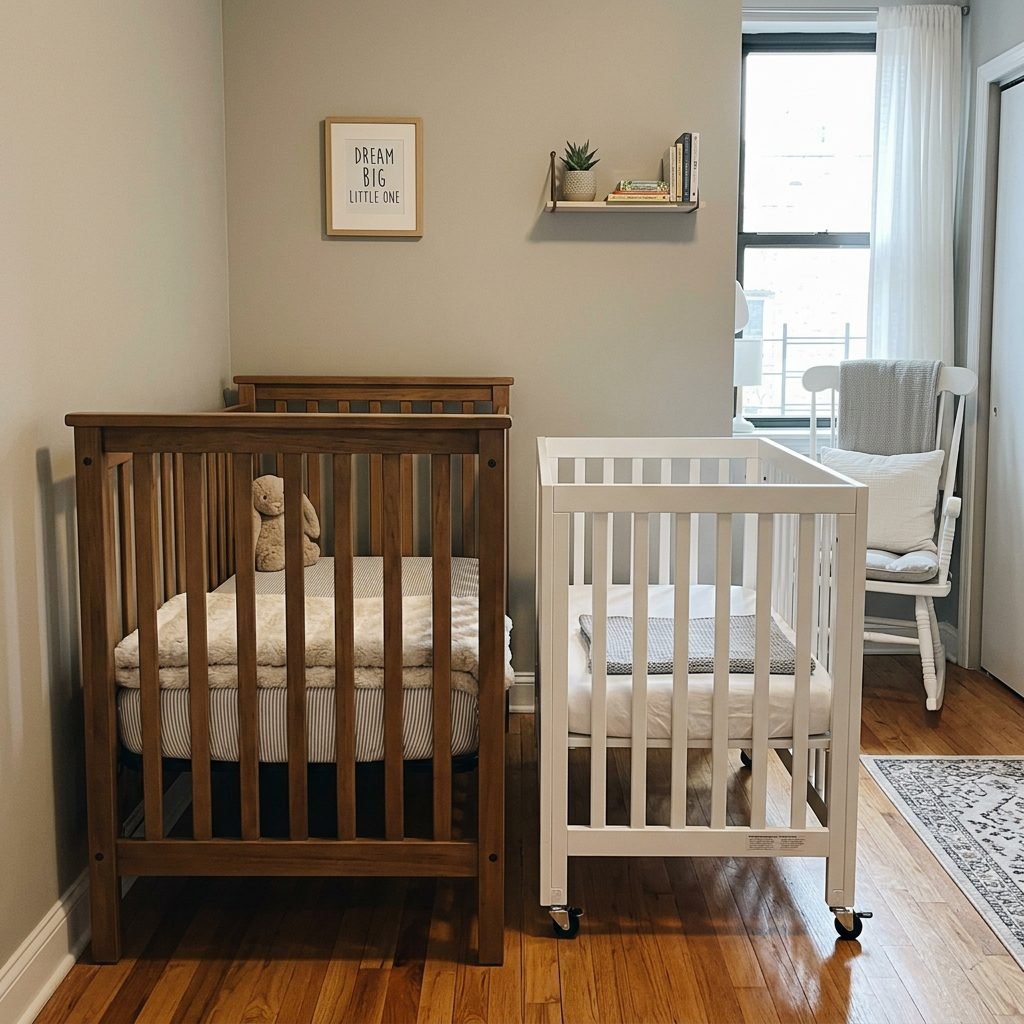
Scale Matters for Sanity
Standard full-sized cribs are roughly 28 inches wide and 52 inches long. In a studio, that’s a massive footprint. If you want to avoid feeling crowded, you must think about scale. Most babies can comfortably sleep in a mini-crib until they are 18 to 24 months old, which is usually when they’re ready for a toddler bed anyway.
Top Space-Saving Sleep Options
- The Mini Crib: These are usually 24 by 38 inches and often come on wheels, allowing you to move the baby’s ‘room’ if you have guests over.
- The Bassinet-to-Crib Hybrid: Look for pieces that grow with the baby but maintain a small profile.
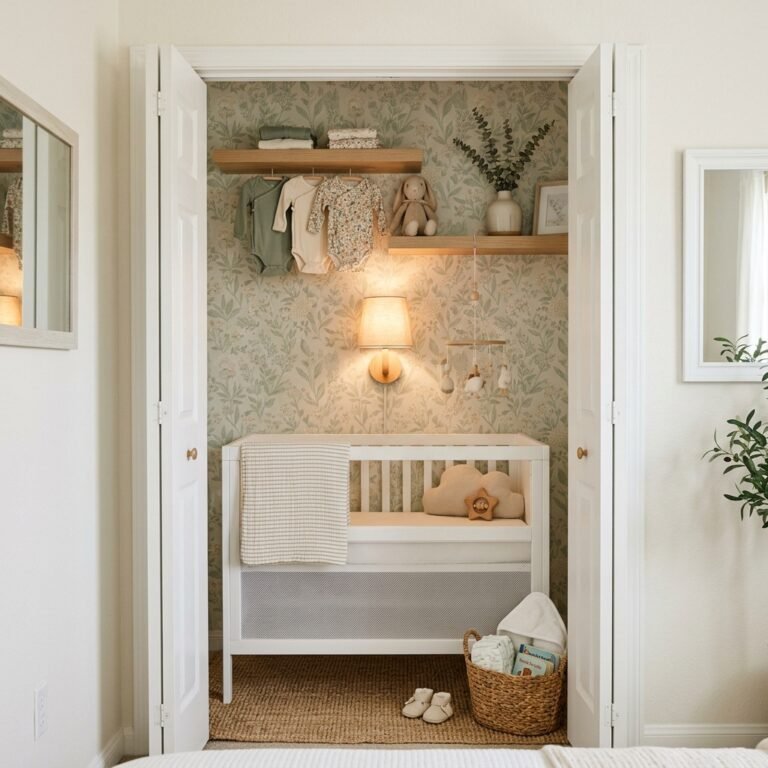
- The Closet Nursery (The ‘Clursery’): If you have a walk-in closet, consider removing the doors and tucking the crib inside. This creates a literal separate room for the baby without taking up any of your main floor space.
| Feature | Full-Sized Crib | Mini Crib | Bassinet |
|---|---|---|---|
| Average Footprint | 10.1 sq. ft. | 6.3 sq. ft. | 4.5 sq. ft. |
| Longevity | Up to 3-4 years | Up to 2 years | Up to 4-6 months |
| Portability | Low (Heavy) | High (Often on wheels) | Very High |
| Storage Built-in | Sometimes drawers | Rarely | Under-basket common |
Vertical Victories: Maximizing Every Inch of Wall Space
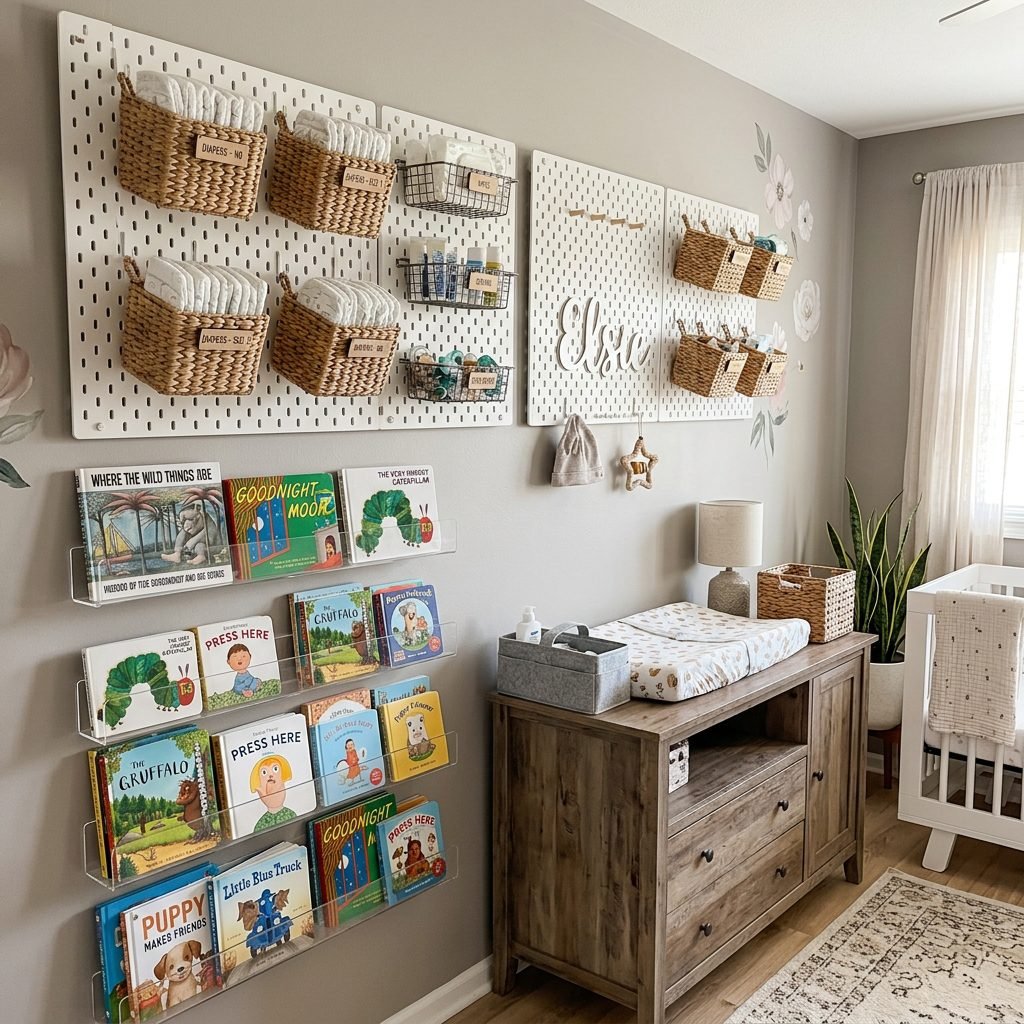
When You Can’t Go Out, Go Up
In a studio, your walls are your best friends. Every inch of vertical space is a potential storage unit. Instead of a bulky dresser, think about floating solutions. This keeps the floor visible, which trick the eye into thinking the room is larger than it is.
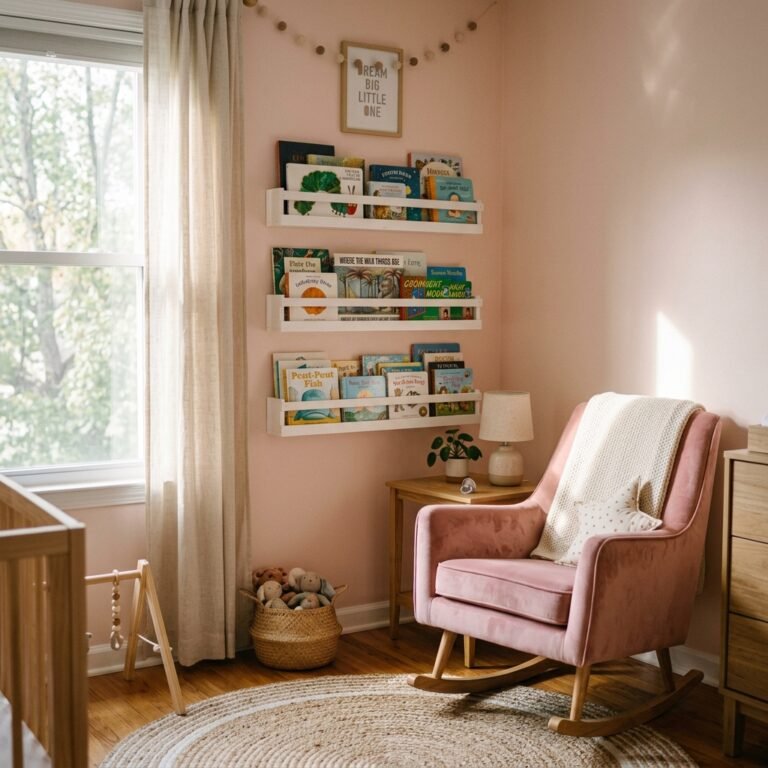
- Acrylic Floating Bookshelves: These are invisible to the eye and hold books vertically, saving precious surface area.
- Over-the-Door Organizers: These aren’t just for shoes! Use them for diapers, wipes, onesies, and swaddles. It’s a zero-footprint changing station.
- Pegboards: A large pegboard above the changing area can hold everything from diaper cream to pacifiers, keeping your surfaces clutter-free.
Pro Tip: Use S-hooks on your pegboard to hang baby’s tomorrow-outfit. It’s functional decor that saves you from digging through drawers at 3:00 AM.
The Multi-Tasking Command Center: Furniture That Does Double Duty
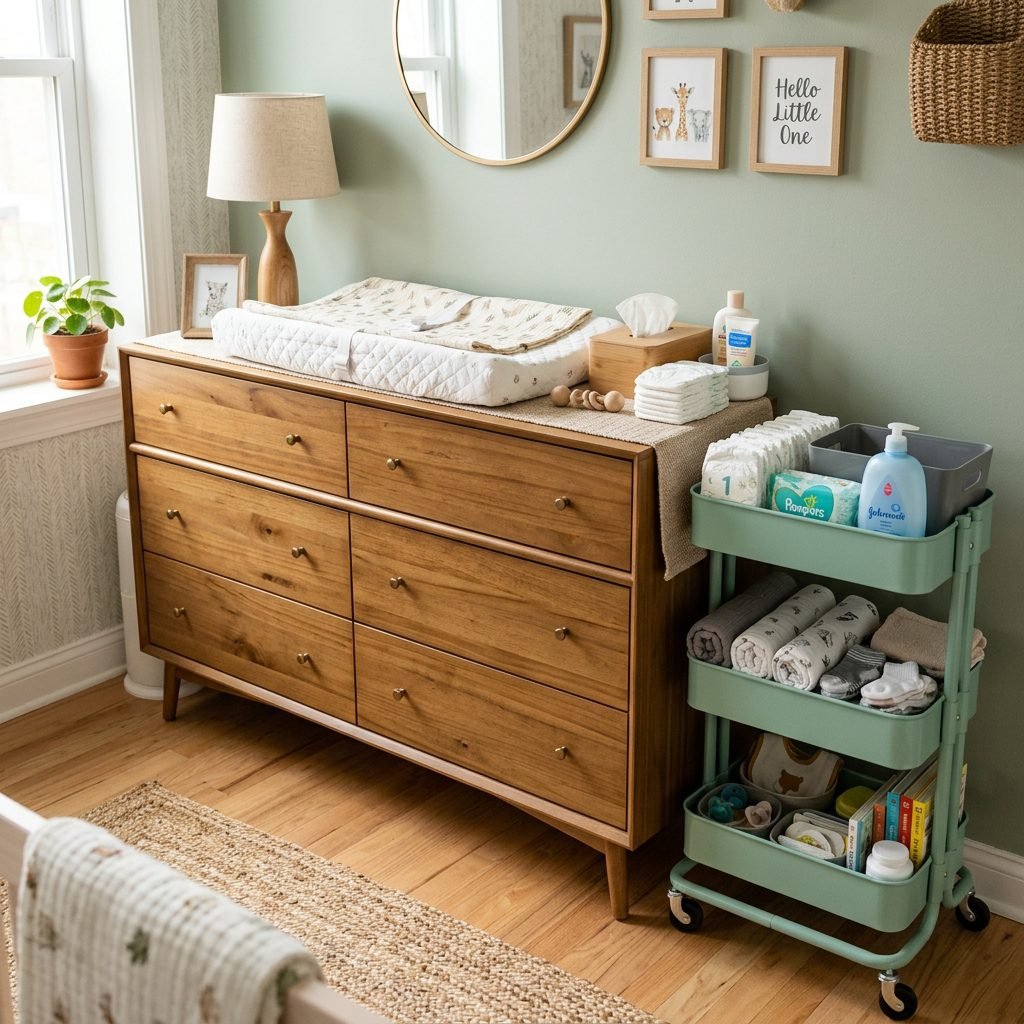
Furniture with a Secret Life
In a small space, every piece of furniture must earn its keep by performing at least two functions. If it only does one thing, it’s taking up too much room. We want to avoid the ‘nursery set’ trap where you buy a matching crib, dresser, and changing table.
Smart Substitutions
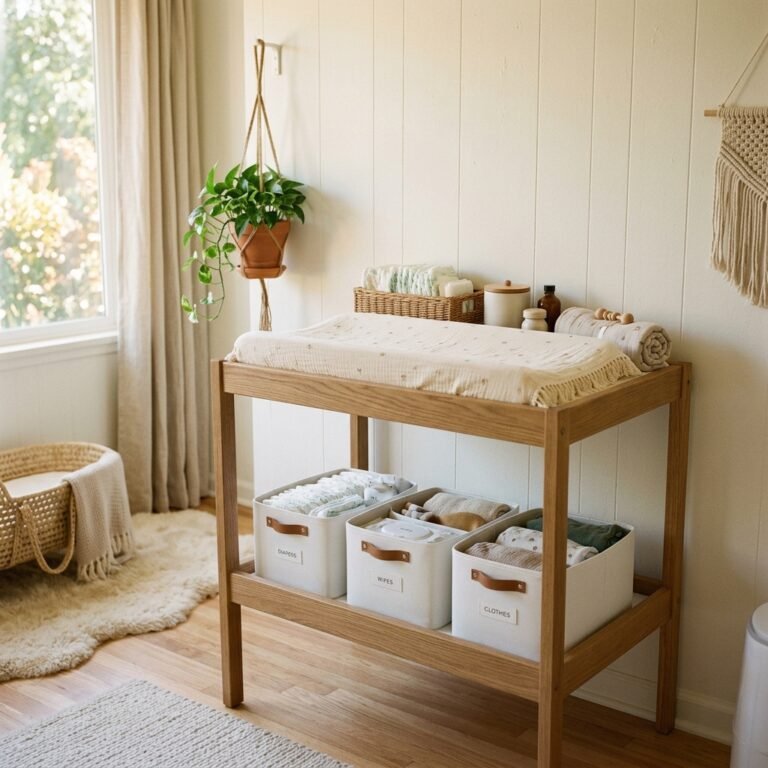
- The Dresser-Top Changer: Skip the standalone changing table. Use a low dresser (like the IKEA Malm or Hemnes) and secure a changing pad on top. Now you have clothing storage and a changing station in one footprint.
- The Storage Ottoman: Instead of a traditional glider, choose a comfortable armchair with a storage ottoman. You can hide extra blankets or bulky diaper boxes inside the ottoman.
- The Rolling Cart (The ‘Diaper Trolley’): A three-tier rolling cart (like the Raskog) can hold all your nursing and diapering supplies. It can be wheeled from the ‘nursery’ to the sofa to your bedside as needed.
Remember, Mama: Your baby doesn’t know the difference between a designer changing table and a padded dresser top. They only care about the warmth of your hands.
The Minimalist Mama’s Registry: Only the Essentials
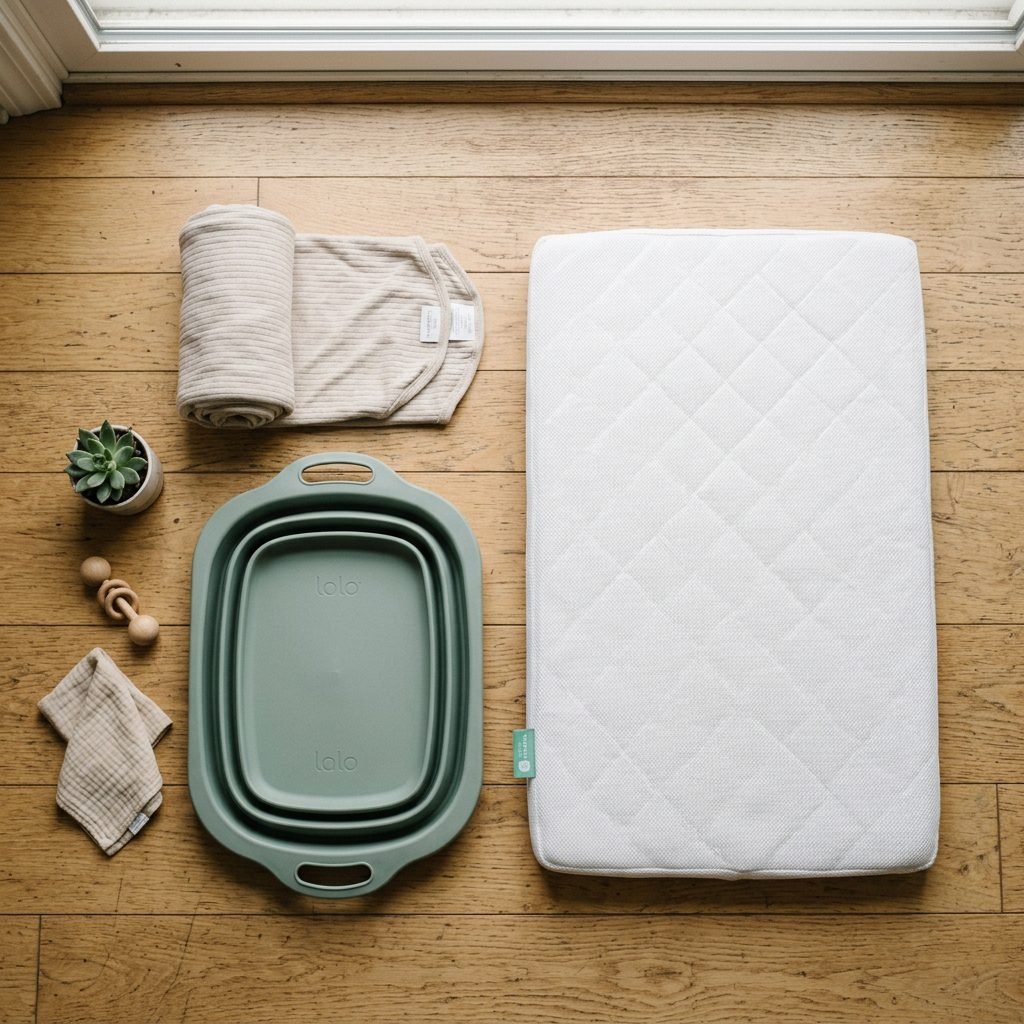
Curating the Clutter
The fastest way to feel crowded is to over-register. Companies will tell you that you need a wipe warmer, a bottle sterilizer, a baby swing, and a jumperoo. You don’t. In a studio, these items become ‘clutter hurdles’ that you’ll be tripping over constantly.
| Category | The Essential (Keep) | The Extra (Skip) |
|---|---|---|
| Sleep | Safe Mini Crib/Bassinet | Dock-a-Tot/Loungers (Not for sleep) |
| Feeding | Breast Pump/Bottles | Bottle Drying Rack (Use your own) |
| Activity | Foldable Play Mat | Large Plastic Activity Centers |
| Soothing | Baby Wrap/Carrier | Massive Electric Swings |
| Bathtime | Collapsible Tub | Standalone Plastic Baby Tubs |
Focus on items that are foldable, collapsible, or hangable. A baby bouncer that folds flat can be tucked under the bed when not in use. A wrap-style carrier (like a Solly Baby or Moby) takes up zero floor space and is the best way to soothe a fussy baby in a small apartment.
Maintaining the Peace: Organization Systems for Sanity
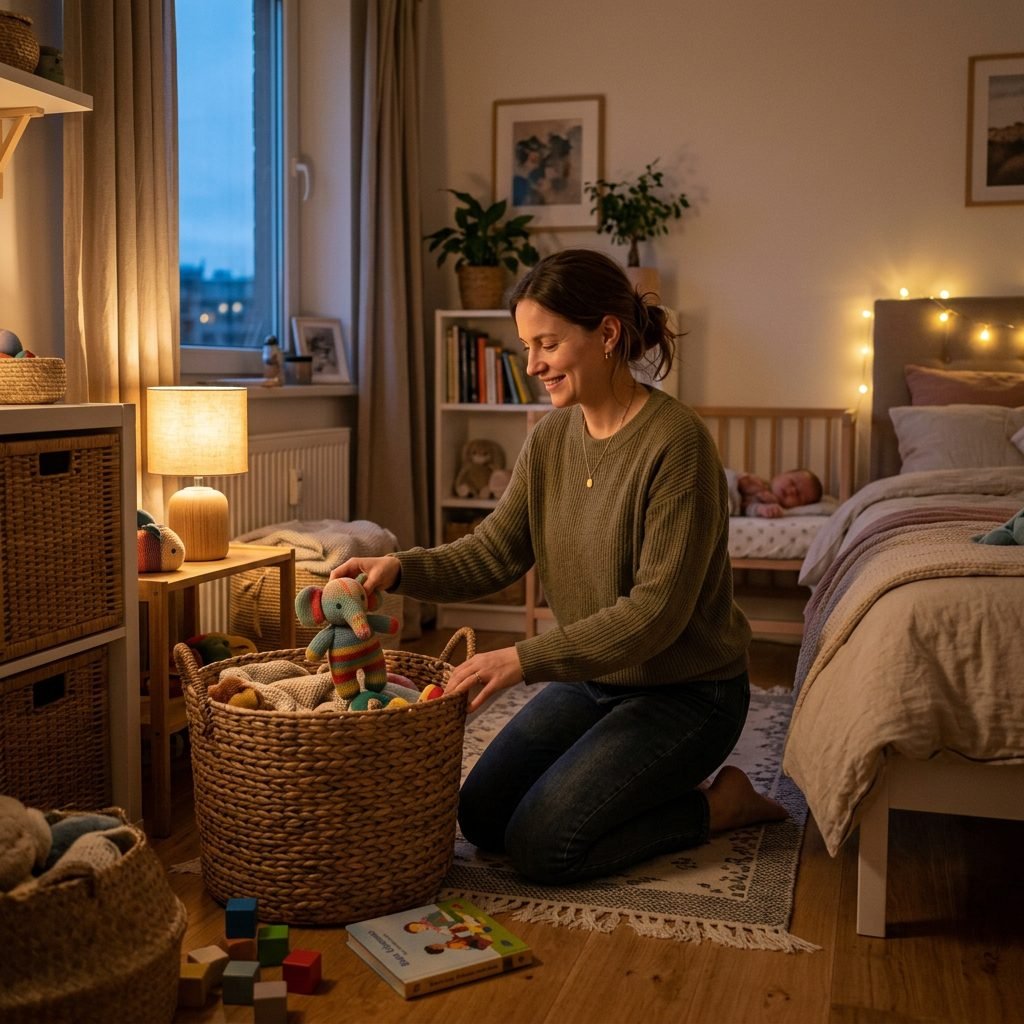
The One-In, One-Out Rule
Once you have your layout set, the challenge is maintenance. In a studio, five minutes of mess looks like five hours of chaos. Establishing a ‘reset’ routine is vital for your mental health during the postpartum period.
- The Evening Reset: Before you head to bed, spend 10 minutes clearing the surfaces. Put the toys in their bin and the bottles in the sink. Starting the morning with a clear view of your studio will lower your cortisol levels.
- Size-Up Storage: Keep a ‘Too Small’ bin in the bottom of the closet. As soon as your little one outgrows a onesie, toss it in the bin. Don’t let outgrown clothes take up prime real estate in your dresser.
- Digital Paperwork: Scan medical records and cards into your phone and toss the physical copies (unless they are originals like birth certificates). Paper clutter is the enemy of small spaces.
A Doula’s Note on Light: In a studio, you share the same light as the baby. Invest in smart bulbs or dimmer switches. This allows you to keep the ‘living room’ side of the apartment dim while the baby is sleeping, without sitting in total darkness yourself.
Conclusion
Your Tiny Home, Your Big Love
Mama, as you prepare your studio for this new arrival, remember that space is a luxury, but love is the essential. You are not ‘cramping’ your baby by living in a small apartment; you are providing them with a world where their parents are always within reach, where every corner is filled with warmth, and where life is lived intentionally. By choosing the right layout, prioritizing multi-functional pieces, and embracing a minimalist mindset, you can create a home that feels spacious and serene. You’ve got this, and your little one is so lucky to be coming home to such a thoughtful, prepared mother. Welcome to the beautiful, cozy chaos of motherhood!