
Try This Towel Roll Trick to Relieve Baby Gas Before Bedtime
Welcome Home, Mama: Let’s Tackle Those Tummy Troubles Together
Oh, sweet mama, I see you. It’s 2:00 AM, the house is hushed, and yet your heart is racing because your little one is pulling their tiny legs up to their chest, face turning a frustrated shade of pink, and letting out those sharp, tell-tale cries of gas pain. As a doula, I’ve sat in those darkened nurseries more times than I can count, holding space for both the baby’s discomfort and the mother’s exhaustion. Please know this: you are doing an incredible job, and what you’re experiencing is a completely normal, albeit stressful, part of the fourth trimester.
A baby’s digestive system is incredibly immature. Imagine a brand-new engine that hasn’t quite learned how to process fuel smoothly yet—that is your baby’s gut. Between 0 and 4 months, the muscles that move gas through the intestines are still learning the ropes, and the nervous system is often overwhelmed by the sensation of air bubbles. That’s where the ‘Towel Roll Trick’ comes in. This gentle, gravity-assisted method is one of my favorite ‘doula secrets’ because it’s non-invasive, costs absolutely nothing, and works in harmony with your baby’s anatomy to provide relief before that final bedtime stretch. In this guide, we’re going to walk through exactly how to perform this trick, why it works, and a few other physical comfort measures to keep in your mama-toolkit.
Understanding the ‘Why’ Behind the Wiggle: Why Babies Get So Gassy
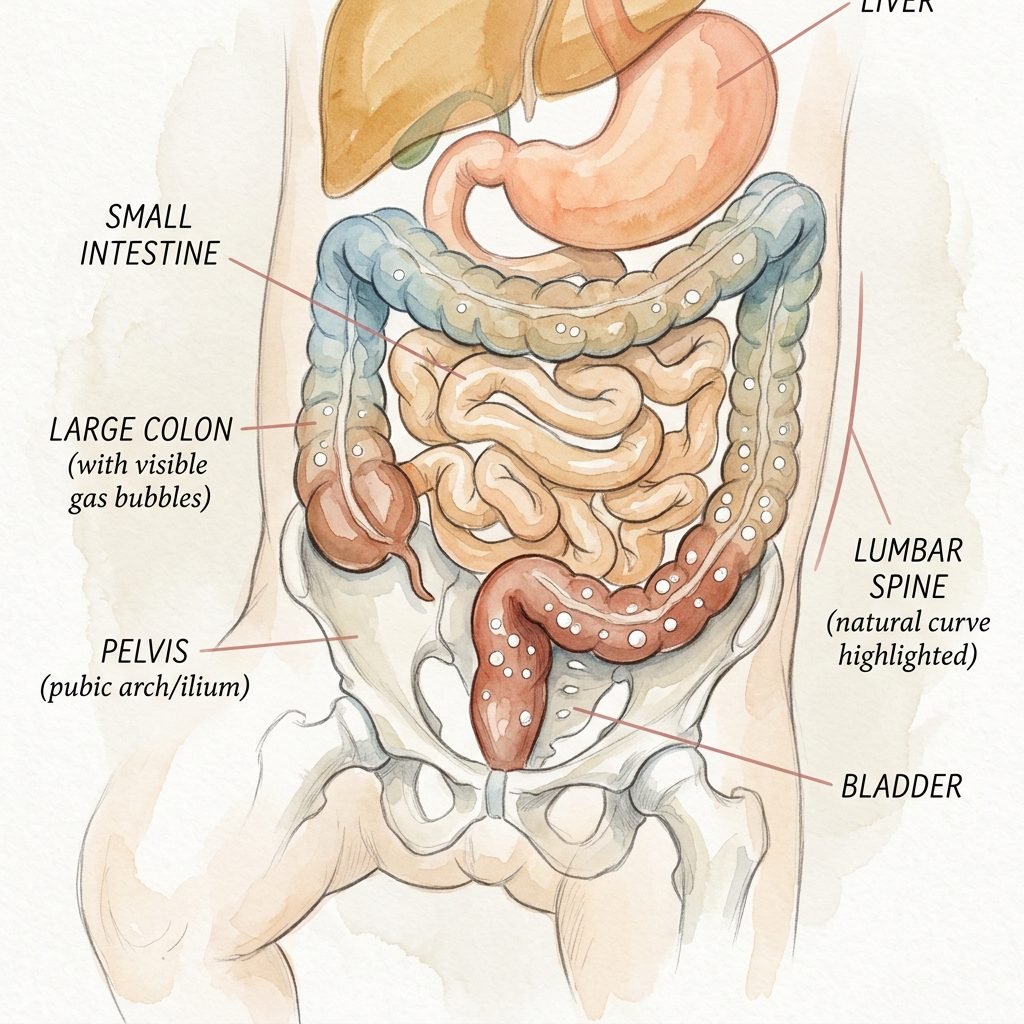
Before we dive into the physical technique, it helps to understand why your little love is struggling. Unlike adults, babies spend the majority of their time lying flat on their backs. While ‘Back to Sleep’ is the gold standard for SIDS prevention, it doesn’t always help with digestion. Gravity isn’t helping those bubbles move ‘down and out.’ Furthermore, babies are ‘obligate mouth breathers’ and often swallow significant amounts of air during crying spells or while gulping down milk.
Common Culprits of Infant Gas
- Immature Digestive Tract: The rhythmic contractions (peristalsis) needed to move waste and gas aren’t fully coordinated yet.
- Lactose Overload: Sometimes, if a baby gets too much ‘foremilk’ (the thinner milk at the start of a breastfeed), the high lactose content can ferment in the gut, causing extra bubbles.
- Air Ingestion: A shallow latch or a bottle nipple that is too fast can lead to ‘aerophagia’—literally, air-eating.
- Overstimulation: Believe it or not, a stressed nervous system can lead to a tight tummy.
By using the towel roll trick, we are essentially changing the pelvic tilt of the baby, which relaxes the abdominal wall and allows the lower intestine to straighten out slightly, making it much easier for gas to pass through the rectum.
The Towel Roll Trick: A Step-by-Step Guide to Soothing Relief
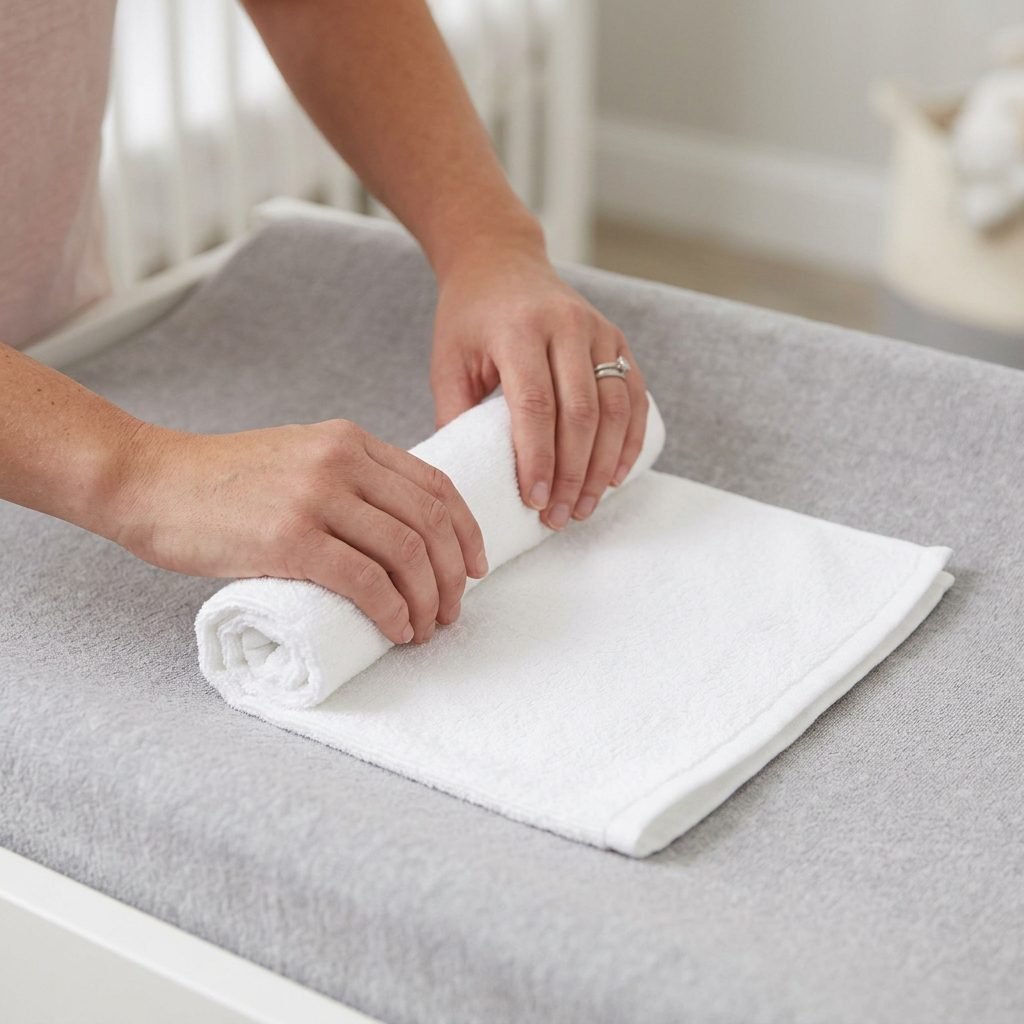
This technique is best used during your pre-bedtime routine—perhaps after a warm bath but before the final feeding. It helps ‘clear the pipes’ so that gas doesn’t wake them up twenty minutes after you’ve finally laid them down. Note: This is a supervised comfort technique, not a sleep position. Once the baby is ready for sleep, the towel must be removed.
- Select Your Tool: Find a small hand towel or a receiving blanket. You want something soft but firm enough to hold its shape.
- The Roll: Fold the towel in half and roll it into a firm ‘burrito’ shape, about 2 to 3 inches in diameter.
- The Placement: Lay your baby on a flat, safe surface (like a changing pad or a play mat). Gently lift their legs and slide the towel roll directly underneath their knees.
- The Angle: Their knees should be bent and slightly higher than their hips. This ‘squatty’ position is the most natural way for the human body to eliminate gas and waste.
- The Duration: Allow your baby to rest in this position for 10 to 15 minutes. You can use this time to read a story or sing a lullaby.
- The Bicycle Finish: While the towel is under their knees, gently cycle their legs in a slow, rhythmic motion toward their tummy to further encourage movement.
“The goal isn’t just to stop the crying; it’s to create a physical environment where the baby’s body can do what it needs to do with ease. The towel roll is like a gentle ‘nudge’ for their digestive system.”
Comparing Gas Relief Techniques: Finding What Works for Your Baby

Every baby is a unique little soul, and what works for one might not work for another. I always recommend having a ‘menu’ of options. If the towel roll doesn’t produce a satisfying ‘toot’ within a few minutes, you might try one of these other doula-approved methods.
| Method Name | Best For… | How it Works |
|---|---|---|
| The Towel Roll | Pre-bedtime wind-down | Relaxes the pelvic floor and straightens the lower bowel via elevation. |
| Tiger in the Tree | Acute, painful gas episodes | Puts gentle pressure on the tummy while the baby is face-down on your forearm. |
| Bicycle Legs | Trapped ‘low’ gas | Manual manipulation of the intestines to push air bubbles toward the exit. |
| I Love You Massage | Chronic constipation/gas | Specific strokes (I-L-U) following the path of the large intestine. |
| Warm Compress | General fussiness | A warm (not hot!) water bottle or cloth relaxes the abdominal muscles. |
Pro Tip: When performing ‘Bicycle Legs,’ make sure you are pushing the knees up toward the ribcage firmly but gently. It’s the compression of the abdomen that actually moves the gas!
The ‘I Love You’ Tummy Massage: A Sisterly Ritual

If the towel roll trick is the ‘passive’ way to help, the ‘I Love You’ (ILU) massage is the ‘active’ way. I love teaching this to my clients because it’s a beautiful way to bond with your baby while providing physical therapy. It follows the natural flow of the ascending, transverse, and descending colon.
- The ‘I’: On the baby’s left side (your right), stroke a straight line down from under the ribs to the hip. This is the descending colon.
- The ‘L’: Start at the baby’s right side under the ribs, stroke across to the left side, and then down. This forms an upside-down ‘L’.
- The ‘U’: Start at the baby’s lower right hip, stroke up to the ribs, across the tummy, and down the left side. This forms an upside-down ‘U’.
Repeat this sequence 5 to 10 times. You can use a baby-safe oil like fractionated coconut oil or sunflower oil to make the strokes smoother. Always talk to your baby during this—tell them how much you love them and how you’re helping their tummy feel better. Your calm voice helps lower their cortisol levels, which in turn relaxes their gut.
Preventative Measures: Stopping Gas Before it Starts
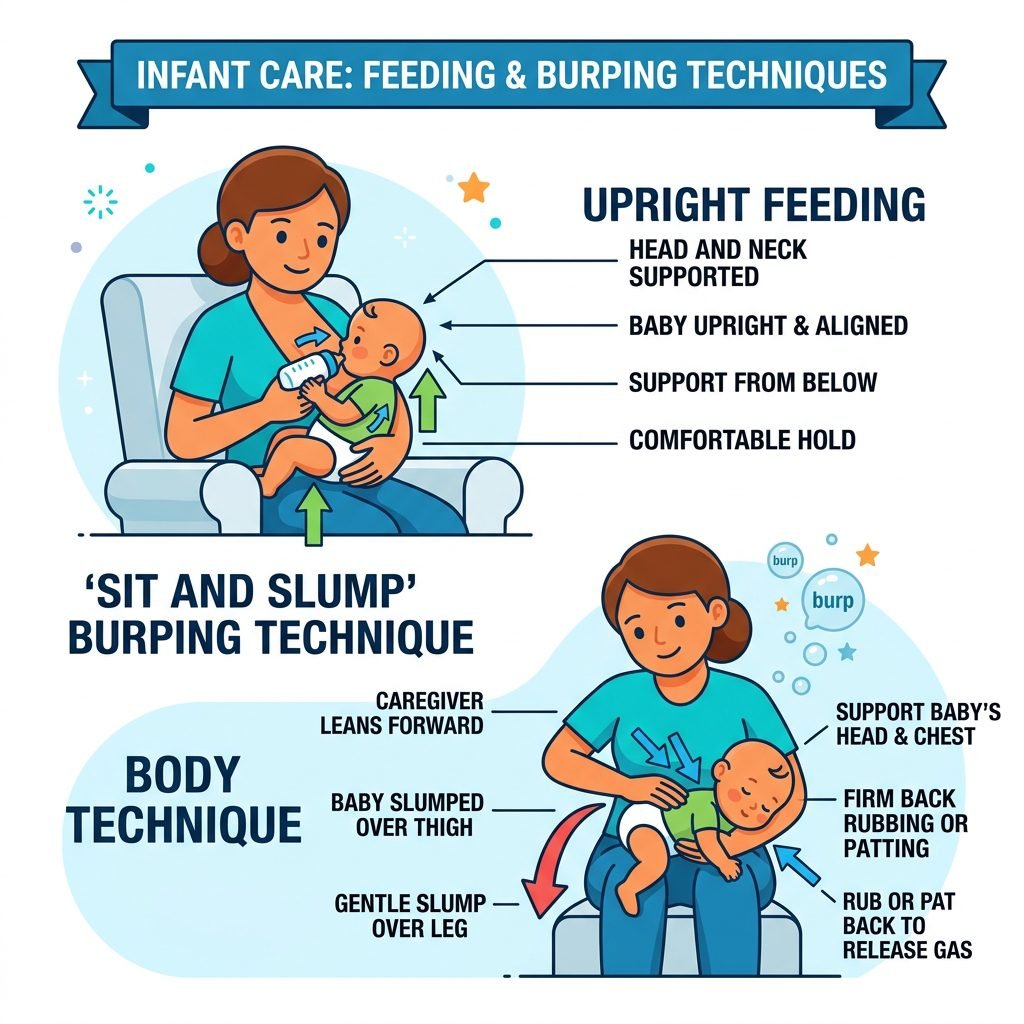
While we love our tricks and tips, the best way to handle gas is to minimize its production in the first place. This involves looking at how the ‘fuel’ is going in. If you are breastfeeding, check the latch—a ‘clicking’ sound often indicates air is getting in. If you are bottle-feeding, ensure the nipple is always full of milk, not air.
The ‘Paced’ Feeding Checklist
- Keep Baby Upright: Feed the baby at a 45-degree angle rather than lying flat.
- Burp Frequently: Don’t wait until the end of the feed. Try to get a burp every 2 to 3 ounces or every time you switch breasts.
- The ‘Sit and Slump’ Burp: Sit the baby on your lap, supporting their chin (not throat) with your hand, and let them slump forward slightly. This compresses the tummy and forces air up.
- Check the Flow: If using a bottle, turn it upside down. Milk should drip at about one drop per second. If it’s a stream, it’s too fast!
Remember, mama, sometimes gas is just a result of a growing body. Even with the perfect feeding technique, some babies are just ‘gassy’ by nature. This isn’t a reflection of your care!
When to Seek Extra Support: Recognizing Colic and Reflux

As a doula, I always want you to trust your gut. If your baby seems to be in inconsolable pain despite all these tricks, it might be more than just standard gas. It’s important to distinguish between ‘the witching hour’ and medical concerns like GERD (Gastroesophageal Reflux Disease) or severe colic.
Signs it’s Time to Call the Pediatrician:
- Projectile Vomiting: More than just a standard ‘spit-up.’
- Poor Weight Gain: If gas or reflux is preventing them from keeping enough calories down.
- Inconsolable Crying: Crying that lasts more than 3 hours a day, 3 days a week, for more than 3 weeks (the Rule of Threes).
- Bloody Stools: This can indicate a milk protein allergy or sensitivity.
- Fever or Lethargy: Always a reason for an immediate call.
You are your baby’s best advocate. If you feel like something isn’t right, don’t be afraid to ask for a second opinion or a lactation consultation. Sometimes a simple change in your diet (if breastfeeding) or a different formula can make a world of difference.
Conclusion
Rest Easy, Mama
The newborn phase is a marathon, not a sprint, and these gassy evenings are some of the toughest miles. By using the towel roll trick, practicing the ILU massage, and staying mindful of feeding positions, you are giving your baby the physical support they need to navigate their developing digestion. More importantly, you are showing up for them with patience and love. Tonight, when the bubbles start to stir, take a deep breath, roll up that towel, and know that this phase is temporary. You’ve got this, and I’m right here cheering you on. Sleep well (hopefully!) and remember: you are exactly the mother your baby needs.