

The Hand-On-Chin Burping Technique for Stubborn Trapped Gas
Welcome to the No-Gas Zone, Mama
Oh, sweet mama, I see you. It is 3:00 AM, your eyes are heavy, and your precious little one is arching their back, pulling their legs up, and let out those sharp, rhythmic cries that pull at your heartstrings. You’ve tried the standard over-the-shoulder pat for twenty minutes, but that stubborn bubble just won’t budge. As a doula, I’ve sat in those quiet, dimly lit rooms with countless families, and I want you to know: you are doing an incredible job. Gas isn’t just a physical discomfort for your baby; it’s an emotional hurdle for you, too.
Infant digestive systems are beautifully brand new, but that also means they are incredibly immature. Swallowed air from a fast let-down, a bottle nipple that’s a bit too flowy, or just the natural process of crying can lead to trapped bubbles that feel like a mountain to a tiny tummy. Today, we are going to master the Hand-On-Chin Burping Technique. This isn’t just another ‘hack’; it is a high-precision, gravity-assisted method that many pediatric experts and doulas consider the ‘gold standard’ for those deep, stubborn bubbles that refuse to come up any other way. Let’s take a deep breath together and learn how to bring some peace back to your nursery.
The Science of the ‘Stuck’ Bubble: Why Traditional Burping Fails
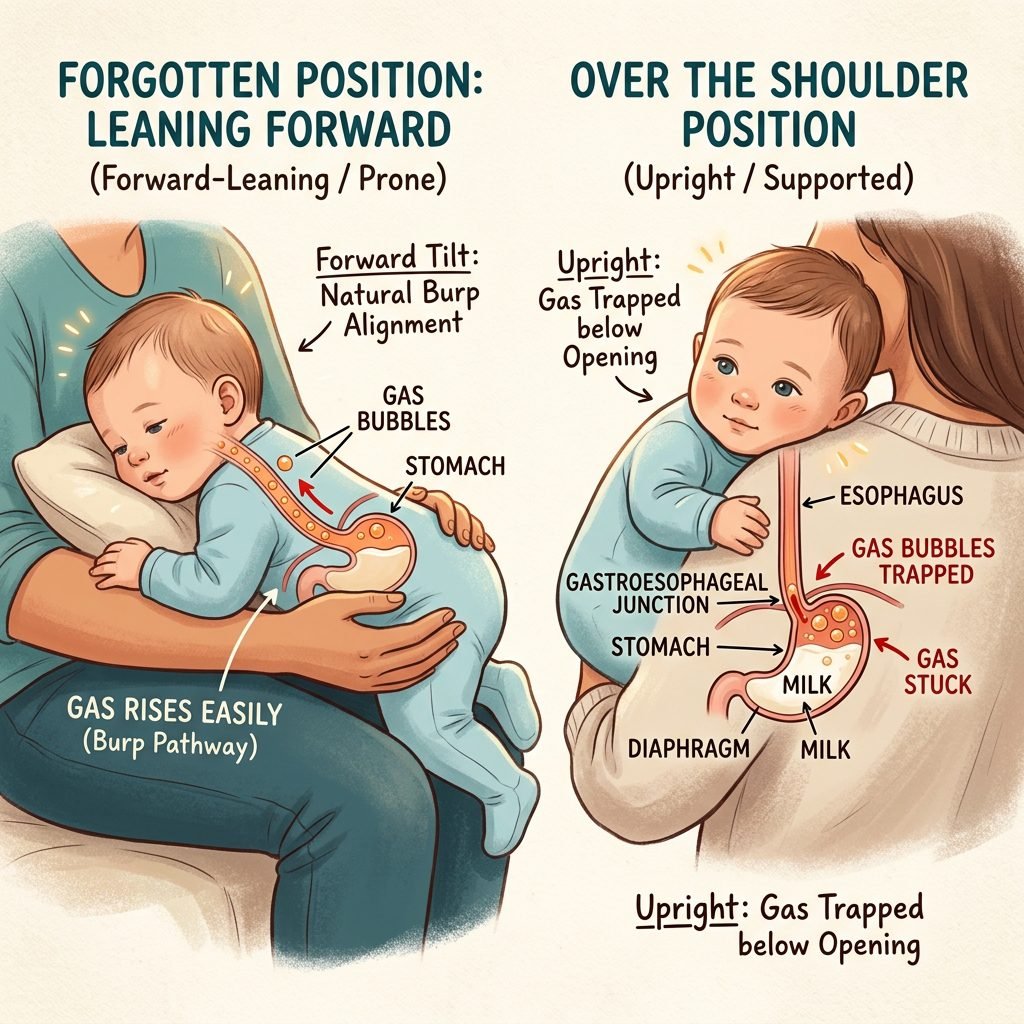
To understand why the hand-on-chin method works so well, we first have to look at what’s happening inside that sweet little torso. When a baby is held upright over your shoulder, their esophagus is elongated, but sometimes their little tummy gets compressed against your collarbone in a way that actually traps the air bubble underneath the milk. This is what leads to ‘wet burps’ or simply no burp at all, while the gas continues to migrate down into the lower intestines, causing colic-like symptoms.
The Anatomy of Relief
- The Esophageal Angle: By sitting the baby upright and leaning them slightly forward, we align the stomach and the esophagus in a direct vertical path.
- Gravity’s Role: Leaning forward allows the heavier liquid (milk) to settle at the bottom of the stomach, while the lighter gas rises to the top, right where it can be expelled.
- The Diaphragm Connection: Gentle pressure on the lower abdomen while supporting the jaw helps ‘nudge’ the diaphragm to release the air.
Remember, mama: a baby’s digestive system takes about three to four months to fully coordinate. Until then, you are their external digestive support system. It’s okay if it takes a little extra time and technique!
Step-by-Step: Mastering the Hand-on-Chin Hold

This technique requires a bit of finesse, but once you get the ‘feel’ for it, it will become your secret weapon. The key here is support without restriction. We want to support the skeletal structure of the jaw, never the soft tissue of the throat.
Execution Guide
- The Seat: Sit your baby firmly on your lap, facing away from you or to the side. Ensure their bottom is secure on your thigh.
- The ‘C’ Grip: Take your dominant hand and form a ‘C’ shape with your thumb and index finger. Place this ‘C’ firmly under the baby’s jawline. Your palm should rest gently against their chest. Crucial: Ensure your fingers are on the bony part of the jaw and not pressing into the neck.
- The Lean: Gently lean the baby forward so their weight is supported by your hand. This forward tilt opens up the airway and allows the stomach to hang naturally.
- The Pat and Circular Rub: Use your other hand to pat the back firmly but gently. Start from the lower back and move upward toward the shoulder blades. Alternate between firm pats and upward circular massages.
- The ‘Wait for It’: Sometimes it takes 2 to 5 minutes of this consistent motion for the pressure to equalize and the bubble to escape.
If you feel the baby start to wiggle or ‘stiffen,’ they are often trying to move that bubble themselves! Stay steady with the jaw support and give them a few extra firm pats.
Choosing Your Battle: Method vs. Gas Severity

Not every gas bubble requires the same level of intervention. Sometimes a gentle rub is enough; other times, you need the ‘big guns.’ Use this table to decide which technique to deploy based on your baby’s cues.
| Gas Severity | Baby’s Behavior | Recommended Technique |
|---|---|---|
| Mild | Quiet, slightly squirmy after feeding. | Standard Over-the-Shoulder Rub. |
| Moderate | Fretful, pulling legs up, red face. | Hand-on-Chin Forward Lean. |
| Stubborn/Severe | Inconsolable crying, rigid body, refusing to latch. | Hand-on-Chin + ‘The Jiggle’ (Gently bouncing the lap). |
| Lower Gas | Passing gas from below, bloating. | Bicycle Legs & Tummy Massage. |
When you see those moderate to stubborn signs, don’t waste time on the shoulder. Move straight to the seated hand-on-chin position to save both you and the baby from unnecessary distress.
Troubleshooting: What to Do When the Burp Won’t Come

We have all been there—you’ve been patting for 10 minutes, the baby is still uncomfortable, and you’re starting to feel frustrated. First, take a breath. Your frustration is a physiological response to your baby’s distress; it’s a sign of your deep bond.
The ‘Reset’ Strategy
If the hand-on-chin method isn’t working after a few minutes, try the ‘Reset.’ Lay the baby flat on their back for 30 seconds. This allows the gas bubbles to move and rearrange. Then, bring them back up into the seated hand-on-chin position. This change in pressure often ‘dislodges’ the bubble so it can finally be expelled.
The Jiggle and Lift
While in the hand-on-chin hold, try gently lifting the baby’s torso upward (elongating the spine) while maintaining the forward lean. A very slight, gentle side-to-side jiggle of your knees can also help ‘shake’ the bubble to the top of the stomach reservoir.
Affirmation for the Hard Moments: “I am the calm my baby needs. This bubble will pass, and we will both find rest soon.”
Beyond the Burp: Preventing Gas Before It Starts

While the hand-on-chin technique is a miracle worker for relief, our goal as your doula team is to help you reduce the frequency of these gassy episodes. Prevention is about managing air intake and supporting the gut.
Practical Prevention Tips
- Paced Feeding: Whether breastfeeding or bottle-feeding, keep the baby as upright as possible. If bottle-feeding, ensure the milk covers the entire nipple so no air is sucked in.
- The Mid-Feed Burp: Don’t wait until the end of the meal! Try to get a burp in halfway through the session. This prevents a massive air pocket from forming under a full stomach of milk.
- Tummy Time: Even 2-3 minutes of supervised tummy time a few times a day helps strengthen the abdominal muscles and naturally pushes gas through the system.
- Check the Latch: A clicking sound during feeding often means air is escaping. If you hear this, unlatch and try for a deeper, more ‘fish-lip’ seal.
If you find that your baby is consistently struggling with extreme gas despite these techniques, it might be worth a chat with your pediatrician about potential sensitivities, but for 90% of babies, it’s simply a matter of mechanical physics and time.
Conclusion
You’ve Got This, Mama
Mastering the Hand-on-Chin Burping Technique is like learning a new dance. At first, it might feel a little clunky or awkward to coordinate the jaw support and the patting, but soon it will become second nature. You are learning the unique language of your baby’s body, and every burp you help them release is a small victory for their comfort and your peace of mind.
Remember that the ‘fourth trimester’ is a season of intense growth. Your baby’s body is working so hard to navigate the world outside the womb, and you are their safest harbor. When the gas is stubborn and the nights are long, hold them close, use these techniques, and know that this phase is temporary. You are a wonderful mother, and your touch is the most healing medicine your baby could ever receive. Sleep well (eventually!), and keep up the amazing work.