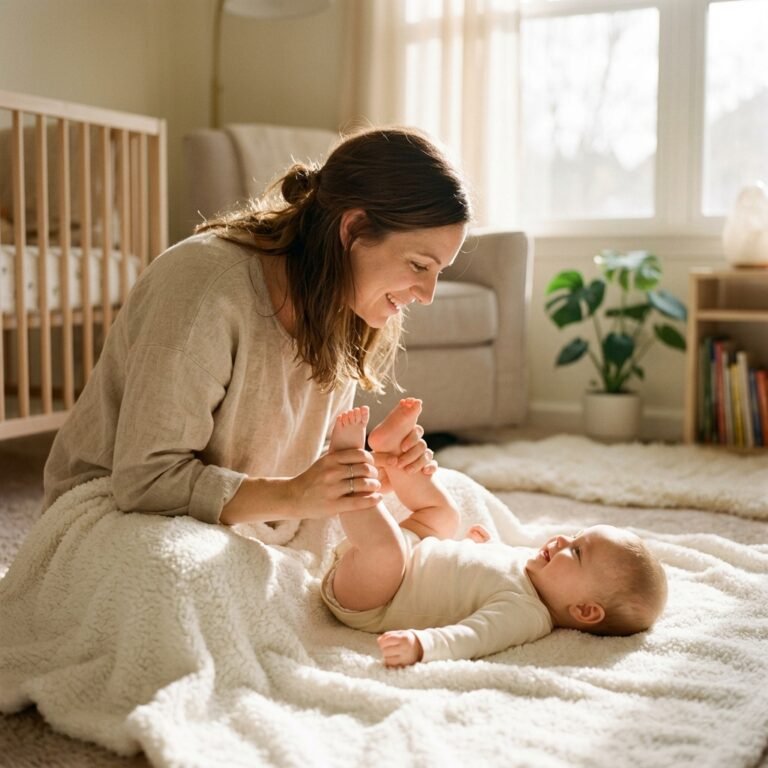
How to Do a Nighttime Foot Massage to Relieve Baby Gas and Help Them Sleep
Finding Calm in the Midnight Chaos
If you are reading this at 2 AM with a fussy, squirming baby on your chest, please take a deep breath. Drop your shoulders away from your ears, unclench your jaw, and know this: You are doing a beautiful job, and you are not alone. The newborn phase is a beautiful, chaotic whirlwind, and one of the most common hurdles new parents face is baby gas. An infant’s digestive system is incredibly immature, and as they learn to process breastmilk or formula, trapped air can cause intense discomfort, leading to those heartbreaking, high-pitched cries that pierce right through a mother’s soul.
As a doula and pediatric sleep specialist, I have sat with countless exhausted parents who feel completely helpless when their baby is writhing in digestive pain. You have likely tried the burping, the bouncing, and the endless swaying. But there is a gentle, evidence-based, and deeply soothing tool you might not have in your toolkit yet: infant foot reflexology and massage.
Touch is your baby’s first language. Long before they can understand your words, they understand the safety, warmth, and rhythm of your hands. A targeted nighttime foot massage does more than just soothe a crying infant; it actively stimulates their parasympathetic nervous system (the “rest and digest” state), encourages the release of trapped gas, and naturally builds sleep pressure. In this guide, we are going to walk through exactly how to perform a gas-relieving foot massage, how to set up your nursery for ultimate relaxation, and how to combine this technique with other holistic gas-busting moves to finally get your baby—and you—some much-needed rest.
Mama, this fussy phase is temporary. Your baby’s digestive tract is growing and maturing every single day. Tonight, we are just going to focus on bringing them comfort, one gentle touch at a time.
Why the Feet? The Magic of Baby Reflexology for Tummy Troubles
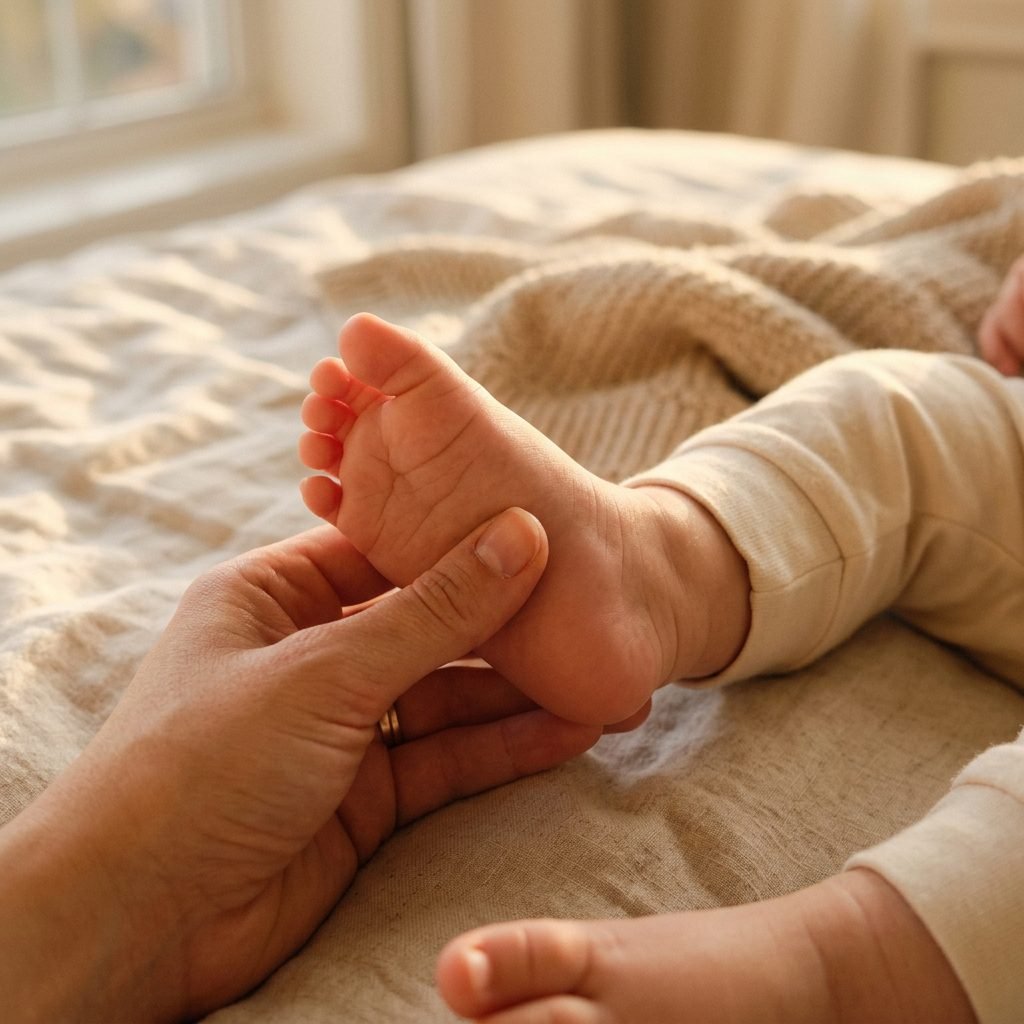
You might be wondering, “If my baby’s tummy hurts, why are we rubbing their feet?” It is a brilliant question. The practice of foot reflexology is rooted in the idea that specific zones on the feet correspond to different organs and systems within the body. While adult reflexology can be quite firm, baby reflexology is incredibly feather-light and gentle, focusing on soothing the nervous system rather than deep tissue manipulation.
For babies, the central and lower portions of the foot pad are directly linked to the solar plexus and the digestive tract. When a baby is gassy, their entire little body goes into a state of tension. They pull their knees up, clench their fists, and their nervous system flips into “fight or flight” mode due to the pain. By gently massaging the feet, you are accomplishing three vital things:
- Interrupting the Pain Cycle: Gentle touch provides new sensory input to the brain, which can temporarily distract from the discomfort in the gut.
- Stimulating the Vagus Nerve: Soft pressure on the feet helps activate the vagus nerve, which tells the brain it is safe to relax, thereby relaxing the intestinal muscles that are trapping the gas.
- Encouraging Peristalsis: Specific strokes on the foot’s arch correspond to the stomach and intestines, energetically and physically promoting the downward movement of gas and stool.
Beyond the physical benefits, the act of sitting quietly and massaging your baby requires you to slow down. Babies are incredibly intuitive; they co-regulate with their caregivers. If you are frantic and stressed, they feel it. When you focus on the rhythmic motion of a foot massage, your own breathing slows down, your heart rate drops, and your baby borrows your calm.
Preparing the Nursery: Setting a Calm, Sleepy Vibe
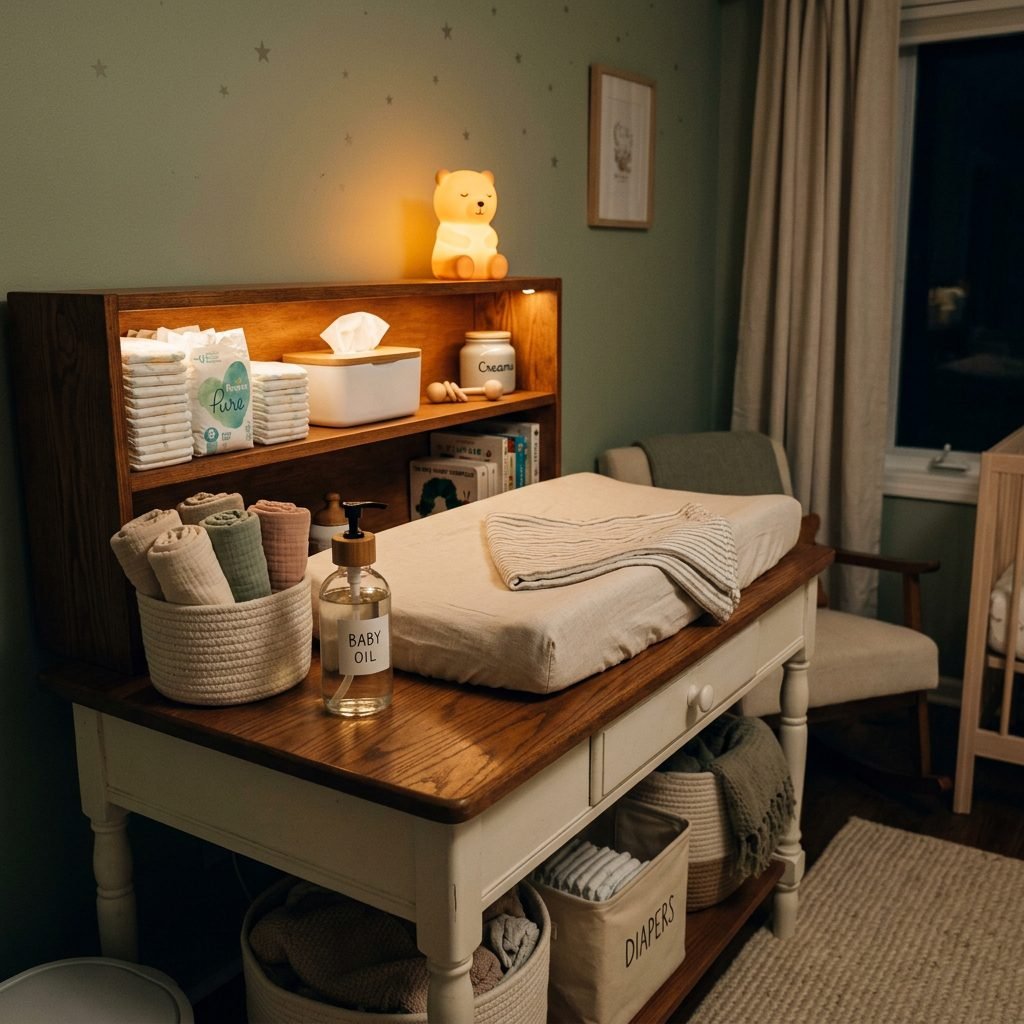
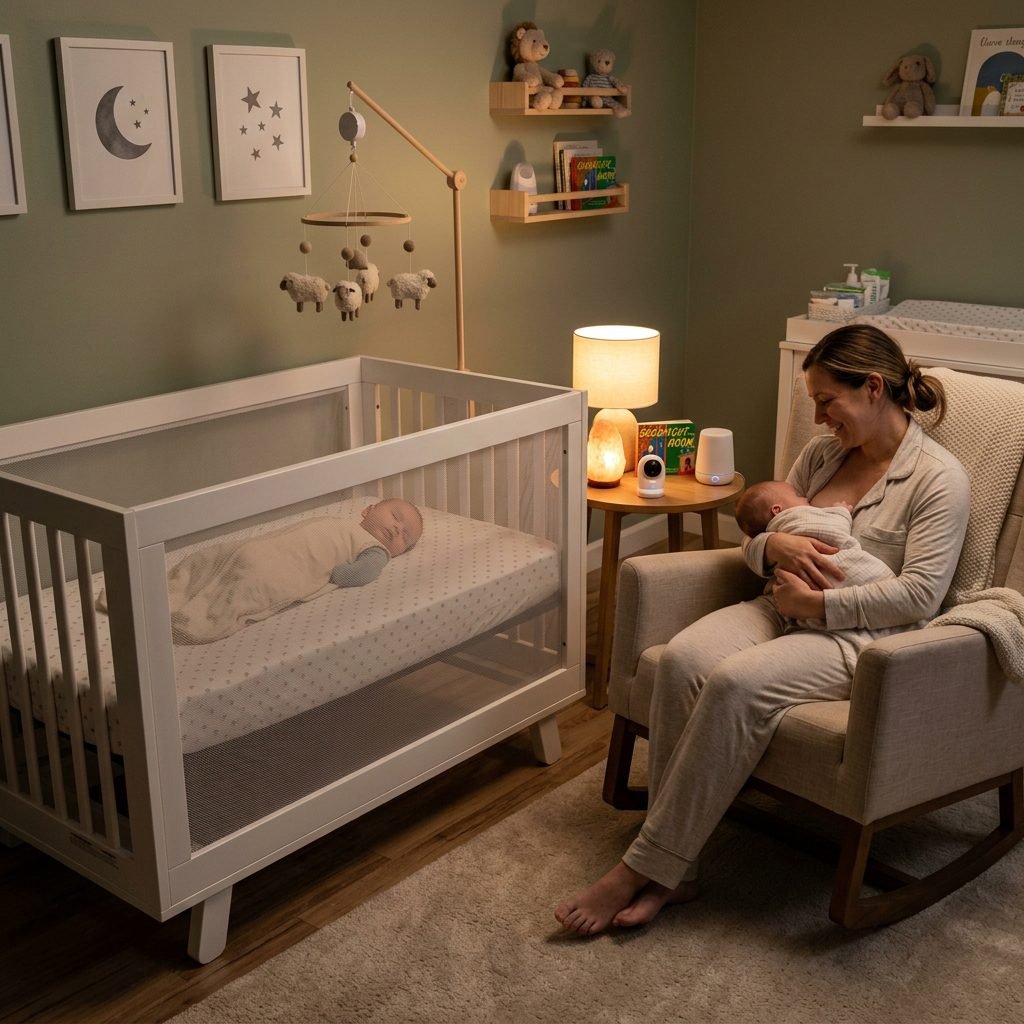
Before we touch the baby’s feet, we need to set the stage. Attempting a calming massage in a bright room with a blaring television will only overstimulate an already uncomfortable baby. We want to recreate the womb environment: dark, warm, and rhythmic.
1. The Lighting and Sound
Switch off overhead lights. Use a small amber or red-hued nightlight. Red light does not interfere with your baby’s natural melatonin production (the sleepy hormone), whereas blue light from phones or bright white LEDs will signal to their brain that it is time to wake up. Turn on your white noise or pink noise machine to a low, continuous rumble—reminiscent of the maternal heartbeat and blood flow they heard in the womb.
2. The Temperature
Babies lose body heat much faster than adults. Ensure the room is comfortably warm, ideally between 68 to 72 degrees Fahrenheit. If you are undressing your baby to massage their legs and feet, keep their top half wrapped in a cozy swaddle or a warm towel to prevent a chill, which can cause them to tense up and trap gas further.
3. Choosing the Right Massage Oil
Friction can be irritating to delicate newborn skin, so a high-quality, baby-safe oil is essential. Avoid synthetic lotions with heavy fragrances, as these can disrupt the endocrine system and irritate the skin. We want pure, edible, single-ingredient oils.
| Type of Oil/Lotion | Safety for Babies | Why We Love It (or Avoid It) |
|---|---|---|
| Cold-Pressed Grapeseed Oil | Highly Recommended | Lightweight, absorbs quickly, non-greasy, and contains zero synthetic fragrances. |
| Organic Sunflower Oil | Highly Recommended | Rich in linoleic acid, excellent for protecting the infant skin barrier. |
| Coconut Oil | Good (Use with caution) | Great natural option, but can be cooling on the skin and occasionally causes breakouts in sensitive babies. |
| Commercial Baby Lotions | Avoid for Massage | Often contain alcohol (which dries skin) and artificial perfumes that can overwhelm tiny noses. |
| Essential Oils (Lavender, Eucalyptus) | Strictly Avoid under 3 Months | Newborn skin and respiratory systems are too fragile for potent essential oils. Stick to unscented. |
The Step-by-Step Nighttime Foot Massage Routine
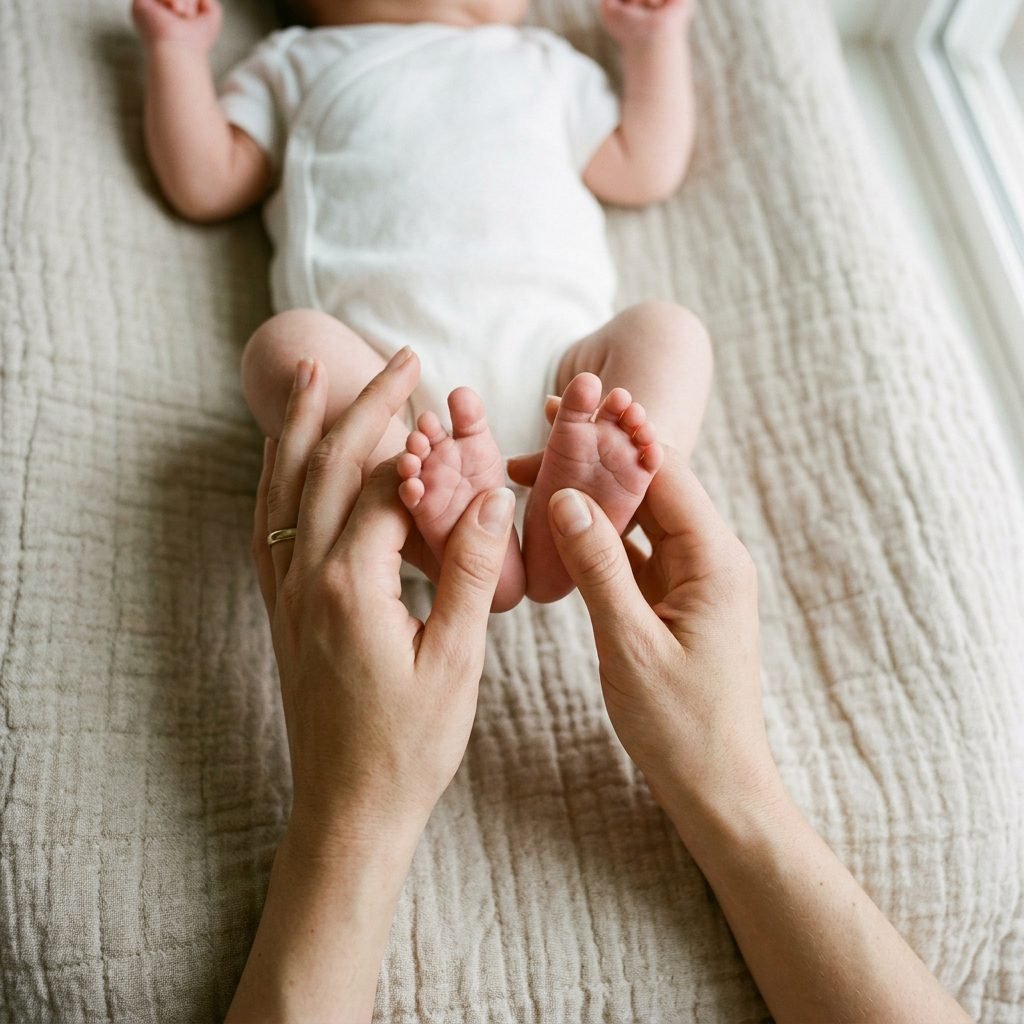
Now that the environment is perfect and you have a drop of warm oil rubbed between your palms, it is time to begin. Remember, the pressure should be incredibly light—imagine the pressure you would use to gently smooth a piece of tissue paper without tearing it. Always maintain eye contact if your baby is awake, and speak in a low, rhythmic whisper or sing a gentle lullaby.
Step 1: The “Hello” Hold (Grounding)
Before moving, simply cup both of your baby’s feet in your warm hands. Hold them gently for 15 to 30 seconds. This is called the grounding hold. It signals to your baby that you are there, and a transition is happening. Take three deep breaths yourself during this hold to lower your own heart rate.
Step 2: The Solar Plexus Press (Central Relaxation)
The solar plexus reflex is the ultimate relaxation button. It is located just below the ball of the foot, right in the center (where the foot naturally indents when you press the toes forward).
- Hold the baby’s foot gently with one hand.
- Using the thumb of your other hand, find the small indentation just under the ball of the foot.
- Press very softly in a tiny circular motion for 3 to 5 seconds.
- Release and repeat three times on each foot.
Step 3: The Tummy Sweep (Gas Release)
This is the core move for digestive relief. The arch of the foot corresponds to the upper and lower intestines.
- Place your thumb just below the solar plexus point (the middle of the arch).
- Apply feather-light pressure and stroke downward toward the heel.
- Repeat this downward sweeping motion 5 to 10 times on the left foot, then switch to the right foot.
- Pro Tip: Always stroke downward, mimicking the natural direction of digestion and gas elimination.
Step 4: The Heel Cup (Pelvic Relief)
The heel of the foot corresponds to the pelvic region and the lower bowel, which is often where stubborn gas gets trapped right before a bowel movement.
- Gently pinch the heel of the foot between your thumb and index finger.
- Give it a soft, rhythmic squeeze, moving around the outer edge of the heel.
- Do this for 10 to 15 seconds per foot.
Step 5: The Toe Roll (Head and Sinus Soothing)
While not directly related to the tummy, the toes correspond to the head and teeth. Massaging them helps release tension from the baby’s jaw and neck, which often tense up when they are crying from gas pain.
- Take each tiny toe between your thumb and index finger.
- Gently roll the toe and pull upward softly, slipping your fingers off the end.
- Repeat for all ten toes.
Script for Mama: As you do this, whisper to your baby, “You are safe. Your tummy is healing. The gas is moving out. Mommy is right here.” The vibration of your voice is just as healing as your touch.
The Ultimate Gas-Relief Combo: Pairing Massage with Body Movement

While a foot massage is incredibly powerful, it works best when paired with gentle physical movements that manually compress the tummy and help work the gas bubbles out of the digestive tract. If your baby is still squirming after the foot massage, transition seamlessly into these doula-approved body movements.
The “I Love You” Tummy Stroke
If your baby’s tummy is not too hard or tender, you can perform the classic “I Love You” abdominal massage. Always ensure you are massaging in a clockwise direction, as this follows the natural path of the large intestine.
- I: Stroke downward on the baby’s left side (your right) to form the letter “I”.
- L: Stroke across the top of the belly from the baby’s right to left, then down the left side, forming a backward “L”.
- U: Stroke up the baby’s right side, across the top, and down the left side, forming an upside-down “U”.
The Bicycle Legs
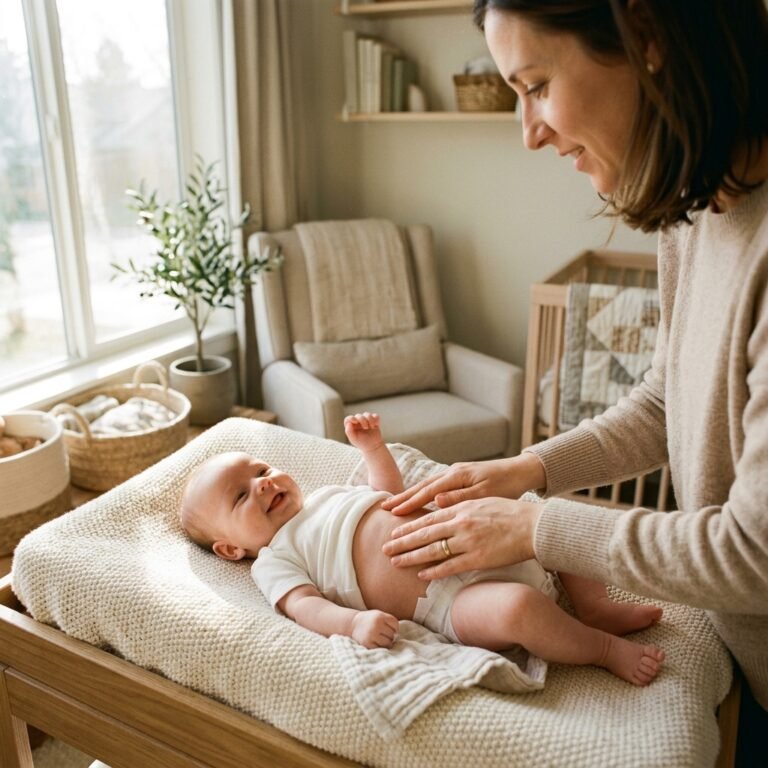
This is the holy grail of gas relief. Lay your baby flat on their back. Take hold of their lower legs and gently pedal them back and forth, as if they are riding a tiny bicycle. After a few pedals, gently press both knees together and push them softly up toward the baby’s tummy. Hold for 3 to 5 seconds. You will often hear a satisfying toot during this compression!
| Gas Symptom | Primary Technique to Use | Duration / Frequency |
|---|---|---|
| High-pitched crying, red face, rigid body | Grounding Foot Hold & Solar Plexus Press | 1-2 minutes until body relaxes slightly |
| Pulling knees to chest, grunting | Bicycle Legs & Knee-to-Tummy Compressions | 5-10 repetitions per session |
| Hard, distended tummy | “I Love You” Tummy Massage (Clockwise) | 3-5 minutes, very light pressure |
| General fussiness before bedtime | Full Nighttime Foot Massage Routine | 5-7 minutes as part of wind-down |
Timing is Everything: When to Massage for Maximum Sleep
A common mistake exhausted parents make is trying to massage a baby when they are already overtired, starving, or immediately after a massive feed. Timing your massage correctly is the difference between a soothing spa experience and a total meltdown.
When NOT to Massage
Never perform a tummy or foot massage immediately after your baby has eaten. Doing so can cause spit-up, acid reflux, and extreme discomfort. Always wait at least 30 to 45 minutes after a full feed before applying any pressure to the feet or abdomen. Additionally, if your baby is actively screaming and thrashing, a massage might be overstimulating. In that case, use a dark room, skin-to-skin contact, and gentle bouncing until they de-escalate, then begin the massage.
Integrating Massage into the Bedtime Routine
Babies thrive on predictability. When you do the exact same series of events every single night, your baby’s brain begins to recognize the pattern and automatically starts releasing sleep hormones. A foot massage is the perfect “bridge” activity between bath time and the final feed.
| Time | Bedtime Routine Step (0-6 Months) | Purpose for Sleep & Digestion |
|---|---|---|
| 6:00 PM | Warm Bath or Warm Washcloth Wipe Down | Raises core body temp; the subsequent drop in temp induces sleepiness. |
| 6:15 PM | Diaper Change & Nighttime Foot Massage | Relaxes the nervous system, clears trapped daytime gas before lying flat. |
| 6:25 PM | Swaddle or Sleep Sack | Provides womb-like security and prevents the Moro (startle) reflex. |
| 6:30 PM | Final Feed (Breast or Bottle) | Fills the tummy. Keep the baby upright for 10-15 minutes after to prevent new gas. |
| 6:50 PM | Burping & Gentle Rocking | Releases any air swallowed during the final feed. |
| 7:00 PM | Into the Crib (Drowsy but Awake, if possible) | Allows baby to drift off in their safe sleep space. |
By clearing out trapped gas before the final feed and sleep, you are setting your baby up for a longer, more comfortable stretch of rest. They won’t wake up 45 minutes later squirming in pain, which means you get to sleep longer, too.
Conclusion
You Are Your Baby’s Best Medicine
Navigating infant gas and sleepless nights is one of the most demanding rites of passage in early motherhood. It tests your patience, your physical endurance, and your emotional resilience. But please remember this: every time you respond to your baby’s cries, every time you gently rub their tiny feet in the dark, and every time you whisper that they are safe, you are building a foundation of profound trust.
This foot massage is a wonderful tool to keep in your back pocket, but the real magic is you. Your touch, your smell, and your presence are the ultimate comfort to your baby. On the nights when the gas is stubborn and the sleep is short, give yourself an immense amount of grace. Order the takeout, leave the laundry in the basket, and know that this difficult phase is fleeting. Soon, their digestive system will mature, the gas will pass naturally, and you will both be sleeping soundly through the night.
Medical Disclaimer: The information provided in this article is for educational and informational purposes only and is not intended as medical advice. Always consult with your pediatrician or a qualified healthcare provider regarding any concerns about your baby’s health, severe gas, persistent crying, or digestive issues. Never use strong pressure when massaging an infant.