

The Modified Side-Lying Burping Technique on a Nursing Pillow for Stubborn Gas
Finding Peace in the Midnight Gas Struggles
Mama, take a deep, grounding breath. If you are reading this at 2 AM with a squirming, crying baby who seems to be fighting invisible tummy demons, please know this first: you are doing an incredible job. The newborn phase, often called the fourth trimester, is a beautiful but overwhelmingly messy transition. Your little one is getting used to the outside world, and their tiny, immature digestive system is working overtime to process milk, air, and everything in between.
As a certified doula and pediatric sleep consultant, I have sat in countless dimly lit nurseries, rocking alongside exhausted parents who feel like they have tried absolutely everything. You have likely patted, bounced, shushed, and paced the hallways until your feet ache. Traditional over-the-shoulder burping works wonders for some babies, but for those with truly stubborn, deep-seated gas, it can sometimes feel like you are just rearranging the bubbles rather than expelling them.
“You are the exact mother your baby needs. A crying baby is not a reflection of your worth; it is simply their only language right now. Give yourself the grace you so freely give to your little one.”
Today, we are going to dive deep into a gentle, highly effective, and ergonomically friendly method: The Modified Side-Lying Burping Technique on a Nursing Pillow. This technique is a closely guarded secret among postpartum nurses and doulas. It not only helps release trapped air by utilizing gravity and anatomy, but it also provides a comfortable, supportive position for your own healing postpartum body. We are going to break down the exact mechanics of infant gas, why this specific technique works when others fail, and how to execute it safely step-by-step. Grab your favorite nursing pillow, a soft burp cloth, and let’s get that trapped air out so you both can finally get some rest.
Understanding the Anatomy of Stubborn Infant Gas
Why Do Babies Get So Gassy?
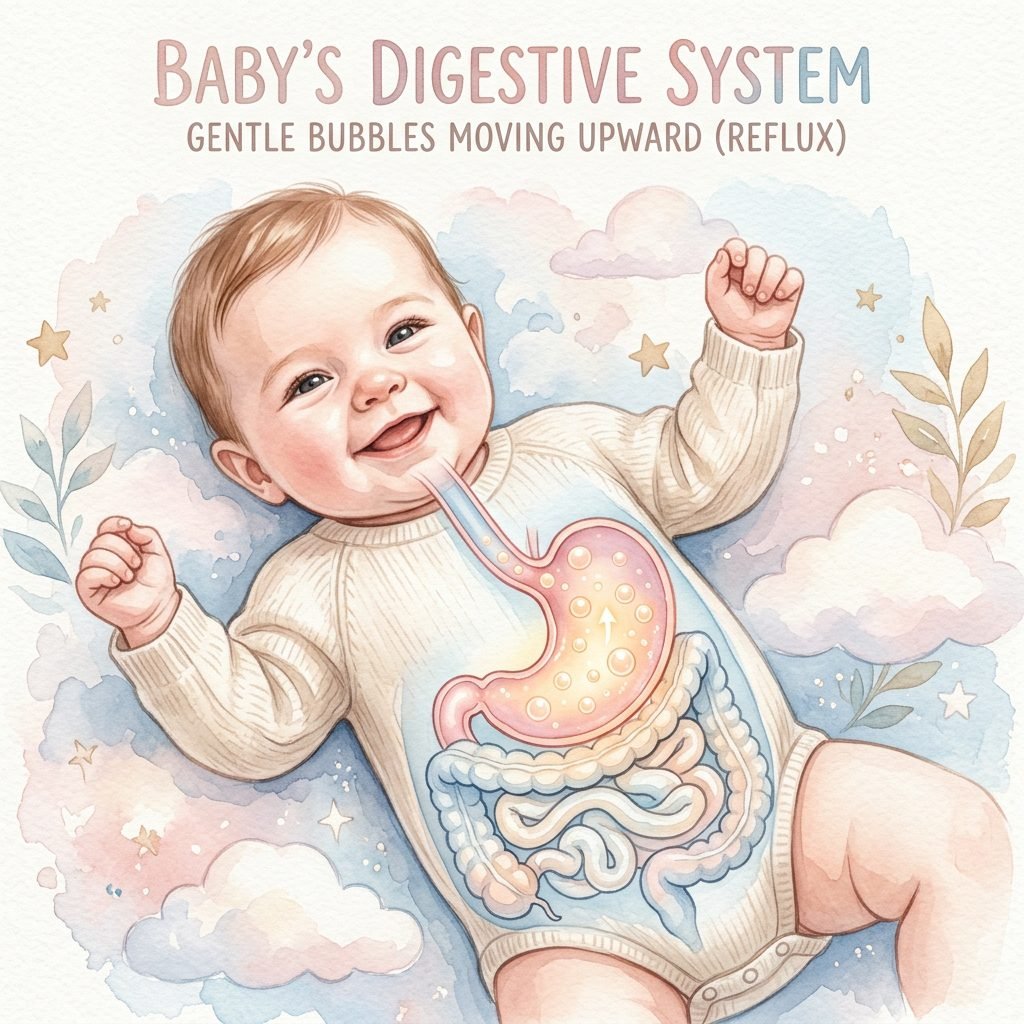
Before we can fix the problem, it is incredibly empowering to understand exactly what is happening inside your baby’s tiny body. Infant gas is not just a nuisance; it is a physiological reality of early development. When babies feed—whether they are breastfed or bottle-fed—they inevitably swallow air. This is known medically as aerophagia. Additionally, as their gut flora begins to develop and they digest the proteins and sugars in breastmilk or formula, natural gastrointestinal gases are produced.
Because a newborn’s core muscles are incredibly weak, they lack the physical strength to bear down and push this gas out on their own. Furthermore, the sphincter at the top of their stomach (the cardiac sphincter) is loose, which is why spit-up is so common. When air bubbles get trapped beneath milk in the stomach, traditional upright burping can sometimes force the milk up along with the air, resulting in a massive spit-up rather than a satisfying burp.
The Physics of the Bubble
Think of your baby’s stomach like a small, J-shaped pouch. When you hold a baby perfectly upright over your shoulder, the air bubble (which naturally wants to rise) can sometimes get trapped against the curvature of the stomach wall. If the gas has already moved past the stomach and into the intestines, patting the upper back while upright does very little to move those lower intestinal bubbles.
This is where lateral (side-lying) positioning comes in. By placing the baby on their side, you are actively changing the angle of that J-shaped pouch. You align the esophageal sphincter in a way that allows the trapped air to bypass the heavy milk, offering a clear, unobstructed pathway up and out. It is simple physics, wrapped in a whole lot of maternal love.
Setting the Stage: Gathering Your Tools

Your Postpartum Comfort Matters, Too
As mothers, we often contort our bodies into the most agonizing positions just to keep our babies comfortable. But mama, your postpartum recovery is vital. Hunching over a baby for 20 to 30 minutes at a time can wreak havoc on your neck, shoulders, and healing pelvic floor. The beauty of the Modified Side-Lying Technique is that it brings the baby up to your level, utilizing tools you likely already have in your nursery.
What You Will Need
- A Firm Nursing Pillow: Brands like the Boppy, My Brest Friend, or the Snuggle Me Organic Feeding Support are perfect. You need something with enough structure to keep the baby elevated.
- High-Absorbency Burp Cloths: Muslin or thick cotton cloths. Have at least two on hand—one for the pillow and one for your shoulder/hand.
- A Glider or Supportive Chair: Ensure your feet are flat on the floor or resting on a nursing stool to support your lower back.
- A Calm Environment: Dim the lights, turn on your white noise machine (aim for around 50 to 60 decibels), and take a moment to regulate your own nervous system. Babies co-regulate; if you are tense, they will clench their tiny abdominal muscles, making it harder to release gas.
By setting up a dedicated, comfortable burping station, you are signaling to your brain and your baby that this is a safe, relaxed space. This psychological shift alone can work wonders for a tense, gassy infant.
Step-by-Step: The Modified Side-Lying Technique

The Masterclass in Gas Relief
Now, let’s get to the magic. This technique requires gentle precision, but once you master it, it will become second nature. Please ensure you are fully awake and alert while performing this technique, as you will need to actively support your baby’s airway.
- Prepare the Pillow: Sit comfortably in your chair with your feet supported. Secure the nursing pillow around your waist. Drape a large burp cloth over the side of the pillow where the baby’s head will rest.
- Position the Baby: Gently lay your baby laterally (on their side) across the nursing pillow. Their belly should be resting against your stomach/ribcage, creating a beautiful, warm, skin-to-skin-like pressure. Their legs will naturally curl up toward their tummy—this fetal tuck is fantastic for lower intestinal gas!
- Support the Airway (Crucial Step): Using your non-dominant hand, gently cradle your baby’s jaw and cheek. Do not put pressure on their throat or neck. Your thumb and forefinger should form a “U” shape, resting on their cheekbones and jawline to keep their head slightly elevated and their airway perfectly straight and open.
- Find the Angle: The baby’s head should be slightly higher than their hips. You can achieve this by lifting the side of the nursing pillow slightly or adjusting your own posture. This 15 to 30-degree incline is the sweet spot for allowing air to rise.
- The Cupped Pat: Cup your dominant hand as if you are holding water. A cupped hand creates a gentle, hollow percussion sound rather than a sharp slap. Begin patting firmly but gently on the baby’s back, starting from the lower ribs and working your way up toward the shoulders.
- The Rhythmic Rub: Alternate between 30 seconds of cupped patting and 30 seconds of firm, upward circular rubs along the left side of their back (where the stomach is located).
“Patience is key here. Give the technique at least 3 to 5 minutes before switching positions. Sometimes those stubborn bubbles need a moment to navigate the digestive tract.”
Comparing the Best Burping Methods
Which Hold is Right for Your Baby?
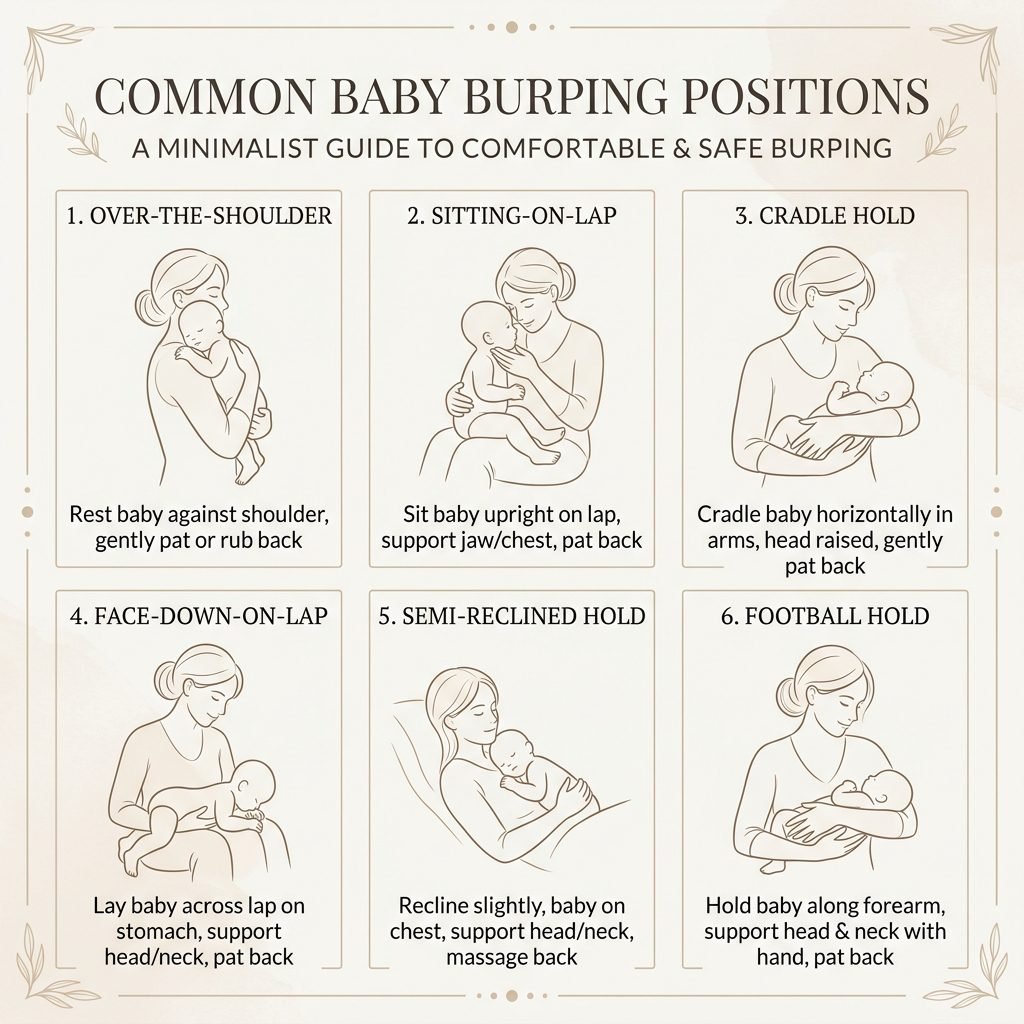
Every baby is unique, and what works at 2 weeks old might not work at 2 months old. As a doula, I always recommend having a “toolkit” of burping methods. Below is a comprehensive comparison to help you decide when to use the Modified Side-Lying Technique versus other popular methods.
| Burping Method | Best For | Gas Severity Level | Pros | Cons |
|---|---|---|---|---|
| Traditional Over-the-Shoulder | Newborns with mild gas, post-feed routine | Low to Moderate | Easy to do anywhere, provides great chest-to-chest comfort | Can put direct pressure on a full stomach, leading to large spit-ups |
| The Magic Hold (Sitting Up) | Older newborns (4+ weeks) with decent neck control | Moderate | Allows you to see their face, gravity assists directly | Requires more active neck support, can be tiring for the parent’s wrists |
| Modified Side-Lying (On Pillow) | Babies with stubborn, deep gas or reflux tendencies | High / Stubborn | Takes pressure off baby’s tummy, protects mom’s posture, highly effective | Requires a nursing pillow and a seated position; harder to do on the go |
| The Football Hold (Face Down) | Colicky babies, extreme fussiness | High | Provides gentle counter-pressure on the intestines | Can be heavy for the parent to hold with one arm for extended periods |
If your baby is thrashing or seems incredibly uncomfortable in the traditional over-the-shoulder hold, that is your cue to switch to the Modified Side-Lying method. The change in gravity and the release of pressure on their distended tummy can offer almost instant relief.
Troubleshooting: When the Burp Just Won’t Come

Combining Techniques for Ultimate Relief
So, you have positioned them perfectly on the nursing pillow, you are doing the cupped pat, and… nothing. The baby is still squirming, and you are starting to sweat. Take a breath, mama. Sometimes gas gets trapped deeper in the digestive tract, moving past the stomach and into the intestines. When this happens, a burp isn’t going to solve the problem; you need to help them pass gas from the other end.
The ‘I Love You’ Massage and Bicycle Legs
If the side-lying burp hasn’t produced results after 5 to 10 minutes, gently transition the baby from their side onto their back, keeping them elevated on the nursing pillow. Now, we move to lower-body gas relief.
- Bicycle Legs: Gently hold your baby’s calves and slowly cycle their legs toward their tummy. Push both knees gently into their stomach, hold for a count of 3 seconds, and release. This manual compression acts like a pump for the lower intestines.
- The ‘I Love You’ Massage: Using two fingers and a tiny drop of baby-safe oil (like coconut or jojoba), trace the letter ‘I’ down the left side of their belly. Then trace an upside-down ‘L’ across the top and down the left side. Finally, trace an upside-down ‘U’ from the lower right, up, across, and down the left. This follows the exact path of the large intestine, physically pushing trapped air toward the exit.
- Warm Compresses: A warm (not hot!) washcloth placed over their onesie on their tummy can help relax tense abdominal muscles, making it easier for the gas to move.
Remember, babies have immature nervous systems. Sometimes they cry not because they are in excruciating pain, but because the sensation of a gas bubble moving through their body is completely new and startling to them. Your calm presence is their anchor.
Red Flags: When Is It More Than Just Gas?

Trusting Your Maternal Intuition
As a doula, I always tell my clients that maternal intuition is a biological superpower. While gas is a universal newborn experience, there are times when excessive fussiness points to something that requires a bit more medical attention. It is incredibly important to distinguish between normal newborn digestive development and issues like severe Acid Reflux (GERD) or a Cow’s Milk Protein Allergy (CMPA).
Signs You Should Consult Your Pediatrician
- Projectile Vomiting: Spit-up is normal; forceful, projectile vomiting that clears the baby’s body by several inches is a sign to call the doctor.
- Arching the Back During Feeds: If your baby consistently arches their back, cries out in pain mid-feed, and refuses to eat despite being hungry, this is a classic sign of silent reflux.
- Blood or Mucus in the Stool: This is an immediate indicator that their digestive tract is irritated, often pointing to a dietary allergy or sensitivity.
- Failure to Gain Weight: If the gas and spit-up are interfering with their growth curve, professional intervention is necessary.
- Inconsolable Crying for Hours: The “Rule of Threes” (crying for more than 3 hours a day, for more than 3 days a week, for more than 3 weeks) is the clinical definition of colic, and your pediatrician can offer targeted support.
If you are breastfeeding, you might be tempted to wildly restrict your diet (cutting out dairy, soy, gluten, broccoli, etc.). Please, mama, do not put yourself on a starvation diet without consulting a lactation consultant or pediatrician first. In many cases, the issue is an overactive letdown or a shallow latch causing the baby to gulp air, rather than the food you are eating. For formula-feeding mamas, switching formulas constantly can actually irritate the tummy more. Always seek evidence-based guidance before making drastic changes.
Conclusion
This Too Shall Pass, Beautiful Mama
Navigating the gassy newborn phase is a rite of passage that tests the patience and emotional endurance of even the most prepared parents. The Modified Side-Lying Burping Technique on a nursing pillow is a phenomenal tool to add to your maternal toolkit. It honors your baby’s anatomy, gently coaxing out those stubborn bubbles, while fiercely protecting your own physical recovery by keeping you supported and comfortable.
On those hard nights when you feel like you are failing, look at your baby. They are safe, they are loved, and they are being held by the exact right person. Their digestive system will mature. The screaming fits will turn into gentle coos, and the nights of endless pacing will eventually become a distant memory. Keep your nursing pillow close, trust your instincts, and remember to breathe. You are doing a spectacular job, and I am so proud of you.
Medical Disclaimer: The information provided in this article, including all techniques, tips, and physical maneuvers, is for educational and informational purposes only and is not intended as medical advice. Every baby is different. Always consult with a qualified pediatrician or healthcare provider regarding any health concerns, severe gas, reflux symptoms, dietary changes, or before attempting new physical techniques with your infant.