

The Gentle Hand-on-Chest Trick to Keep Your Baby Sleeping When Transferred to the Crib
We have all been there, mama. You have spent the last 45 minutes rocking, swaying, and shushing your little one into a blissful slumber. Your arms are aching, your back is tight, and you are dreaming of that hot cup of tea (or let’s be honest, your own pillow). You move with the precision of a diamond thief, inching toward the crib. But the moment their tiny back touches the mattress—waaah!—those eyes fly open, and you are back at square one.
As a doula and sleep consultant, I want you to know that this isn’t a failure on your part; it is biology. Your baby has a highly sensitive internal ‘altimeter’ and a startle reflex that is hardwired for survival. To them, leaving your warm, breathing body feels like a freefall. That is where The Gentle Hand-on-Chest Trick comes in. This technique is more than just a physical move; it is a way to bridge the gap between your embrace and the independence of the crib. Today, I am going to walk you through the ‘why’ and the ‘how’ of this game-changing maneuver, so you can finally reclaim your evening with confidence and peace.
The Science of the Startle: Why Babies Wake During Transfer
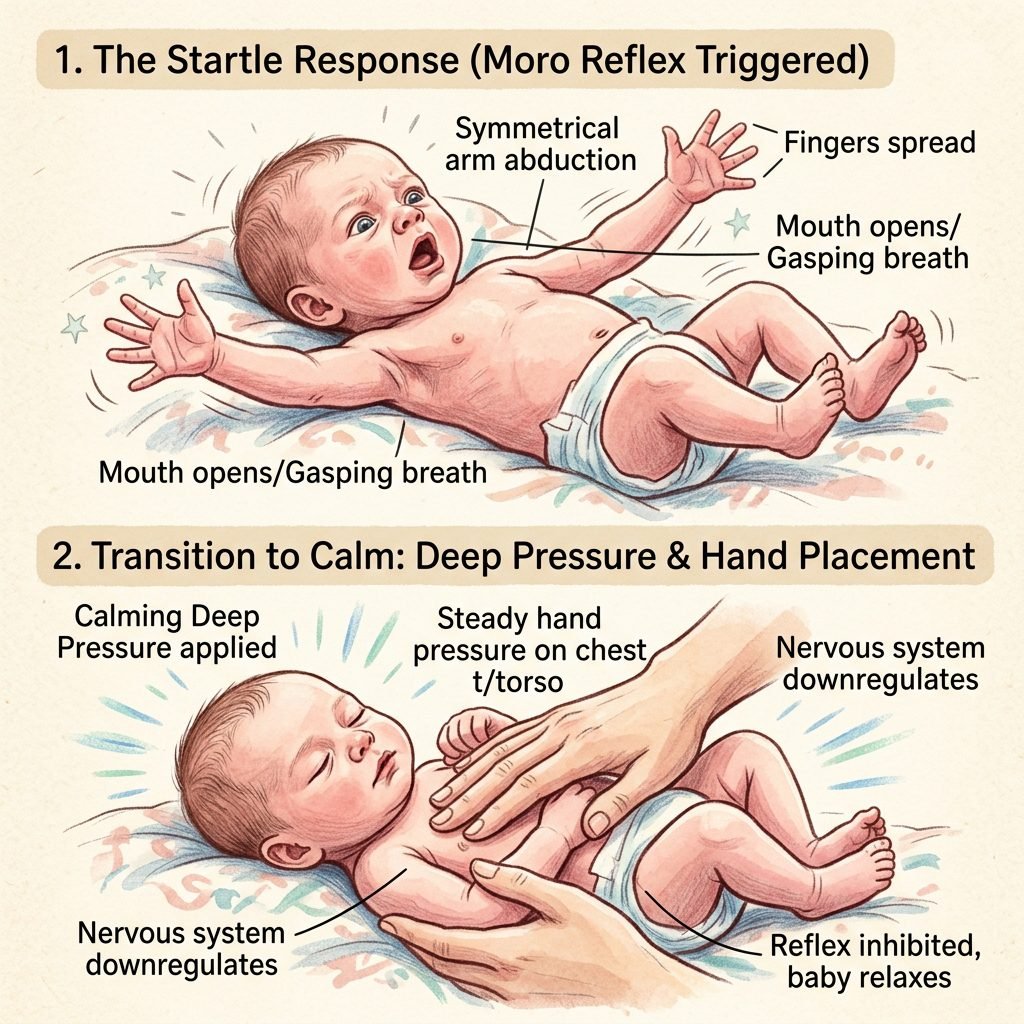
Before we dive into the technique, let’s talk about why the ‘ninja transfer’ usually fails. Newborns are born with the Moro Reflex, often called the startle reflex. When a baby feels a sudden change in position or a sensation of falling, their arms fling out, their body jerks, and they wake up in a state of alarm.
The Three Triggers of the Transfer Fail
- Temperature Shock: Going from your 98.6-degree body to a cold cotton sheet is a massive sensory shock.
- The Inner Ear Shift: When you tilt a baby horizontally to lay them down, the fluid in their inner ear shifts, signaling to their brain that they are no longer upright and safe.
- Loss of Containment: In your arms, they are compressed. On a flat mattress, they feel ‘exposed’ to the elements.
By understanding these triggers, we can use the Hand-on-Chest trick to counteract them. We aren’t just putting them down; we are mimicking the sensation of being held even after our arms have let go.
Step-by-Step: Mastering the Hand-on-Chest Technique
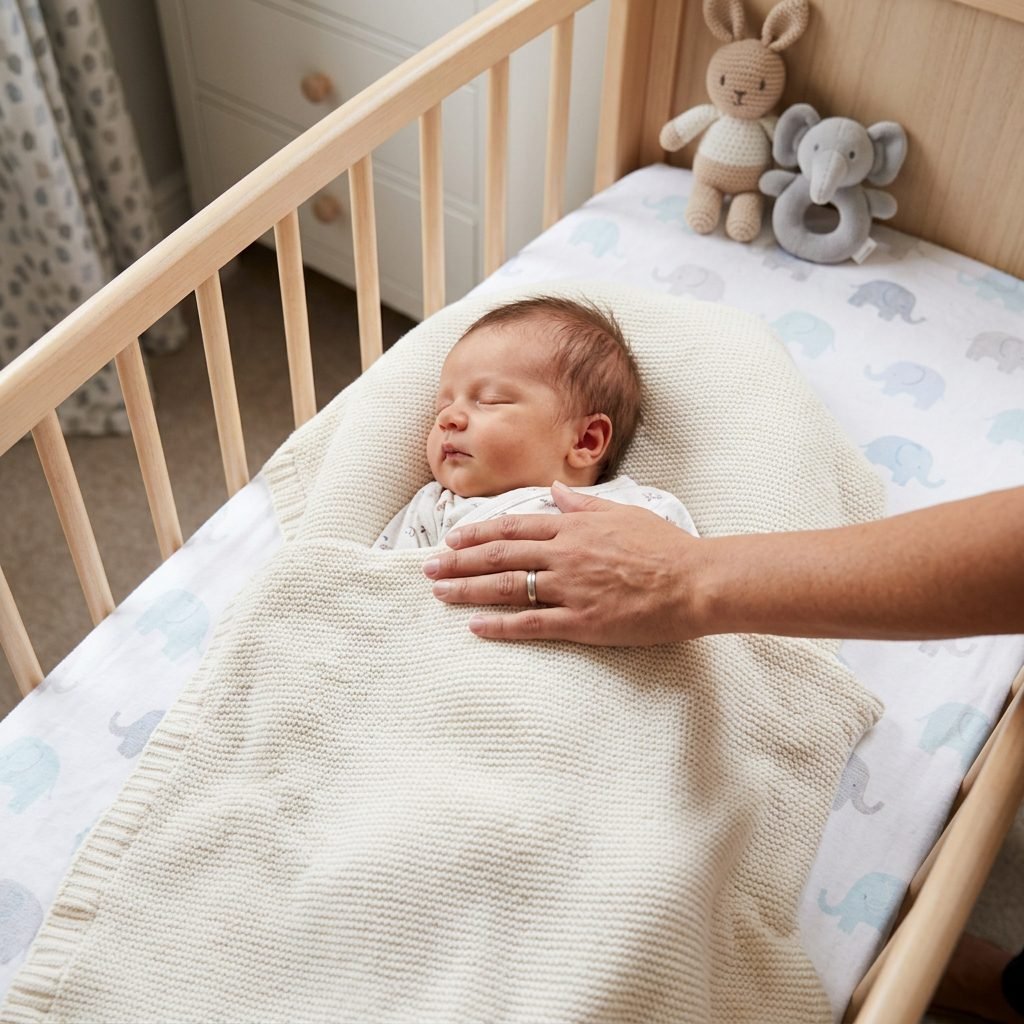
This method requires patience and a bit of ‘slow-motion’ grace. Follow these steps to ensure the highest success rate for a peaceful transition.
- The Limp Limb Test: Before you even move toward the crib, ensure your baby is in a deep sleep. Gently lift their arm and let it drop. If it falls like a heavy noodle, they are ready. If they pull back, wait another 5 to 10 minutes.
- The ‘Feet-First’ Descent: Never lead with the head. Lower the baby so their feet and bottom touch the mattress first. This prevents the sensation of falling.
- The Hand Placement: As you lower them, keep your non-dominant hand firmly but gently on their chest, and your dominant hand under their head/neck.
- The Slow Withdrawal: Once their body is fully on the mattress, do not pull away! Slide your hand out from under their head, but keep that firm hand on their chest.
- The Weighted Press: Apply a slight, comforting pressure to their chest and belly. This mimics the weight of your body and suppresses the Moro reflex if they happen to twitch.
- The 60-Second Rule: Stay there. Keep your hand on their chest for at least one full minute. If they stir, increase the pressure slightly and add a soft ‘shhh’ sound.
- The Finger-by-Finger Release: Slowly lift your fingers one by one until only your palm is touching, then lift away entirely.
“The goal isn’t just to put them down; it’s to convince their nervous system that they are still being held long after you’ve walked away.”
The Success Matrix: Comparing Transfer Methods
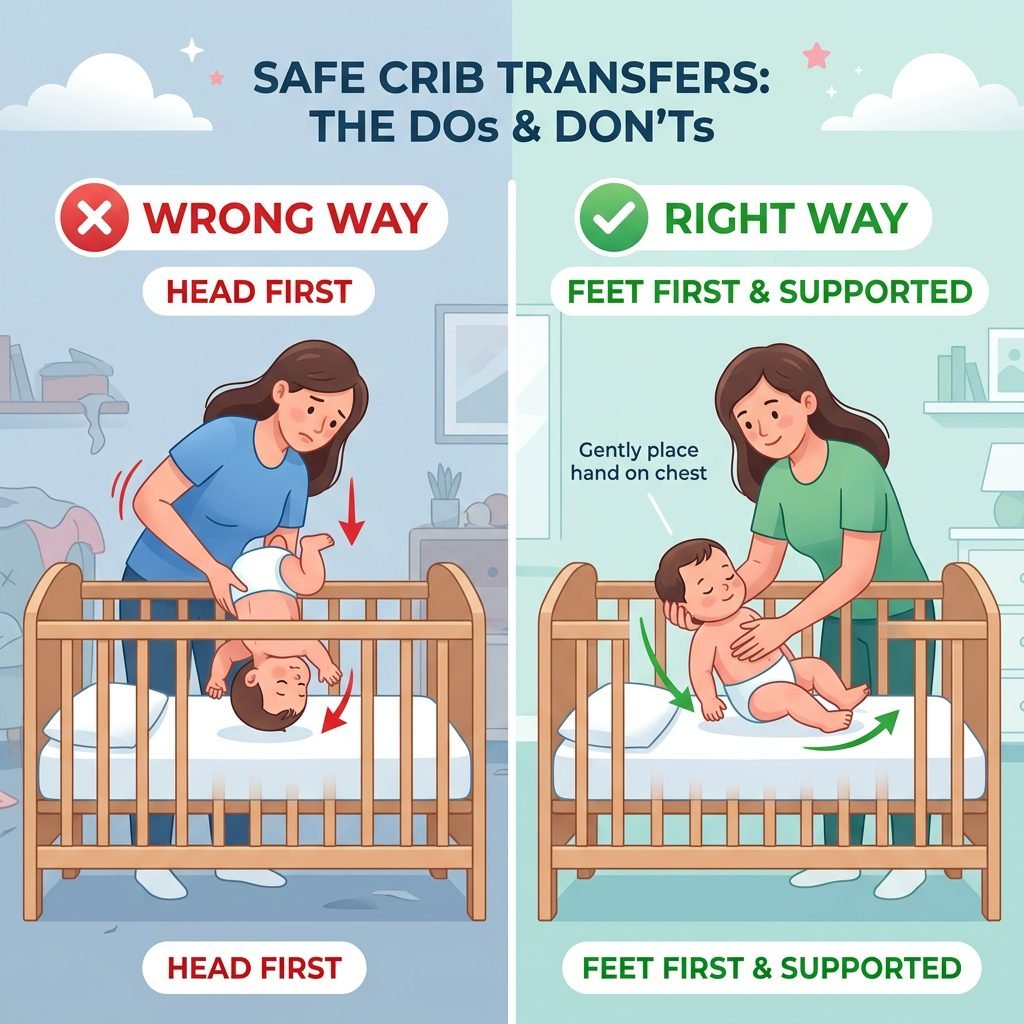
To help you visualize why this works better than the standard ‘drop and run’ method, I have compiled this comparison table. You will see that the Hand-on-Chest method addresses the sensory needs of the infant far more effectively.
| Feature | The ‘Standard’ Drop | The Hand-on-Chest Trick |
|---|---|---|
| Initial Contact | Head or back first (Triggers startle) | Feet and bottom first (Grounding) |
| Sensory Transition | Abrupt loss of heat and touch | Gradual transition of pressure |
| Startle Management | Baby wakes and cries | Hand pressure suppresses reflex |
| Success Rate | Low (approx. 30%) | High (approx. 85%) |
| Time Required | 10 seconds | 2 to 3 minutes |
As you can see, mama, taking those extra 120 seconds to apply the Hand-on-Chest trick can save you hours of re-settling later in the night.
Nursery Hacks to Support a Smooth Transfer

Your environment plays a huge role in whether the Hand-on-Chest trick will stick. If the room is too bright or the sheets are ice-cold, even the best technique won’t save the nap.
Prepare the ‘Landing Pad’
- Warm the Sheets: Use a heating pad on a low setting to warm the crib mattress for 5 minutes before the transfer. CRITICAL: Always remove the heating pad and check the temperature with your wrist to ensure it isn’t hot before laying the baby down.
- The Scent Trick: Sleep with the crib sheet for one night so it smells like you. A familiar scent is incredibly grounding for a newborn.
- White Noise Calibration: Ensure your white noise machine is running at about 50 to 60 decibels (the volume of a soft shower). This masks the sound of your footsteps as you walk away.
By optimizing the environment, you are creating a ‘sensory bridge’ that makes the Hand-on-Chest trick even more effective. You want the crib to feel like an extension of your own arms.
Troubleshooting: What to Do If They Stir
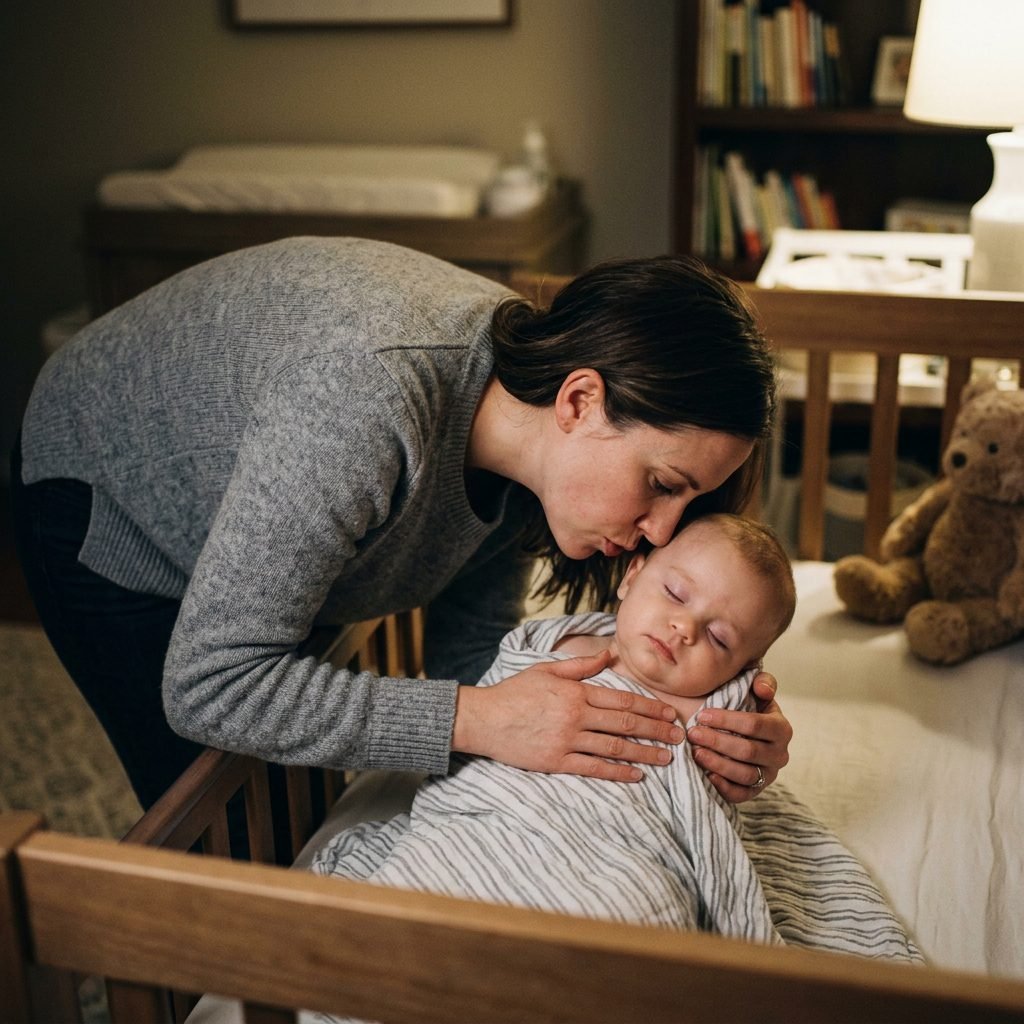
Even with the best technique, babies are unpredictable. If your little one begins to squirm or let out a ‘pre-cry’ during the transfer, do not pick them up immediately! Instead, try the ‘Shush-Pat’ combo while your hand is still on their chest.
The Recovery Protocol
- Freeze: The moment they stir, stop moving. Keep your hand firmly on the chest.
- Increase Pressure: Apply slightly more weight (think of it like a gentle ‘weighted blanket’ effect).
- Rhythmic Patting: Use your other hand to gently pat their hip or the mattress next to them. This rhythmic vibration is very soothing.
- Loud Shushing: Your shushing should be slightly louder than their crying to get their attention and help them regulate.
Most babies will settle back down within 30 to 60 seconds if you remain calm. If you panic and snatch them up, you confirm their fear that the crib is an unsafe place to be.
Conclusion
Mama, mastering the crib transfer is a skill, just like breastfeeding or swaddling. It takes practice, and some nights will be easier than others. The Hand-on-Chest Trick is your secret weapon to ensure that your hard work in rocking them to sleep doesn’t go to waste. Remember to be patient with yourself and your baby. You are doing an incredible job navigating these blurry, beautiful early days of motherhood.
“Sleep is a journey, not a destination. Each successful transfer is a win for both your baby’s development and your own mental well-being.”
Tonight, take a deep breath, trust the technique, and remember that you deserve that rest just as much as your little one does. Sweet dreams!