How to Style a Rotating Bookshelf to Save Space in Your Nursery Reading Corner
Embracing the Nesting Journey in Small Spaces
Welcome, sweet mama. If you are reading this, you are likely in that beautiful, whirlwind phase of nesting where every inch of your nursery feels like a canvas for the love you are already pouring into your little one. I know the feeling of looking at a small room and wondering how you will fit all the dreams, the gear, and the library of stories you want to share. As a doula and a nursery organizer, I have seen so many parents struggle with the ‘clutter overwhelm’ that often accompanies preparation. But here is a little secret from my heart to yours: you do not need a massive room to create a magical sanctuary.
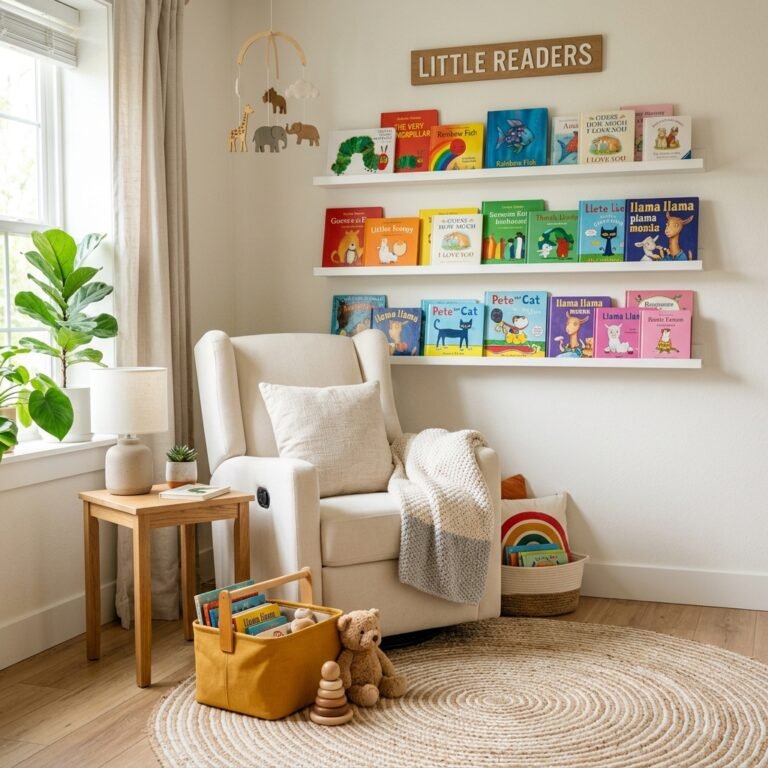
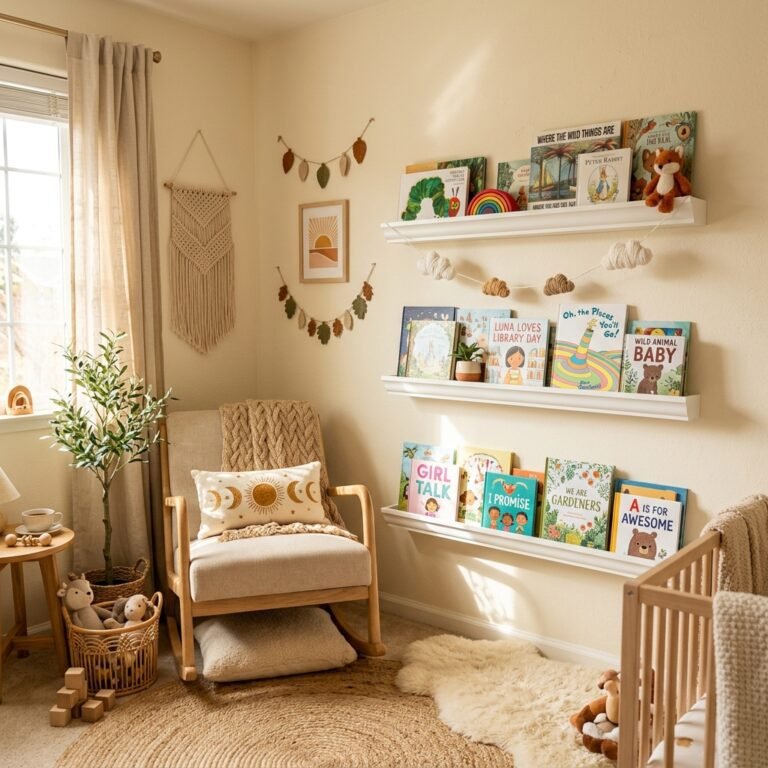
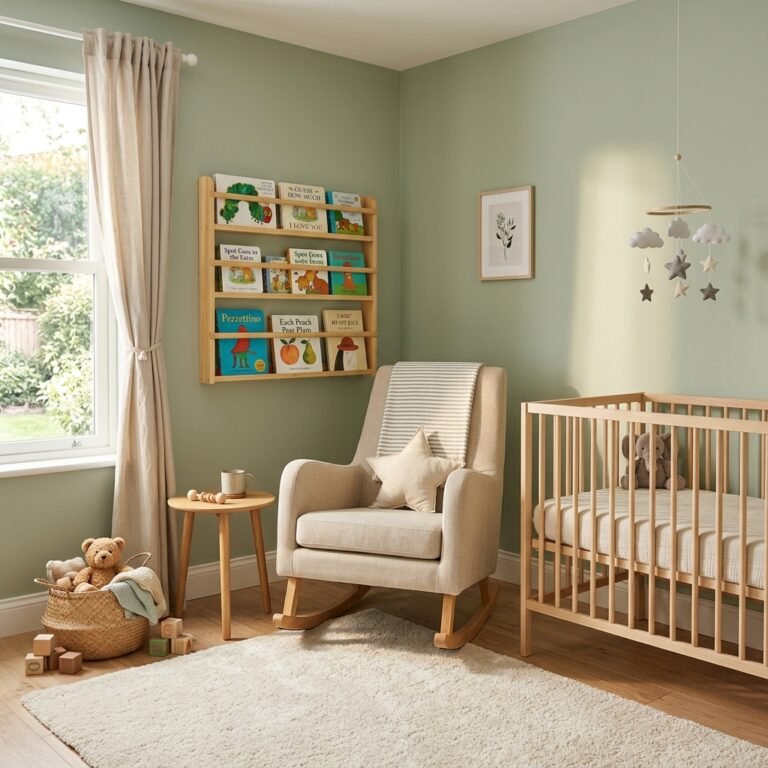
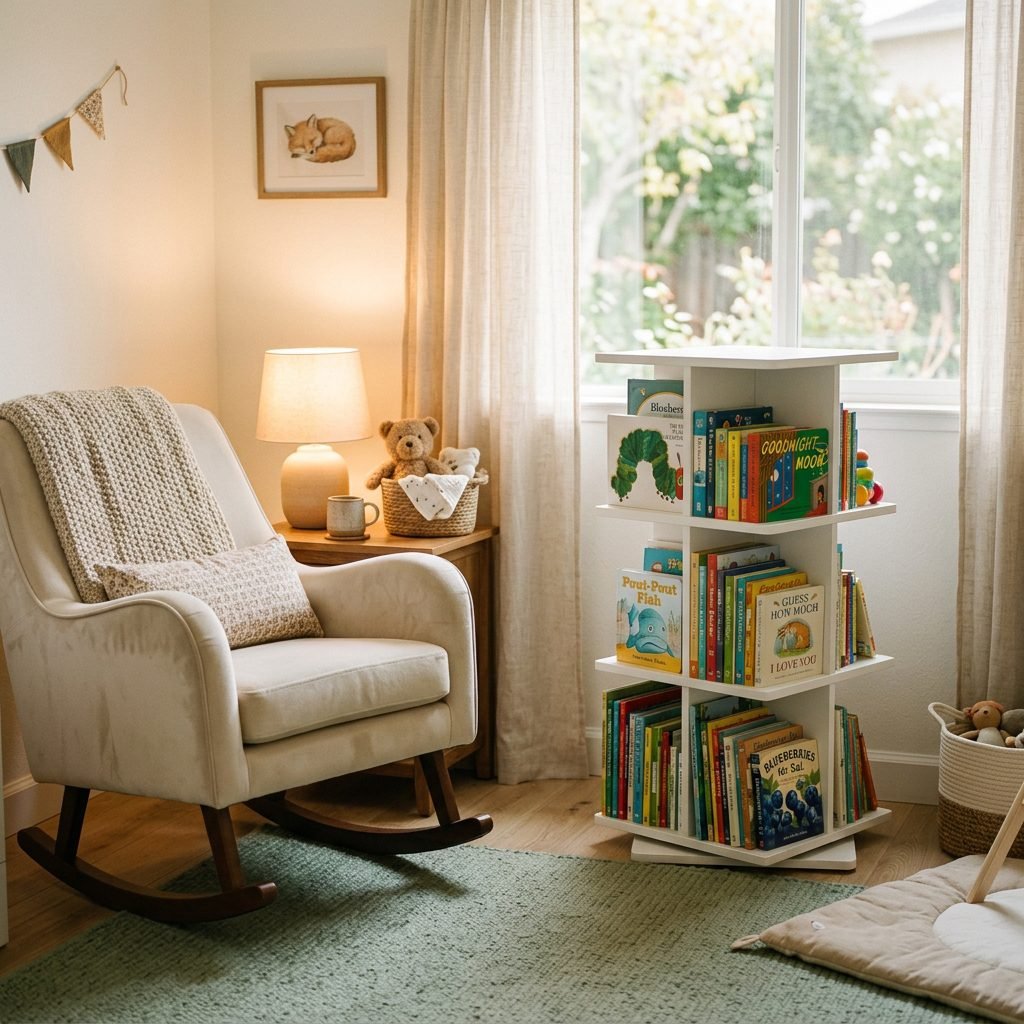
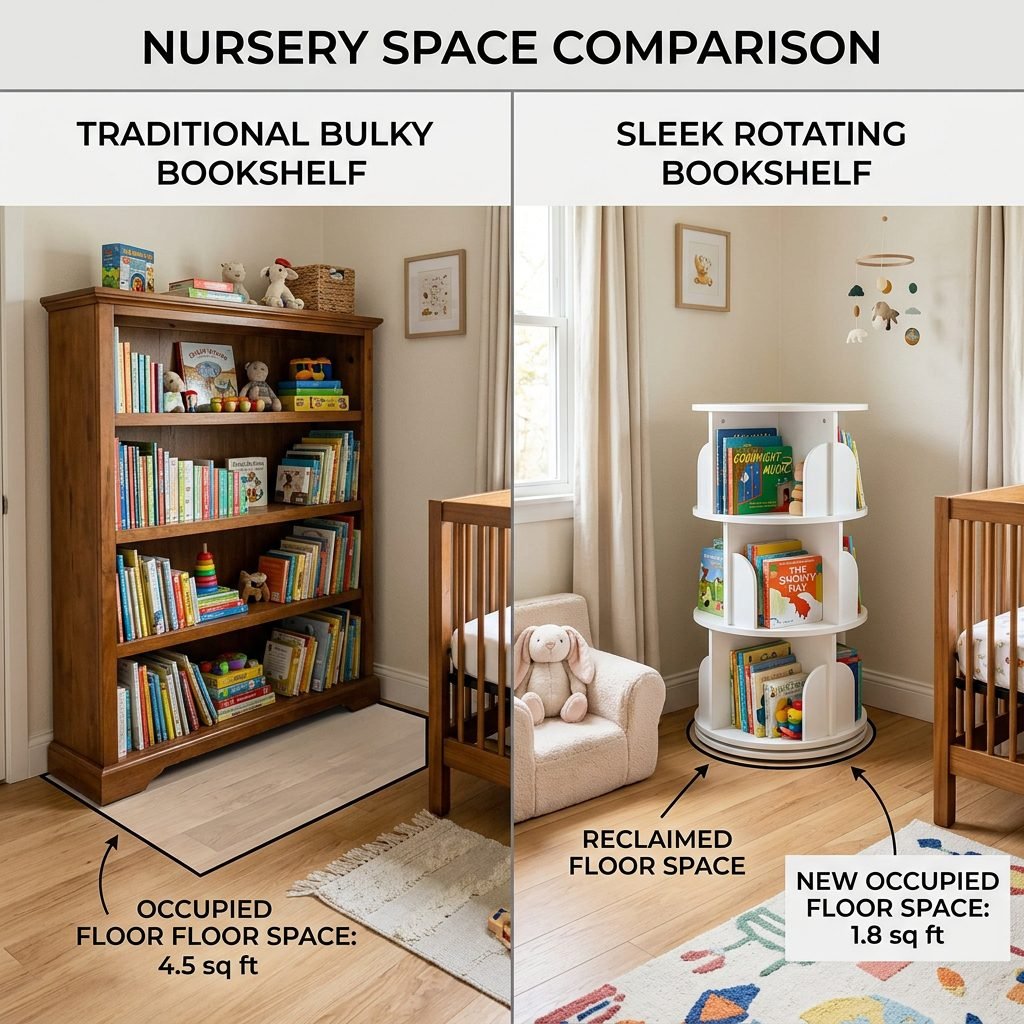
The reading corner is one of the most vital parts of your nursery ecosystem. It is where the midnight feedings happen, where the first giggles over ‘Pat the Bunny’ occur, and where your child’s imagination will first take flight. When space is at a premium, the traditional wide bookshelf can feel like a bulky intruder. That is where the rotating bookshelf, or the ‘book carousel,’ becomes your best friend. It is a vertical marvel that offers 360 degrees of storage while occupying a fraction of the floor space. In this guide, we are going to walk through how to choose, style, and organize this piece to serve both your aesthetic heart and your practical needs. Let’s take a deep breath together and start building this cozy nook.
Selecting Your 360-Degree Sanctuary: Finding the Perfect Fit
Choosing the Right Foundation for Your Nook
Before we dive into the styling, we need to ensure you have selected a bookshelf that aligns with your nursery’s dimensions and your baby’s safety needs. Rotating bookshelves come in various materials, from warm natural woods to sleek, modern acrylics. As a doula who values the ‘sensory environment,’ I often recommend solid wood or high-quality MDF for a grounded, earthy feel, or clear acrylic if you want the bookshelf to ‘disappear’ visually, making the room feel even larger.
Size and Scale Considerations
When measuring your space, remember that the ‘footprint’ of a rotating bookshelf is usually a square or a circle. You need to allow for the rotational clearance. This means you shouldn’t push it flush against two walls in a corner; leave at least 2 to 3 inches of breathing room so it can spin freely without scuffing your paint. Look for a 3-tier or 4-tier model. A 3-tier model is often the perfect height to sit next to a nursing glider, acting as both a library and a side table for your water bottle or phone.
| Feature | Traditional Wall Shelf | Rotating 3-Tier Tower |
|---|---|---|
| Floor Space Required | 3-5 Linear Feet | 1.5 Square Feet |
| Storage Capacity | 25-40 Books | 60-100 Books |
| Visual Weight | Heavy/Dominant | Light/Compact |
| Accessibility | Fixed Height | 360-Degree Access |
A doula’s reminder: Your nursery should serve you as much as the baby. Choose a height that allows you to reach the top tier comfortably while seated in your nursing chair.
Tiered Curations: Organizing by Developmental Stages
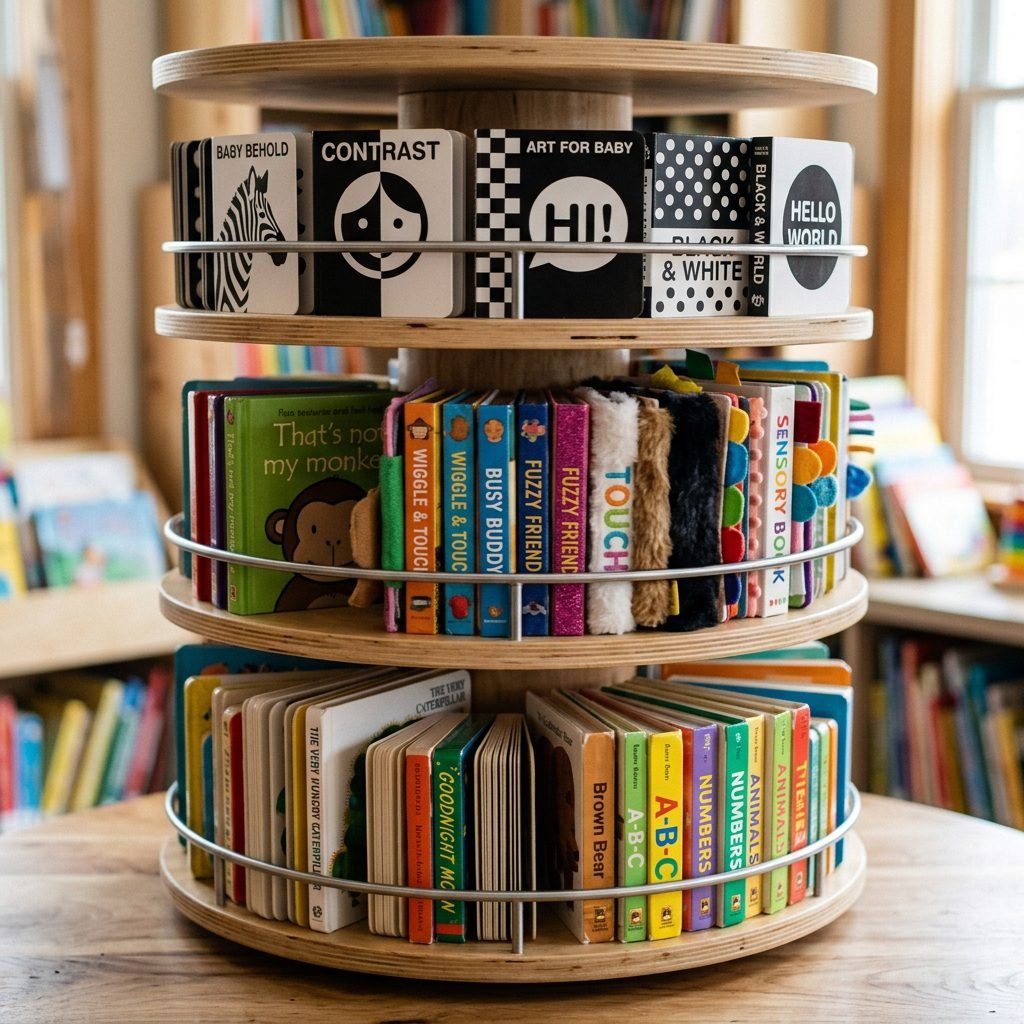
The Strategy of the Spin
One of the most functional ways to style your rotating bookshelf is to organize it by developmental priority. This isn’t just about making it look pretty; it’s about making those blurry-eyed 3:00 AM moments easier for you and, eventually, encouraging independent play for your toddler.
The Newborn Tier (The Top Level)
The top tier should be your ‘Parental Zone.’ Since your newborn won’t be reaching for books for a while, use this space for high-contrast black and white books that you can easily grab to show them during tummy time. It is also the perfect spot for your ‘parenting bibles’—those sleep guides or breastfeeding manuals you find yourself reaching for constantly. Pro tip: Use a small basket on this tier to hold pacifiers or a spare burp cloth.
The Interactive Tier (The Middle Level)
The middle tier is for the ‘Touch and Feel’ books and the musical sound books. These are the ones you will use most during the 6-to-12-month stage. Because this tier is at eye level when you are sitting in a glider, it should house the stories you read every single night. Consistency is key for infant sleep hygiene, and having your ‘bedtime favorites’ right here at arm’s reach creates a smooth transition to sleep.
The Toddler Tier (The Bottom Level)
The bottom tier is all about sturdy board books. As your little one begins to crawl and pull themselves up, they will naturally gravitate toward this level. By placing the heavy, durable board books here, you are encouraging ‘shelf-work’—a Montessori-aligned practice where the child chooses their own activity. It also keeps the heavier books at the base, which adds stability to the unit’s center of gravity.
- Top: High-contrast, parenting guides, nursery rhymes.
- Middle: Soft books, touch-and-feel, interactive flaps.
- Bottom: Heavy board books, oversized picture books.
Styling Secrets: Balancing Aesthetics with Tiny Hands
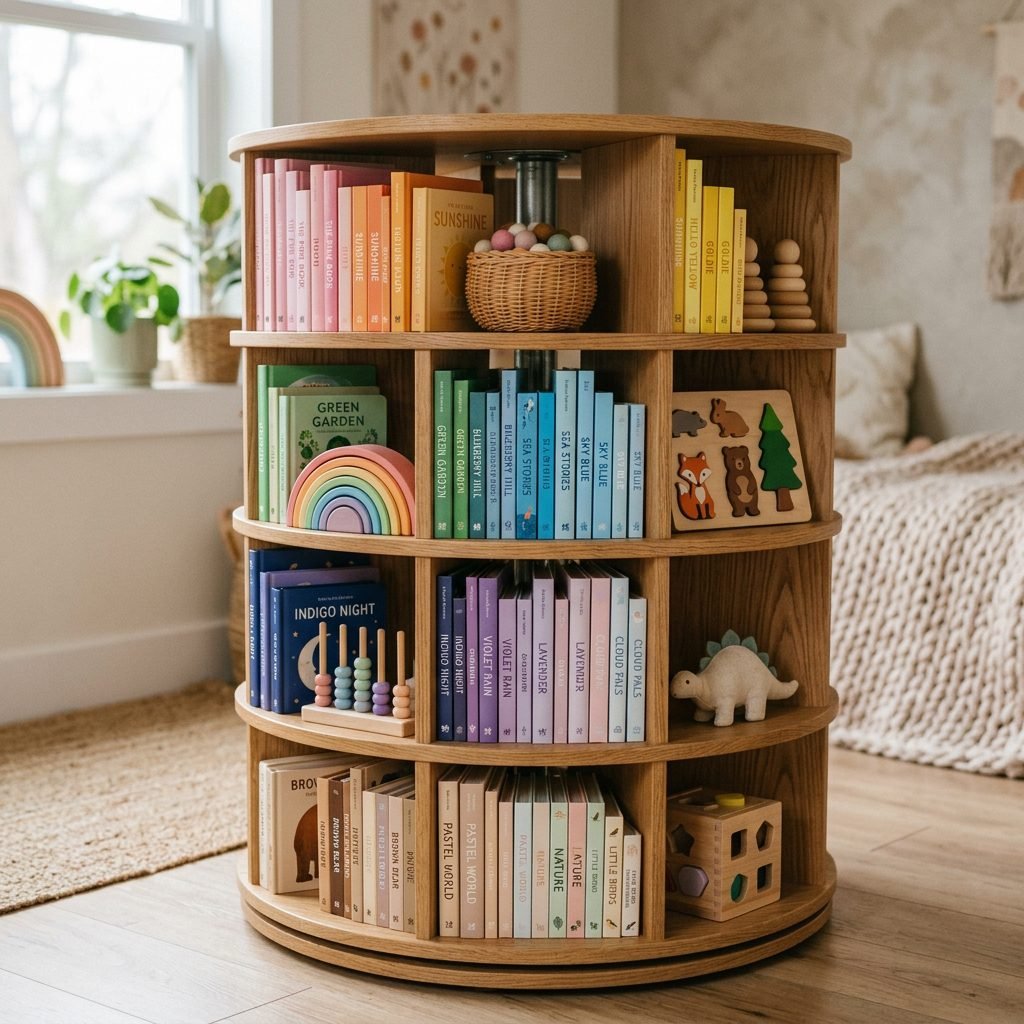
Creating a Visual Masterpiece
Now, let’s talk about the ‘pretty’ part! You want this bookshelf to look like it belongs in a curated boutique, but it has to be functional. The beauty of a rotating shelf is that you have four distinct ‘faces’ to style. You can treat each side as a different ‘vibe’ or maintain a cohesive look throughout.
The Rainbow Method vs. The Minimalist Look
If you love a pop of color, try the Rainbow Method. Arrange the book spines by color—red, orange, yellow, green, blue, indigo, violet—as you move around the carousel. This creates a stunning visual rhythm that is surprisingly soothing to the eye. If you prefer a more ‘Boho’ or ‘Scandi’ look, turn the books so the pages face out (the ‘neutral spine’ look), though this can make finding a specific book a bit harder for you!
Incorporating Non-Book Elements
To prevent the bookshelf from looking like a library stack, mix in some non-book decor. On each tier, leave a small gap for:
- A small, non-toxic wooden toy or rattle.
- A tiny potted faux-succulent (keep real plants out of reach!).
- A framed birth announcement or a sonogram photo.
- Small wicker baskets to hold ‘sensory bins’ or small stuffed animals.
These elements break up the vertical lines of the book spines and add texture. Remember, mama, negative space is your friend. You don’t have to jam-pack every inch. Leaving a little room allows the eye to rest and makes the room feel more spacious.
Maximizing the Vertical: The Top Surface Utility
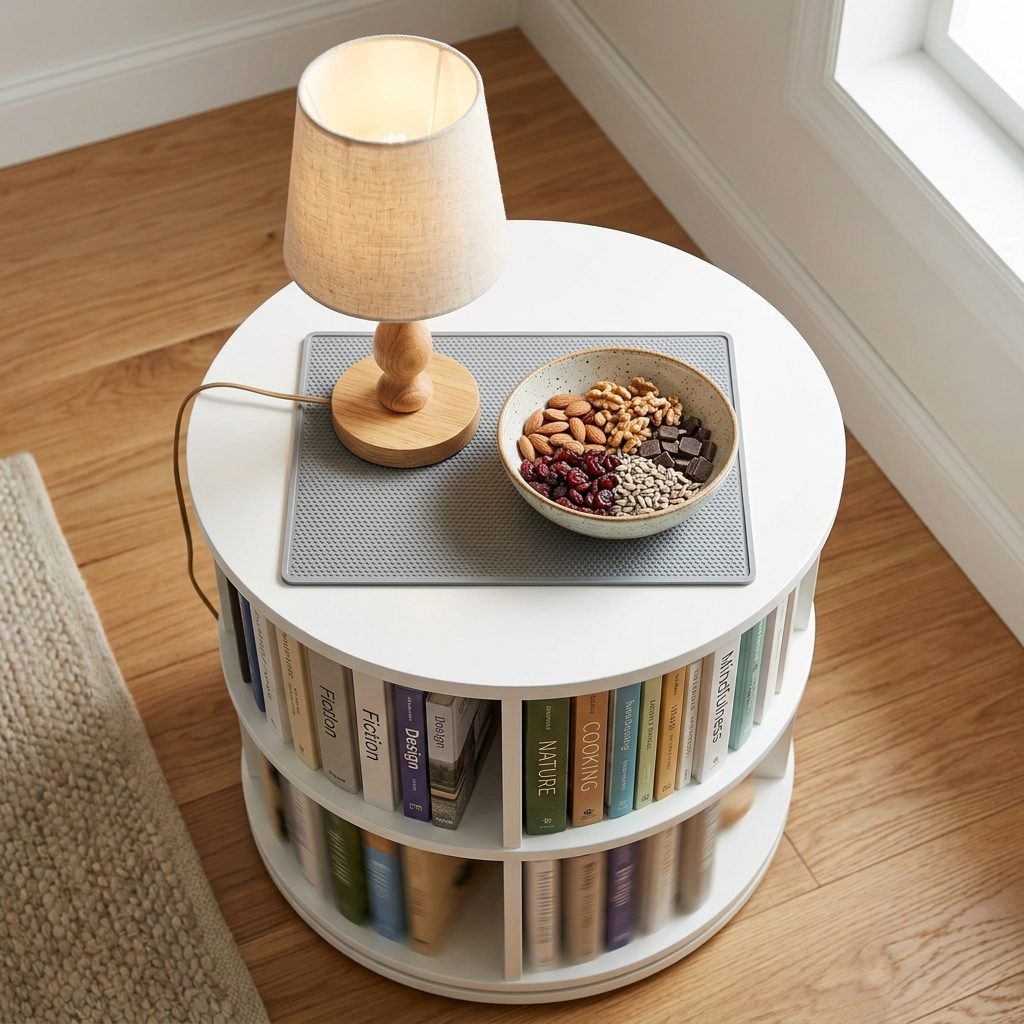
The ‘Bonus’ Side Table
In a small nursery, every flat surface is prime real estate. The top of your rotating bookshelf is more than just a lid; it is a functional tabletop. Because the unit rotates, you want to be careful about what you place here, but with a few ‘grippy’ hacks, it can be a lifesaver.
Essentials for the Top Tier
I recommend using the top surface for items you need while nursing or rocking. A dimmable nightlight is a perfect candidate. Look for a cordless, rechargeable one so you don’t have to worry about a power cord tangling as the shelf spins. A white noise machine also fits perfectly here, projecting sound evenly across the room.
The ‘Grippy’ Secret
Crucial Tip: To prevent items from sliding off when you or your toddler spins the shelf, apply a small piece of museum wax or a non-slip silicone mat to the bottom of your lamp or noise machine. This keeps your items secure while allowing the shelf to do its job. You might also place a small tray here to hold your ‘nursing snacks’ or a haakaa during those long evening clusters.
Sisterly Advice: Always keep your water bottle on the top surface. Staying hydrated is the number one rule of postpartum recovery, and having it right there in your reading nook ensures you never forget.
The Reading Nook Ecosystem: Rugs, Lighting, and Comfort
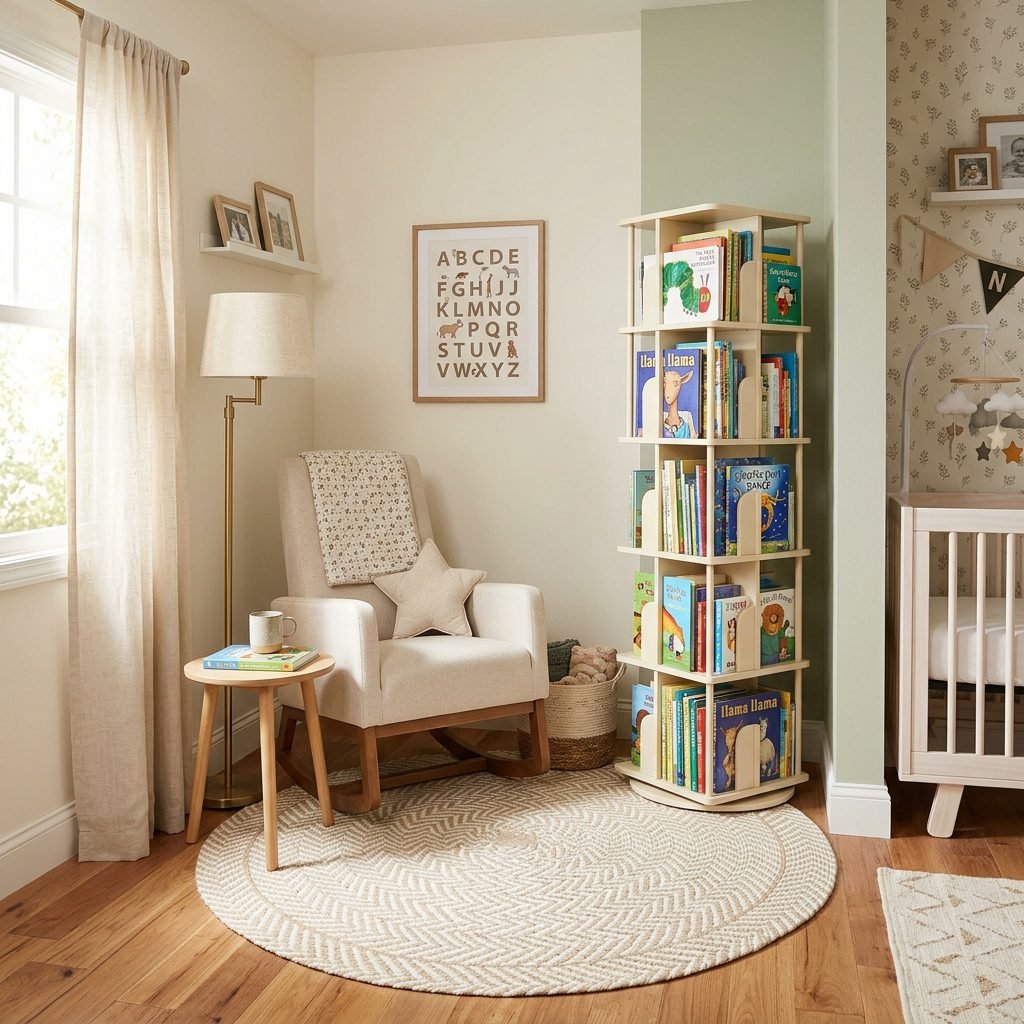
Designing Around the Shelf
Your rotating bookshelf is the star, but it needs a supporting cast to create a true ‘nook’ feel. To save space, we want to define the area without adding walls or bulky dividers.
Defining the Space with Textiles
Place a small, round rug (about 3 to 4 feet in diameter) directly under the bookshelf and the front legs of your rocking chair. This ‘anchors’ the furniture and tells the brain, ‘This is a separate, cozy zone.’ A sheepskin or a high-pile shag rug adds the sensory softness that babies love during floor play.
Layering the Comfort
Since the bookshelf is saving you so much floor space, you might have room for a floor pouf or a large linen cushion. This gives you a place to rest your feet while nursing, and later, it becomes a ‘crash pad’ for your toddler to sit on while they pick out books from the bottom tier of their carousel. Add a soft muslin throw over your chair to complete the look. Lighting should be warm and low—avoid harsh overhead lights which can overstimulate a baby’s developing nervous system.
| Element | Small Space Choice | Benefit |
|---|---|---|
| Rug | Round 4′ Jute or Washable Cotton | Defines the zone without ‘cutting’ the room. |
| Seating | Slim-profile Swivel Glider | Allows you to turn toward the shelf easily. |
| Lighting | Cordless LED Mushroom Lamp | Safe, portable, and fits on the shelf top. |
| Storage | Vertical Rotating Tower | Holds 3x more books than a standard shelf. |
Safety and Longevity: A Doula’s Checklist

Ensuring a Secure Environment
As much as we love aesthetics, safety is our non-negotiable priority. A rotating bookshelf is a moving piece of furniture, and as your baby grows into a curious toddler, they will want to test its limits. Here is how we keep the space safe and functional for years to come.
Anchoring and Weight Distribution
Most rotating bookshelves are designed to be stable, but center of gravity is everything. Always place your heaviest books (large encyclopedias, heavy board books) on the bottom tier. This prevents the unit from becoming top-heavy. While you cannot ‘anchor’ a rotating shelf to the wall in the traditional sense (as it needs to spin), you should ensure it is placed on a level surface. If your nursery has thick carpeting, consider placing a thin, solid piece of plywood under the base to ensure it doesn’t wobble.
Finger Safety and Non-Toxic Finishes
Check the clearance between the tiers. You want to make sure there are no ‘pinch points’ where tiny fingers could get caught as the shelf rotates. Look for models with smooth, rounded edges and Greenguard Gold Certified finishes. This ensures that the ‘new furniture smell’ isn’t actually off-gassing chemicals into your baby’s sleeping environment. As a doula, I always advocate for the ‘sniff test’—if it smells strongly of chemicals, let it air out in a garage or sunroom for at least a week before bringing it into the nursery.
- Check for smooth rotation without jerky movements.
- Inspect all screws and fasteners monthly to ensure they haven’t loosened.
- Clean with a simple damp cloth; avoid harsh sprays that can degrade the wood finish.
- Teach your toddler ‘gentle hands’ when spinning the library.
Conclusion
Your Sanctuary Awaits
Mama, as you stand back and look at your newly styled reading nook, I want you to take a moment to acknowledge the incredible work you are doing. Styling a rotating bookshelf isn’t just about ‘saving space’—it is about intentionality. You are creating a space where your child will feel safe, where they will learn the rhythm of your voice, and where they will discover worlds beyond their nursery walls.
By choosing a vertical, rotating solution, you have cleared the physical clutter, which in turn helps clear the mental clutter. You’ve created a room that breathes. Whether you are color-coding by the rainbow or organizing by developmental stages, remember that the most important ‘style’ in this room is the love you bring to it. You’ve got this, and your little one is so lucky to have a mama who cares so much about the details of their world. Happy reading, and may your nursery be a place of endless peace and wonder.