Tight Hips? This 10-Minute Prenatal Flow Will Change Your Life
Welcome to Your Moment of Relief, Mama
Oh, sweet mama, I know that feeling all too well. It starts as a dull ache in your lower back, then transforms into that ‘tightening’ sensation in your hips, and before you know it, you’re doing the ‘pregnancy waddle’ just to get to the kitchen. Whether you are in your first trimester and feeling the initial shifts of your center of gravity, or you are in those final weeks where ‘lightning crotch’ and pelvic pressure have become your constant companions, your hips are carrying a lot right now—literally and figuratively.
As a doula, I often tell my clients that the hips are the ‘junk drawer’ of the body; we store our physical tension, our birth anxieties, and the literal weight of our growing miracles right there in the pelvic bowl. But here is the good news: you do not have to just ‘tough it out’ until delivery. This 10-minute prenatal flow is designed to create space where you feel restricted, bring blood flow to your pelvic floor, and help you reconnect with your changing body. It is more than just a stretch; it is a way to tell your body, ‘I hear you, and I’ve got you.’
Before we dive into the movement, take a deep breath. Release your jaw. Drop your shoulders. You are doing the incredible work of building a human, and you deserve these ten minutes of pure, unadulterated comfort. Let’s get onto the mat and unlock those hips together.
The Science of the ‘Pregnancy Waddle’: Why Your Hips Are So Tight
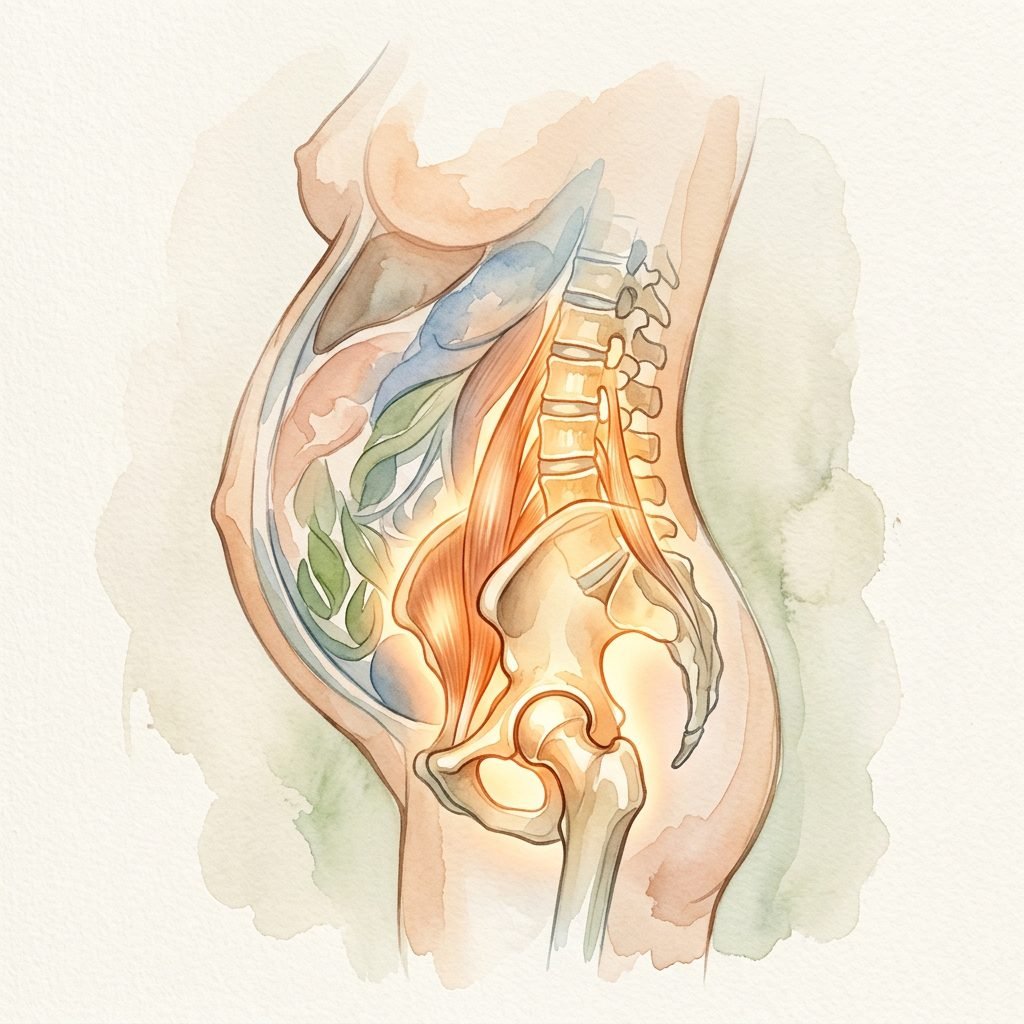
You might be wondering why your hips, which were perfectly fine a few months ago, now feel like they belong to a rusty tin man. It isn’t just the extra weight of the baby; it is a complex hormonal and structural dance happening inside you. The primary culprit is a hormone called Relaxin. While its job is beautiful—softening your ligaments and joints to allow your pelvis to open for birth—it also makes your joints less stable. To compensate for this instability, your muscles (especially your hip flexors and psoas) often ‘grip’ and tighten up to keep you steady.
Common Causes of Hip Discomfort
- Shifting Center of Gravity: As your belly grows forward, your pelvis tilts anteriorly, putting immense pressure on the hip sockets.
- The Psoas Connection: This deep muscle connects your spine to your legs. When it’s tight from sitting or carrying weight, it pulls on your lower back.
- Pelvic Girdle Pain (PGP): Often caused by the uneven movement of the pelvic joints, leading to sharp pains or a feeling of ‘grinding.’
Understanding that this tightness is actually your body trying to protect you can help you approach your stretches with more grace and less frustration. We aren’t trying to ‘fix’ a broken body; we are simply helping a hardworking body find its balance again.
Safety First: The Doula’s Guide to Prenatal Movement
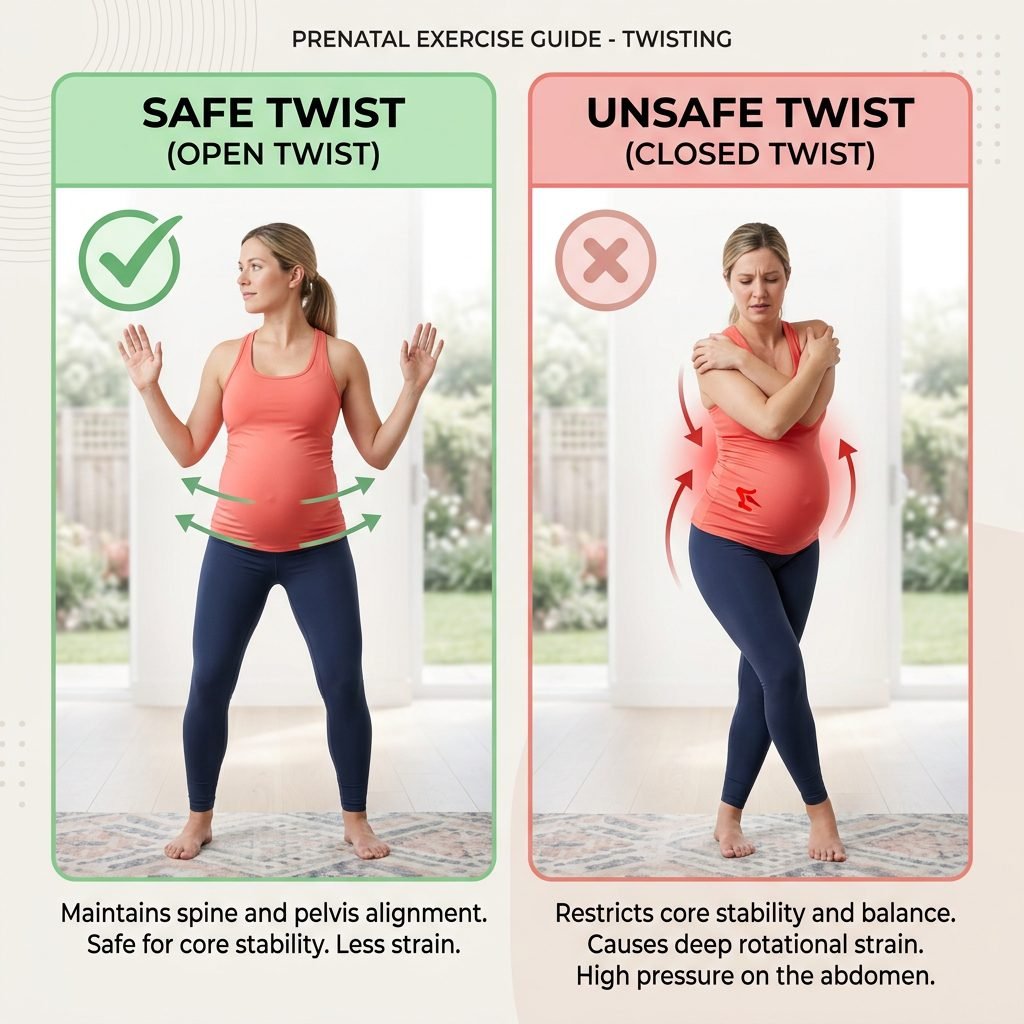
Before we begin our flow, we must establish the ‘Safety Sanctuary.’ Pregnancy is not the time to push for your deepest-ever split or to ignore a sharp pain. Your body is already hyper-flexible due to Relaxin, so it is very easy to overstretch without realizing it. We want to aim for ‘functional mobility’—movement that feels good and helps you move better in your daily life.
| Movement Type | Safe & Recommended | Avoid or Modify |
|---|---|---|
| Twisting | Open twists (moving the shoulders while keeping the belly facing forward). | Closed twists (crossing the belly over the thigh, which compresses the uterus). |
| Forward Folds | Wide-legged folds to make plenty of room for the ‘bump.’ | Narrow-legged folds that squish the belly or restrict breath. |
| Lying Down | Side-lying or propped up with several pillows/bolsters. | Flat on your back for long periods (after 20 weeks) to avoid vena cava compression. |
| Stretching Depth | Staying at about 70% of your maximum range of motion. | Pushing into ‘painful’ territory or bouncing in a stretch (ballistic stretching). |
Doula Tip: If you feel any sharp, shooting pains in your pubic bone (Symphysis Pubis Dysfunction), keep your knees closer together and avoid wide-legged asymmetrical poses like Warrior II or deep side lunges.
The 10-Minute Life-Changing Hip Flow
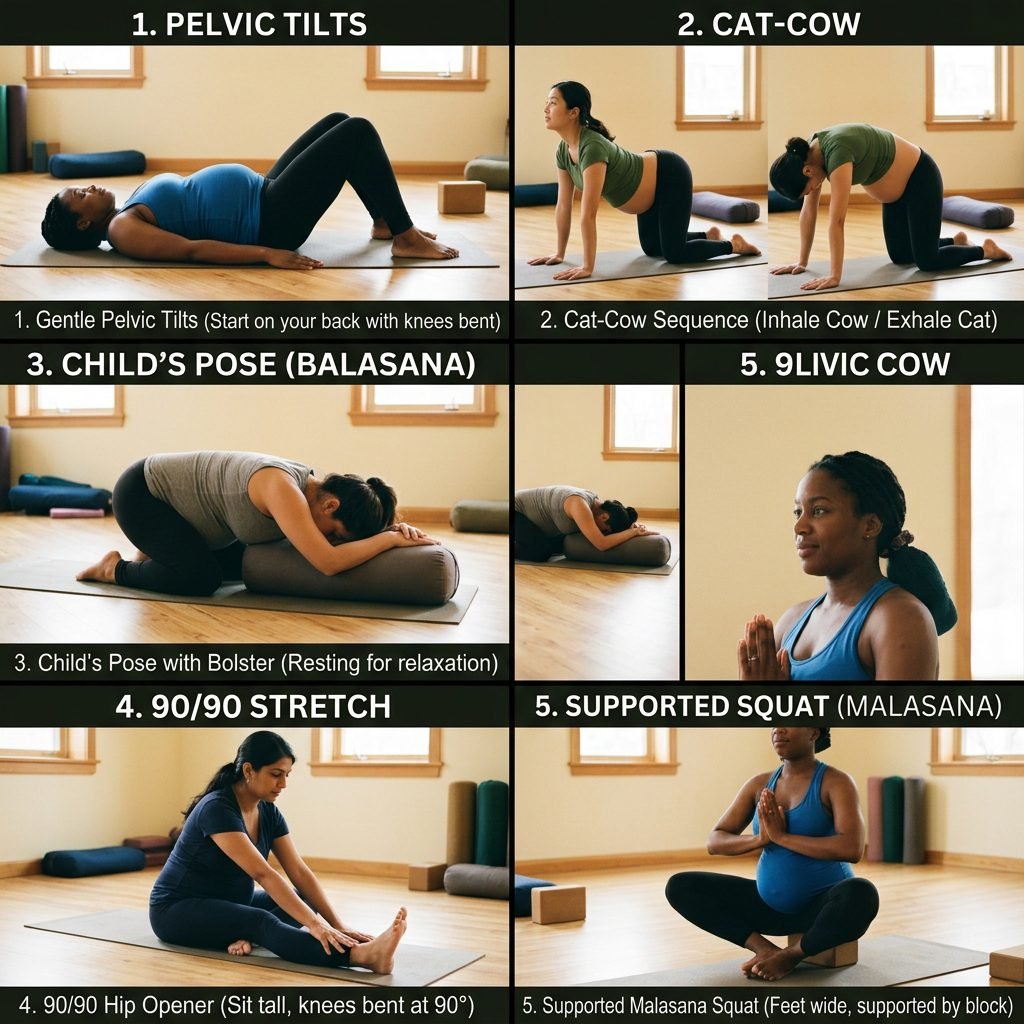
Find a quiet space, grab a couple of bed pillows or a yoga block, and let’s begin. Move slowly, breathe deeply, and remember that your breath is the most important part of this practice.
1. Seated Pelvic Tilts & Circles (2 Minutes)
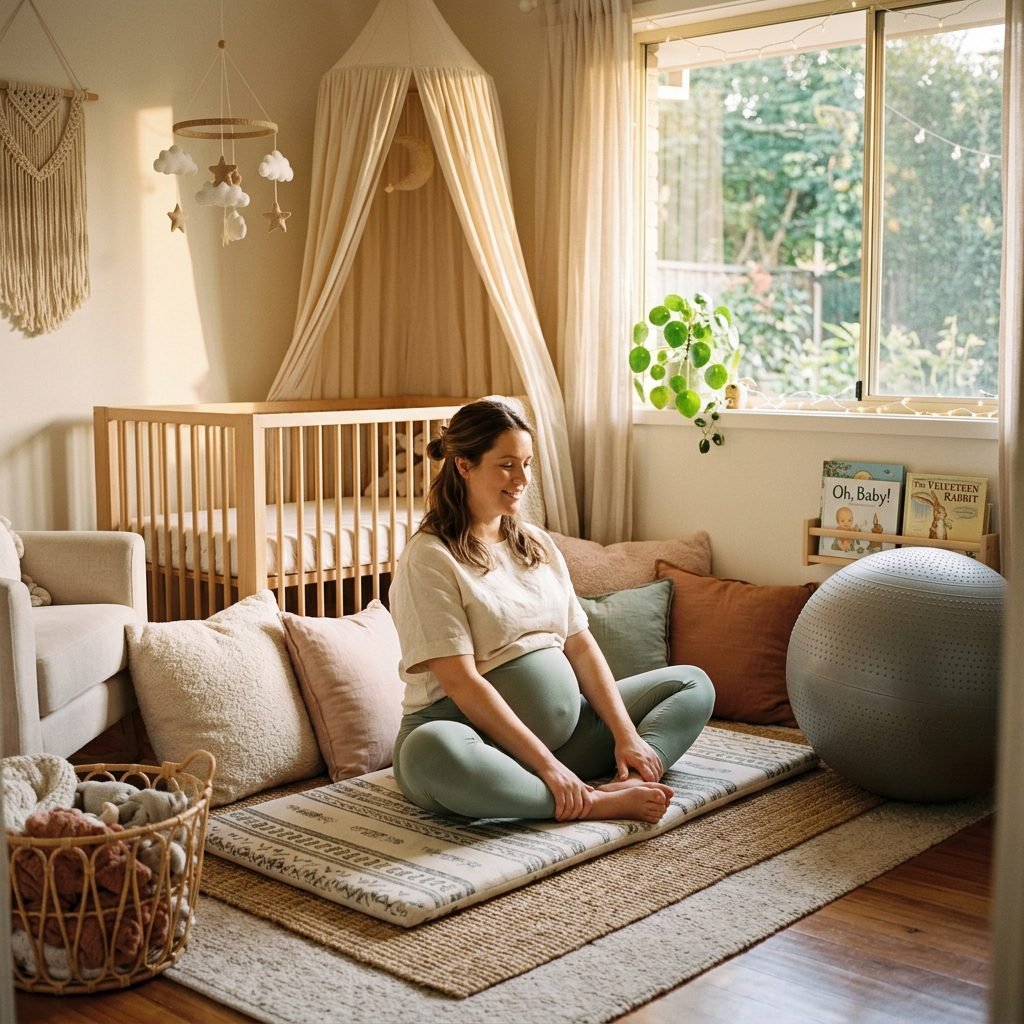
Start in a comfortable cross-legged position (Sukhasana). If your hips are very tight, sit on the edge of a folded blanket. Place your hands on your knees. As you inhale, gently arch your back and look up, opening your chest. As you exhale, round your spine like a cat, tucking your chin. After a few rounds, start making large circles with your torso, as if you are stirring a giant pot with your ribs. This wakes up the pelvic floor and lubricates the hip sockets.
2. Cat-Cow with a ‘Wag the Tail’ (2 Minutes)
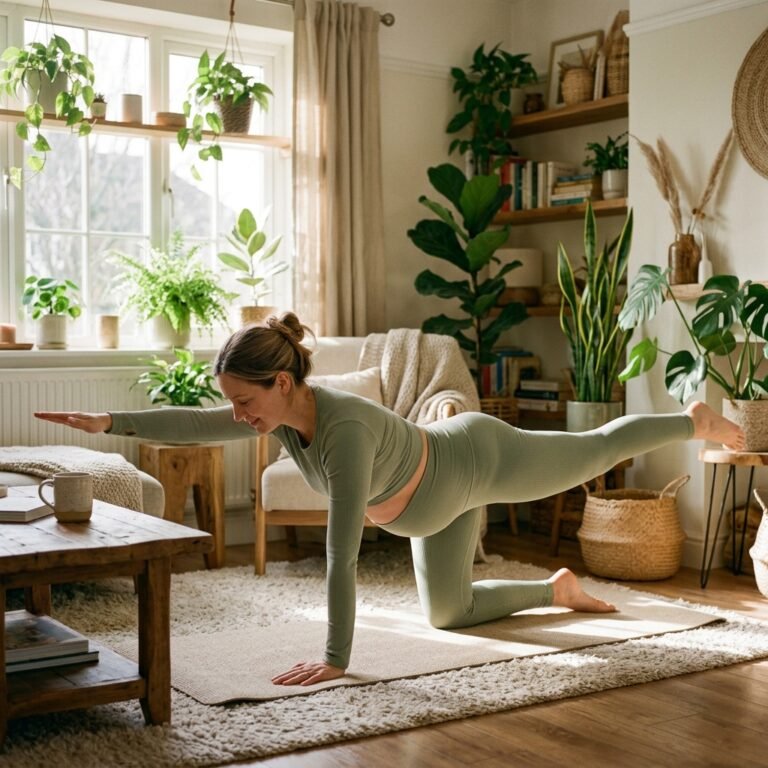
Move to your hands and knees. Ensure your wrists are under your shoulders and knees are under your hips (or wider for the belly). Flow through Cat-Cow, but at the top of the movement, gently shift your hips from side to side, as if you are ‘wagging your tail.’ This releases the lateral hip muscles and the QL (quadratus lumborum) in your lower back.
3. Wide-Knee Child’s Pose with Side Stretch (2 Minutes)
Bring your big toes together and take your knees as wide as the mat. Sink your hips back toward your heels. If they don’t reach, place a pillow between your calves and thighs. Walk your hands forward and rest your forehead on the mat or a block. To add the side stretch, walk both hands to the right side, breathing into your left ribcage and hip. Switch sides after 1 minute. This creates space in the side body which is often compressed as the baby moves up.
4. Modified Pigeon Pose (2 Minutes)
Instead of the traditional deep pigeon, we will do the ’90/90′ stretch. Sit on the floor with your right leg bent at a 90-degree angle in front of you and your left leg bent at a 90-degree angle to the side. Lean forward slightly over your front shin until you feel a gentle stretch in the outer right hip. This is much safer for the sacroiliac (SI) joint during pregnancy. Hold for 1 minute per side.
5. Supported Malasana (Yogi Squat) (2 Minutes)
This is the ultimate birth-prep pose! Stand with your feet wider than your hips, toes pointed out. Slowly lower your hips into a squat. Crucial: Sit on a stack of books, a yoga block, or a sturdy stool. We want the benefits of the hip opening without the strain of holding your weight. Press your elbows against your inner thighs and bring your palms to your heart. Breathe deep into your pelvic floor, visualizing it softening and opening.
Beyond the Mat: Daily Habits for Happy Hips
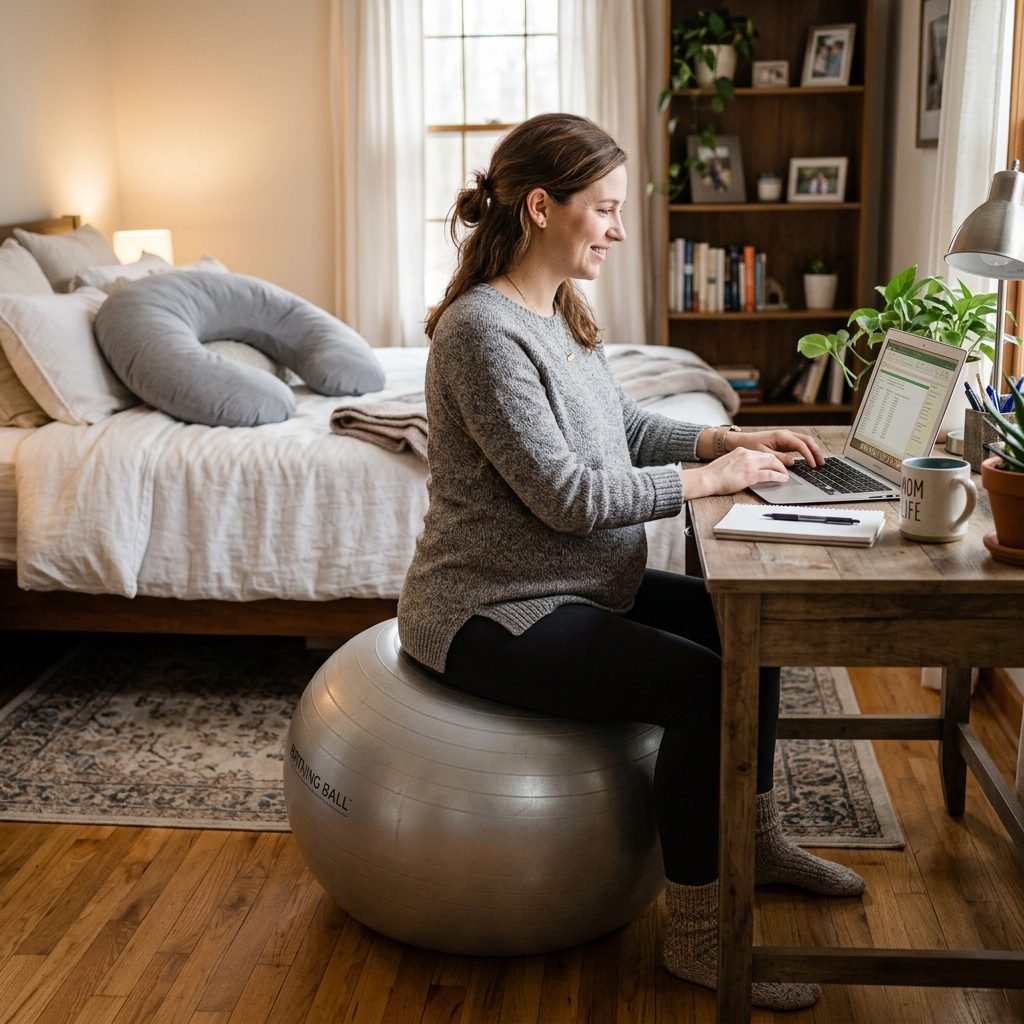
While a 10-minute flow is life-changing, how you move the other 23 hours and 50 minutes of the day matters just as much. Your hips are constantly reacting to your environment. Here are my top doula-approved ‘Hip Hacks’ for daily life:
- The Birthing Ball is Your Best Friend: Swap your office chair or sofa for a properly inflated birthing ball. It keeps your pelvis in an active, neutral position and encourages the baby into an optimal birthing position (LOA).
- Pillow Forts are Mandatory: When sleeping on your side, place a firm pillow between your knees and your ankles. This keeps your hips stacked and prevents the top leg from pulling your pelvis out of alignment.
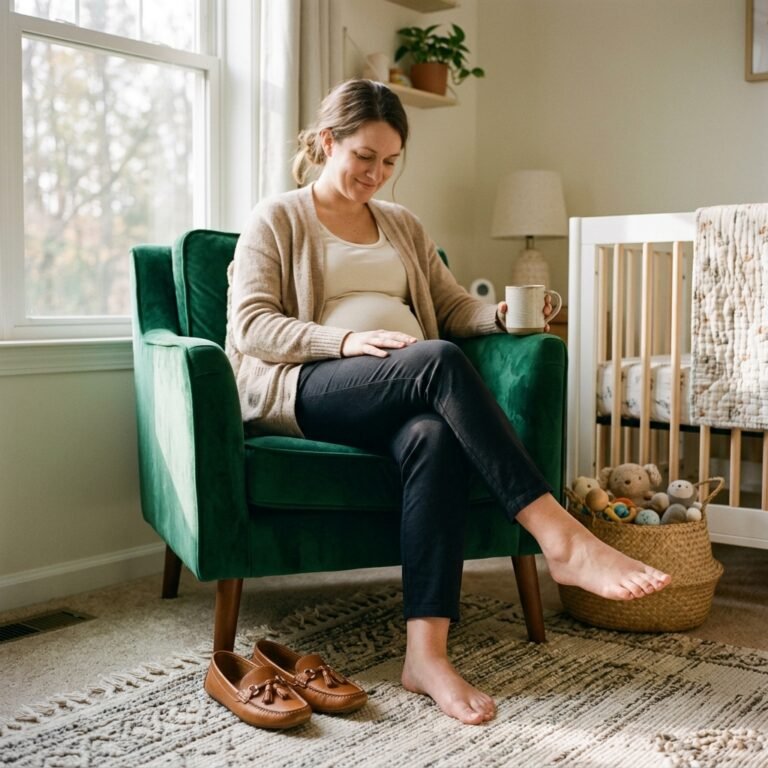
- Mind Your Footwear: Your feet are the foundation of your hips. Avoid high heels or completely flat, unsupportive flip-flops. Look for shoes with good arch support to prevent your gait from stressing your hip joints.
- The ‘Sit Like a Man’ Rule: Avoid crossing your legs at the knees. This cuts off circulation and twists the pelvis. Instead, cross at the ankles or keep both feet flat on the floor.
The Emotional Release: Why Hips and Heart are Connected

In the world of yoga and somatic healing, we say the ‘hips hold the issues.’ As you prepare for motherhood, you might be carrying fears about labor, anxieties about your new identity, or the stress of a nursery ‘to-do’ list. Because the psoas muscle is closely linked to our ‘fight or flight’ response, it tightens when we are stressed.
As you move through your hip flow, don’t be surprised if some emotions bubble up. You might feel a sudden urge to cry, or a wave of relief, or even a burst of power. This is normal and healthy. Use these affirmations to help settle your mind as you soften your body:
“My body is soft, my hips are open, and I am ready.”
“I trust the natural wisdom of my pelvis to move and expand.”
“With every breath, I release tension and make room for my baby.”
By releasing the physical grip in your hips, you are signaling to your nervous system that you are safe. And a safe mama is a relaxed mama.
Conclusion
Mama, you did it. Ten minutes might not seem like much, but for your hips, it is a total reset. By taking this time to breathe into the tight spaces, you aren’t just relieving pain; you are preparing your body for the incredible journey of birth and the physical demands of postpartum life. Remember, consistency is key. Try to incorporate this flow into your morning routine or right before bed to help you sleep more comfortably.
You are strong, you are capable, and your body was built for this. Keep moving, keep breathing, and keep listening to that beautiful intuition of yours. I’ll see you on the mat tomorrow!