RIP To Your Shoe Collection: Why Pregnancy Makes Your Feet Grow Permanently
Hey there, mama. Take a deep breath and let’s have a heart-to-heart. You’ve probably spent months preparing your nursery, your birth plan, and your hospital bag. You’ve marveled at your growing bump and maybe even giggled at your outnie belly button. But then, one morning, you tried to slide into your favorite pair of designer flats or those reliable work pumps, and… nothing. It’s like Cinderella’s sisters in reverse; the shoe simply won’t fit. I’m here as your sister-in-arms and your doula to tell you the truth that doesn’t always make it into the pregnancy books: RIP to your old shoe collection might be a reality.
It is a phenomenon that many women experience but few are warned about until it happens. Your feet aren’t just swollen from a long day of carrying extra life; they are actually changing shape. For many of us, this change is permanent. But before you mourn those stilettos too deeply, I want you to understand the incredible biological process happening beneath your ankles. Your body is softening, expanding, and grounding itself to support the miracle of birth. In this guide, we are going to dive deep into the science of Relaxin, how to distinguish between temporary edema and permanent structural changes, and how to curate a new, stunning footwear collection that honors the powerful woman you’ve become.
Your feet are the foundation of your journey into motherhood. If they need a little more room to carry the weight of your new world, give it to them with grace and a really cute new pair of loafers.
The Science of the Stretch: Why Relaxin Changes Everything
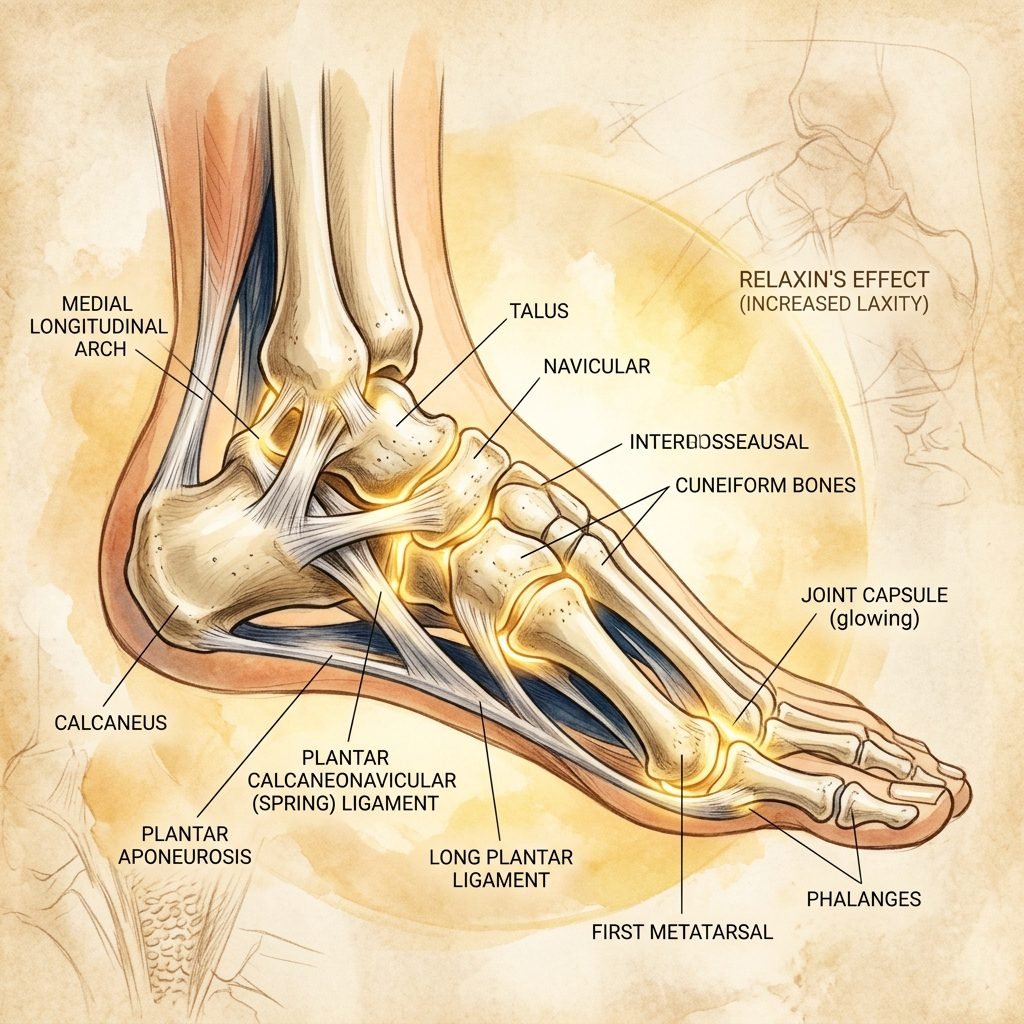
You might have heard of Relaxin in the context of your pelvis opening up for birth, but this powerhouse hormone doesn’t just target your hips. Relaxin is produced by the ovary and the placenta, and its primary job is to loosen the ligaments in the pelvic region and soften the cervix. However, Relaxing is systemic—it travels through your entire bloodstream, affecting ligaments throughout your body, including the 26 bones and over 30 ligaments in each of your feet.
When these ligaments loosen, the structure of your foot becomes more flexible. Combine this hormonal loosening with the 25 to 35 pounds (or more) of average weight gain during pregnancy, and you have the perfect recipe for arch collapse. As the arch flattens, the foot naturally lengthens and widens. Studies have shown that for many first-time mothers, this loss of arch height is permanent, leading to an increase in foot length of anywhere from 2 to 10 millimeters.
The Impact on Your Gait
This isn’t just about shoe size; it’s about how you move. A flatter foot can lead to a change in your gait, often resulting in what we call the ‘pregnancy waddle.’ While this is a functional adaptation to keep you balanced as your center of gravity shifts, it can put new strain on your knees and lower back. Understanding this allows us to choose footwear that provides the structural integrity your ligaments can no longer offer on their own.
| Feature | Role of Relaxin | Long-term Effect |
|---|---|---|
| Ligament Laxity | Loosens connective tissues to ease delivery. | Permanent flattening of the longitudinal arch. |
| Weight Distribution | Shifts center of gravity forward. | Increased pressure on the forefoot and heel. |
| Bone Alignment | Allows bones to spread slightly. | Permanent widening of the midfoot area. |
Swelling vs. Structural Change: Knowing the Difference
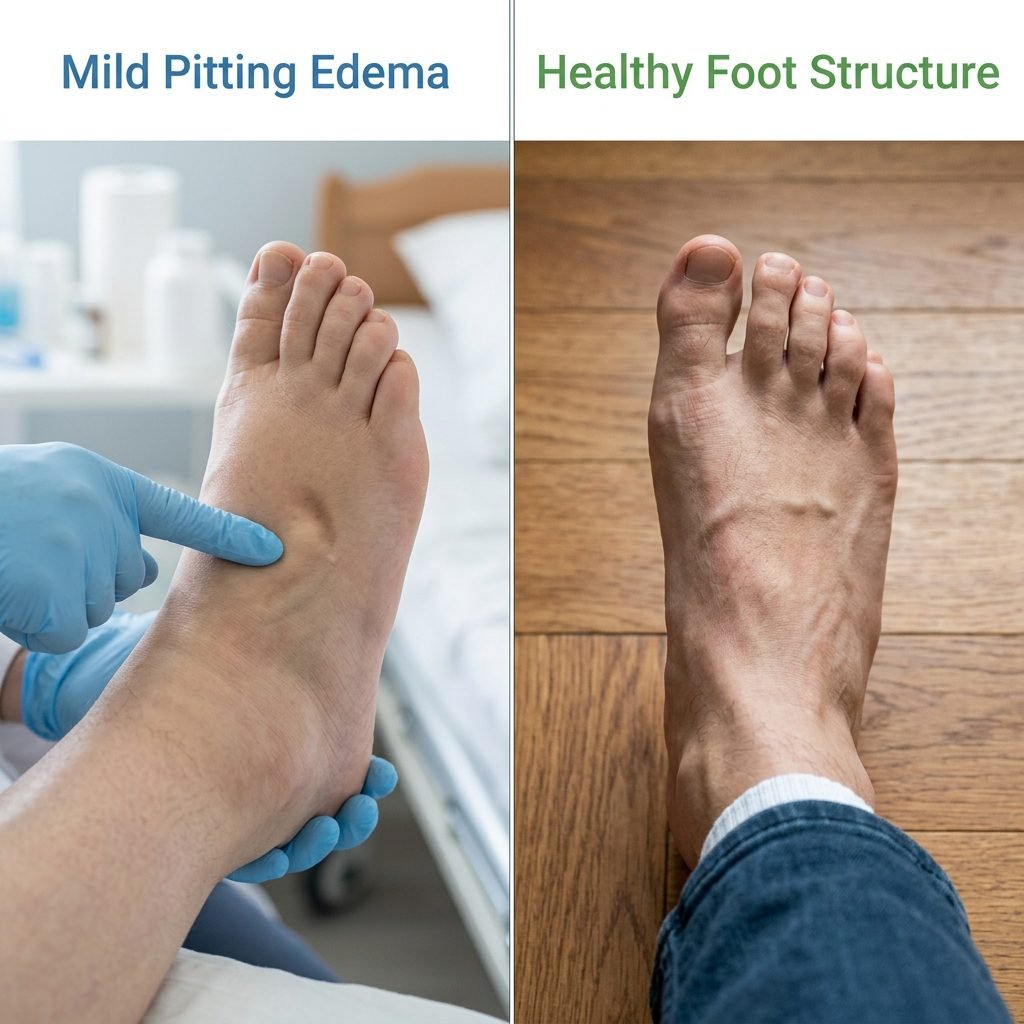
It’s important to distinguish between Edema (temporary swelling) and actual structural growth. Most women experience some level of swelling during the third trimester because the body produces about 50% more blood and body fluids to support the developing baby. This fluid often pools in the lower extremities due to gravity and pressure from the uterus on the pelvic veins.
So, how do you know if you’ll ever see your ankles again? Edema is usually bilateral and changes throughout the day. If your shoes fit in the morning but are tight by 4 PM, that’s fluid. If you press your thumb into your shin and it leaves a dimple (pitting), that’s fluid. However, if six months after delivery, when the fluid has vanished and your weight has stabilized, you still can’t fit into your pre-pregnancy size, you have experienced a structural change.
When to Call Your Provider
- Sudden Swelling: If you notice a sudden increase in swelling in your face or hands, it could be a sign of preeclampsia.
- Asymmetrical Swelling: If one leg is significantly more swollen than the other, or if there is redness and heat, seek medical attention immediately to rule out a blood clot (DVT).
- Pain: If the ‘growth’ is accompanied by sharp plantar fasciitis pain or heel spurs.
The Postpartum Shoe Audit: Measuring for Your New Foundation

Once you are about 12 weeks postpartum, your body has processed most of the excess fluid, and your ligaments have begun to stabilize (though if you are breastfeeding, Relaxin may still be present in smaller amounts). This is the time for the Postpartum Shoe Audit. Don’t try to squeeze back into your old life; it’s time to measure the woman you are today.
Go to a professional shoe store and get measured using a Brannock Device. You need to check both length and width. Many women find they have gone up a half or full size, but more importantly, many find they now require a ‘Wide’ (D) width rather than a ‘Standard’ (B) width. This is because the metatarsal bones have spread.
The ‘Keep or Toss’ Criteria
Go through your closet and try on every pair. Be honest with yourself. If a shoe is pinching your toes or causing your arch to ache within five minutes, it’s time to let it go. Wearing shoes that are too small can lead to bunions, ingrown toenails, and chronic back pain. Consider donating your high-end pre-pregnancy shoes to a local women’s charity or selling them on a resale app to fund your new ‘Mom Capsule’ collection.
Affirmation: My body has expanded to hold life. My feet have widened to carry my legacy. I honor this growth by giving myself the space I need to walk comfortably.
Styling the New Foot: Your Post-Baby Footwear Capsule
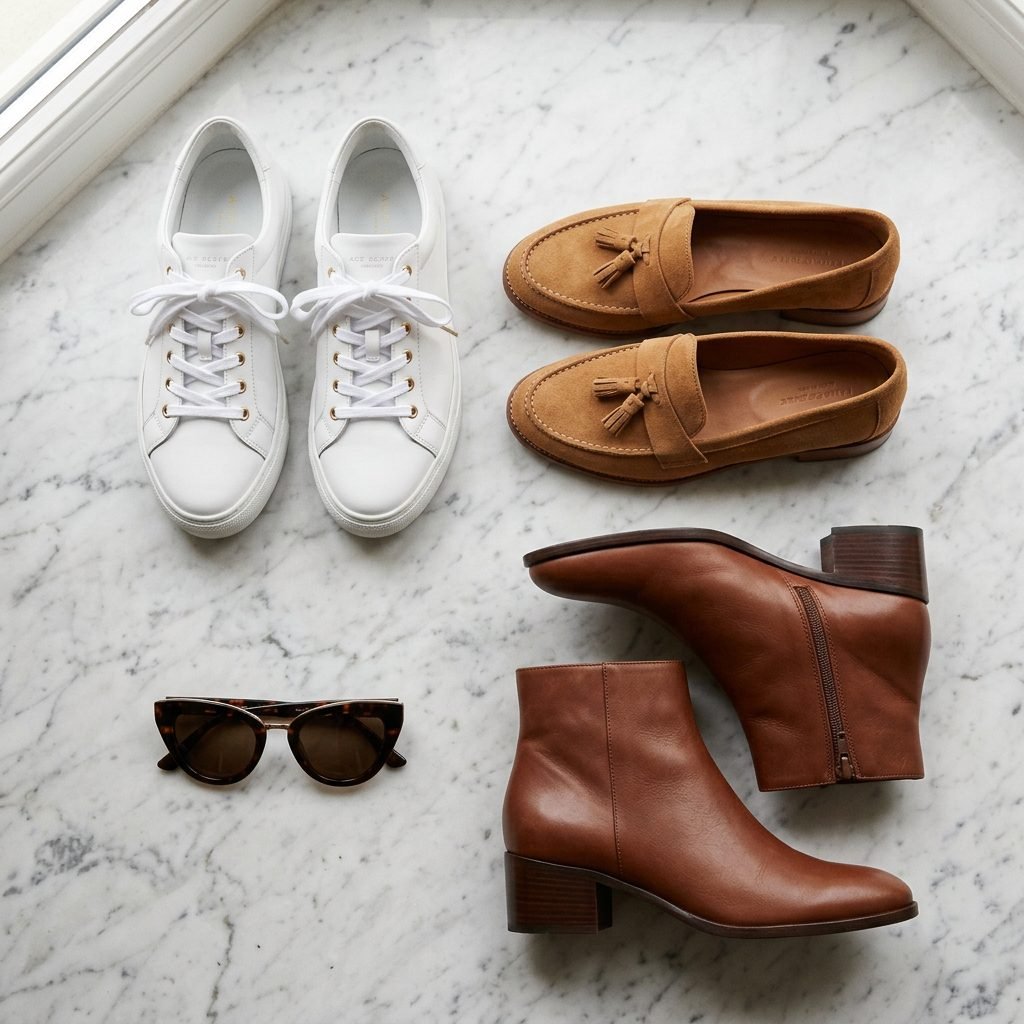
Now for the fun part! Just because your feet are larger doesn’t mean your style has to suffer. In fact, this is an opportunity to invest in high-quality, ergonomic footwear that looks as good as it feels. The goal is to find shoes that offer arch support, a wide toe box, and adjustable closures.
As a stylist and doula, I recommend a ‘Rule of Three’ for your initial postpartum capsule: a supportive sneaker, a refined loafer or mule, and a block-heel bootie. Avoid thin, flat flip-flops or ballet flats with no structure, as these will only exacerbate any arch pain left over from the Relaxin stretch.
| Shoe Type | What to Look For | Style Tip |
|---|---|---|
| Sneakers | Orthotic insoles and knit uppers for stretch. | Pair with midi dresses for a ‘cool mom’ vibe. |
| Loafers | Soft leather that molds to your wider foot. | Great for returning to work or elevated lunch dates. |
| Block Heels | Heels under 2 inches with a wide base. | Provides height without the instability of a stiletto. |
| Sandals | Adjustable Velcro or buckle straps. | Essential for days when lingering swelling occurs. |
Pro-Tip: The Power of Insoles
If you have shoes that almost fit but feel a bit flat, try a high-quality over-the-counter orthotic insole. This can ‘lift’ your arch back up, effectively shortening the foot slightly and providing the comfort you need for long walks with the stroller.
The Doula’s Toolkit for Tired Toes: Recovery Exercises
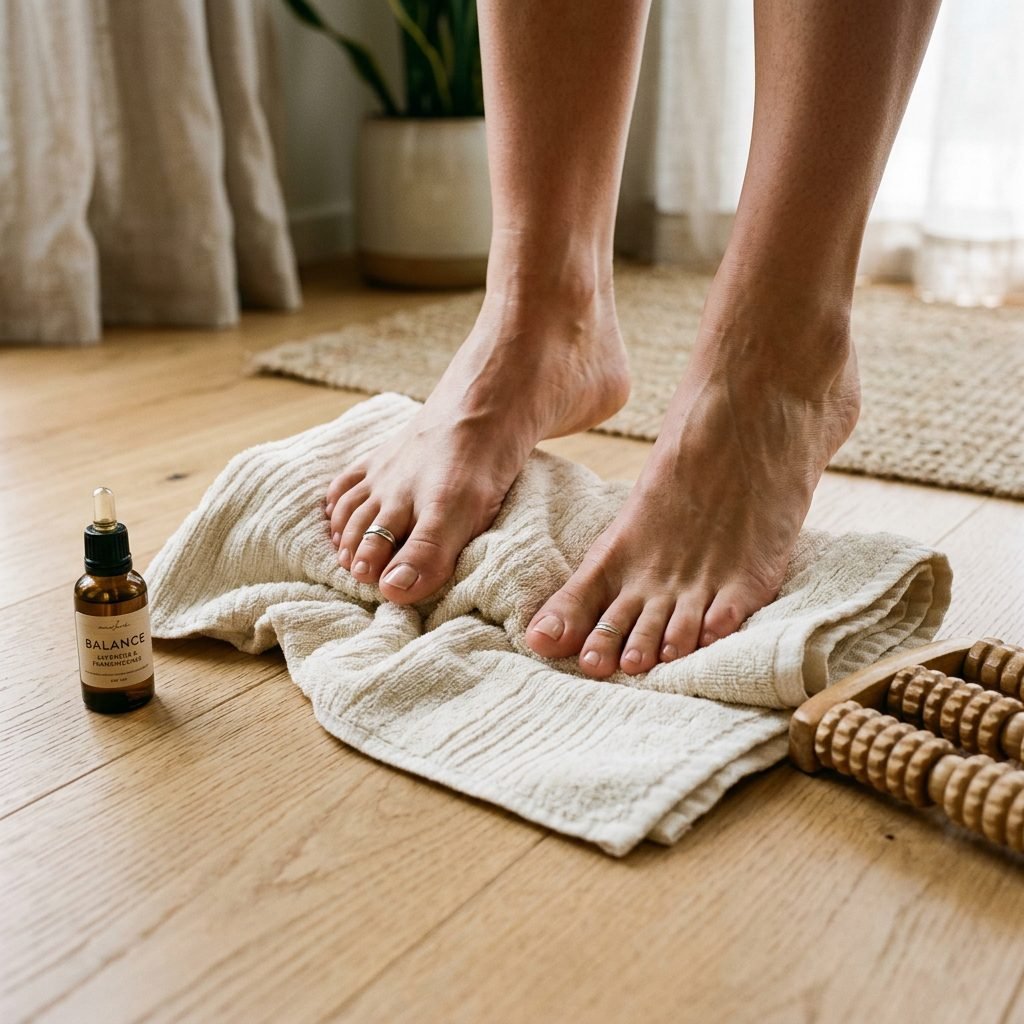
Whether your feet have grown permanently or are just exhausted from the transition, they deserve some TLC. As a doula, I always recommend a few simple exercises to help restrengthen the intrinsic muscles of the foot after the ‘Relaxin era.’
- Towel Curls: Sit in a chair with your feet flat on a towel. Use your toes to scrunch the towel toward you. This strengthens the arch.
- Marble Pickups: Place a few marbles on the floor and try to pick them up with your toes and put them in a bowl.
- Tennis Ball Roll: Roll the sole of your foot over a tennis ball or a frozen water bottle to massage the plantar fascia and reduce inflammation.
- Calf Stretches: Tight calves can pull on the heel and flatten the arch further. Use a wall to stretch your calves for 30 seconds on each side, twice a day.
Self-Massage Ritual: Every night, use a magnesium-rich lotion to massage your feet. Magnesium helps with muscle relaxation and can improve sleep—something every new mama needs!
Embracing the Change: A New Path Forward

It is okay to feel a little sad about the shoes that no longer fit. They represent a version of you—perhaps the one who danced all night at her wedding or the one who felt invincible in four-inch heels. But the woman you are now is stronger, more resilient, and deeply grounded. Your feet have literally changed to support the weight of motherhood, and that is a beautiful, albeit expensive, transformation.
As you move forward, remember that your comfort is the priority. A mother who isn’t in pain is a mother who can be more present for her child. So, buy the bigger size. Choose the wide width. Invest in the support. You aren’t ‘losing’ your old feet; you are gaining a more stable foundation for the most important journey of your life.
You are walking a new path now, and you deserve beautiful shoes that don’t hurt the feet that carry your world.
Conclusion
In the grand scheme of motherhood, a change in shoe size is a small price to pay for the magic of bringing life into the world, but it’s a change that deserves acknowledgment and care. By understanding the science of Relaxin, distinguishing between temporary swelling and permanent growth, and choosing footwear that supports your new structure, you can step into this new chapter with confidence. Your feet have done incredible work, mama. It’s time to treat them with the respect—and the stylish new shoes—they deserve. Welcome to the ‘New Size’ club; we have better arch support and we’re walking toward a very bright future.