My First Pelvic Floor Therapy Appointment: What Really Happens Down There
Welcome to Your Path of Healing, Mama
I see you, sister. I see you sitting there, perhaps with a little bit of anxiety fluttering in your chest, wondering if you should really go through with this. Maybe you’re six weeks postpartum and your OB-GYN gave you a referral because things just don’t feel ‘right’ yet. Or maybe you’re thirty-two weeks pregnant and the ‘lightning crotch’ or leaking is becoming more than a nuisance. Whatever brought you here, I want you to take a deep, belly-expanding breath. You are taking a massive, beautiful step toward reclaiming your body.
As a doula, I’ve held the hands of countless women who felt ‘broken’ after birth, only to see them flourish after a few sessions of Pelvic Floor Physical Therapy (PFPT). We talk about our birth plans, our nursery colors, and our baby’s sleep schedules, but we rarely talk about the foundation of our core. Your pelvic floor is the unsung hero of your body, holding up your organs, supporting your spine, and playing a starring role in intimacy and waste management. Today, we are going to pull back the curtain on that first appointment. No medical jargon, no scary mysteries—just the sisterly truth about what really happens ‘down there’ and why you’re going to leave that office feeling like a superhero.
“Your body did something miraculous. It grew a human. It stretched, shifted, and opened. Now, it deserves the same dedicated care and rehabilitation we would give any other major physical feat.”
The Heart-to-Heart: Why the ‘Chat’ Matters Most

More Than Just a Medical History
When you first walk in, you won’t be heading straight for the treatment table. In fact, you’ll likely spend the first 20 to 30 minutes just talking. A pelvic floor therapist is like a specialized detective for your lady-bits. They want to know the ‘whole you.’ You’ll discuss things you might have felt too embarrassed to tell your best friend. Do you leak when you sneeze? Does sex feel like a ‘stabbing’ sensation or just ‘off’? Do you feel like something is literally falling out of you (the ‘heaviness’ of prolapse)?
What They Will Ask You
- Your Birth Story: Did you have a long pushing phase? Was there a vacuum or forceps involved? Did you have a C-section? (Yes, C-section mamas need PFPT too!)
- Your Bathroom Habits: How many times a day are you peeing? Do you find yourself ‘just in case’ peeing? Are you struggling with constipation?
- Your Goals: Do you want to run a marathon? Do you just want to jump on a trampoline with your toddler without an adult diaper?
You are not alone, this is normal. I want to remind you that your therapist has heard it all. They aren’t judging your ‘leaky’ moments; they are looking for the root cause. This conversation builds the trust necessary for the physical part of the exam.
The External Assessment: Checking the Scaffolding
It’s Not Just About the Vagina
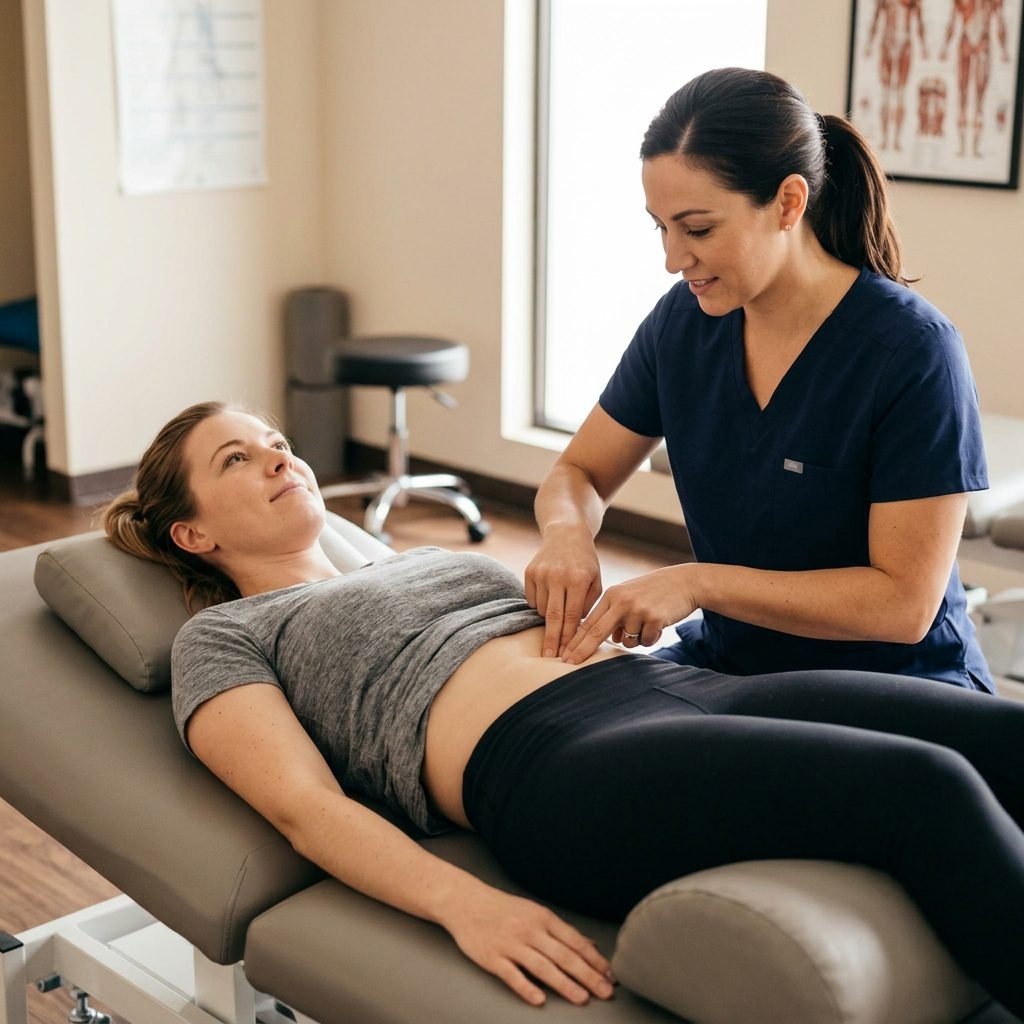
Before we even get to the ‘down there’ part, your therapist is going to look at your body as a whole system. Think of your pelvic floor as the floor of a house. If the walls (your abs) are leaning or the roof (your diaphragm) isn’t sitting right, the floor is going to suffer. Your therapist will likely check your posture, your hip mobility, and your abdominal wall.
The Diastasis Recti Check
If you are postpartum, they will definitely check for Diastasis Recti (the separation of the abdominal muscles). They’ll have you lie on your back and do a small crunch while they gently feel the midline of your stomach. This is vital because a weak core often forces the pelvic floor to overwork, leading to pain or tightness.
| Assessment Area | What They Are Looking For |
|---|---|
| Diaphragm/Breathing | Are you a ‘chest breather’ or a ‘belly breather’? |
| Hip Flexibility | Tight hips can pull on the pelvic floor muscles. |
| Glute Strength | Weak glutes often lead to a ‘tucked’ pelvis and a tight floor. |
| Scar Tissue | C-section or perineal scars that might be restricting movement. |
The Internal Exam: Demystifying the Process
The Part Everyone Worries About
Okay, let’s talk about the elephant in the room: the internal exam. First, know this: you can say no. You are always in control of your body. If you aren’t ready for an internal exam at your first visit, that is 100% okay. However, if you are comfortable, this is where the most valuable information is gathered.
How It Differs From a Pap Smear
Unlike a gynecologist’s exam, there are no speculums and no cold metal. It is much more gentle. Here is the step-by-step process:
- Privacy: You’ll be given a private space to undress from the waist down and cover yourself with a sheet.
- External Visual: The therapist will look for skin irritation, hemorrhoids, or how the muscles move when you cough or ‘wink’ the anus.
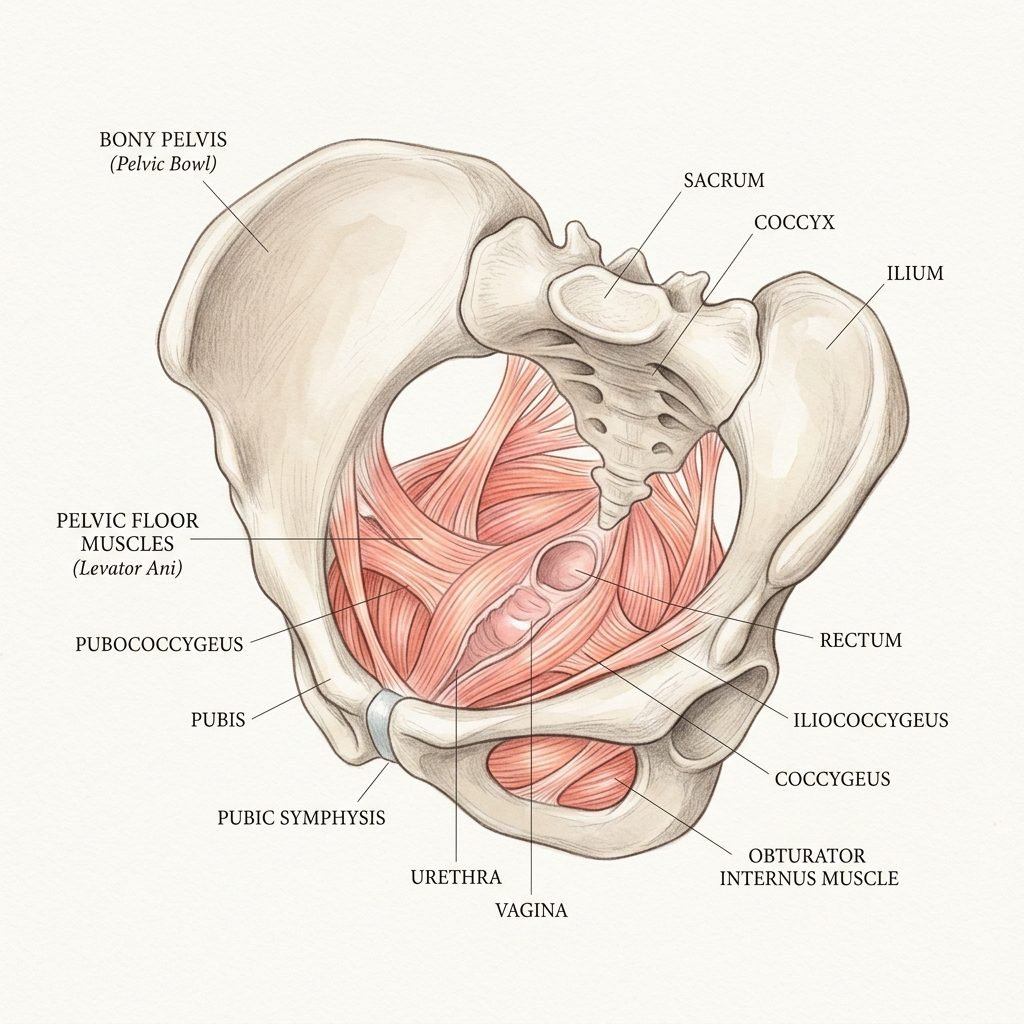
- Internal Palpation: The therapist will use one gloved, lubricated finger to gently enter the vaginal canal. They aren’t looking at your cervix; they are feeling the muscles that line the vaginal walls.
- The ‘Clock’ Method: They will gently press at different ‘hours’ on a clock (e.g., 3 o’clock, 6 o’clock) to check for trigger points, tension, or weakness.
- Strength Test: They will ask you to perform a Kegel (squeeze) and then a ‘bearing down’ motion to see how your muscles coordinate.
Pro-Tip: Don’t worry about shaving, grooming, or if you’re on your period. These therapists are medical professionals who see bodies in all their natural states every single day. They truly do not care about your stubble!
The Connection: Breathing and the ‘Piston’ Effect

Learning to Breathe Again
One of the most ‘aha!’ moments in your first PFPT appointment is learning about the Piston Effect. Most of us have been told to ‘just do Kegels,’ but for many women, the problem isn’t that the pelvic floor is too weak—it’s that it’s too tight (hypertonic) and doesn’t know how to relax.
The Diaphragm-Pelvic Floor Link
Imagine your torso is a piston. When you inhale, your diaphragm moves down, and your pelvic floor should also move down and relax. When you exhale, they both move up. If you are constantly sucking in your stomach or holding your breath, your pelvic floor is stuck in a state of constant tension. This can lead to pelvic pain and even urge incontinence.
“Inhale to expand and soften; exhale to lift and support. Your breath is the remote control for your pelvic floor.”
Your therapist will likely spend a good portion of the first session teaching you 360-degree breathing. You’ll practice breathing into your ribs and back, feeling that gentle ‘blossoming’ sensation in your pelvic floor. It feels weird at first, but it is the foundation of all healing.
The Game Plan: What Happens Next?
Your Homework (The Good Kind!)
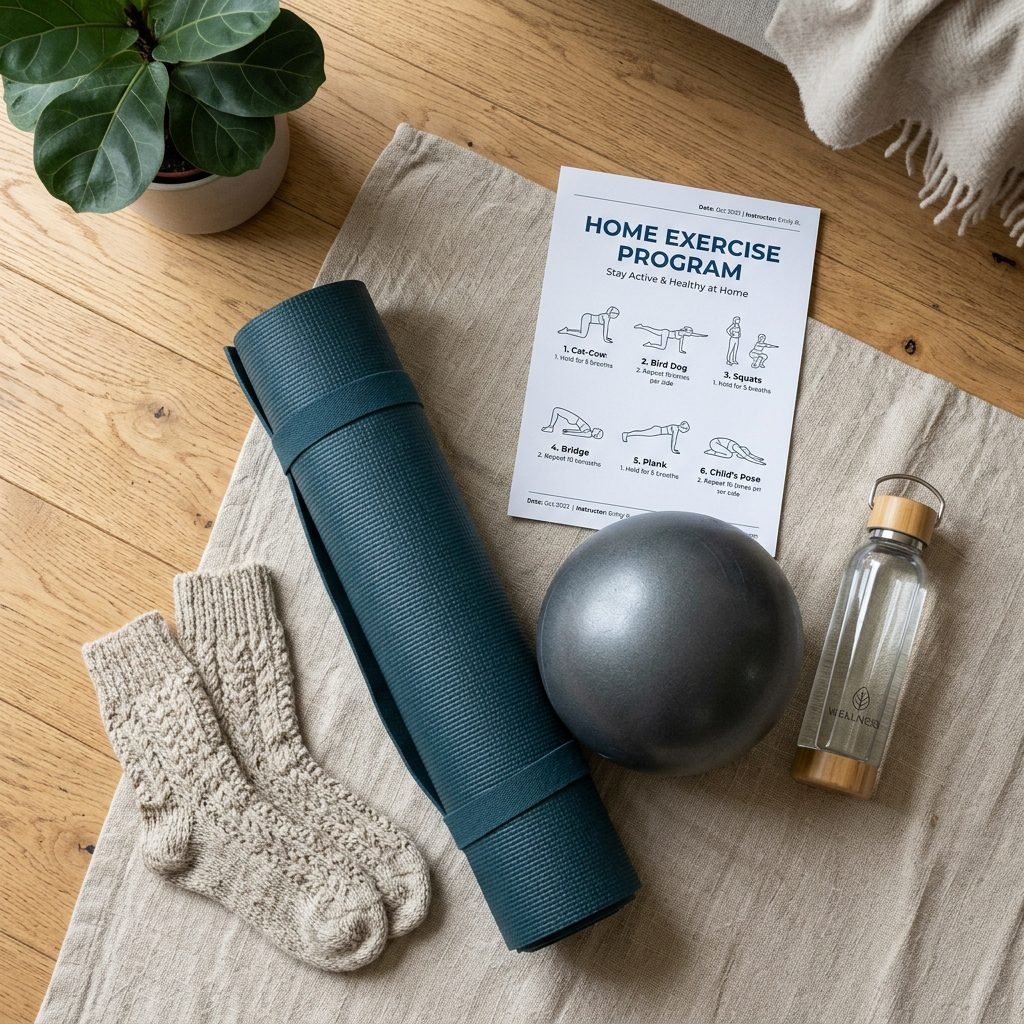
You’ll leave your first appointment with a clear roadmap. PFPT is not a ‘quick fix,’ but rather a retraining of your brain and muscles. Your therapist will give you a few simple exercises to do at home. These aren’t usually ‘workouts’ in the traditional sense; they are nervous system resets.
Common First-Week Goals
- Bladder Retraining: Learning to wait an extra 5 minutes before peeing to increase bladder capacity.
- Posture Correction: Learning how to sit while nursing or holding the baby to avoid ‘mummy-slump.’
- Release Work: Using a tennis ball or a specific stretch (like Happy Baby pose) to relax tight hip muscles.
| Symptom | Potential Home Strategy |
|---|---|
| Leaking when jumping | Exhaling on exertion (the ‘Blow as you Go’ method). |
| Pain with intimacy | Progressive muscle relaxation and focused breathing. |
| Pelvic Heaviness | Managing intra-abdominal pressure and specific core engagement. |
The most important thing to remember is that consistency beats intensity. Doing your 5 minutes of breathing every day is better than doing 30 minutes once a week!
Conclusion
You’ve Got This, Mama
Walking out of that first Pelvic Floor Therapy appointment, you might feel a strange mix of emotions: relief, vulnerability, and a newfound sense of awe for your body. You’ve just done something incredibly brave. You’ve looked a physical challenge in the face and said, ‘I am worth the effort to heal.’
Remember, sister, your pelvic floor health is a journey, not a destination. There will be days when you feel strong and days when you leak a little while laughing at a joke. That’s okay. The tools you are learning now will serve you for the rest of your life—through motherhood, menopause, and beyond. You aren’t just ‘fixing’ a problem; you are building a stronger, more connected version of yourself. Keep breathing, keep showing up for yourself, and know that your pelvic floor (and your doula!) is cheering you on every step of the way.