
Relieve Sciatica Pain In 5 Minutes With These Simple Stretches
Oh, sweet mama, I know exactly what you are feeling. That sharp, shooting ‘zing’ that starts in your lower back and travels all the way down your leg—sometimes feeling like an electric shock, other times like a dull, nagging ache that just won’t quit. Whether you are in your second trimester or nearing your due date, sciatica is an uninvited guest that can make even the simplest tasks, like getting out of bed or walking to the kitchen, feel like a monumental challenge. As a doula, I have sat beside so many mothers who felt like their bodies were betraying them, but I want you to take a deep breath and know this: you are not alone, and relief is closer than you think.
Sciatica during pregnancy isn’t just a ‘normal ache’; it is a signal from your body that things are shifting, stretching, and making room for your beautiful little one. Between the hormone relaxin loosening your joints and the weight of your growing uterus pressing on the sciatic nerve, it is no wonder you are feeling the pinch. The good news? You don’t need a 60-minute yoga class or a professional physical therapist to start feeling better right now. In just 5 minutes, we can target the piriformis muscle and the lower back to decompress that nerve and give you back your mobility. Let’s walk through these gentle, sisterly stretches together, focusing on your breath and your baby as we find your comfort again.
The Anatomy of the ‘Zing’: Why Sciatica Hits During Pregnancy
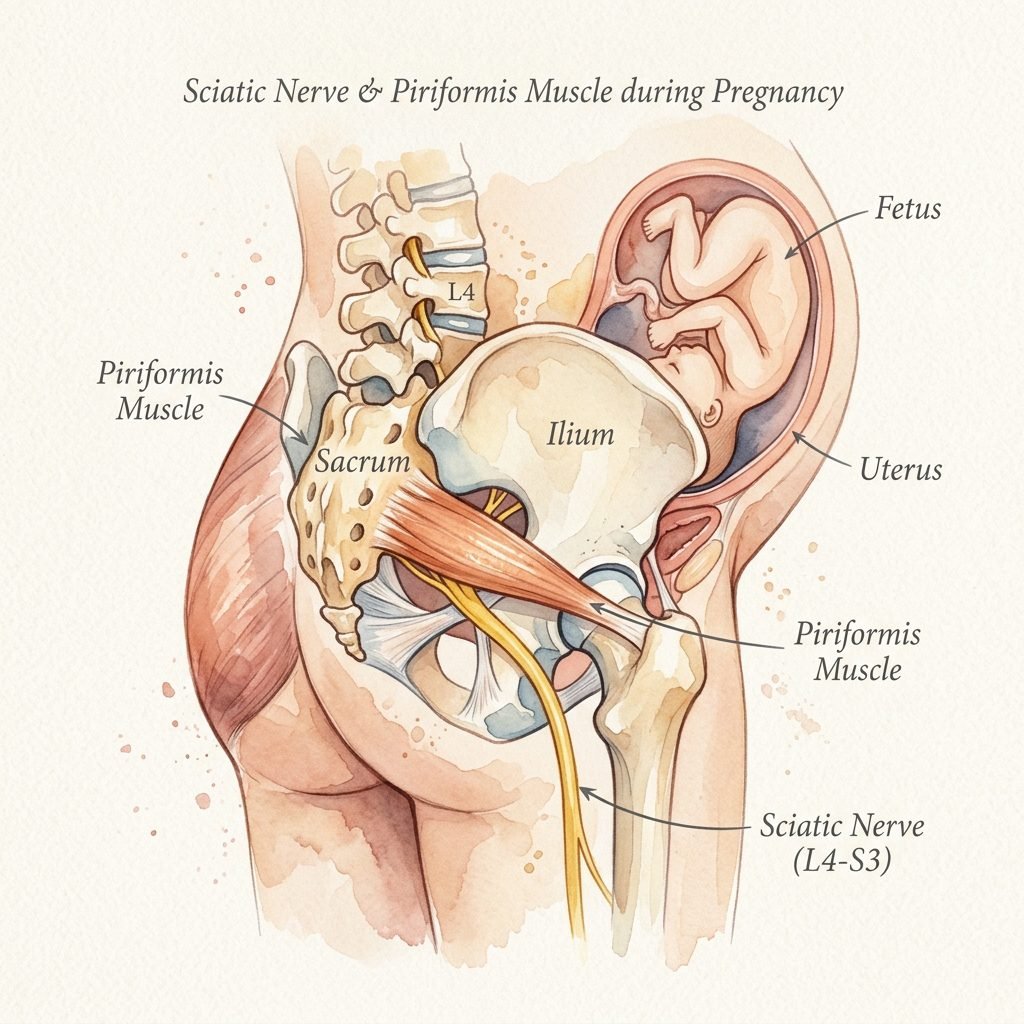
Before we dive into the stretches, let’s talk about the ‘why’ behind that discomfort. Understanding your body is the first step toward healing it. The sciatic nerve is the longest and largest nerve in your body, running from your lower back, through your hips and buttocks, and down each leg. During pregnancy, several factors conspire to irritate this nerve. First, there is the hormone relaxin. This incredible hormone is designed to soften your ligaments and prepare your pelvis for birth, but it can also make your joints a bit unstable, causing muscles like the piriformis in your glutes to overcompensate and tighten up right on top of the nerve.
Secondly, as your belly grows, your center of gravity shifts forward. To keep from falling over, most mamas naturally arch their lower backs more than usual—a posture we call lumbar lordosis. This puts extra pressure on the lower spine. Finally, the baby’s position can sometimes mean their head is resting directly on the nerve. It’s a lot for your body to handle! But remember, your body is incredibly resilient. By performing targeted movements, we can create space in the pelvic bowl and release the muscular tension that is ‘pinching’ the nerve. We aren’t just stretching; we are creating a more spacious home for your baby and a more comfortable vessel for you.
Your 5-Minute Relief Sequence: Step-by-Step Instructions
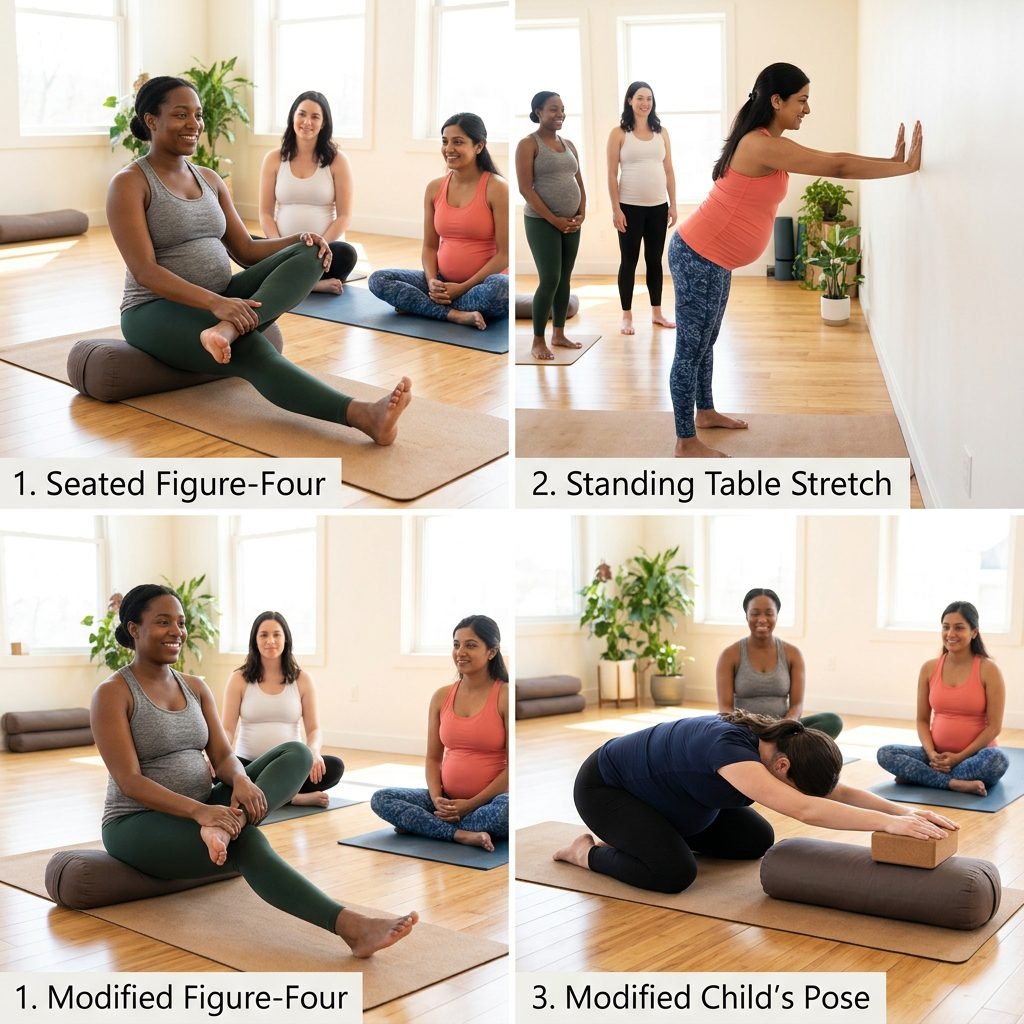
Find a comfortable spot—either a sturdy chair or a clear space on the floor. Wear something loose, and remember to move slowly. If any movement causes sharp pain (beyond a ‘good’ stretch sensation), please stop immediately and rest. We are looking for gentle release, not a workout.
1. The Seated Figure-Four (1.5 Minutes)
This is the gold standard for sciatica relief because it targets the piriformis muscle directly without putting pressure on your belly.
- Sit on the edge of a sturdy chair with your feet flat on the floor.
- Lift your affected leg and rest your ankle on the opposite knee, creating a ‘4’ shape.
- Keep your back very straight and tall. Imagine a string pulling the crown of your head to the ceiling.
- Gently lean forward from your hips—not your waist—keeping your chest open. You will feel a deep stretch in your glute.
- Hold for 45 seconds while taking deep, ‘belly breaths’ to send oxygen to the muscle. Repeat on the other side.
2. The Standing Table Stretch (1.5 Minutes)
This stretch helps decompress the spine and takes the weight of the baby off your lower back.
- Stand facing a table, a high counter, or the back of a sofa.
- Place your hands on the surface and slowly walk your feet back until your body forms an ‘L’ shape.
- Keep your feet hip-width apart (or wider to accommodate your belly).
- Let your head hang between your arms and push your hips away from the table.
- Focus on lengthening your spine. Hold for 60 seconds, swaying your hips gently from side to side if it feels good.
3. The Modified Child’s Pose (2 Minutes)
This is your ‘reset’ button. It opens the lower back and allows the pelvic floor to relax.
- Kneel on a yoga mat or a soft carpet.
- Bring your big toes together and spread your knees wide apart—wide enough for your belly to fit comfortably between them.
- Sit back on your heels and slowly lower your chest toward the floor, extending your arms in front of you.
- Rest your forehead on the floor or a firm pillow.
- Breathe into your back ribs. Stay here for 2 minutes, letting gravity do the work of opening your hips.
Daily Ergonomics: Preventing the Flare-Up Before It Starts
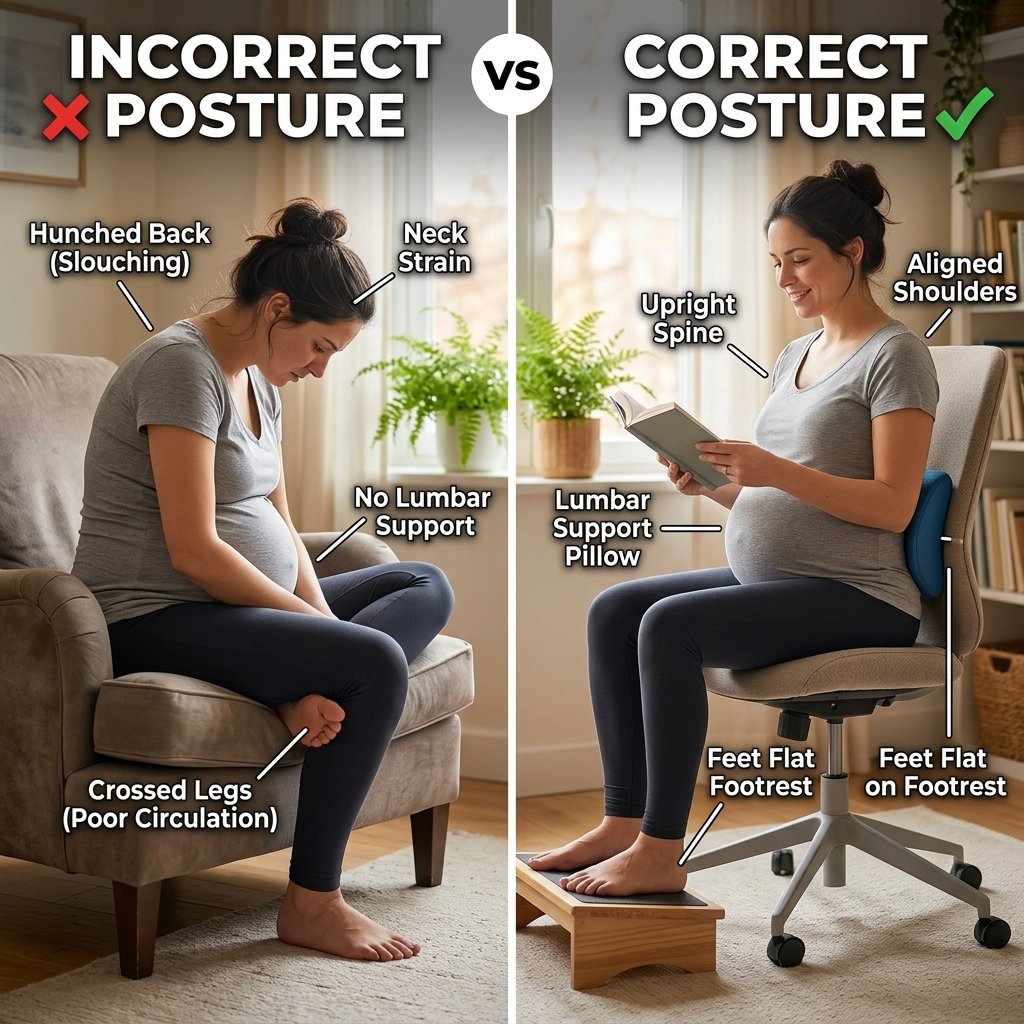
Stretching is wonderful for acute relief, but how we move throughout the day determines if the pain stays away. As your doula, I want to encourage you to look at your daily habits. Are you crossing your legs when you sit? This is a major culprit for sciatic irritation because it misaligns the pelvis. Are you standing for long periods in shoes that don’t offer support? Your feet are the foundation of your posture. Even the way you sleep matters! If you are a side sleeper (which is recommended), ensure you have a thick pillow between your knees and ankles to keep your hips parallel.
“Your body is doing the magnificent work of growing a human. Treat it with the same tenderness you will show your newborn. Move slowly, sit with support, and never hesitate to rest when the ‘zing’ starts to whisper.”
Consider your workstation as well. If you work at a desk, ensure your monitor is at eye level and your feet are supported by a small stool. This prevents you from slouching and putting unnecessary pressure on your lumbar spine. Small adjustments in your daily ergonomics can be the difference between a day spent in pain and a day spent in comfort.
Navigating Relief Safely: The Do’s and Don’ts of Sciatica Care
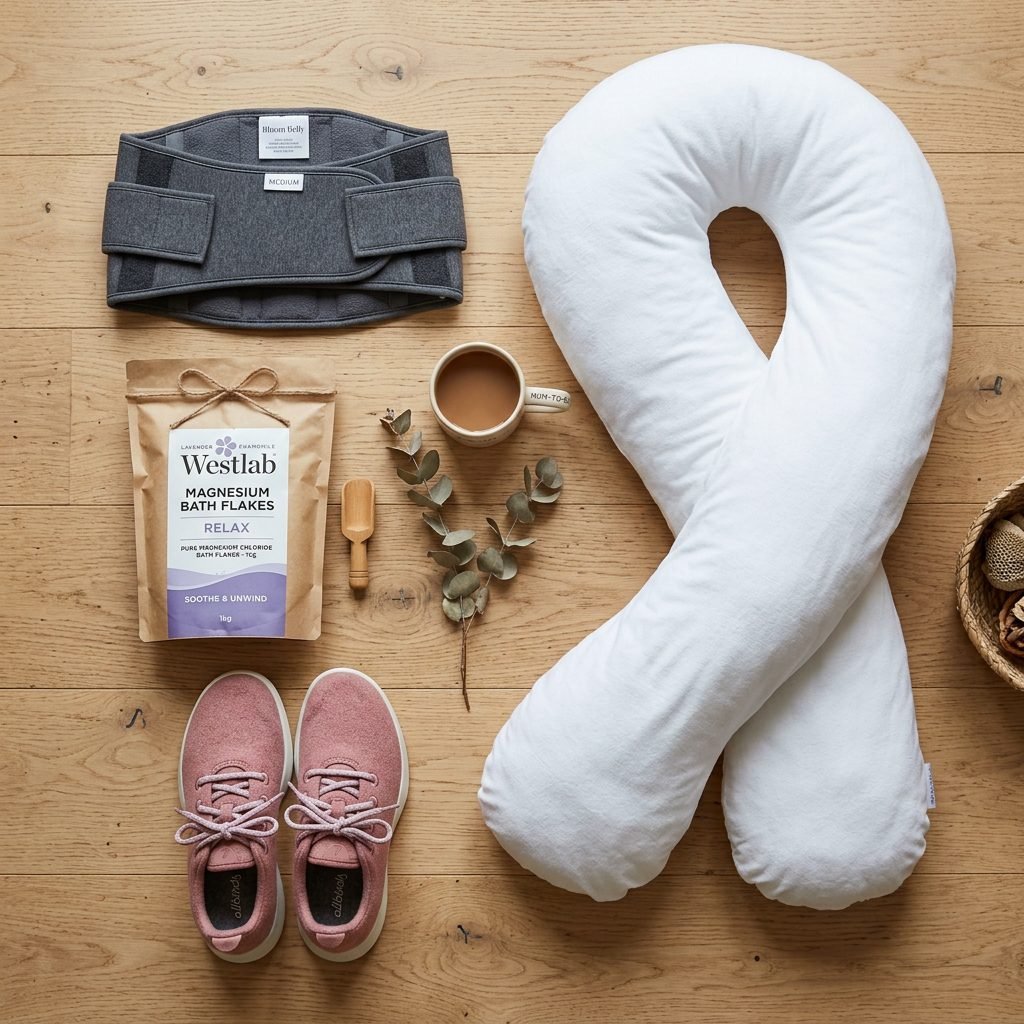
When you are in pain, it is tempting to try anything for a bit of peace. However, during pregnancy, we have to be mindful of what is safe for both you and the baby. For example, while a hot bath sounds heavenly, we must ensure the water temperature doesn’t raise your core body temperature too high. Similarly, while some essential oils are soothing, others should be avoided until after delivery. Use the table below to guide your choices as you build your ‘Sciatica Relief Toolkit’.
| Relief Method | The ‘Do’ (Safe & Supportive) | The ‘Don’t’ (Use Caution) |
|---|---|---|
| Temperature Therapy | Use a warm (not hot) heating pad on the glute for 15 mins. | Do not apply direct heat to the belly or use boiling hot water bottles. |
| Footwear | Wear supportive sneakers or flats with arch support. | Avoid high heels or completely flat flip-flops with no cushion. |
| Movement | Engage in pelvic tilts and gentle swimming. | Avoid heavy lifting or sudden, twisting movements of the spine. |
| Sleep Support | Use a full-body pregnancy pillow to align hips. | Avoid sleeping flat on your back after the first trimester. |
| Supplements | Ask your provider about Magnesium for muscle tension. | Do not take Ibuprofen or NSAIDs without medical approval. |
Always remember that your body’s signals are valid. If a stretch feels ‘wrong’ or causes numbness that doesn’t go away, that is your body’s way of asking for a different kind of help. We always want to work with your body, never against it.
The Doula’s Corner: Emotional Resilience and When to Call for Help

Mama, I want to take a moment to acknowledge the mental load of chronic pain. When you are already dealing with nausea, fatigue, and the anxiety of becoming a parent, physical pain can feel like the straw that breaks the camel’s back. It is okay to feel frustrated. It is okay to cry. Pain is exhausting. Part of my role as your doula is to remind you that self-compassion is a form of medicine. If you didn’t get everything on your to-do list done today because your back hurt, that is okay. You are literally building a nervous system, a heart, and a brain. That is enough work for one day.
When to Seek Professional Guidance
While most sciatica is a temporary ‘side effect’ of pregnancy, there are times when you need to call your midwife or doctor. Please reach out to your healthcare provider if you experience any of the following:
- Sudden, severe weakness in your leg or foot.
- Numbness in your ‘saddle area’ (groin or inner thighs).
- Loss of bladder or bowel control (this is a medical emergency).
- Pain that is so severe it prevents you from sleeping or performing basic tasks.
- Pain accompanied by a fever or vaginal bleeding.
For most of you, a combination of these 5-minute stretches, a good support belt, and some extra rest will see you through. You are doing a wonderful job, and this season of discomfort is just that—a season. It will pass, and soon you will be holding your little one, and this pain will be a distant memory.
Conclusion
Relieving sciatica pain doesn’t have to be another chore on your long pregnancy list. By dedicating just 5 minutes a day to these gentle stretches, you are telling your body that its comfort matters. You are creating the space you need to breathe, move, and enjoy these final months of your pregnancy journey. Remember, sweet mama: stay hydrated, keep your pelvis aligned, and lean on your support system. You are strong, you are capable, and you are doing an incredible thing. Keep these stretches in your ‘back pocket’ for whenever that ‘zing’ decides to visit, and know that I am rooting for you every step of the way.