
10 Clever Nursery Book Storage Ideas to Encourage Early Reading
Welcome to Your Baby’s First Library
Oh, mama, there is something truly magical about the scent of a new board book and the promise of a thousand adventures shared in the quiet of a nursery. As a doula and a nursery organization enthusiast, I’ve seen firsthand how the way we store books can fundamentally change a child’s relationship with reading. It isn’t just about tidiness—though we all love a clean floor!—it’s about accessibility, visual stimulation, and creating a sensory-rich environment where books are seen as treasures rather than chores.
Early literacy isn’t about teaching your six-month-old to decode words; it’s about the emotional bond formed during storytime and the cognitive development sparked by bright illustrations. When books are within reach, your little one learns that they have the agency to choose their own stories. In this guide, we’re going to explore ten clever, stylish, and evidence-based storage solutions that fit every nursery size and budget. Whether you’re nesting in your third trimester or rearranging for a crawling ten-month-old, these ideas will help you build a sanctuary of stories.
Reading to your baby is a form of swaddling for the soul; it wraps them in your voice and the rhythm of language, providing comfort that lasts a lifetime.
The Montessori Method: Front-Facing Floating Shelves
Why Front-Facing Matters
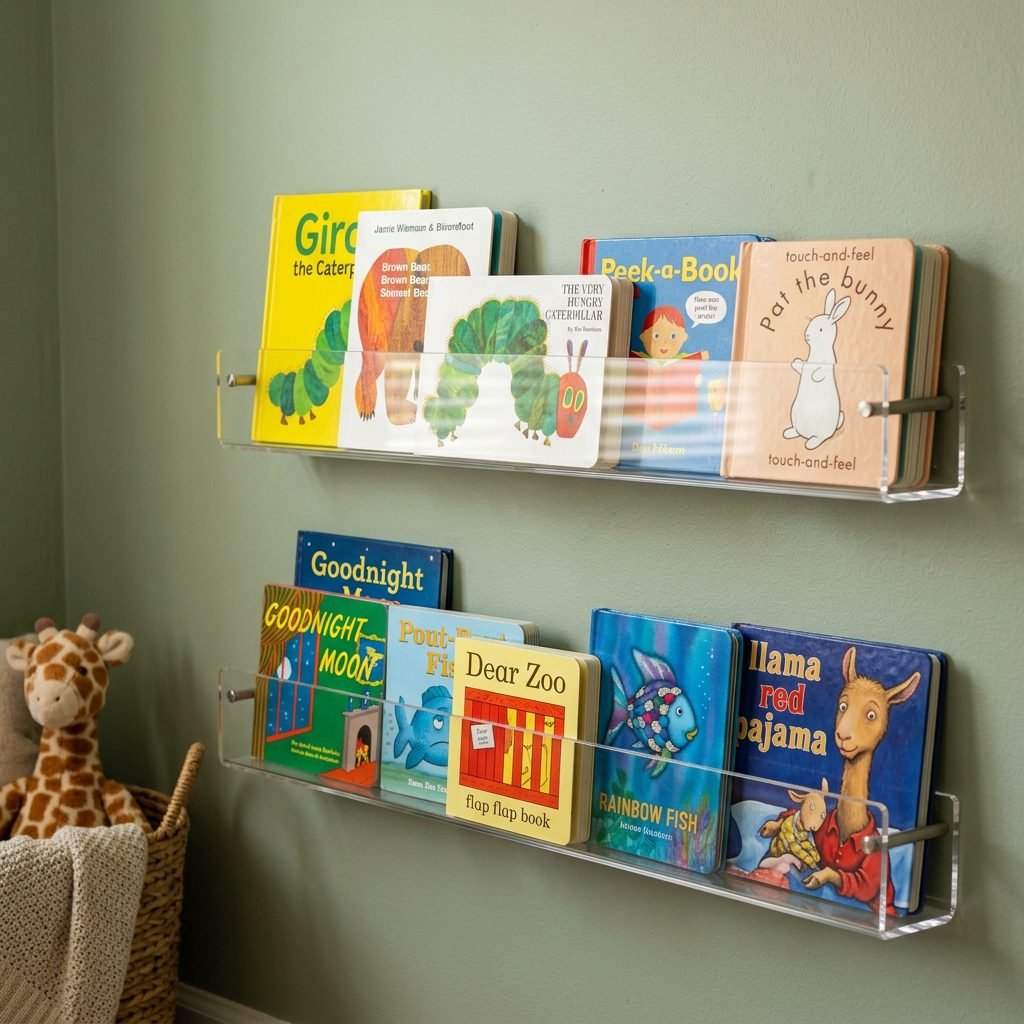
In the world of Montessori education, the focus is always on the child’s perspective. Traditional bookshelves show only the spines of books, which can be difficult for a toddler to recognize. By using front-facing floating shelves, you turn book covers into beautiful wall art. This visual cue makes it significantly easier for your little one to point to their favorite story, fostering a sense of independence.
Implementation Tips
- Height is Key: Install the lowest shelf no higher than 12 to 15 inches from the floor so your crawler or cruiser can reach.
- Acrylic vs. Wood: Acrylic shelves offer a ‘disappearing’ look that makes the books look like they are floating, while wood adds warmth and texture.
- Safety First: Always use heavy-duty wall anchors. As your baby grows, those shelves will inevitably become ‘pull-up’ bars.
| Storage Type | Accessibility Level | Style Vibe |
|---|---|---|
| Floating Acrylic | High (Visual) | Modern & Airy |
| Classic Spine-Out | Low (for infants) | Traditional |
| Forward Ledge | High (Physical) | Scandi-Chic |
The IKEA Spice Rack Hack: Budget-Friendly Brilliance
The DIY Queen’s Favorite Secret
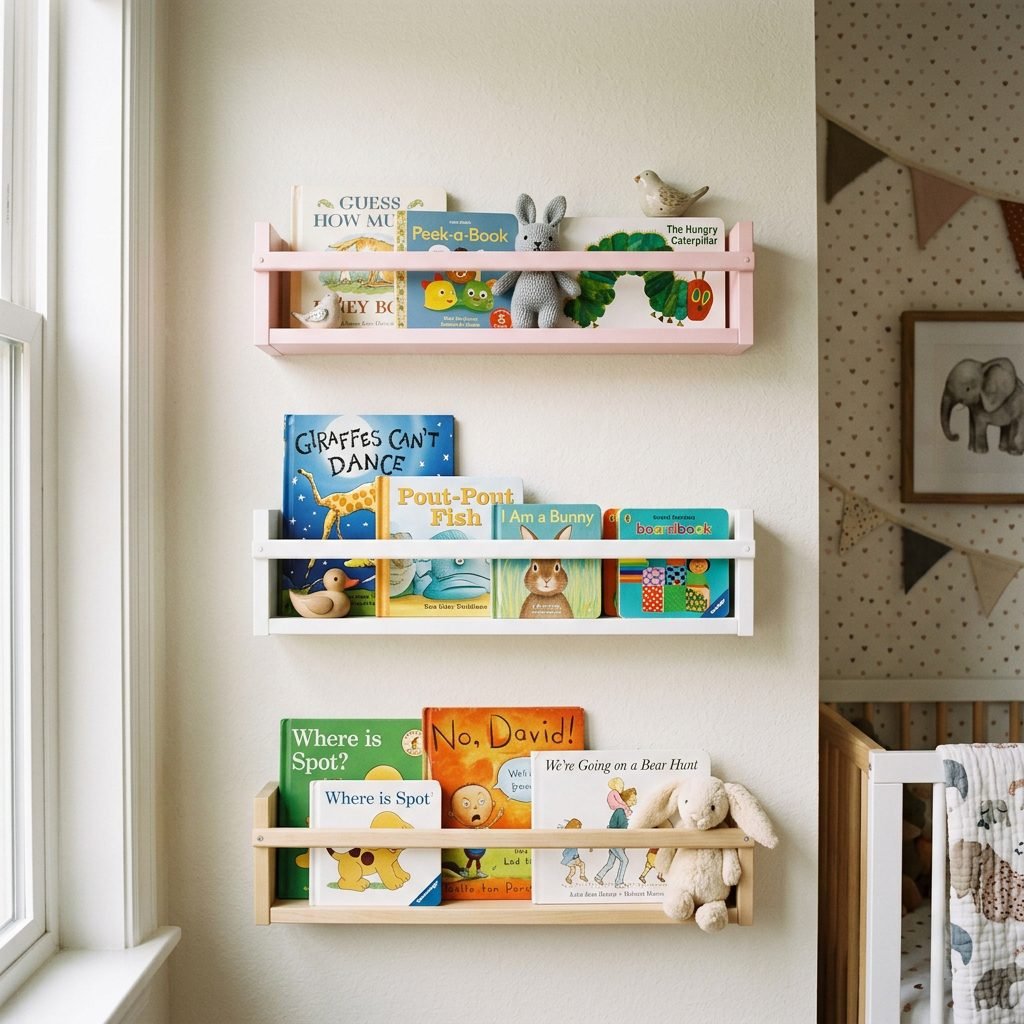
If you’re looking for a high-impact, low-cost solution, look no further than the humble wooden spice rack. These small, sturdy units are the perfect depth for board books and can be customized with a bit of non-toxic paint or stain to match your nursery’s palette. They are particularly wonderful for small nurseries or the narrow space behind a door.
How to Style the Spice Rack Library
- Paint before assembly: It’s much easier to get into the corners when the pieces are flat.
- Invert for hanging: Some moms like to hang one spice rack upside down to create a small hanging rod for baby’s favorite outfits underneath the books.
- Group by color: For a curated look, arrange the books in a rainbow pattern. This isn’t just for Instagram, mama—it actually helps babies recognize color patterns!
Mama tip: Use ‘Low-VOC’ or ‘Milk Paint’ to ensure the air in your nursery stays as pure as possible for those tiny lungs.
The Mobile Book Cart: Literacy on the Go

Flexibility for the Postpartum Days
During those early weeks of postpartum recovery, you might find yourself moving from the nursery to the living room or your own bedroom. A three-tier rolling utility cart is a lifesaver. You can keep books on the top tier, nursing supplies on the middle, and diapers on the bottom. As your baby grows, it becomes a dedicated mobile library that can follow them to their play mat.
Organizing Your Cart
- Top Tier: High-contrast black and white books for newborns.
- Middle Tier: Texture-rich ‘touch and feel’ books.
- Bottom Tier: Heavier musical books or oversized storybooks.
| Feature | Benefit | ||
|---|---|---|---|
| Wheels | Easy to move during vacuuming or room transitions. | Metal Frame | Durable and easy to wipe down (spit-up happens!). |
| Tiered Design | Separates books by developmental stage or theme. |
The Cozy Floor Basket: For the Tummy Time Pro
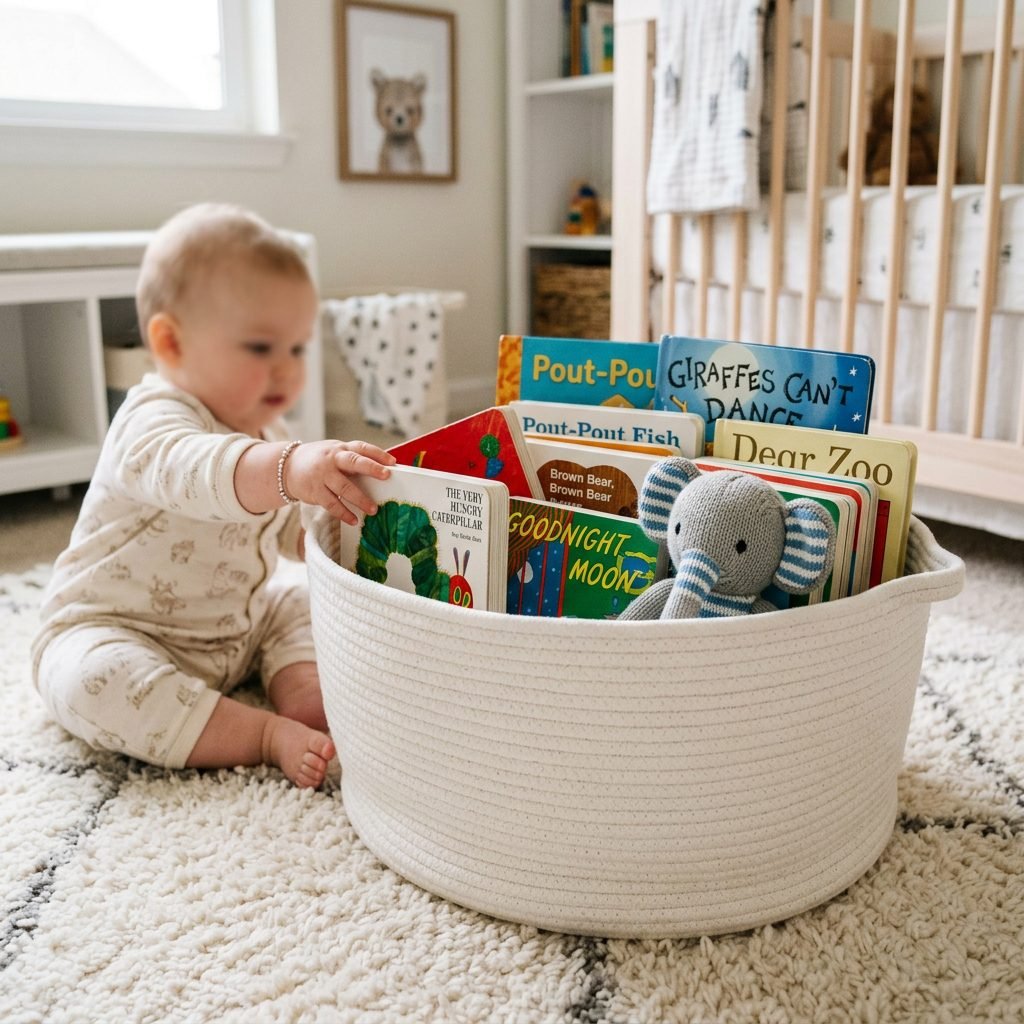
Tactile Exploration at Ground Level
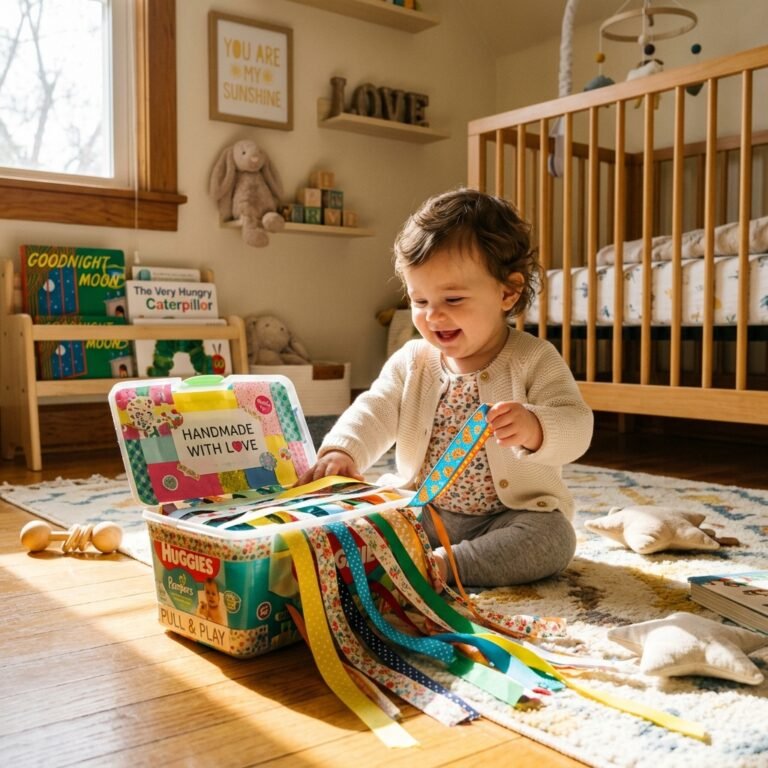
Sometimes, the best storage isn’t a shelf at all. A woven seagrass or soft cotton rope basket placed right on the rug encourages ‘tummy time’ reading. When your baby is working on those neck muscles, having a book they can easily grab (and, let’s be honest, chew on) makes the hard work of development much more fun.
Choosing the Right Basket
Look for baskets with low sides (no more than 6-8 inches high) so the baby doesn’t have to struggle to see over the edge. Avoid baskets with sharp wicker ends; instead, opt for soft materials like felt or cotton coil. This is the perfect spot for ‘indestructible’ books made of fabric or chew-proof paper.
Remember, mama: In the first year, ‘reading’ often looks like ‘tasting.’ Choose non-toxic, BPA-free books for these floor-level baskets!
Closet Nook Transformations: Maximizing Every Inch
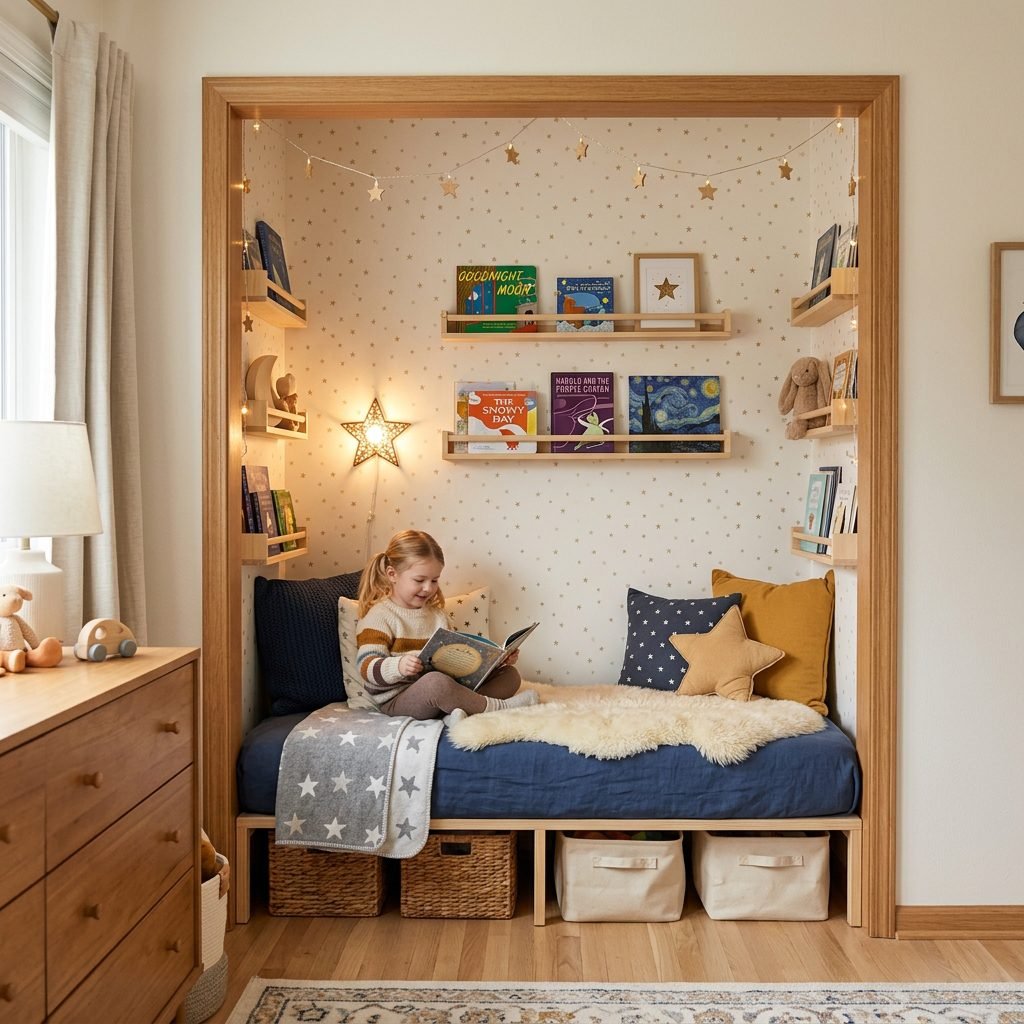
The Hidden Reading Grotto
If you’re working with a small nursery, consider removing the closet doors and turning the bottom half of the closet into a reading nook. By installing a few narrow ledges and a custom-cut foam cushion, you create a dedicated ‘destination’ for reading. This helps a child associate reading with comfort and safety.
The Closet Library Checklist
- Lighting: Install a battery-operated, touch-sensitive puck light so it’s bright enough to see the pictures.
- Soft Flooring: Use a sheepskin rug or a layer of floor pillows.
- Side Storage: Use the side walls of the closet for extra shelves, maximizing the vertical space.
| Item | Estimated Cost | Impact |
|---|---|---|
| Wall Ledges (2) | $30 | High Visuals |
| Floor Pillow | $25 | Comfort |
| LED Puck Light | $12 | Functionality |
The ‘Book Rain’ Wall: Vertical Visual Impact

Creating an Immersive Environment
For the mom who loves a dramatic design statement, the ‘Book Rain’ wall involves installing thin picture rails from the ceiling down to the baseboards. This covers an entire wall in books. It’s not just a storage solution; it’s a sensory wallpaper that changes as you rotate the books for different seasons or holidays.
Curation Tips
- Seasonal Rotation: Bring out the snowy stories in December and the garden books in April.
- Height-Appropriate Curation: Place the ‘grown-up’ paperbacks or fragile vintage books on the top rails, and the sturdy board books on the bottom.
- Spacing: Leave about 10 to 12 inches of vertical space between rails to accommodate taller picture books.
Conclusion
Writing Your Own Story
Mama, as you prepare this space for your little one, remember that the most important part of any nursery library isn’t the expensive shelving or the perfectly coordinated covers—it’s you. It’s the sound of your voice as you read the same story for the tenth time, the warmth of your baby tucked under your chin, and the quiet moments of wonder you share together. These storage ideas are simply tools to make those moments happen more often and more easily.
Start small. Pick one corner, one basket, or one shelf. As your child grows, their library will grow with them, evolving from high-contrast patterns to epic fairy tales. You are building the foundation for a lifetime of curiosity and imagination. You’ve got this, and your little one is so lucky to have a mama who cares so much about their world of wonder.
Happy reading, sweet soul!