How to Set Up a Safe Pillow Obstacle Course to Help Your Baby Learn to Crawl
Hello, mama! If you are reading this, chances are your little one is showing signs of being on the move. Whether they are rocking on their hands and knees, doing the classic “army crawl” backward, or simply glaring at a toy just out of reach with fierce determination, this is such an exciting—and let’s be honest, slightly nerve-wracking—milestone.
As a doula and infant development advocate, I want to wrap my arms around you and remind you of one vital truth: every single baby develops at their own beautiful, unique pace. There is no magical date on the calendar when your baby “must” crawl. However, there are incredibly fun, engaging, and loving ways we can support their emerging gross motor skills right in the comfort of our own living rooms.
“Your baby’s development is a journey, not a race. Our goal is to create an environment where they feel safe enough to take risks, strong enough to try, and loved enough to know that falling is just part of learning.”
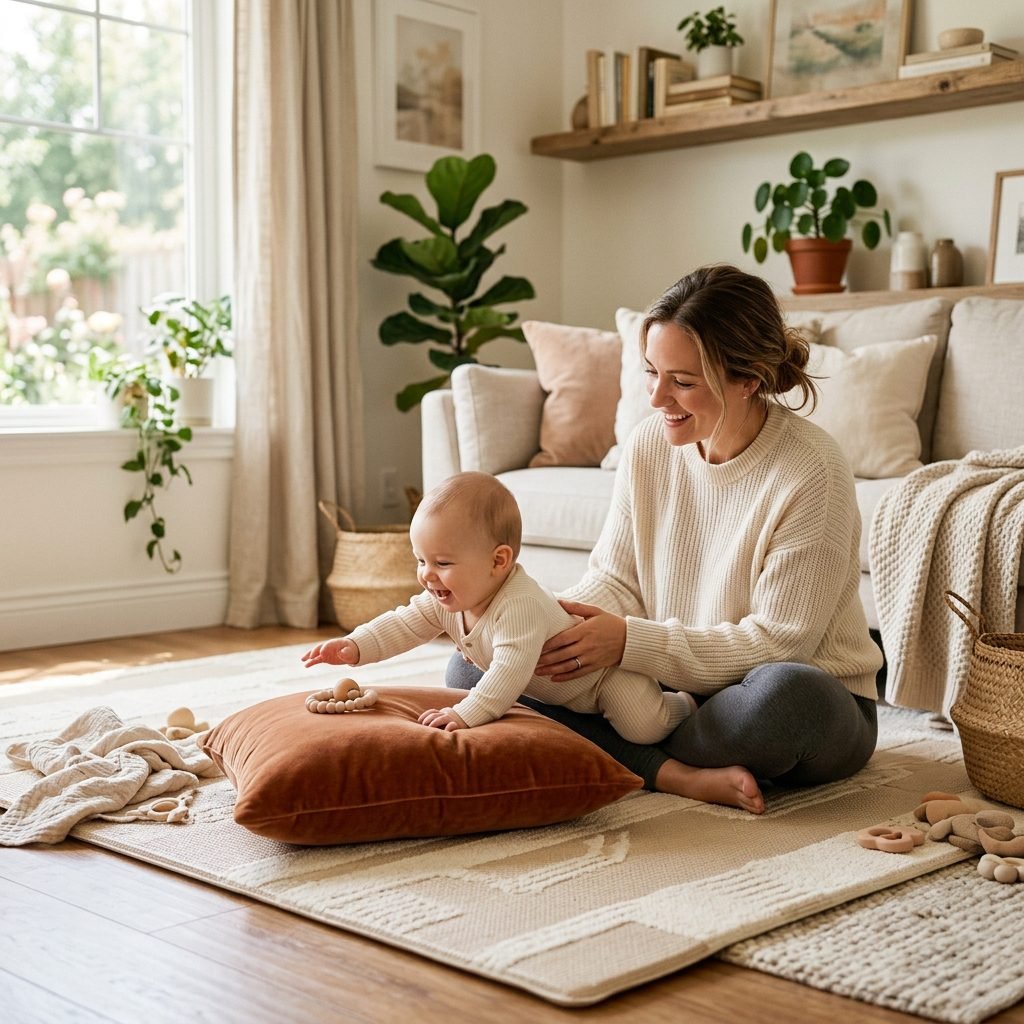
One of my absolute favorite ways to encourage movement, build core strength, and foster spatial awareness is by setting up a safe pillow obstacle course. It sounds simple, but this DIY sensory play activity is a developmental powerhouse. By strategically placing pillows, cushions, and rolled blankets around your baby’s play space, you are creating a dynamic landscape that challenges their balance, encourages cross-lateral movement, and builds the crucial muscle tone needed for independent crawling. In this comprehensive guide, we are going to dive deep into exactly how to set up an obstacle course that is safe, incredibly fun, and perfectly tailored to your baby’s current mobility level.
The Developmental Magic Behind the Obstacle Course
Before we start tearing the cushions off your beautifully styled sofa, let’s talk about why this activity is so beneficial. Crawling is not just about getting from point A to point B; it is a complex neurological and physical achievement.
Building Core and Upper Body Strength
To crawl, a baby needs immense strength in their neck, shoulders, arms, and core. When a baby approaches a pillow obstacle, they cannot just slide over it. They have to push up with their arms, engage their abdominal muscles, and lift their hips. This resistance training is exactly what they need to master the four-point stance (hands and knees).
Enhancing Bilateral Coordination
Crawling requires a cross-crawl pattern—moving the right arm with the left leg, and vice versa. Navigating uneven surfaces like a plush pillow forces the brain to communicate across its two hemispheres. This bilateral coordination is foundational not just for crawling, but for future skills like walking, running, and even reading!
Developing Spatial Awareness and Problem Solving
When faced with a “mountain” (a firm couch cushion), your baby has to make a choice. Do I go over it? Do I go around it? How much force do I need? This builds critical cognitive skills. They are learning about depth perception, cause and effect, and spatial mapping.
- Vestibular Input: Moving over uneven surfaces stimulates the vestibular system in the inner ear, which governs balance and spatial orientation.
- Proprioception: The deep pressure of pushing into a firm pillow helps your baby understand where their body is in space.
- Confidence: Every time they successfully conquer a pillow mountain, their confidence soars, encouraging them to try harder next time.
Safety First: Essential Guidelines for Your Indoor Playground
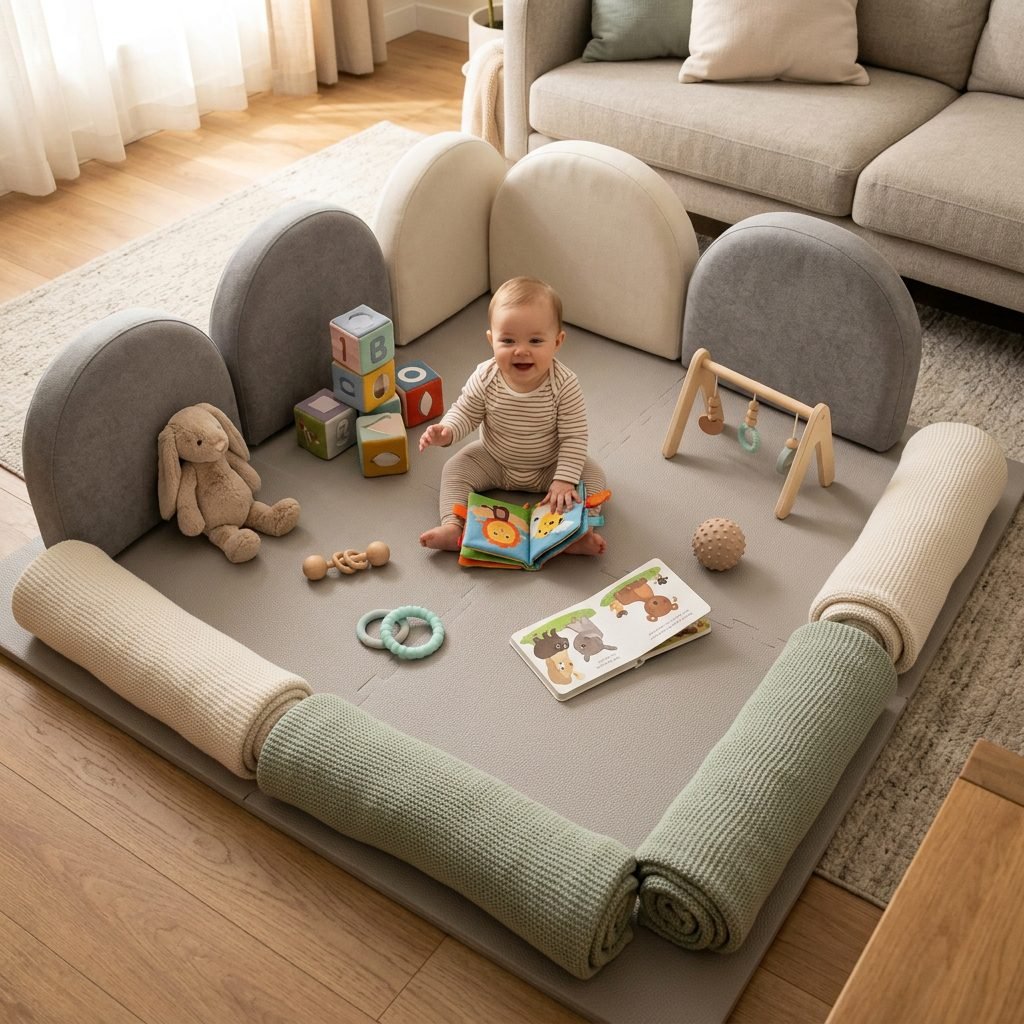
As moms, our first instinct is always protection. While we want to encourage risk-taking in play, we must ensure the environment is completely hazard-free. A pillow course is inherently soft, but there are still crucial safety protocols to follow to prevent accidental rolls, suffocation risks, or frustrating tumbles.
Choosing the Right Location
Always set up your obstacle course on a soft but firm surface. A carpeted floor or a high-quality foam playmat is ideal. Avoid setting up on elevated surfaces like a bed or a couch, as a sudden burst of momentum could lead to a fall. The floor is your safest bet.
Active Supervision is Mandatory
This is not an independent play activity where you can step into the kitchen to grab a coffee. Because we are introducing soft, plush items into the baby’s space, you must be within arm’s reach at all times. If your baby gets tired and buries their face in a pillow, you need to be there to gently roll them over.
| Safe Setup Practices | Hazards to Avoid |
|---|---|
| Using firm, structural couch cushions that hold their shape. | Using overly fluffy, feather-filled pillows that pose a suffocation risk. |
| Setting the course on a flat, non-slip floor mat or carpet. | Setting the course near sharp furniture corners or hard tile floors. |
| Keeping the course short (2-3 obstacles) to prevent exhaustion. | Overwhelming the baby with a massive pile of pillows. |
| Staying within arm’s reach and maintaining visual contact. | Leaving the baby unattended, even for a few seconds. |
| Clearing the surrounding area of small toys or choking hazards. | Using pillows with loose buttons, tassels, or long decorative fringes. |
Remember: Watch for signs of fatigue. Learning to crawl is exhausting work! If your baby starts crying, resting their head heavily, or losing coordination, it is time to pack up the course and offer a restorative cuddle or a nap.
Sourcing Your Materials: The Living Room Scavenger Hunt
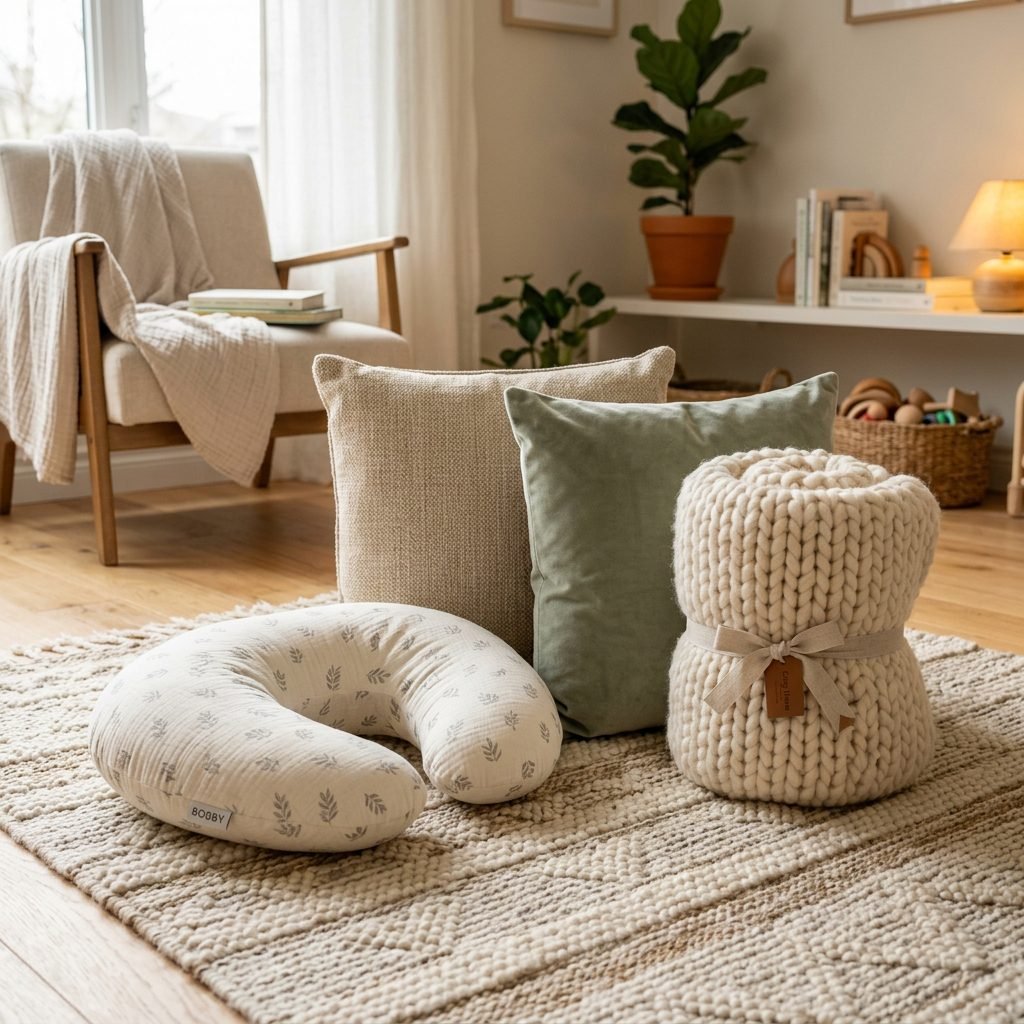
You do not need to buy expensive, specialized pediatric physical therapy blocks to create an amazing obstacle course. Everything you need is likely already in your home! The secret is to mix and match textures, heights, and firmness levels to keep your baby’s brain and body guessing.
The Best Household Items for Your Course
- Firm Couch Cushions: These are the MVPs of the obstacle course. They are sturdy enough to support your baby’s weight without sinking, making them perfect for practicing the hands-and-knees position.
- Nursing Pillows (like a Boppy): The classic “C” shape is incredible for propping up a baby’s chest or acting as a curved barrier they have to maneuver over.
- Rolled-Up Blankets: Take a thick, chunky knit or fleece blanket and roll it tightly into a log. This creates a low-profile “speed bump” that is perfect for early crawlers trying to lift their tummies off the floor.
- Yoga Bolsters or Blocks: If you have a yoga bolster, its firm, cylindrical shape is an excellent challenge for an older baby who is almost crawling.
| Material Item | Best Used For | Developmental Benefit |
|---|---|---|
| Firm Couch Cushion | The “Main Mountain” obstacle | Builds core strength and encourages pushing up on hands. |
| Nursing Pillow | Chest support or curved barrier | Promotes reaching and weight shifting. |
| Rolled-Up Towel/Blanket | Low-level speed bumps | Helps babies lift their hips and tuck their knees. |
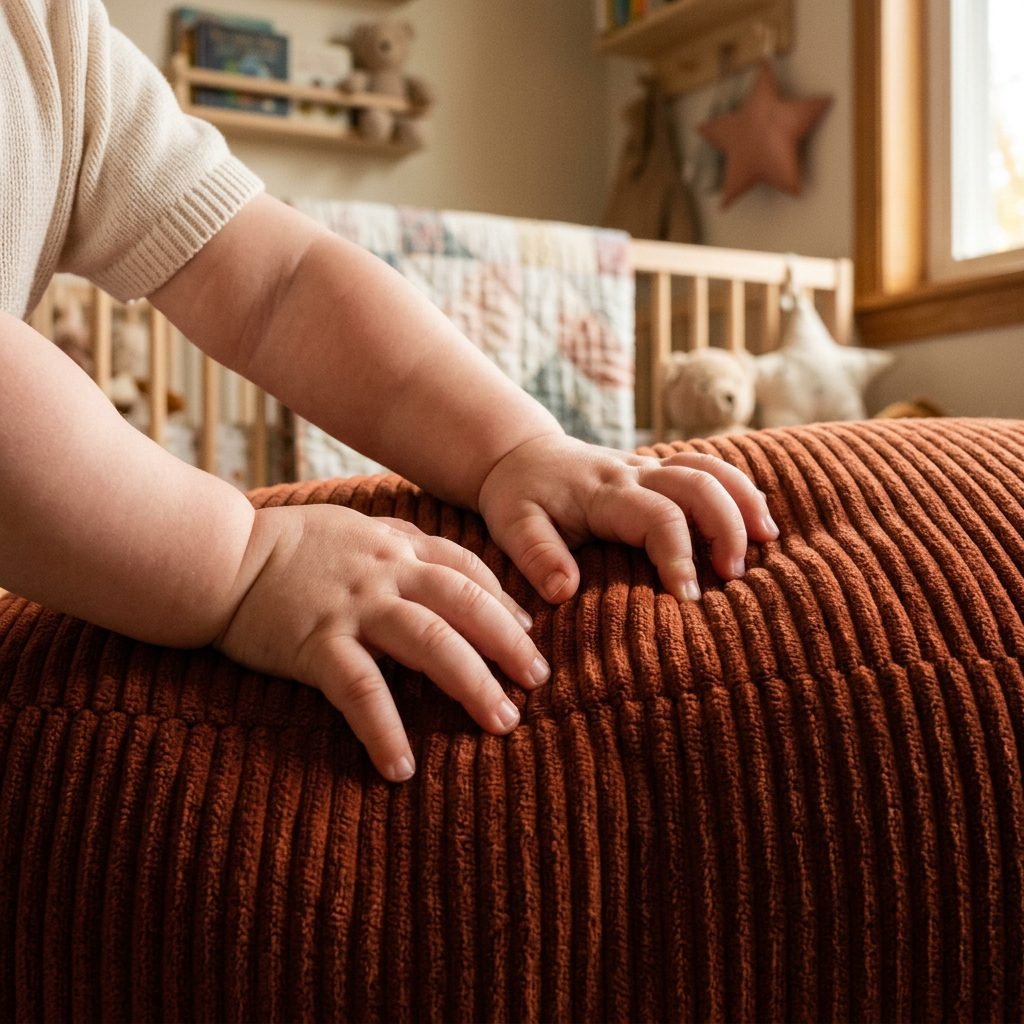
| Decorative Throw Pillow | Texture exploration (velvet, corduroy) | Provides tactile sensory input for their hands and knees. |
When selecting your items, try to incorporate different fabrics. A smooth leather cushion feels different than a fluffy fleece blanket, adding a rich layer of sensory play to the physical exertion.
Step-by-Step: Designing the Perfect Crawling Course
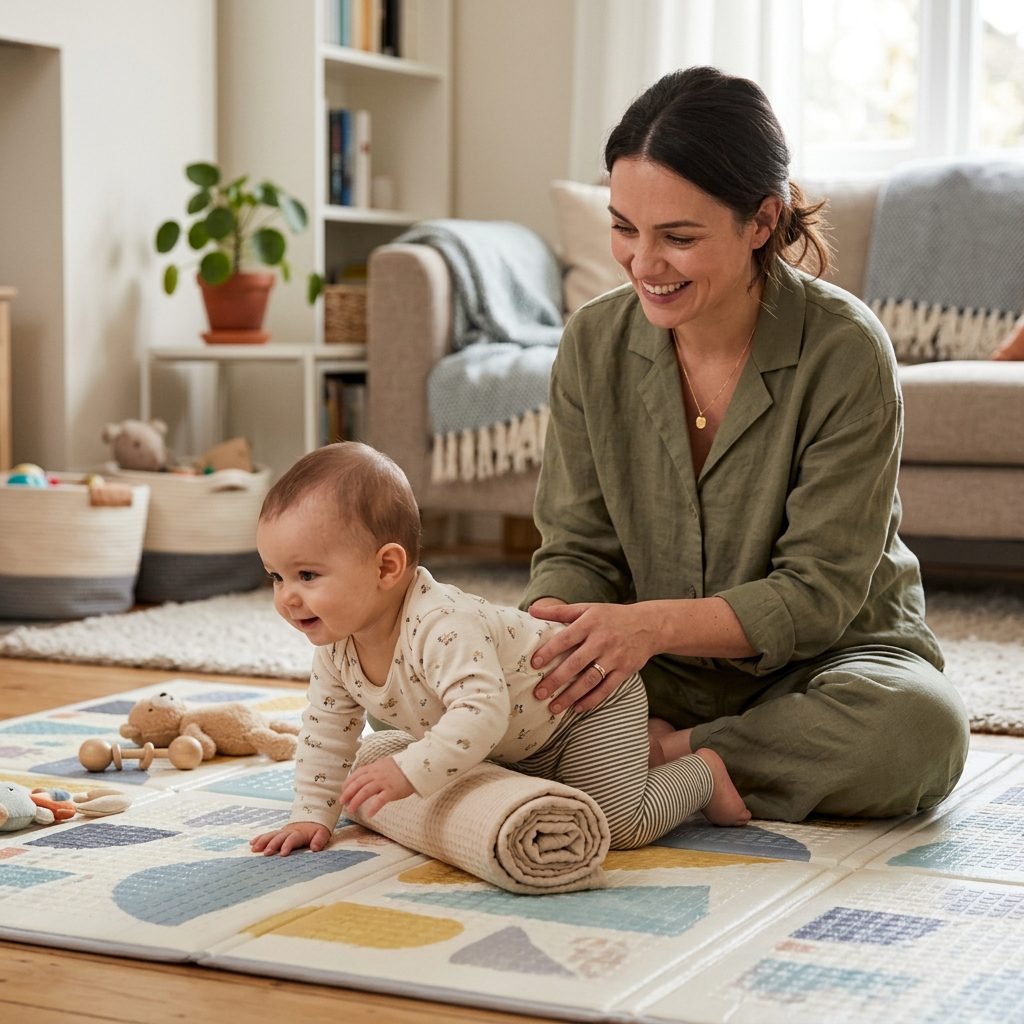
How you set up the course depends entirely on where your baby is in their mobility journey. A baby who is just learning to push up needs a very different setup than a baby who is already army crawling across the room. Let’s break down three distinct setups.
Setup 1: The Pre-Crawler (Tummy Time Booster)
If your baby is strong in tummy time but hasn’t started moving forward yet, the goal is to encourage weight shifting and reaching.
- Lay a soft blanket flat on your playmat as the base.
- Place a tightly rolled towel or a nursing pillow in the center.
- Gently place your baby so their chest is supported by the roll, with their arms draped over the front. This lifts their upper body, taking the pressure off their face and encouraging them to look around.
- Place a high-contrast toy or a baby-safe mirror just out of reach on the floor in front of them to encourage them to shift their weight forward.
Setup 2: The Army Crawler (The Speed Bump Course)
If your baby is dragging their belly on the floor to get around, the goal is to help them lift their hips and get up onto their knees.
- Create a linear path using 2 or 3 rolled-up blankets or low, firm throw pillows spaced about two feet apart.
- Place your baby at the start of the path.
- Sit at the end of the path with their favorite toy. As they army crawl forward, they will encounter the “speed bump.”
- To get over the bump, they will naturally have to push up with their arms and tuck their knees under their hips—the exact motion needed for traditional crawling!
Setup 3: The Four-Point Rocker (The Mountain Range)
If your baby is already getting up on their hands and knees and rocking back and forth, it is time to challenge their balance and coordination.
- Use your largest, firmest couch cushions to create a staggered, uneven terrain. Overlap a throw pillow onto a couch cushion to create a “ramp.”
- Ensure the perimeter is completely clear of hard objects, as they may tip over while navigating the heights.
- Place highly motivating “bait” (like a TV remote, completely cleaned and batteries secured, or a set of shiny measuring spoons) at the peak of the mountain.
- Stay close to support their hips as they climb. You can gently place your hands on their pelvis to help guide their weight shifts as they figure out how to conquer the cushion.
Motivation Station: How to Entice Your Baby to Move
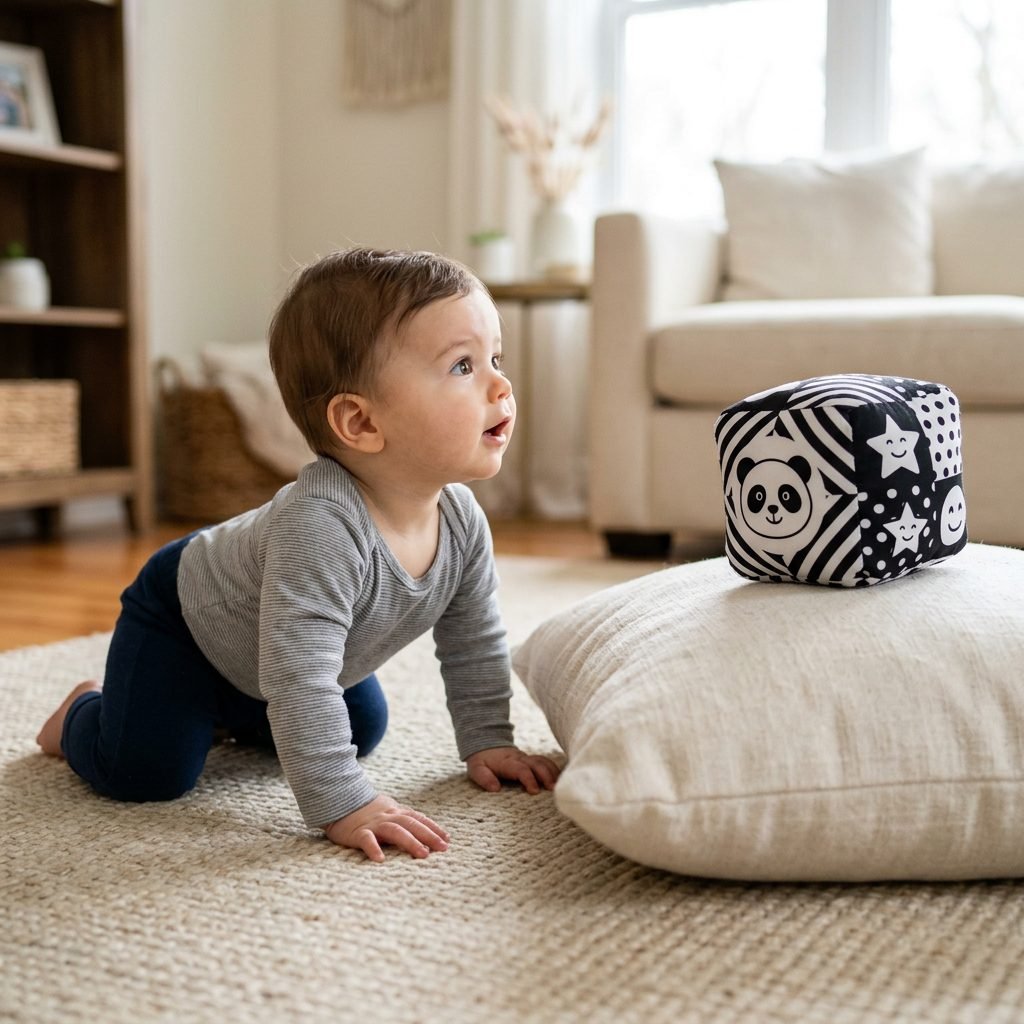
You can build the most magnificent pillow fort in the world, but if your baby isn’t motivated, they will likely just lay their head down and suck their thumb. The secret to a successful obstacle course is the “bait.”
Choosing the Right Lures
Babies are naturally curious, but they all have different preferences. Some babies are highly motivated by visual stimuli, while others prefer auditory rewards. Here are some fantastic ways to encourage movement:
- Baby-Safe Mirrors: Babies love looking at themselves! Propping a mirror at the end of the obstacle course is a surefire way to get them moving forward.
- Novel Household Items: Let’s be real—babies rarely want their actual toys. They want what you have. A clean silicone spatula, a set of metal measuring spoons, or an empty water bottle with some dry rice inside (cap glued shut!) can be incredibly enticing.
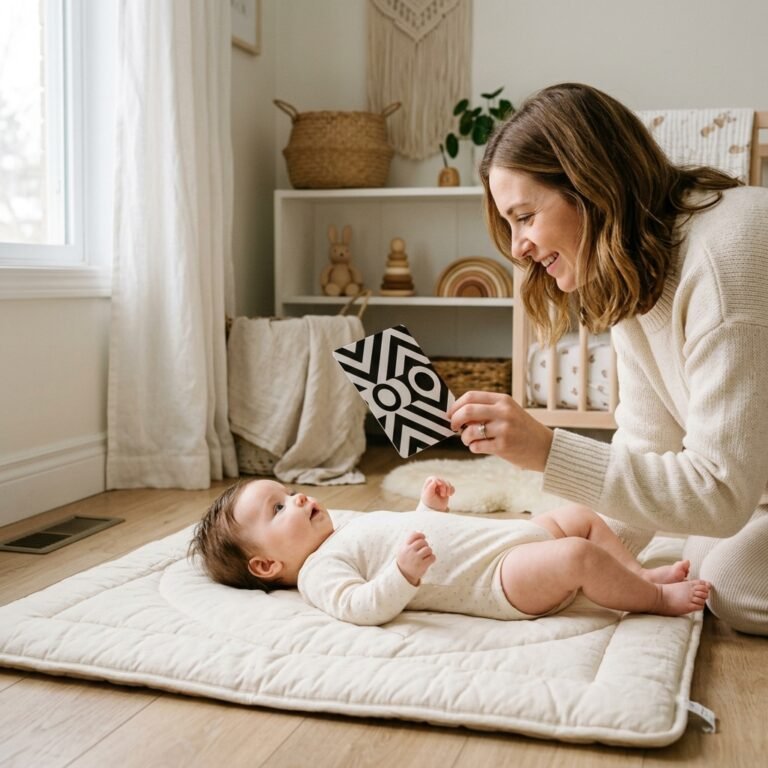
- High-Contrast Cards: For younger babies, black and white contrast cards placed strategically over the pillows can capture their focus.
- You! You are your baby’s favorite thing in the world. Sit at the end of the course, open your arms, smile widely, and call their name with immense enthusiasm.
Handling Frustration with Empathy
Learning a new skill is hard. Your baby might get stuck halfway over a cushion and start to fuss. This is a crucial moment for empathetic parenting. Instead of immediately swooping in and rescuing them (which takes away their chance to problem-solve), offer verbal reassurance and physical support.
“I see you working so hard! That pillow is tricky, isn’t it? You are so strong, you can do this. Mama is right here.”
If the frustration turns into genuine distress, absolutely intervene. Pick them up, validate their feelings, and try again later. We want the obstacle course to be associated with joy and play, not stress.
Integrating the Course into Your Daily Routine
Consistency is key when it comes to gross motor development, but that doesn’t mean you need to dedicate hours a day to formal “crawling practice.” Integrating the pillow obstacle course into your daily rhythm makes it feel natural and fun.
When to Play
Timing is everything. You want your baby to be rested, fed, and in a “quiet alert” state. Avoid setting up the course right after a full feeding (to prevent spit-up from all the tummy pressure) or right before naptime when they are overly tired.
| Time of Day | Activity Level | Suggested Setup |
|---|---|---|
| Morning (Post-Breakfast) | High Energy | The Mountain Range (Couch Cushions) – Challenge their fresh muscles. |
| Mid-Day (Before 2nd Nap) | Moderate Energy | The Speed Bump Course – Focus on linear movement and reaching. |
| Late Afternoon | Low Energy / Fussy | The Tummy Time Booster – Keep it simple and supportive. |
Keep the sessions short. Five to ten minutes of active obstacle course play is a massive workout for a baby. If you do this once or twice a day, you will be amazed at how quickly their strength and coordination improve.
Dressing for Success
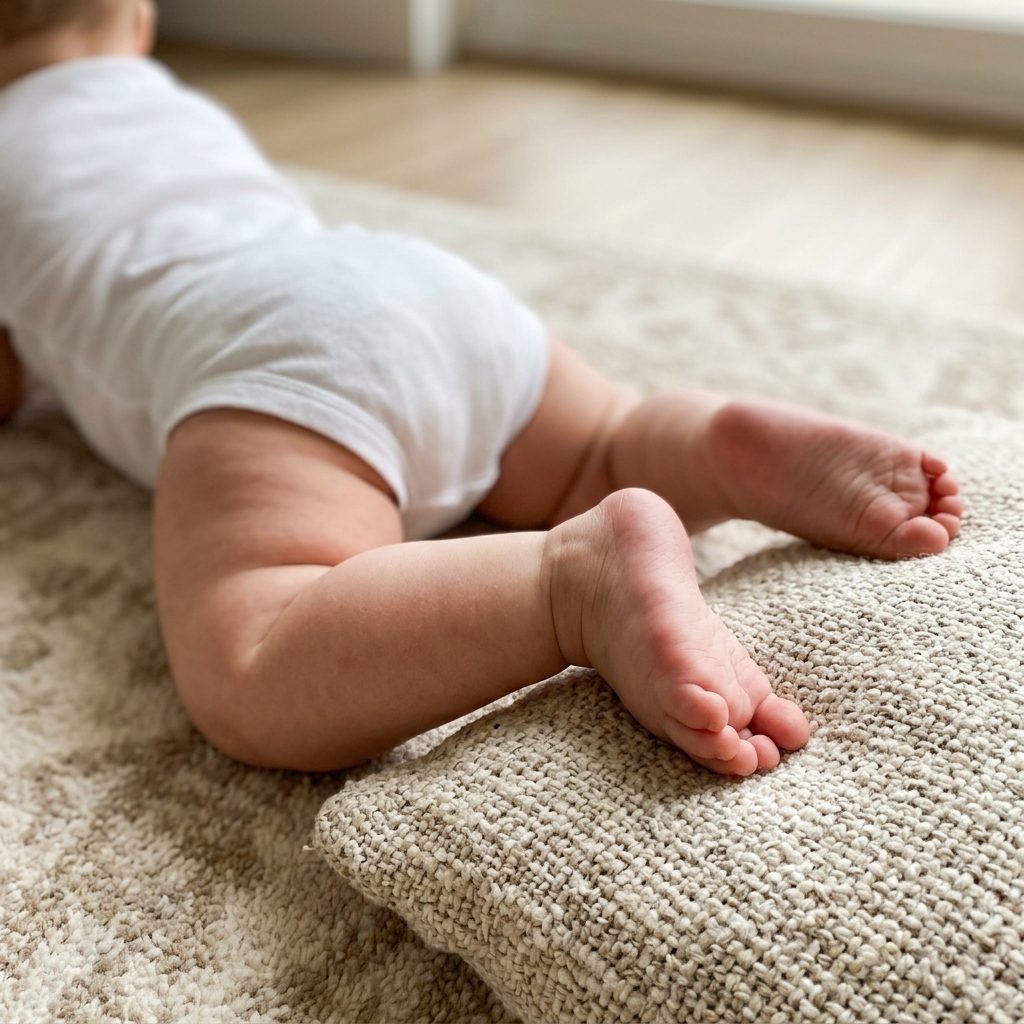
Believe it or not, your baby’s outfit plays a huge role in their ability to crawl! Hardwood floors and slippery leggings are a recipe for frustration. When it’s time for the obstacle course, strip them down to their diaper, or dress them in a onesie with bare legs and bare feet. Skin-to-surface contact provides the traction they need to push off the floor and grip the pillows.
Conclusion
Oh, mama, watching your baby learn to navigate the world is one of the most profound joys of parenthood. Setting up a safe pillow obstacle course is such a beautiful, intentional way to bond with your little one while supporting their natural development. Remember to keep the atmosphere light, celebrate the tiny victories (even just lifting a hip!), and give yourself grace if your baby isn’t interested right away.
They will crawl when they are ready. Until then, enjoy the snuggles, take entirely too many photos of their chubby legs conquering couch cushions, and trust that you are doing an incredible job guiding them through these precious milestones. You’ve got this, and they’ve got this!