
The Step-by-Step Infant Massage Guide to Relieve Trapped Gas Instantly
Welcome to the Quiet After the Storm
Oh, mama, I see you. It is 2:00 AM, the house is silent except for the rhythmic, pained cries of your sweet little one, and your heart is breaking right along with your sleep cycle. We have all been there—holding a tiny human whose tummy feels as tight as a drum, wondering how something so small can produce so much discomfort. As a doula, I want you to take a deep breath and drop your shoulders. You are doing an incredible job, and what you are feeling is the natural, fierce protection of a mother. Trapped gas is one of the most common hurdles in the first fourth trimester, and while it feels overwhelming, your own two hands are the most powerful tools you have for healing. This guide is designed to be your sisterly companion, walking you through the gentle, rhythmic art of infant massage. We aren’t just moving gas; we are communicating safety, love, and relief through your fingertips. Let’s transform those tears into tiny sighs of relief together.
Remember, sweet mama: your touch is a language your baby understood long before they heard your voice. You are exactly what they need right now.
Understanding the Gassy Tummy: Why It Happens
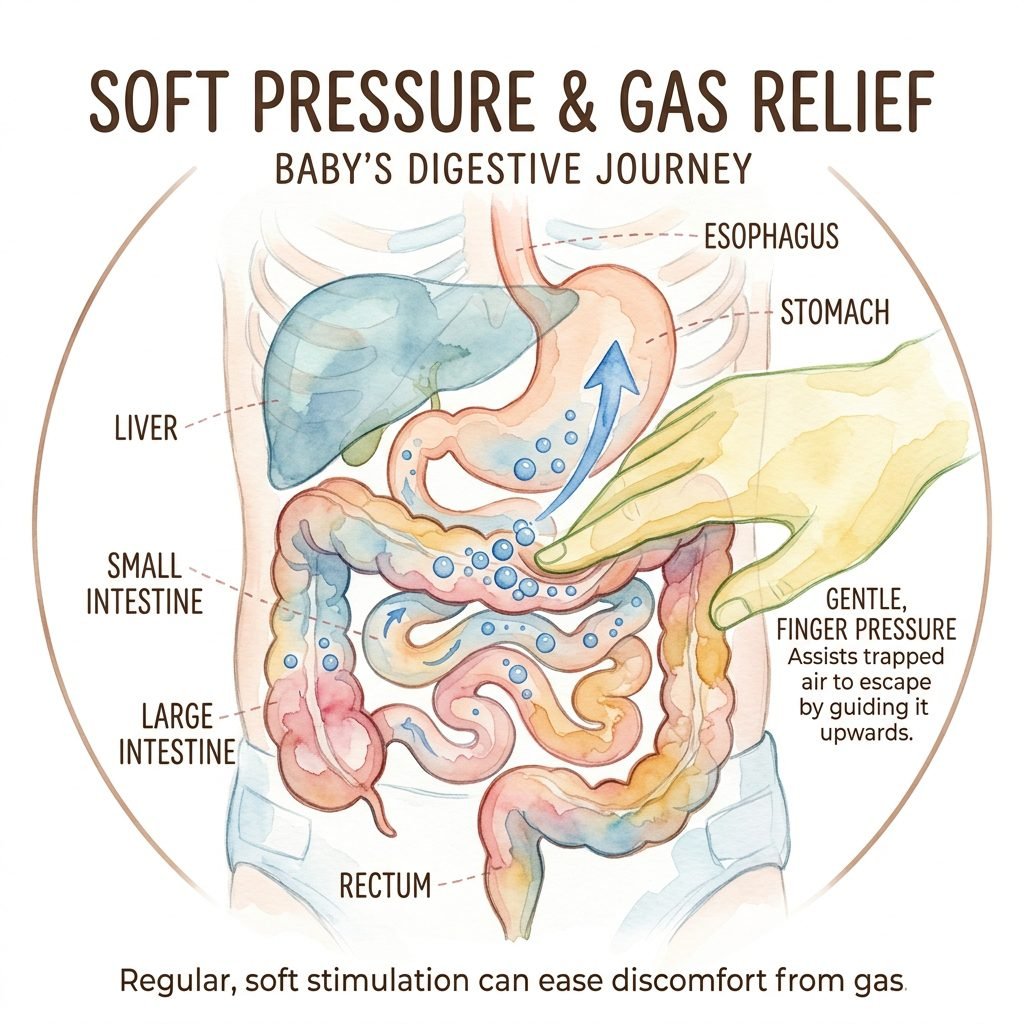
The Immature Digestive System
Before we dive into the physical moves, let’s talk about the ‘why.’ Your baby’s digestive system is a work in progress. When they are born, their gut is still learning how to process milk, manage air bubbles, and coordinate the muscles required for a bowel movement. This lack of coordination is why they often grunt, turn red, and pull their legs up to their chest. Trapped gas occurs when air bubbles get stuck in the bends of the intestines, causing pressure and distention. This can happen from swallowing air during feeding, crying, or even as a byproduct of the natural breakdown of lactose. Understanding that this is a physiological milestone rather than a ‘problem’ can help lower your anxiety. We are simply helping their body do what it hasn’t quite mastered yet.
The Emotional Connection of Touch
Massage does more than move air; it stimulates the vagus nerve, which connects the brain to the digestive tract. By applying gentle pressure, you are encouraging the parasympathetic nervous system to take over—this is the ‘rest and digest’ mode. When your baby relaxes, their sphincter muscles relax, making it much easier for that stubborn gas to find its way out. You are creating a loop of calm that benefits both of you.
Preparation: Setting the Sacred Space for Relief

Creating the Environment
You cannot rush a massage, especially when a baby is already in distress. To be successful, you need to set the stage. Ensure the room is warm—ideally between 72 and 75 degrees Fahrenheit—since your baby will be partially undressed. Dim the lights and perhaps put on some soft white noise or a gentle lullaby. You want to signal to their nervous system that the ’emergency’ is over.
Choosing Your Lubricant
Never massage dry skin, as the friction can be uncomfortable. I always recommend edible, cold-pressed oils. Since babies often put their hands in their mouths, safety is paramount. Fractionated coconut oil or grapeseed oil are excellent choices because they are light, hypoallergenic, and easily absorbed. Avoid essential oils for newborns unless specifically cleared by a professional, as their scent can be overwhelming and their skin is incredibly permeable.
The ‘Permission’ Ritual
Even at a few weeks old, we want to honor your baby’s autonomy. Before you start, rub a little oil between your palms to warm it up (and let them hear the sound). Hold your hands near their face and say, ‘Mama is going to give you a tummy rub now to help your belly feel better.’ Watch their cues. If they are stiffening or screaming harder, they might need a cuddle first. If they relax or look at you, you have the green light.
The Core Massage Techniques: Step-by-Step
1. The Water Wheel
Place the pinky side of your hands horizontally across your baby’s upper abdomen, just below the ribcage. Gently scoop downward toward the pelvis, one hand after the other, as if you are paddling a water wheel. This move helps move contents from the small intestine toward the large intestine. Repeat this 6 to 10 times.
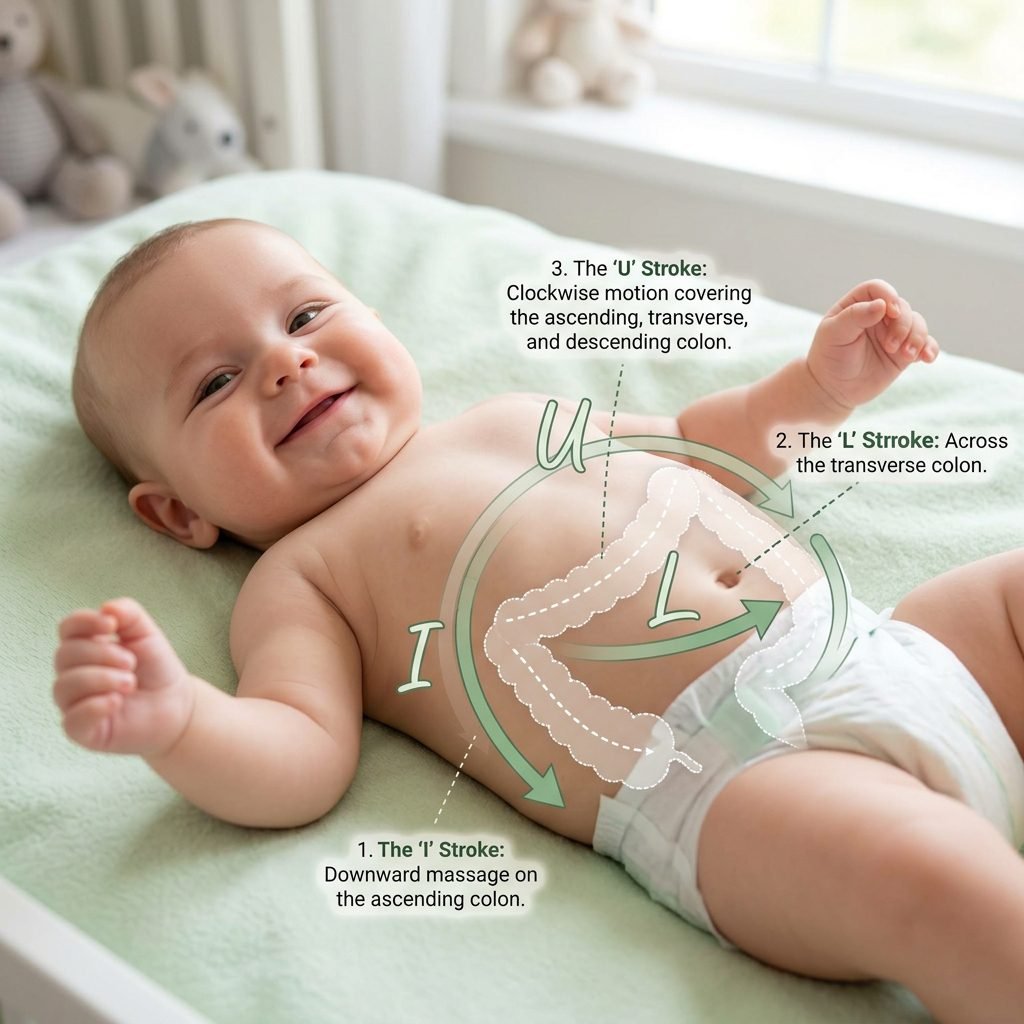
2. The ‘I Love U’ Stroke
This is the gold standard of infant massage. It follows the path of the large intestine:
- I: Using two fingers of your right hand, trace a straight line down the left side of the baby’s belly (your right). This is the descending colon.
- L: Trace an inverted ‘L’ starting from the baby’s upper right side, across to the left, and down. This covers the transverse and descending colon.
- U: Trace an inverted ‘U’ starting from the lower right, up, across, and down the left side. This follows the entire path of the large intestine.
3. Sun and Moon
Your left hand stays on the baby’s belly, moving in a full circle clockwise (the Sun). Your right hand follows, making a half-circle from the 10 o’clock to the 5 o’clock position (the Moon). This rhythmic circular motion is incredibly soothing for trapped wind in the lower gut.
4. Bicycle Legs
While not a ‘stroke,’ this is vital. Hold your baby’s ankles and gently move their legs in a cycling motion toward their tummy. After a few ‘pedals,’ push both knees gently up toward their chest and hold for 5 seconds. This physical compression often results in the ‘instant’ relief we are looking for!
Advanced Holds and the Gas Severity Matrix

The Tiger in the Tree
Sometimes, a baby is too upset for a traditional massage. This is where the ‘Tiger in the Tree’ hold comes in. Lay your baby face-down along your forearm, with their head resting in the crook of your elbow and their legs straddling your hand. Use your other hand to rub their back. The gentle pressure of your arm against their tummy, combined with gravity, works wonders.
Matching the Method to the Misery
Not all gas is created equal. Use this table to determine which technique to prioritize based on your baby’s symptoms.
| Symptom | Severity | Primary Technique |
|---|---|---|
| Occasional grunting/squirming | Low | Bicycle Legs & Water Wheel |
| Hard tummy, pulling legs up | Medium | Full ‘I Love U’ Routine |
| Inconsolable crying, arched back | High | Tiger in the Tree + Warm Compress |
| Chronic evening fussiness (Colic) | Ongoing | Preventative Daily Massage (2x day) |
The Clock Massage
Imagine a clock on your baby’s belly. Using your fingertips, apply gentle pressure at the 12, 3, 6, and 9 o’clock positions. This ‘spot’ pressure can help break up larger bubbles that are stuck in the corners of the intestinal tract.
Timing and Frequency: When to Massage

The Golden Rule of Timing
The most important rule of infant massage is never massage immediately after a feeding. You must wait at least 30 to 45 minutes to avoid causing spit-up or reflux. The goal is to move gas, not the milk they just worked so hard to swallow!
Making it a Routine
Massage is most effective when used as a preventative measure. Don’t just wait for the crying spells! Incorporating a 10-minute massage into your post-bath routine or during a mid-morning diaper change can keep the digestive system moving smoothly throughout the day. Consistency is key; the more you do it, the more your baby’s body will respond to the cues of relaxation.
When to Stop
If your baby turns away, becomes rigid, or their crying intensifies significantly during the massage, stop immediately. Sometimes the pressure can be too much if the gas is particularly painful. In those moments, transition to skin-to-skin contact or a warm bath instead.
Troubleshooting and Maternal Self-Care

What if it Doesn’t Work?
Mama, if the gas doesn’t move immediately, you haven’t failed. Sometimes the gas is higher up in the stomach and requires a different burping position, or it might be a sign of a temporary sensitivity. Try the Football Hold or placing them tummy-down across your lap while you gently bounce your knees. The vibration can often do what manual massage cannot.
Checking in with Yourself
A baby can feel your tension. If you are frustrated, your touch will be firm and clinical rather than soft and healing. If you feel your blood pressure rising, put the baby in a safe place (like their crib) for 5 minutes. Wash your face, take ten deep breaths, and come back. You are a better healer when you are regulated.
“You are the calm in their storm. Even if the gas stays, your presence is the most important part of the process.”
Conclusion
The Breath of Relief
As you finish your massage, gently stroke from your baby’s head down to their toes to signal the end of the session. Wrap them snugly in a warm blanket. Whether you heard a satisfying ‘toot’ or just managed to calm the crying for a few minutes, you have succeeded. You are learning your baby’s cues, and they are learning that you are their safe harbor. Over the coming weeks, their digestive system will mature, and these gassy nights will become a distant memory. Until then, keep your hands warm, your heart open, and your oil bottle ready. You’ve got this, mama.