8 Simple Montessori Activities to Boost Your 10-Month-Old’s Pincer Grasp
The Magic of the Tiny Pinch
Hello, mama. There is a specific, quiet magic that happens around the 10-month mark. You’ll notice your little one moving away from the ‘raking’ grasp—where they use their whole palm to sweep items toward them—and toward the delicate, sophisticated pincer grasp. This is the ability to coordinate the thumb and index finger to pick up tiny objects. As a doula and a fellow mom, I can tell you: this isn’t just a physical milestone; it’s the birth of independence. It’s the first step toward them being able to feed themselves, button a tiny sweater, and eventually, hold a pencil to write you ‘I love you’ notes.
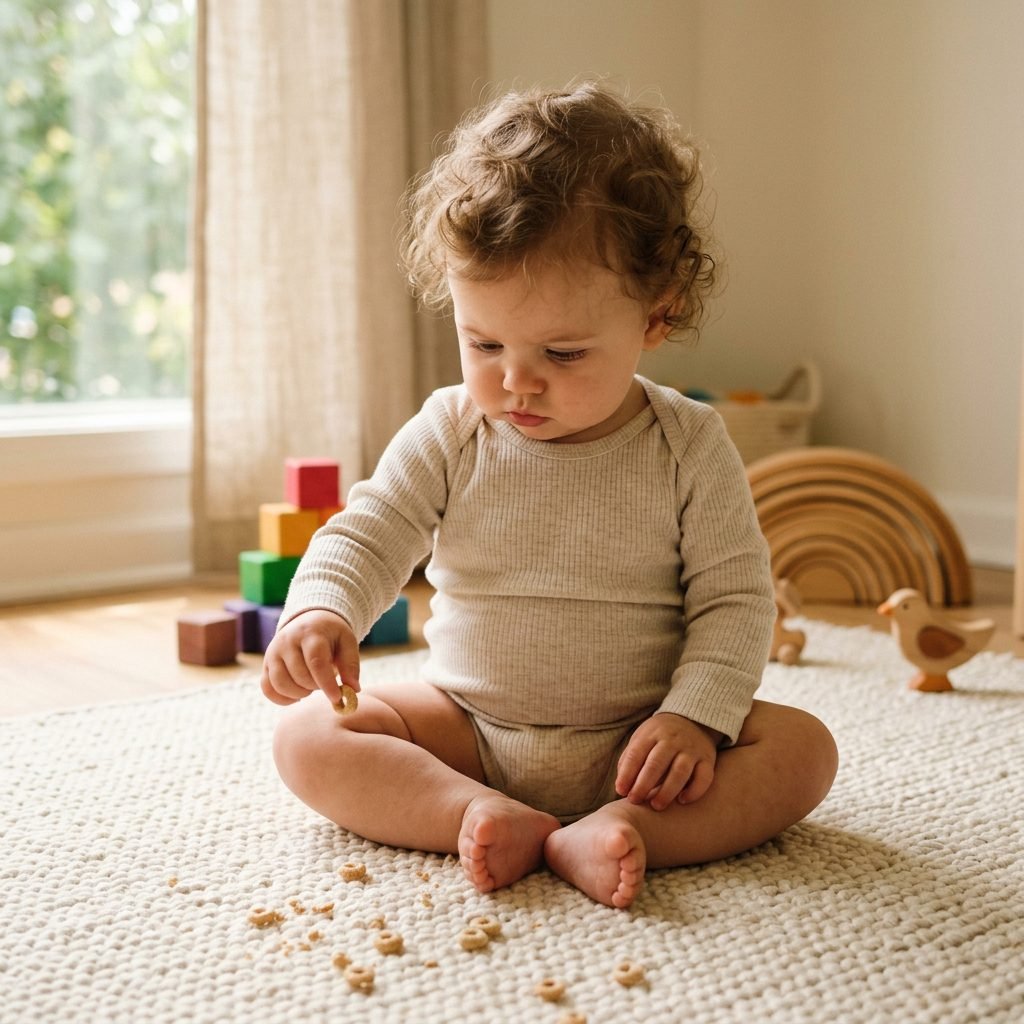
In the Montessori philosophy, we follow the child’s ‘sensitive period’ for small objects. Your baby is likely obsessed with every stray crumb on the rug or the tiny tags on their plushies. Instead of just redirection, we can lean into this curiosity with purposeful, sensory-rich activities that strengthen those tiny hand muscles. Below, I’ve curated a guide to 8 simple, low-cost, and deeply engaging activities that you can set up in minutes. Let’s dive into this journey of discovery together, with a cup of tea in hand and a heart full of wonder at how much your baby is growing.
Understanding the Pincer Grasp: Why It Matters
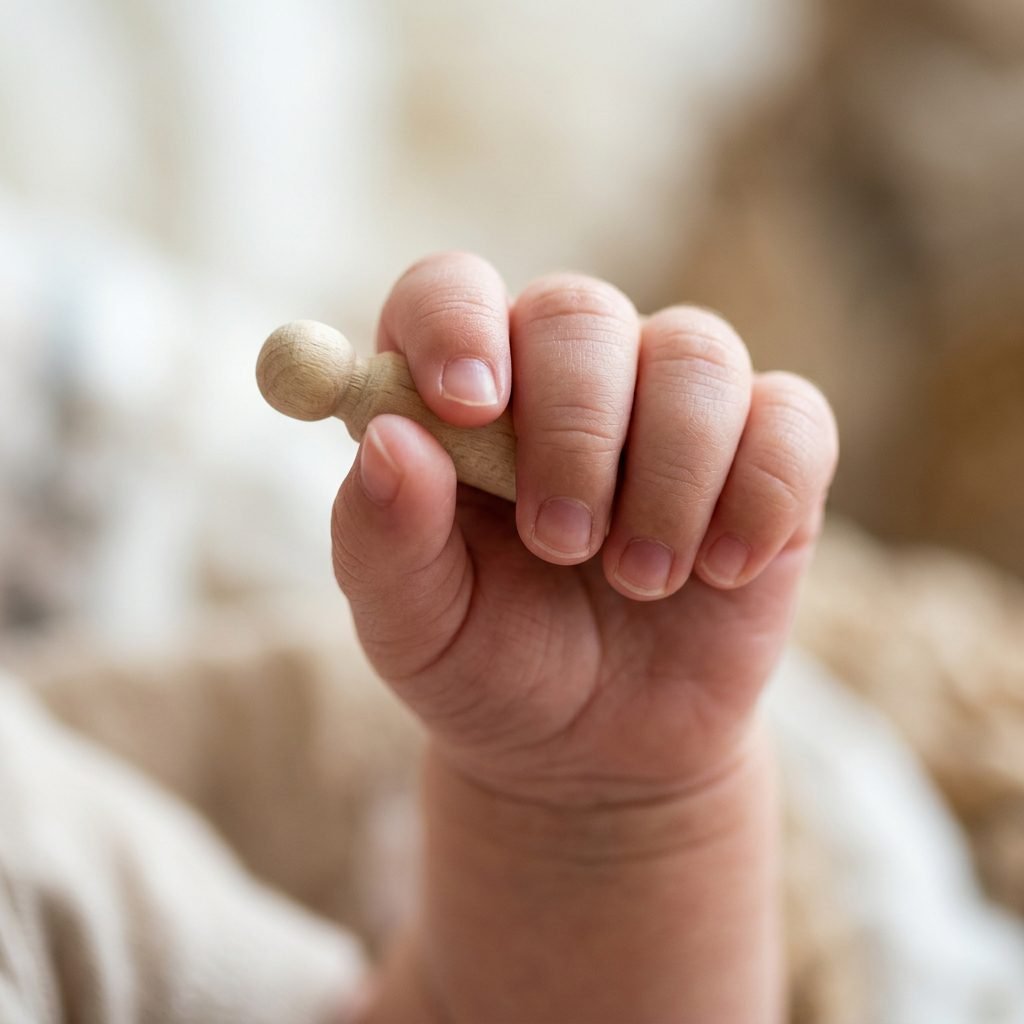
Before we jump into the fun, let’s talk about the ‘why.’ The pincer grasp is a complex neurological and physical feat. It requires the brain to calculate distance (depth perception) and the fingers to execute a precise, controlled movement. Most babies begin to develop the ‘inferior pincer grasp’ (using the pads of the fingers) around 9 months, progressing to the ‘superior pincer grasp’ (using the very tips of the fingers) by 12 months.
The Benefits of Early Mastery
- Self-Feeding Success: A strong pincer grasp allows your baby to manage small bites of soft food, reducing frustration during mealtime.
- Hand-Eye Coordination: These activities bridge the gap between what the eye sees and what the hand does.
- Focus and Concentration: In Montessori, we call this ‘Work.’ When a baby focuses on a small task, they are building their attention span.
Your baby’s hands are the tools of their intelligence. Every time they pinch, pull, or poke, they are literally building their brain.
Safety First: Preparing Your Montessori Environment
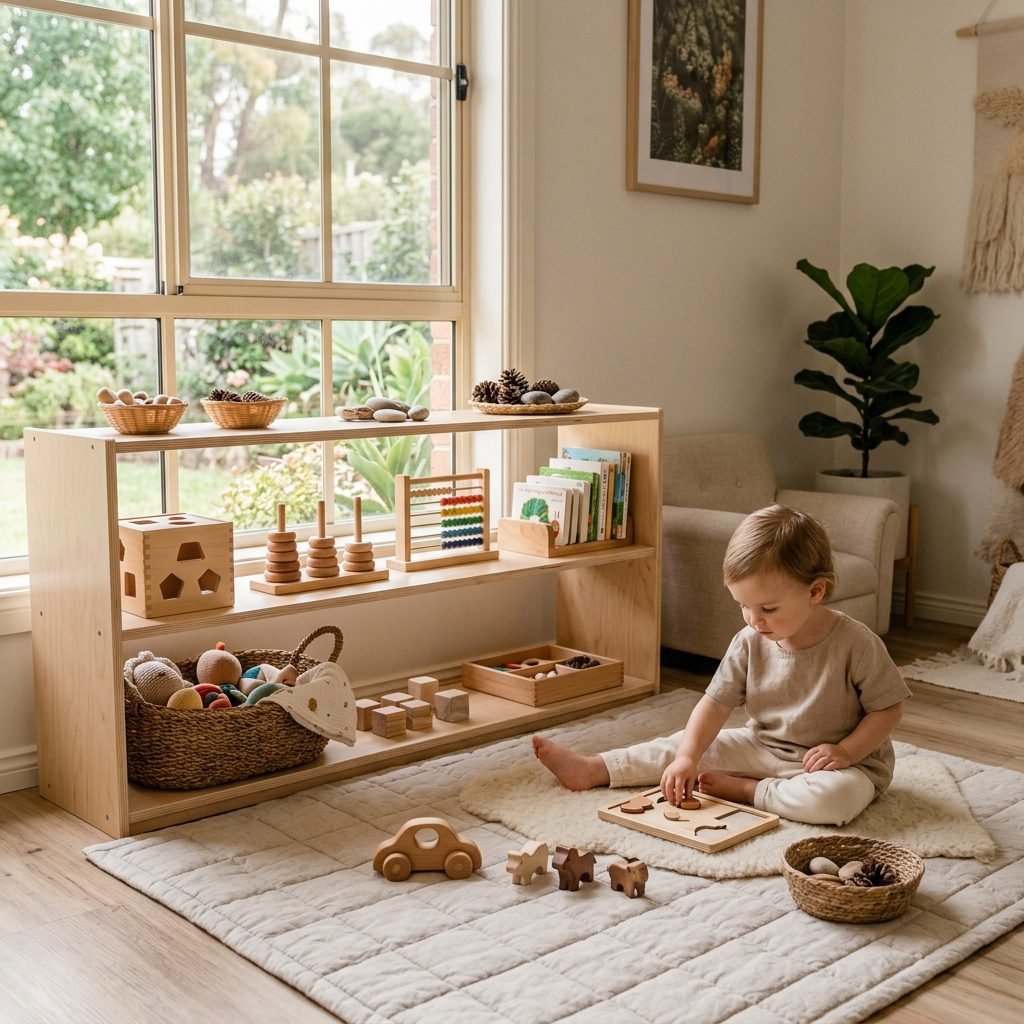
At 10 months, your baby is a little explorer, but they don’t yet understand the concept of ‘choking hazards.’ When we provide small items for pincer grasp practice, active supervision is non-negotiable. Always sit within arm’s reach and ensure the items used are either taste-safe (edible) or large enough not to be swallowed if they aren’t meant for the mouth.
Creating a ‘Yes’ Space
To help your baby focus, minimize distractions. Turn off the TV, put away the loud electronic toys, and lay out a simple mat. This defines the ‘workspace’ and helps your little one understand that something special is about to happen. Use natural materials like wood, stainless steel, and cotton whenever possible to provide varied tactile feedback.
| Safety Rule | Action Step |
|---|---|
| Choking Check | Ensure non-food items are larger than a toilet paper roll diameter. |
| Supervision | Never leave a baby alone with pincer grasp materials. |
| Cleanliness | Sanitize household items like whisks or muffin tins before play. |
Activity 1: The ‘O’ Cereal Threading
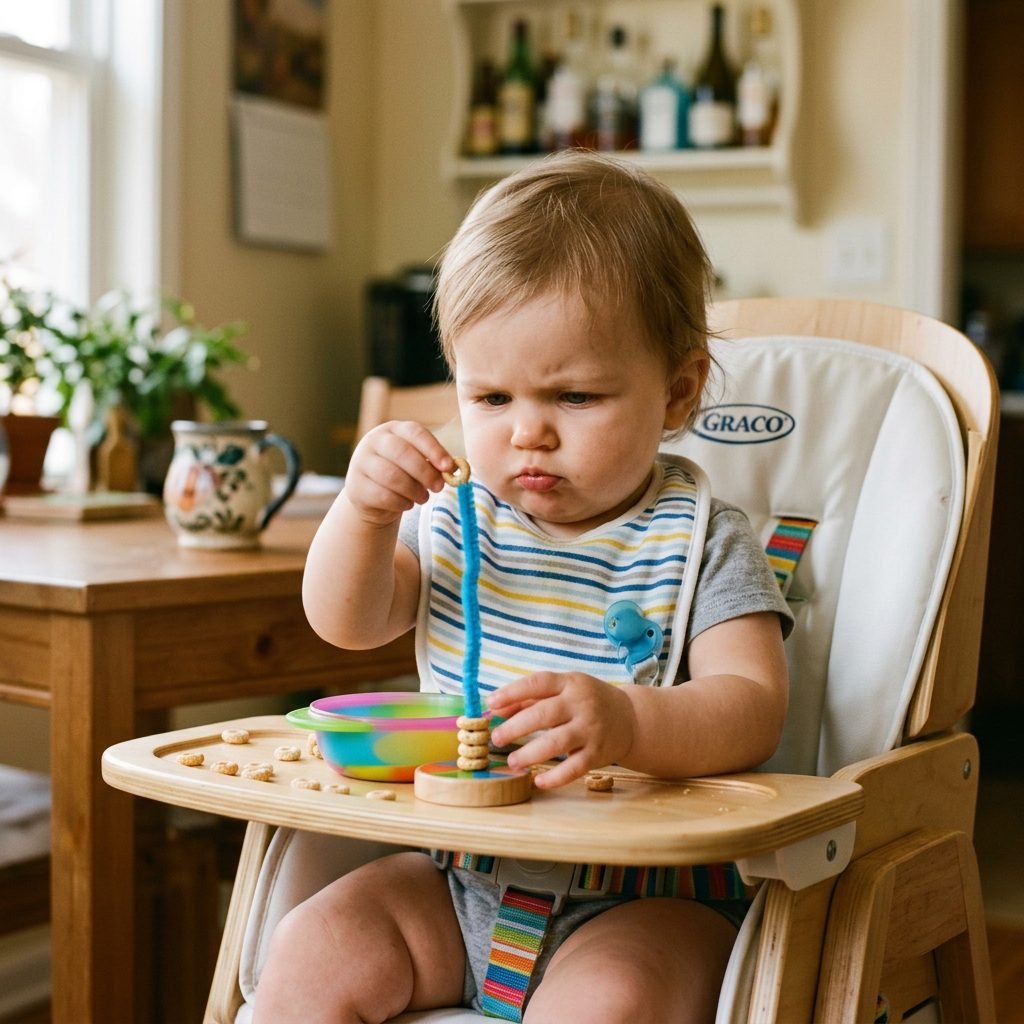
This is a classic for a reason! It combines the pincer grasp with bilateral coordination (using both hands together). We use a soft pipe cleaner instead of a string because it stays upright, making it much easier for a 10-month-old to succeed.
The Setup:
- Take a clean, colorful pipe cleaner and poke it through the holes of an overturned colander so it stands up like a little tower.
- Place a small bowl of ‘O’ shaped cereal (like Cheerios) next to it.
- Model the behavior: slowly pick up a cereal piece and drop it onto the pipe cleaner.
The Sisterly Tip: Don’t worry if they just want to eat the cereal at first! That is also pincer grasp practice. Eventually, they will notice the ‘tower’ and try to mimic your movements. Celebrate the effort, not just the result.
Activity 2: The Muffin Tin Rescue
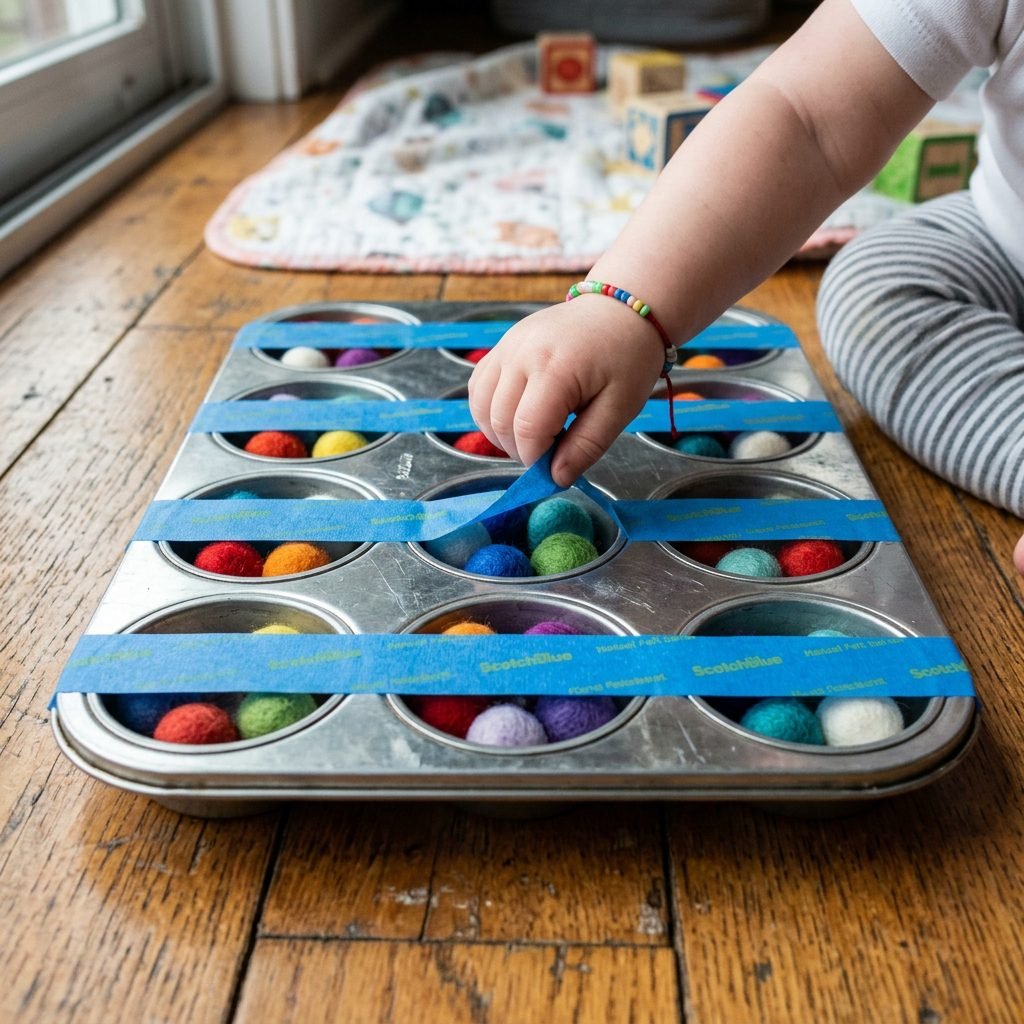
This activity introduces resistance, which helps build the actual muscle strength in the fingertips. It’s also incredibly satisfying for babies who love to peel things.
The Setup:
- Place a few large pom-poms or small silicone toys into the cups of a muffin tin.
- Take pieces of painters tape (which is low-tack and safe) and criss-cross them over the top of each cup, ‘trapping’ the toy inside.
- Show your baby how to use their thumb and forefinger to catch the edge of the tape and peel it back.
The sound of the tape peeling and the ‘reward’ of the toy inside keeps them engaged for much longer than a standard toy. It’s a fantastic way to practice that precision grip while also working on problem-solving skills.
Activity 3: The Whisk and Pom-Pom Pull
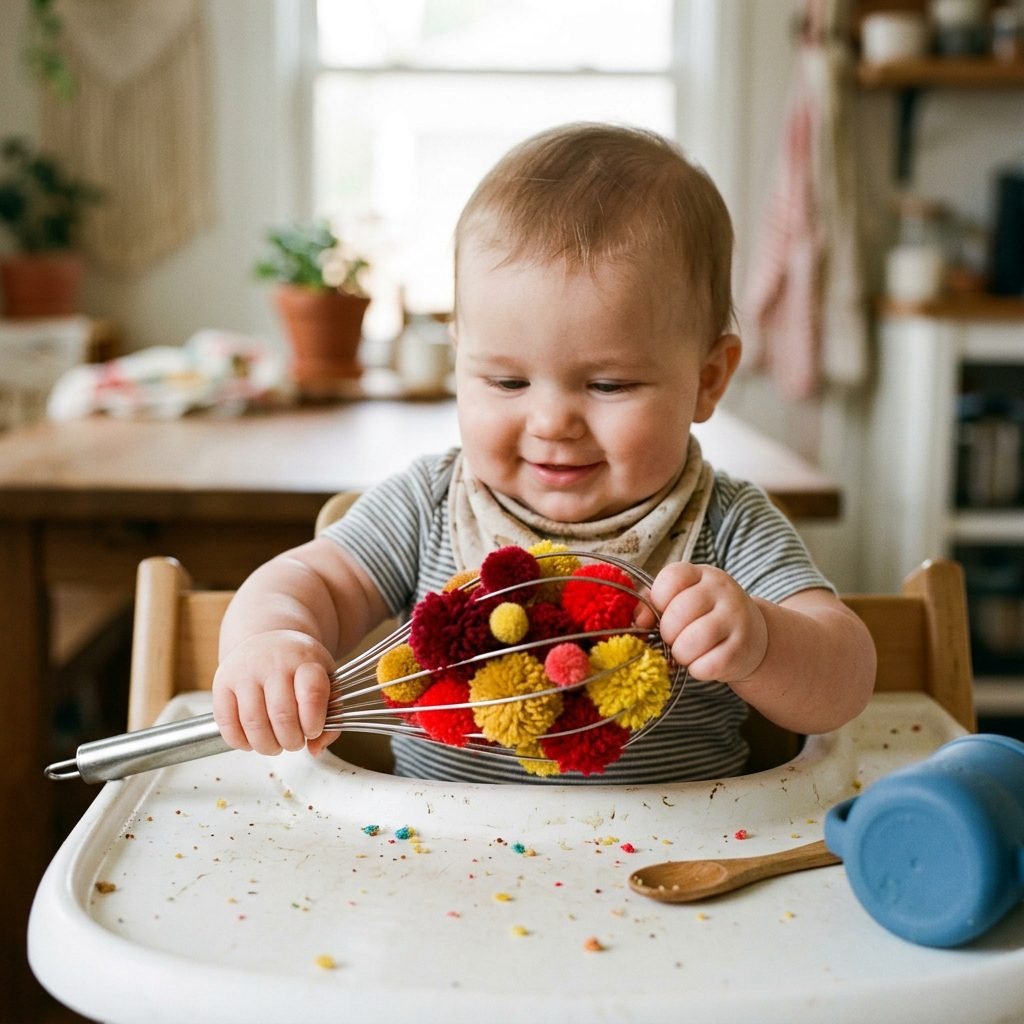
Most of the best Montessori toys are already in your kitchen! A simple balloon whisk is a masterpiece of engineering for a 10-month-old. This activity focuses on pincer pull rather than just a pinch.
Instructions:
- Stuff several large, colorful wool pom-poms (or even clean socks) inside the wires of a kitchen whisk.
- Hand the whisk to your baby.
- They will have to use their pincer grasp to reach between the wires, pinch the pom-pom, and pull it through the narrow gaps.
This is a great ‘quiet time’ activity for when you are preparing dinner. It keeps their hands busy and their minds engaged with the physics of ‘in and out.’ Note: Ensure the pom-poms are high-quality so they don’t shed fibers into your baby’s mouth.
Activity 4: The ‘Secret Treasure’ Egg Carton
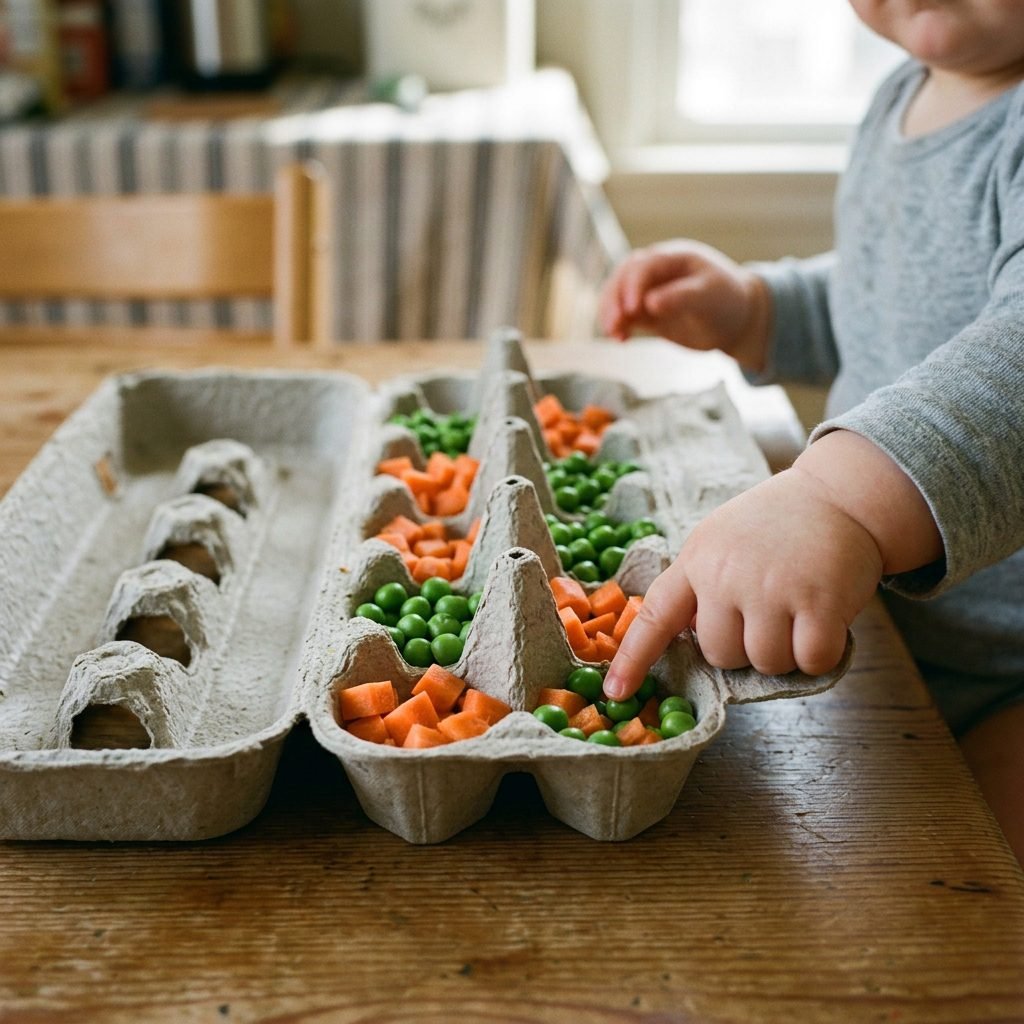
Recycling is the heart of a crafty mom’s toolkit. An empty, clean egg carton is a perfect 12-slot sorting tray that naturally encourages the pincer grasp because the compartments are small and deep.
The Setup:
Place one small, edible item in each compartment. You could use thawed peas, small pieces of steamed carrot, or blueberries. Because the compartments are deep, the baby cannot use their whole hand to grab the food; they are forced to use their fingertips to ‘hook’ the item out.
Why this works:
It adds a sensory/tactile element. The coldness of a pea versus the squishiness of a carrot provides different feedback to the nerves in their fingertips, further refining their motor control. Plus, it’s a healthy snack time win!
Activities 5-8: Household Hacks for Fine Motor Mastery
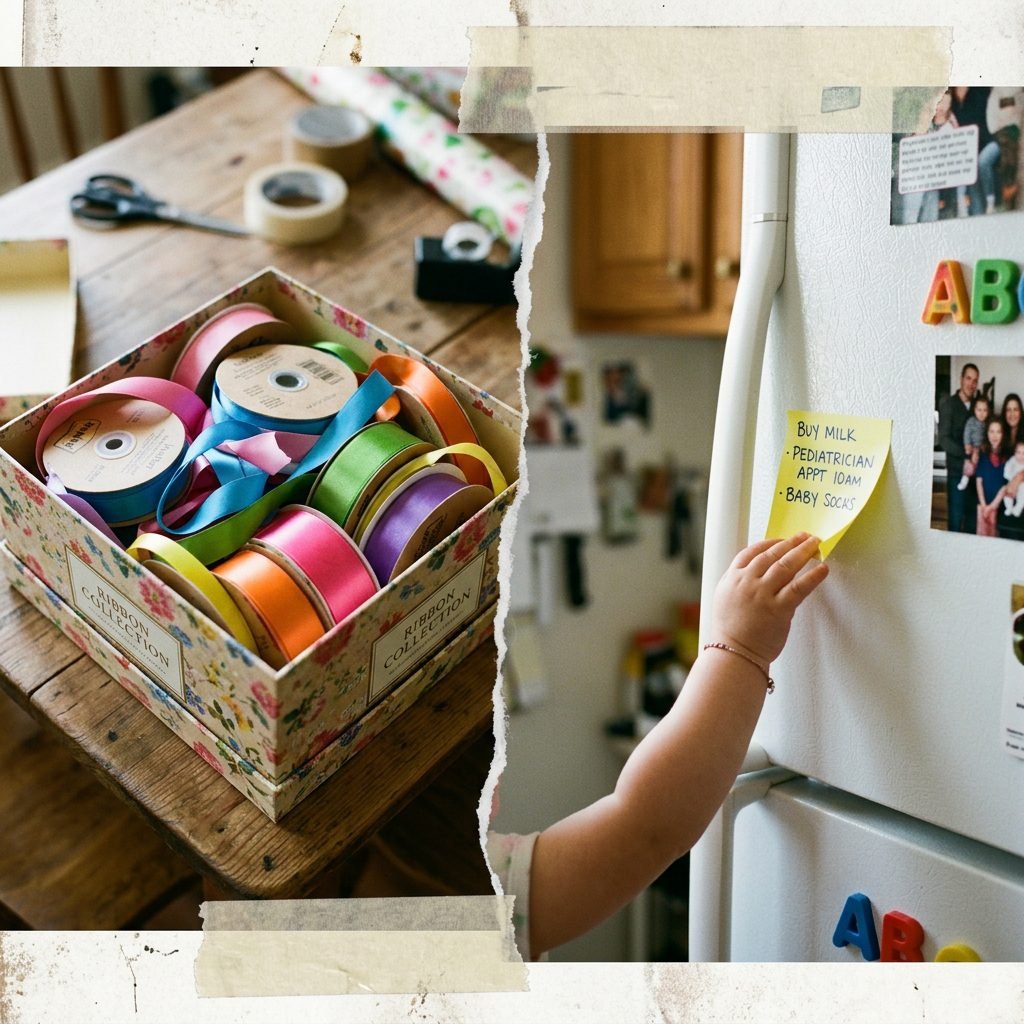
We don’t need expensive kits to raise a Montessori baby. Here are four more quick-fire ideas using things you likely have in your junk drawer or pantry:
- 5. The Ribbon Box: Poke holes in an old shoebox and thread various ribbons through. Tie knots on the ends inside. Your baby will love pinching the thin ribbon and pulling it until it stops.
- 6. Sticky Note Wall: Stick 5-10 colorful Post-it notes at eye level on a wall or the fridge. The act of pinching the corner to peel it off is excellent for finger isolation.
- 7. The Coin Slot (DIY): Take an oatmeal container, cut a thin slit in the lid, and provide large plastic jar lids (the ‘coins’). This requires the baby to orient their hand horizontally or vertically to fit the ‘coin’ in.
- 8. Felt Leaf Peeling: If you’re feeling crafty, cut leaf shapes out of felt and attach them to a felt ‘tree’ using small velcro dots. The resistance of the velcro is a workout for tiny fingers!
| Activity | Main Material | Budget Tip |
|---|---|---|
| Ribbon Box | Shoebox & Scraps | Free – Use old gift ribbons |
| Sticky Notes | Post-its | $2 – Use bright colors |
| Coin Slot | Oatmeal Can | Free – Repurpose pantry items |
| Felt Peeling | Felt Sheets | $3 – Buy at any craft store |
Conclusion
You’re Doing Amazing, Mama
Watching your 10-month-old discover the power of their own hands is one of the most rewarding parts of this stage. Remember, every baby follows their own timeline. Some might master the pincer grasp at 9 months, while others are still perfecting it at 12. These activities aren’t about ‘testing’ your baby; they are about connection and play.
When you sit on the floor with them, observing their concentration and offering a gentle smile when they finally catch that elusive cereal ‘O,’ you are building their confidence. You are their first teacher, their safest harbor, and their biggest cheerleader. Keep it simple, keep it safe, and most importantly, keep it fun. You’ve got this!