
5 Birth Ball Pelvic Tilt Variations to Shorten Your Active Labor
Embracing the Rhythm of Birth
Hello, sweet mama. If you are reading this, you are likely nearing that magical threshold where your baby transitions from your womb into your arms. As a doula, I have sat beside countless women in the dim light of labor rooms, and if there is one tool I consider an absolute game-changer, it is the humble birth ball. But it is not just about sitting on it; it is about movement. Specifically, the magic of pelvic tilts.
Active labor is where the real work begins. Your cervix is dilating, your contractions are intensifying, and your baby is working hard to navigate the bony landscape of your pelvis. By incorporating specific birth ball pelvic tilt variations, you are not just managing pain—you are actively helping your baby descend, rotating them into the optimal position, and potentially shaving hours off your labor time. Let’s walk through this together, sister to sister, with the wisdom of the birth room and the comfort of a warm hug.
The Science of Space: Why Pelvic Tilts Work
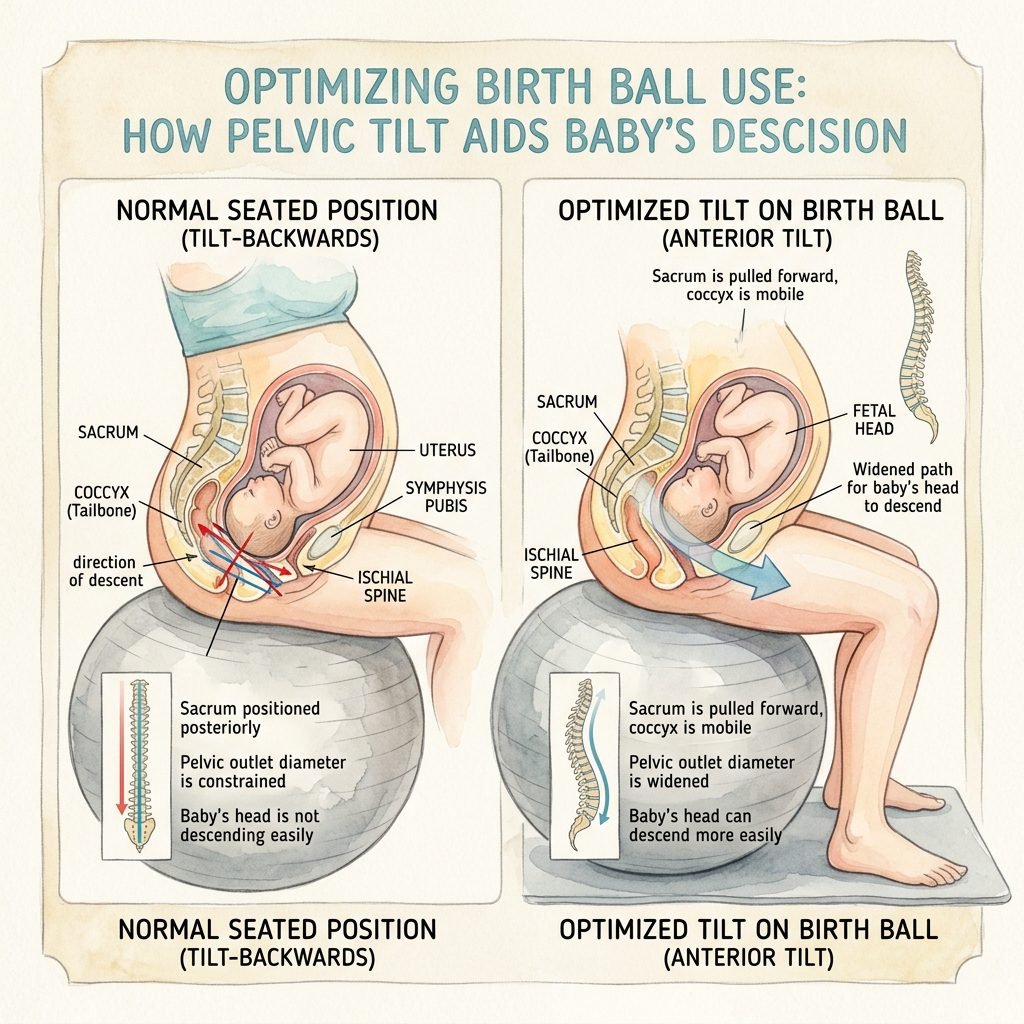
Your pelvis is not a static ring of bone; it is a dynamic, multi-jointed structure held together by ligaments that soften during pregnancy thanks to the hormone relaxin. When you perform pelvic tilts on a birth ball, you are creating a ‘rocking’ motion that encourages the baby’s head to apply even pressure to the cervix, which triggers the release of oxytocin—the hormone responsible for effective contractions.
Optimizing Fetal Positioning
Many long labors are the result of a ‘sunny-side up’ (OP) baby or a baby whose head is slightly tilted. Pelvic tilts help create the wiggle room necessary for your baby to tuck their chin and rotate into the OA (occiput anterior) position, which is the smoothest path out. Here is a quick guide on how different movements assist during various labor phases:
| Labor Phase | Movement Goal | Recommended Tilt |
|---|---|---|
| Early Labor | Encourage Descent | Classic Forward-Back |
| Active Labor | Pelvic Opening | Figure-Eight / Infinity |
| Transition | Rotation & Pressure | Asymmetrical / Hula |
| Pushing Prep | Outlet Expansion | Deep Supported Lean |
“My body is soft, my pelvis is wide, and my baby moves down with ease and grace.”
Preparation: Choosing Your Ball and Your Sanctuary

Before we dive into the moves, we must ensure your equipment is safe and your environment is soothing. A birth ball is essentially a high-quality exercise ball, but for labor, safety is paramount. Look for ‘anti-burst’ labels and ensure the size is correct for your height.
- Height 5’0″ to 5’5″: 55cm ball.
- Height 5’6″ to 5’10”: 65cm ball.
- Height 5’11” and up: 75cm ball.
When sitting on the ball, your hips should be slightly higher than your knees. This keeps your pelvis in an anterior tilt, which is exactly where we want it. To create your birth sanctuary, dim the lights, put on a playlist of rhythmic beats or soft mantras, and ensure you have a support person nearby to steady you if your legs feel shaky.
Variation 1: The Classic Forward-Back Rock
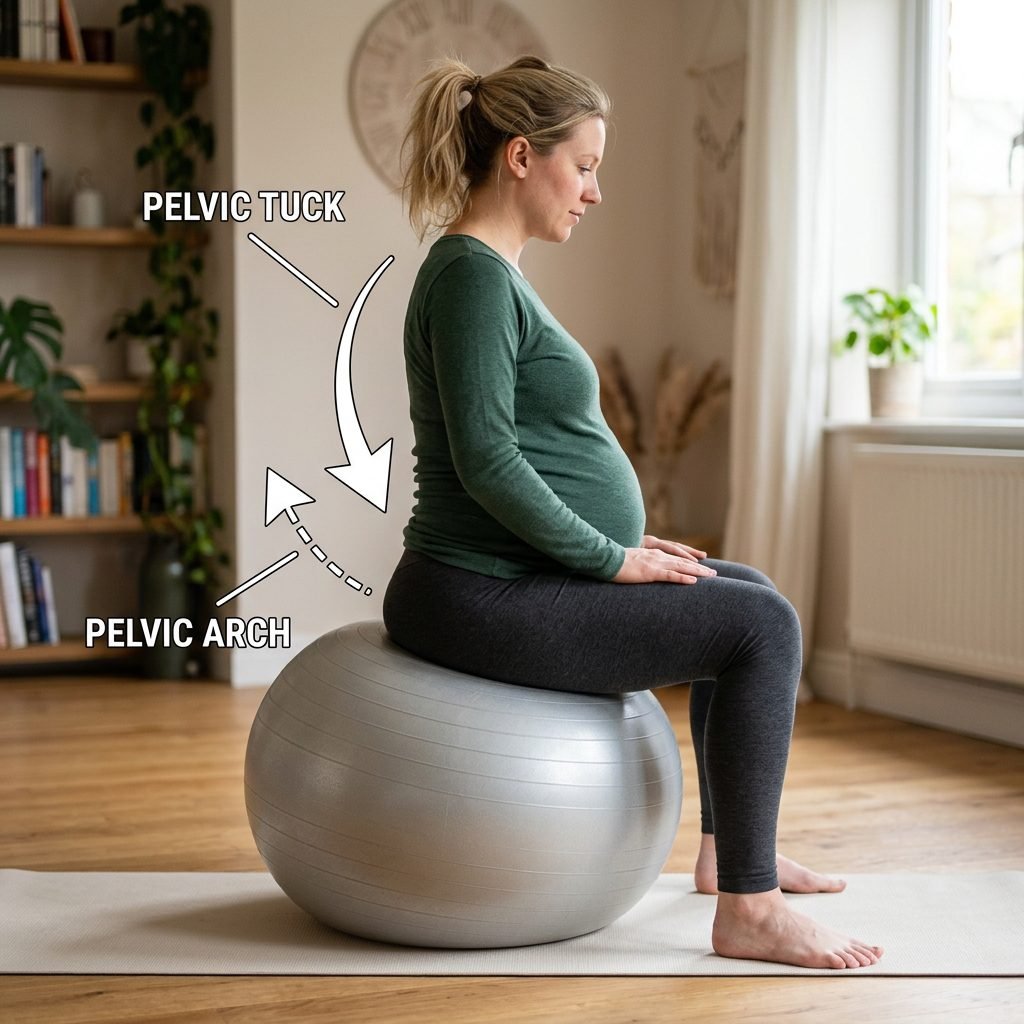
This is the foundation of all birth ball work. It is gentle, intuitive, and incredibly effective for encouraging the baby to engage with the cervix during the start of active labor.
How to Perform the Classic Rock
- Sit squarely on the center of the ball with your feet wider than hip-width apart.
- Place your hands on your knees or your belly.
- Exhale as you tuck your tailbone under, rounding your lower back and pulling your belly button toward your spine.
- Inhale as you tilt your pelvis forward, arching your back slightly and pointing your tailbone toward the wall behind you.
- Repeat this rhythmically, matching the movement to your breath.
Doula Tip: During a contraction, focus on the ‘tuck’ phase to help relieve pressure on your sacrum, especially if you are experiencing back labor.
Variation 2: The Hula Sway (Side-to-Side)
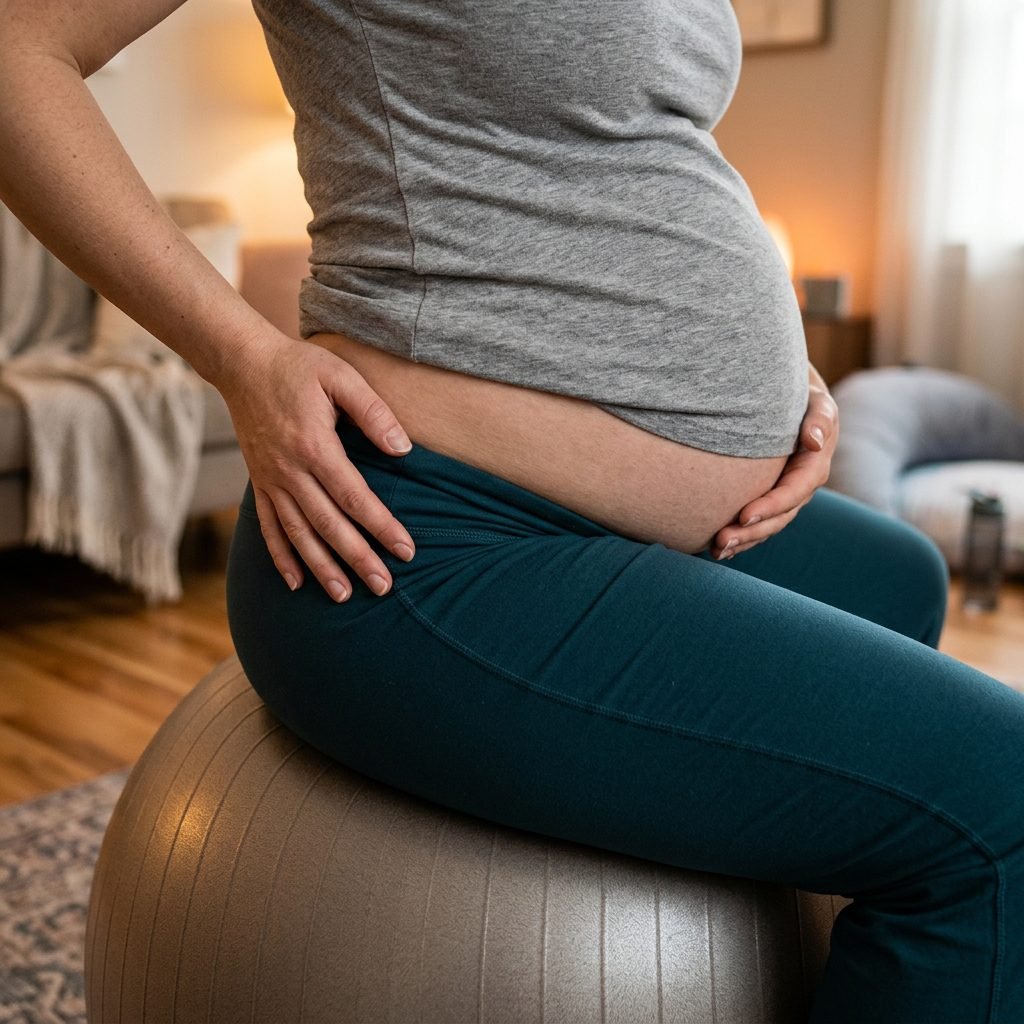
If the forward-back rock is the engine, the Hula Sway is the lubricant. This movement helps loosen the tight ligaments around the hips and allows the baby to shift laterally if they are stuck against a pelvic shelf.
How to Perform the Hula Sway
- Maintain a wide, stable stance with your feet flat on the floor.
- Shift your weight into your left sit-bone, letting the ball roll slightly to the left.
- Shift your weight into your right sit-bone, rolling the ball to the right.
- Keep your upper body relatively still—the movement should come entirely from your waist and hips.
- Visualize your pelvis as a bowl of water that you are gently tipping from side to side without spilling.
This variation is particularly helpful when you feel a ‘plateau’ in labor progress. It creates a subtle shifting of the pelvic bones that can be just enough to let the baby slip further down.
Variation 3: The Figure-Eight Infinity Loop
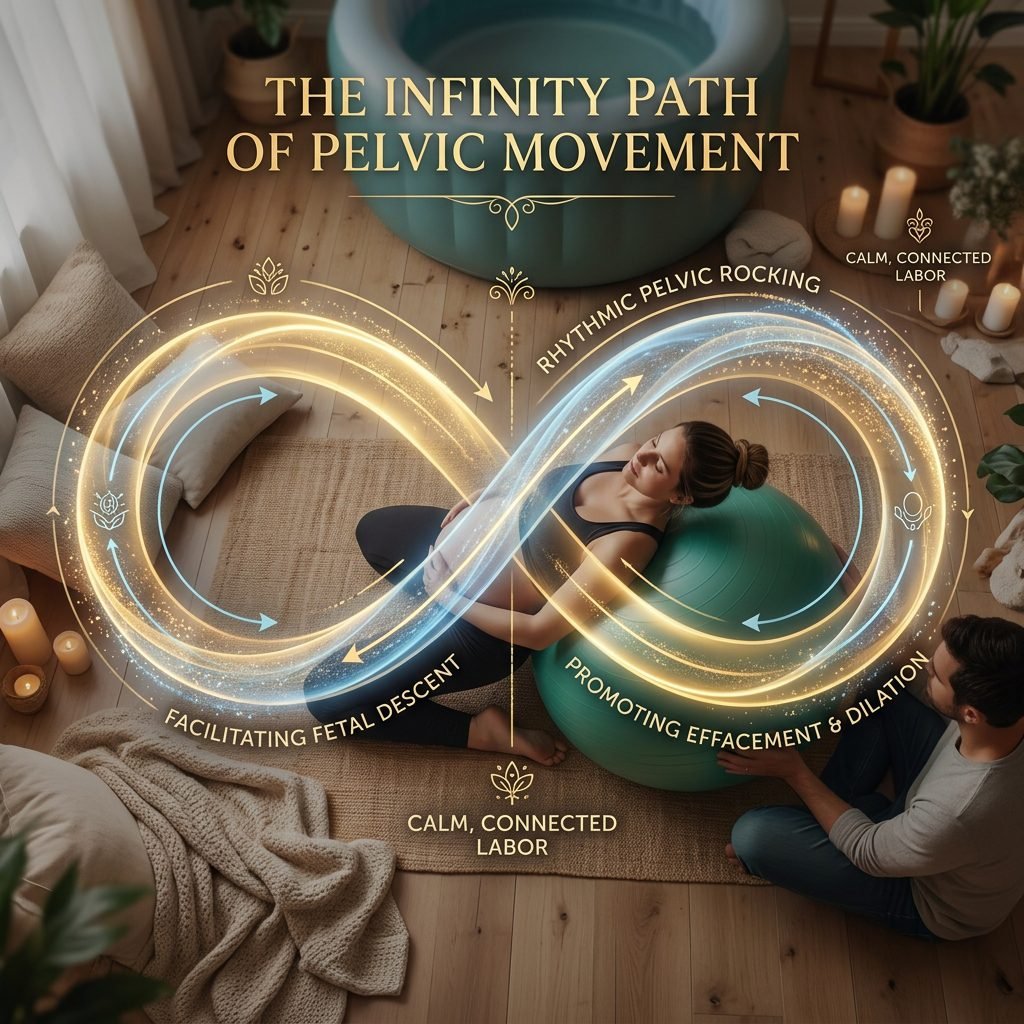
This is my personal favorite for active labor. The figure-eight combines forward, back, and side movements into one fluid motion. It mimics the natural path a baby takes through the birth canal—which is actually a spiral, not a straight line.
How to Perform the Figure-Eight
- Imagine there is a crayon attached to your tailbone and you are drawing a large ‘8’ or infinity symbol on the floor beneath the ball.
- Lead with one hip, swinging it forward and around, then cross through the center and lead with the other hip.
- Keep your jaw loose and your mouth open (a relaxed jaw equals a relaxed pelvic floor!).
- Allow your arms to dangle or rest them on a bed or birth partner for extra stability.
Why it works: The multi-planar movement keeps the pelvic outlet constantly changing shape, which prevents the baby from getting wedged in one position.
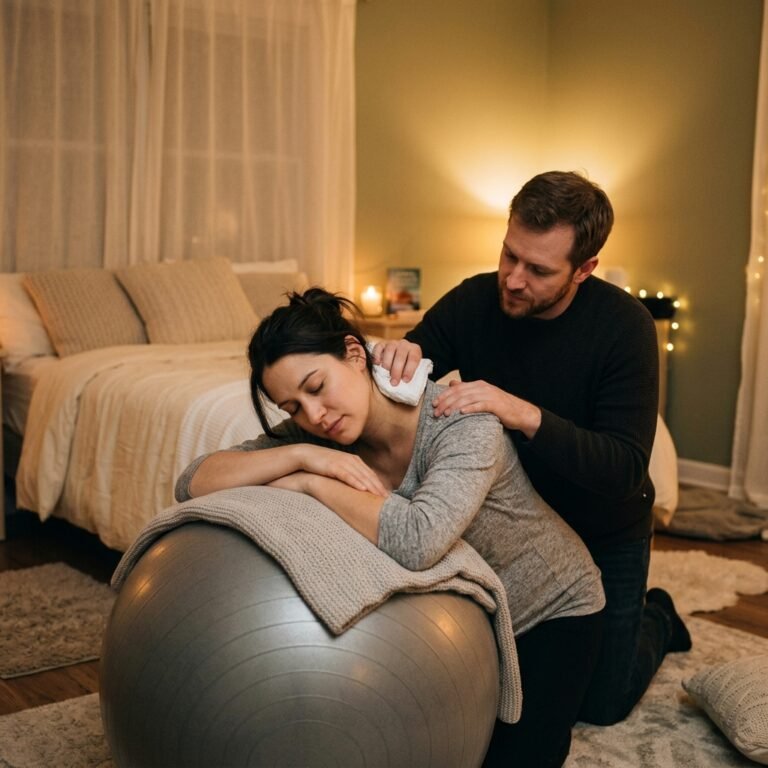
Variation 4: The Supported Forward Lean
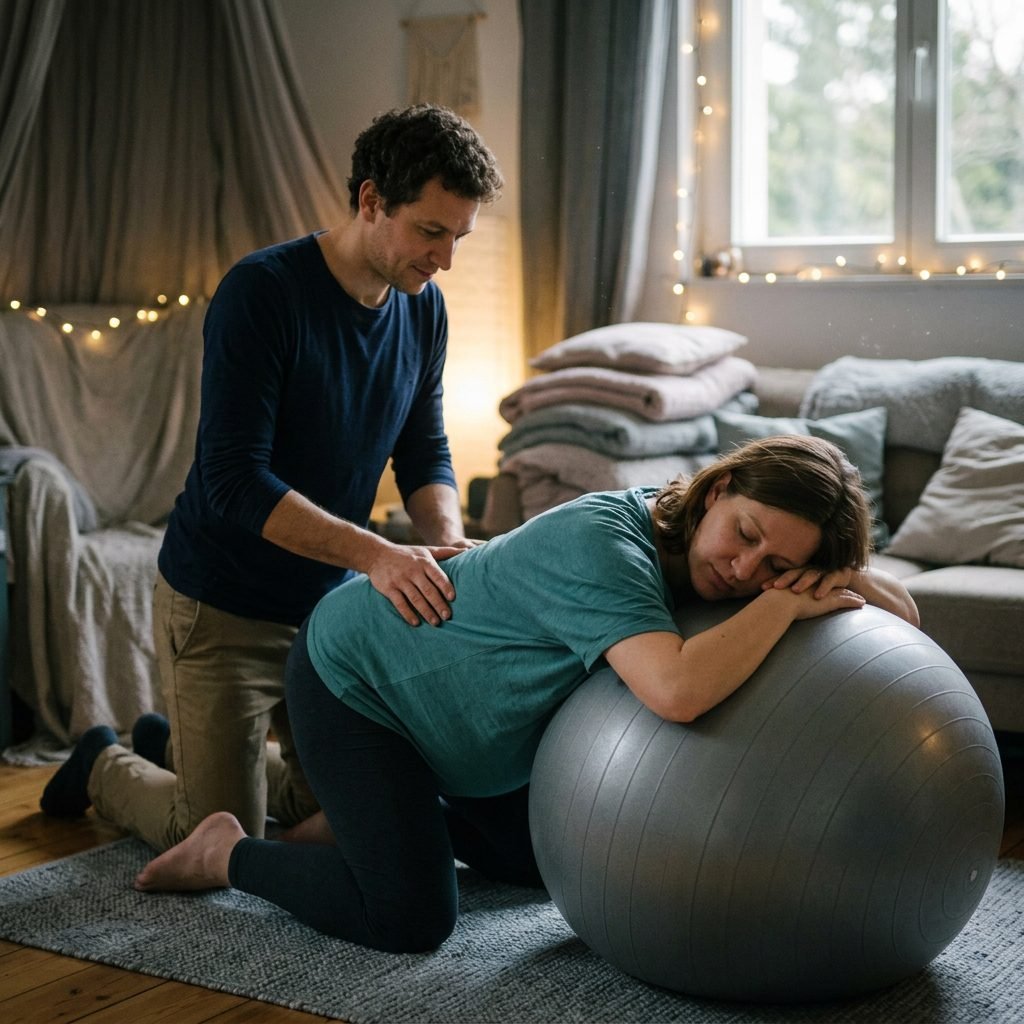
Sometimes, sitting upright becomes too intense during the peak of active labor. The supported forward lean uses gravity to pull the baby’s weight off your spine while still allowing for pelvic tilts.
How to Perform the Forward Lean
- Kneel on a soft mat or pillow in front of the birth ball.
- Drape your chest and arms over the ball, hugging it close.
- Rest your head on your hands or a pillow placed on top of the ball.
- In this position, perform small pelvic tilts by wagging your ‘tail’ (tailbone) up and down or side to side.
This is the ultimate position for back labor relief. If your baby is ‘OP’, this position encourages them to fall forward into the ‘hammock’ of your belly and rotate.
| Benefit | Description | ||||
|---|---|---|---|---|---|
| Gravity | Pulls baby away from the spine/sacrum. | Rest | Allows the mother to relax her legs and core. | Accessibility | Perfect for a partner to provide back massage. |
Variation 5: The Asymmetrical Stair-Step Tilt
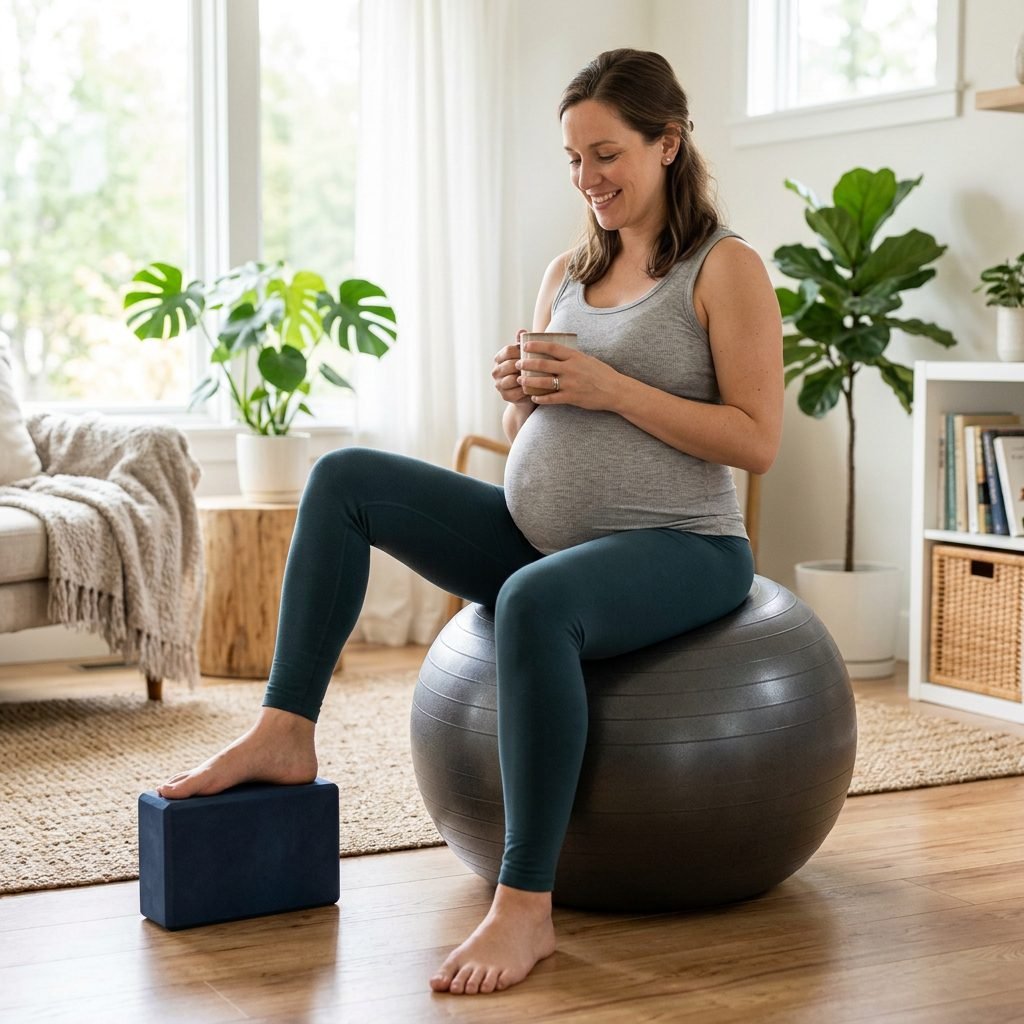
When labor stalls or the baby is high, we need to create asymmetry. An asymmetrical pelvis is actually wider than a symmetrical one. This move is a powerhouse for shortening the final stretch of active labor.
How to Perform the Asymmetrical Tilt
- While sitting on the ball, place one foot on a small stool or a stack of books (about 6-8 inches high).
- Keep the other foot flat on the floor.
- Perform small, gentle bounces or side-to-side sways in this ‘uneven’ position.
- Switch legs every 5-10 minutes or after every few contractions.
By lifting one leg, you are opening one side of the pelvic mid-plane, giving the baby a specific ‘pocket’ of space to move into. It is like unlocking a puzzle box—sometimes you just need to turn the key a different way.
Conclusion
You are the Expert of Your Body
Mama, as you practice these moves, remember that there is no ‘perfect’ way to labor. These pelvic tilt variations are tools in your birthing kit, meant to be used whenever they feel right. If a move feels good, stay there. If it doesn’t, move on. Your body has an ancient, primal wisdom that knows exactly how to bring your baby into the world. By using the birth ball to keep your pelvis mobile and your spirit grounded, you are shortening the distance between you and that first, breathtaking meeting with your little one.
Trust the process, lean into the rhythm, and know that you are stronger than you ever imagined. You’ve got this!