

The Gentle Over-The-Shoulder Burping Technique For Stubborn Infant Gas
Oh, sweet mama, I see you. It is 3:00 AM, the house is quiet, and yet your heart is racing because your little one is squirming, grunting, and clearly uncomfortable. There is a specific kind of helplessness we feel as mothers and doulas when we know a tiny air bubble is causing such big distress in a small body. As a doula, I have spent countless hours in the quiet of the night, swaying with babies who just couldn’t find relief. The ‘wind’—as we often call it—can be a stubborn foe, but I want you to take a deep breath and know that you are doing an incredible job. Your baby isn’t just crying; they are communicating, and you are here, listening. In this guide, we are going to dive deep into the most reliable, time-tested method for relieving that pressure: The Gentle Over-The-Shoulder Burping Technique. This isn’t just about a pat on the back; it is about alignment, pressure, and the rhythmic connection between you and your baby. We will explore the anatomy of why these bubbles get stuck, how to prep your space for success, and the exact physical nuances that turn a ‘maybe’ burp into a satisfying release. You’ve got this, sister. Let’s get that bubble out together.
Understanding the ‘Windy’ Baby: Why Gas Gets Stubborn
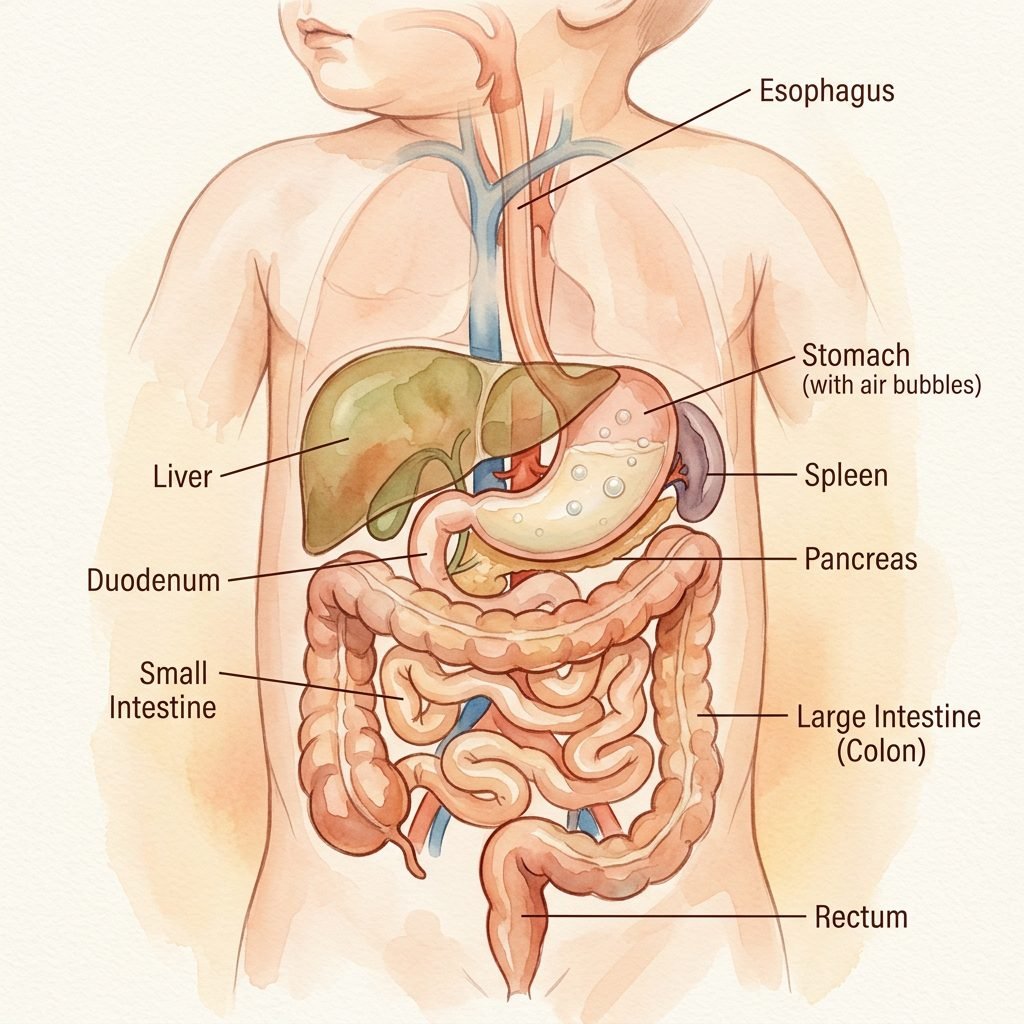
Before we jump into the ‘how,’ let’s talk about the ‘why.’ Newborns have incredibly immature digestive systems. Their esophageal sphincter—the little valve that keeps stomach contents down—is still learning its job. When babies feed, whether by breast or bottle, they often swallow air. This is known as aerophagia. For some babies, a fast let-down or a shallow latch can increase this air intake significantly. Once that air is trapped under a layer of milk, it creates a ‘plug’ that feels like intense pressure in their tiny tummies.
Common Causes of Infant Gas
- Immature Digestion: The muscles that move food through the gut are still developing their rhythm.
- Feeding Mechanics: Gulping too quickly or a bottle nipple that is too fast can introduce excess air.
- Crying Cycles: Ironically, the more a baby cries from gas, the more air they swallow, creating a frustrating cycle.
As a doula, I always remind my clients that gas isn’t a reflection of your feeding ability; it is a physiological milestone. Stubborn gas happens when those air bubbles get ‘stuck’ in the curves of the stomach. The over-the-shoulder technique is the gold standard because it uses gravity and your own body’s firm structure to help those bubbles rise to the top of the esophagus. It provides the necessary vertical alignment that sitting positions sometimes lack.
Remember, mama: A gassy baby is not a ‘bad’ baby, and a crying baby is not a sign that you are failing. It is just a temporary physical puzzle we are solving together.
The Masterclass: Execution of the Over-the-Shoulder Technique

Now, let’s get into the physical practice. This is where the ‘doula touch’ makes all the difference. We aren’t just holding the baby; we are creating a conduit for that air to escape. Follow these steps with intention and calm energy.
Step-by-Step Instructions
- The Preparation: Drape a thick, absorbent muslin cloth over your shoulder. Trust me, you want coverage from your neck down to your mid-back. This protects your clothes and provides a soft surface for baby’s cheek.
- The High Placement: Lift your baby so their tummy is resting firmly against the top of your collarbone. Their chin should hang slightly over your shoulder. This ‘high’ placement is crucial because it puts direct, gentle pressure on the upper abdomen where air bubbles often congregate.
- The Hand Cup: Instead of a flat-handed slap, cup your palm. Imagine you are holding a small amount of water in your hand. This creates an air cushion that vibrates through the chest wall without being jarring.
- The Rhythmic Pat: Begin patting the lower-to-mid back. The motion should be firm but rhythmic—think of it as a heartbeat. Pat for 60 seconds, then transition to a firm upward stroke.
- The Upward Stroke: Using the heel of your hand, sweep from the base of the spine up toward the neck. This literally ‘herds’ the air bubbles upward.
The key here is consistency. Sometimes it takes 10 to 15 minutes for a stubborn bubble to move. Don’t be afraid to shift your weight from foot to foot or do a gentle ‘doula sway’ while you work. The movement of your hips helps relax the baby’s abdominal muscles, making it easier for the gas to pass.
Troubleshooting the ‘No-Burp’ Scenario
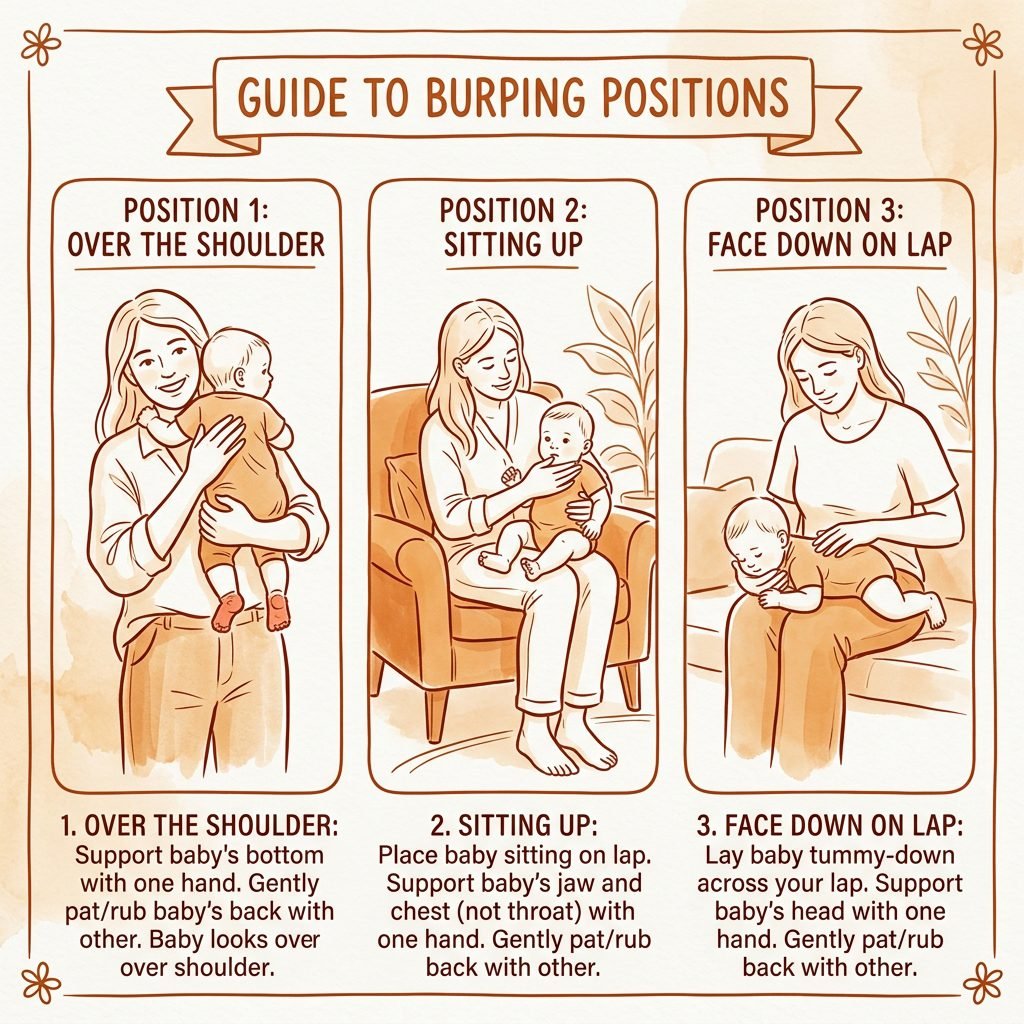
What happens when you’ve patted, stroked, and swayed for 15 minutes and… nothing? First, don’t panic. Not every feeding results in a burp, but if the baby is still squirming, the bubble is likely still there. This is when we look at the ‘Burping Method vs. Gas Severity’ matrix to decide if we need to pivot.
| Method | Ideal Gas Severity | Key Benefit |
|---|---|---|
| Over-the-Shoulder | Stubborn / High | Maximum chest pressure and spinal alignment. |
| Sitting on Lap | Mild / Moderate | Great for visual monitoring and ‘the wobble.’ |
| Face-Down on Lap | Extreme / Lower Gas | Deep abdominal pressure for trapped bubbles. |
The ‘Wobble’ Technique
If the shoulder isn’t working, try the ‘wobble’ while they are still in position. Gently lean your body forward and back, or side to side, while the baby is on your shoulder. This change in angle can dislodge a bubble that is stuck in a ‘pocket’ of the stomach. Never shake, but a gentle, fluid circular motion of your own torso can work wonders.
The Pause and Reset
Sometimes, the baby’s muscles are too tense from crying to let the air out. If they are arching their back, lay them flat on their back for 30 seconds. Do a few ‘bicycle legs’ (moving their legs in a cycling motion toward their tummy). This ‘resets’ the abdominal pressure. Then, bring them back up to the shoulder. Often, that transition is exactly what the bubble needs to move.
The Doula’s Secret: Sensory Cues and Timing

Timing is everything. One of the biggest mistakes I see new parents make is waiting until the very end of a feed to burp. If you have a ‘stubborn’ gasser, you need to burp mid-feed. If breastfeeding, burp during the switch between breasts. If bottle-feeding, try every 1 to 2 ounces. This prevents a large ‘air plug’ from forming under a full stomach of milk.
Reading the Cues
Your baby will tell you when they need a burp before they even start crying. Look for these ‘pre-gas’ signs:
- The Squirm: Pulling away from the nipple and then immediately wanting it back.
- The Grunt: Small, guttural noises that sound like they are straining.
- The Pedal: Kicking their legs out straight and then pulling them in tight.
When you see these, go straight to the shoulder. Pro-Tip: Use your scent to calm them. Nuzzle your face into their hair while they are on your shoulder. Your familiar scent lowers their cortisol, relaxes their gut, and makes the burp come easier. We call this ‘co-regulation.’ Your calm nervous system actually helps their digestive system relax.
You are the expert on your baby. If your gut says there is a bubble, there probably is. Trust your intuition over the clock.
Post-Burp Care and Emotional Wellness

Once you hear that glorious ‘belch,’ the relief is almost instant—for both of you! But the work doesn’t quite end there. After a big burp, keep your baby upright for at least 15 to 20 minutes. This allows gravity to keep the milk down while the rest of the digestive process begins. This is a great time for some ‘upright snuggles’ or reading a short book.
Caring for the Caregiver
Mama, I want to talk to you for a moment. Dealing with a gassy, fussy baby is exhausting. It can trigger feelings of inadequacy or ‘postpartum rage’ when the crying won’t stop. Please know that this is a season, and it is a short one. If you feel your frustration rising, it is okay to put the baby in a safe space like their crib, walk into the other room, and take ten deep breaths. A baby can feel your tension, and a tense baby has a harder time burping. By calming yourself, you are actually helping them.
If you are a postpartum recovery mother, remember to mind your posture. The over-the-shoulder technique can strain your upper back if you are hunching. Pull your shoulders back and down, and use a nursing pillow or a chair with good lumbar support to help take the weight of the baby.
Conclusion
The journey of the first few months is filled with small victories, and few feel as triumphant as successfully relieving a stubborn gas bubble. The Gentle Over-The-Shoulder Burping Technique is more than just a physical move; it is a moment of bonding and relief that you provide for your little one. By understanding the ‘why’ behind the gas, mastering the cupped-palm pat, and maintaining your own calm energy, you are becoming the ultimate maternal wellness companion for your child. Remember, sister, you are doing a beautiful job. The nights are long, but you are the exact mother your baby needs. Keep this guide in your back pocket for those tough nights, and soon enough, you’ll be the one passing these tips down to a friend. You’ve got this!